Pigeon: a bird on a mission
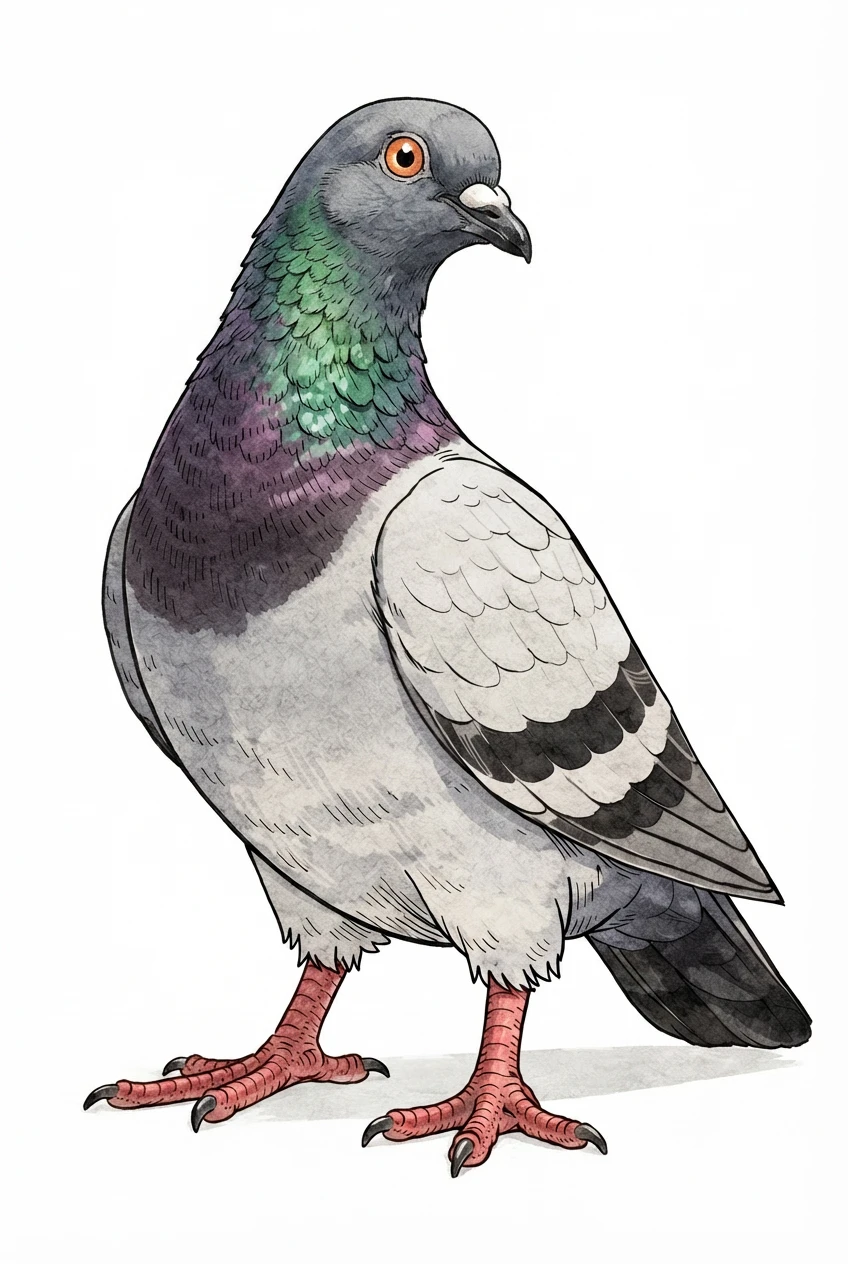
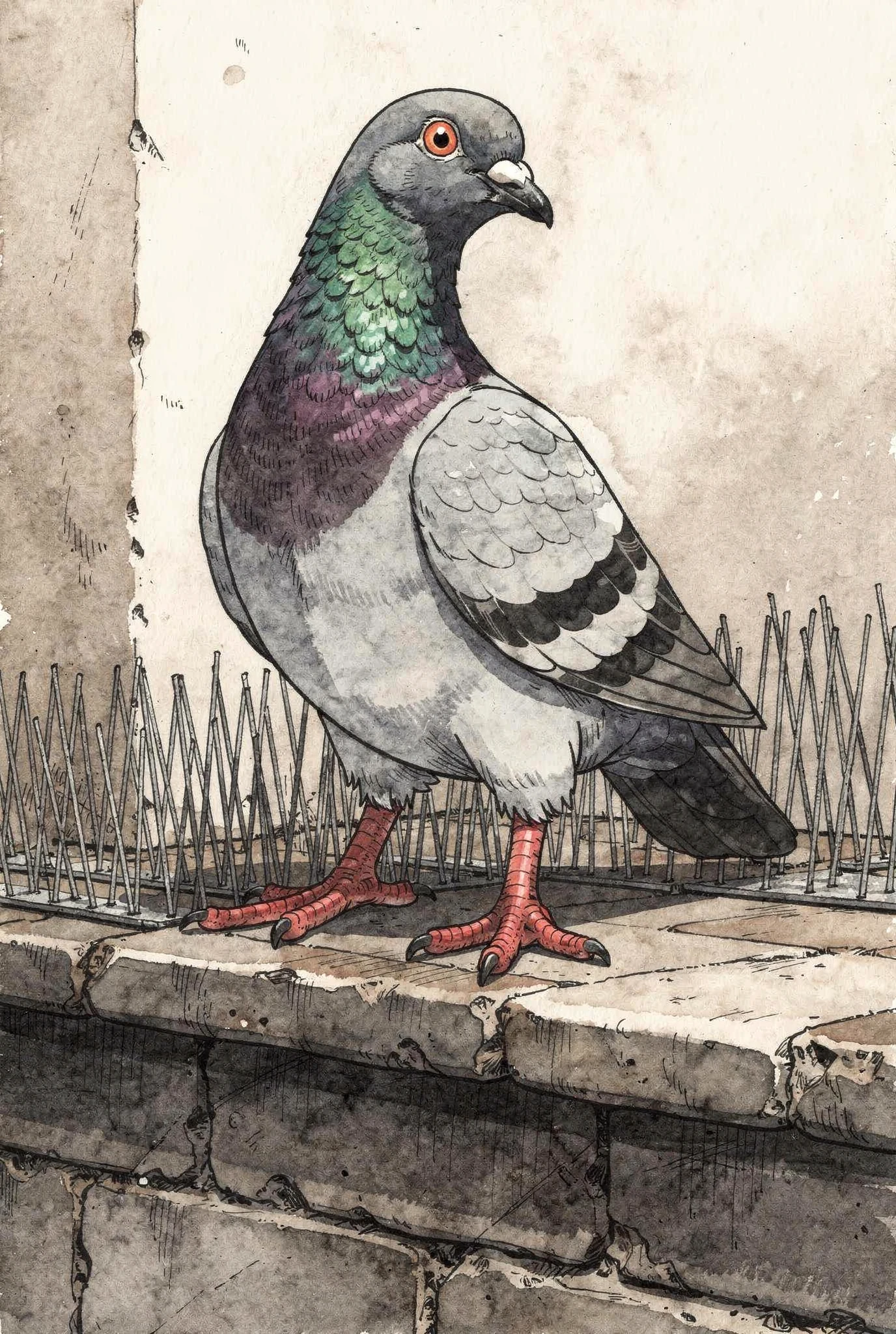
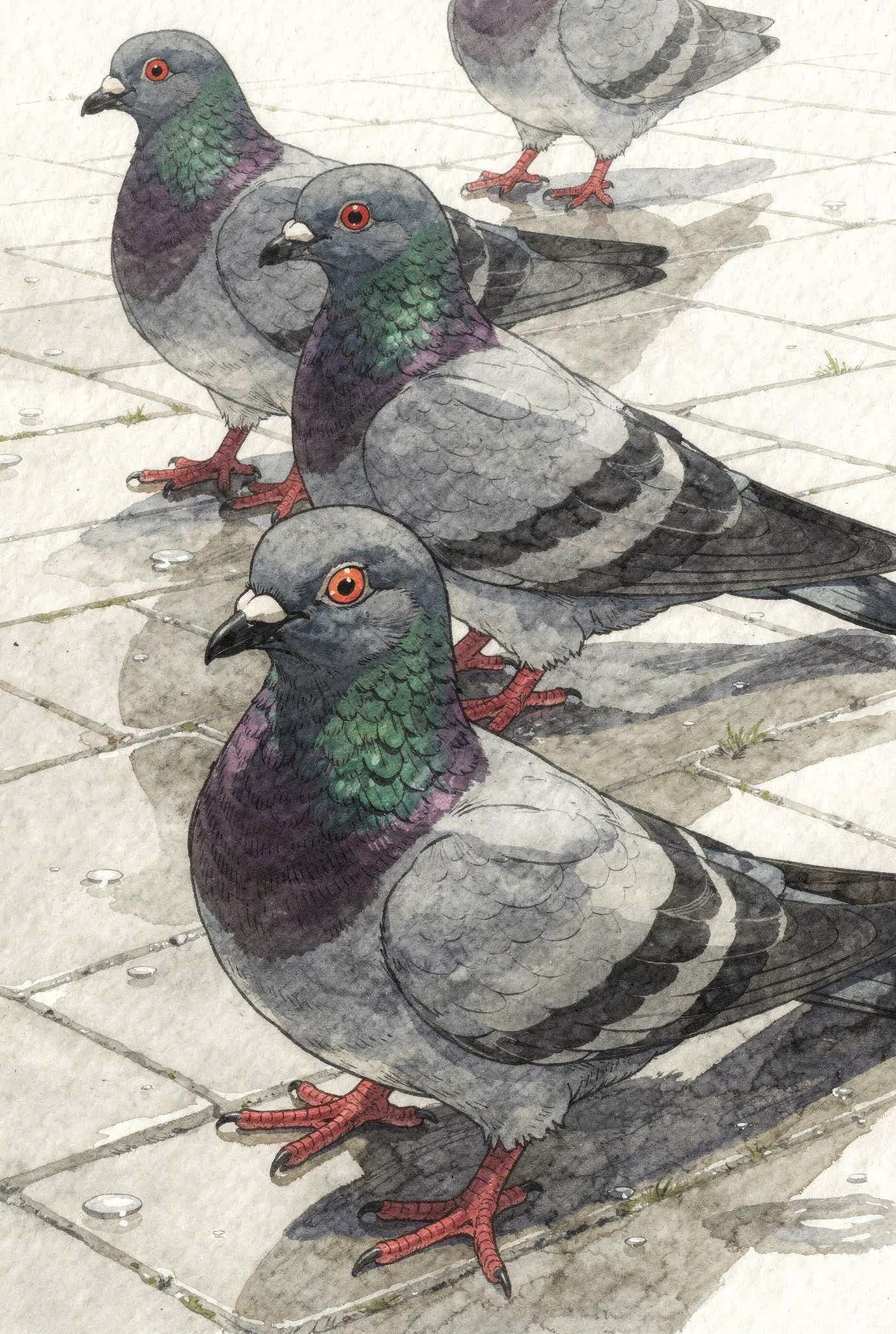
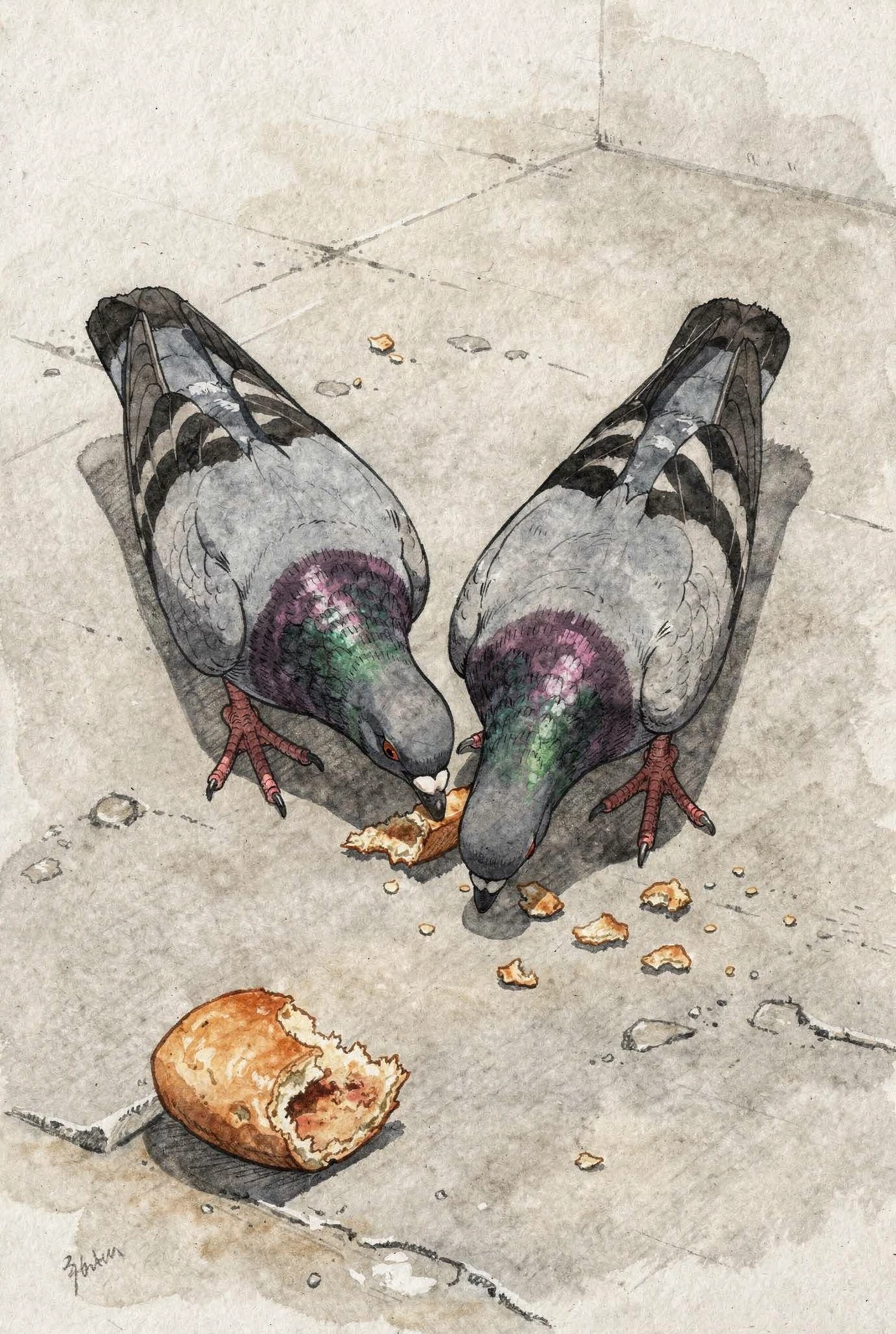
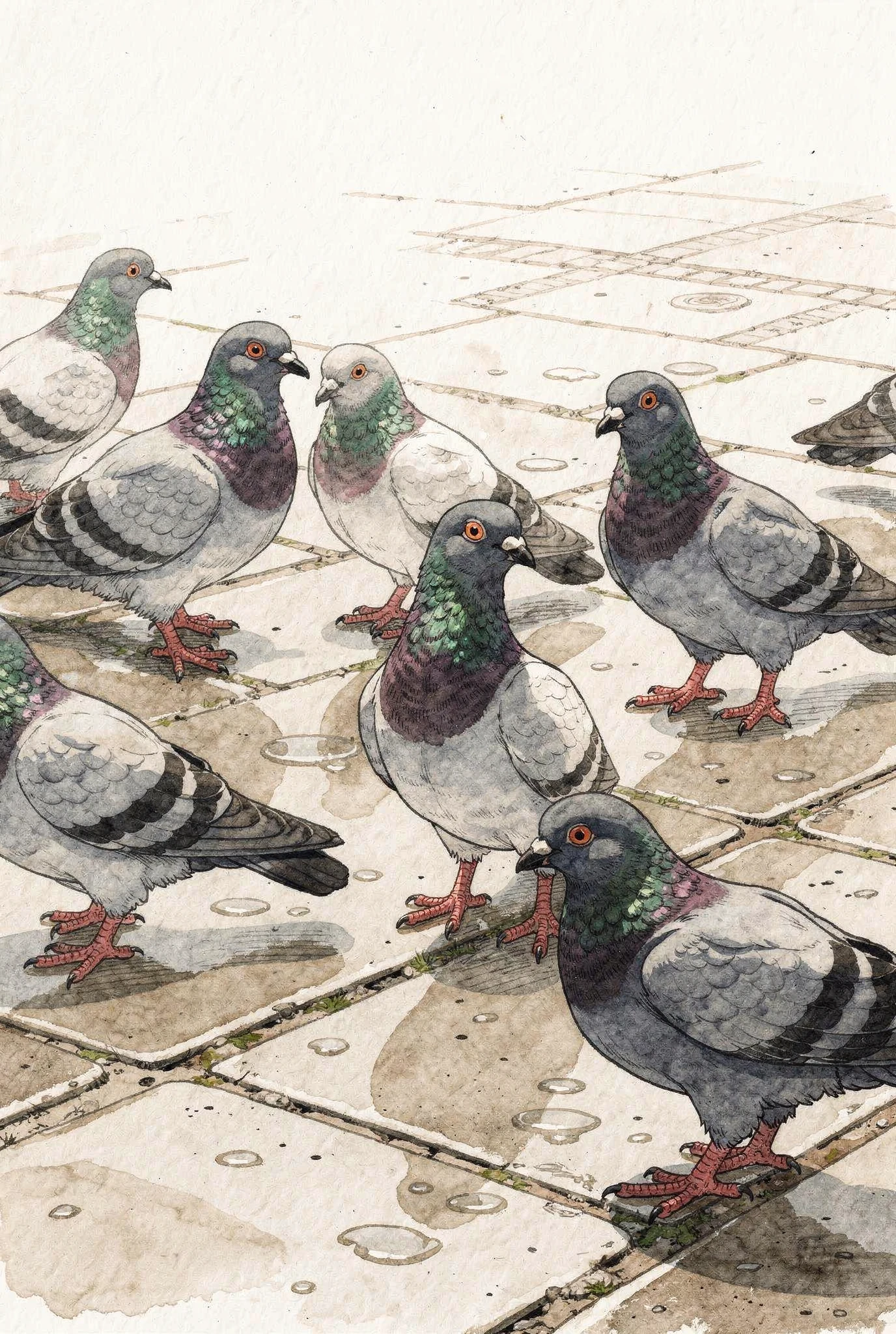
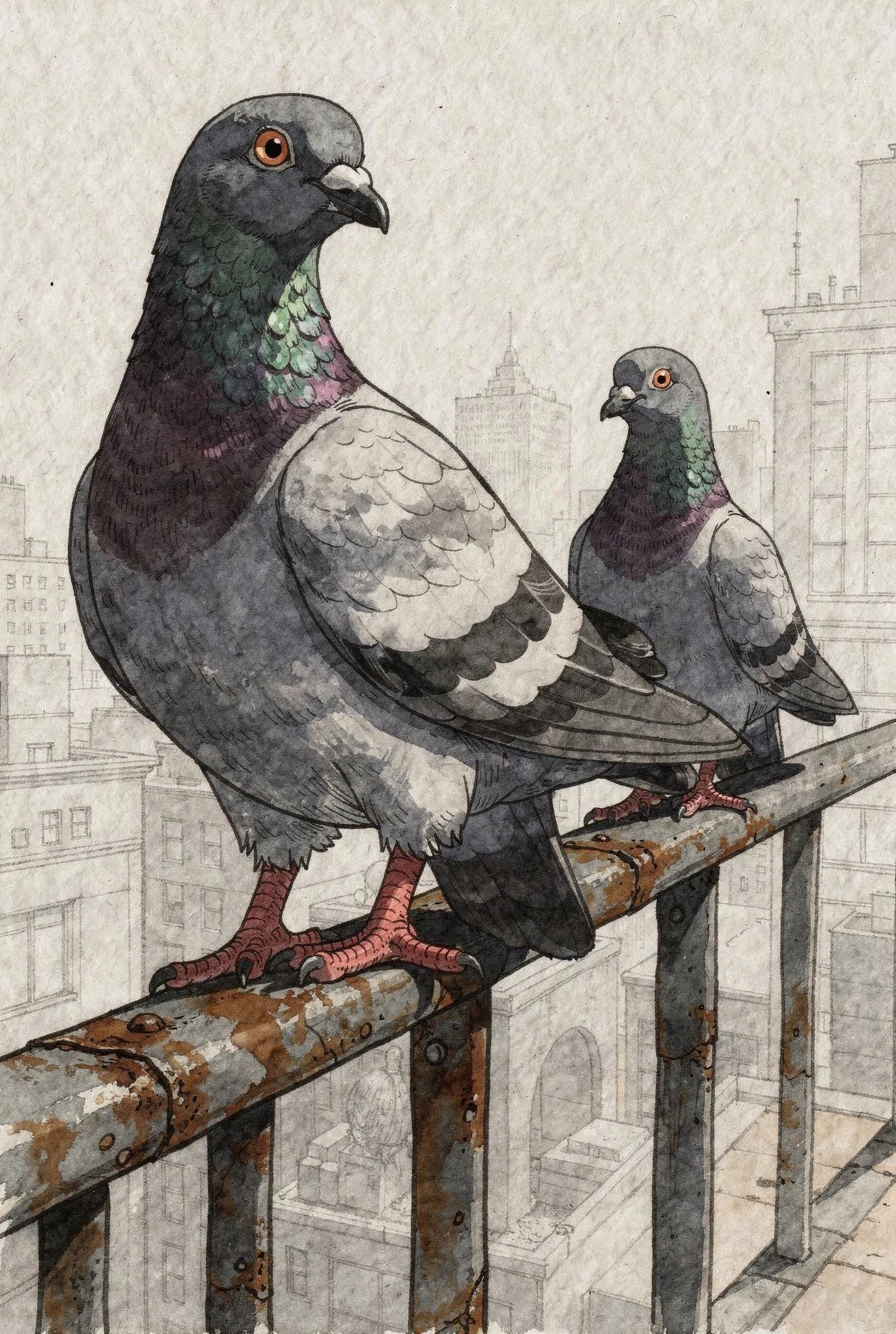
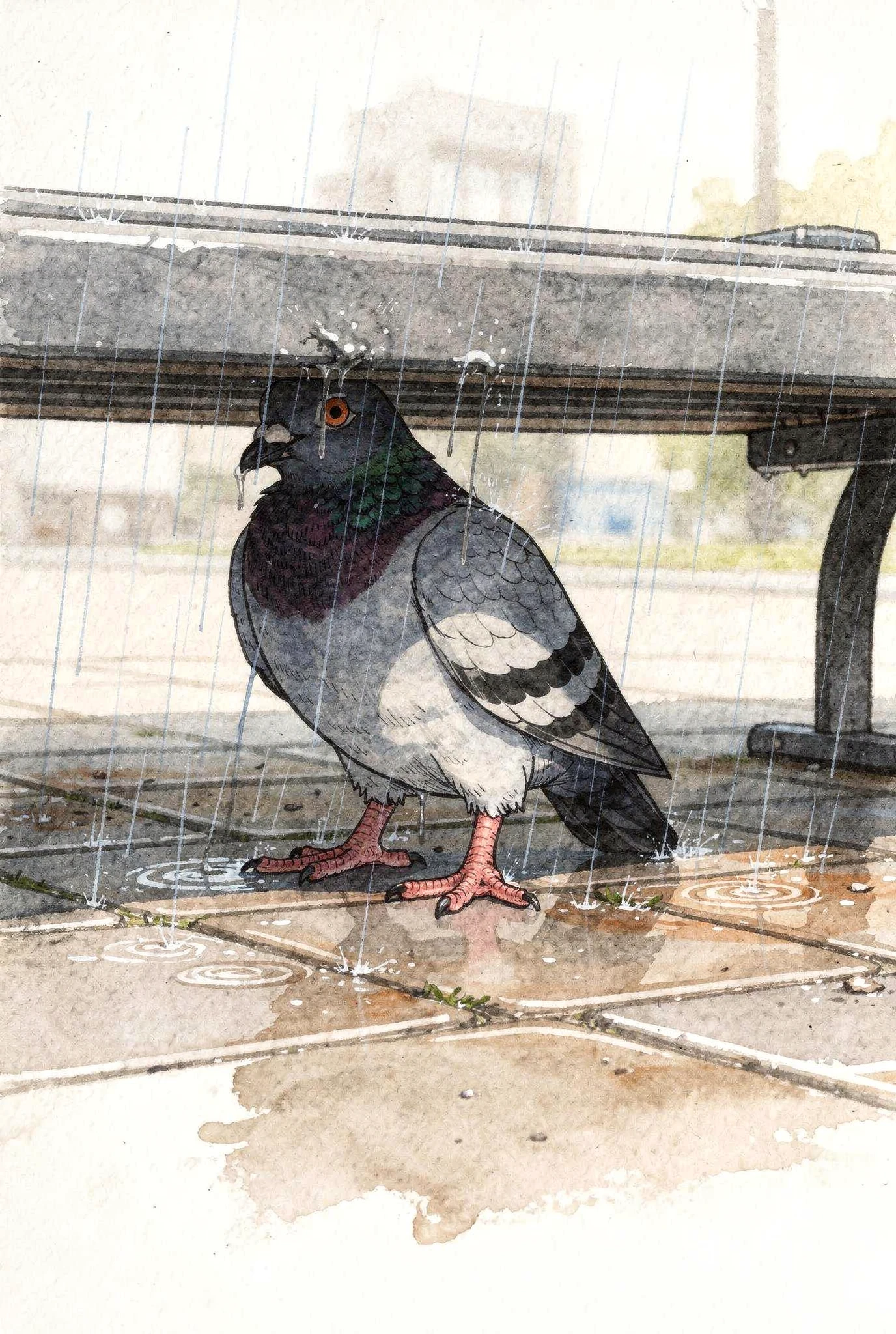
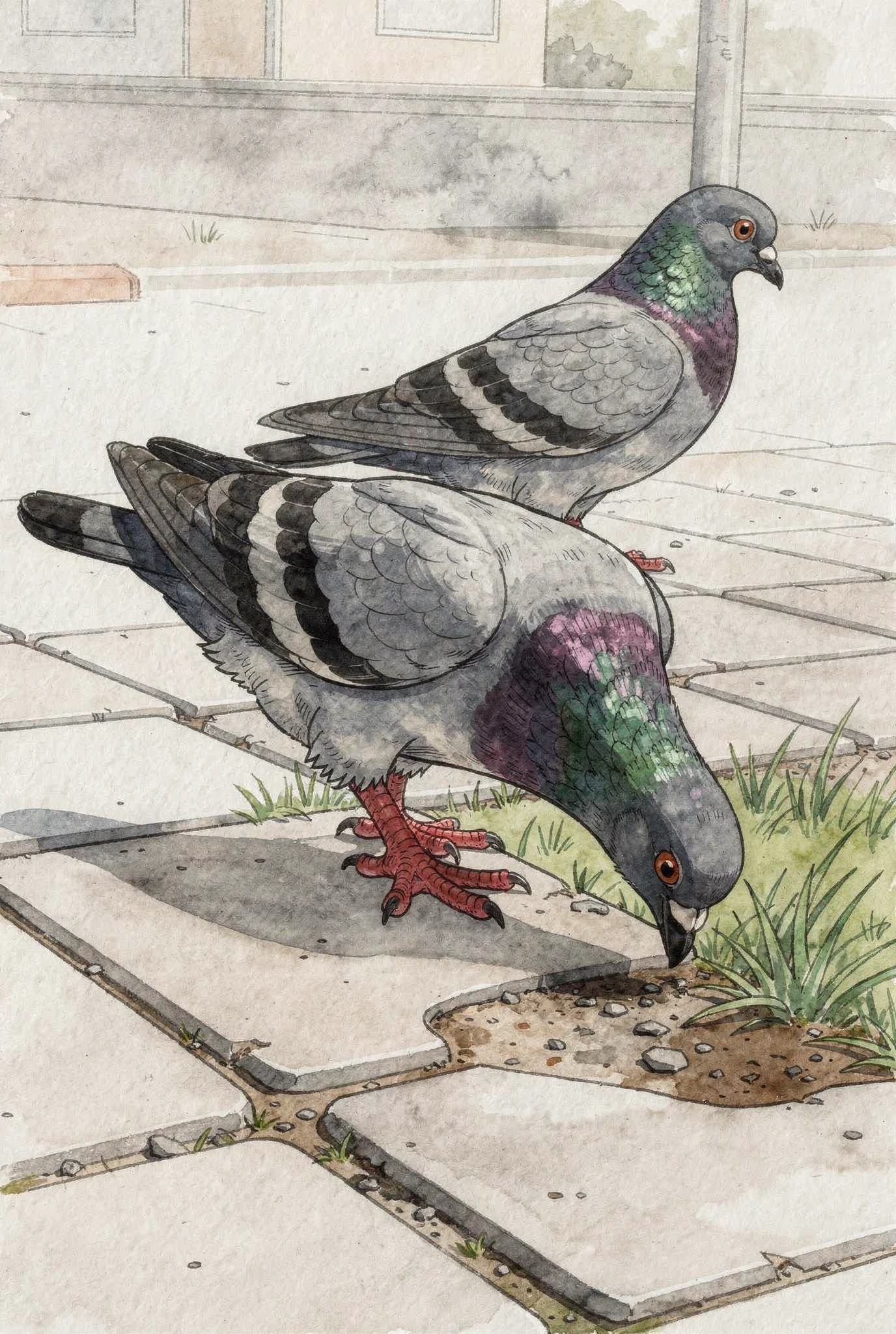
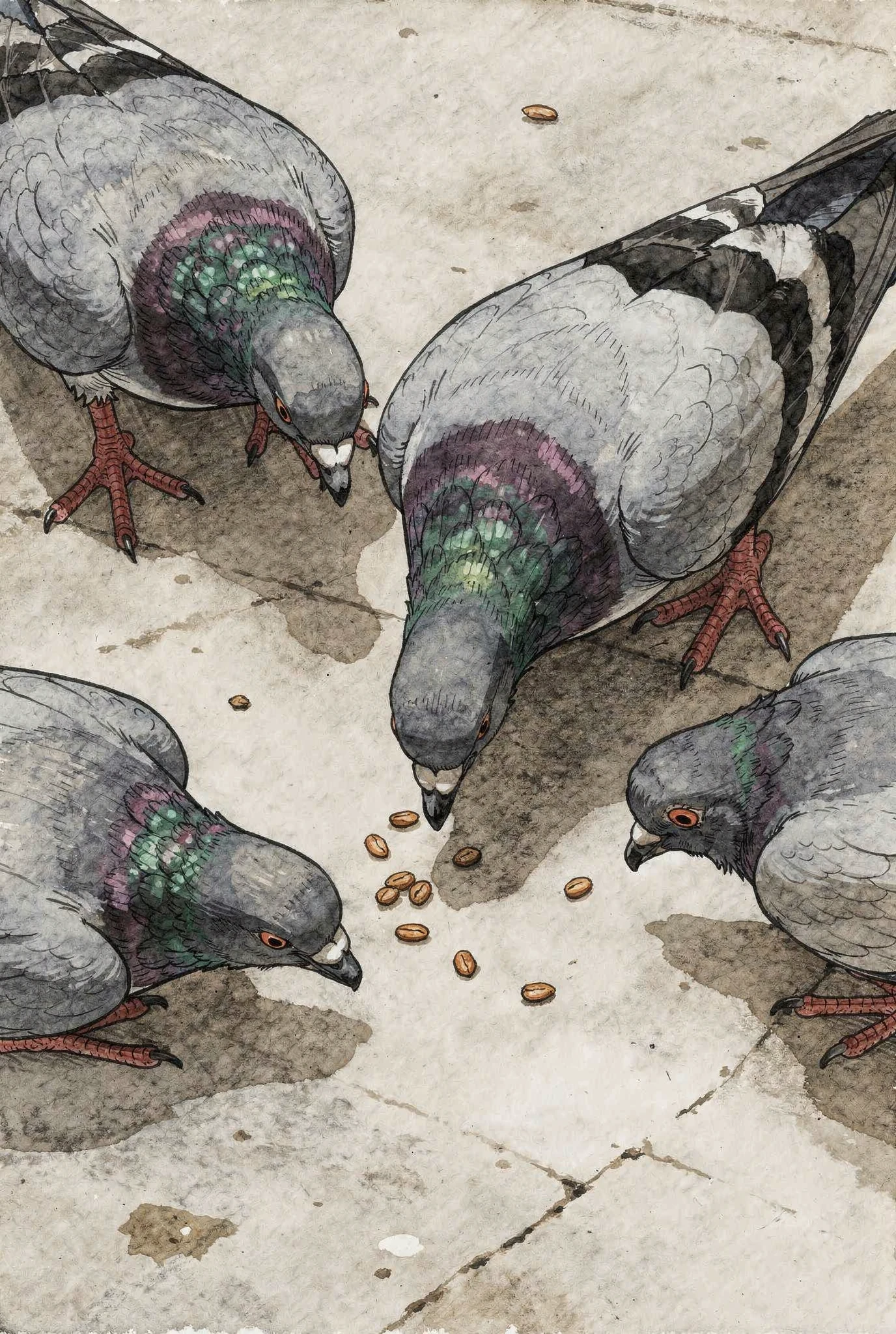
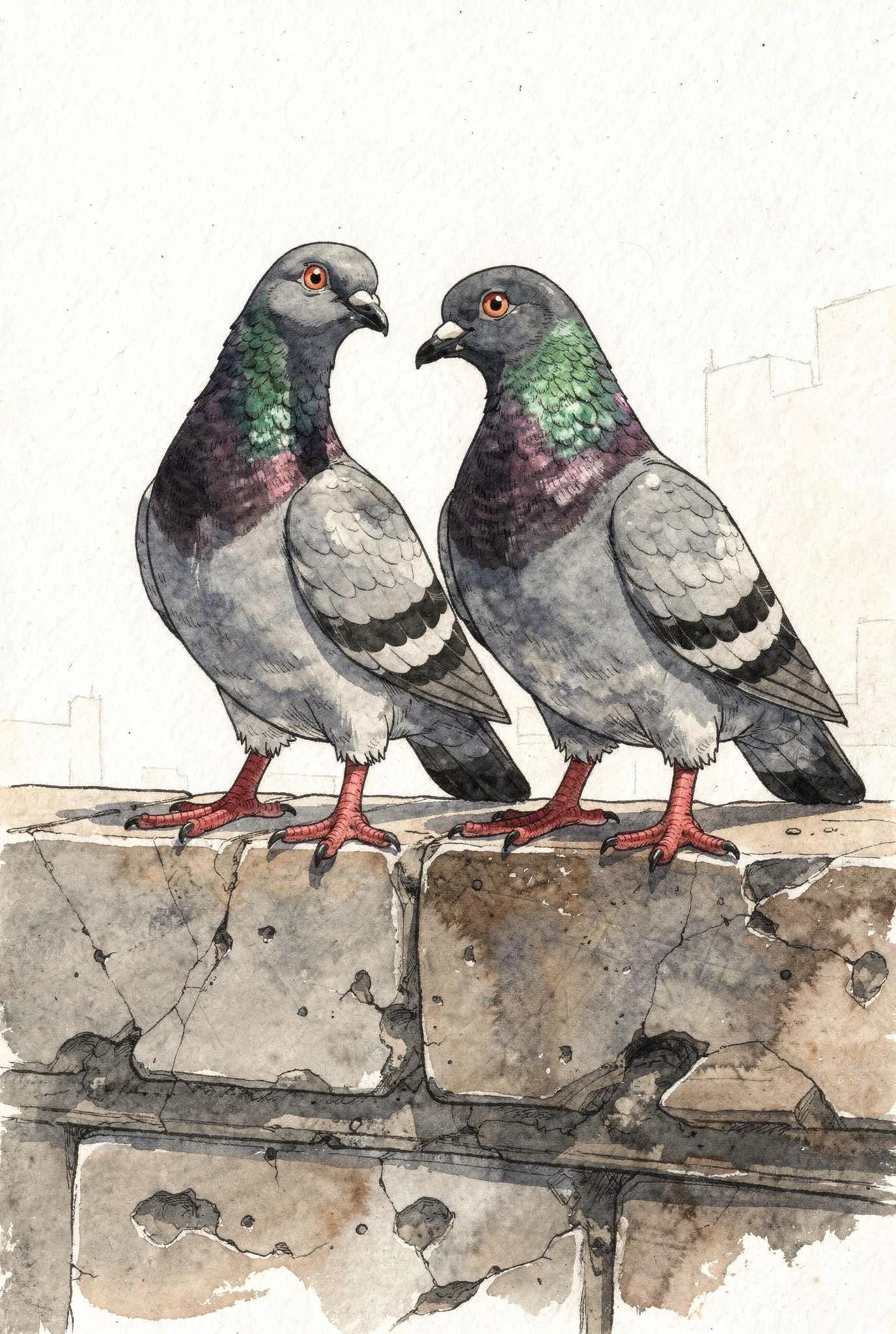
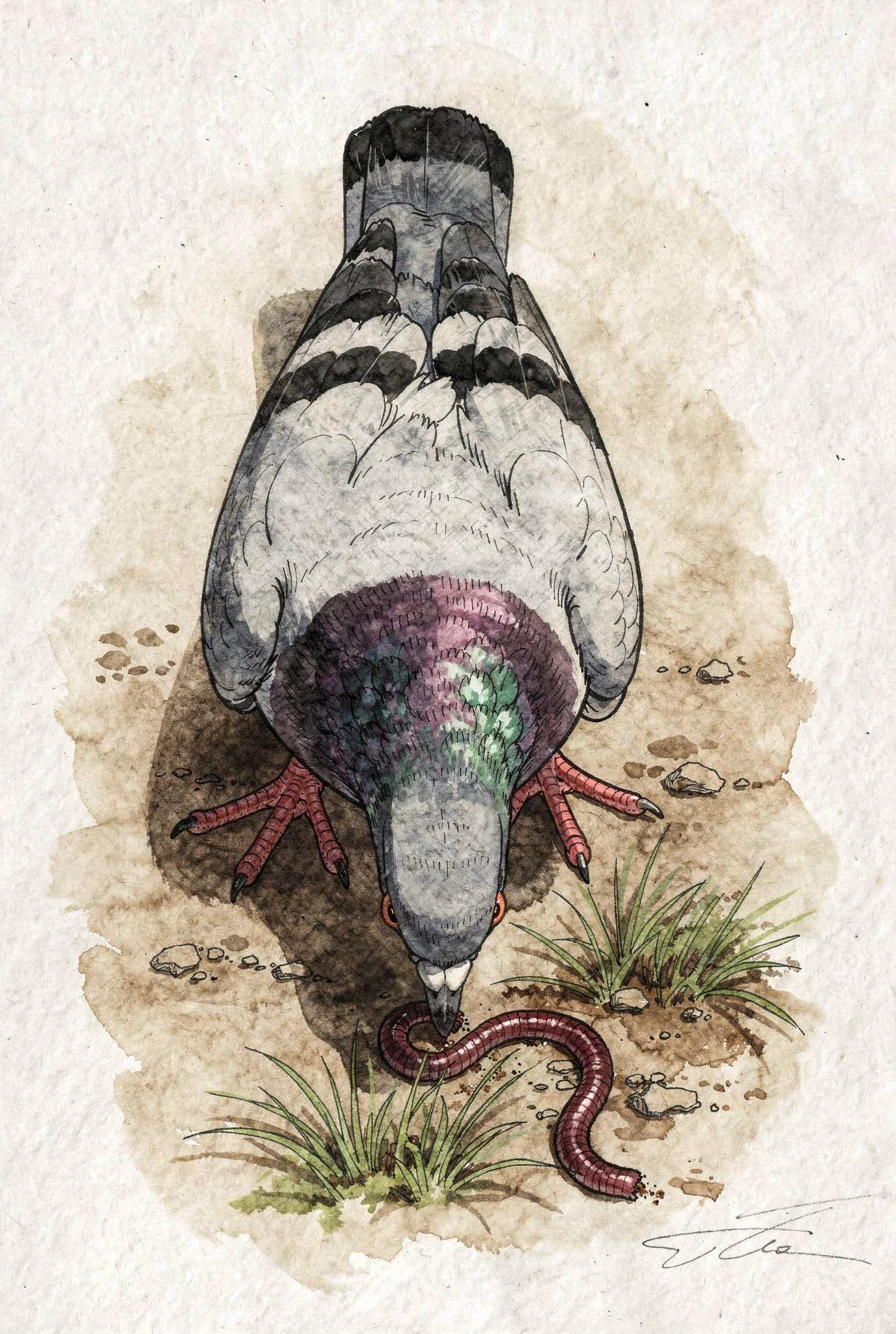
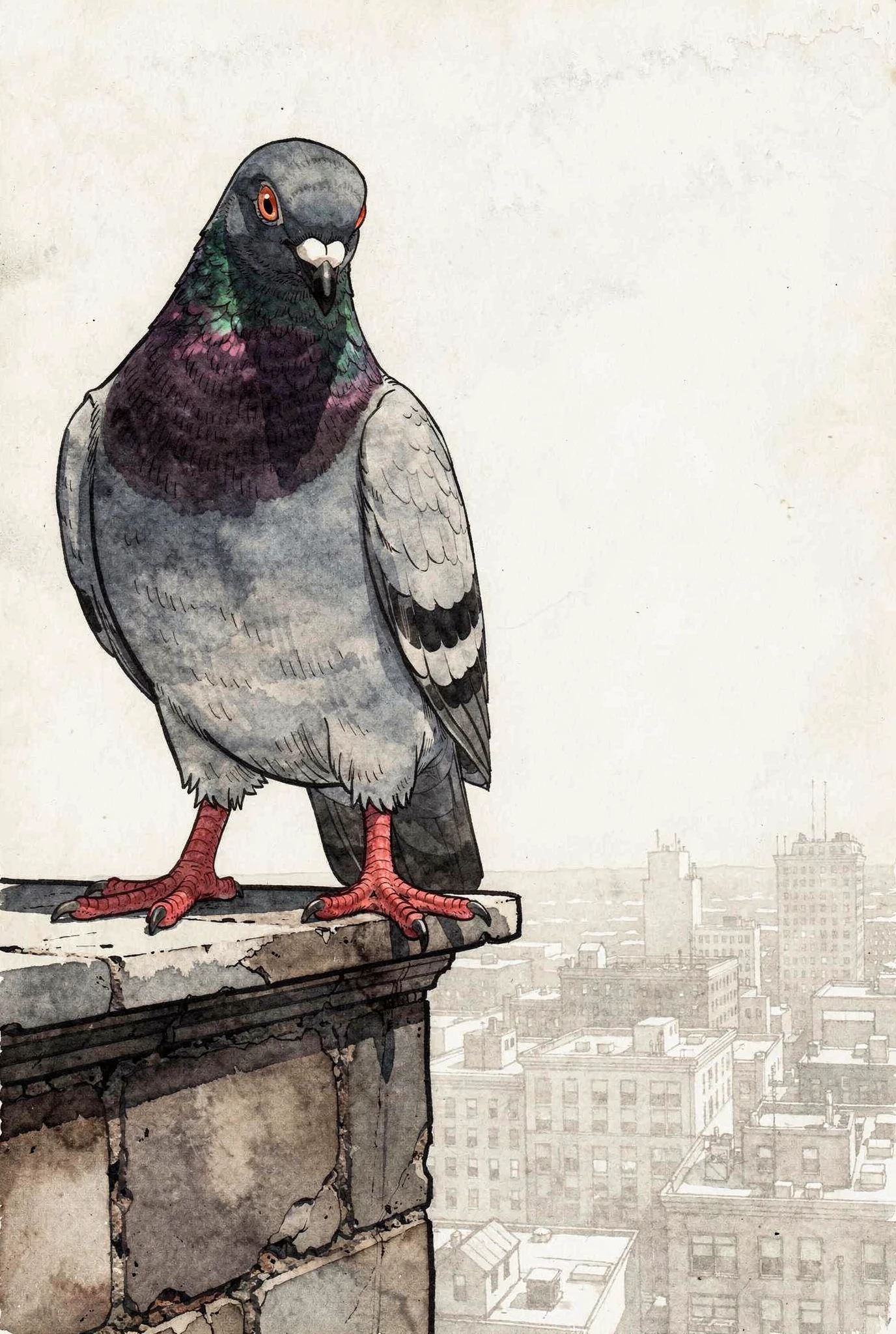
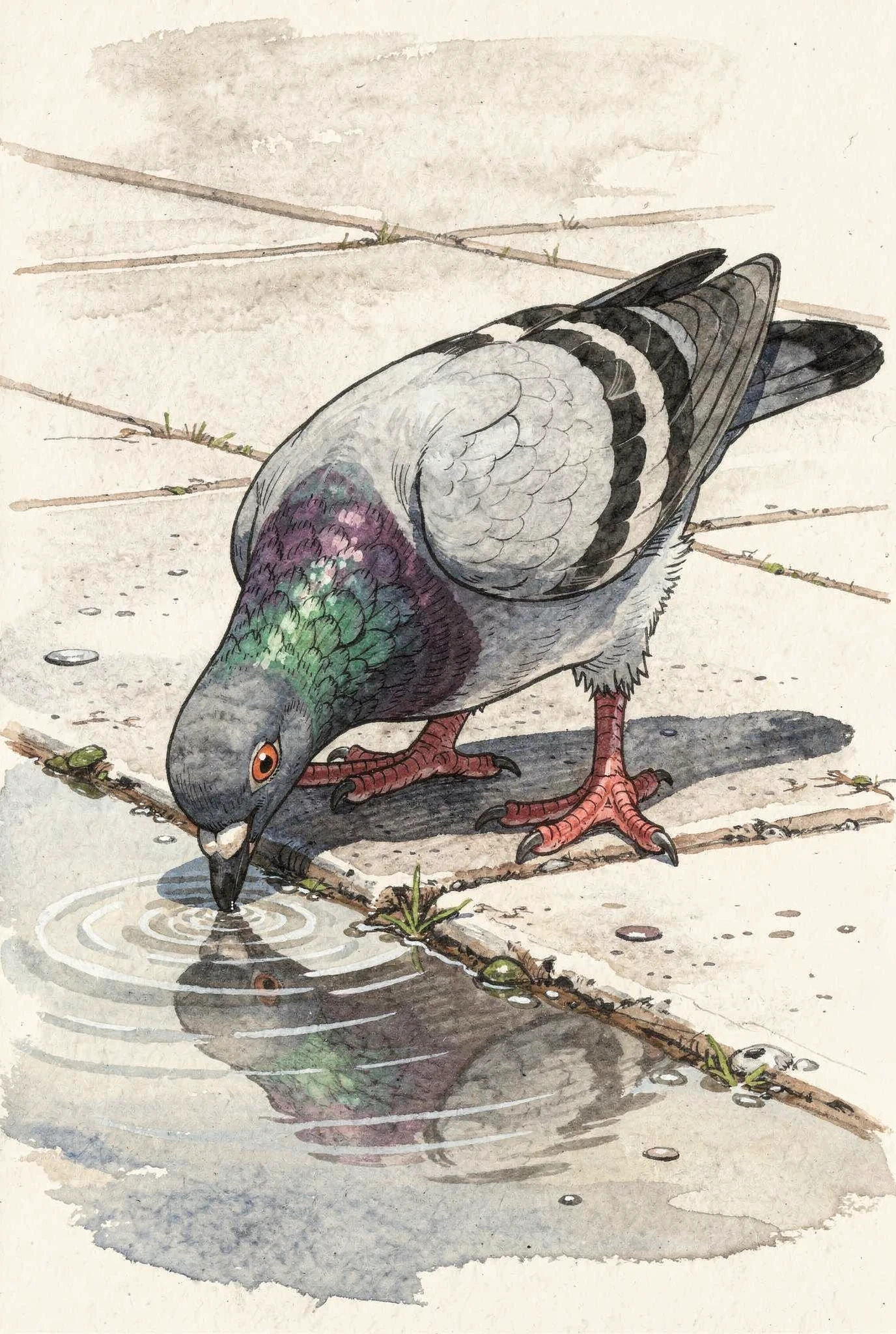
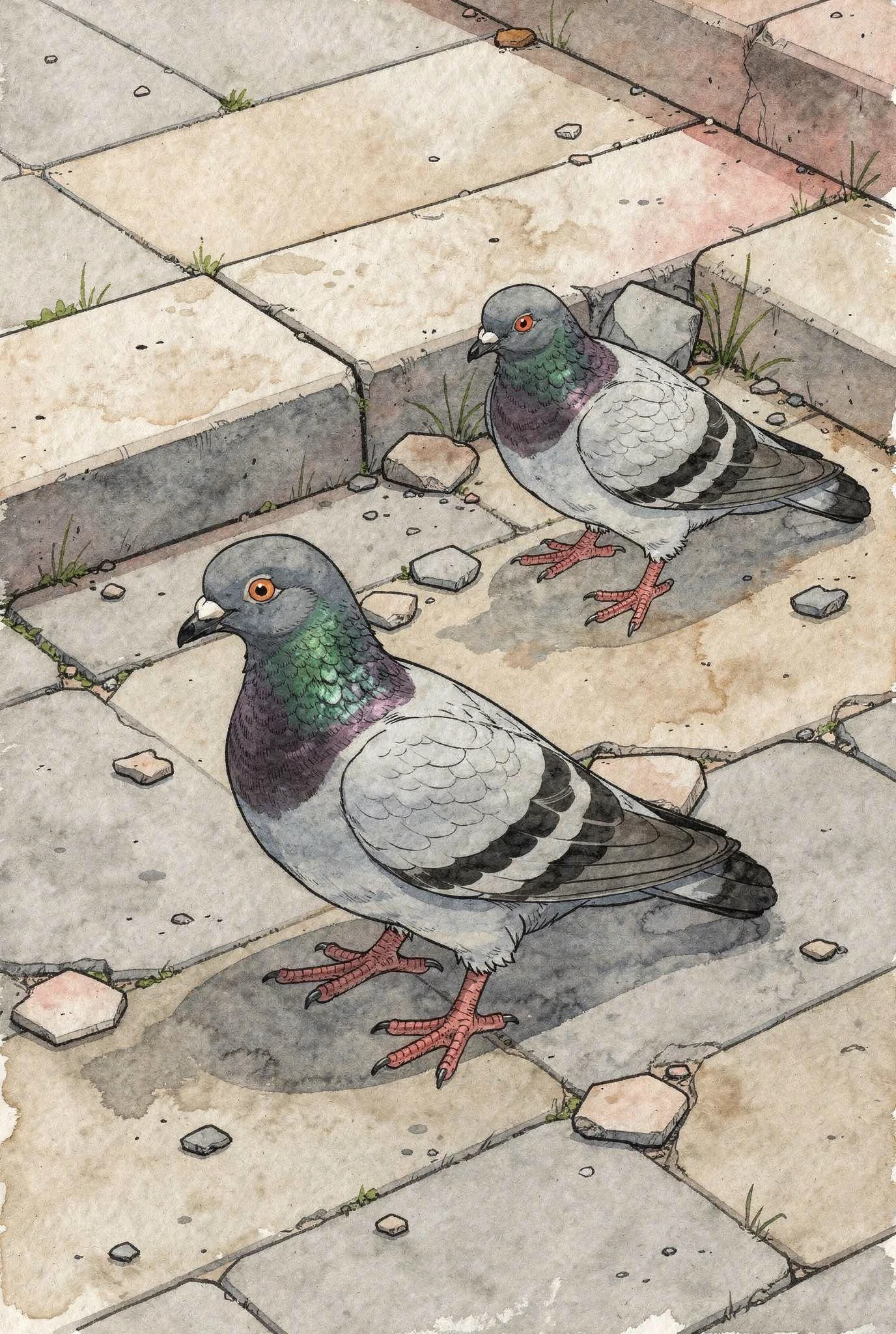
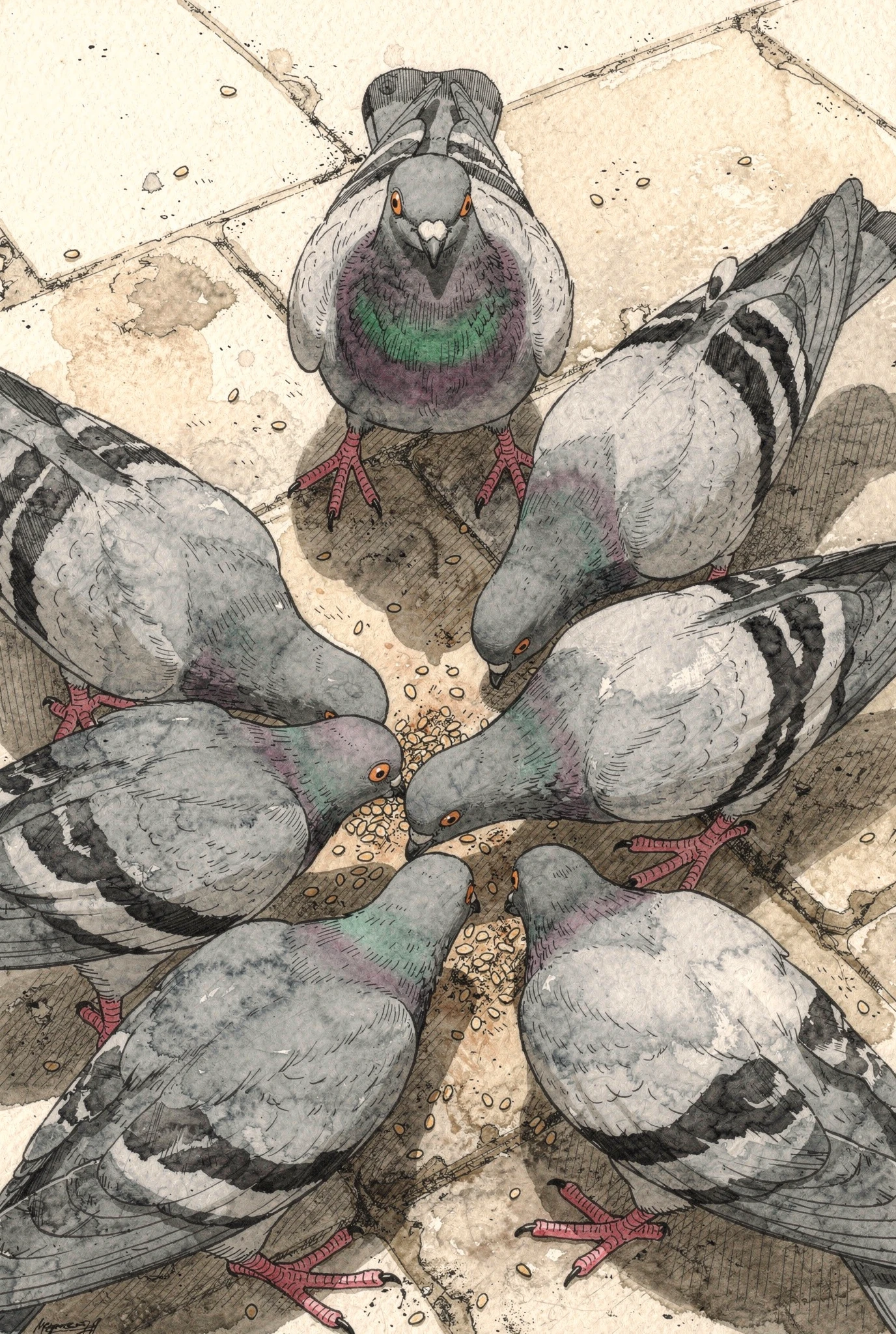
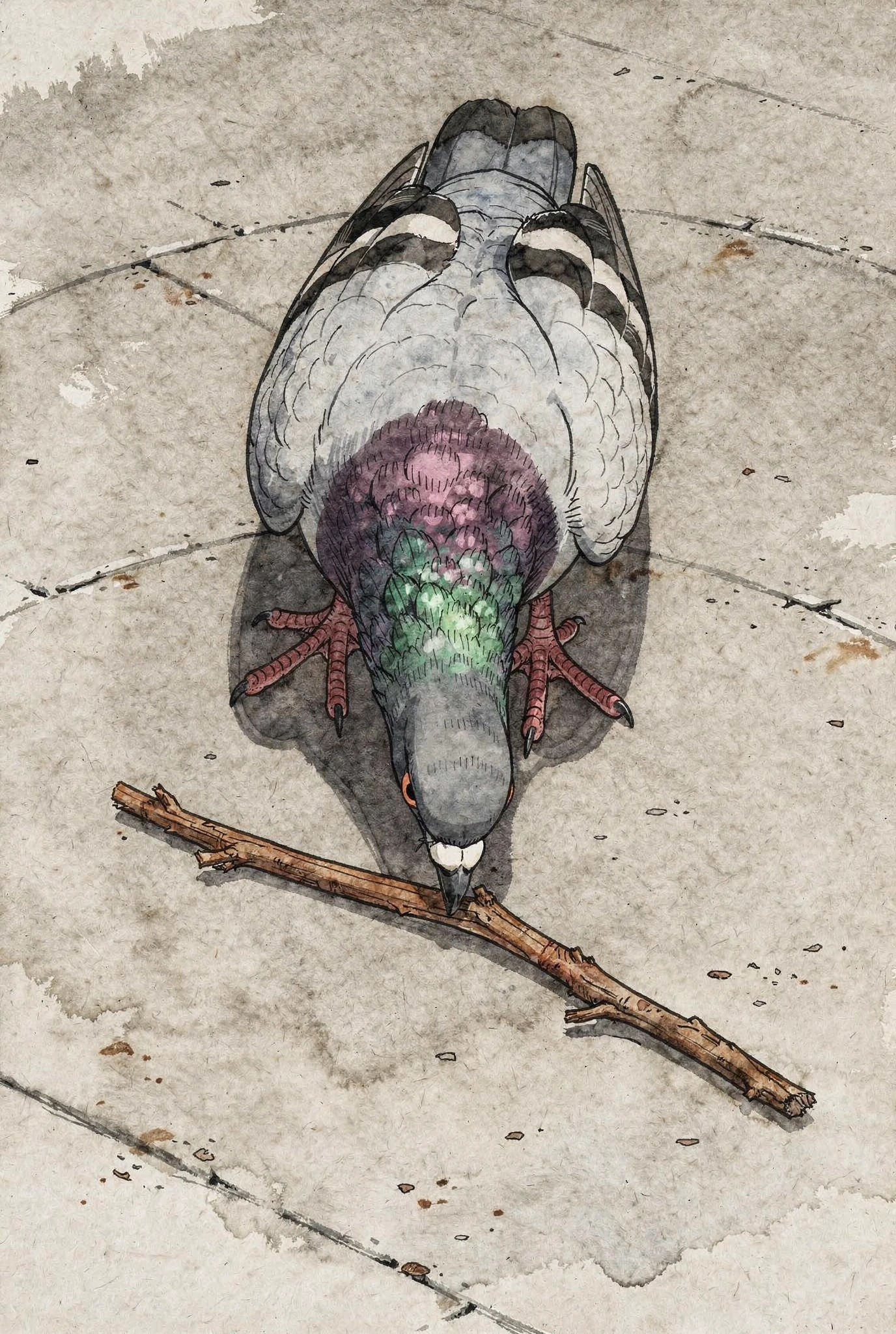
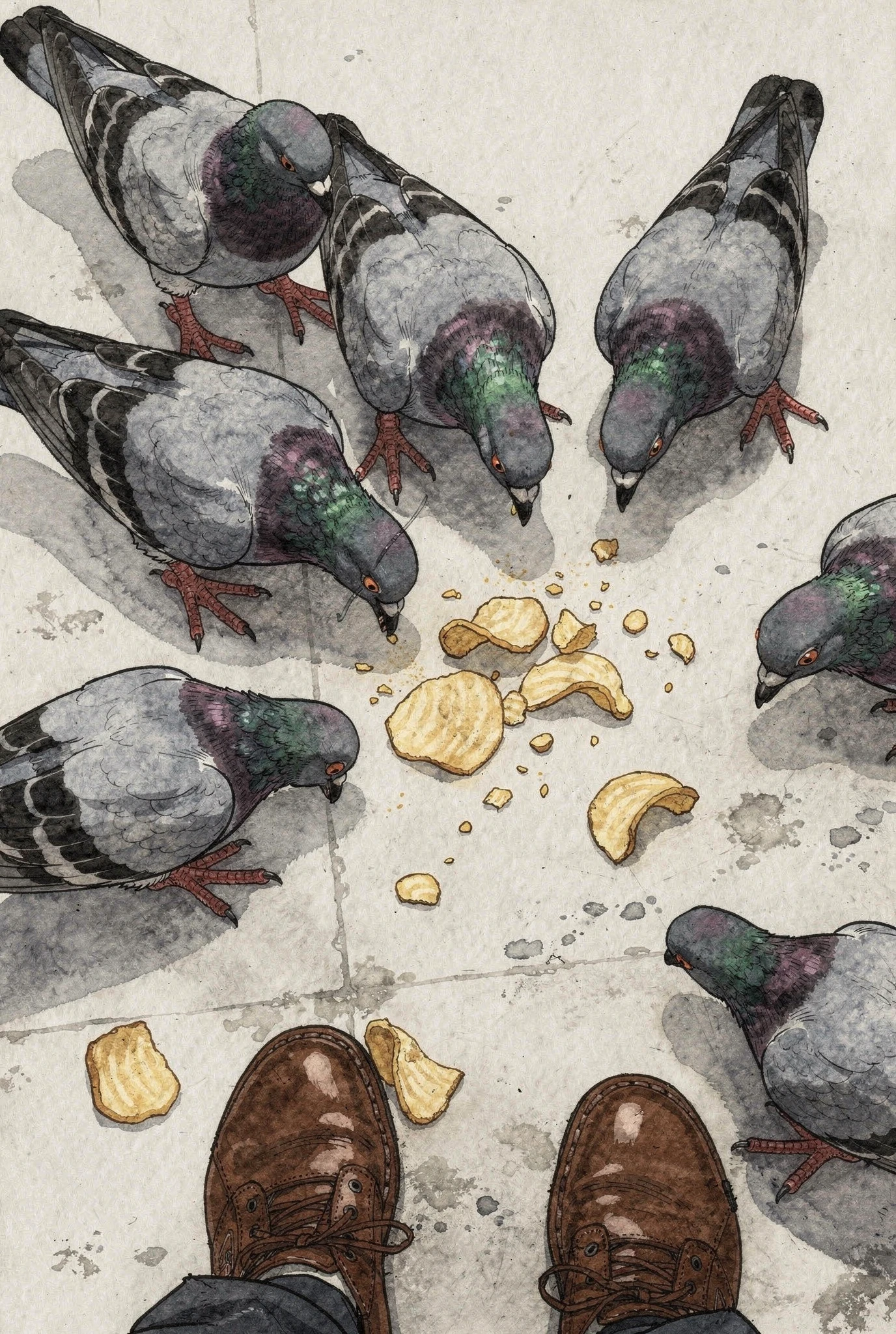
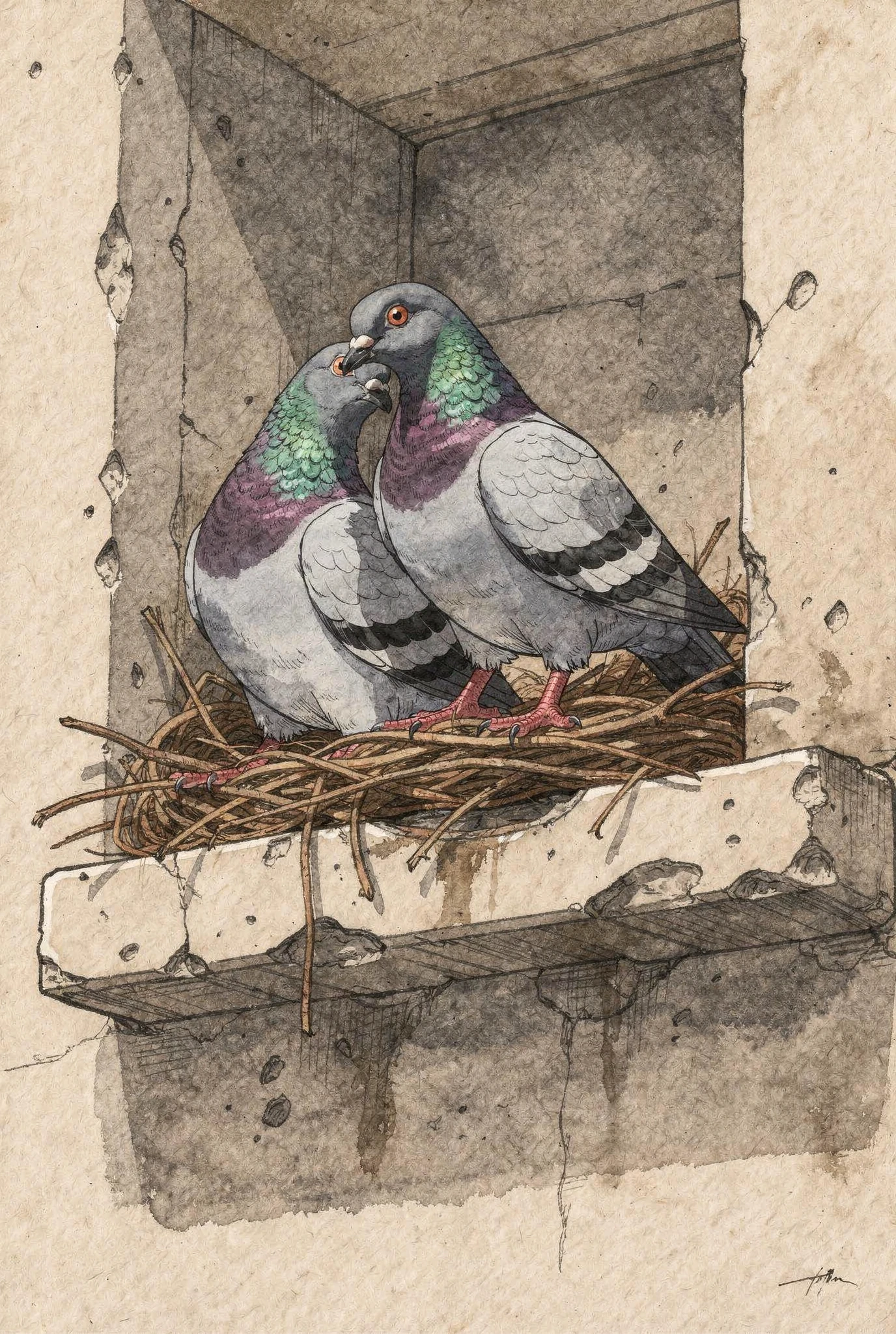
Pigeon is a synthographic drawing project built around a single recurring urban bird, held consistent across a sequence of images while posture, setting, and circumstance shift around him. Working in a restrained ink-and-wash language with lightly suggested environments, the series takes one of the city's most familiar and disregarded creatures and gives him continuity, presence, and a kind of fictional life. The pigeon is not a cartoon or caricature, but a street-level intelligence: alert, persistent, self-possessed, slightly insolent, and entirely at home in the spaces people overlook. Pavement, railing, ledge, kerb, puddle, wall: the world around him remains partial and incomplete, enough to place him without ever overwhelming him. What matters is that he returns, and that each return strengthens the sense that this is the same bird moving through the same city under changing conditions.
Feral pigeons are ordinary only at a distance. Up close, they are unexpectedly beautiful: green and violet iridescence at the neck, pale ash wings marked with dark bars, bright orange eyes, pink-red feet, and the compact authority of a creature shaped by weather, competition, routine, and public life. They live among us without ceremony, feeding, waiting, watching, scattering, regrouping, claiming small territories, and returning again to familiar ground. That combination of visibility and disregard makes the pigeon an ideal subject. He is common but not simple, urban but not fully assimilated, social yet stubbornly self-interested. Here, those qualities become the basis for character. Through repetition, a bird most people barely register begins to acquire mood, personality, and identity.
At the same time, Pigeon is also about what happens to drawing under artificial intelligence. What would once have demanded hours of labour can now be directed, stabilised, varied, and refined at speed. The point, however, is not efficiency for its own sake, but the attempt to use technology in pursuit of comparable results. Generative AI is not a replacement for traditional illustration, or any other artistic medium. It is not a pencil, a brush, or a camera, but it is a tool nonetheless. What AI offers is another way of making pictures, and another way of thinking about what illustration can be. You may never achieve the same level of precision or accuracy with AI as you would with drawing by hand, but with time, patience, careful prompting, and a little luck, perhaps those things are not so far out of reach. If you can sense the potential, then the project is a success. If not, perhaps I should sharpen my tools.
Gallery
"I don't understand why people would want to get rid of pigeons. They don't bother no one." — Mike Tyson