Pictoria: coded masculinity
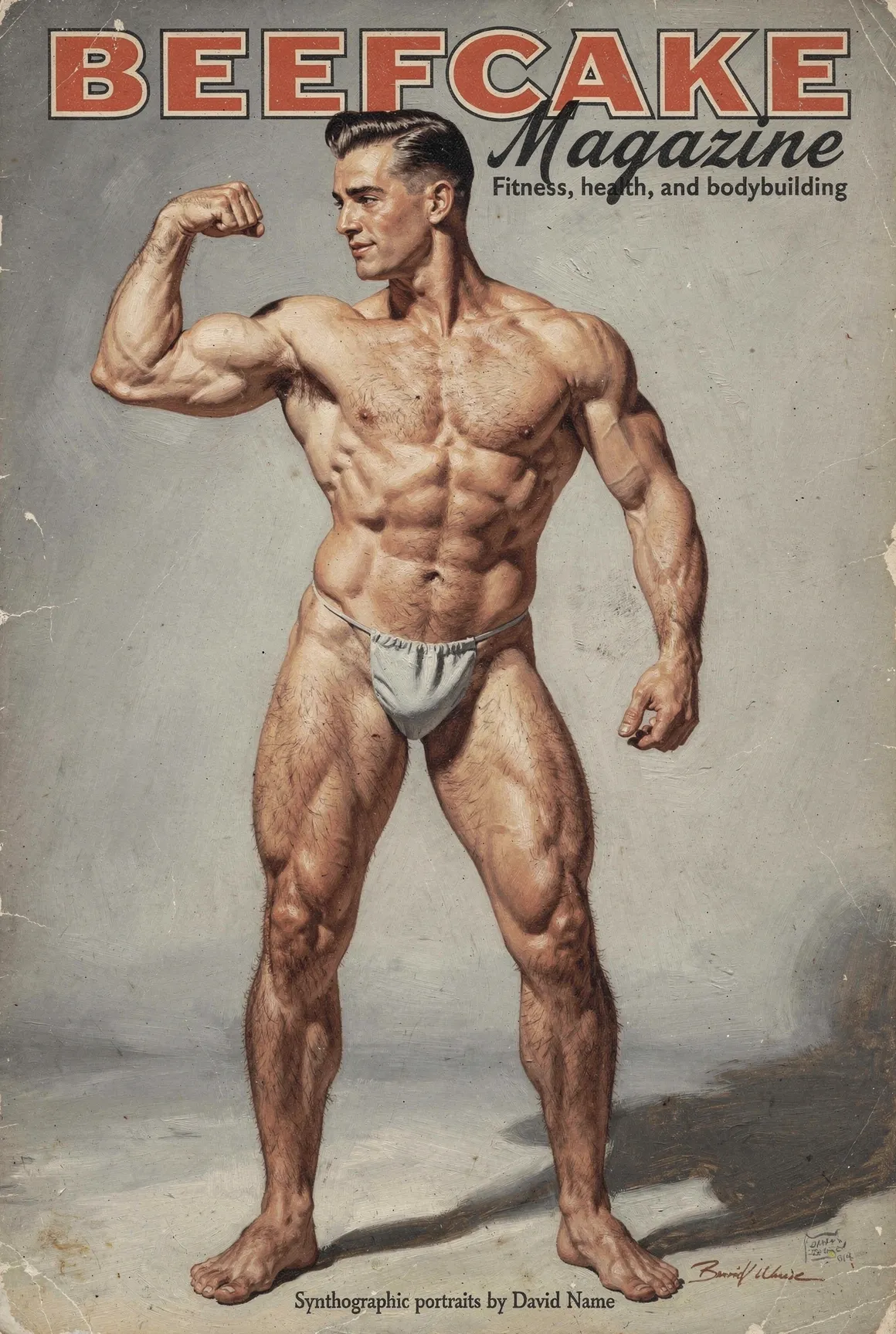
This project draws its lineage from the mid-twentieth-century world of physique magazines, publications that operated at the edge of legality and visibility. These magazines were devoted to physique photography — that is, photographs of muscular "beefcake" men — typically young and attractive — in athletic poses. During their heyday in North America in the 1950s to 1960s, they were presented as magazines dedicated to fitness, health, and bodybuilding, and were widely consumed by a mostly-gay audience. Handsome, virile men appeared in minimal clothing — posing pouches, briefs, G-strings — in order to focus attention on the body. In a period shaped by censorship and repression, such photographs became an act of resistance, and the male body served as both signal and message.
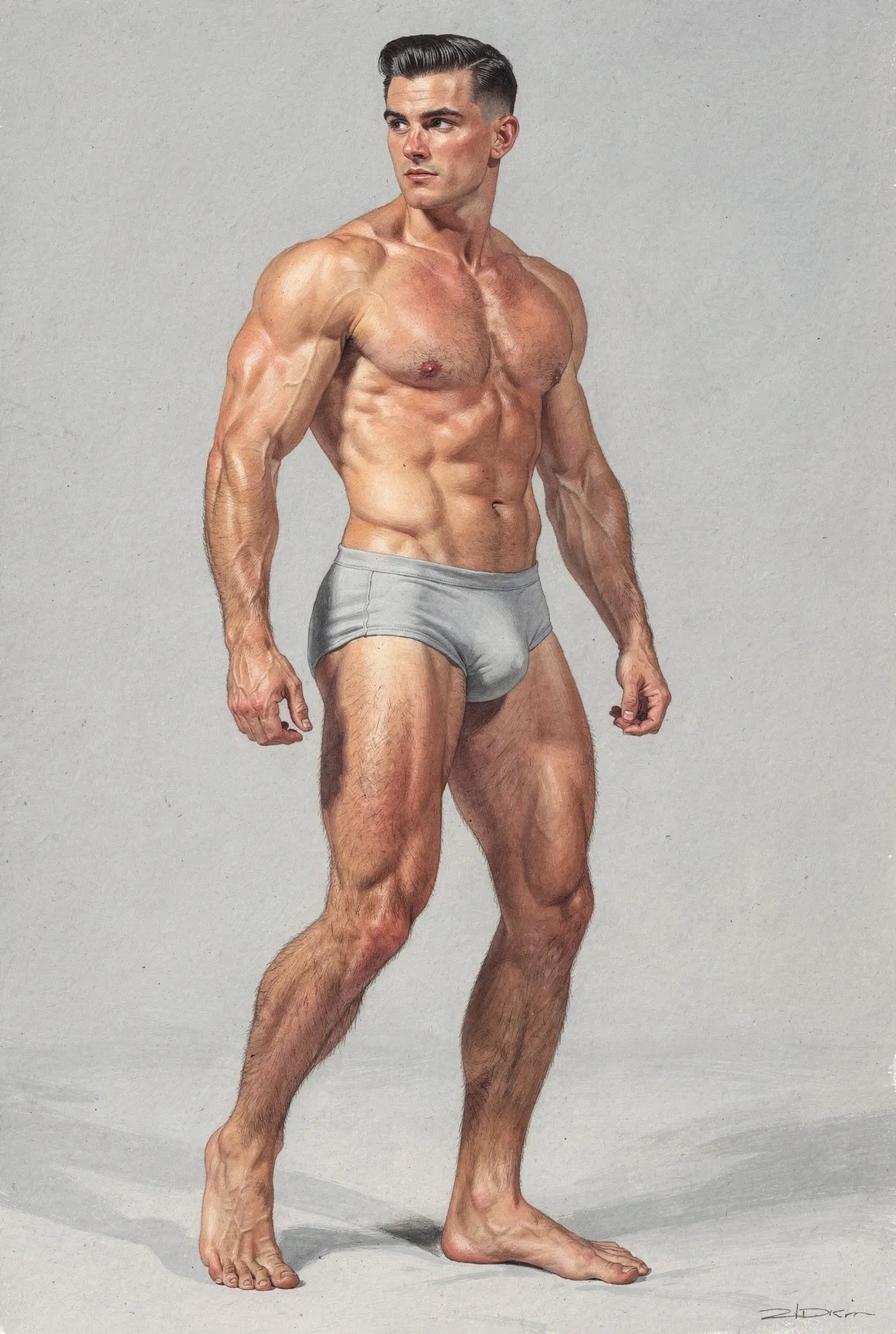
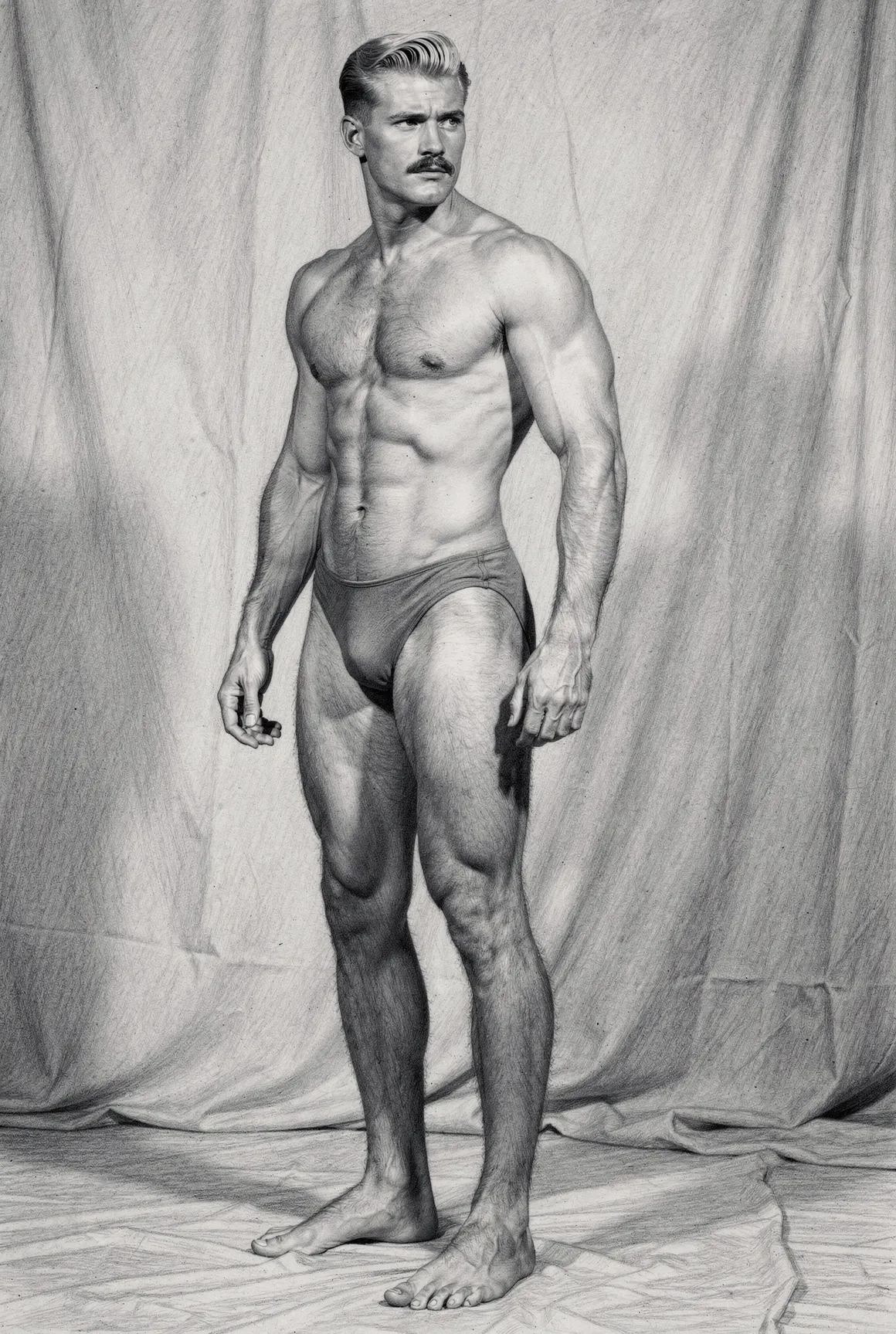
Bob Mizer's Physique Pictorial stands at the centre of this tradition. Its figures are athletic, composed, and often arranged in contrapposto or classical twists that recall sculpture as much as sport. The emphasis was not flamboyance but restraint: clean backgrounds, controlled lighting, and poses that presented the body as evidence rather than spectacle. Alongside photography, illustration played a parallel role in shaping gay visual culture. Artists such as George Quaintance refined the male form into an idealised, almost pastoral vision of masculinity, while Tom of Finland pushed the drawn body toward erotic insistence and graphic clarity. Pencil and paint allowed desire to move beyond documentation into projection, exaggeration, and fantasy, filling gaps where photography could not safely go.
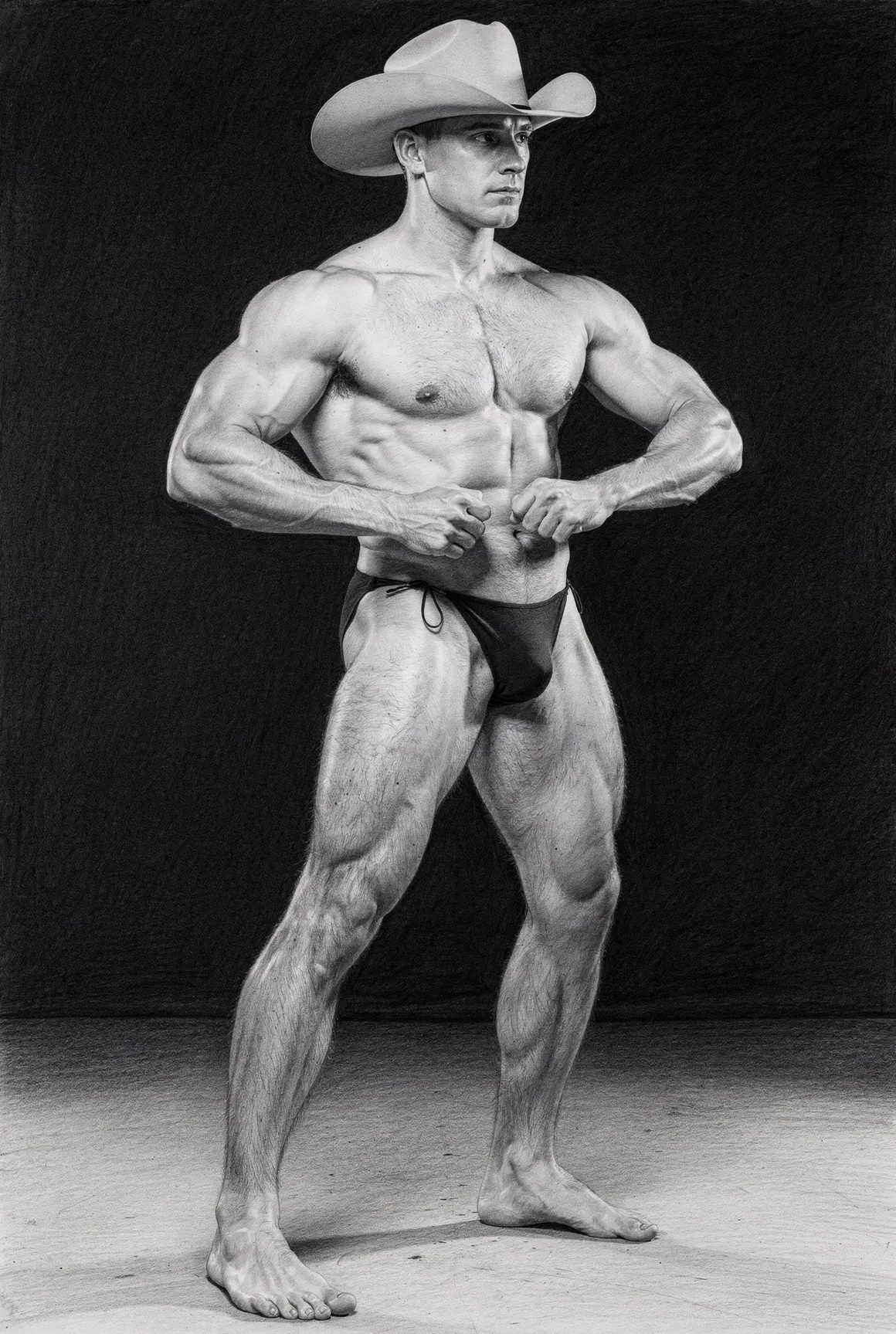
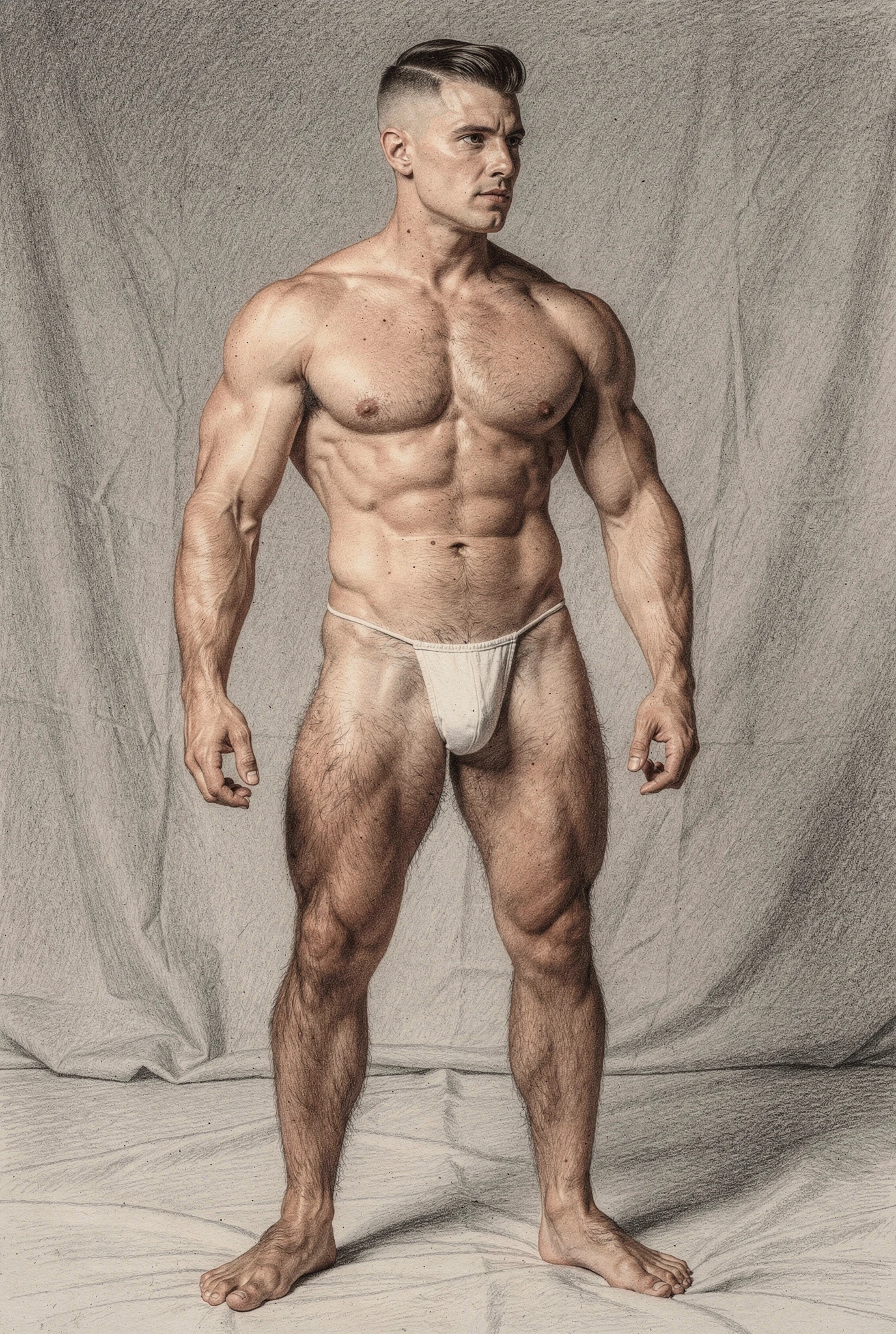
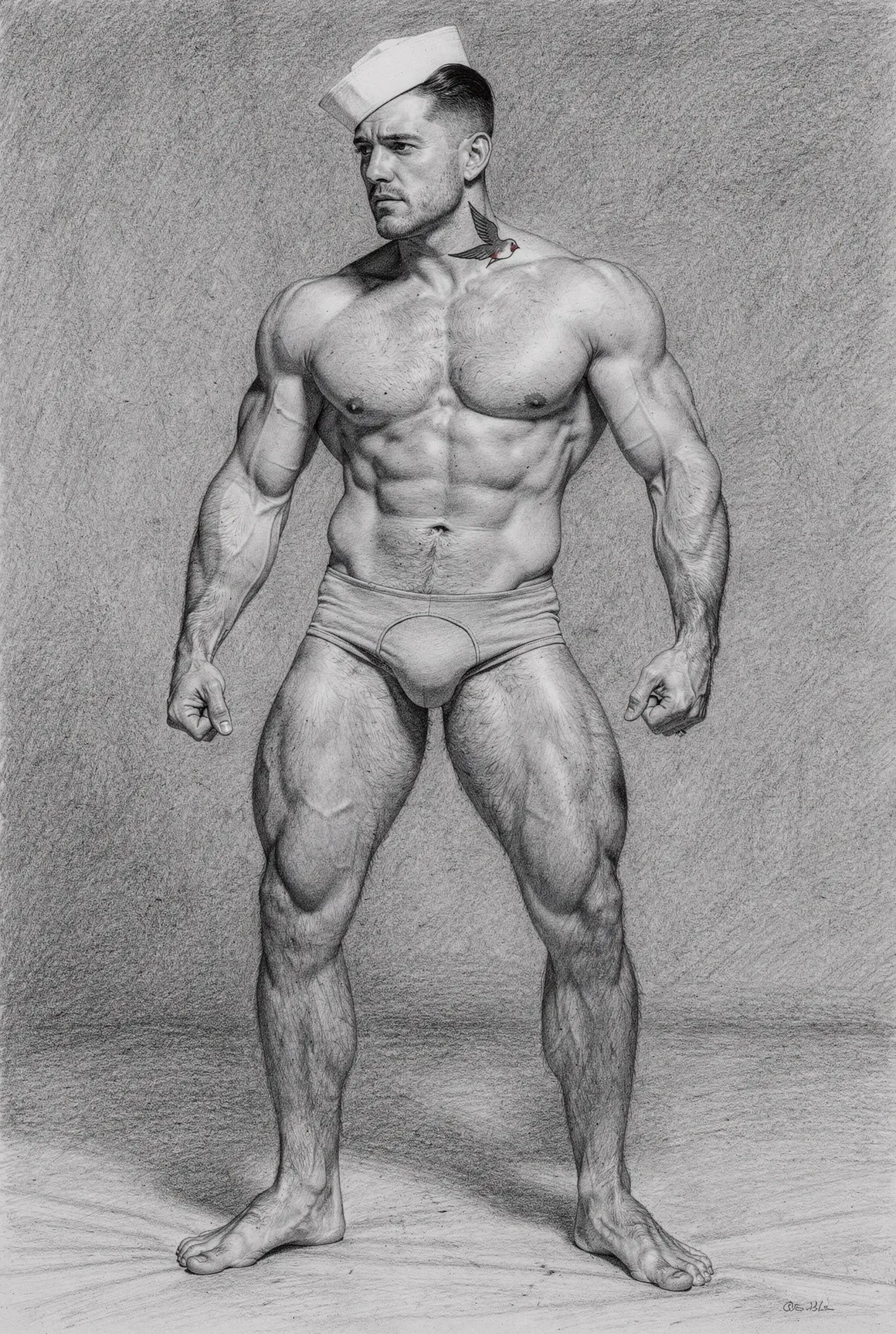
Running through Pictoria is a dialogue between these histories and the later precision of Robert Mapplethorpe. Where Mizer encoded desire to evade scrutiny, Mapplethorpe exposed it with formal exactness, transforming flesh into object and statement. Pictoria occupies the space between these approaches. Photographic images behave like polished gelatin-silver prints — controlled, tonal, and exact — while gouache, oil, and pencil studies introduce a second register, one of idealisation. Together they reflect how masculinity and desire have long been constructed across different eras and mediums. Using contemporary generative tools, the project does not imitate these histories but re-reads them, exploring how men and their bodies can be presented in the age of artificial intelligence.
Gallery
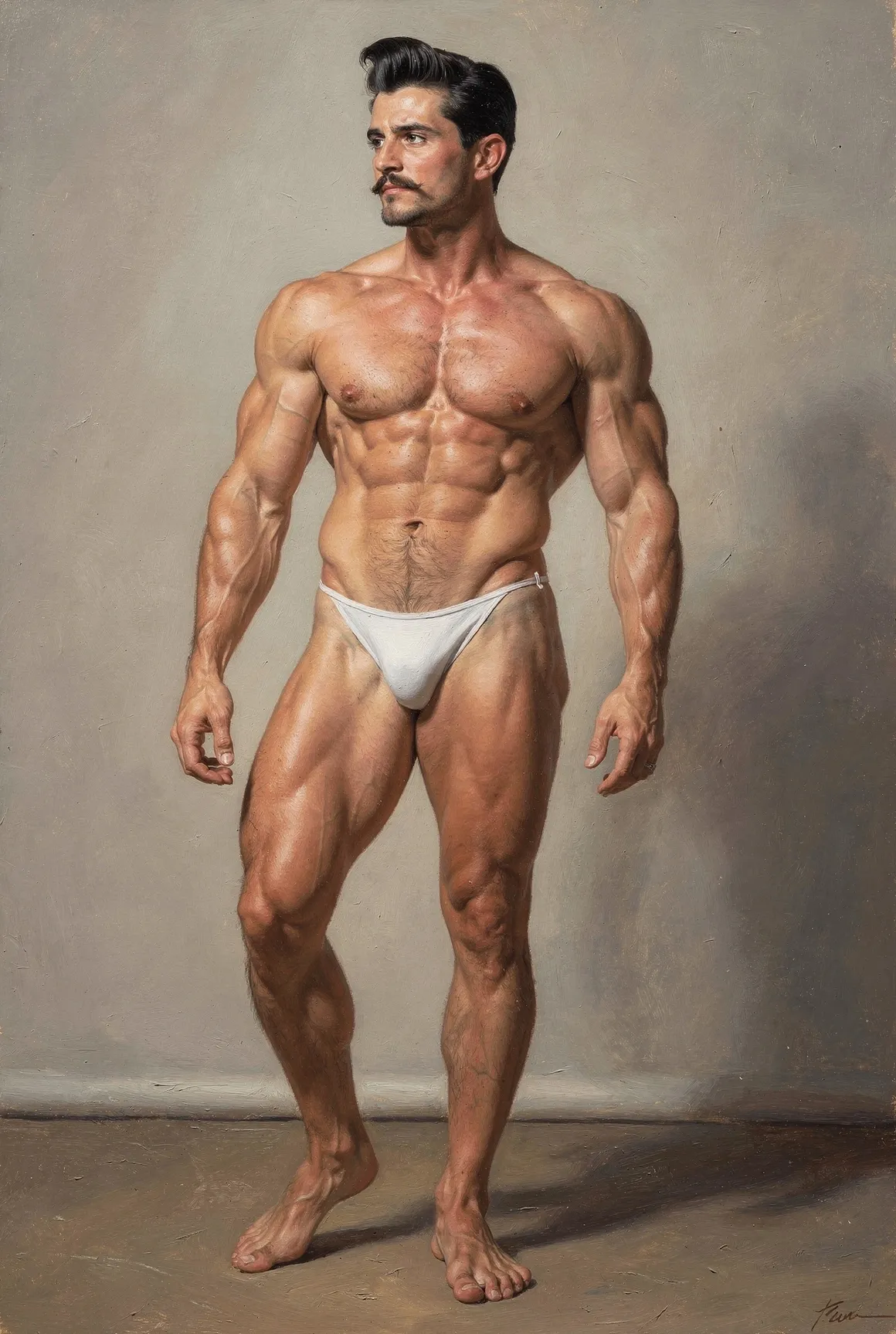
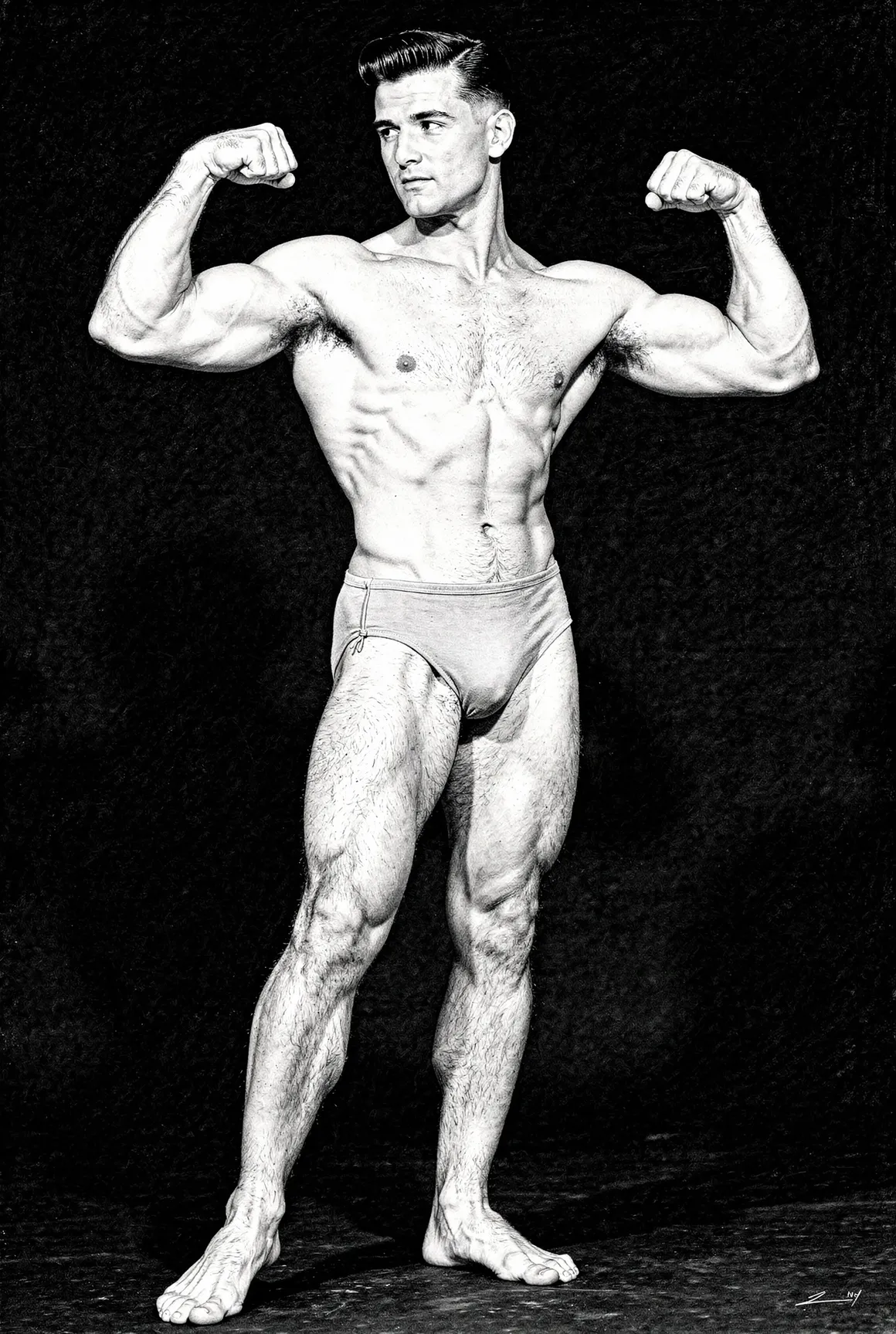
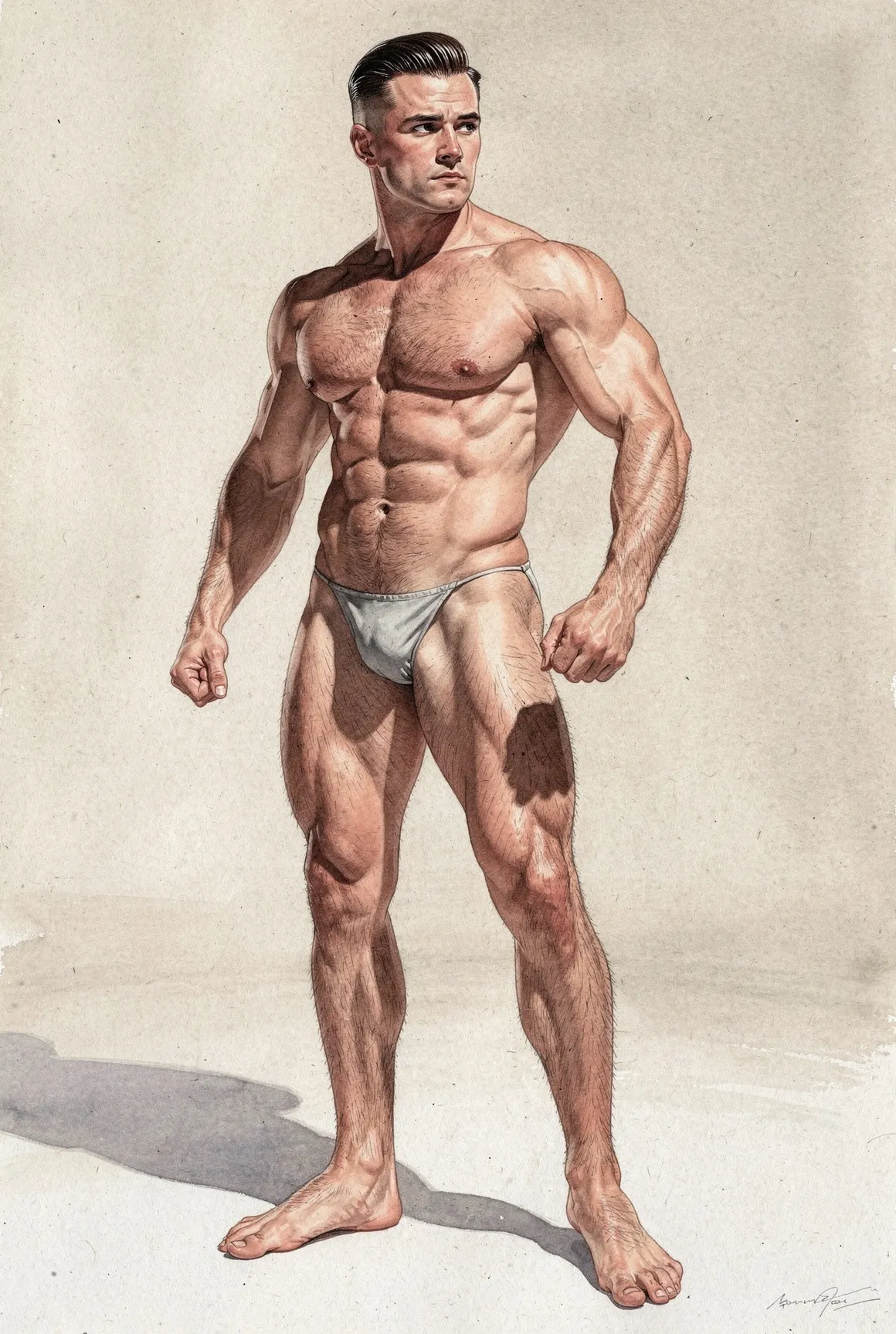
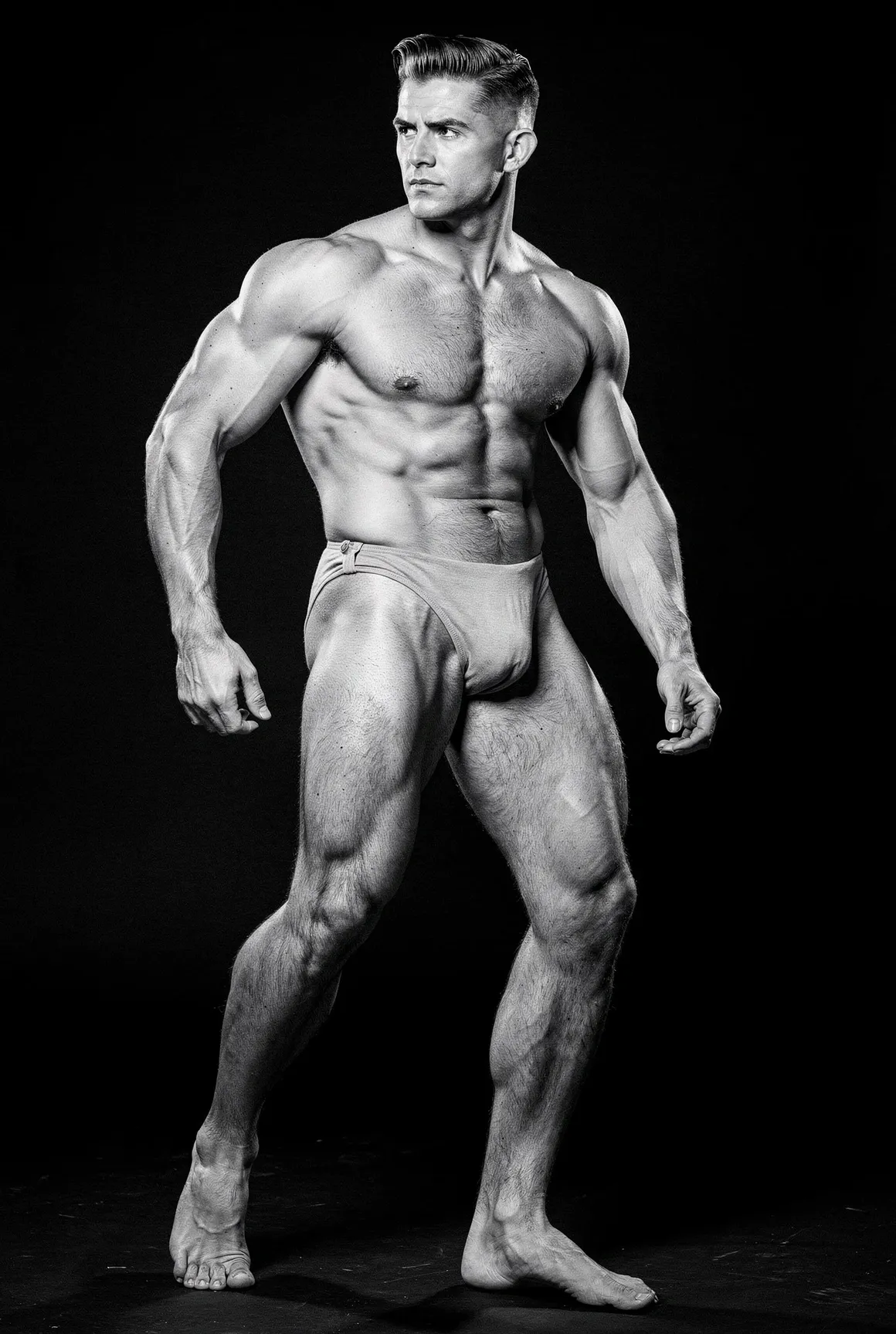
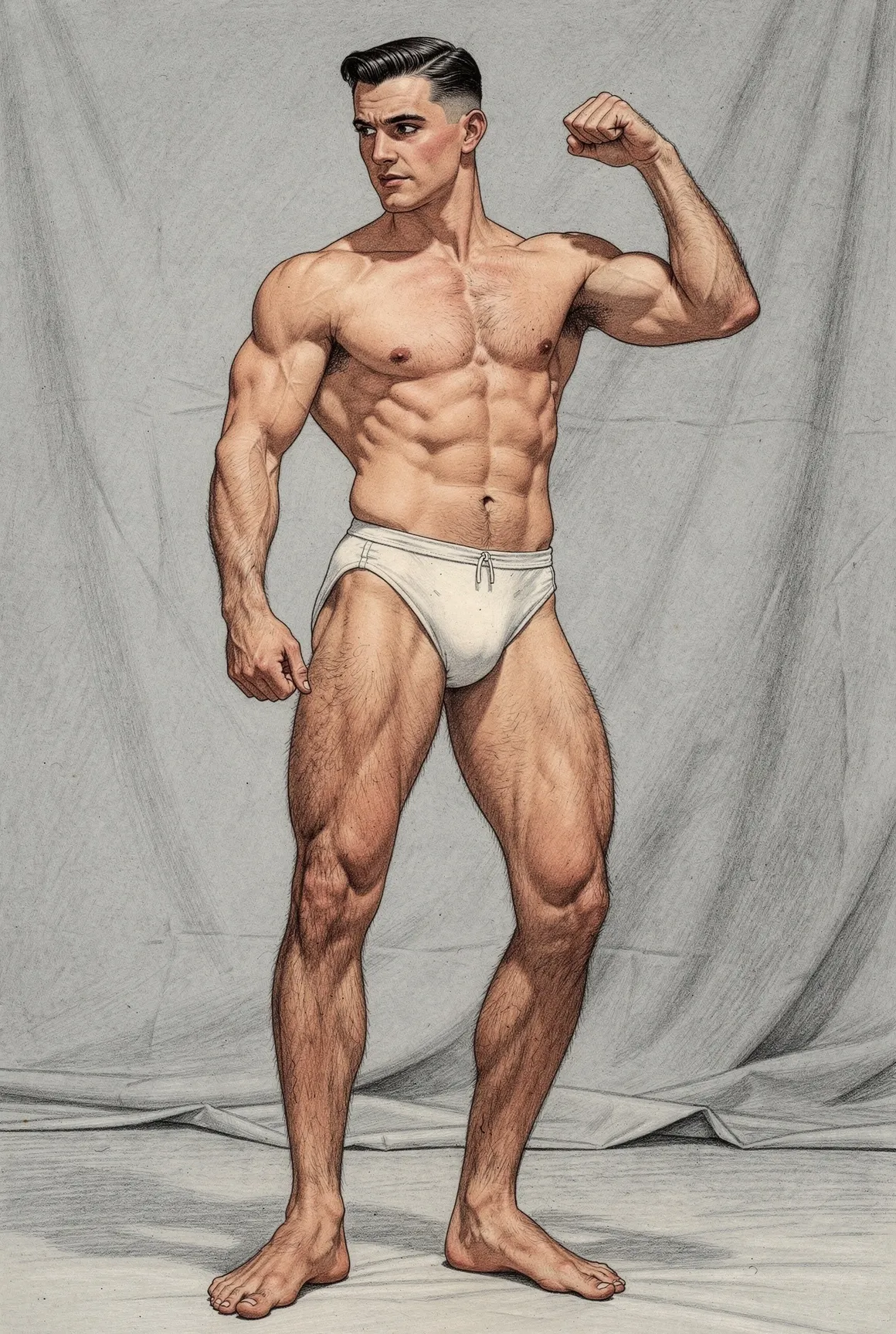
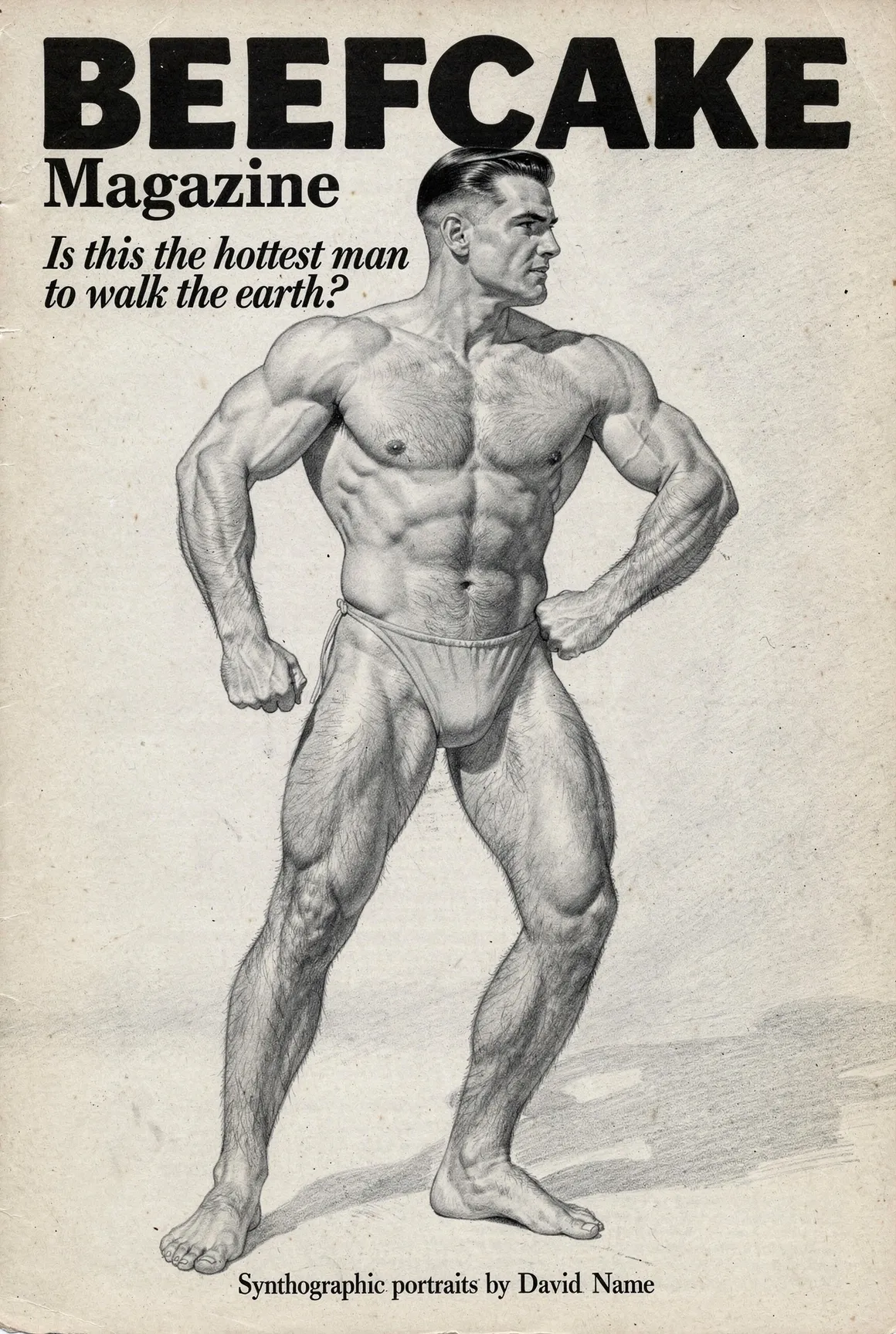
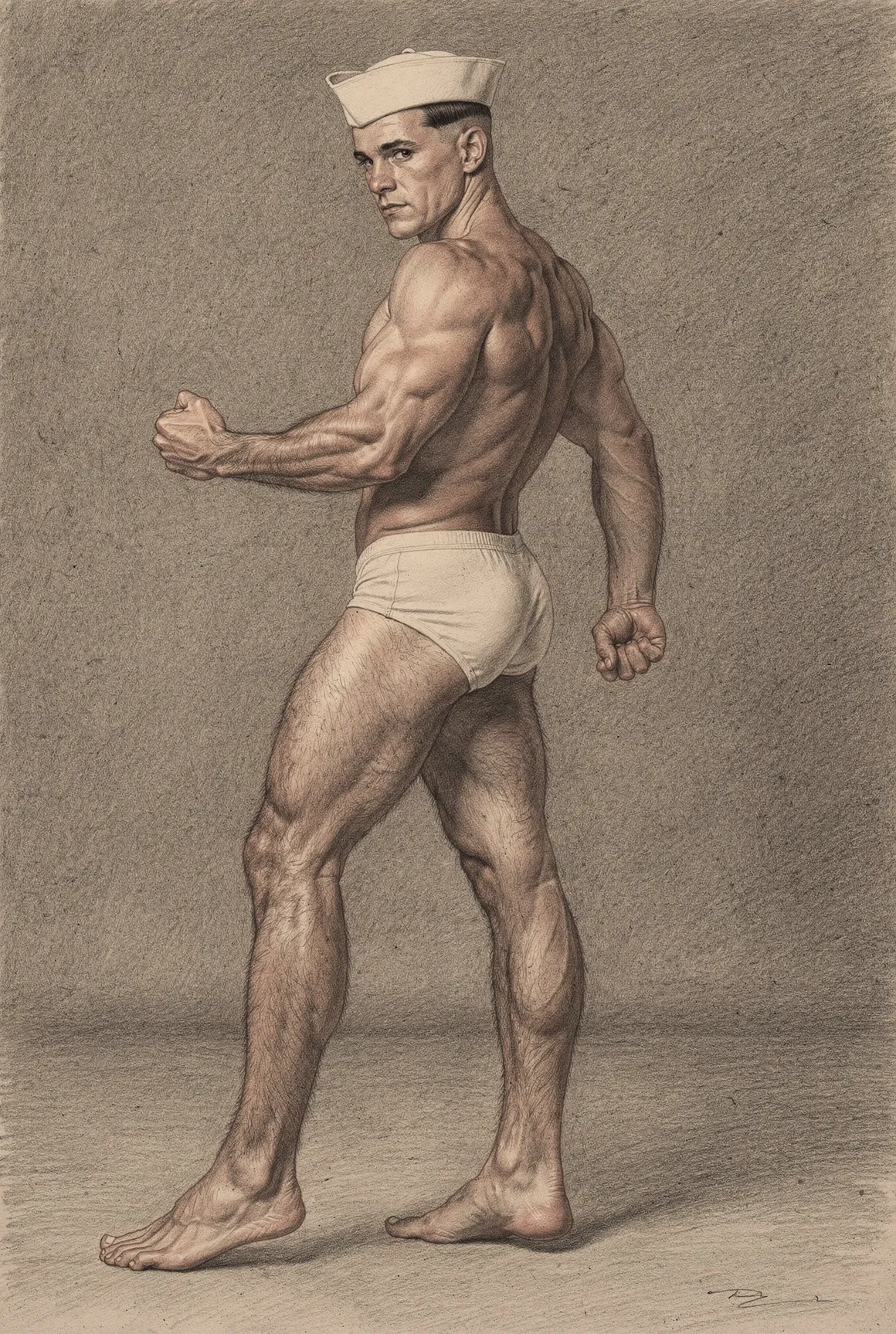
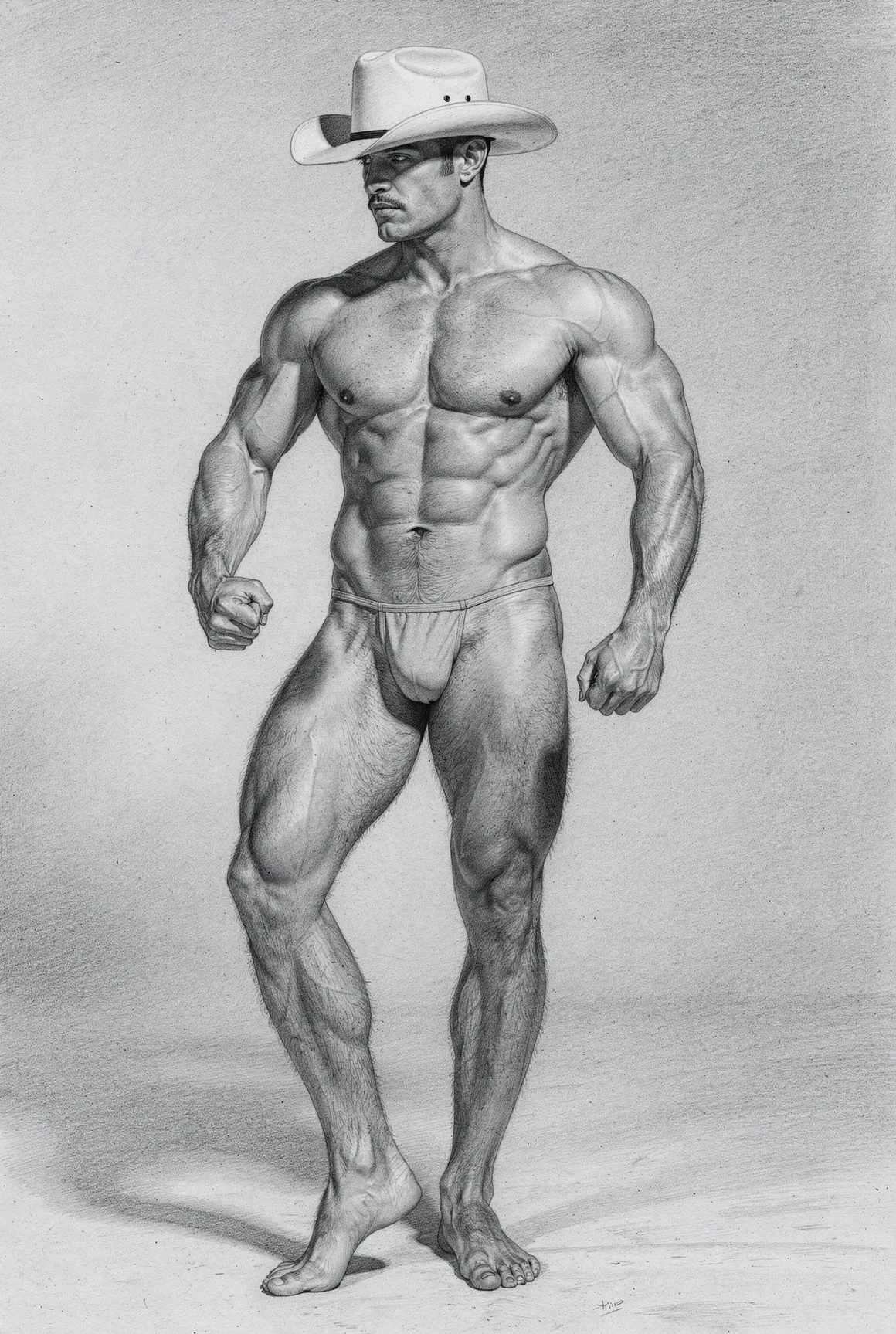
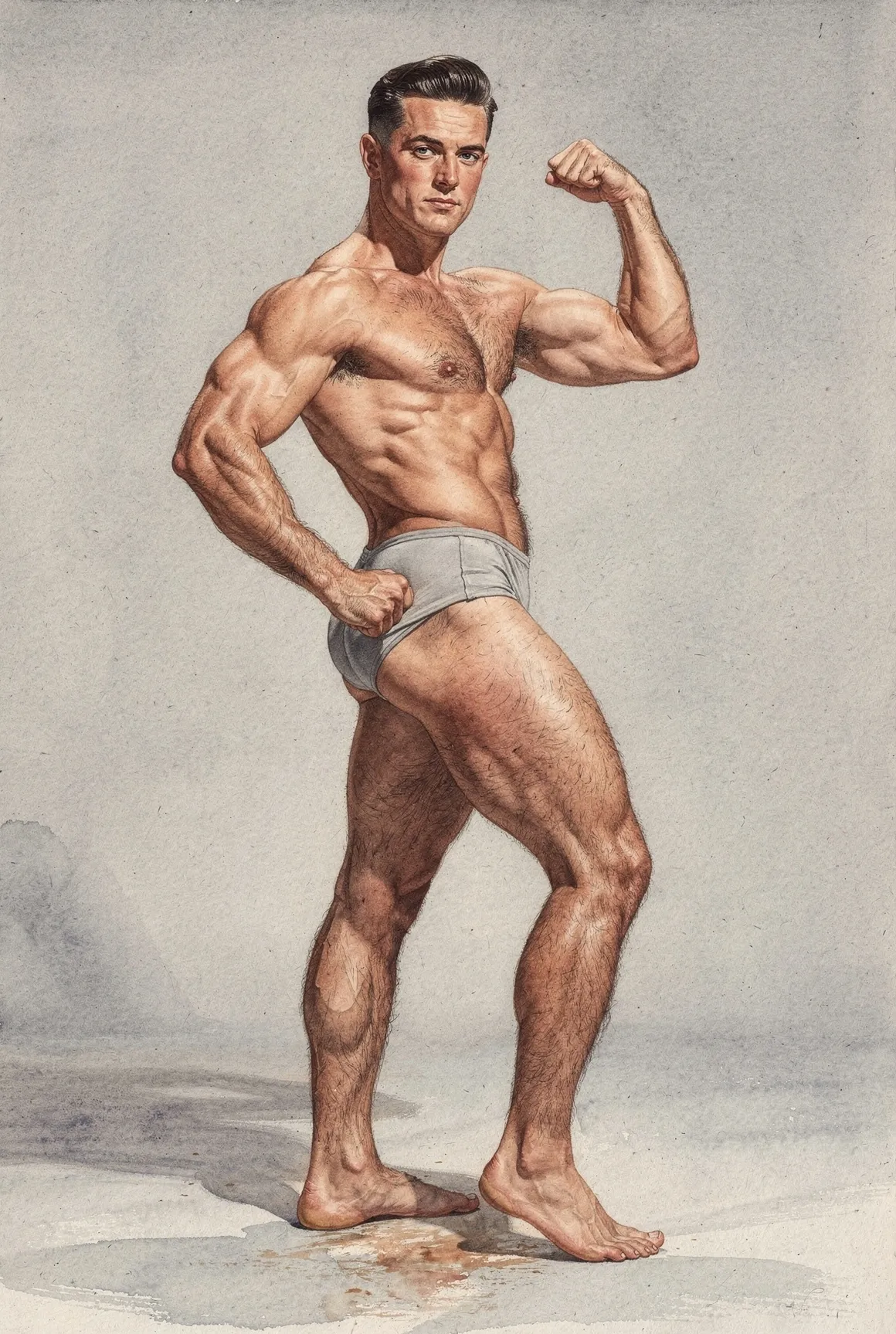
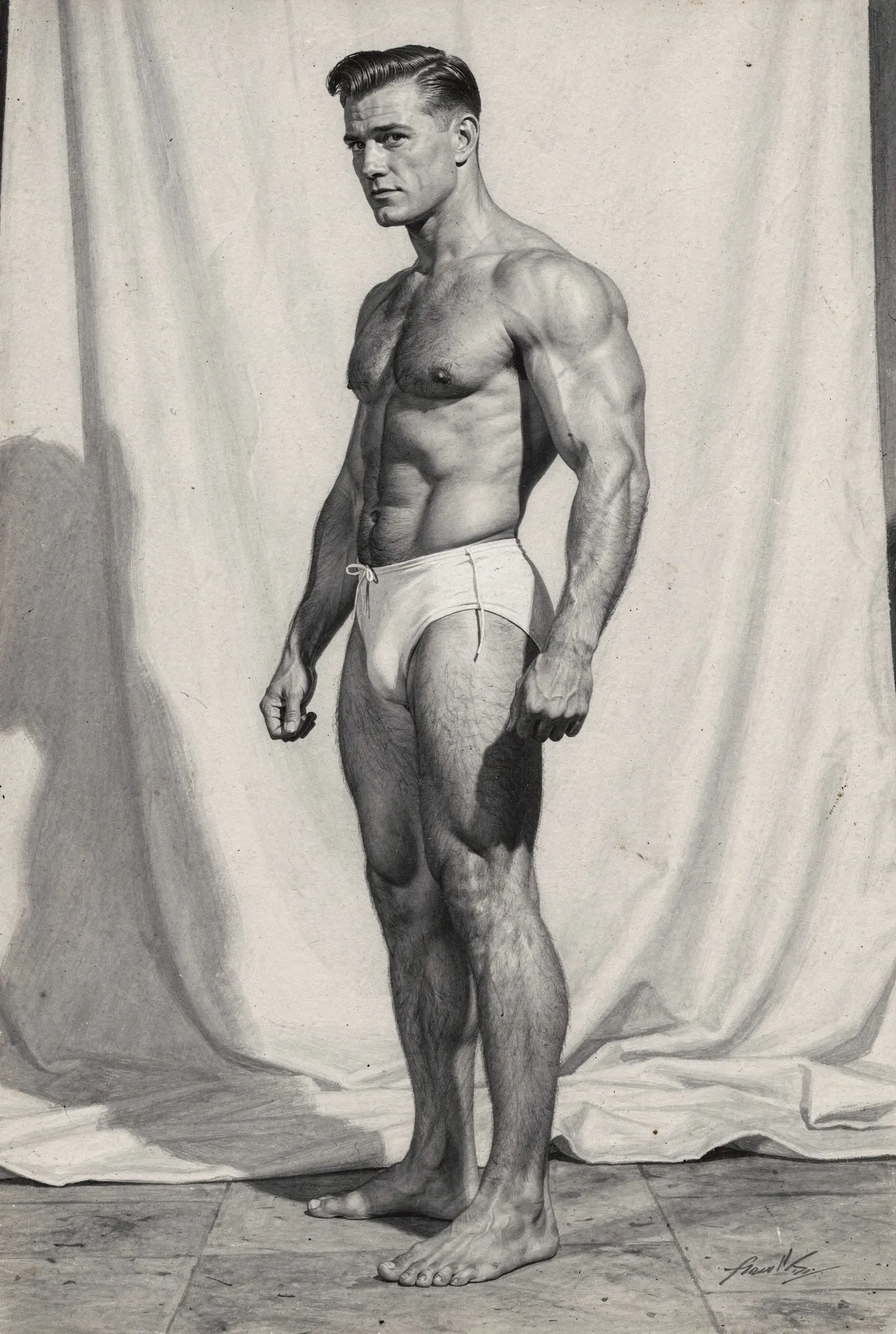
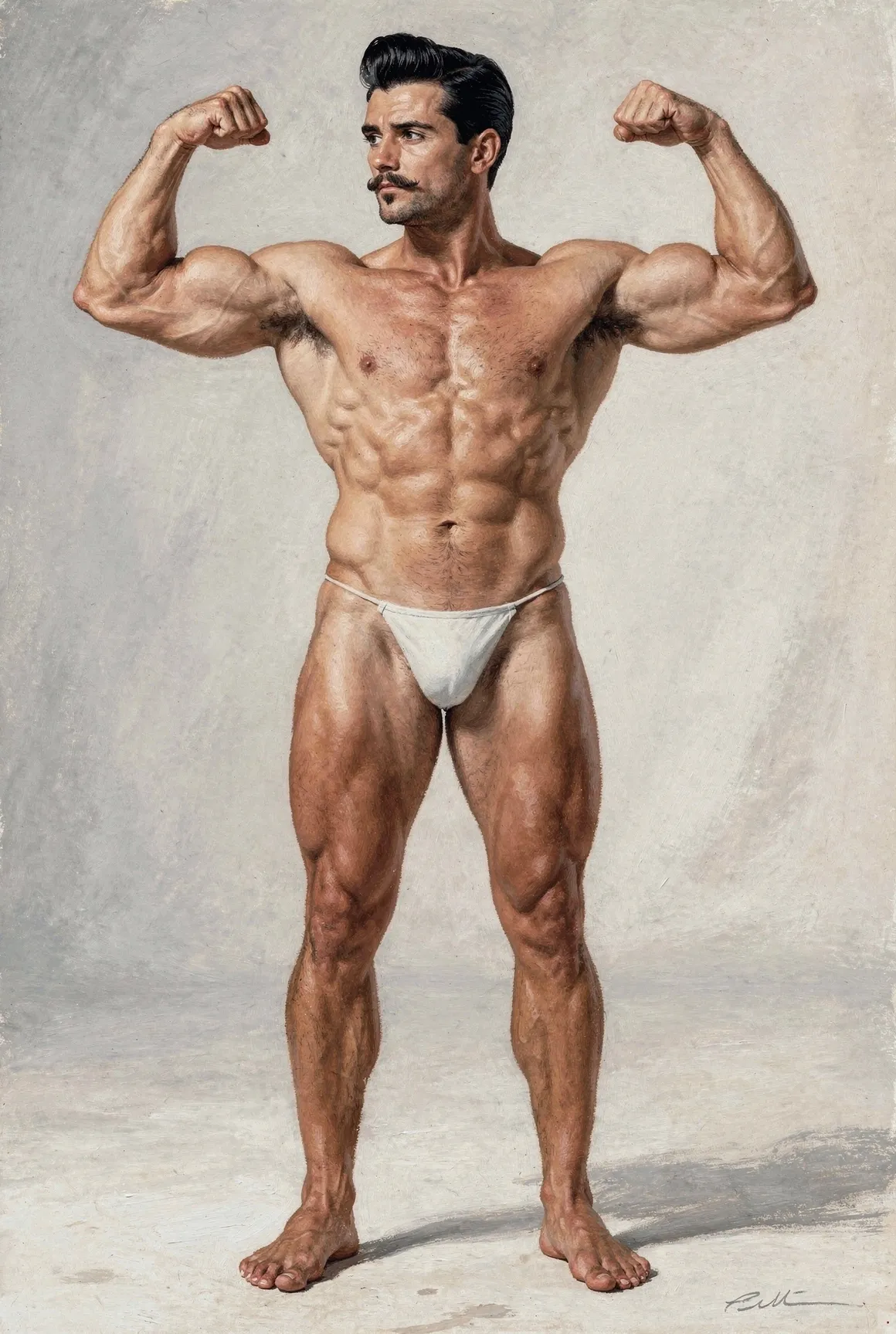
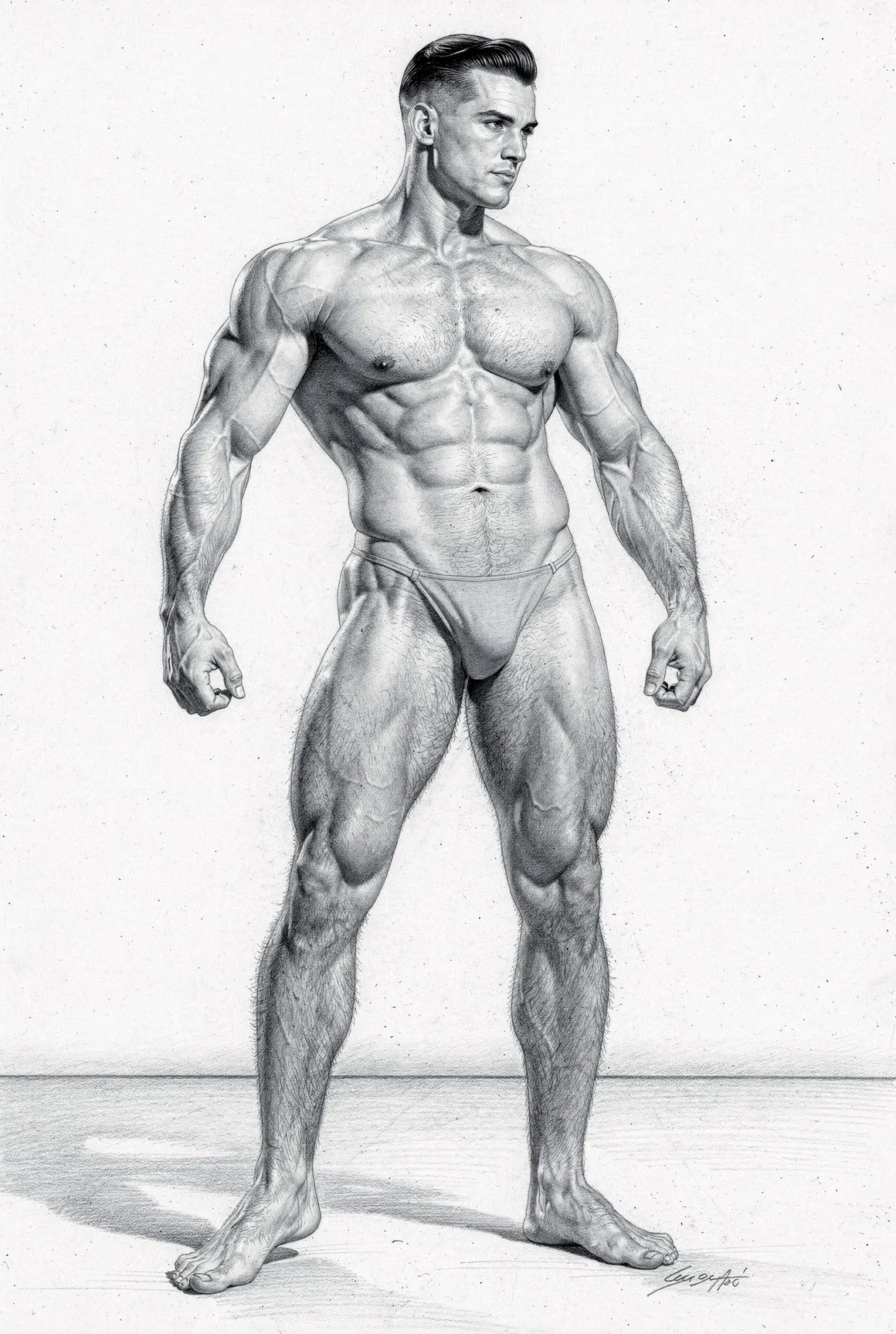
"If you channel it right, there's more energy in sex than there is in art." — Robert Mapplethorpe