ICONS: synthographic male archetypes
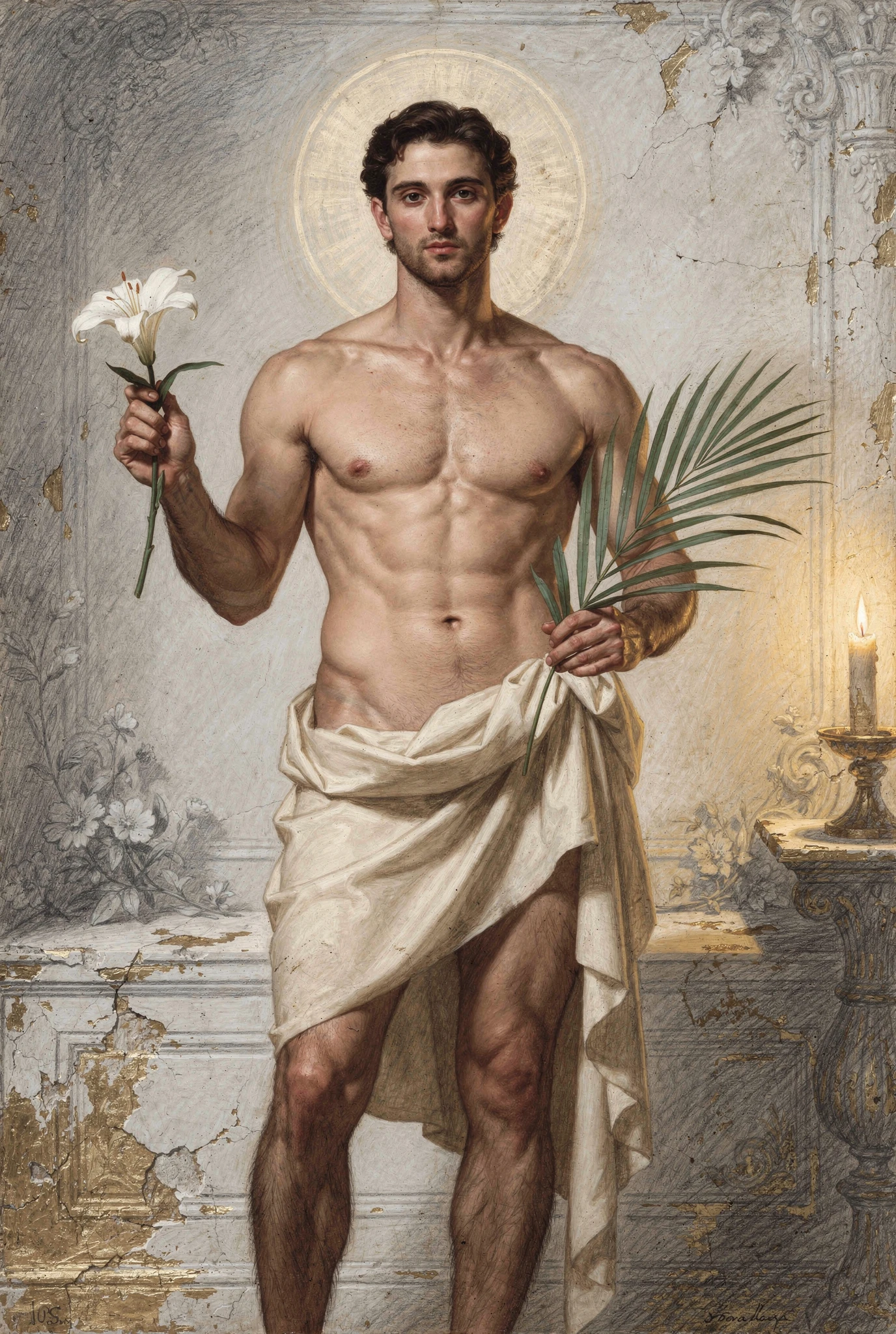
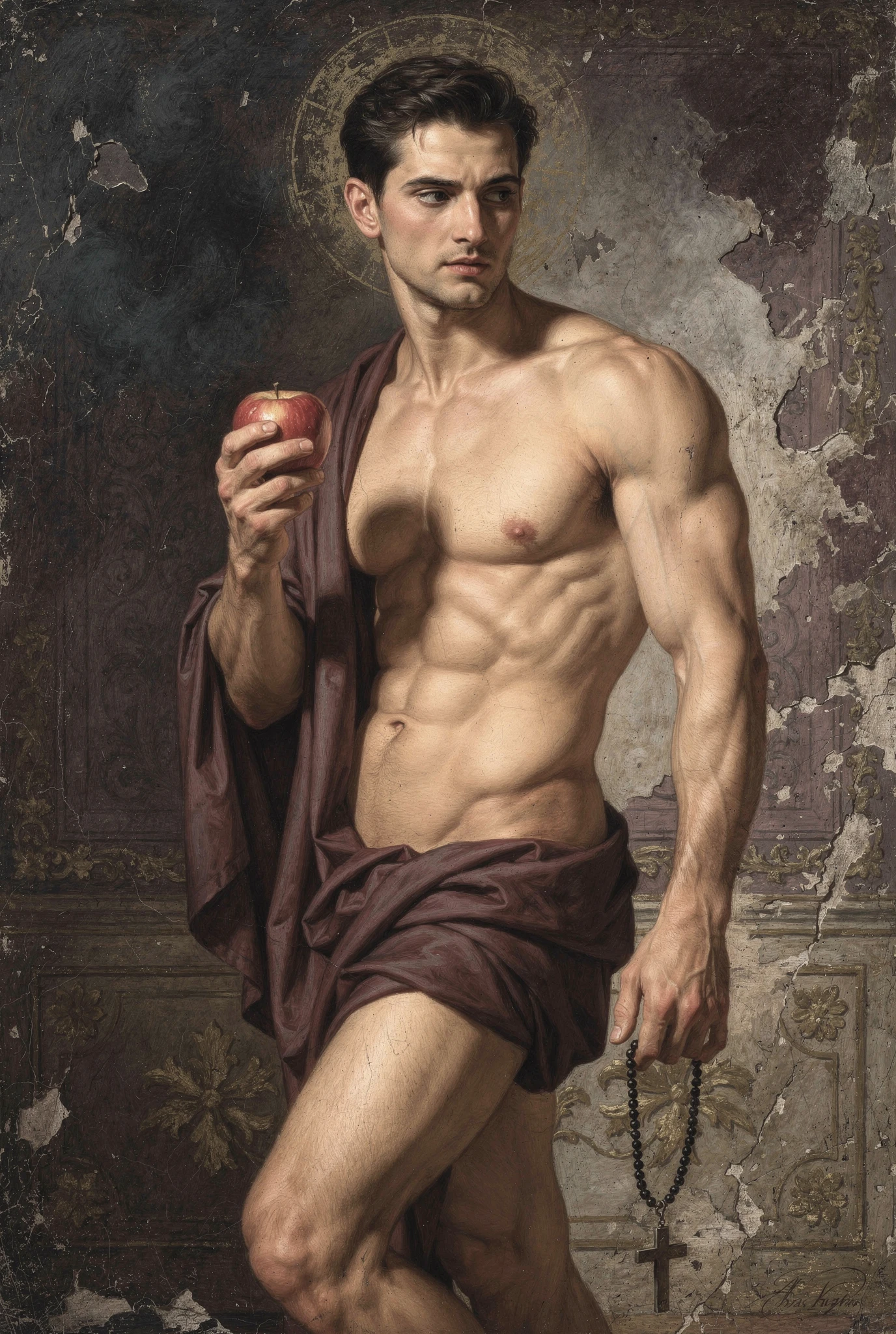
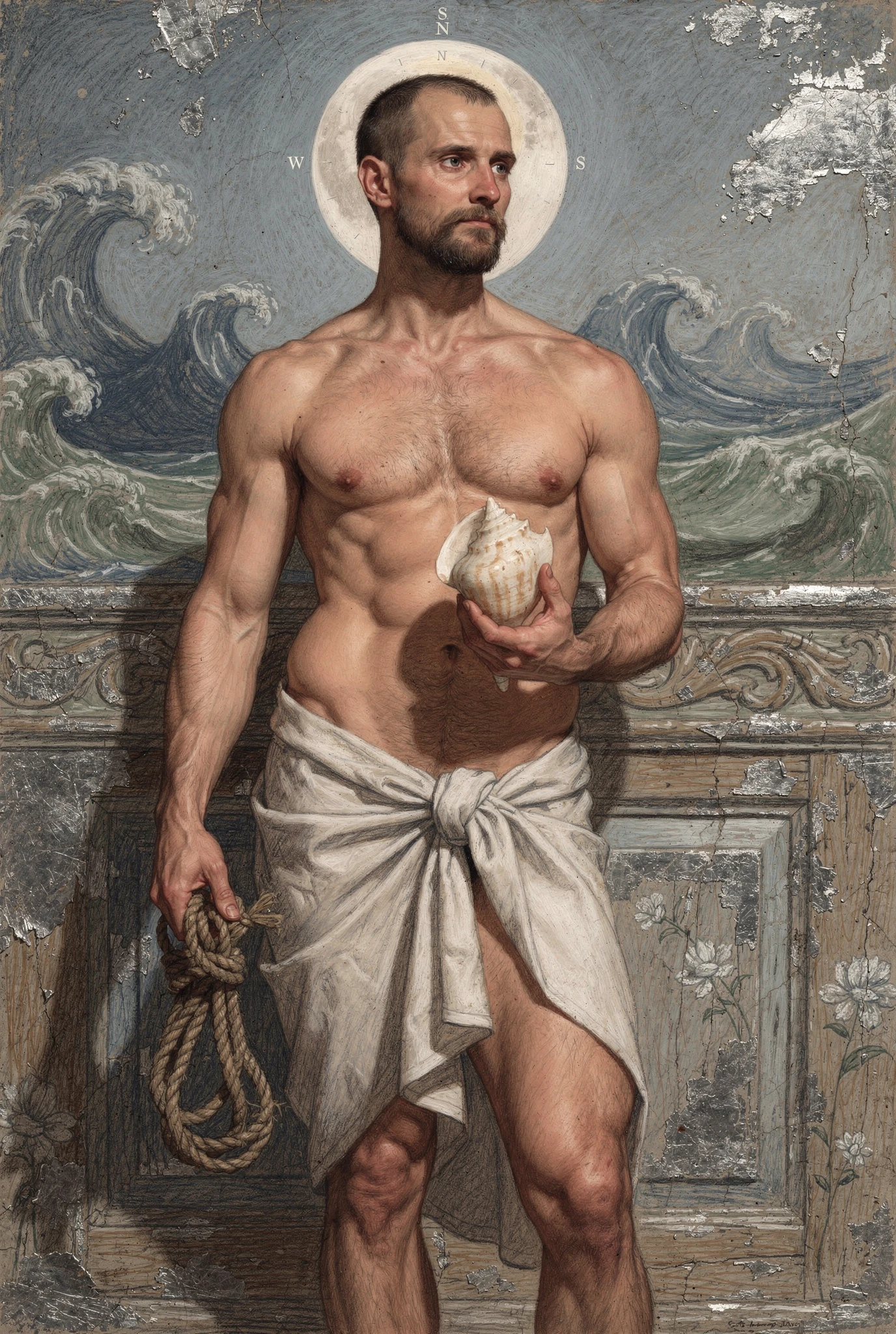
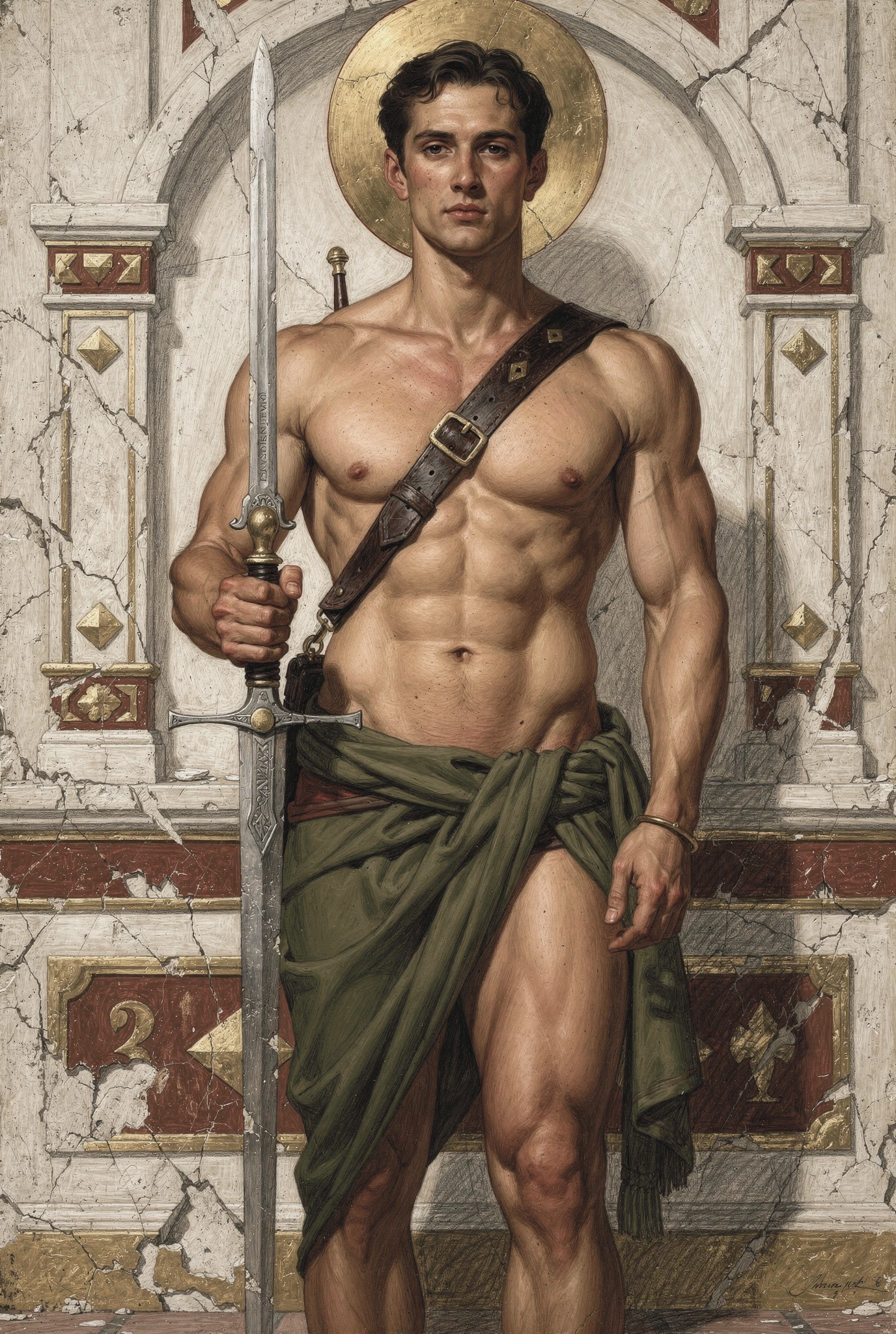
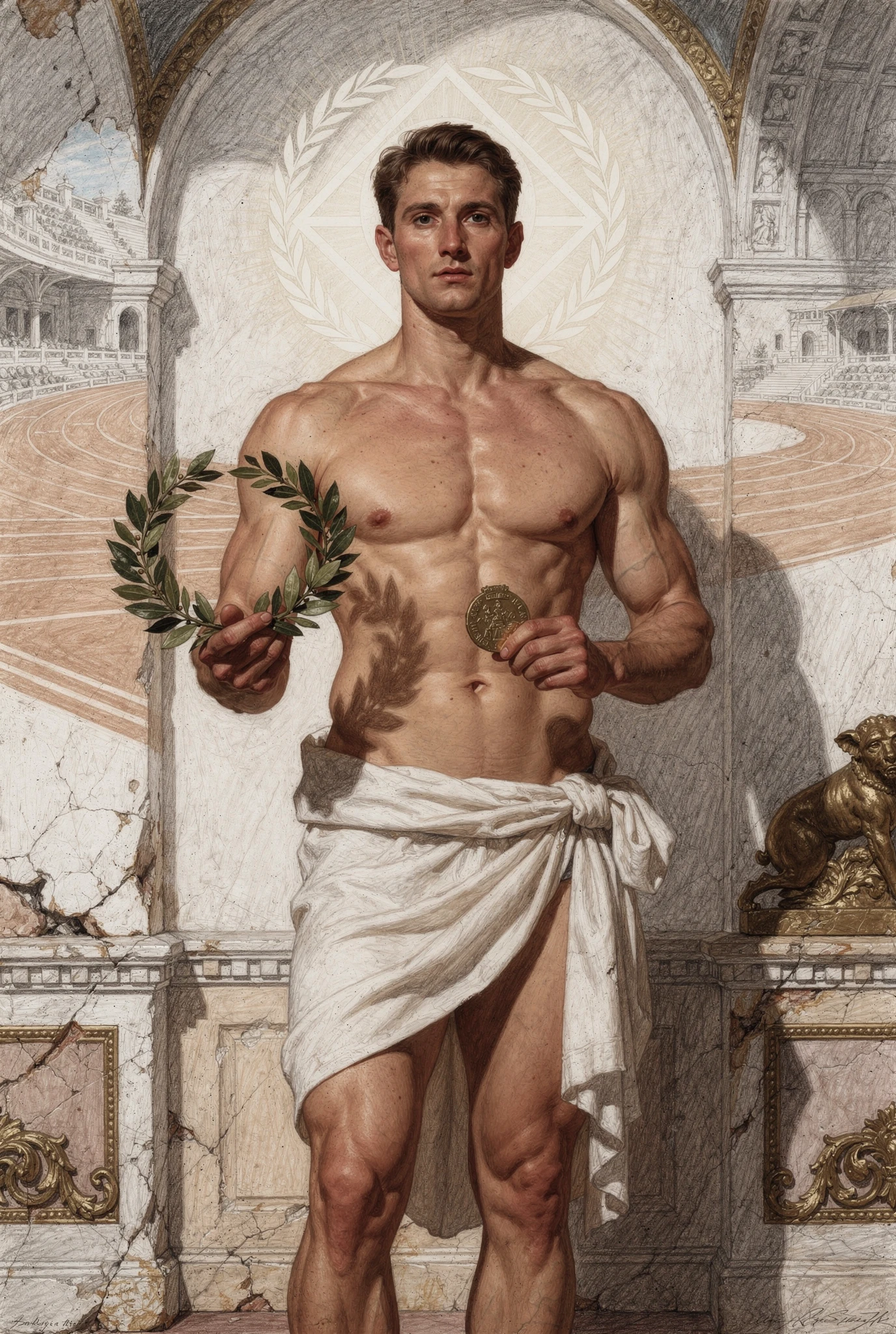
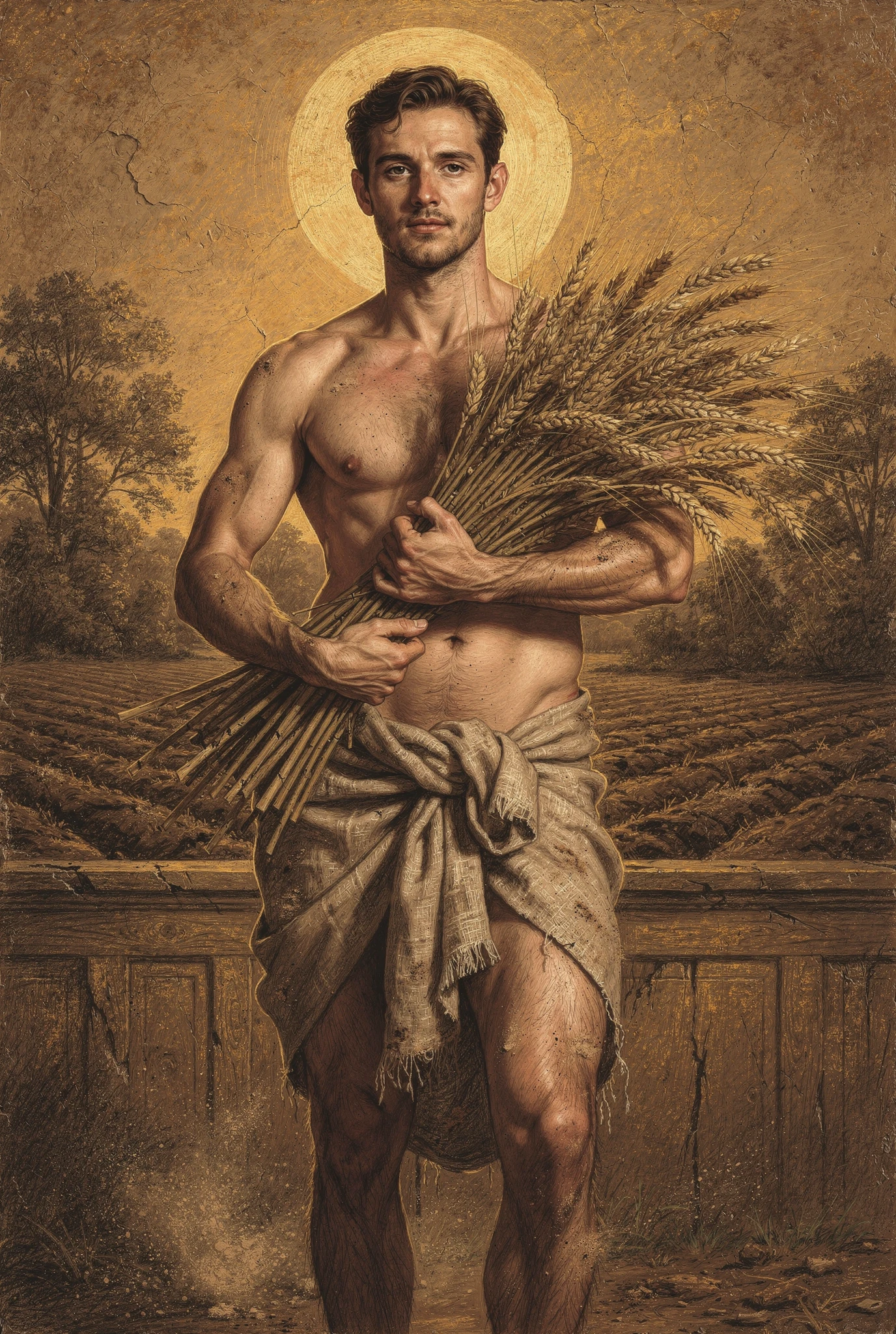
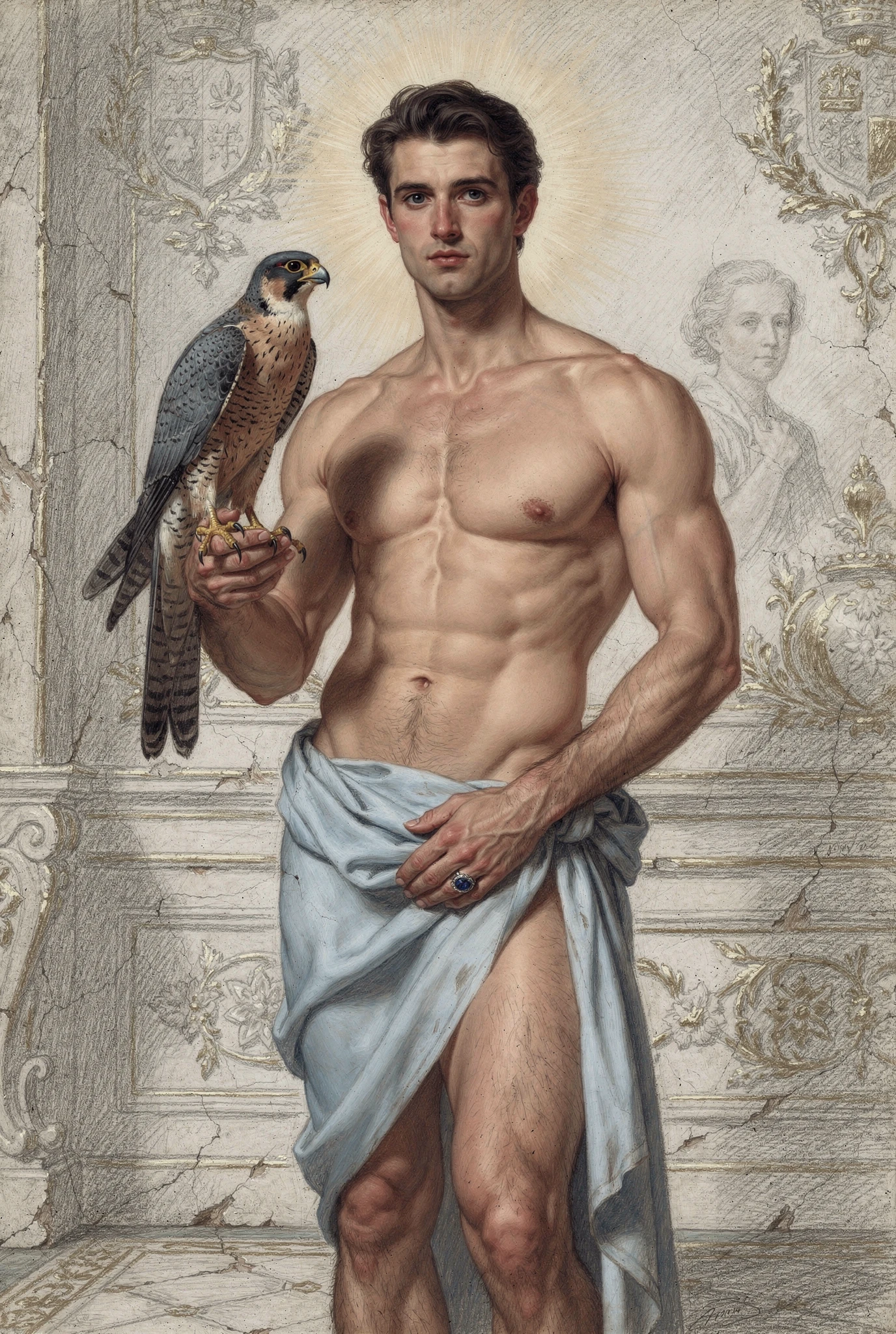
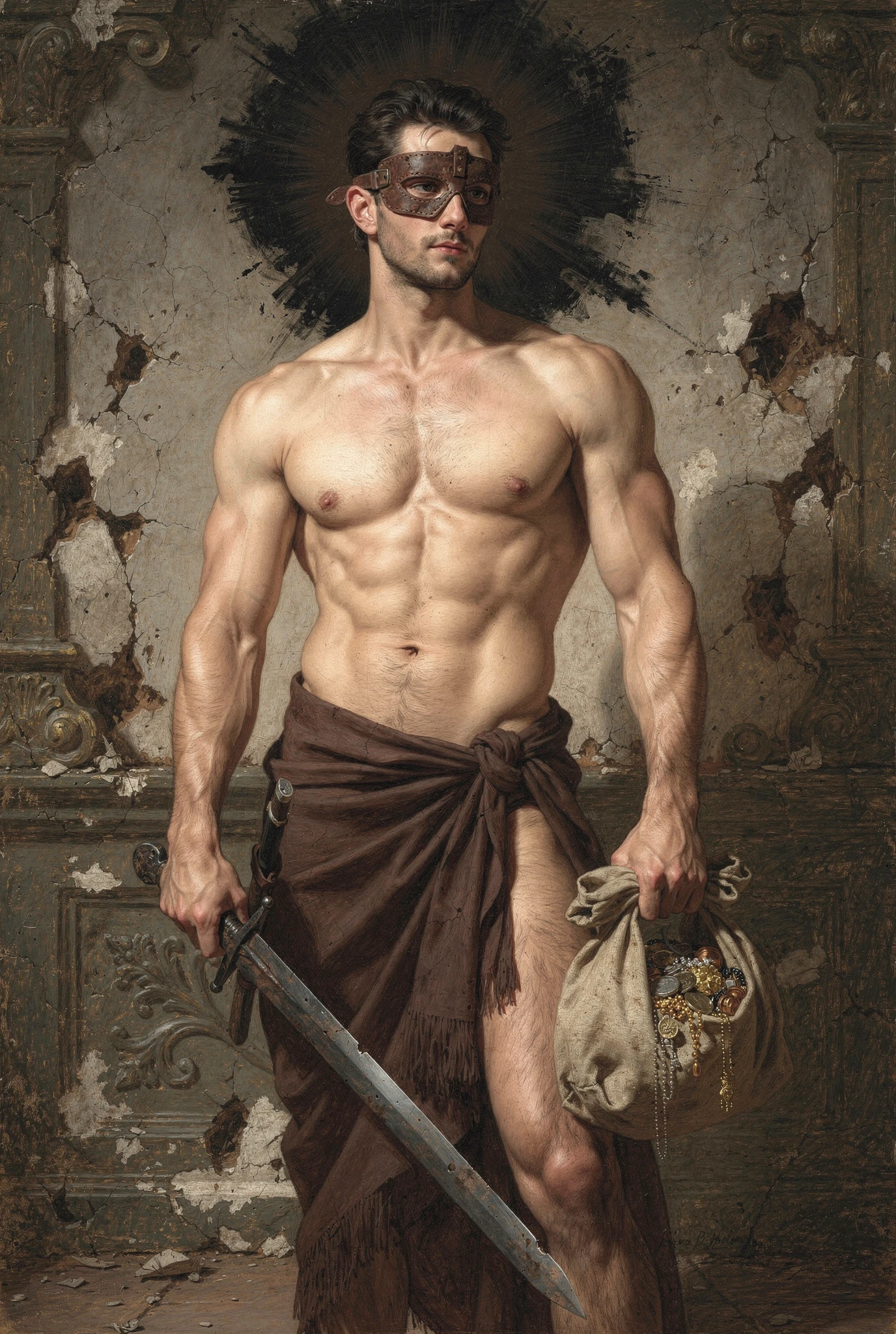
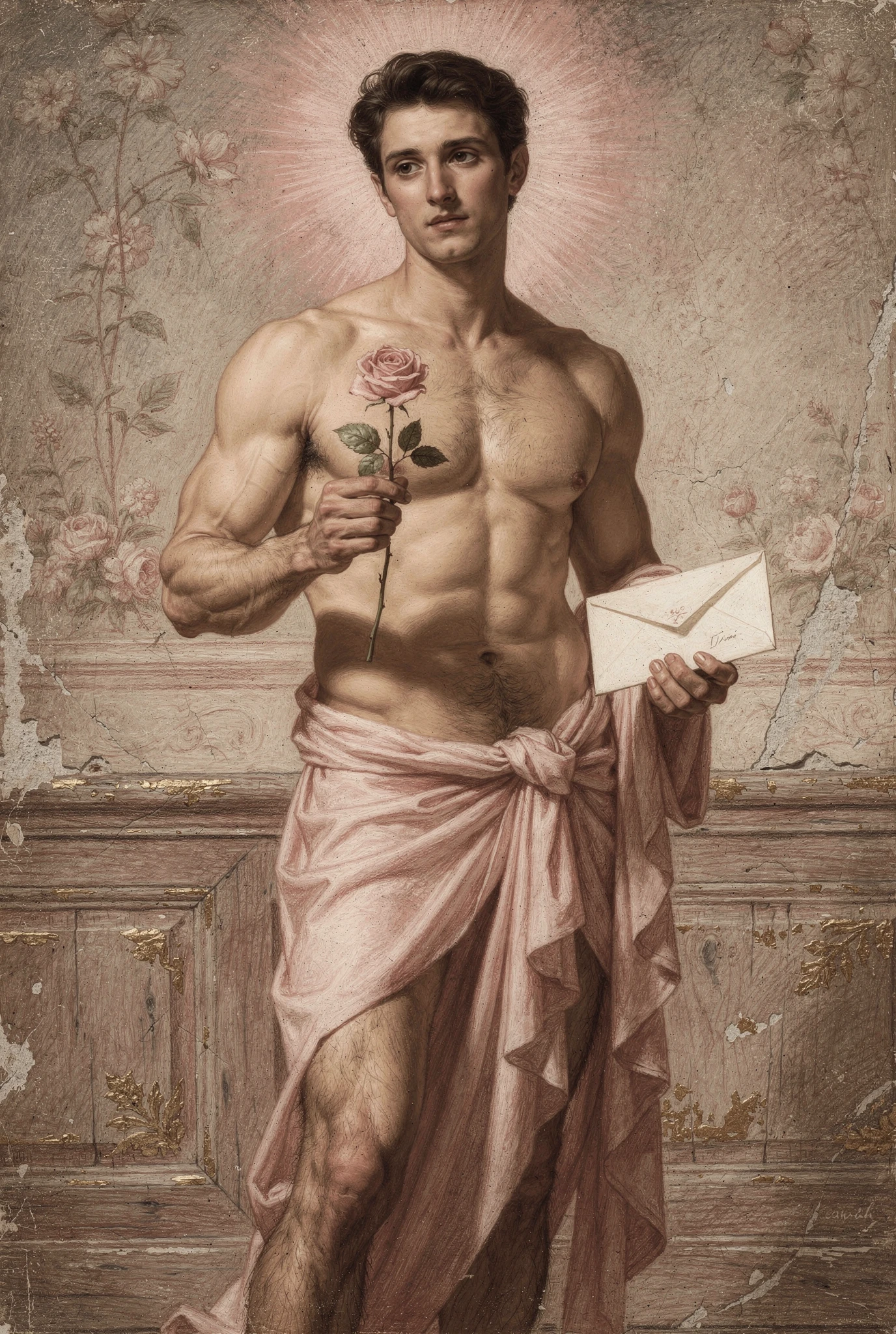
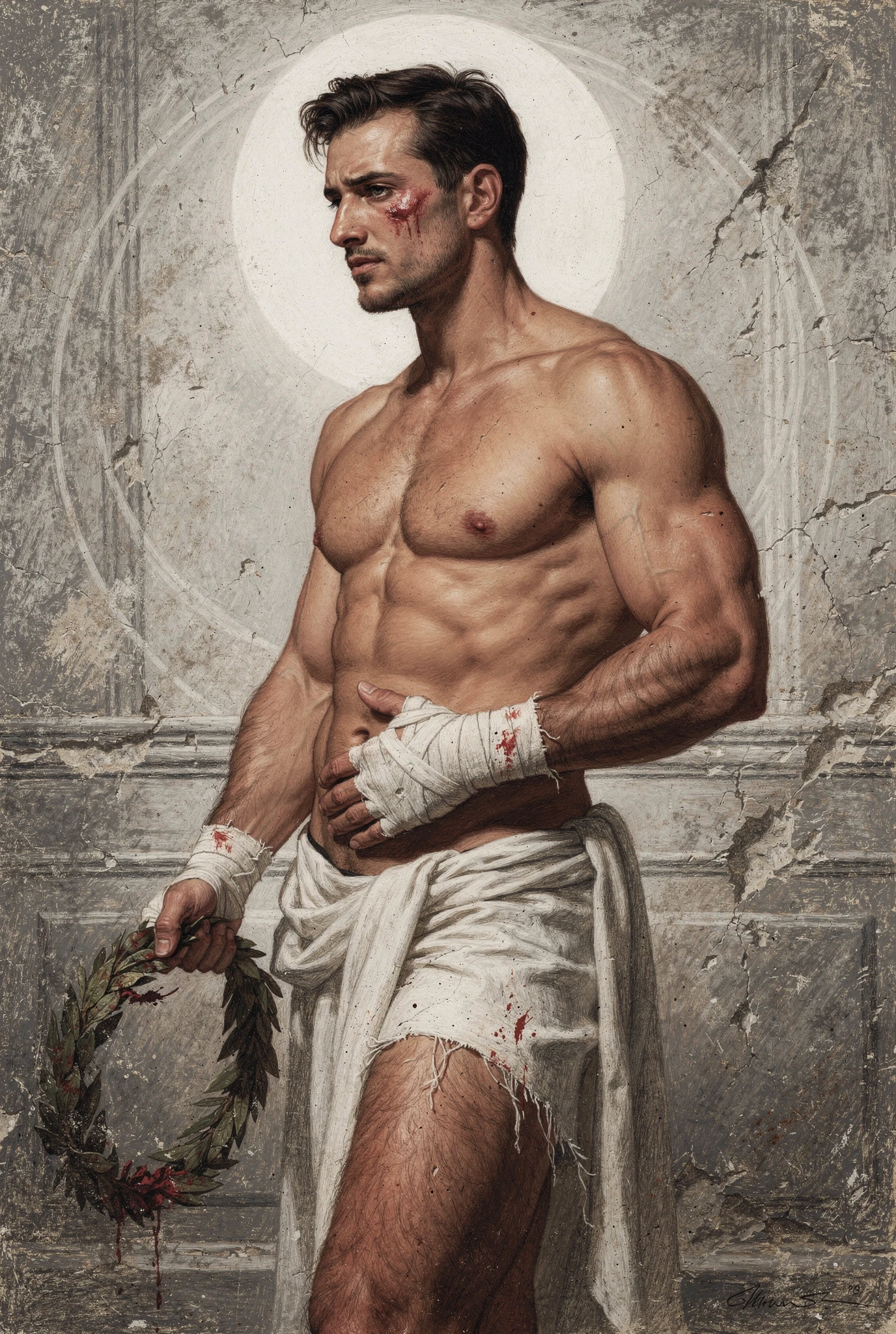
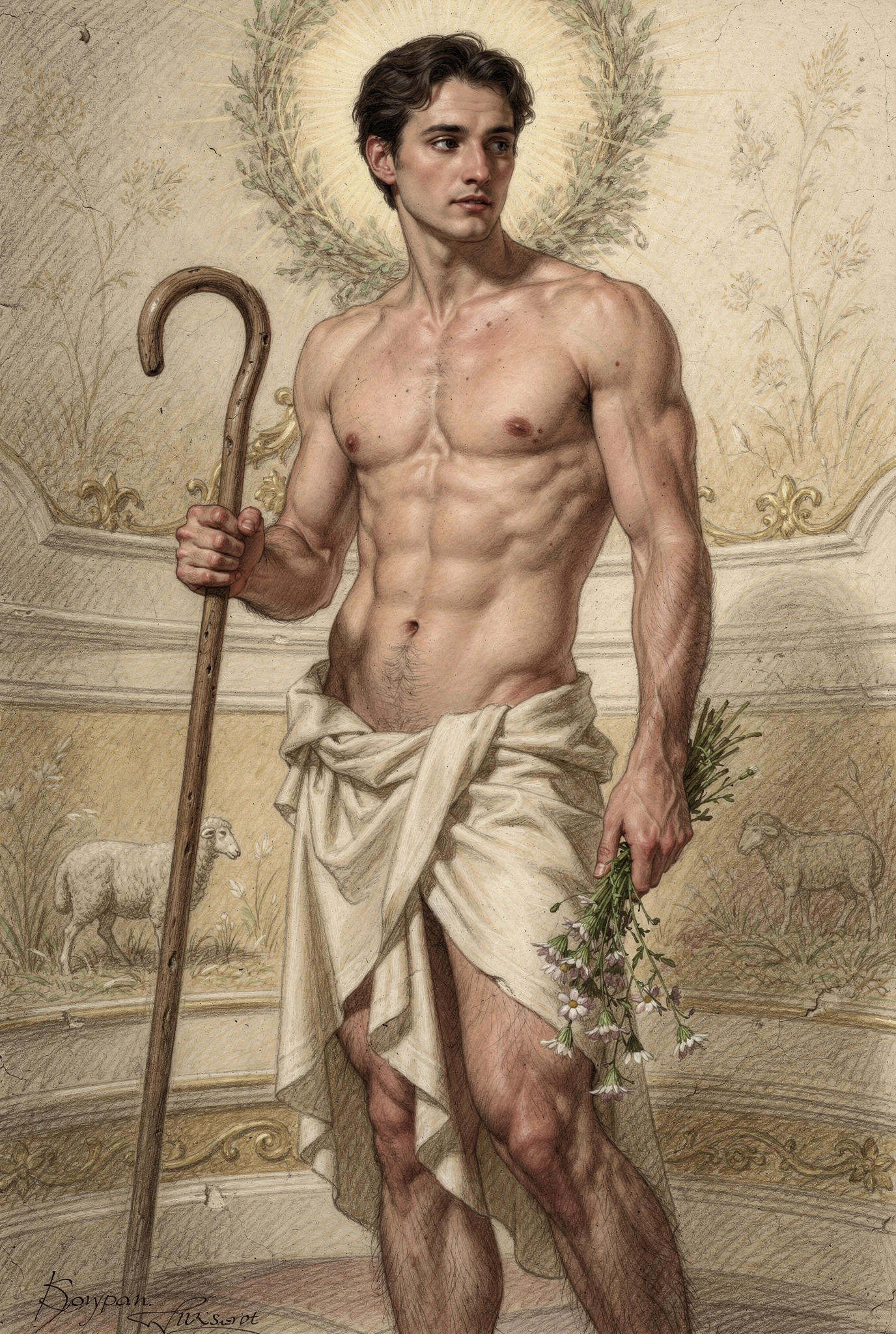
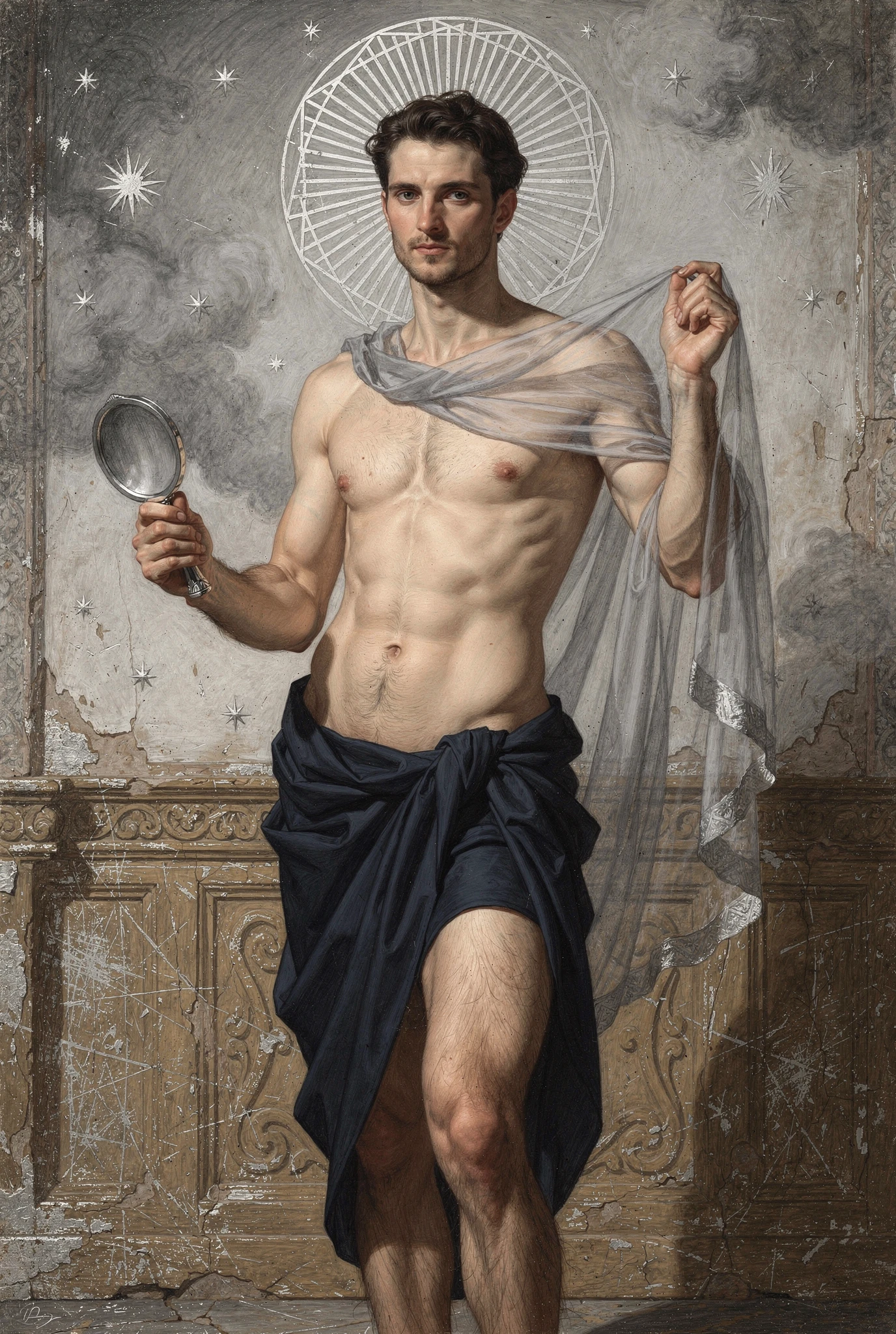
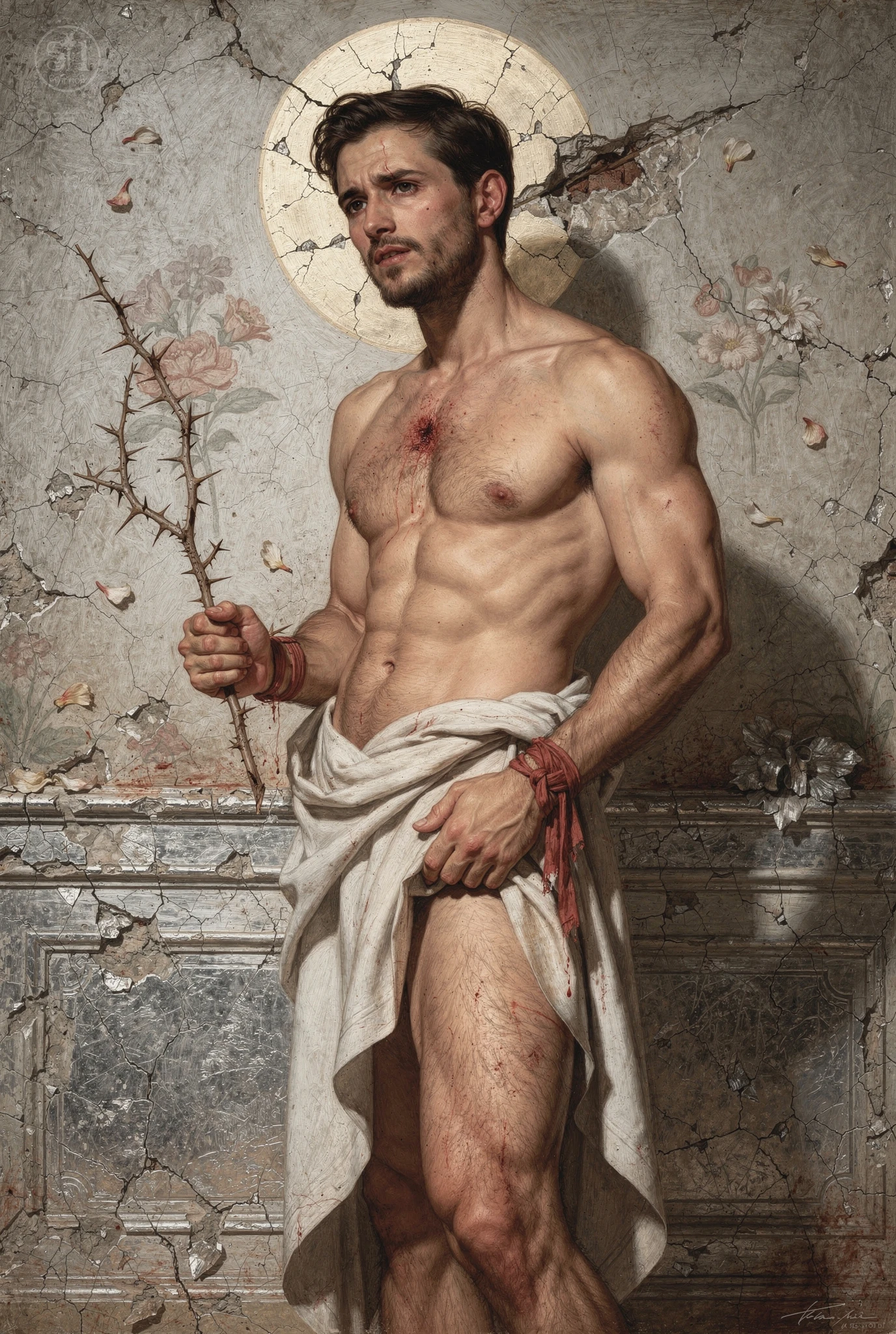
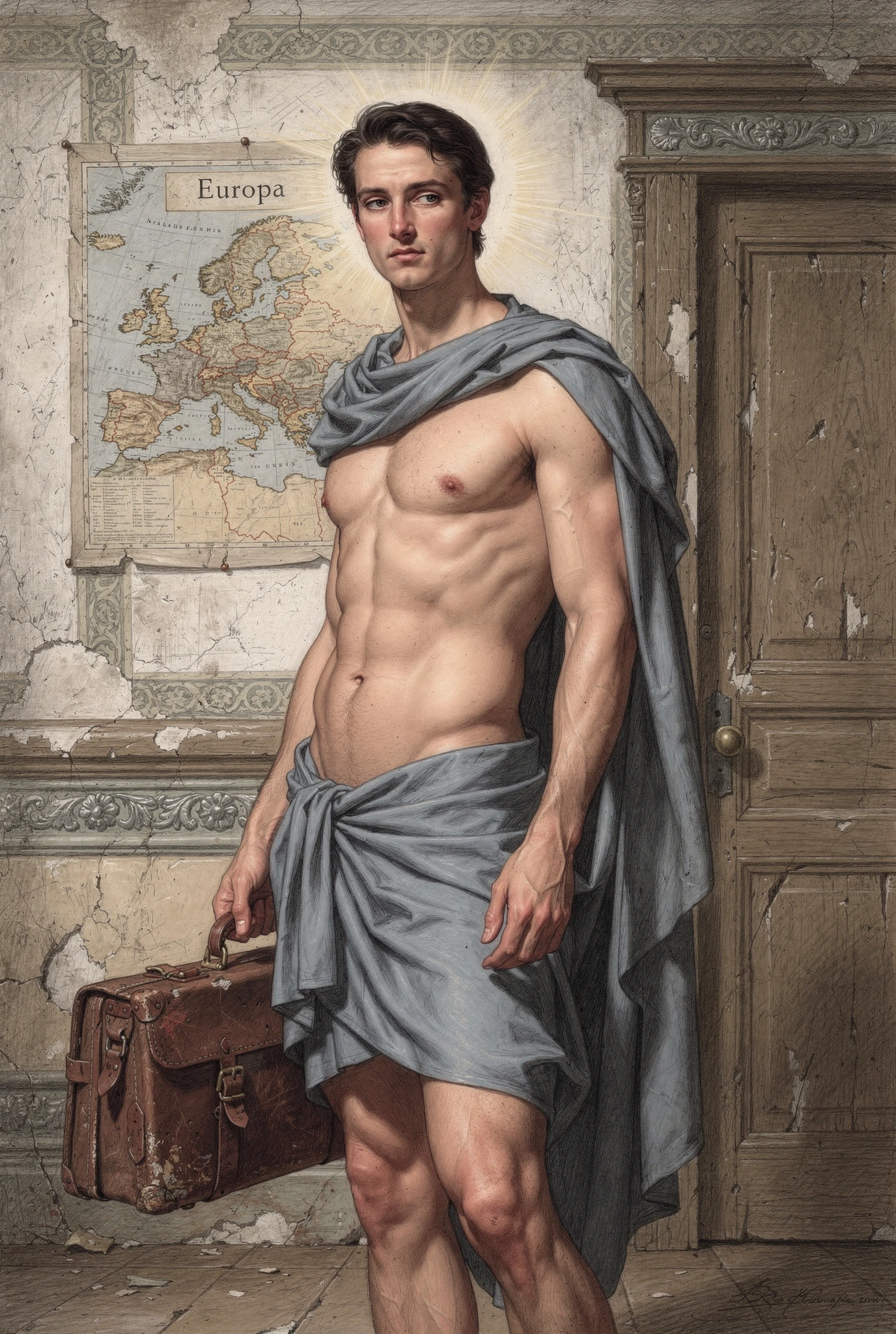
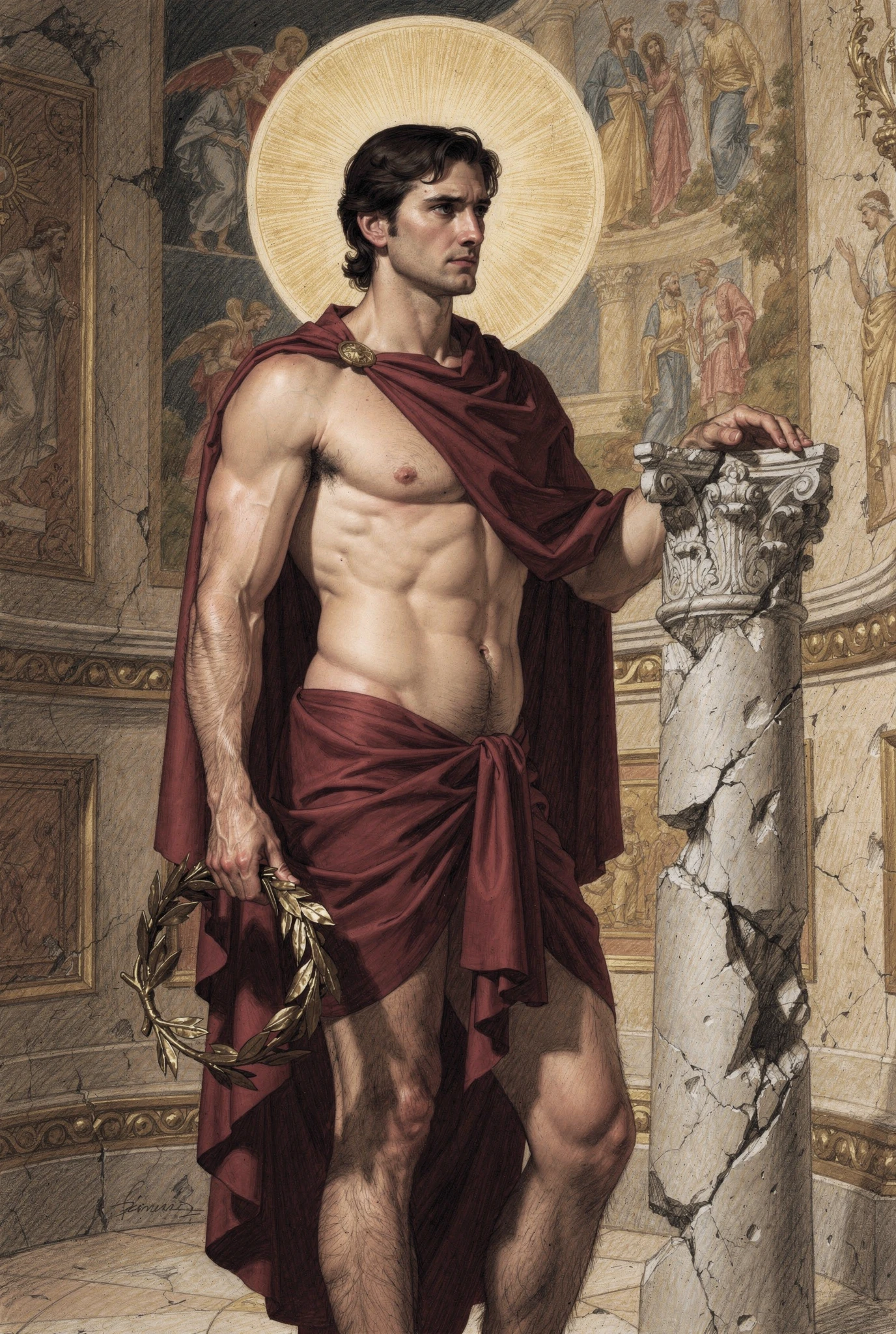
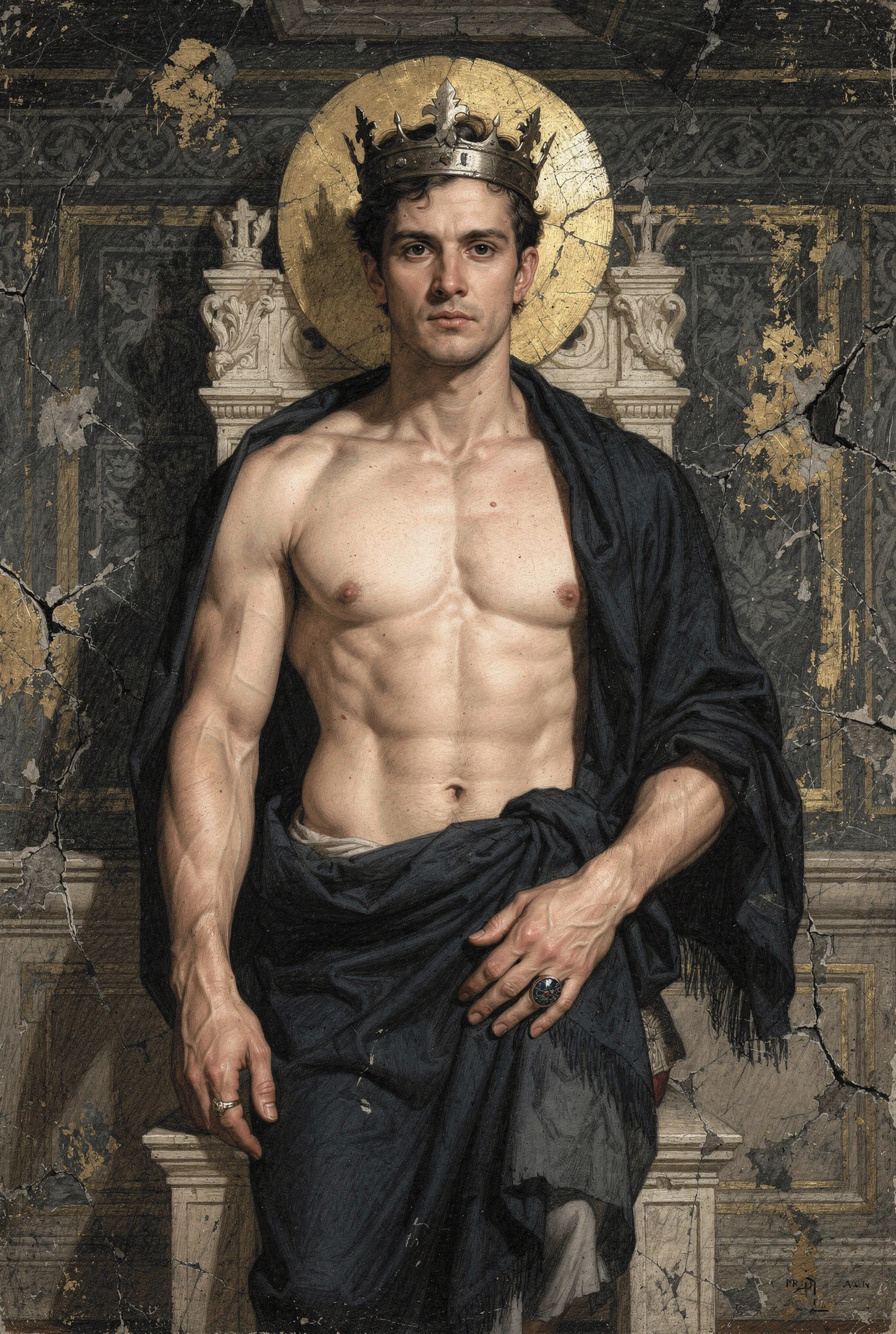
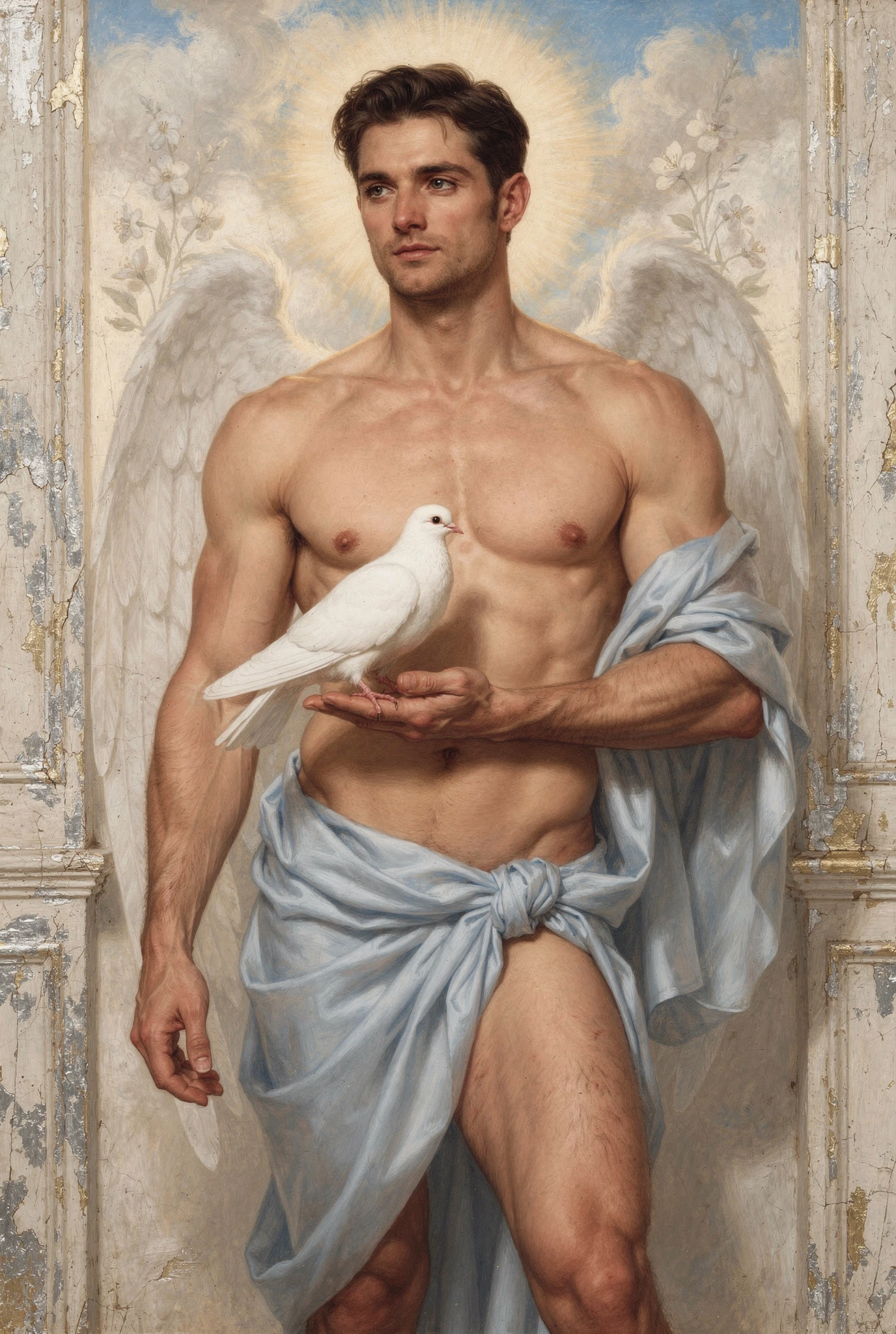
ICONS presents eighteen male figures as contemporary archetypes: saint, sinner, sailor, soldier, athlete, worker, prince, outlaw, lover, fighter, shepherd, magician, martyr, stranger, hero, fool, king and angel. Each image shows a different man, yet each body is asked to carry more than itself. These are not portraits in the ordinary sense, but figures of recurrence: roles made flesh, images already half-known before they are named. The men appear bare, draped, armed, adorned, offered and withheld. They stand in shallow devotional spaces, surrounded by damaged fresco surfaces, metallic traces, halos, flowers, and architectural detailing. The setting is intimate but not domestic, sacred but not quite religious. Each figure seems to have stepped out of an older visual order and into a newly artificial one, where masculinity is staged as something to be read, desired, judged and believed.
In Byzantine and Orthodox traditions especially, an icon was not just a picture of a holy figure. It was a devotional object, a surface through which the sacred was approached. The image mattered because it was more than illustration; it organised attention and made looking feel consequential. An archetype works differently, but with a similar power of return. Archetypes are not just types of people. They are recurring forms that survive because they are useful. The saint still helps us imagine purity. The sinner helps us imagine appetite. The soldier helps us imagine obedience and violence. The angel helps us imagine beauty as something almost inhuman. In ICONS, the religious icon and the cultural archetype meet inside the male body. The holiness is uncertain, the rituals invented, but the old habits of reverence remain.
The male body has been repeatedly idealised throughout art history: Greek athletes and gods, Roman emperors, Renaissance saints and martyrs, Christ's exposed and suffering body, heroic soldiers, workers, kings, revolutionaries, fashion models and bodybuilders. Across temples, churches, museums, studios, gyms and screens, it has been made to signify power, discipline, sacrifice, erotic beauty and transcendence. ICONS does not reproduce that history directly; it reassembles it through artificial means. Flesh appears warm and believable, yet visibly interpreted through graphite hatching, painterly glazing, fresco-like wear and photographic realism. Nothing is labelled within the images, so the viewer is left to read the signs and decide where devotion ends and performance begins. Each figure is both body and emblem, object and fiction, man and mask. Together they form a small synthetic chapel of masculine images: seductive, solemn, unstable, and knowingly made.
Gallery
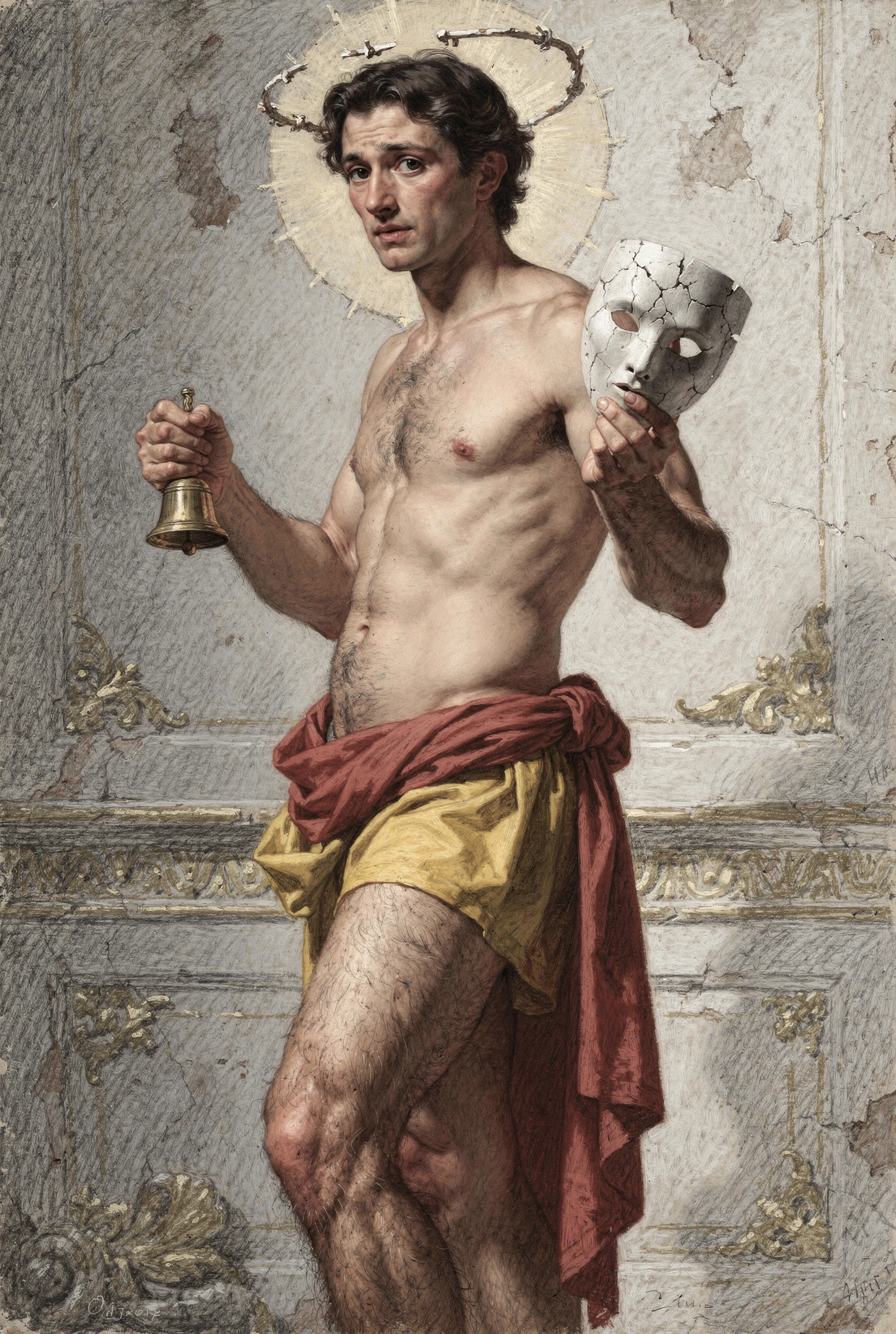
"Man is least himself when he talks in his own person. Give him a mask, and he will tell you the truth." — Oscar Wilde