Tulipa vitrea: the search for material truth
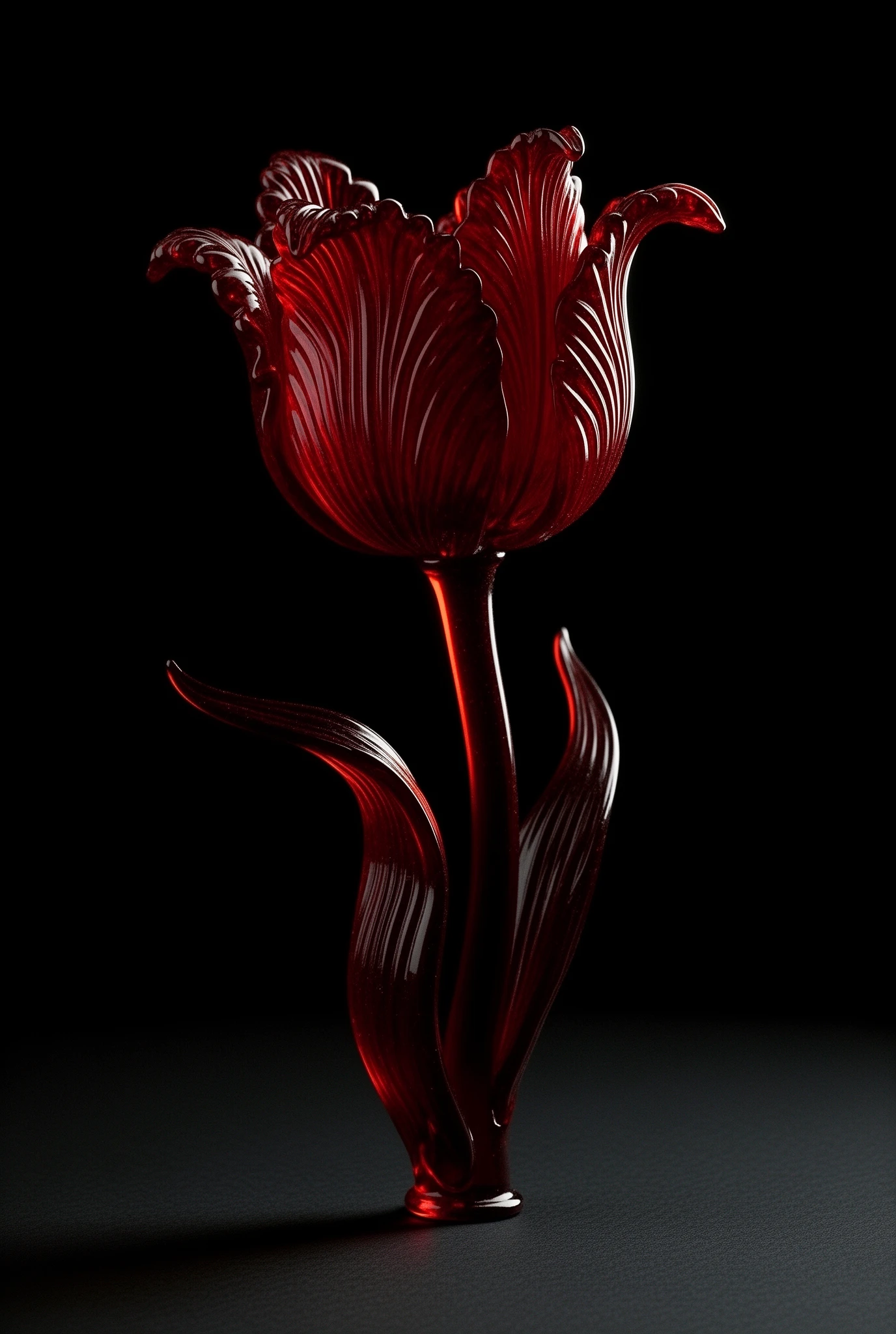
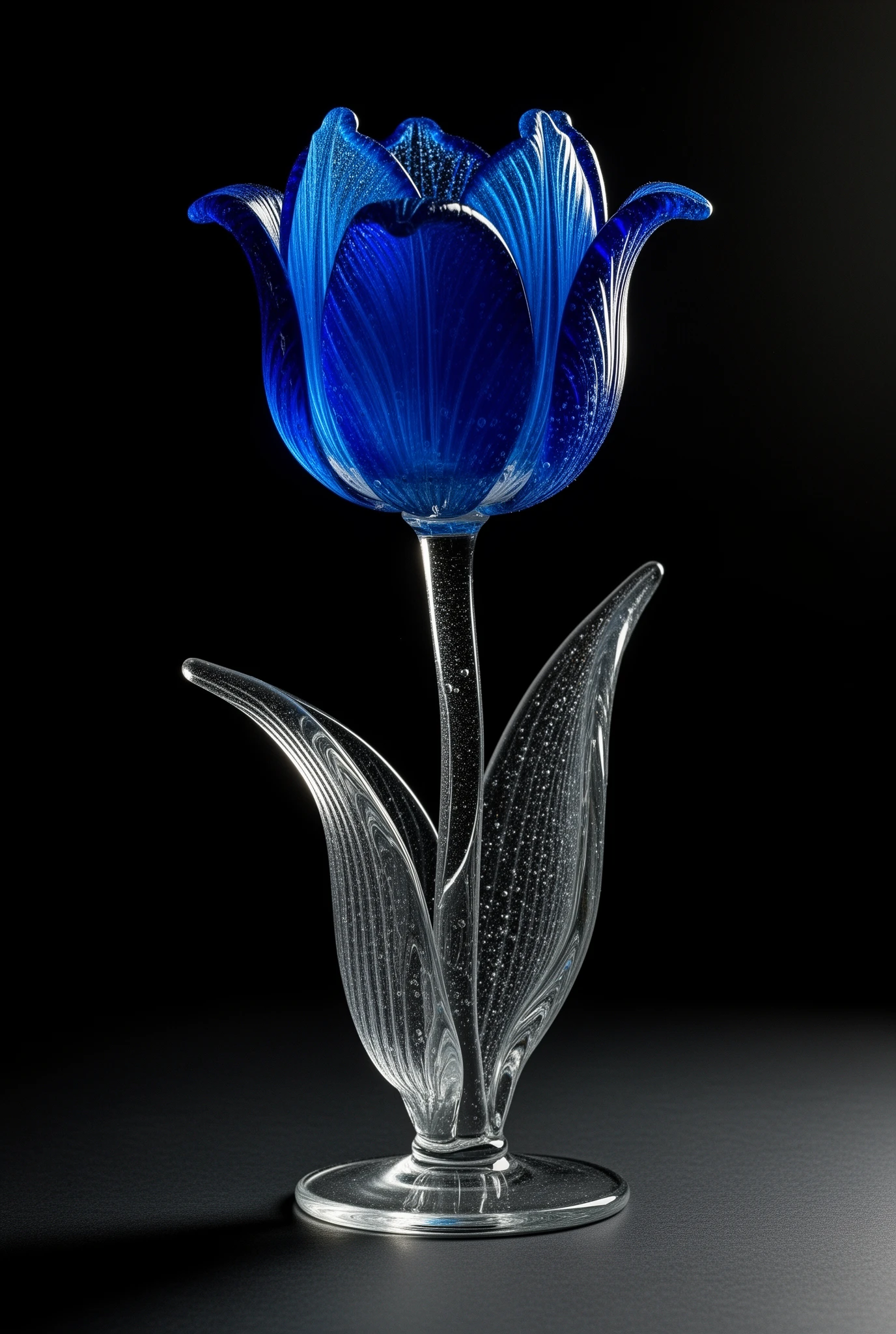
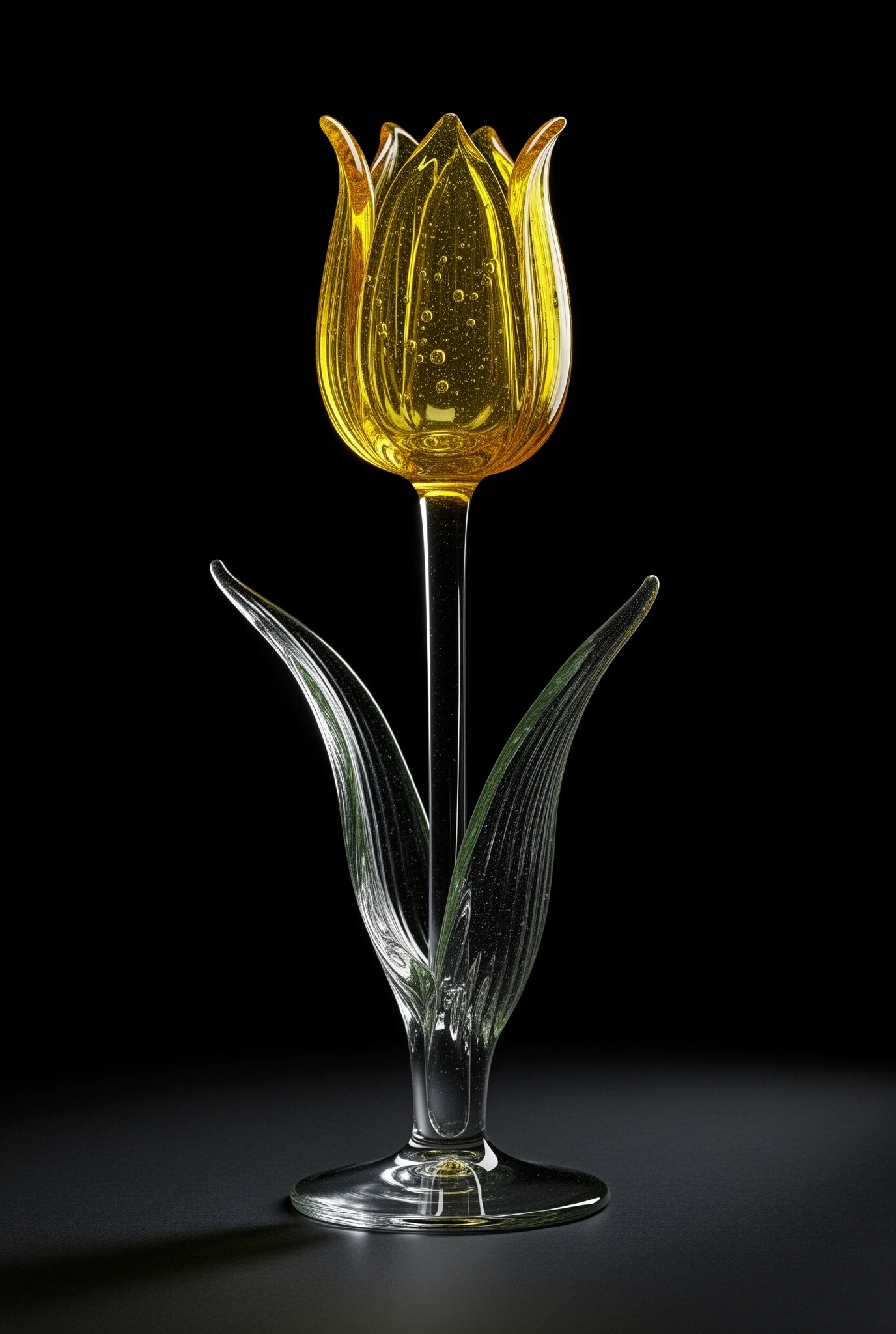
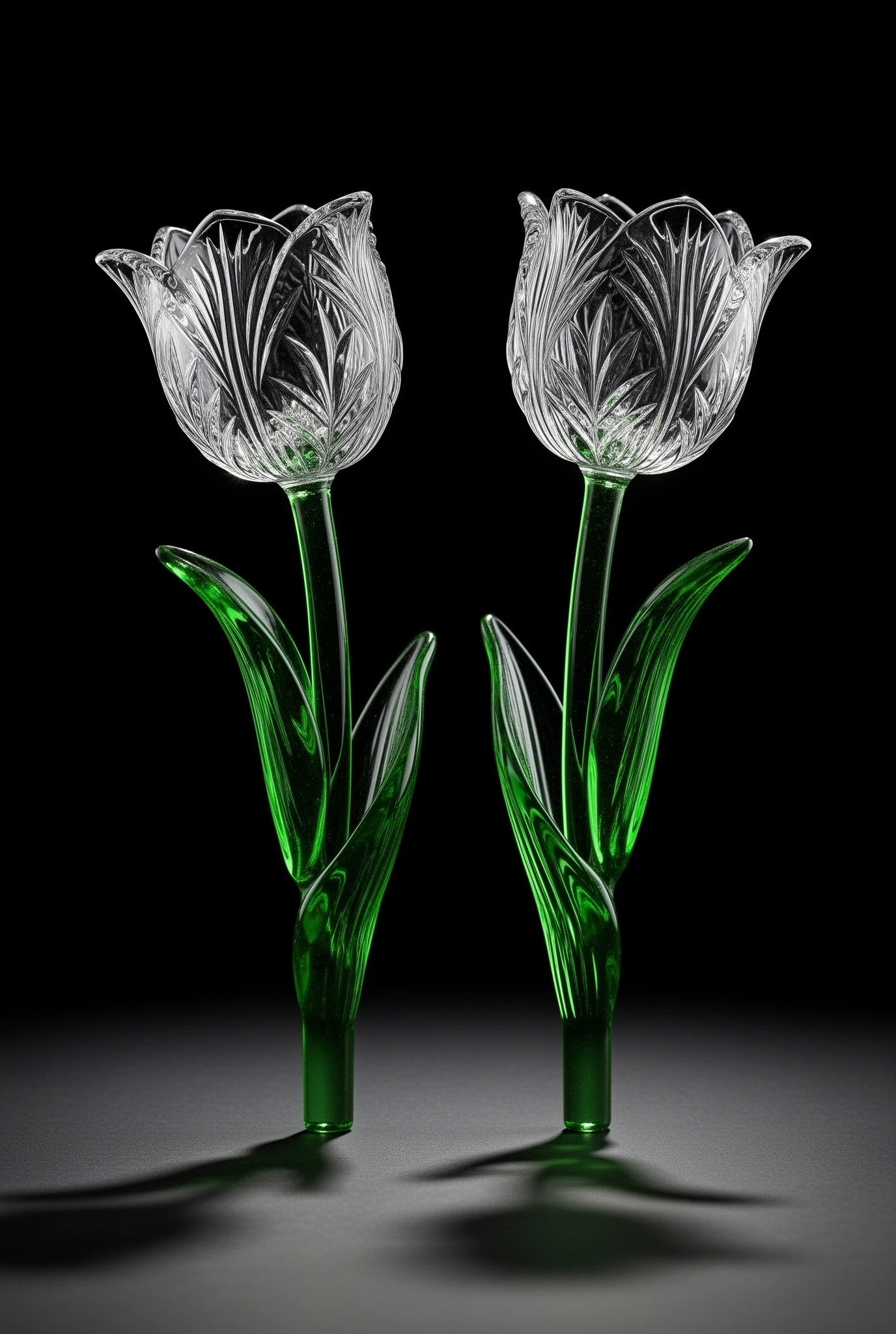
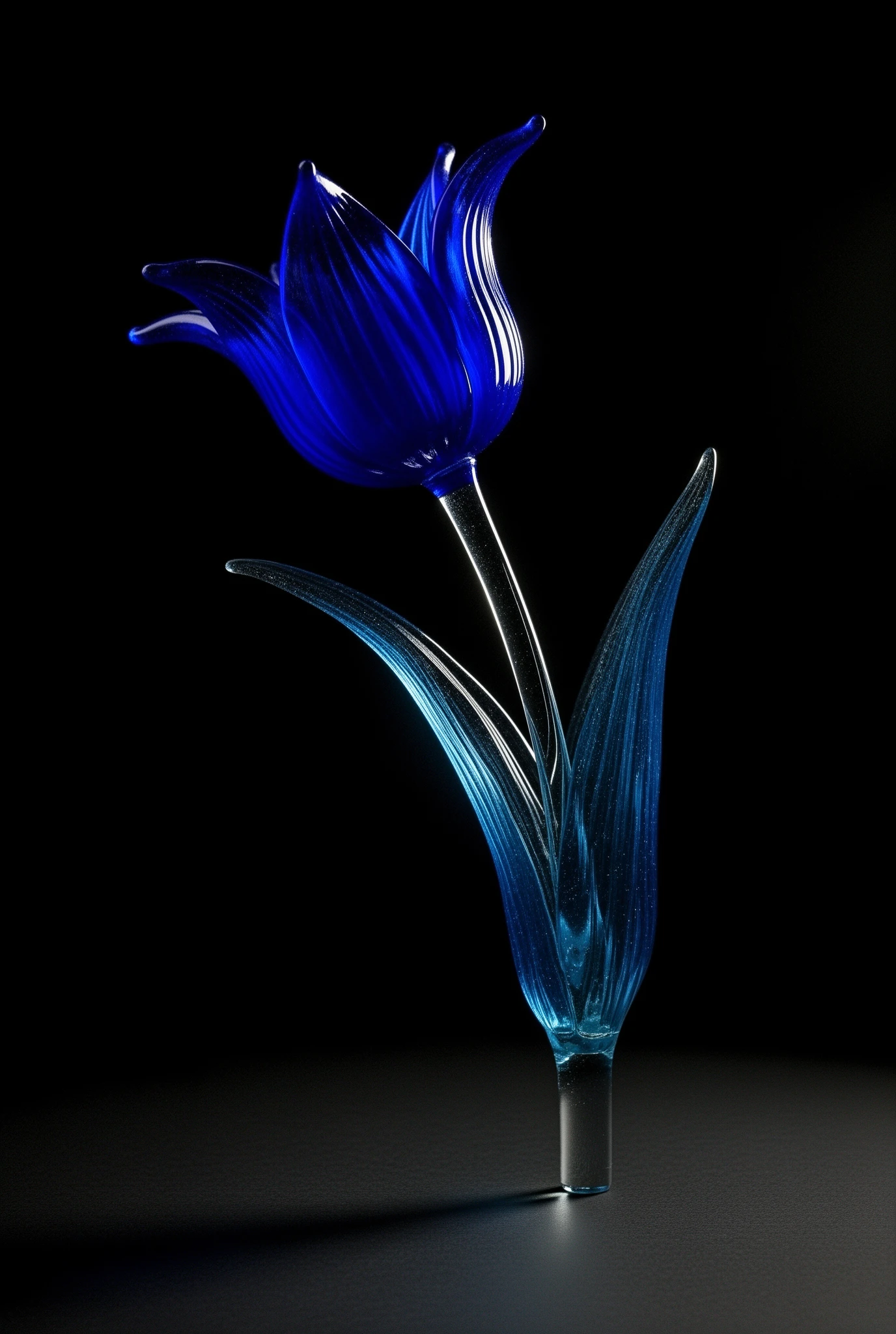
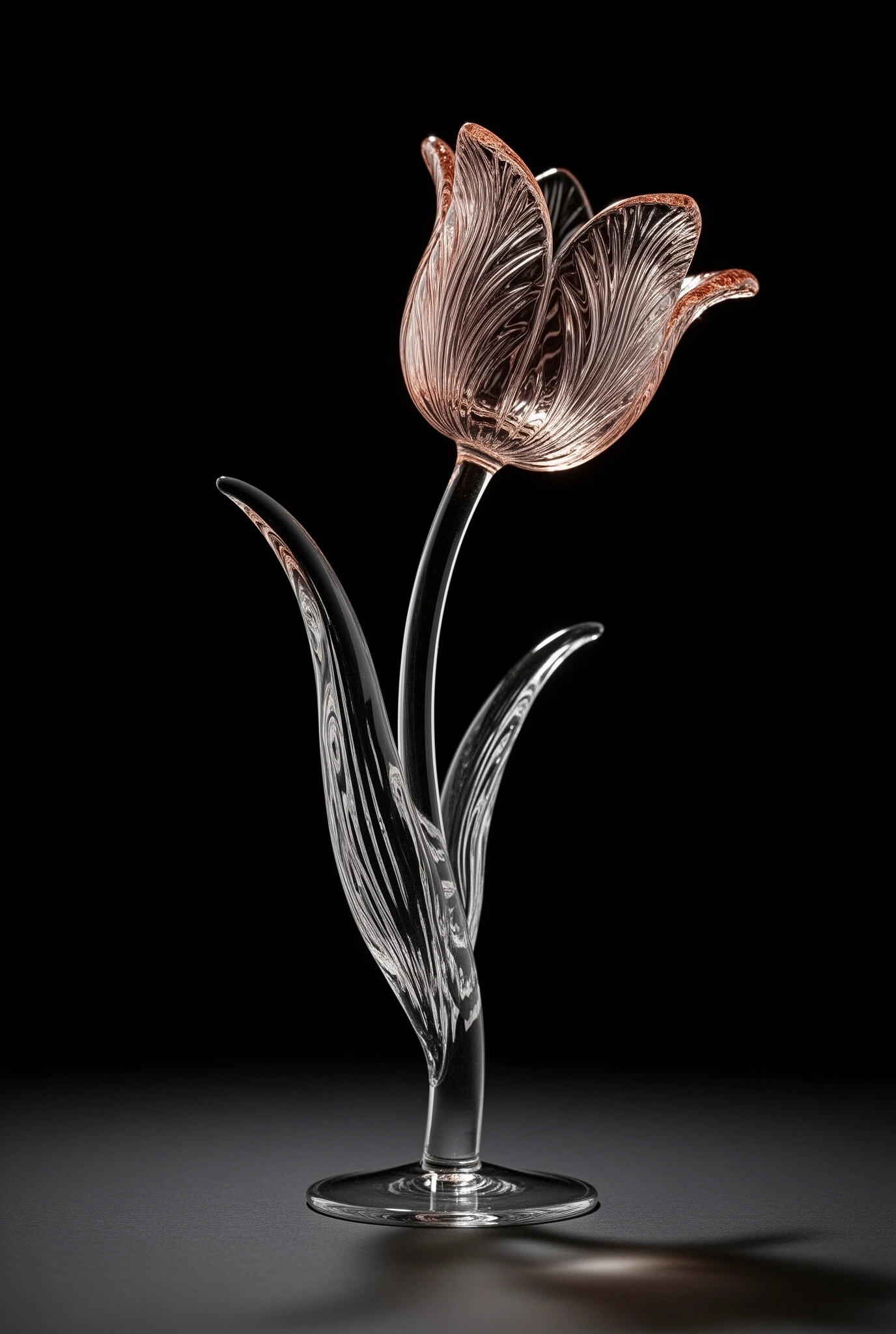
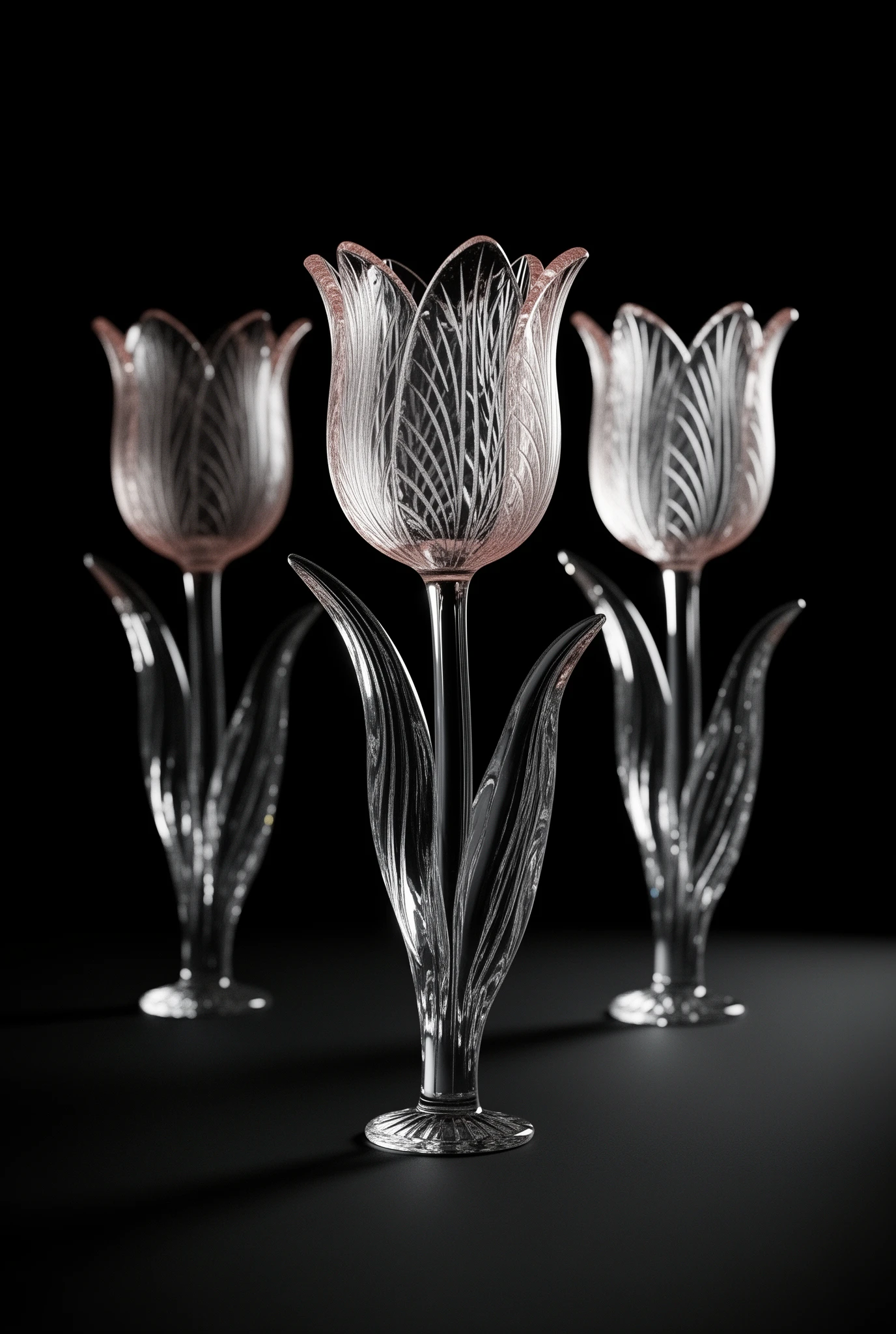
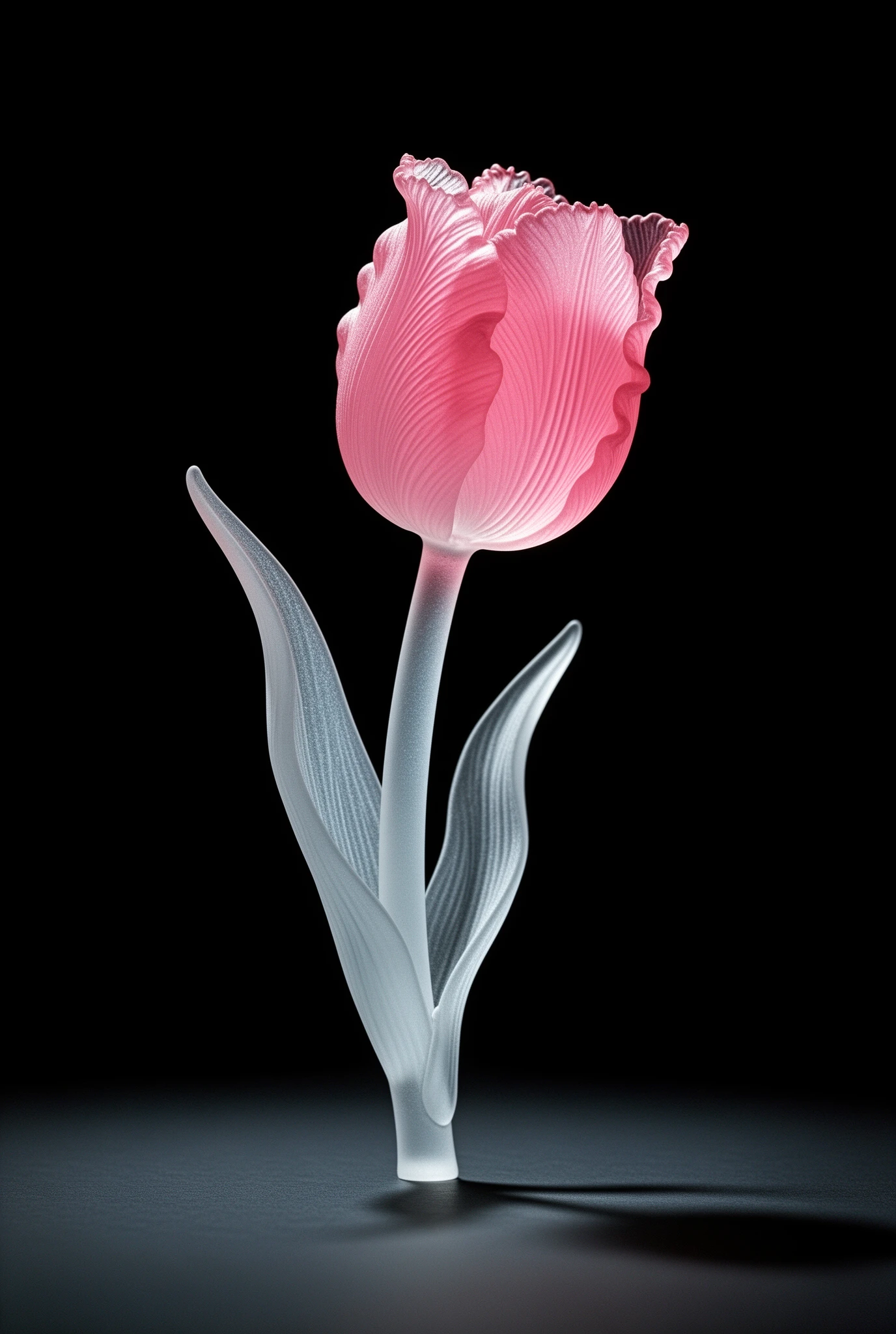
Vitrea begins with a transformation. In traditional glassmaking, raw materials are subjected to intense heat until their granular opacity collapses into a continuous, translucent mass. Sand becomes glass not by imitation, but by reorganisation — its structure altered so completely that the origin is no longer visible. These images follow a comparable process. Language, instruction, and code are subjected to computational force, reorganised until words lose their discreteness and re-emerge as optical form. The tulips in these synthographs are not depicted; they are generated.
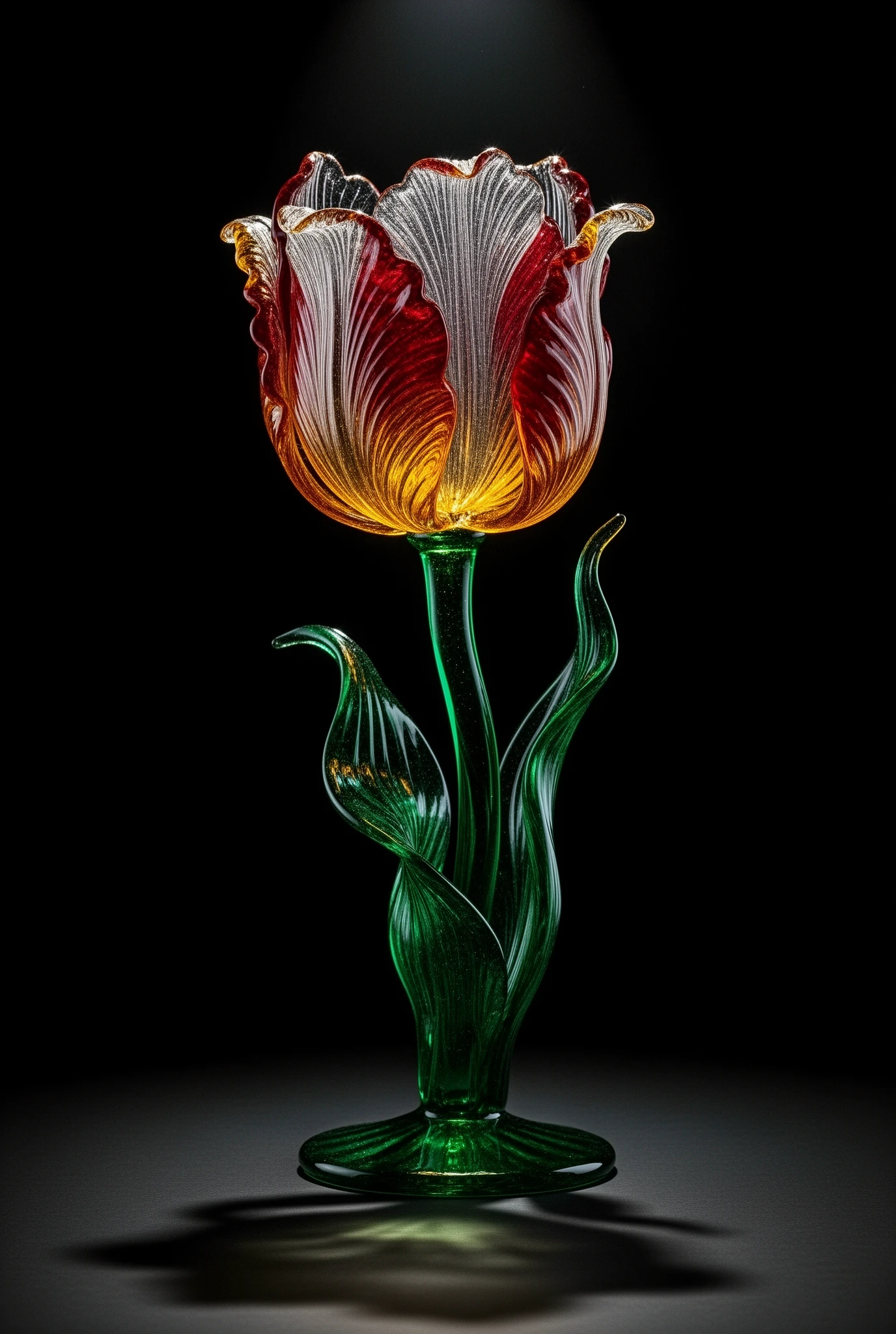
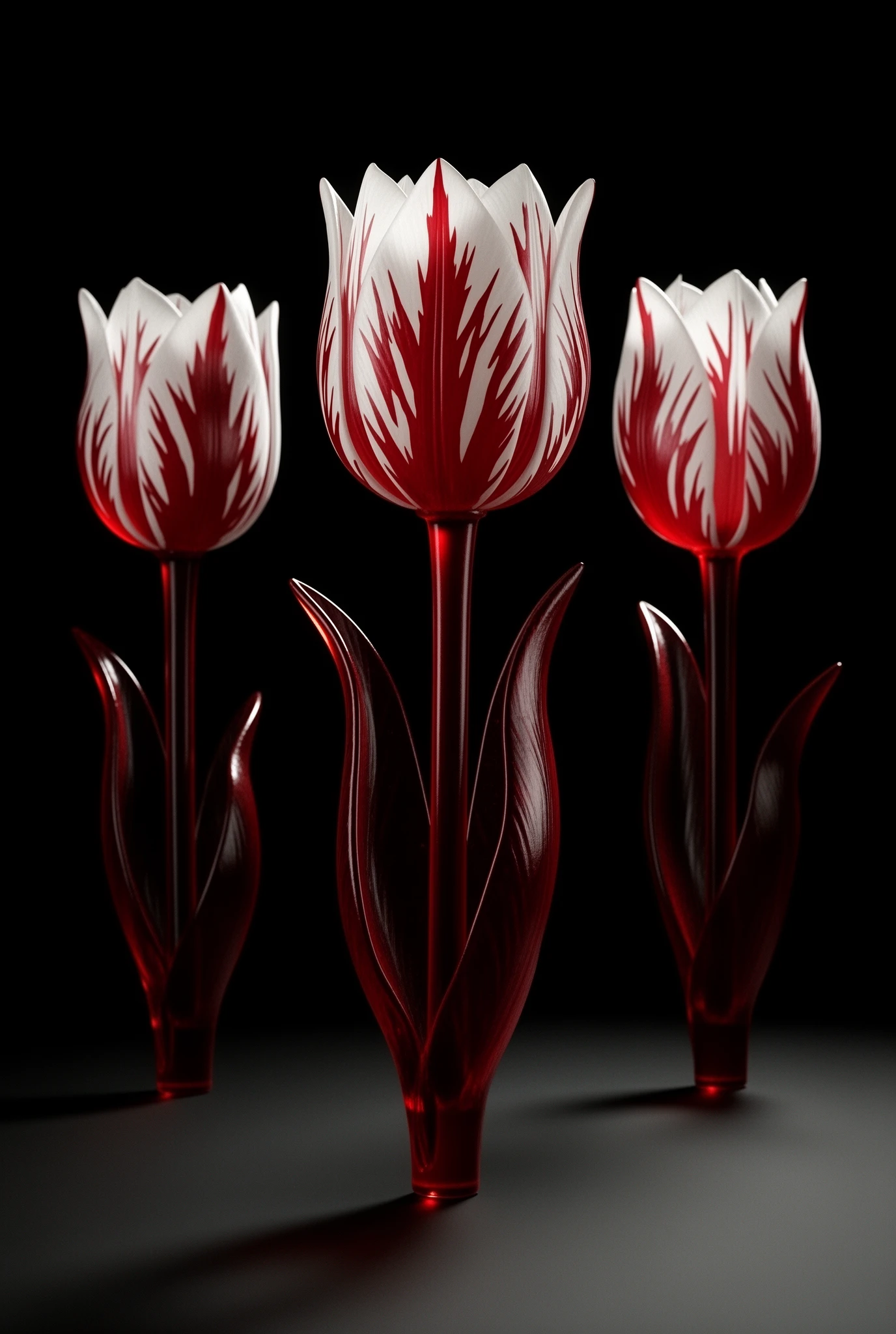
During the seventeenth-century phenomenon now known as Tulip mania, rare bulbs became vessels for extraordinary projection, valued less for their biology than for the meanings imposed upon them — rarity, instability, desire, status. The most celebrated example, the red-and-white Semper Augustus, achieved near-mythic prices before the market collapsed. Its distinctive "broken" patterning, caused by viral mutation, was once mistaken for a mark of perfection. The historical flower and the synthetic image share a peculiar economy of belief. Vitrea returns to this history obliquely, where value again attaches to surfaces that possess no organic origin, and beauty arises from conditions that are entirely constructed.
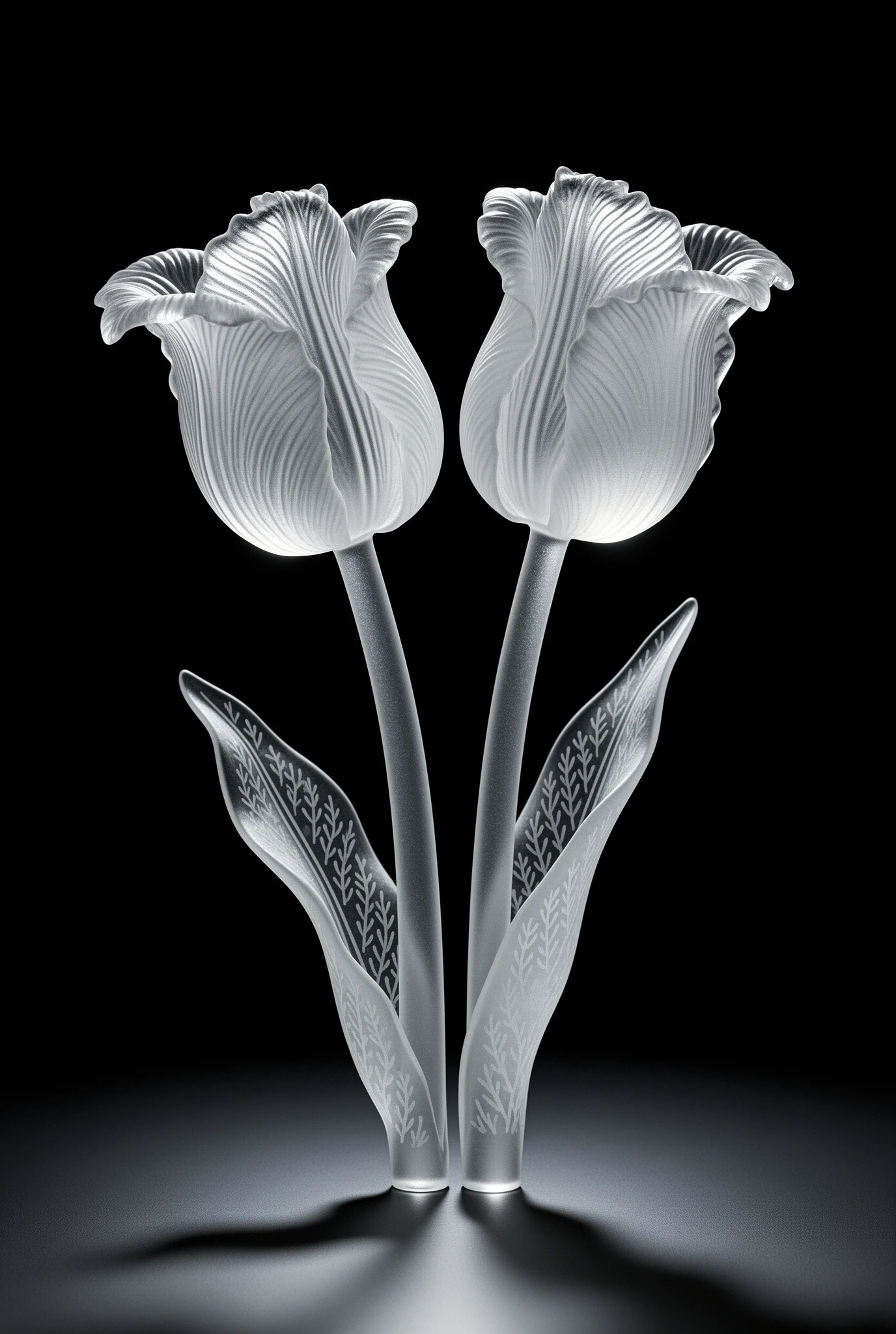
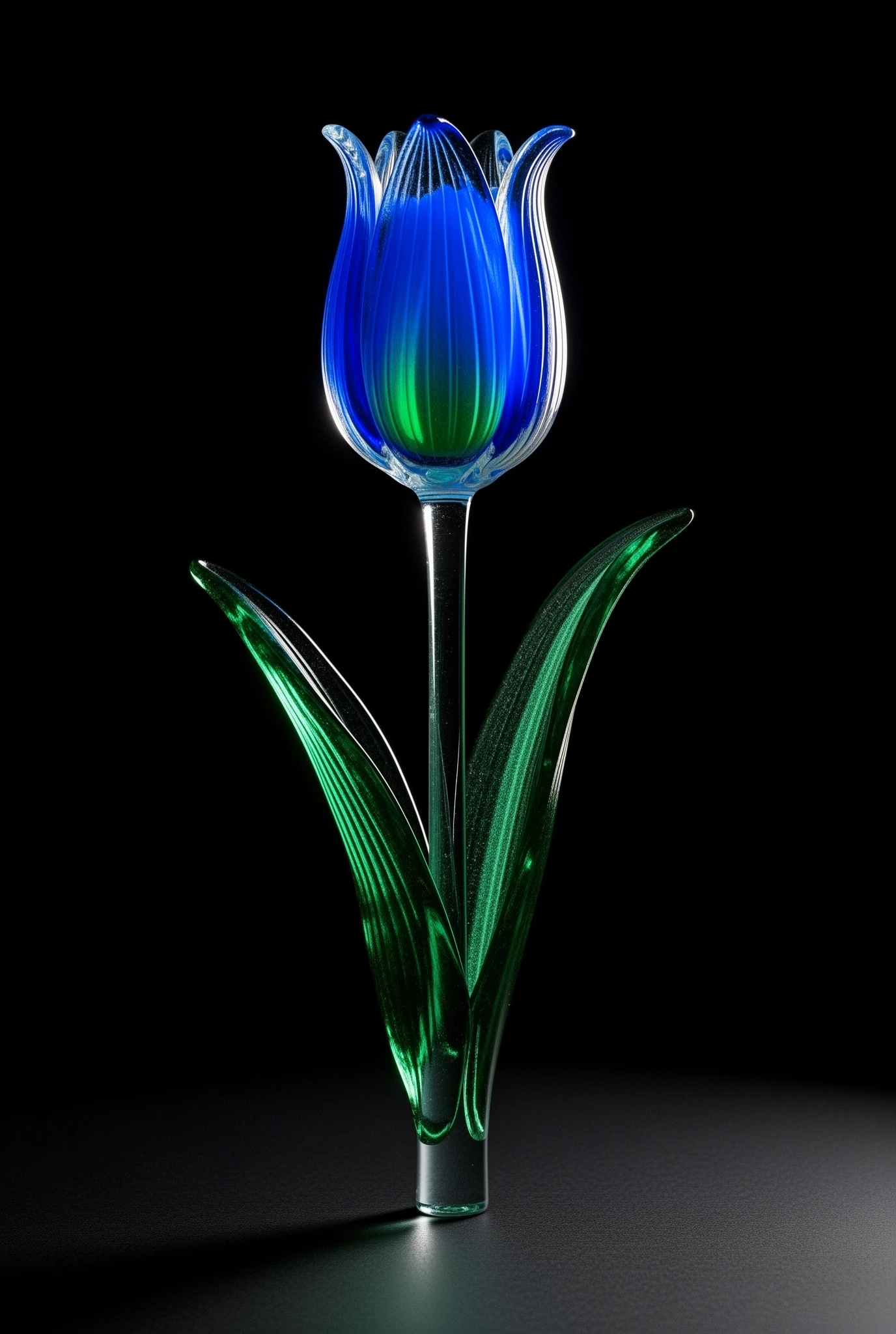
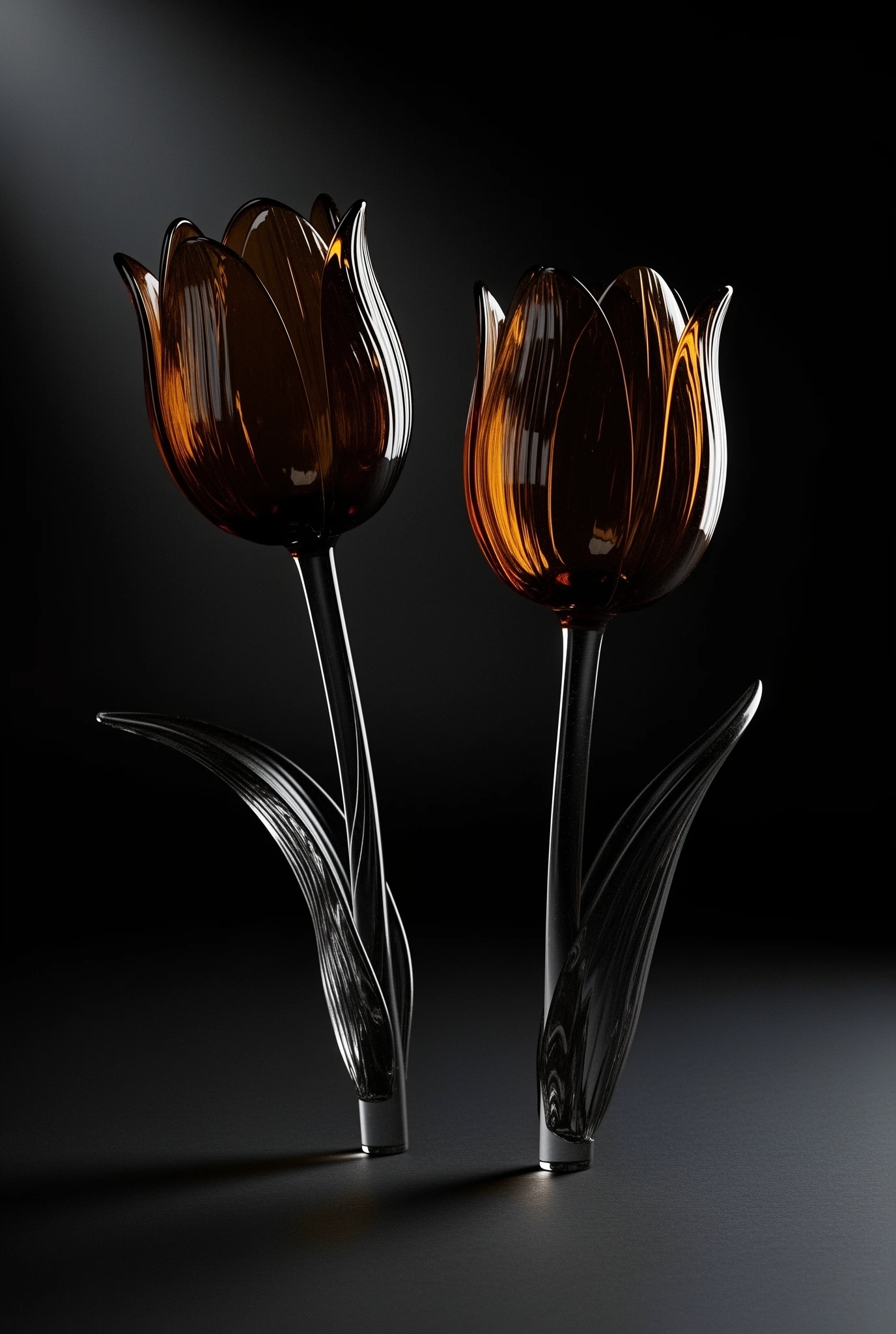
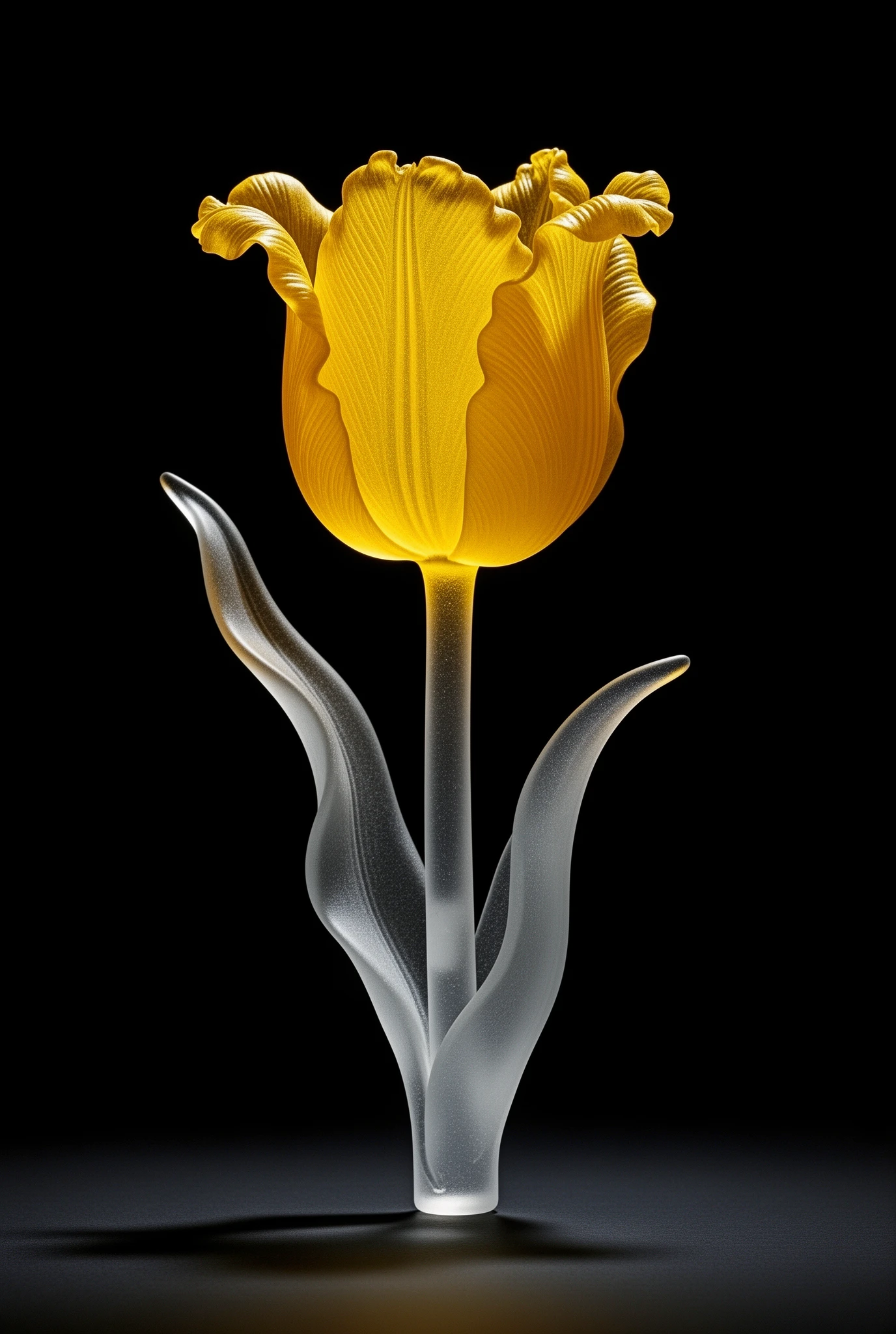
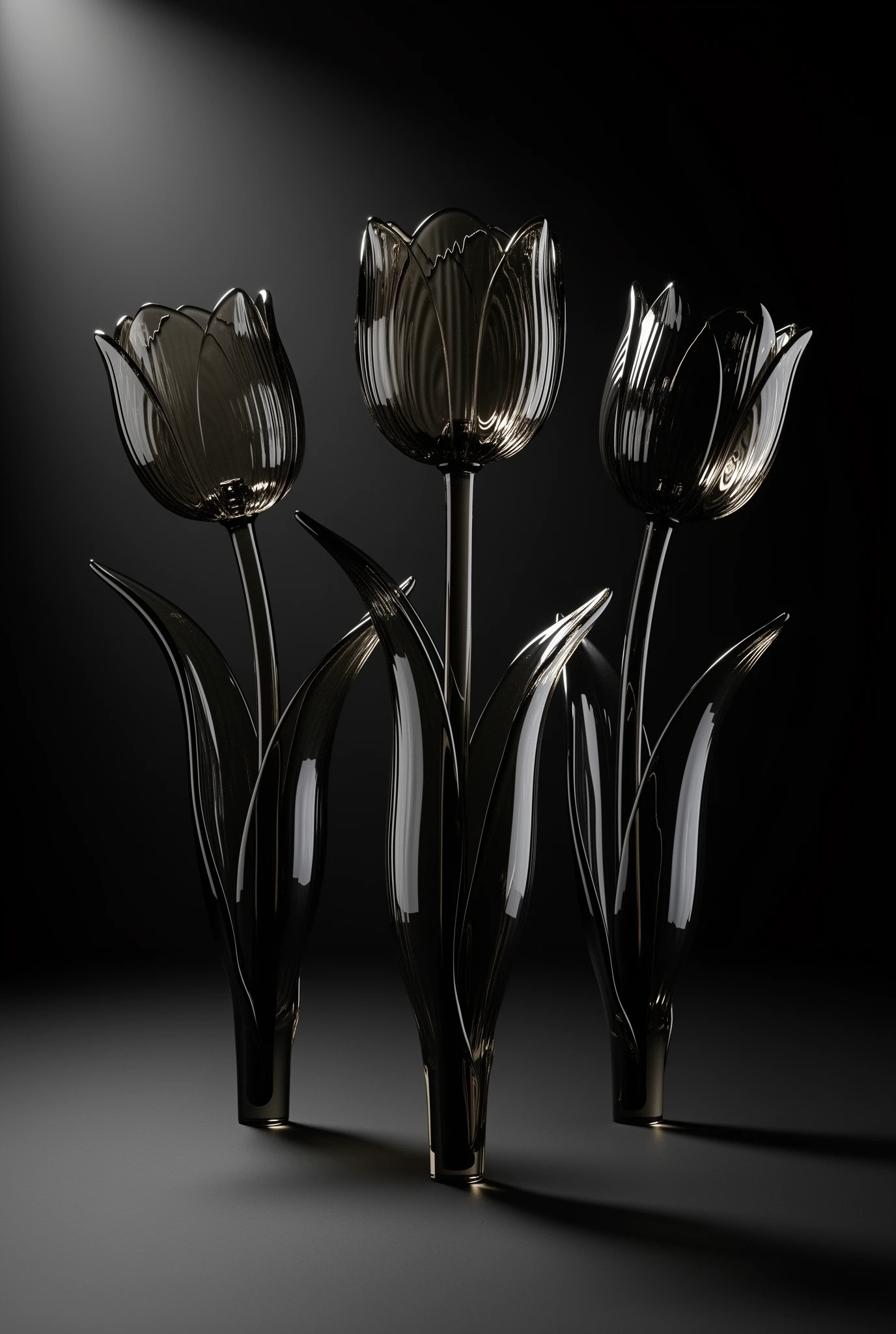
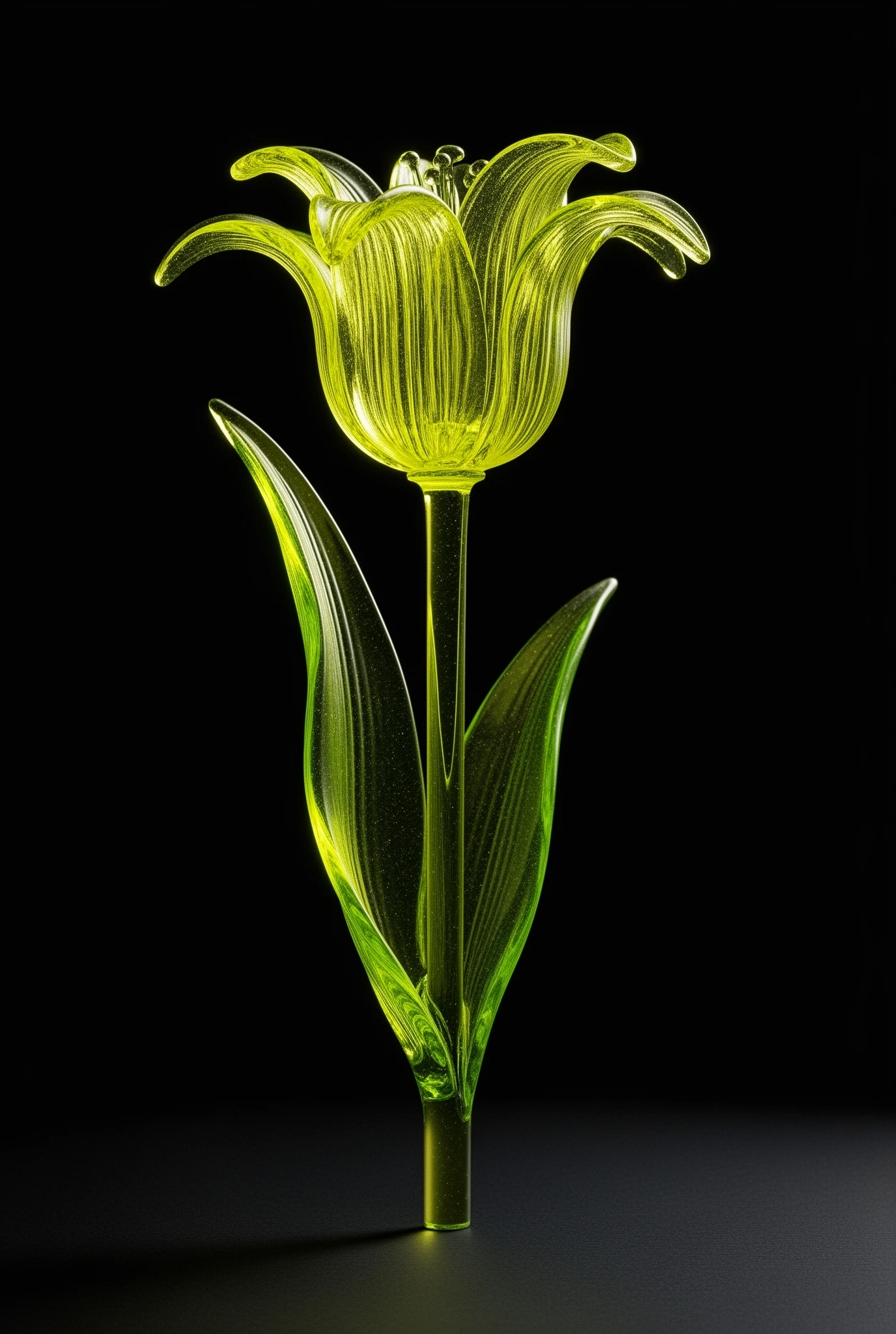
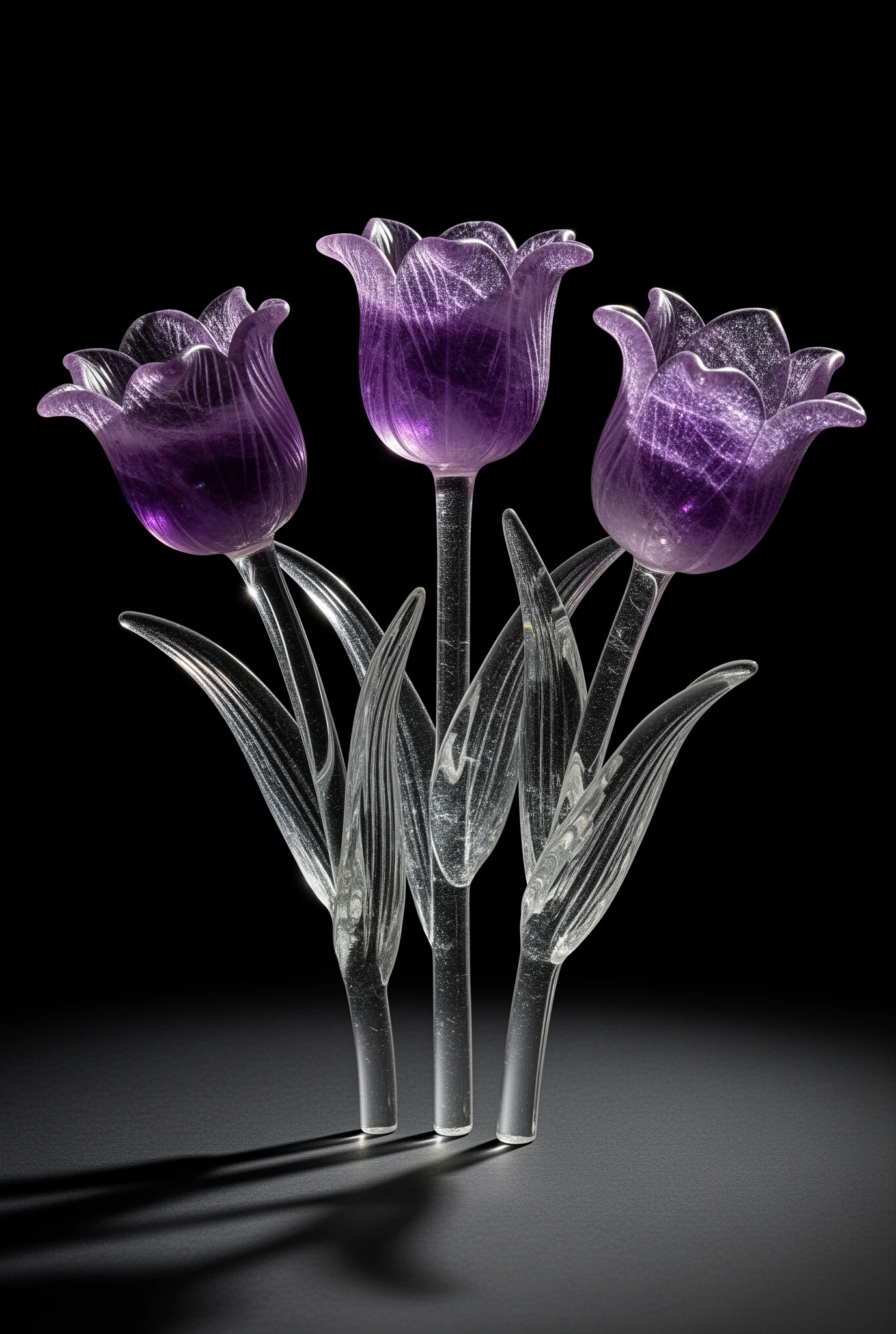
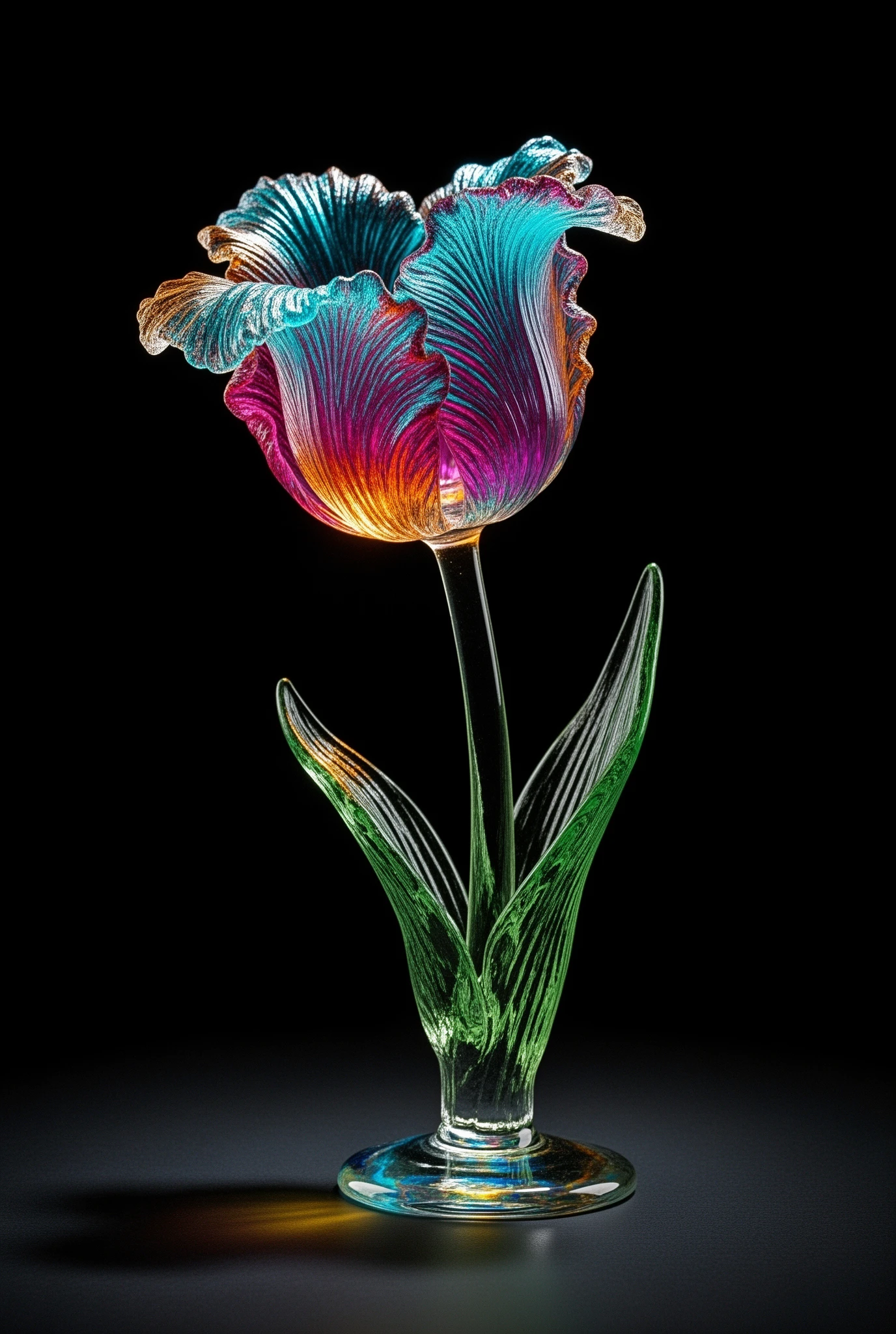
Each work presents a tulip translated into glass, then into image, occupying a space that appears physical yet remains wholly simulated. Light behaves as if transmitted through molten silica; weight and balance seem to obey gravity; surfaces invite touch while remaining untouchable. Vitrea is therefore less about flowers or objects than about the persistence of material conviction in an immaterial medium. What once required furnaces and minerals is now achieved through syntax and probability. The result is a series of objects that do not exist, yet insist — quietly and persuasively — that they do.
At a moment when images are produced in overwhelming quantities and circulate with unprecedented ease, Vitrea adopts a deliberately slower logic. These works are conceived not as fleeting outputs but as images intended to withstand duration — to be printed, handled, installed, and encountered as one would encounter a physical artefact, holding attention through presence rather than novelty. The project asks whether a synthetic image can assume the authority once associated with made things. If glassmaking transforms sand into a substance that holds light, synthography here attempts a parallel task: to transform language into objects that possess weight, presence, and the capacity to endure beyond the conditions of their generation.
Gallery
"Art completes what nature cannot bring to finish." — Aristotle