SOMA: the male body as form, power, and probability
In Greek, sōma describes the body as distinct from mind or soul; in Huxley's Brave New World, soma is a fictional euphoric drug that delivers a manufactured state of equilibrium, a chemistry of control and pleasure. Here, soma is neither spiritual nor medicinal, but physical — a synthographic inquiry into the male body at the point where history, desire, and algorithmic vision intersect. The male body has never been just a body. It has always been a coded surface on which societies inscribe their ideals, fears, and hierarchies. Artificial intelligence is simply the latest author. In ancient Greece the body was conceived as ideal form, governed by proportion and harmony; in Rome it became an instrument of power, shaped by discipline and authority; in contemporary culture it is reconfigured as identity, curated, measured, and circulated through images. In artificial intelligence, the body undergoes a further transformation: it becomes probability — a statistical construct assembled from data, inference, and optimisation. Soma traces this continuum, following the body as it moves from ideal, to power, to identity, to algorithm.
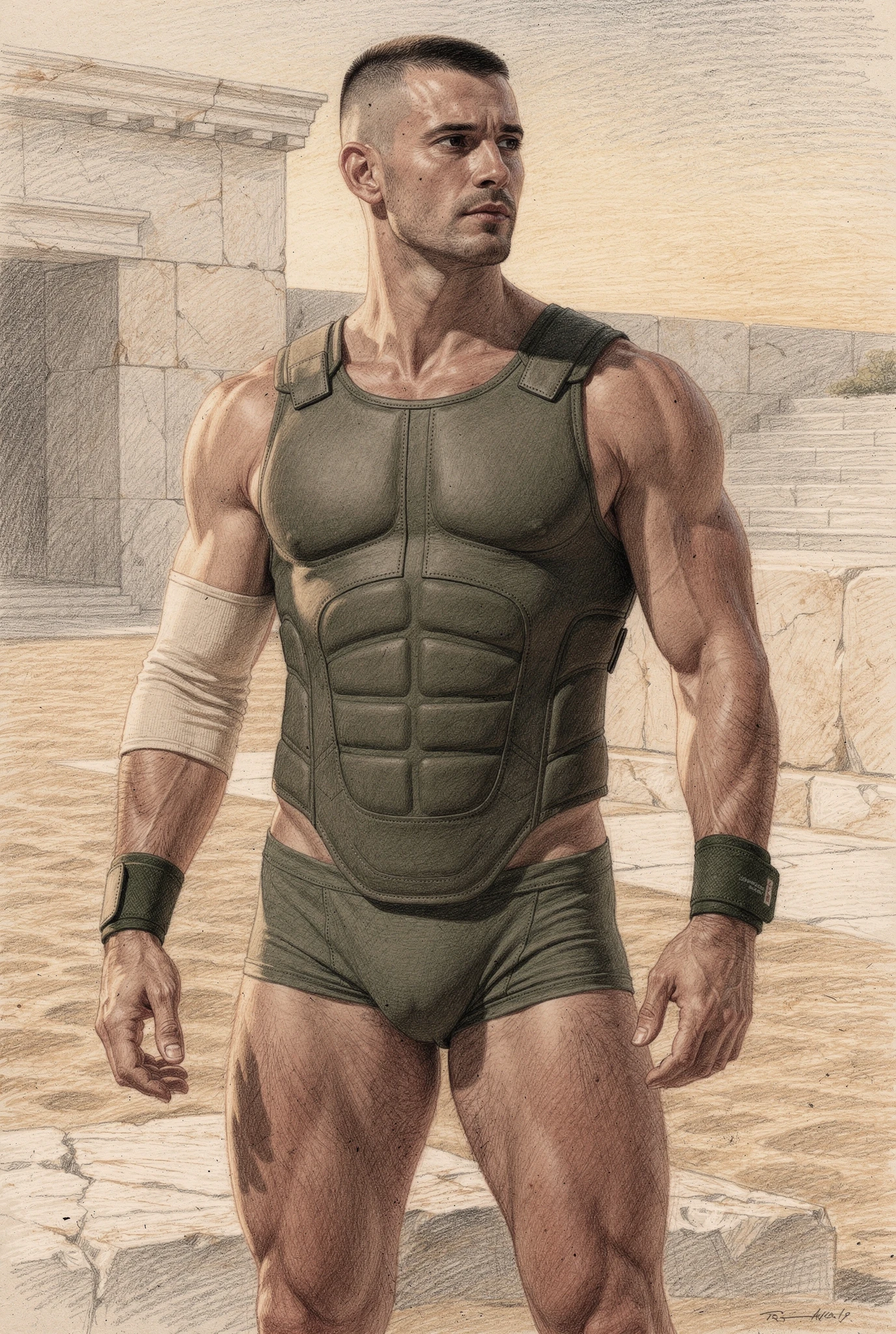
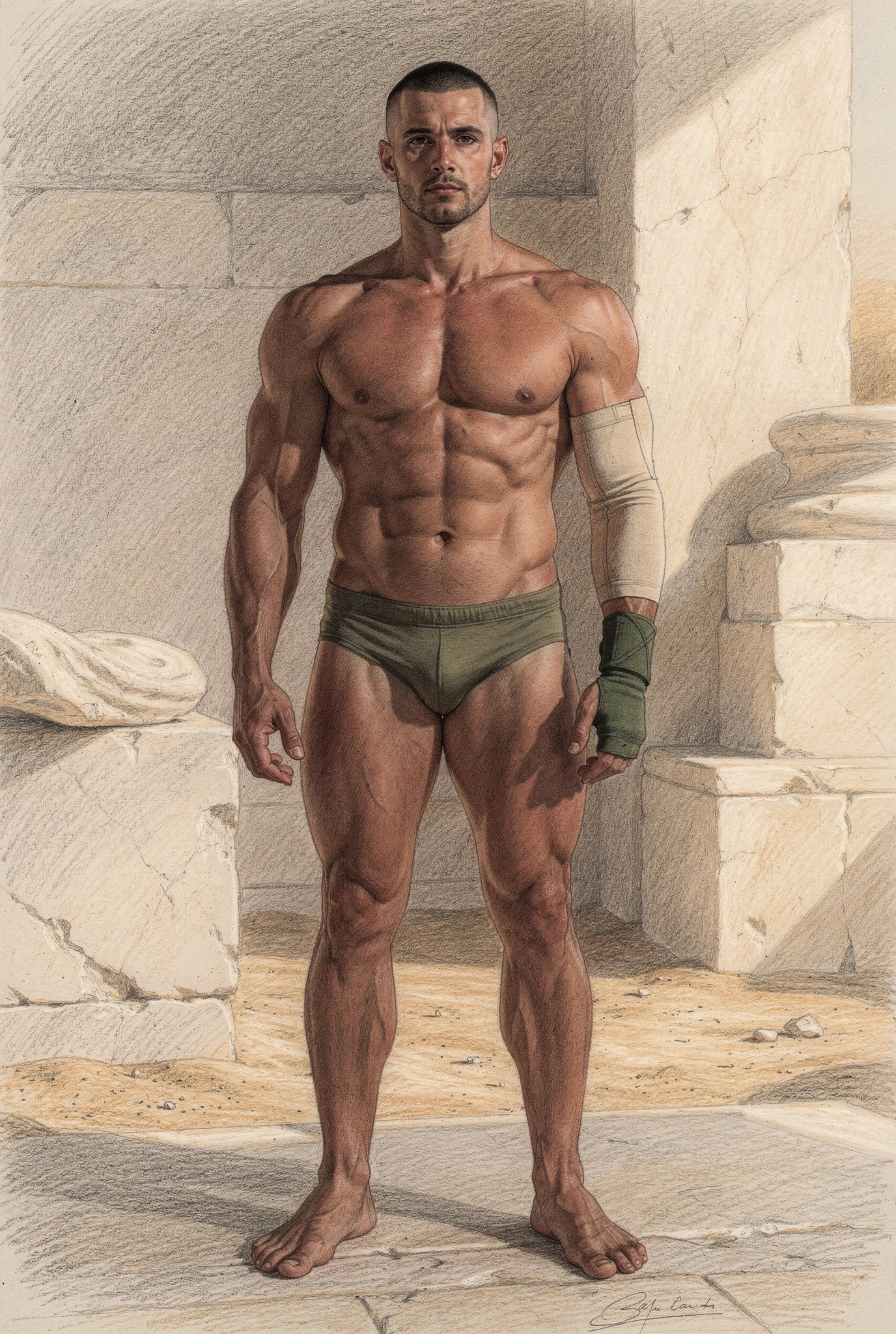
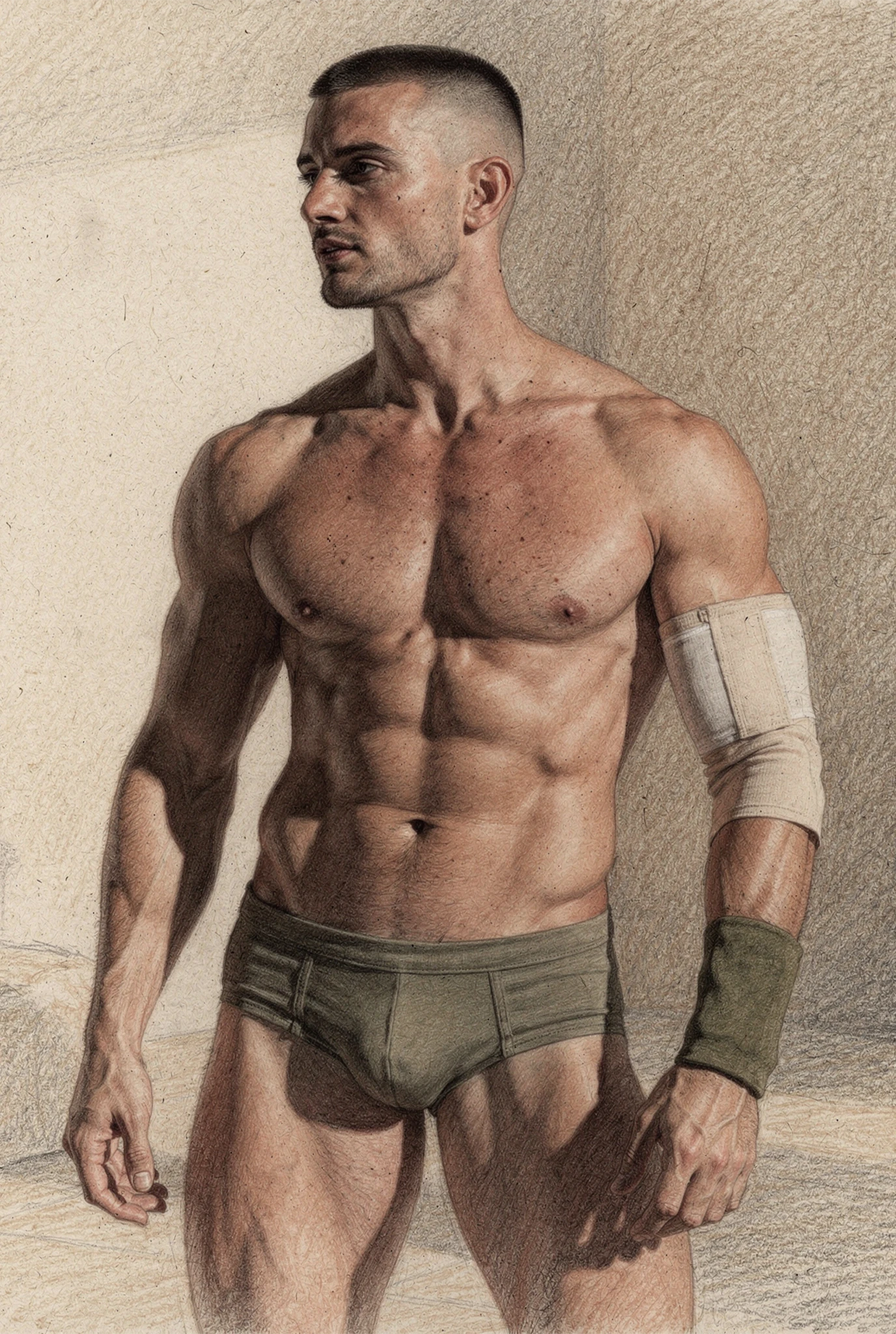
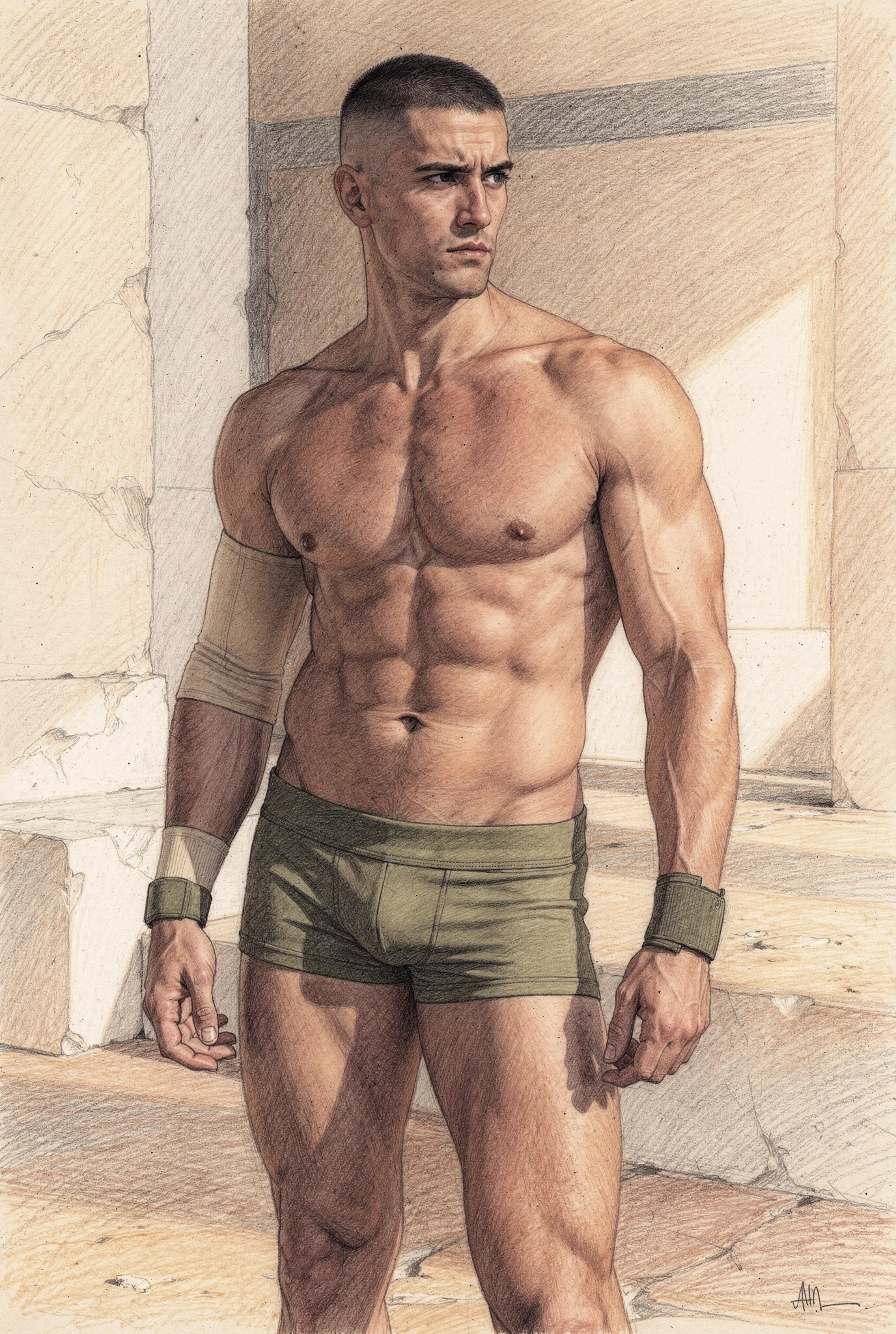
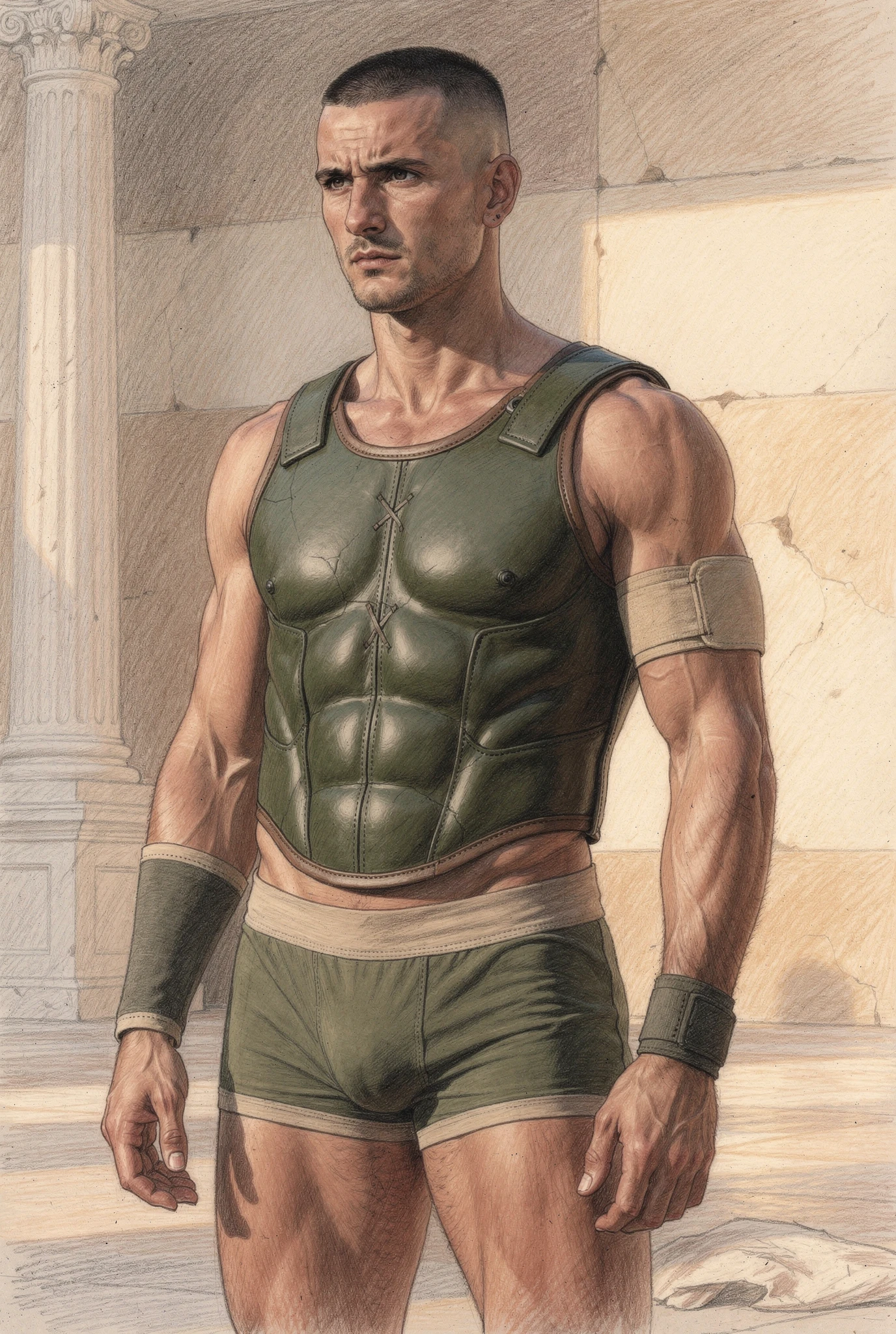
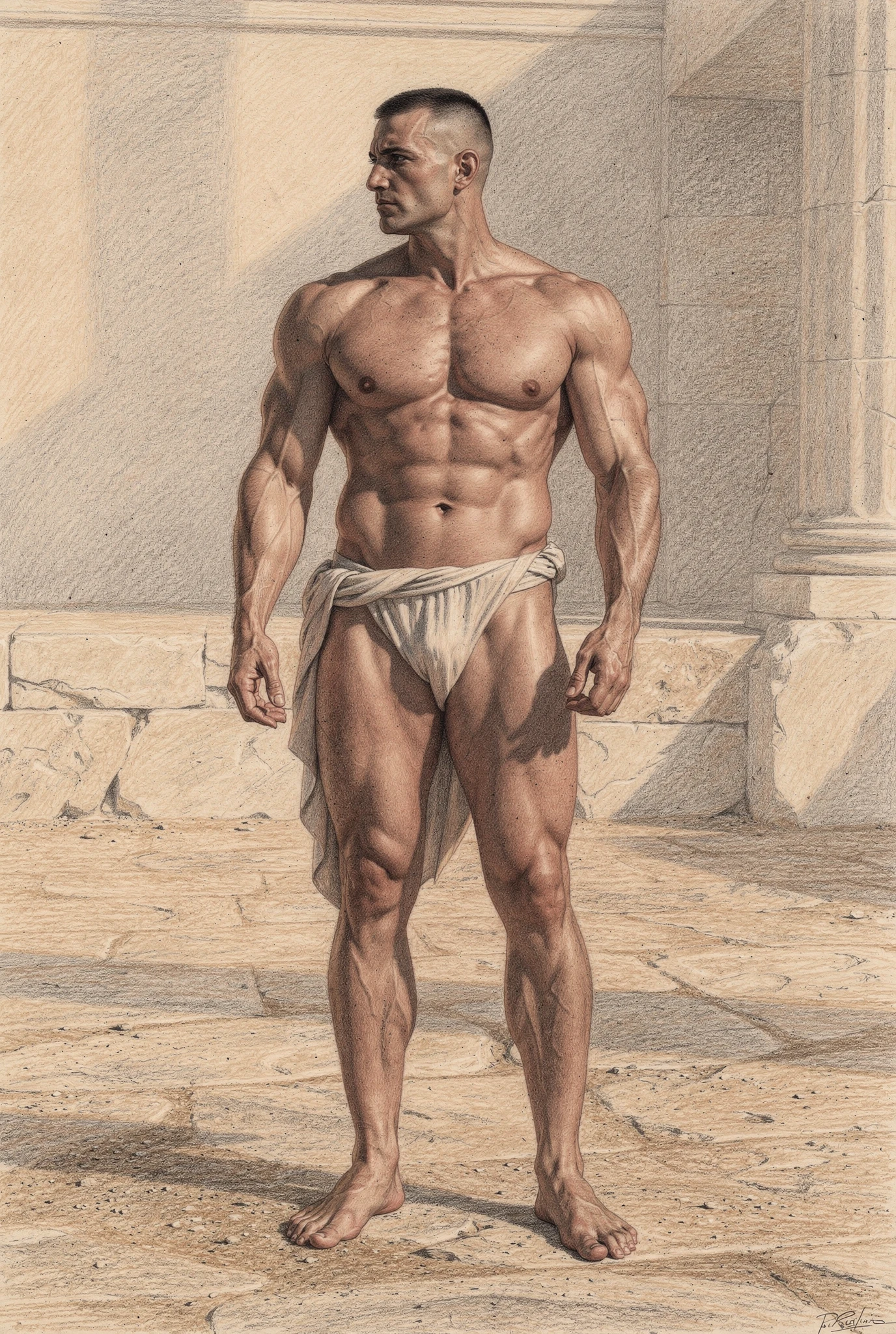
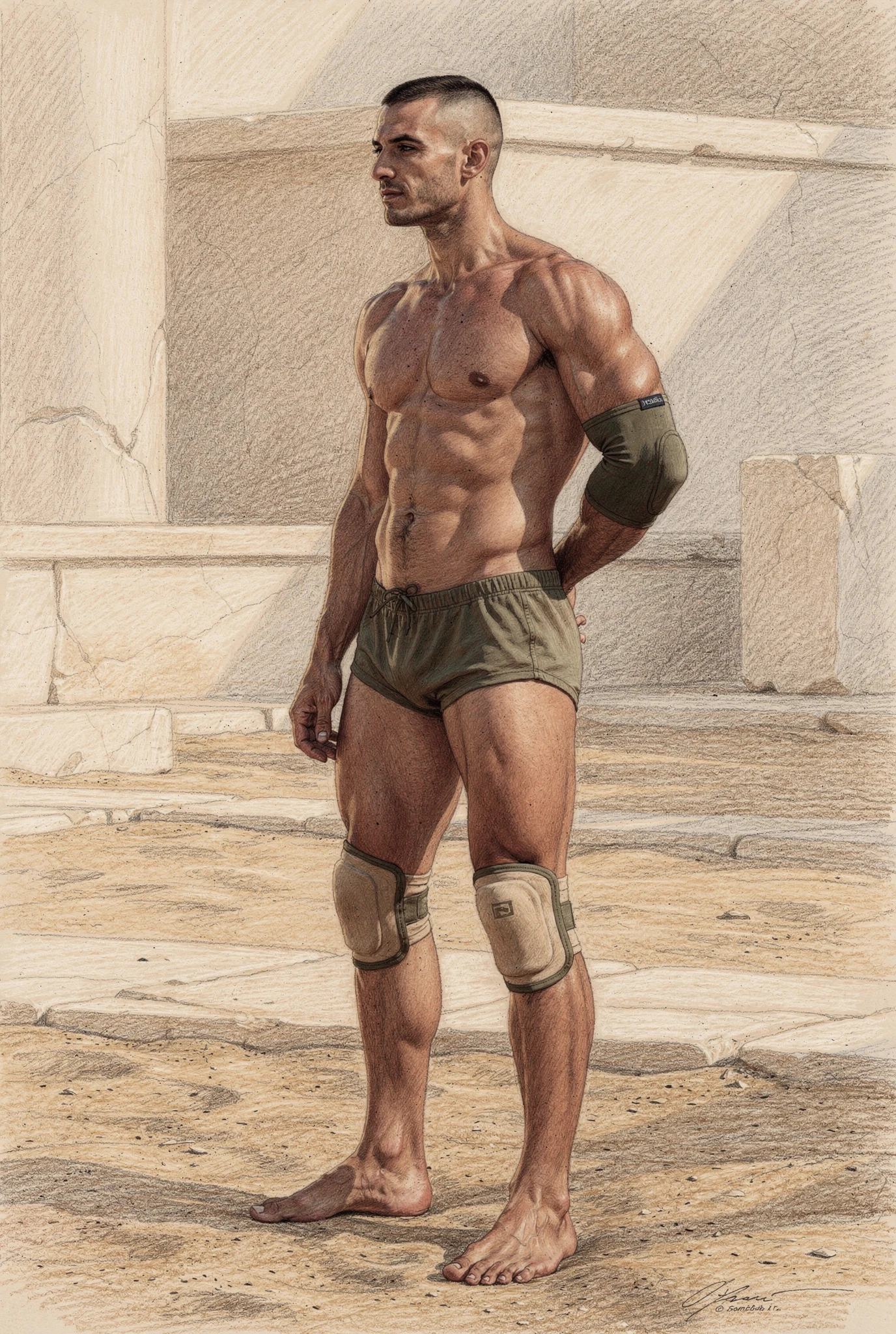
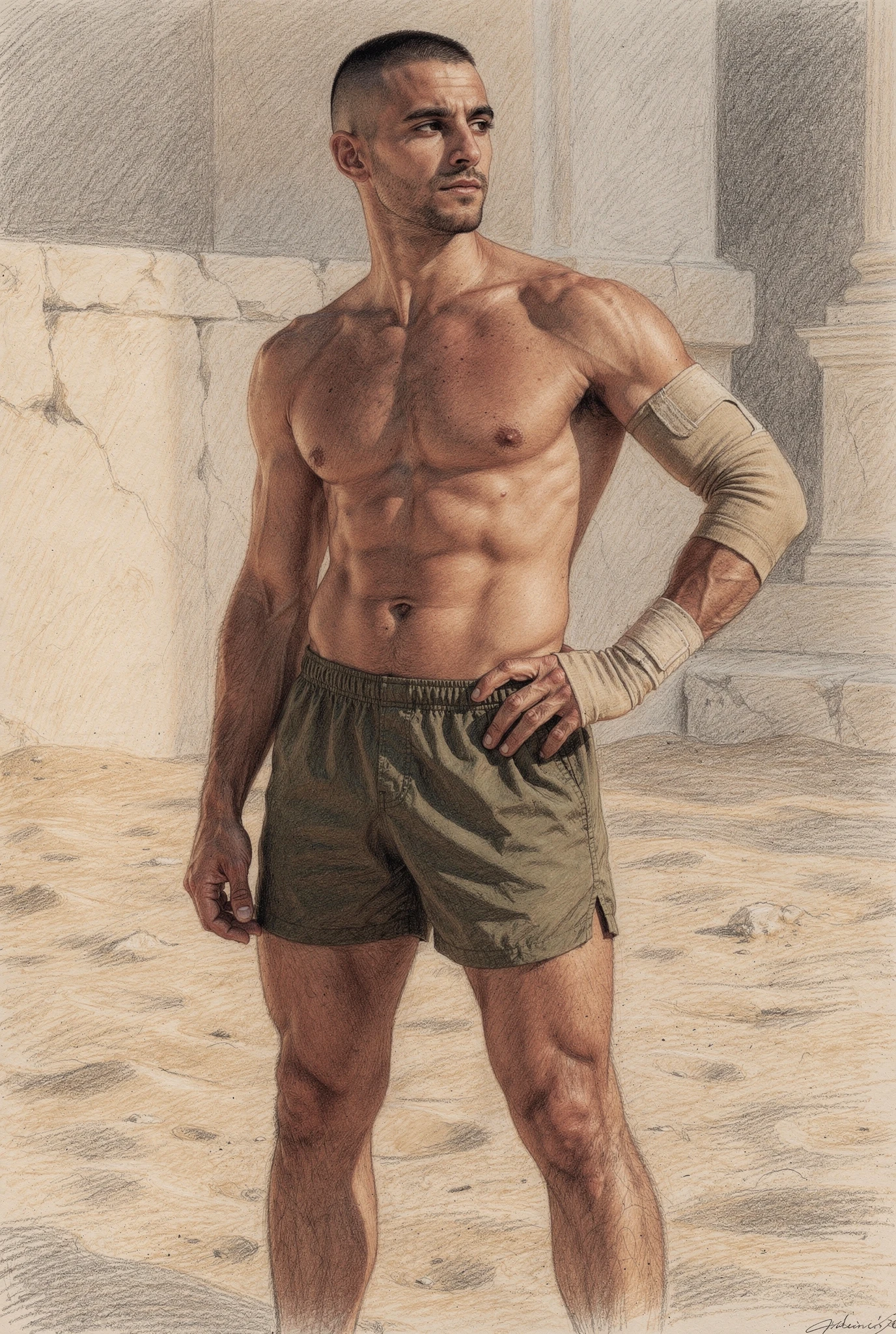
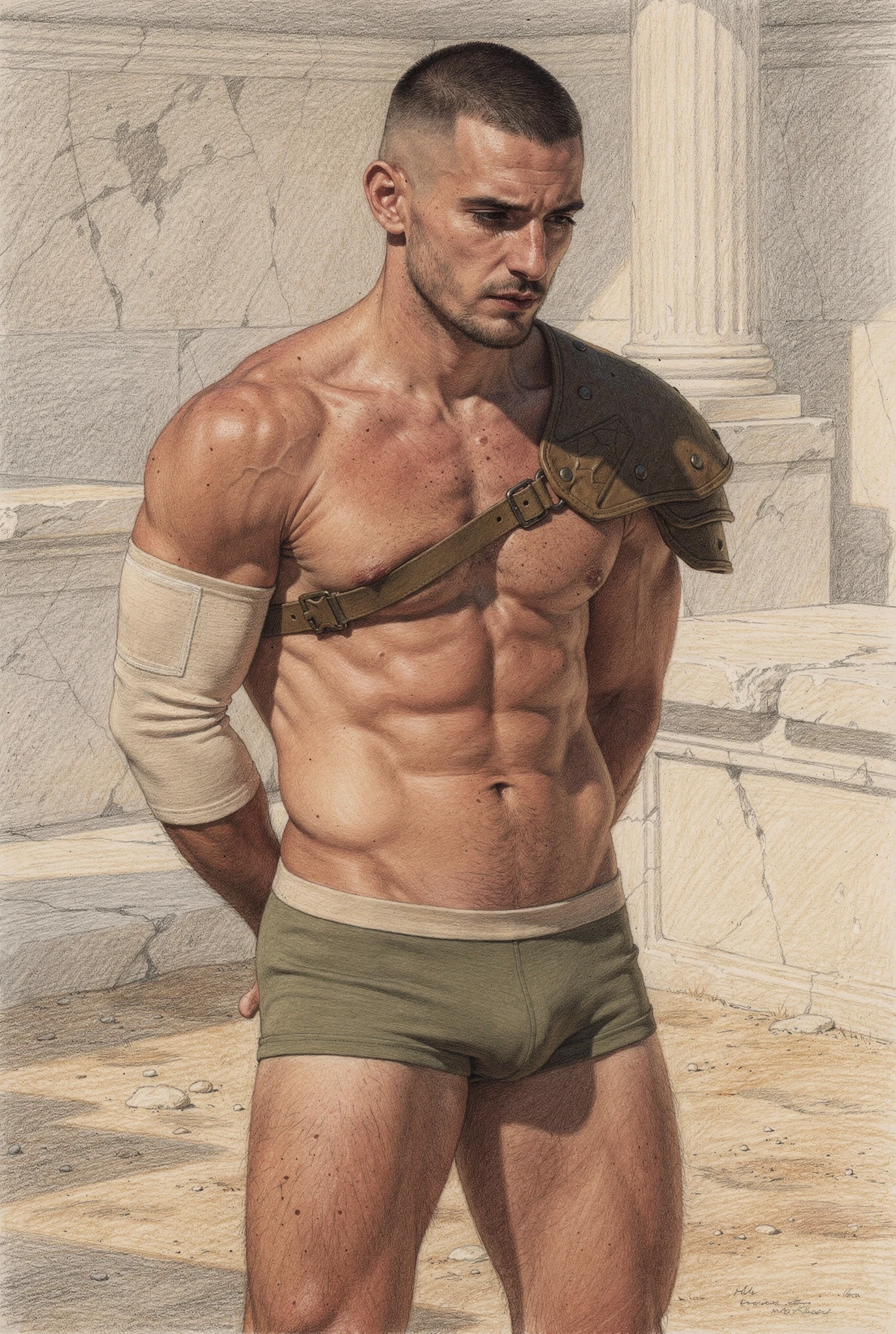
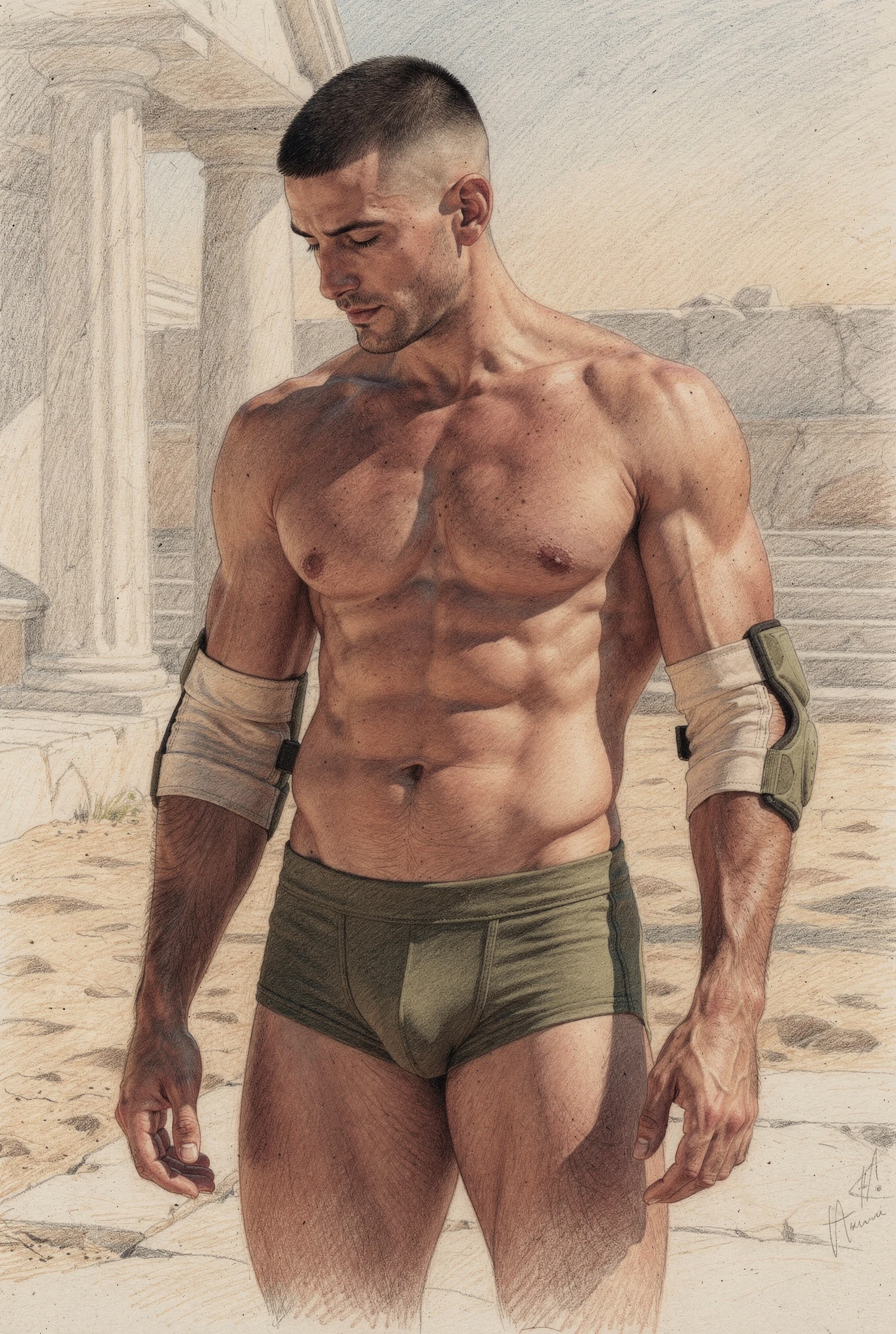
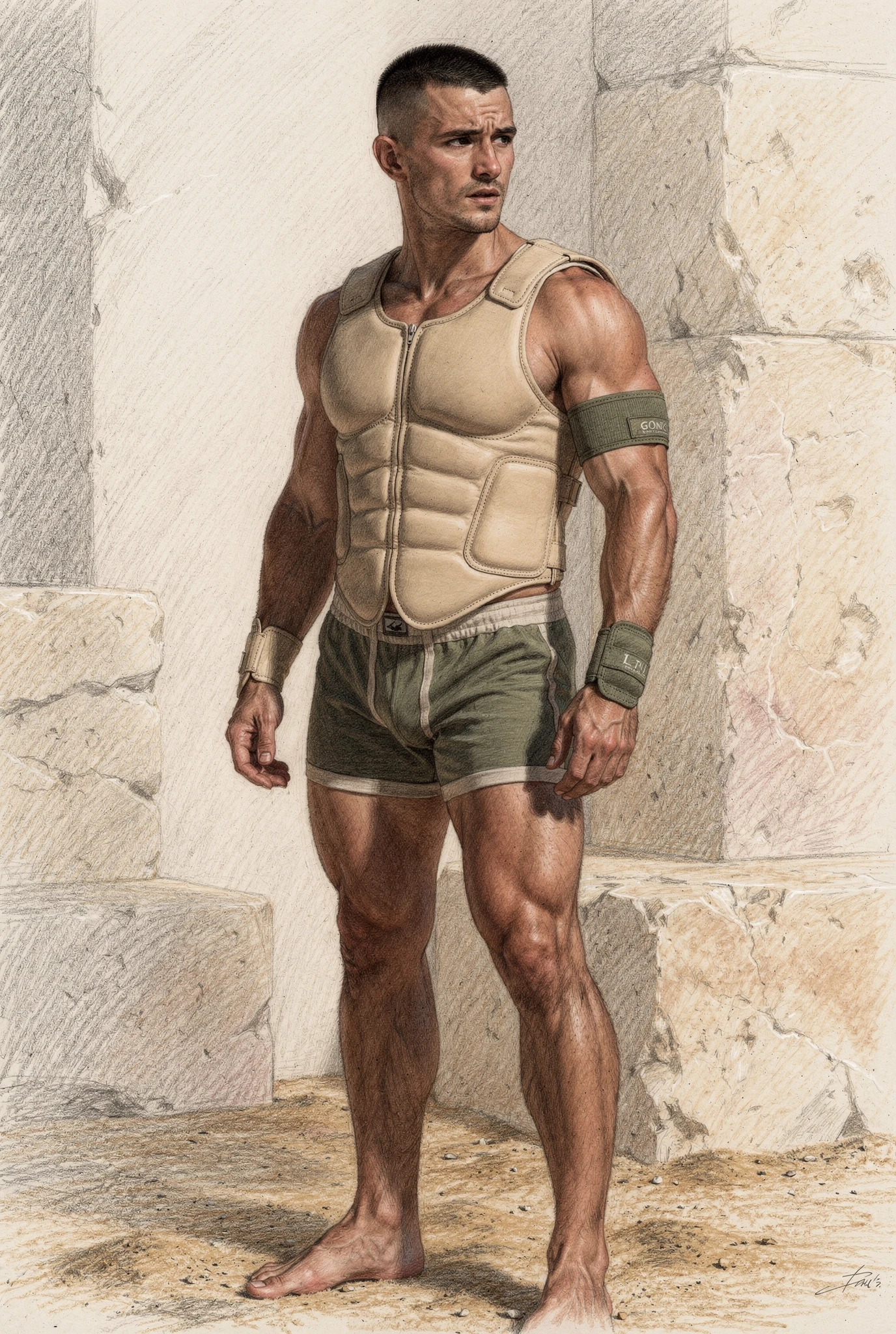
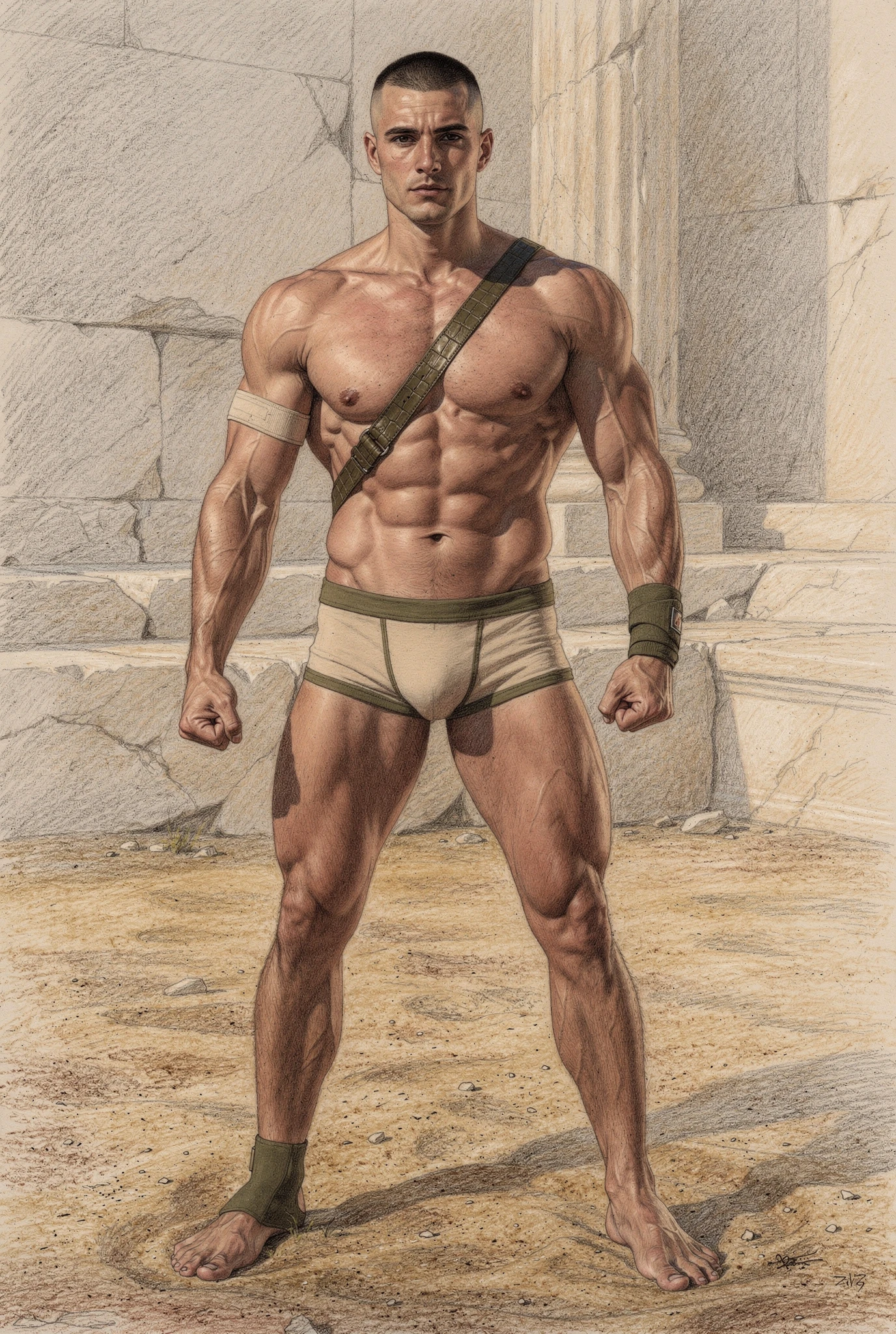
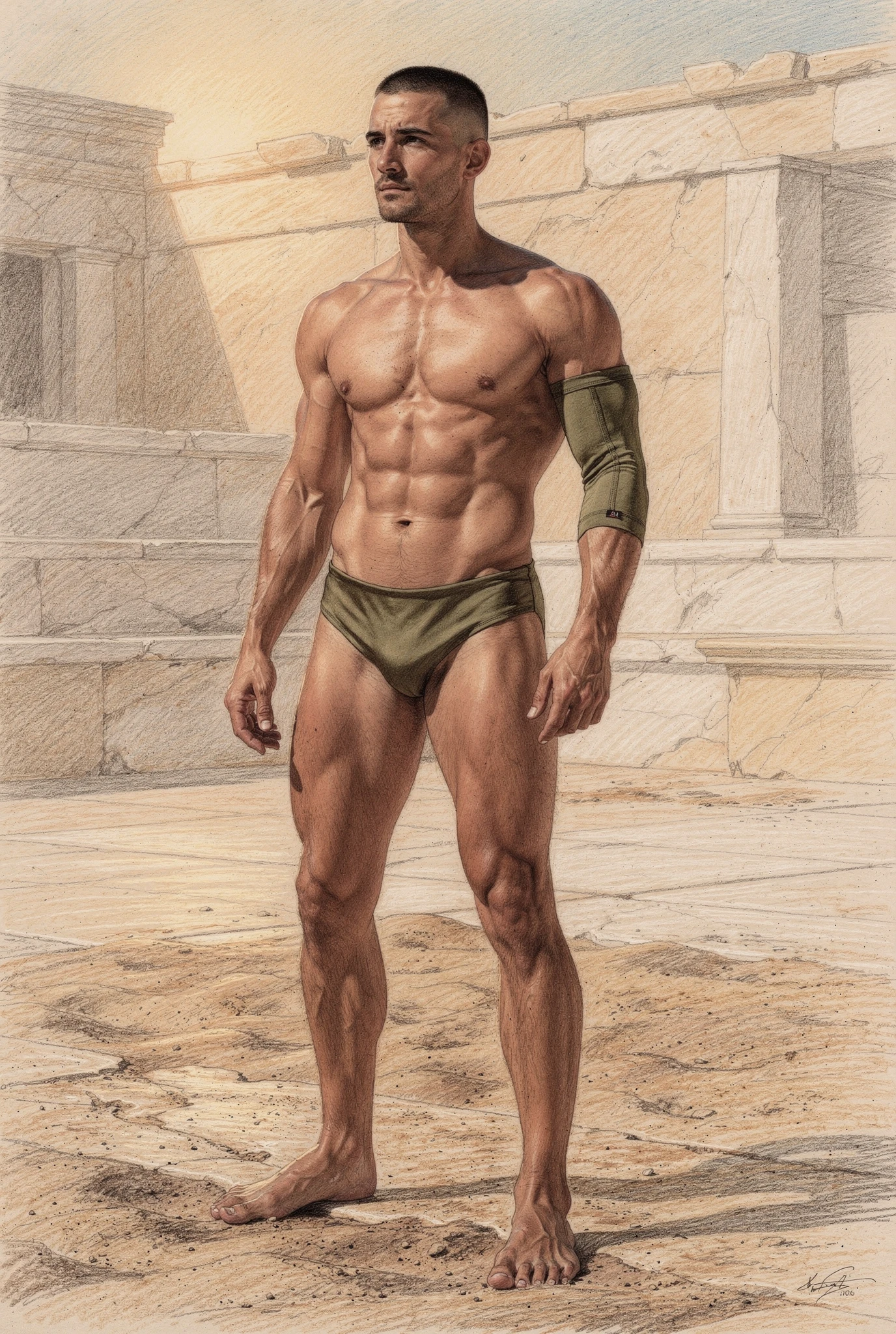
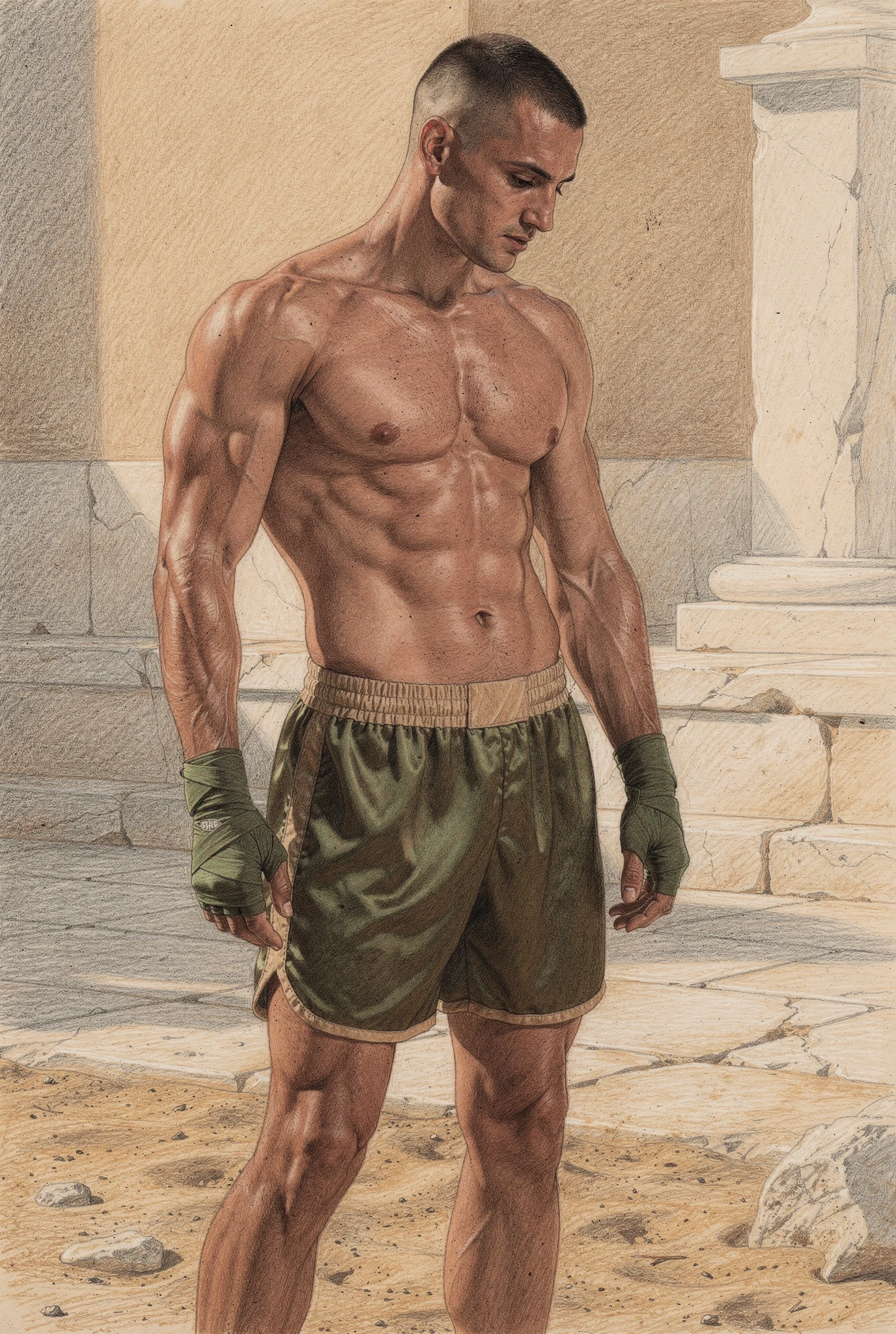
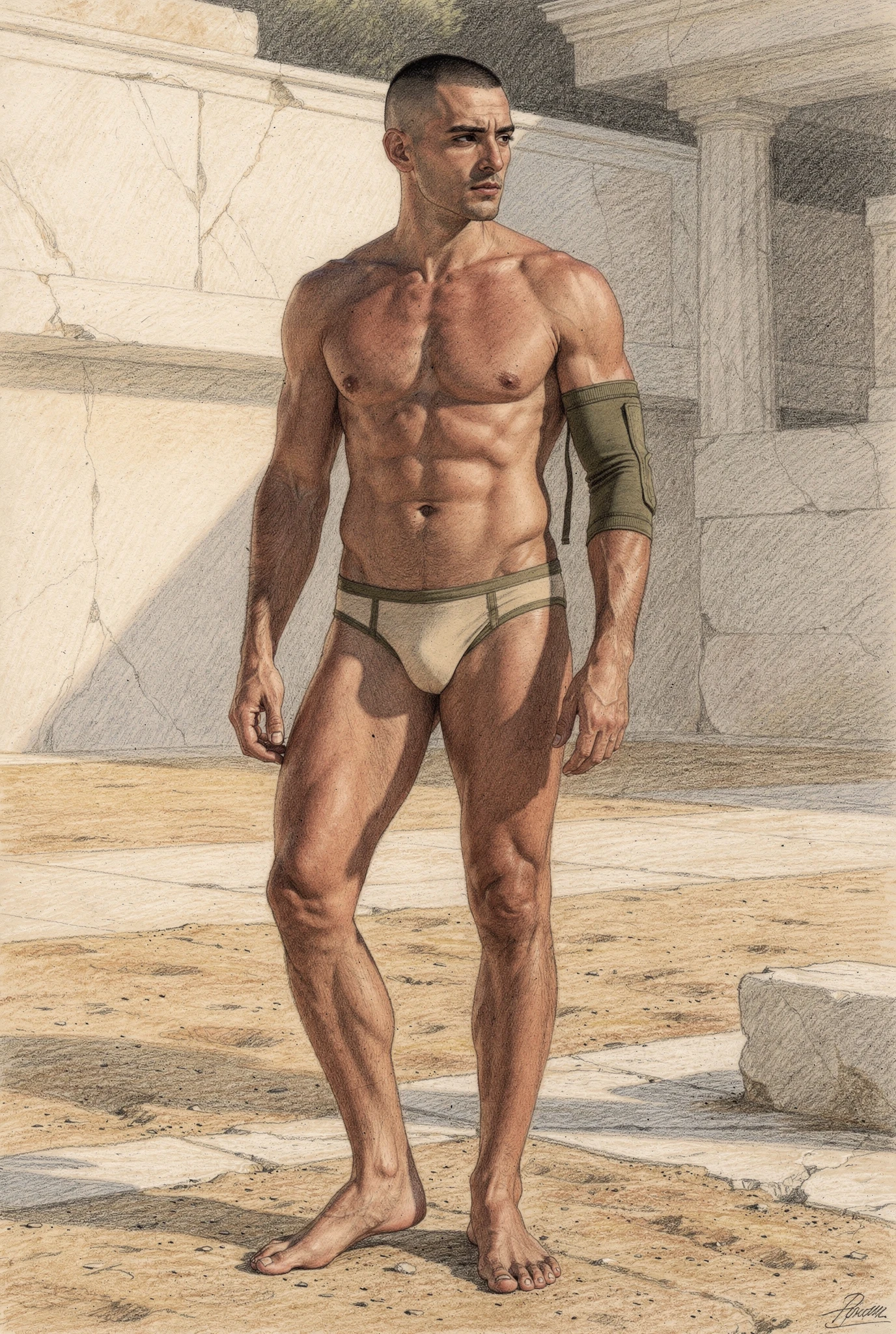
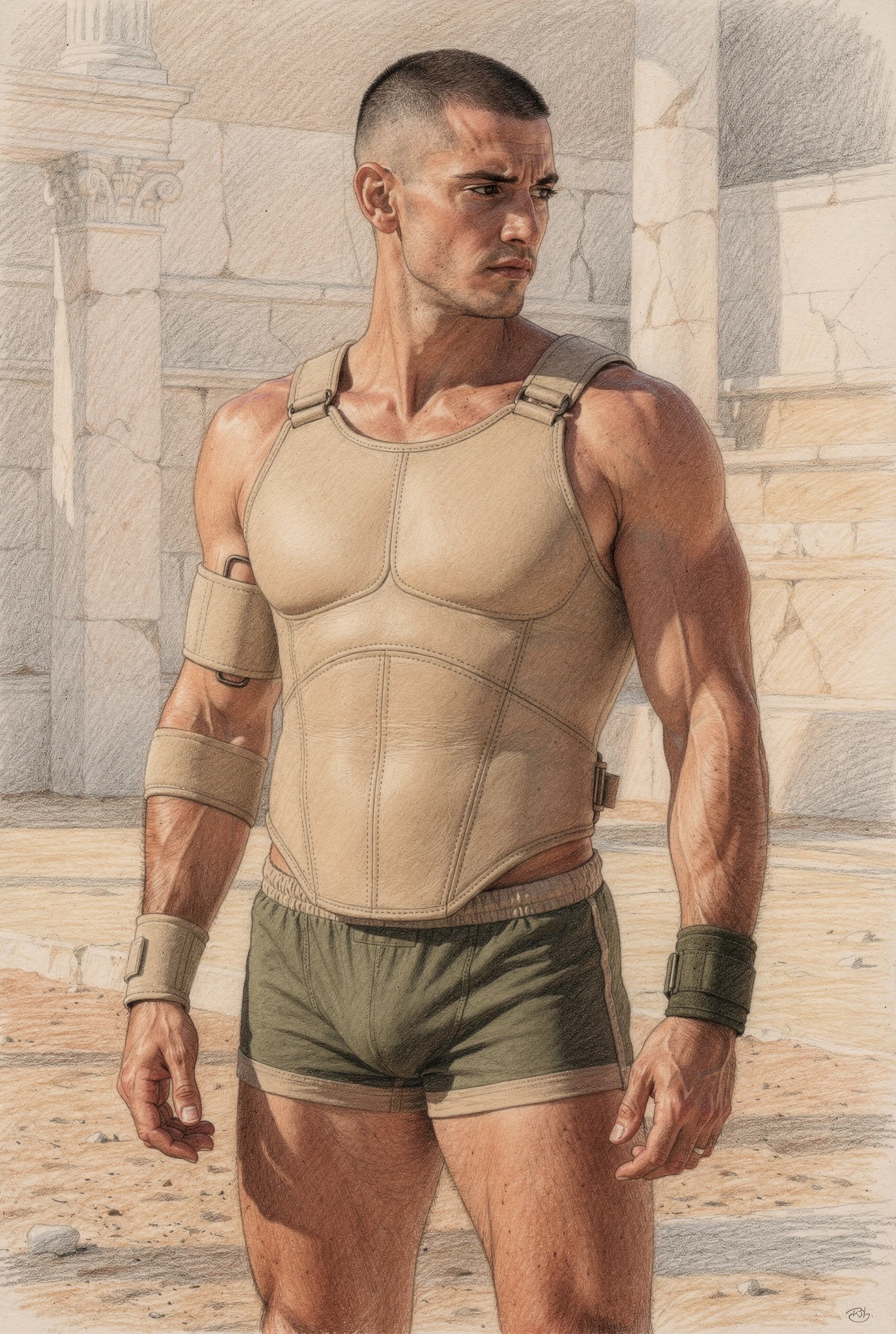
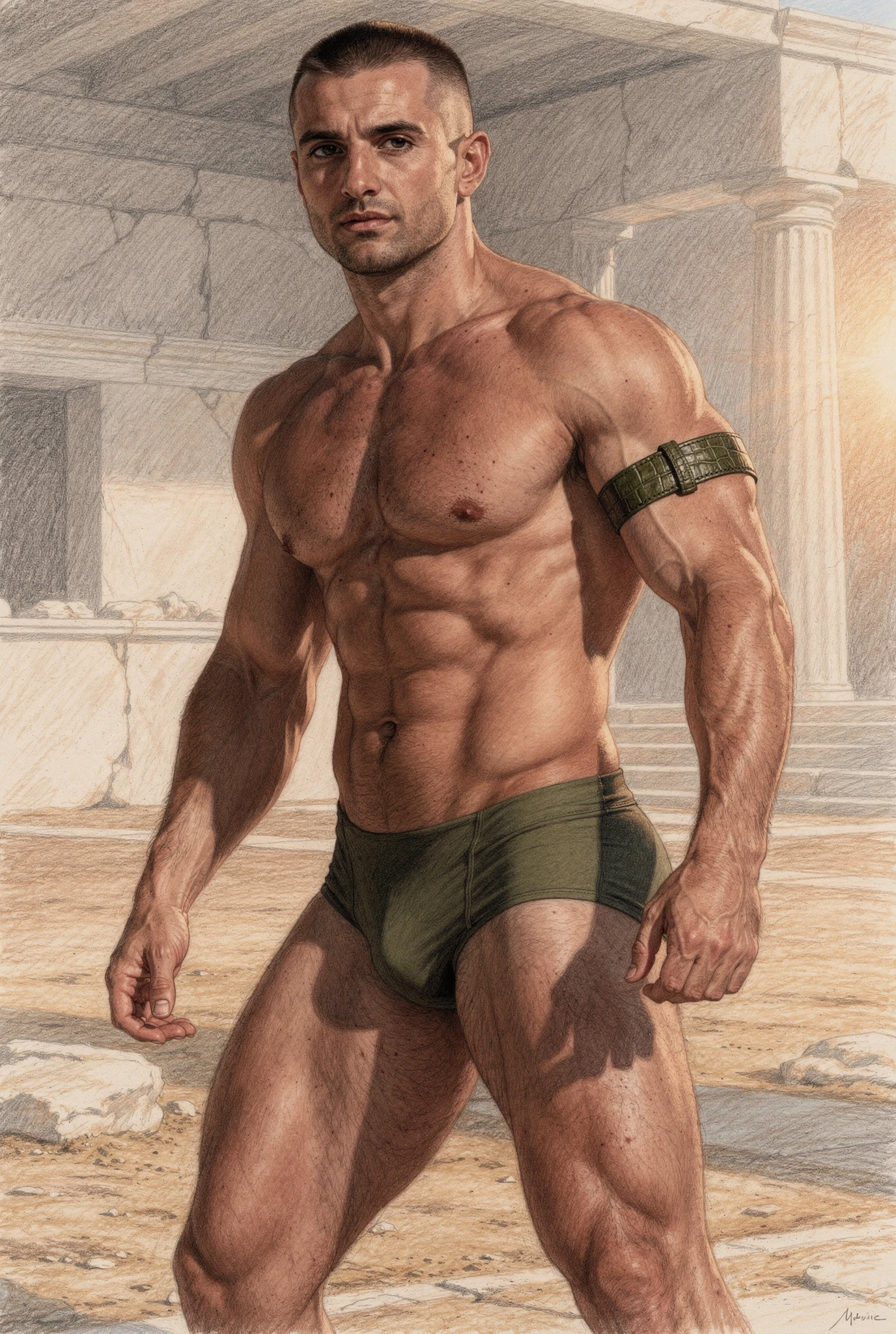
The figures in Soma are not portraits of real men but synthetic bodies rendered as flesh. Their skin is warm, sun-kissed, and shaped by training rather than chance, suggesting lives lived in Mediterranean climates where the body is formed through sport, exercise, and discipline. These bodies are not accidental; they are produced, maintained, and watched. They inhabit abstracted palaestra-like spaces — architectural residues of ancient training grounds — where physique culture, observation, and control converge. Modern garments and accessories situate the figures in contemporary time, while occasional references to the anatomical cuirass recall Roman strategies of power dressing, where armour mirrored an idealised physique rather than concealing it. Rendered through a dual logic in which environments dissolve into graphite while flesh remains chromatic and tactile, the figures appear both archaeological and contemporary, intercepted rather than staged.
Rather than heroic gestures or symbolic narratives, Soma captures bodies in moments of micro-movement: shifting weight, turning, hesitating, resting. These men do not perform overtly, yet they are acutely visible, caught within overlapping regimes of gaze that include classical aesthetics, modern self-surveillance, and machine vision. Homoeroticism emerges not as spectacle but as structural tension — between admiration and authority, exposure and restraint, discipline and desire. Beneath the surface lies a quiet mythology: not gods, but archetypes encoded in posture and proportion, bodies calibrated to be looked at and to know they are being looked at. Their presence oscillates between confidence and introspection, control and vulnerability. Soma does not ask how the male body should be represented; it asks how the male body is seen when beauty becomes power, power becomes identity, and identity becomes data — when the body is no longer simply human, but a coded structure of looking that looks back at itself.
Gallery

"The chief function of the body is to carry the brain around." — Thomas A. Edison