Osuneko: from concept to realisation
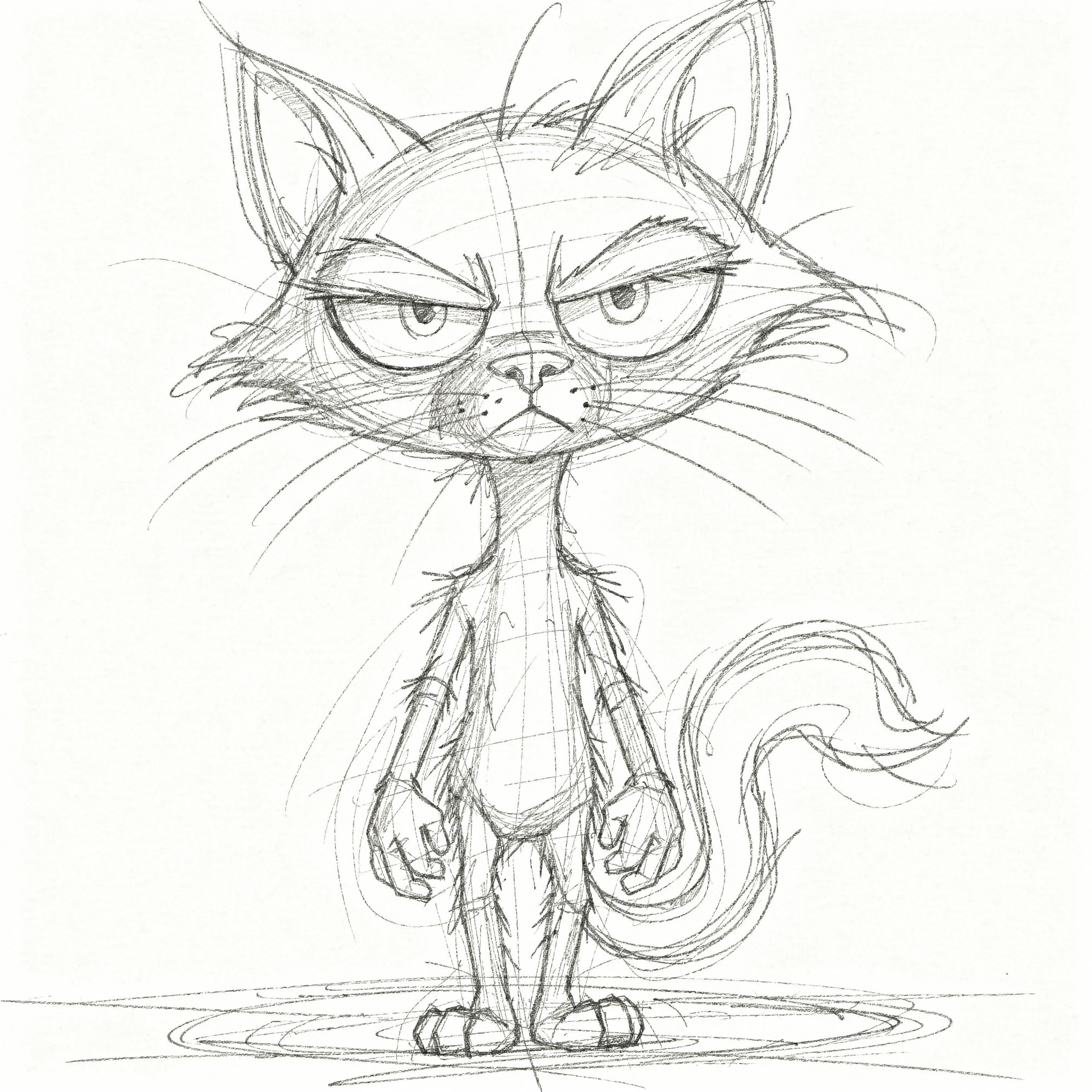
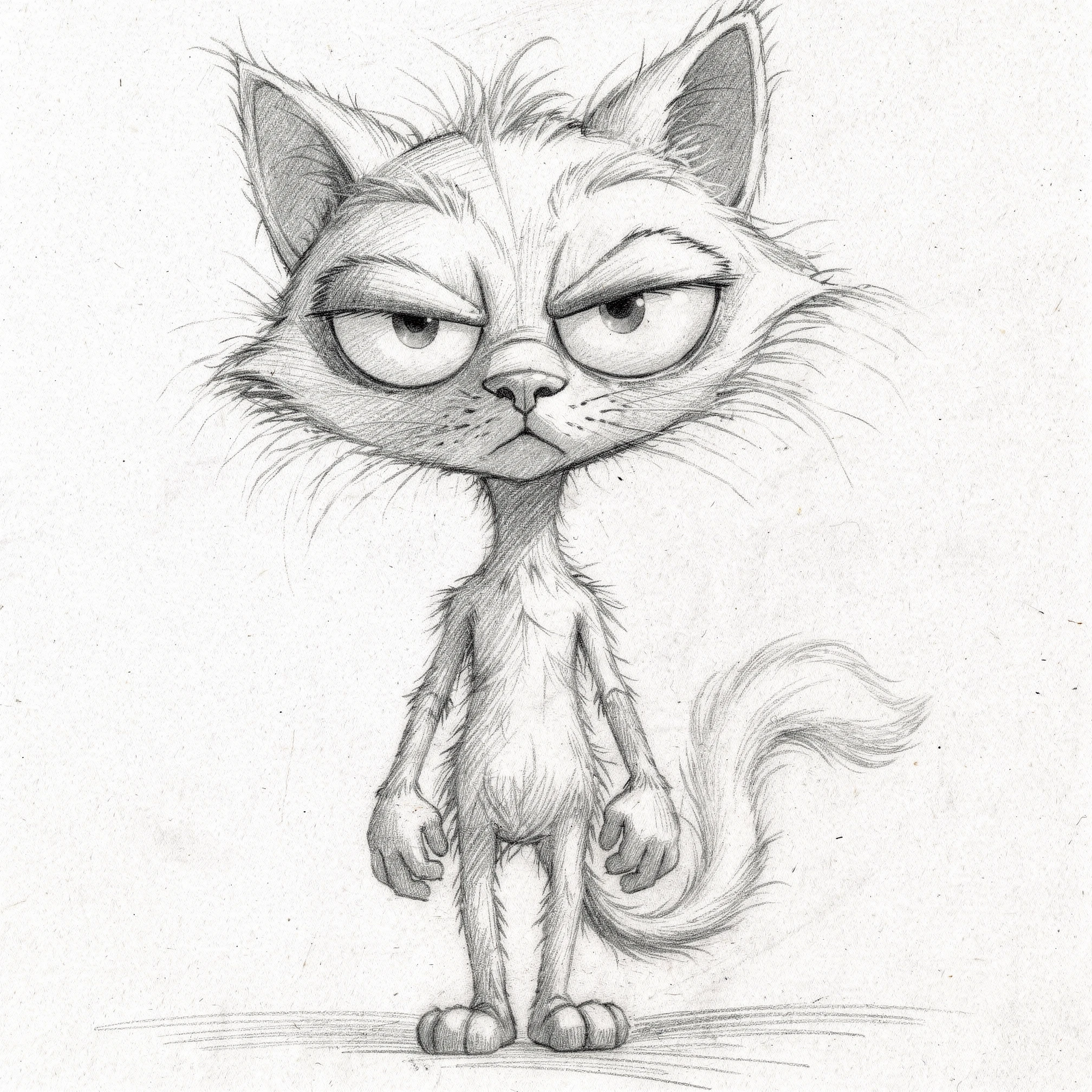
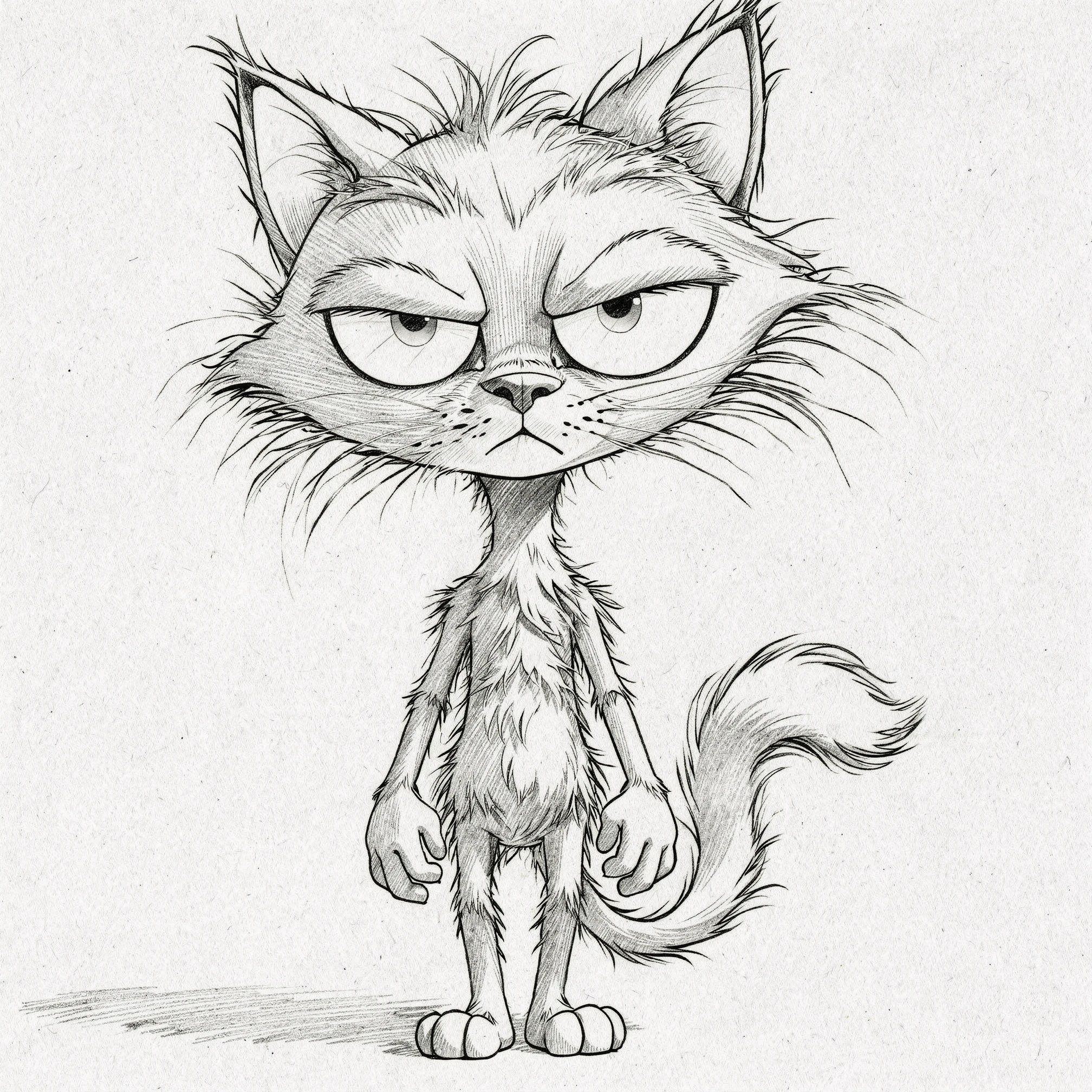
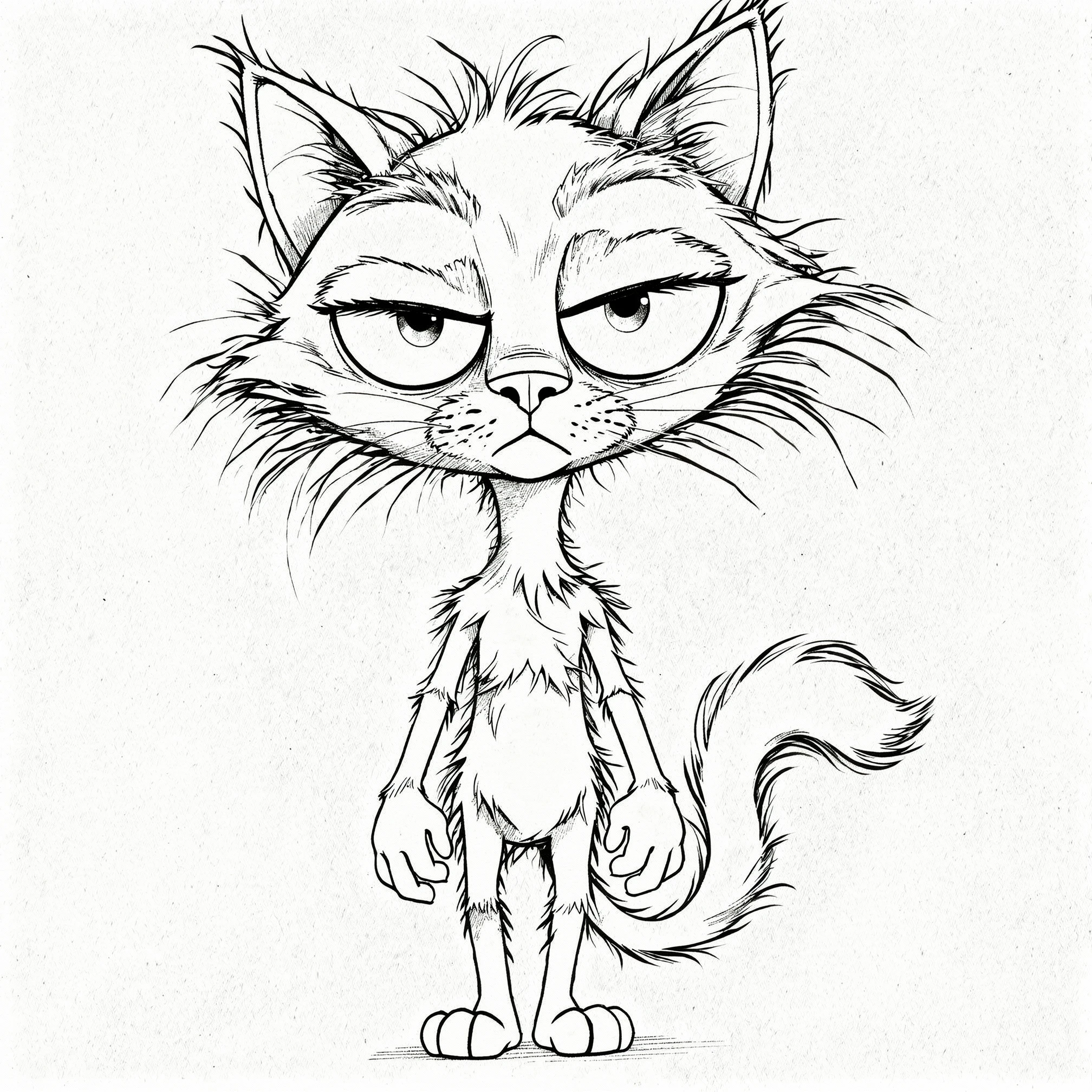
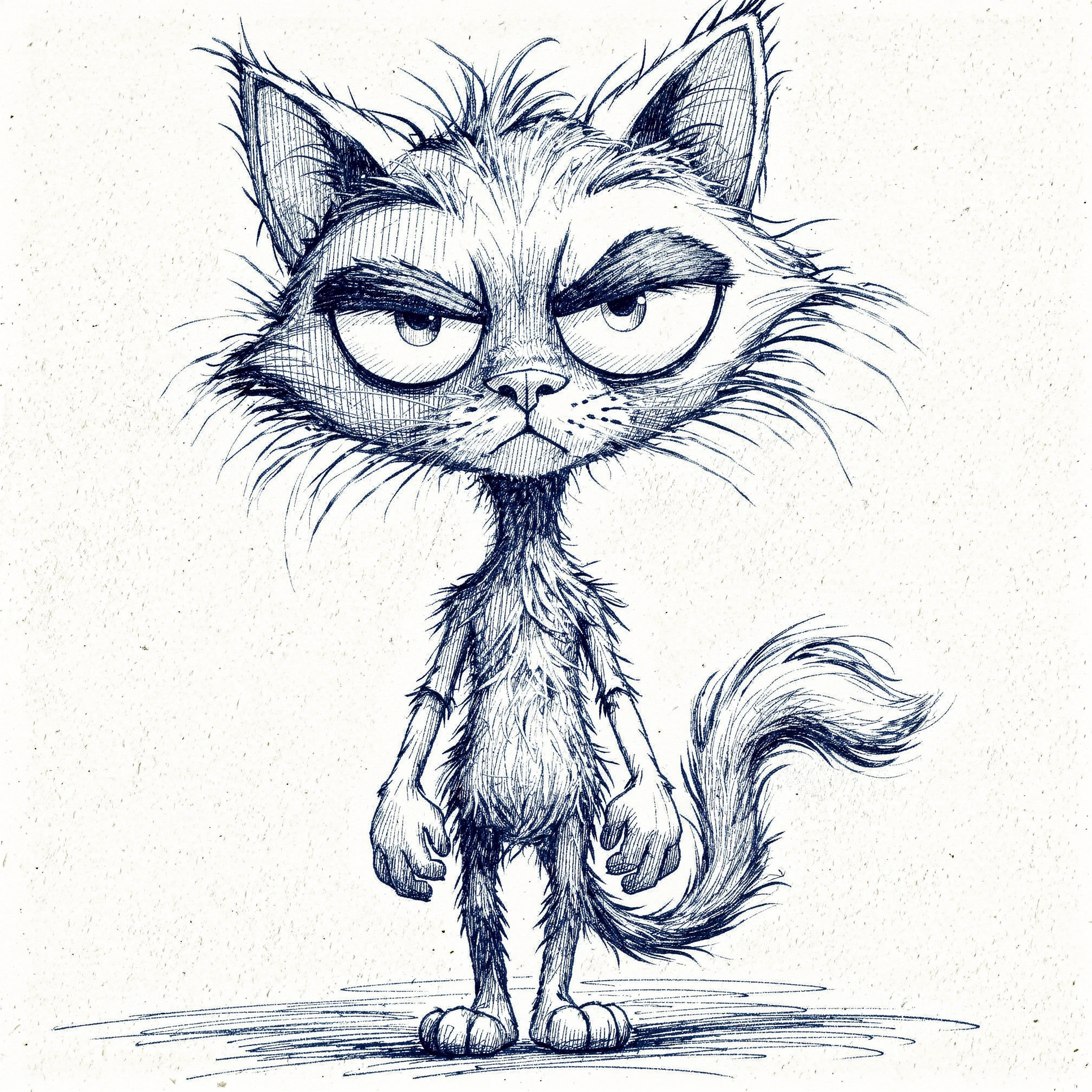
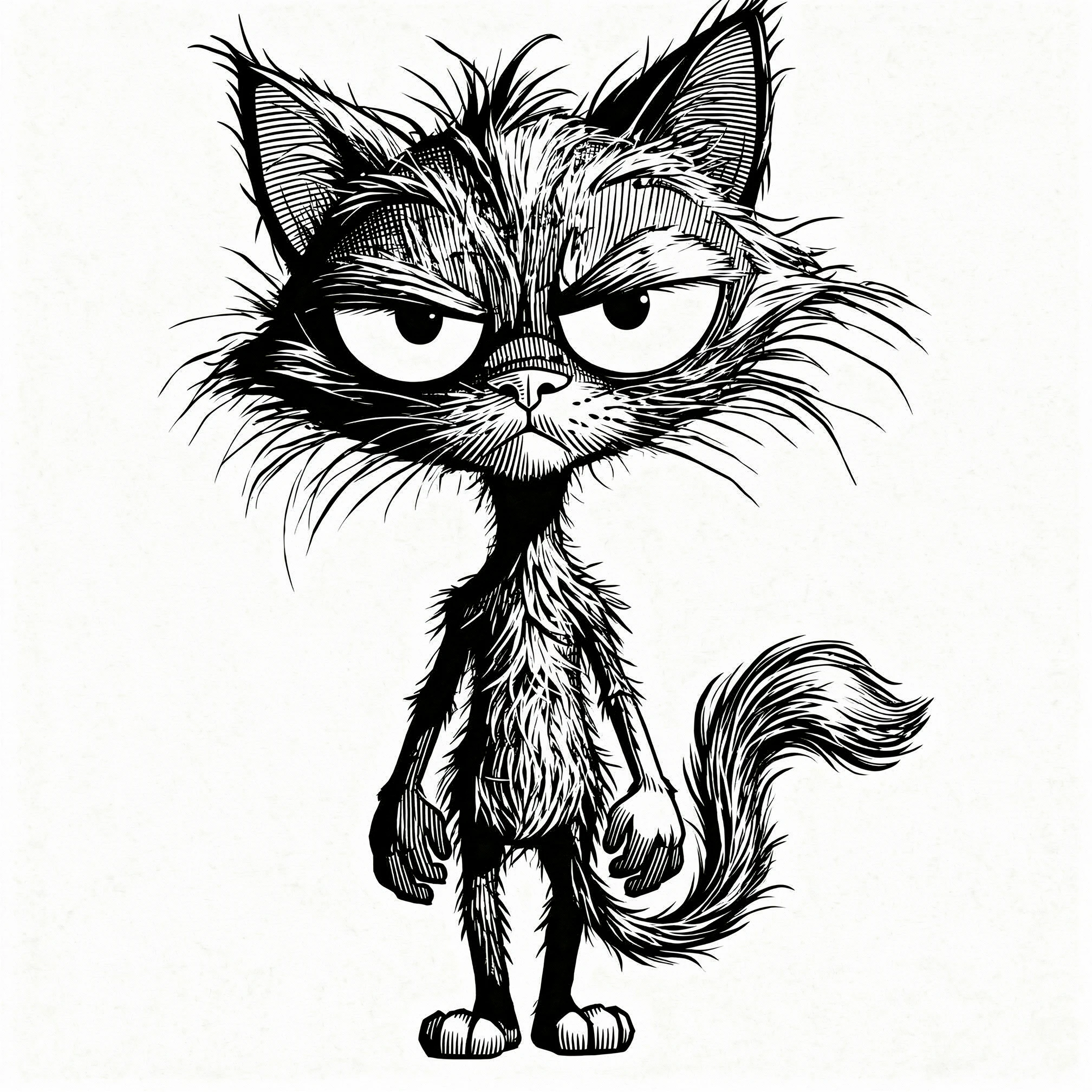
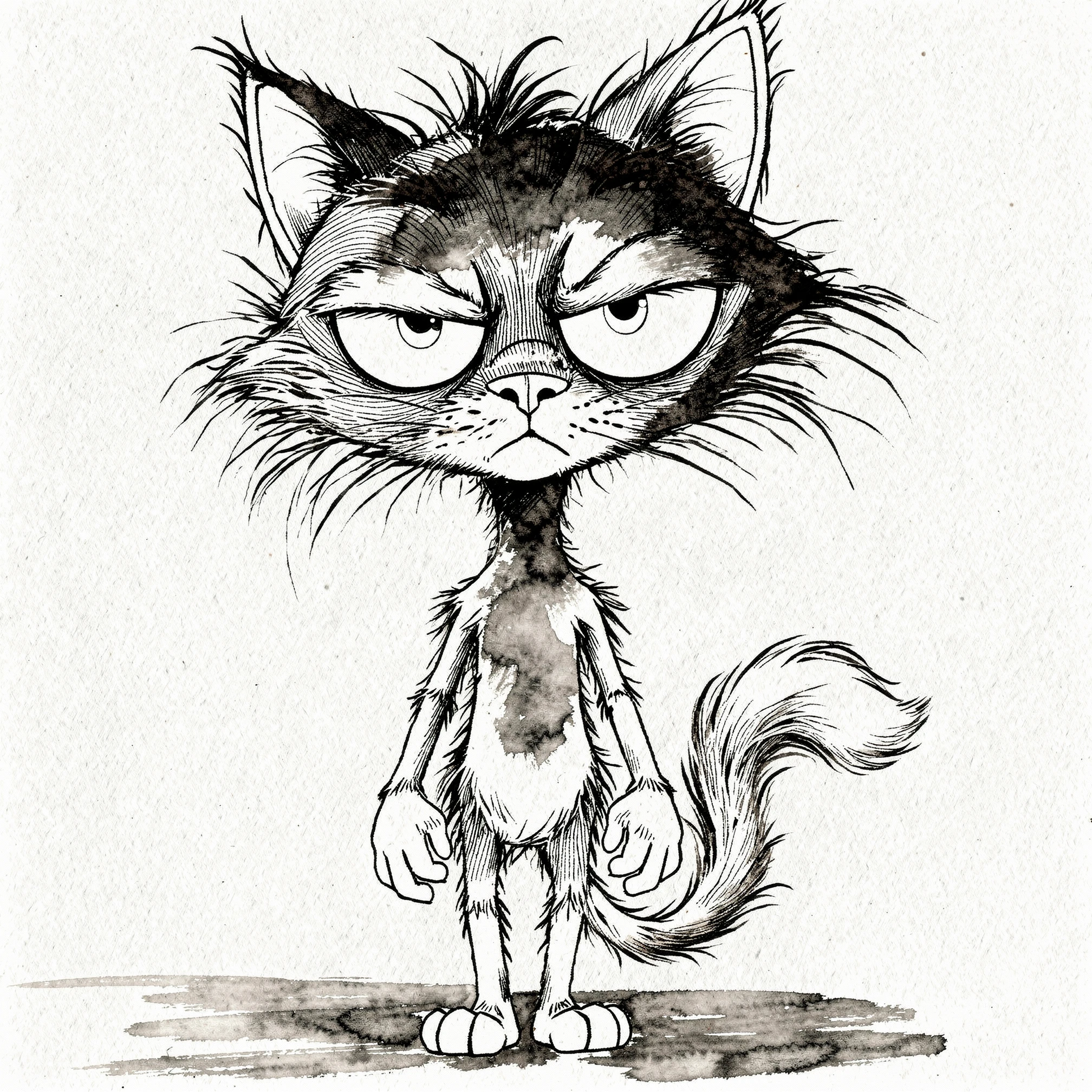
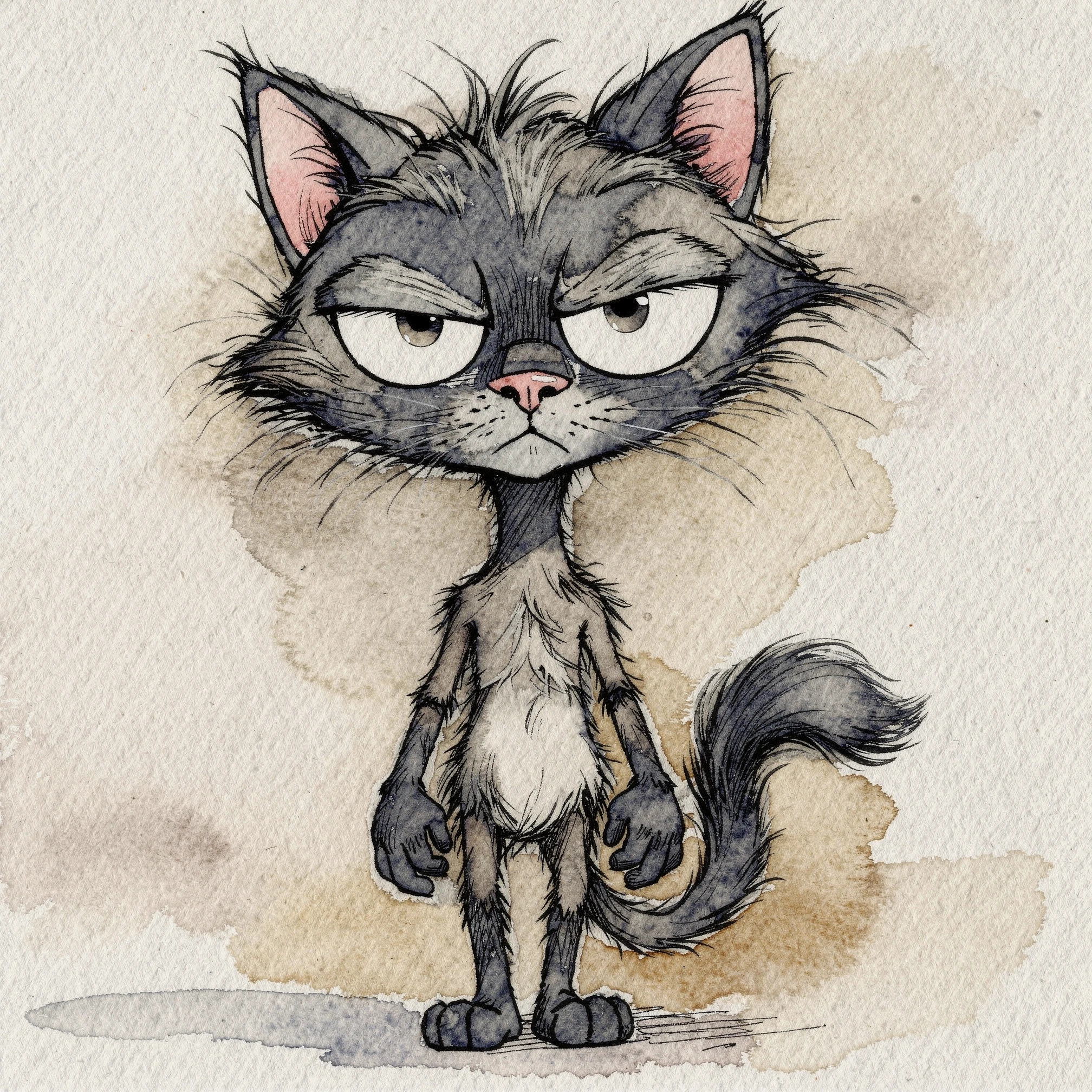
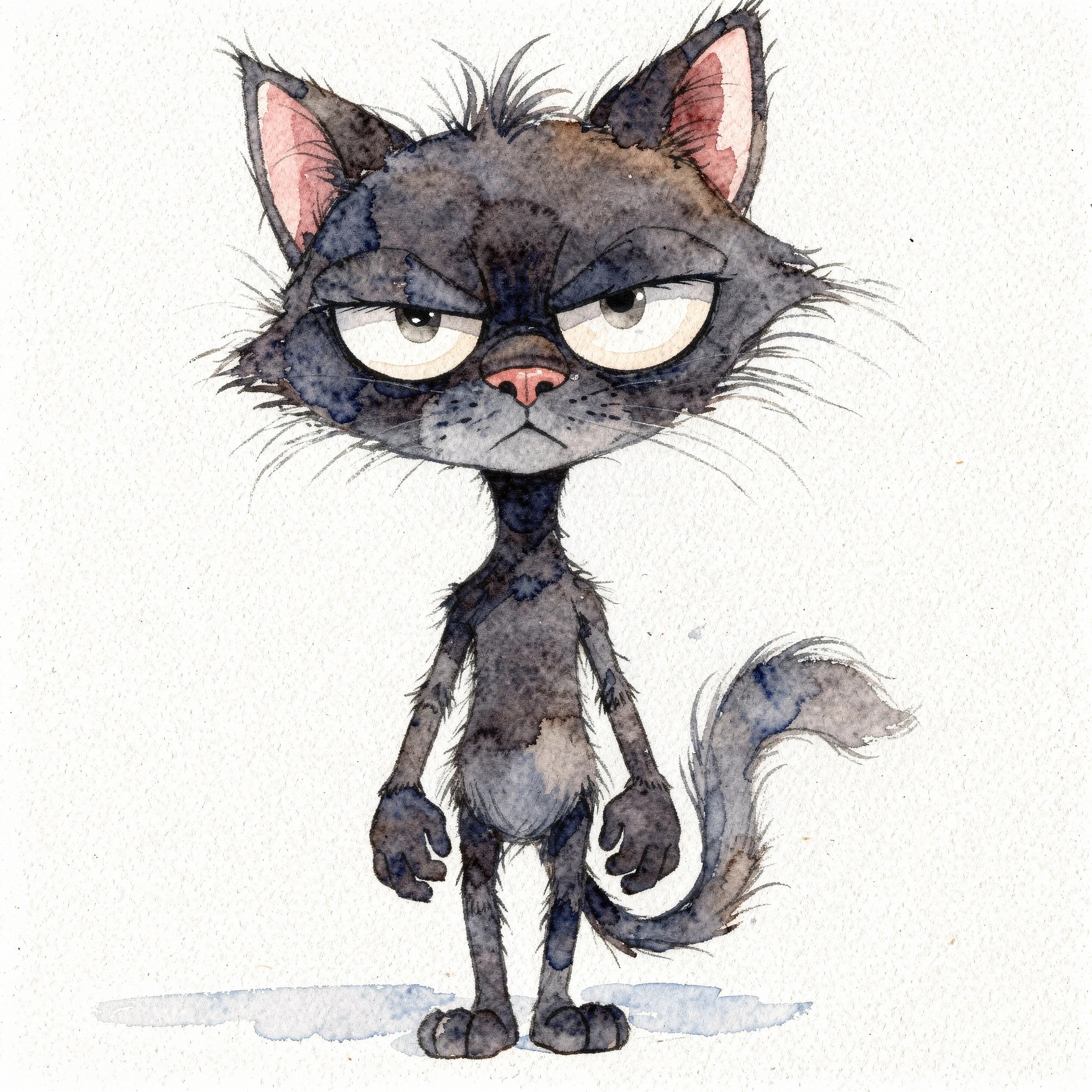
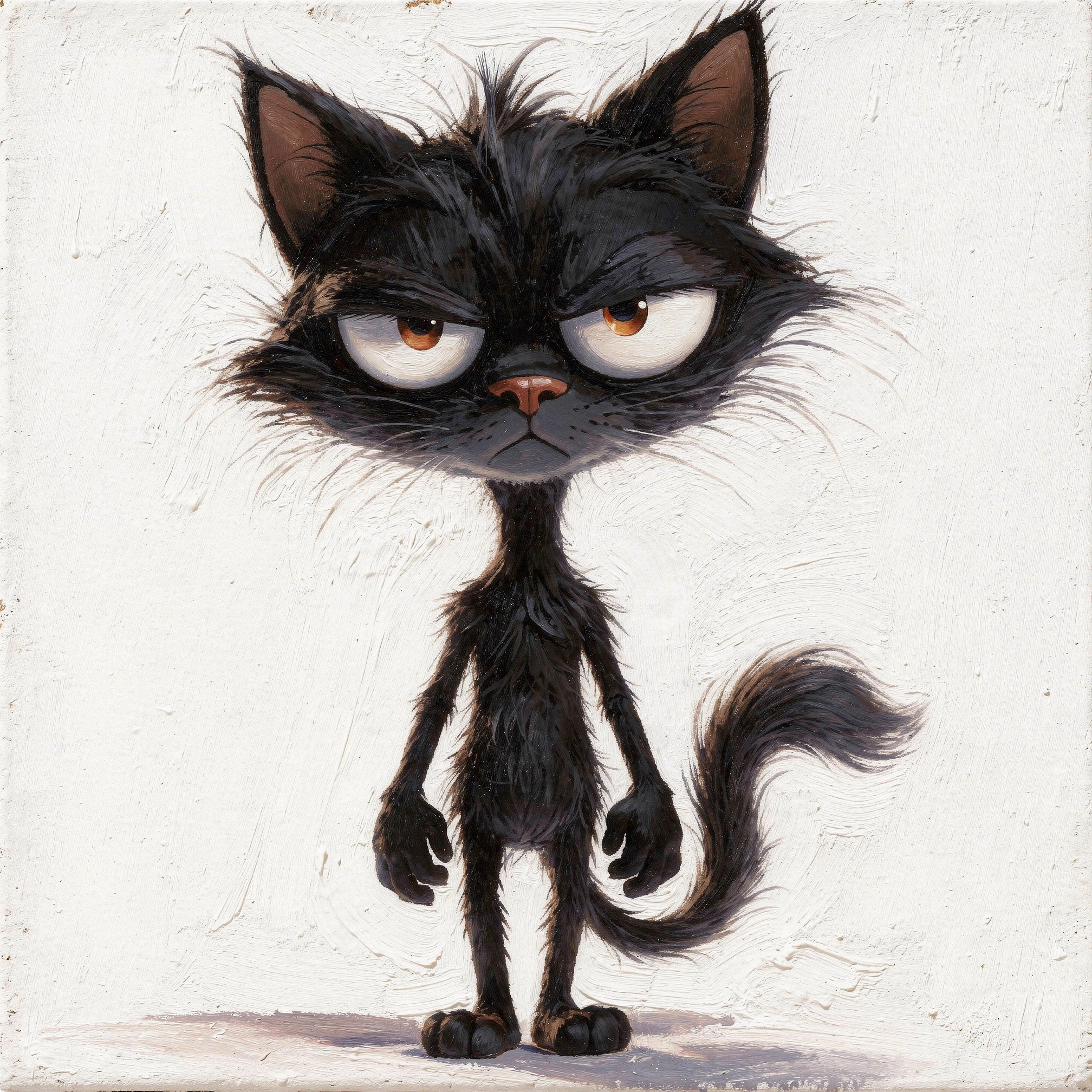
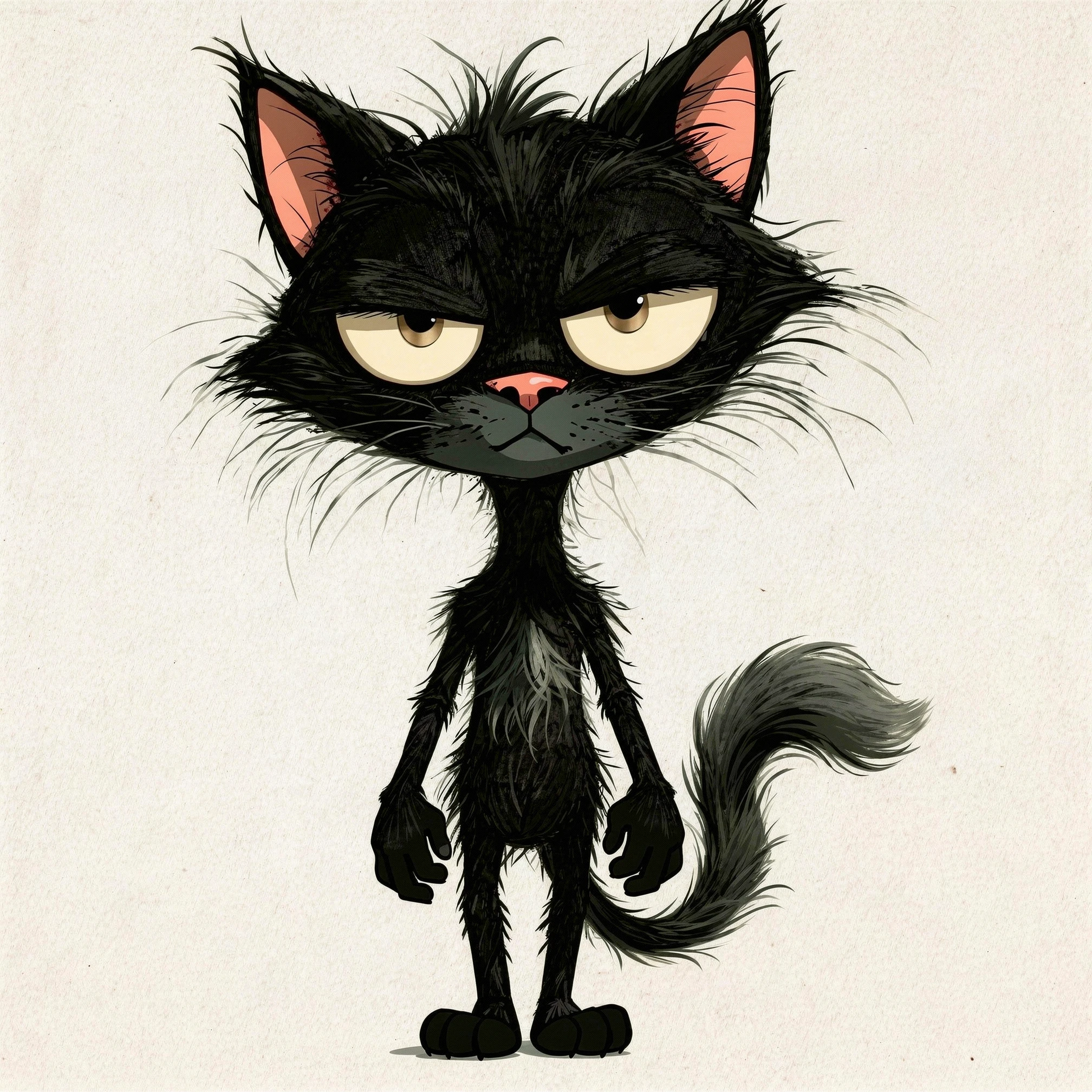
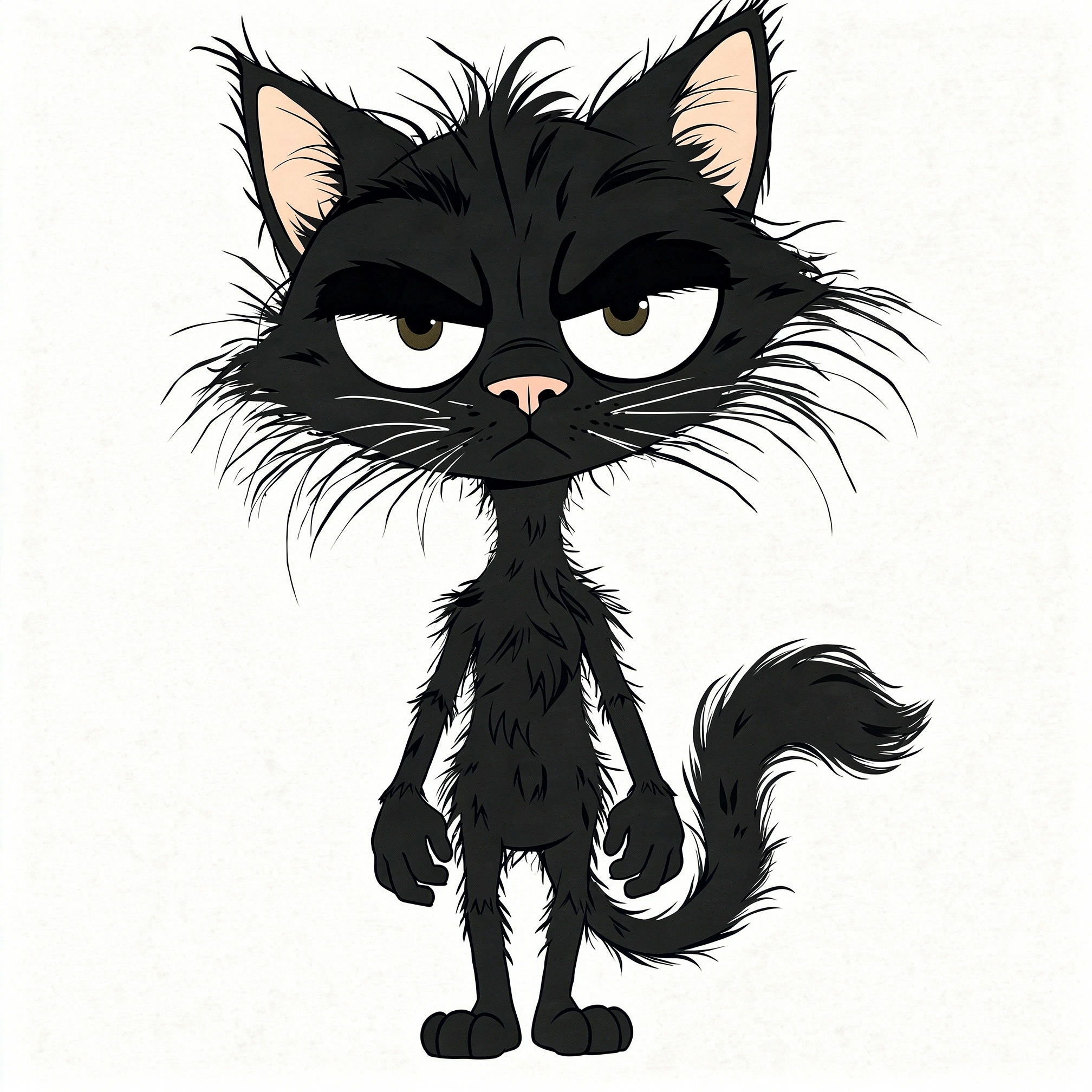
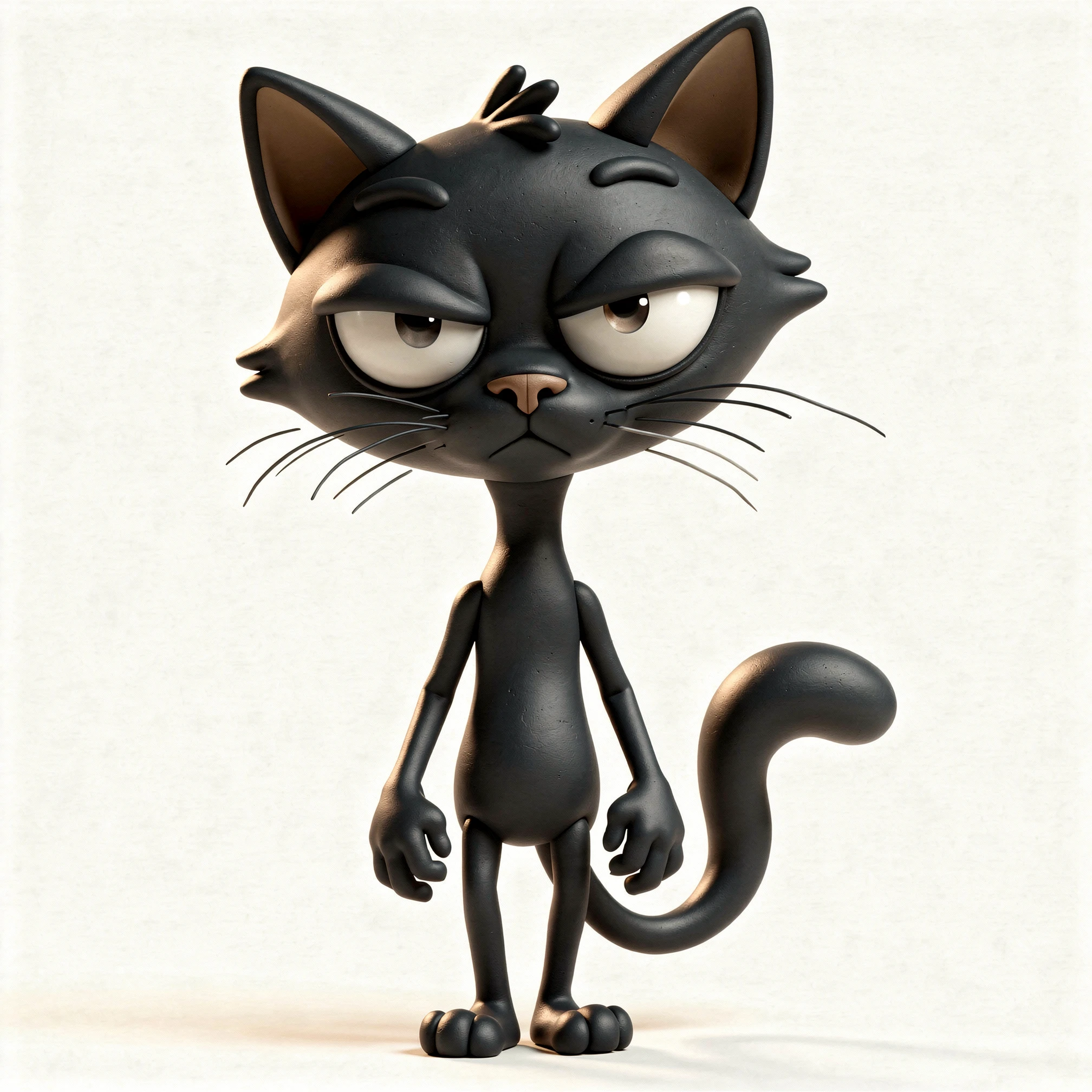
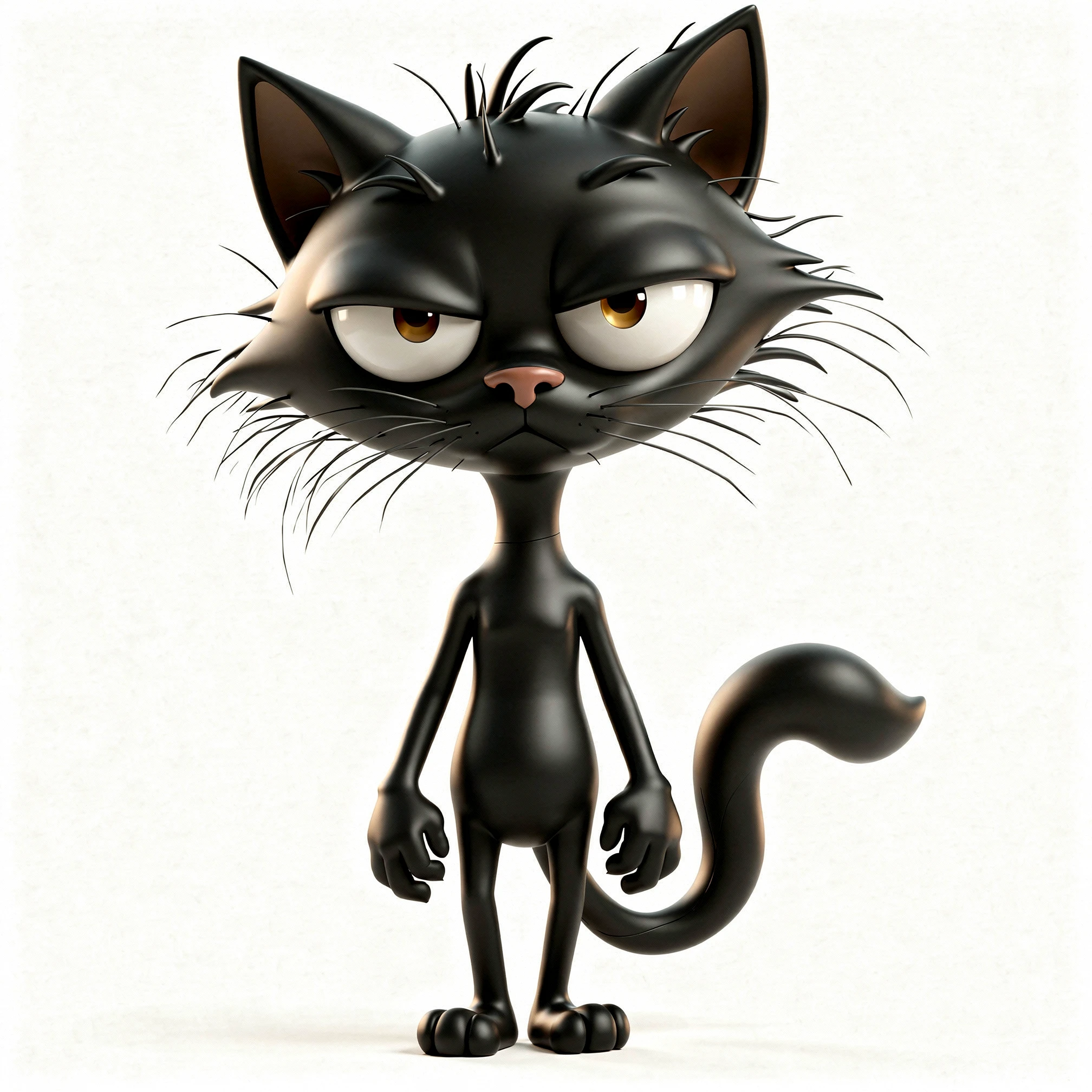
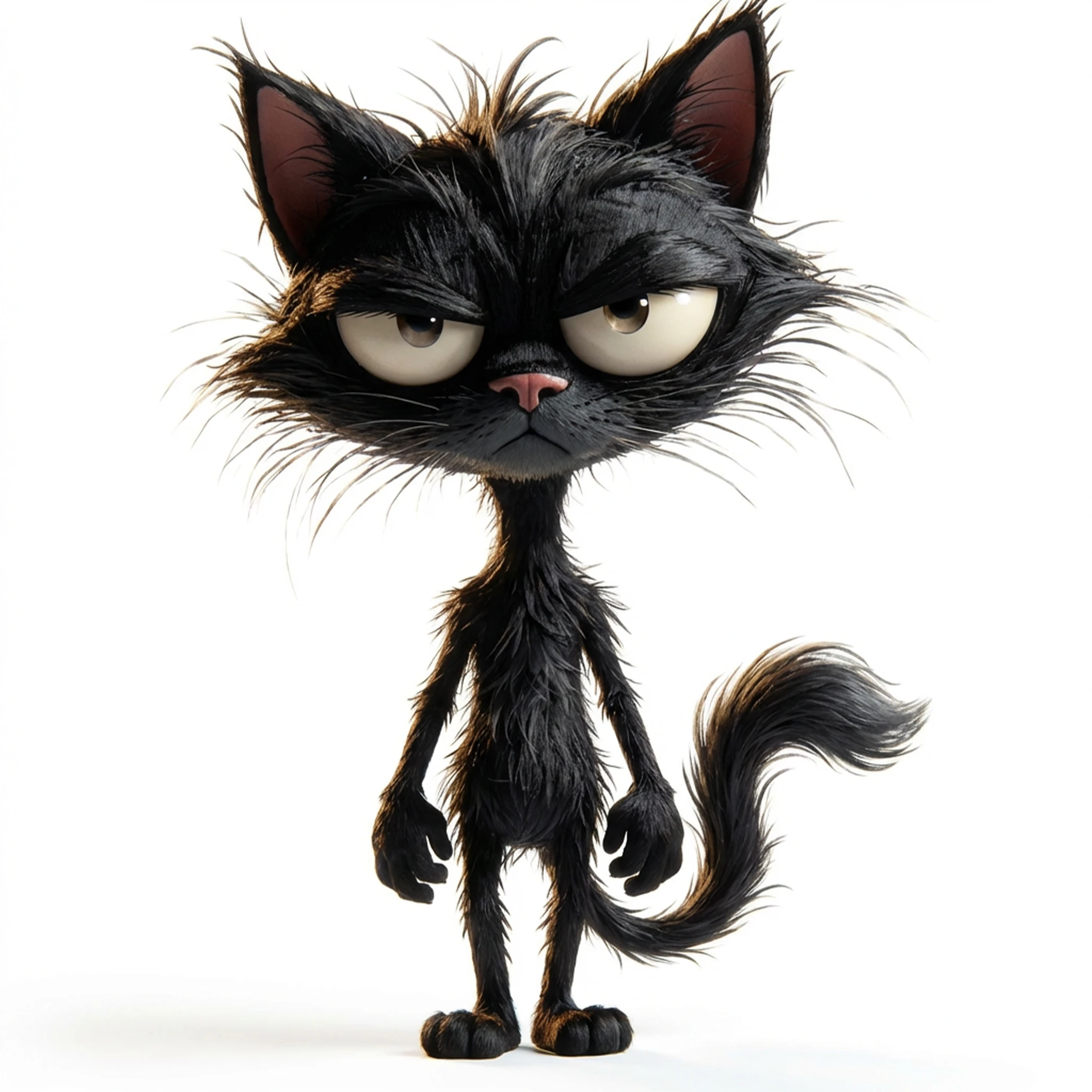
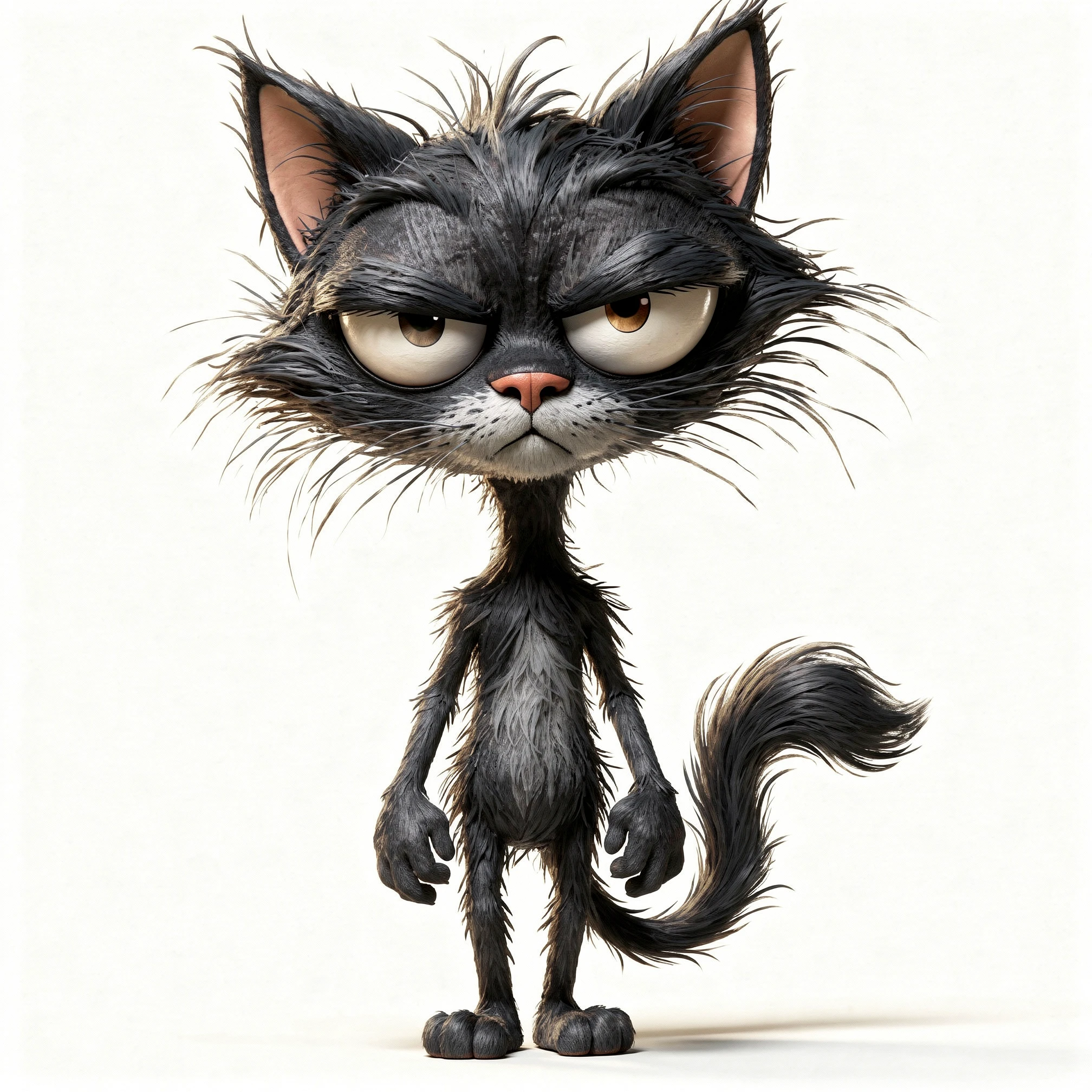
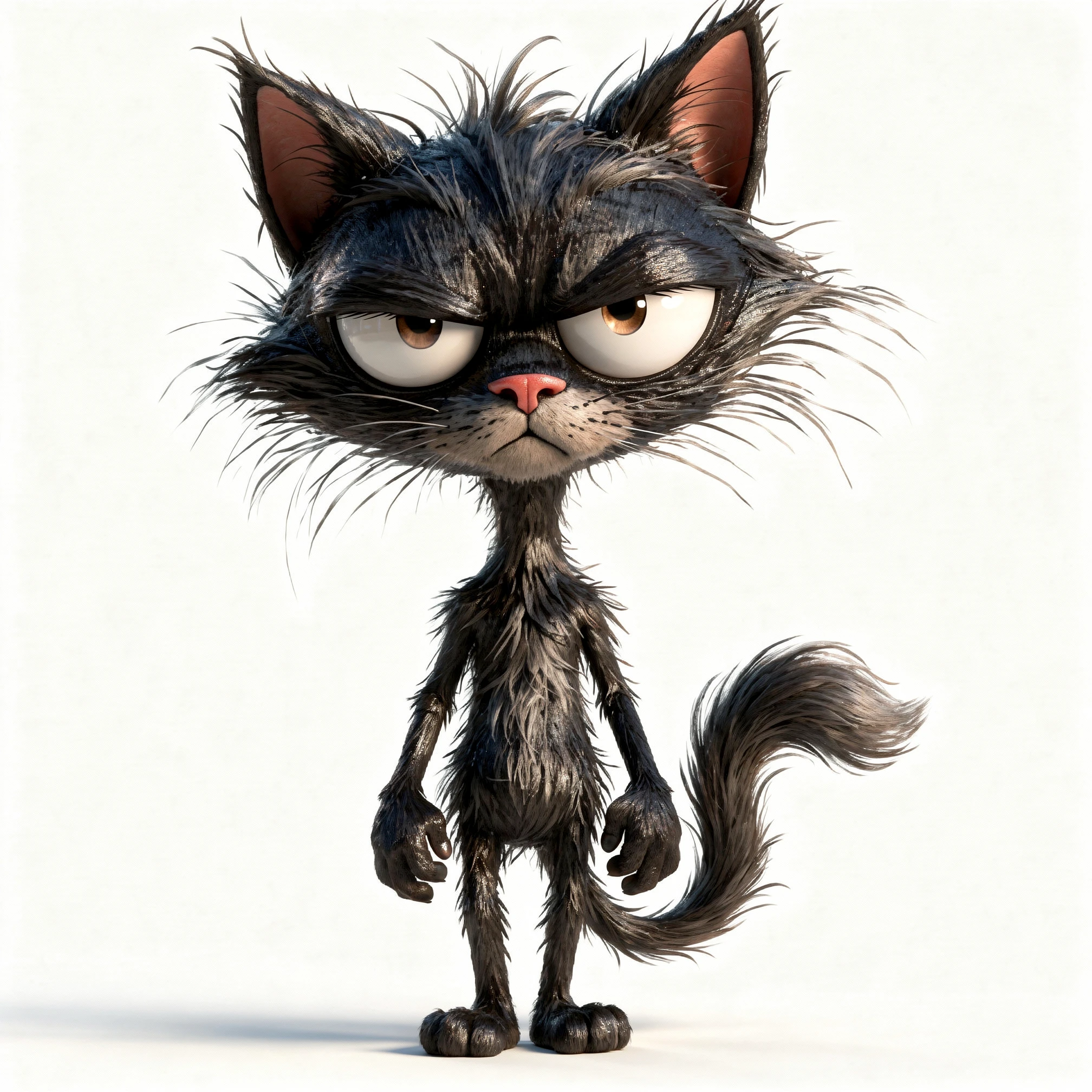
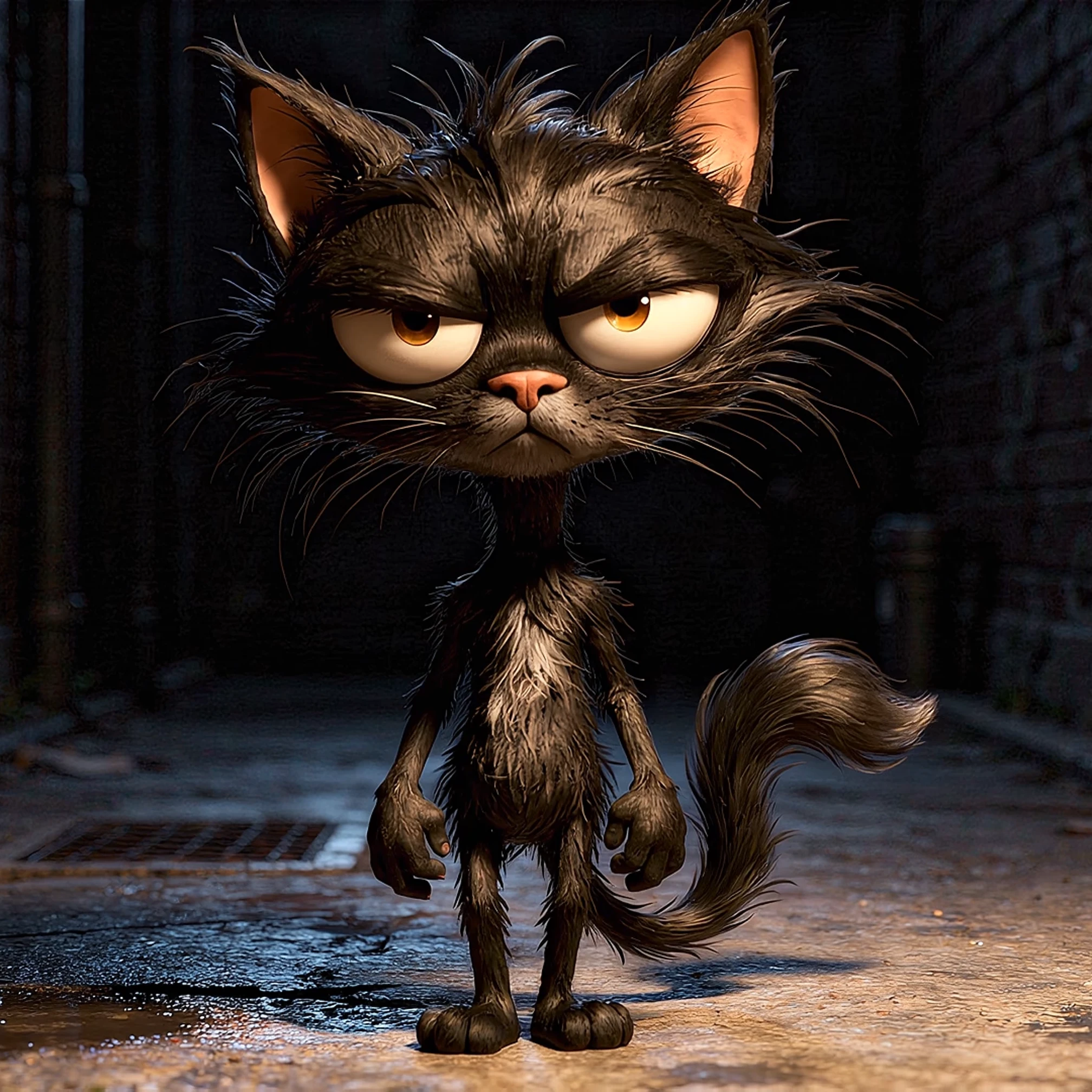
Osuneko is a Japanese term meaning male cat — osu denoting maleness, neko meaning cat — a simple, functional name for a character who resists embellishment. The project presents a single character held constant while everything around him shifts. Across eighteen images, the same cat appears to pass through a familiar arc of artistic development: from loose pencil gesture to tightened line, from ink to colour, from suggestion to volume, and finally into a fully realised three-dimensional presence. The cat's power lies in being slightly feral, a bit underloved, and absolutely unimpressed by the world's nonsense. His expression barely changes, yet his form is repeatedly translated — not to tell a story, but to test how identity survives repetition. Osuneko does nothing in particular. He simply exists, and in doing so invites projection: attitude, history, mischief, indifference.
Rather than telling a story through narrative or action, Osuneko presents a progression of becoming. What the sequence proposes, however, is not a record of labour but a beautifully engineered fiction. The comforting narrative of artistic authenticity — from sketchbook to refinement, material to software, model to render — is reconstructed after the fact. The ladder is real in appearance but invented in origin. Every image in the series is generated synthetically, working backwards from a reference image that already contains the end state. The work simulates not just styles and processes, but the myth of process itself: the idea that development must unfold in a linear fashion. As Picasso once observed, "Learn the rules like a pro, so you can break them like an artist." Here, the workflow is an illusion — coherent, persuasive, and deliberately false.
This inversion reflects how artificial intelligence now operates within contemporary image production, including animation and film. AI functions less as a replacement for artistic intent and more as an accelerant: a means of collapsing time, testing variation, and stabilising form at speed. In Osuneko, consistency becomes the true subject. Pose, proportions, and character identity remain fixed while surface, medium, and dimensionality mutate around them. The video marks the final threshold, where motion and sound briefly animate the figure, allowing the cat to cross from stillness into presence. The video isn't flawless, and it certainly wasn't made by Pixar or Walt Disney Studios. What matters is not how Osuneko was made — or who made him — but that he holds together, as an idea and as a character, with a quietly stubborn refusal to explain himself. Let's call him Neko for short.
Gallery
"An idea is a point of departure and no more." — Paul Klee