Anthos v2: digital floristry in the age of AI

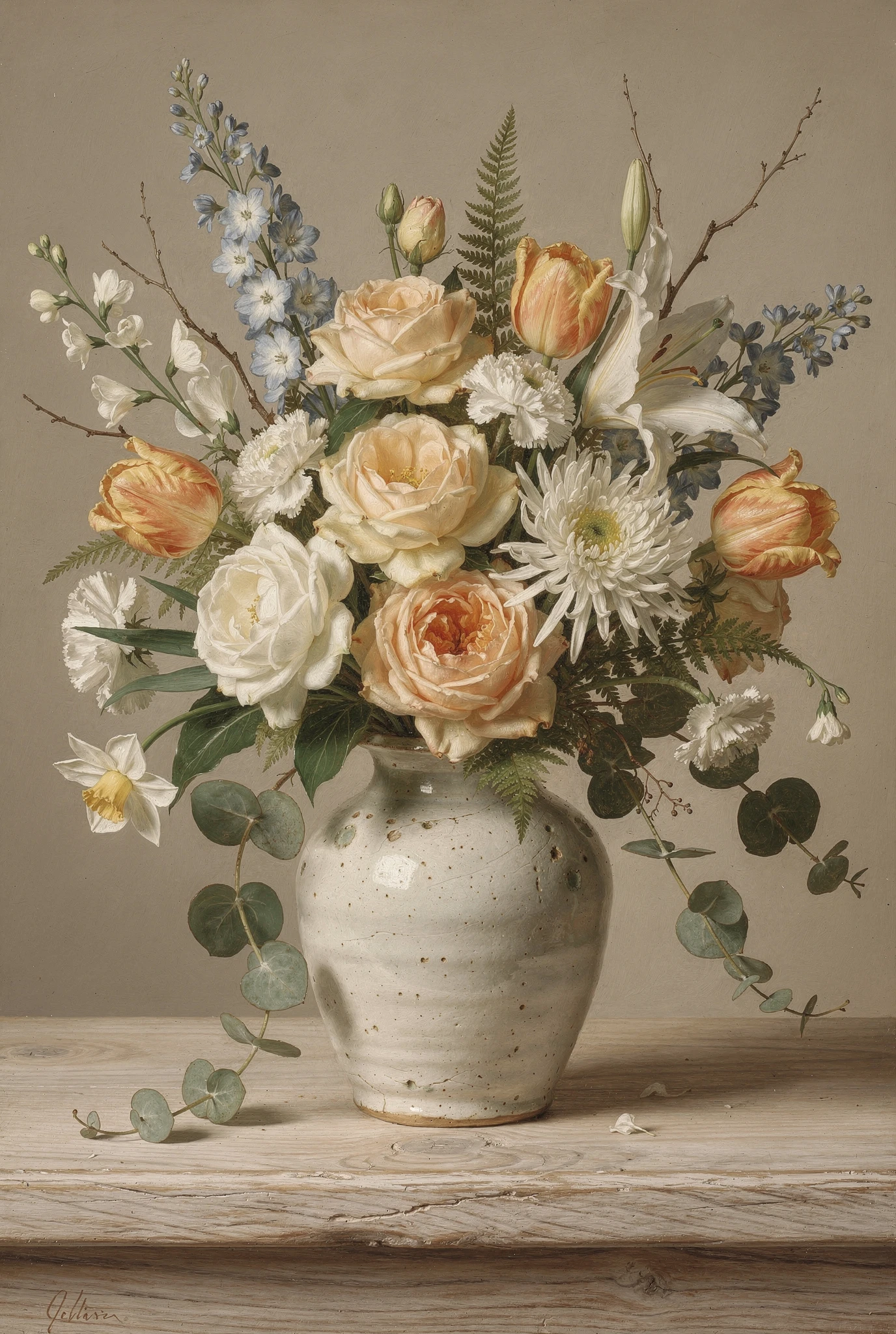
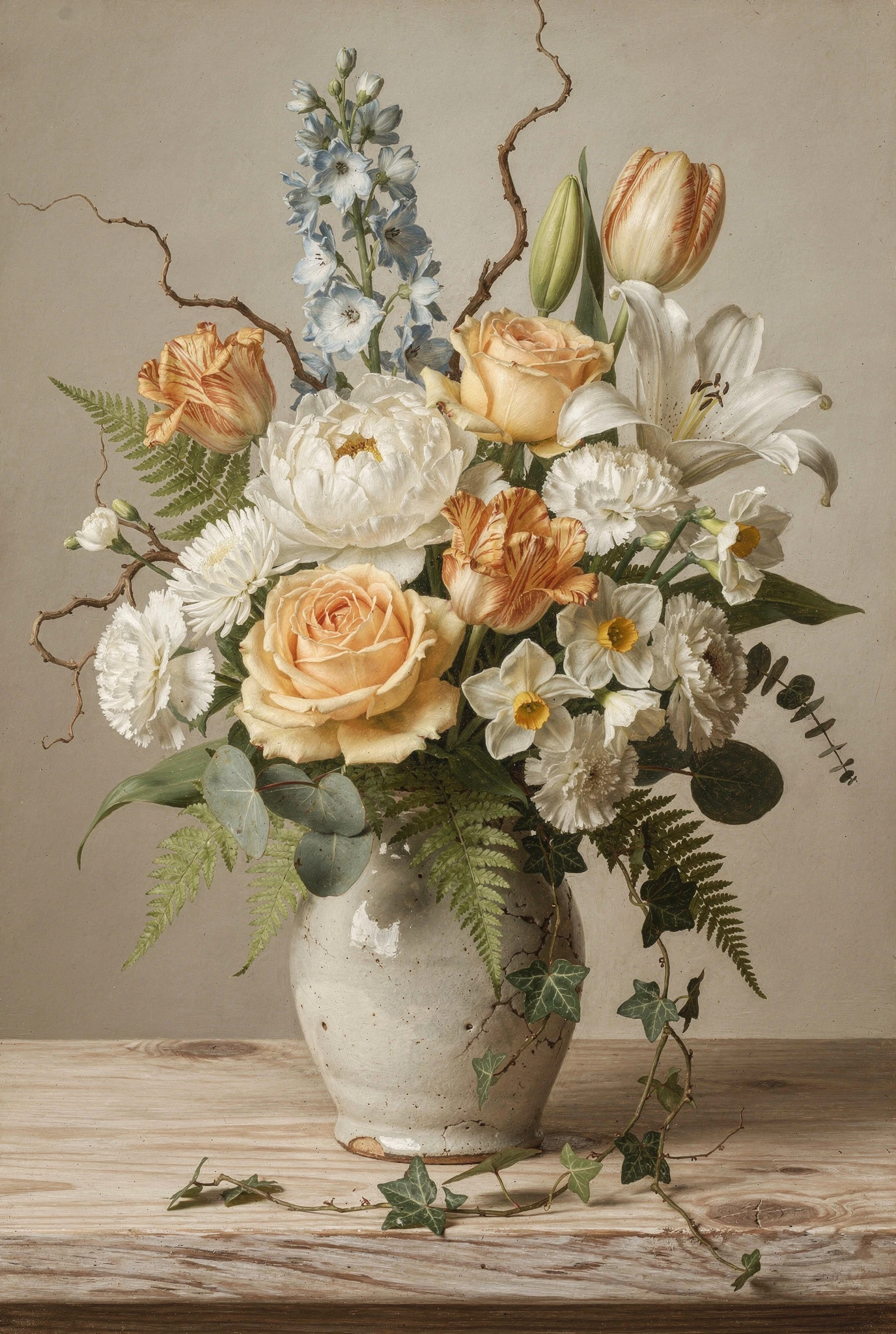
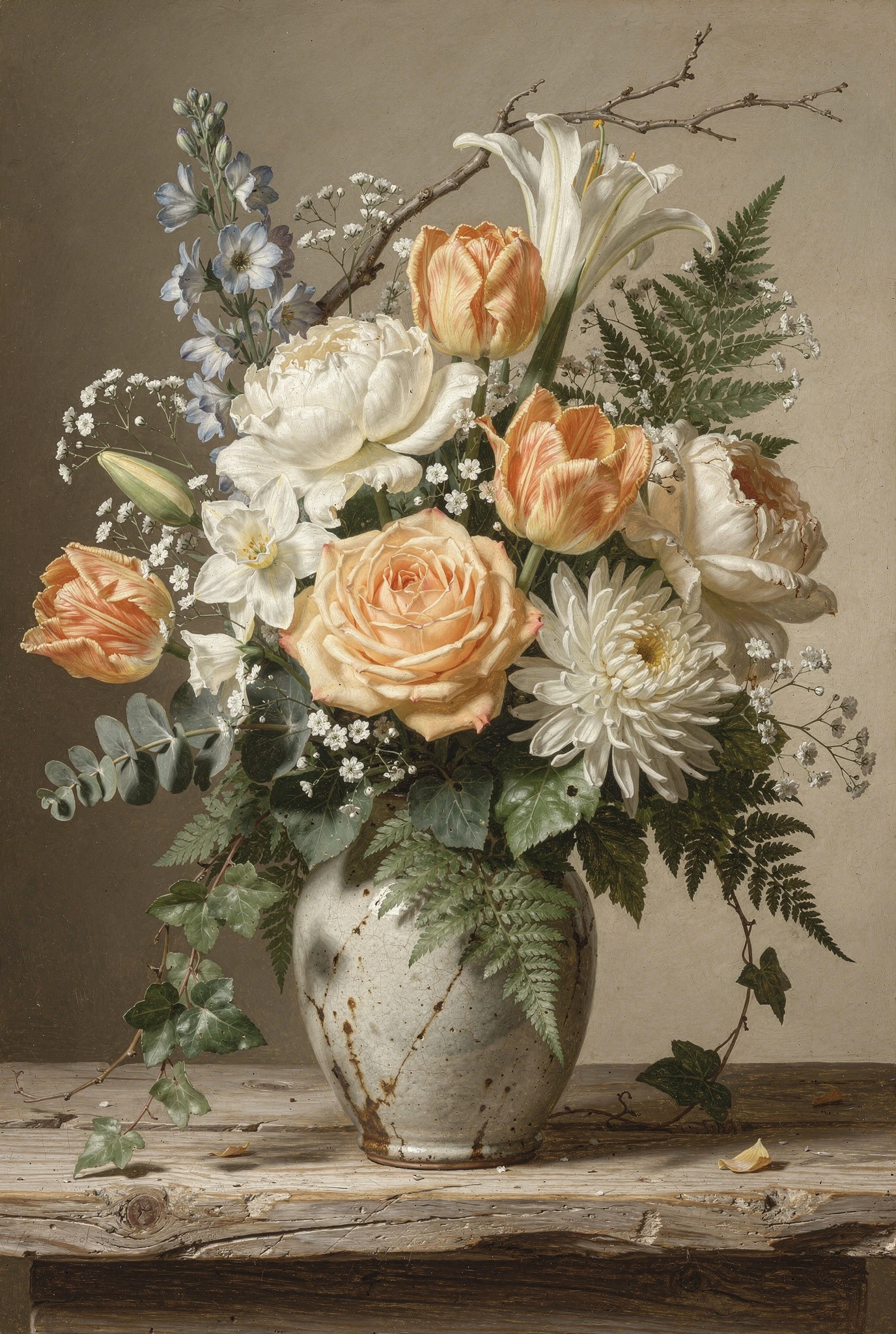
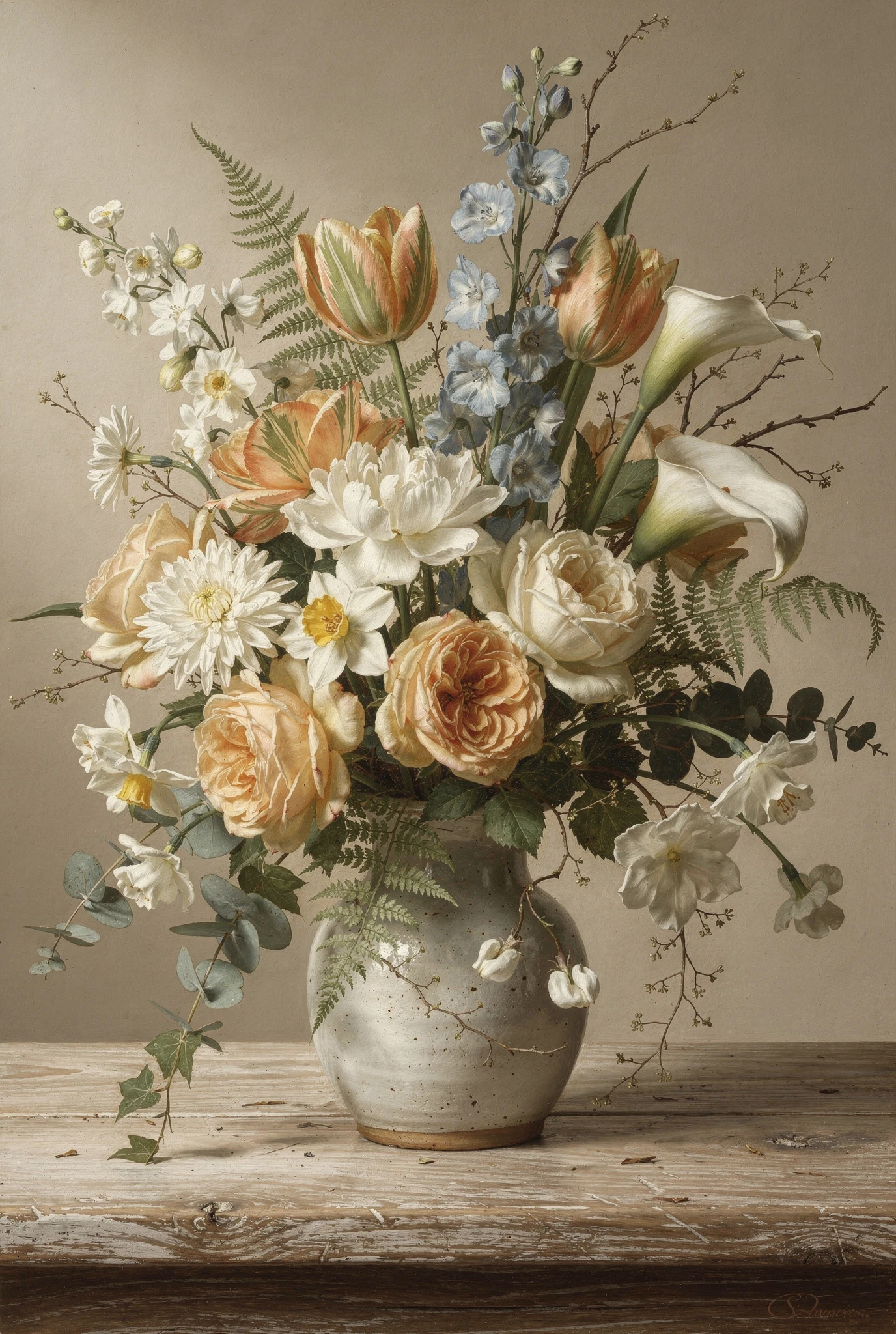
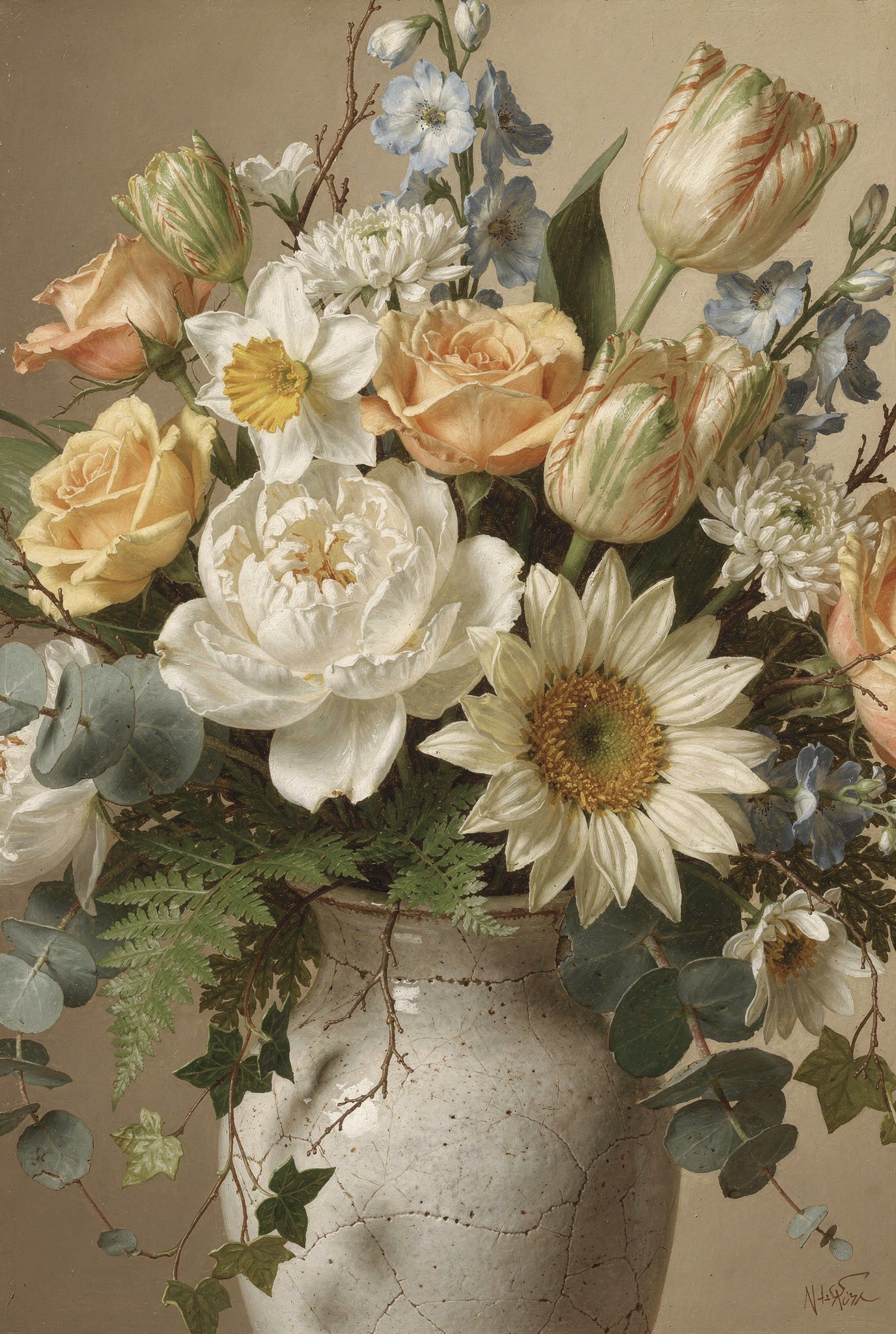
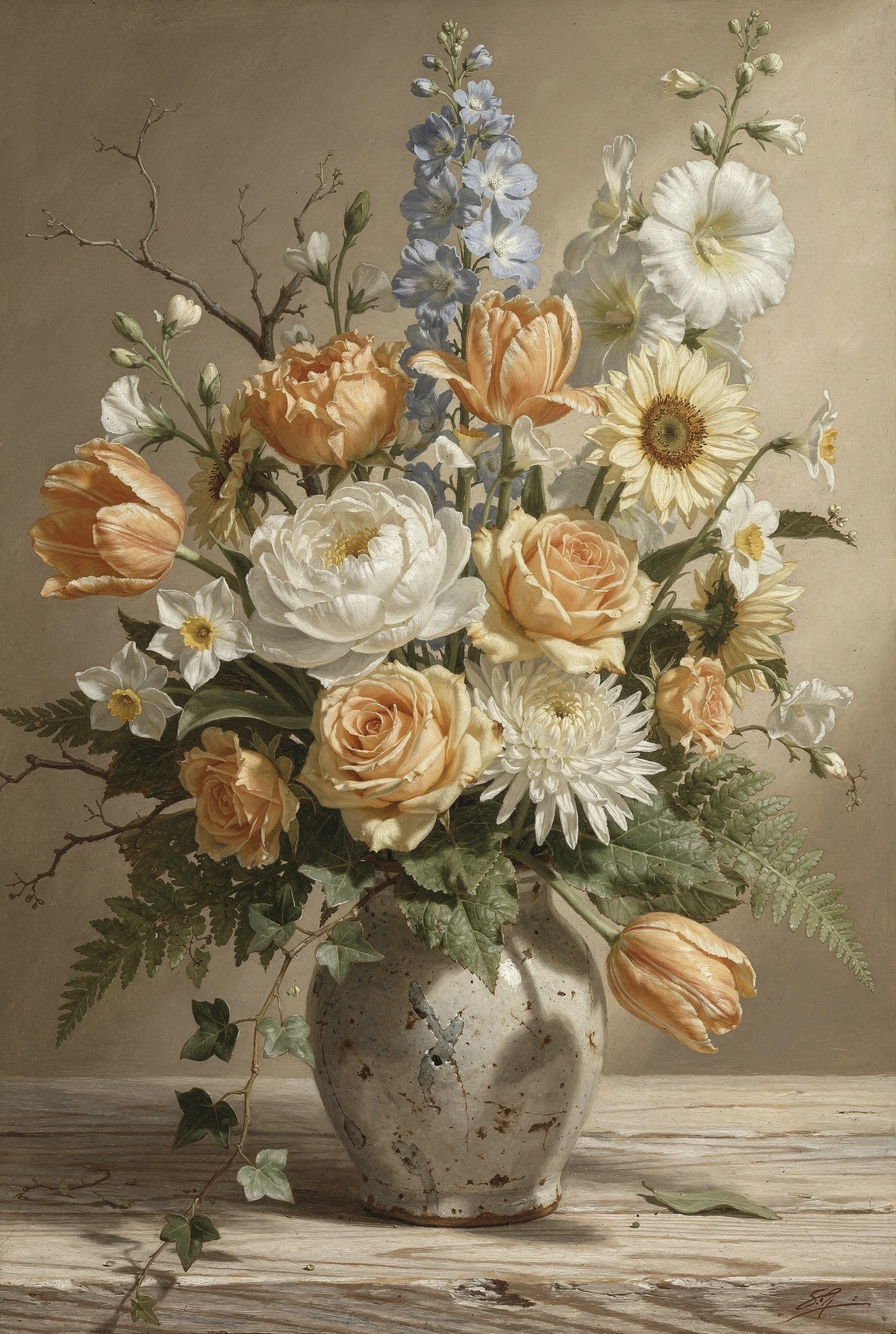
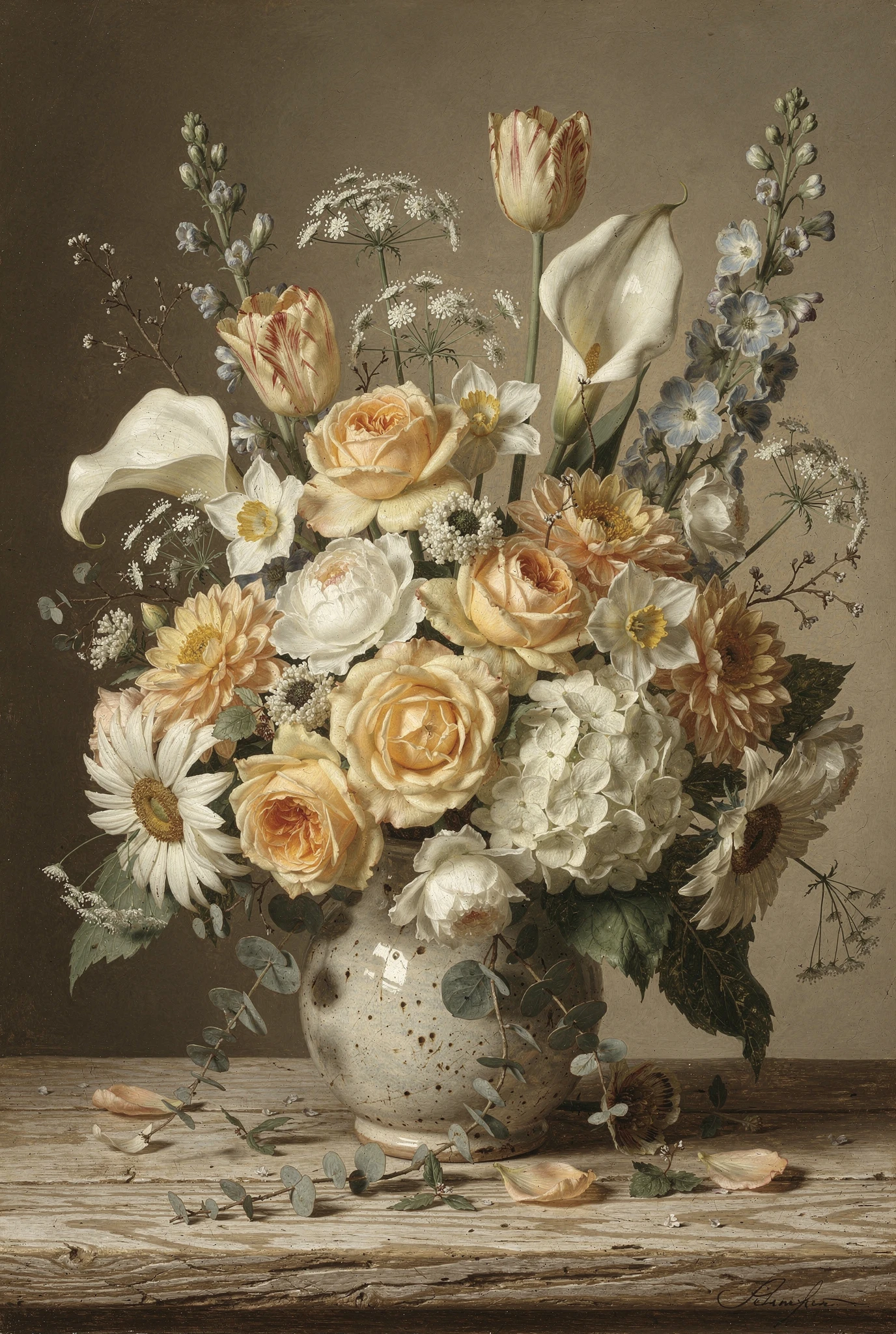
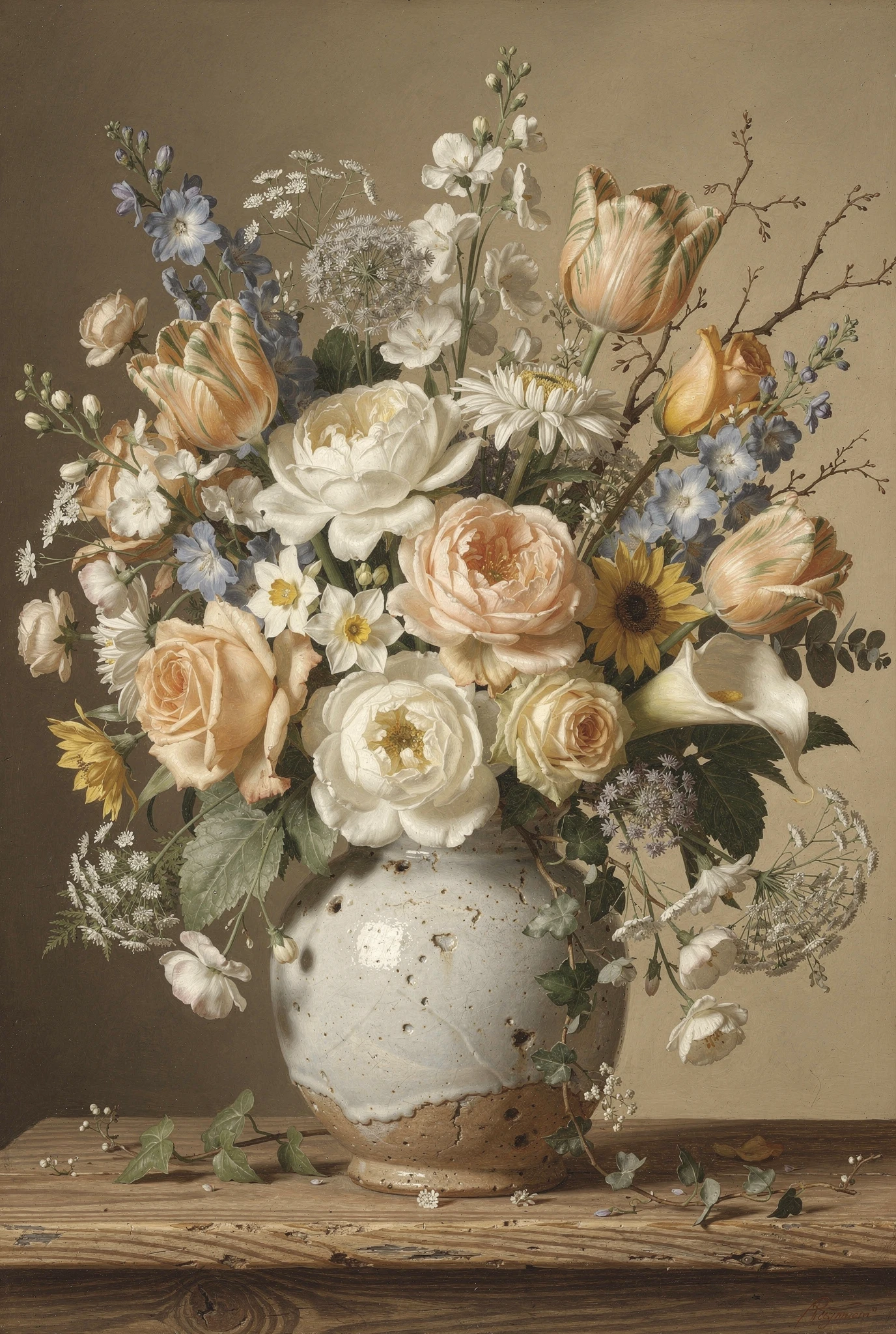
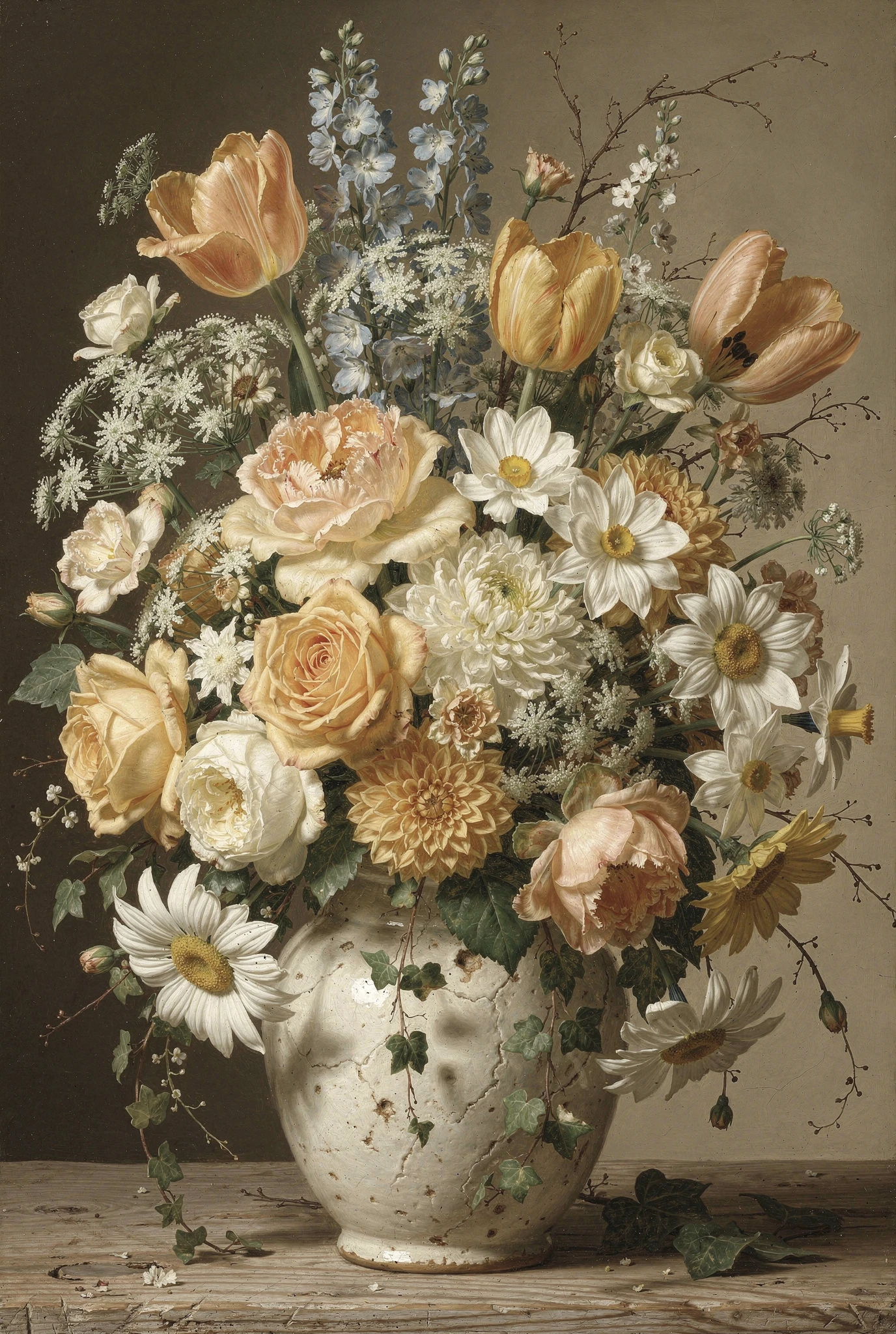
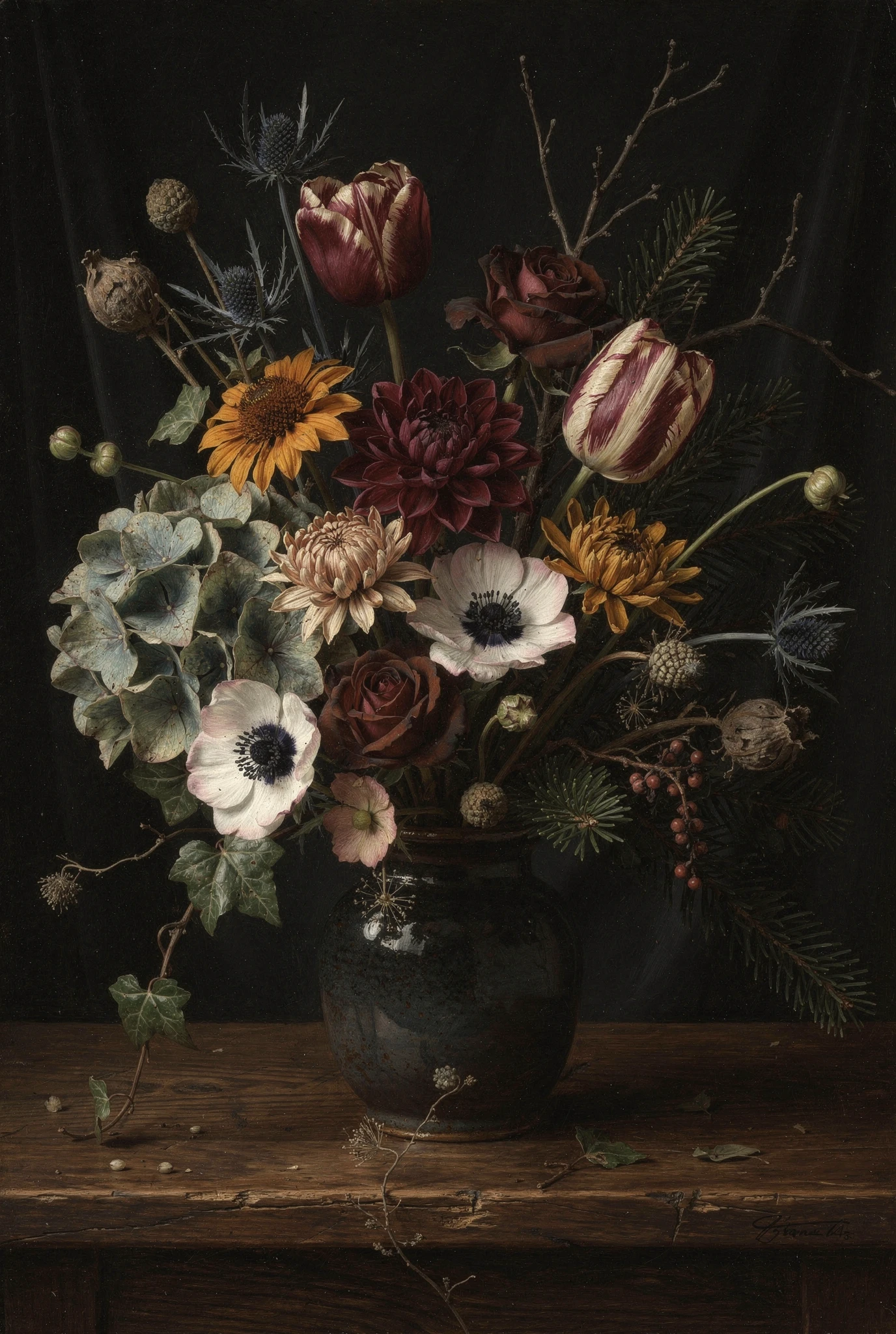
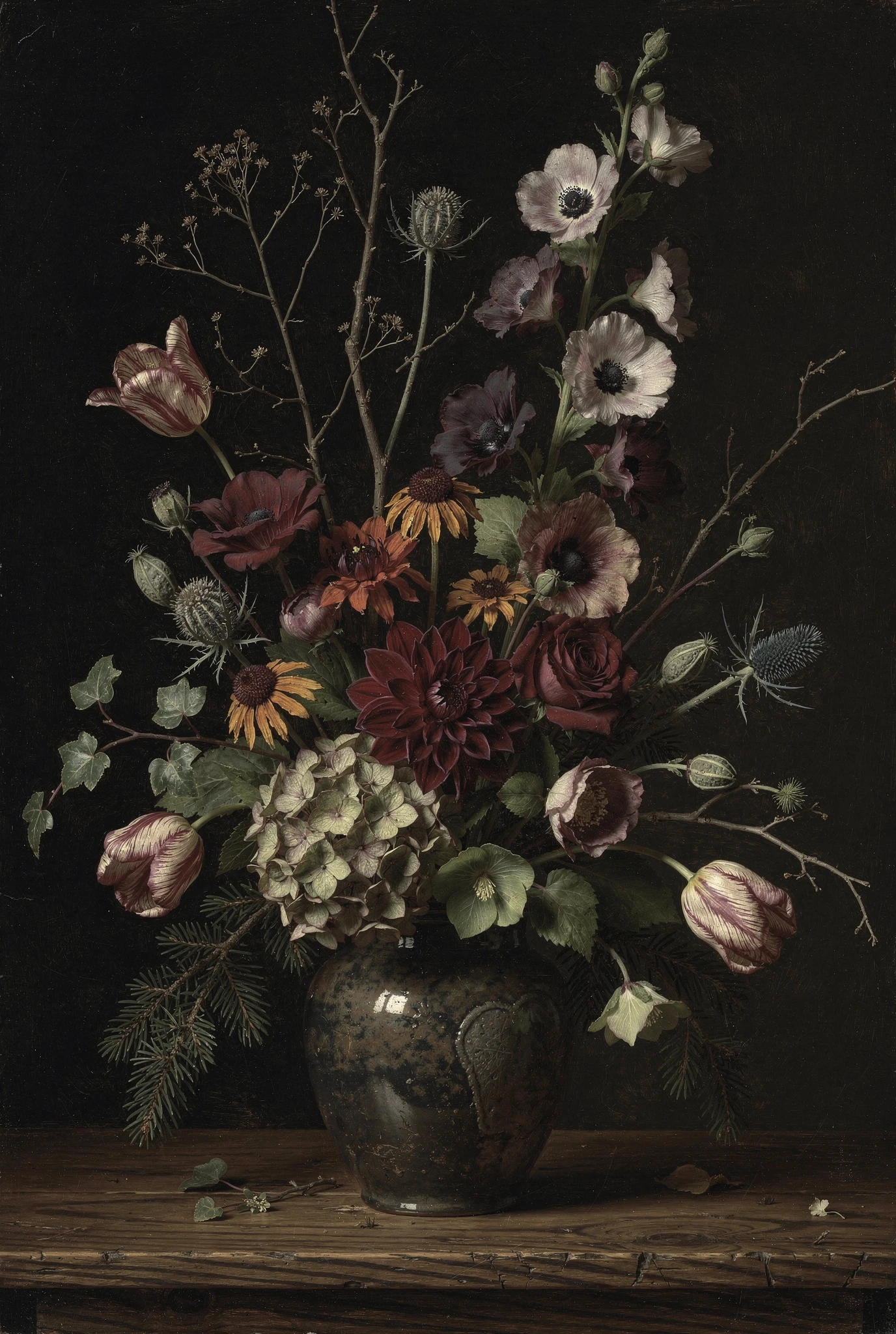
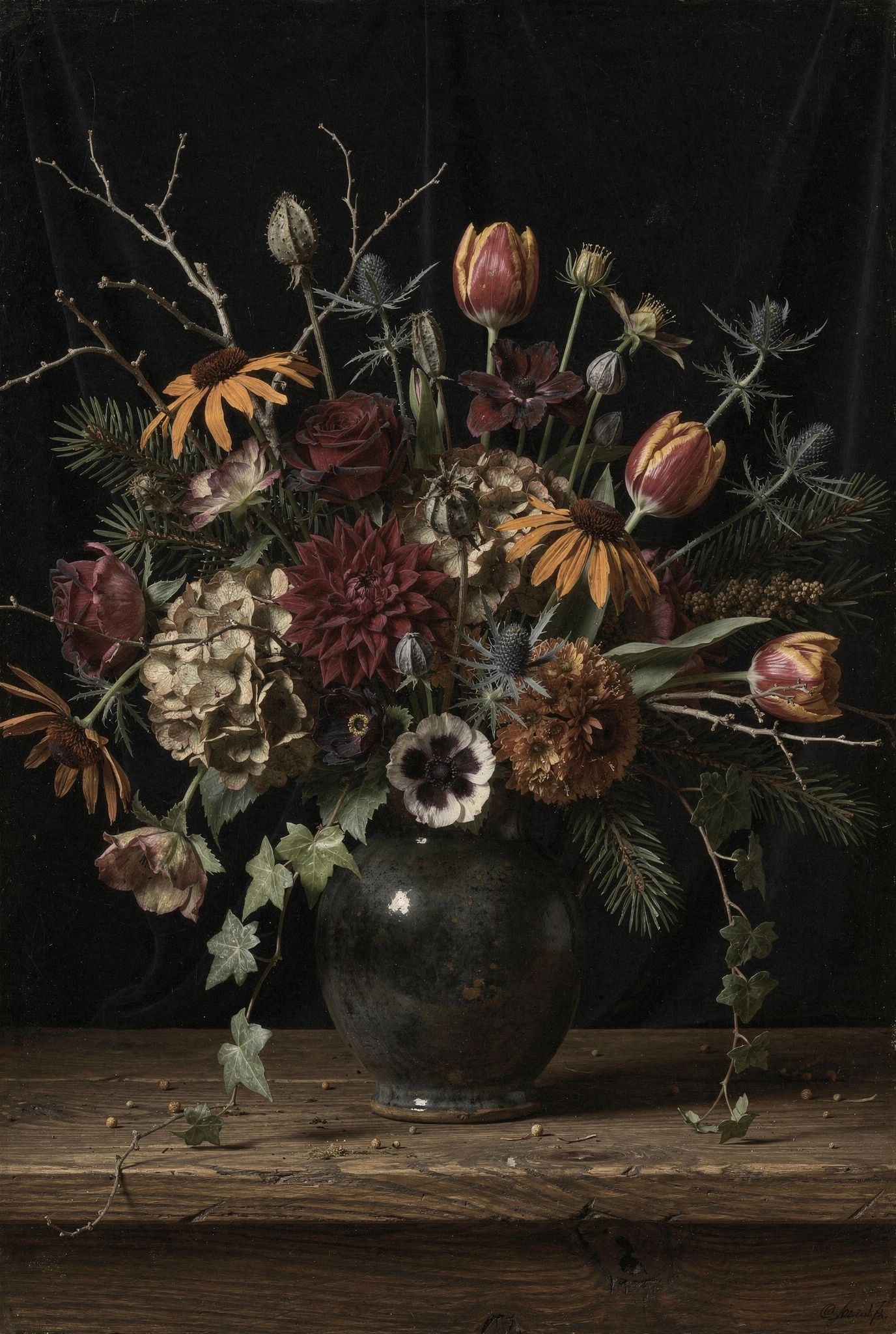
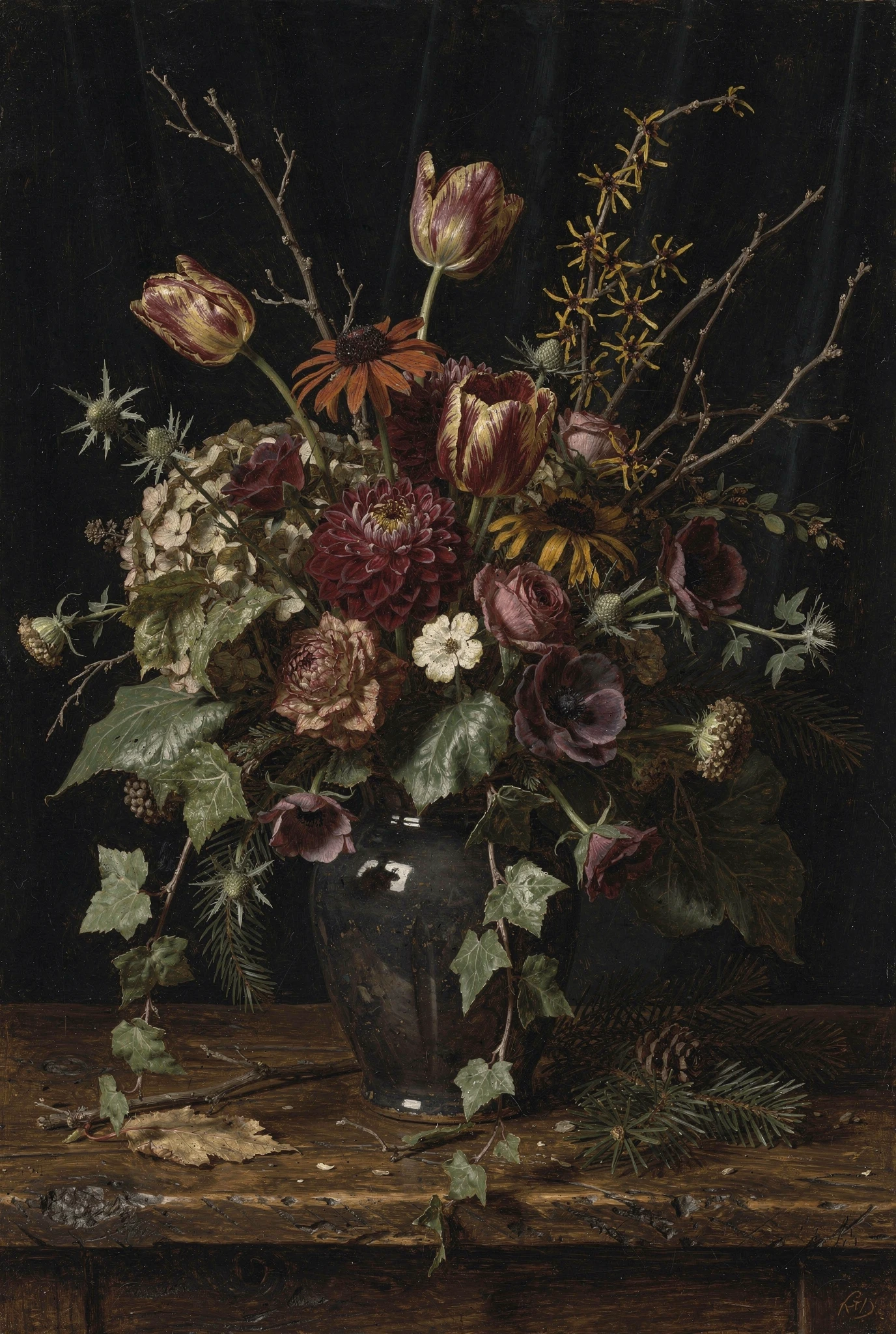
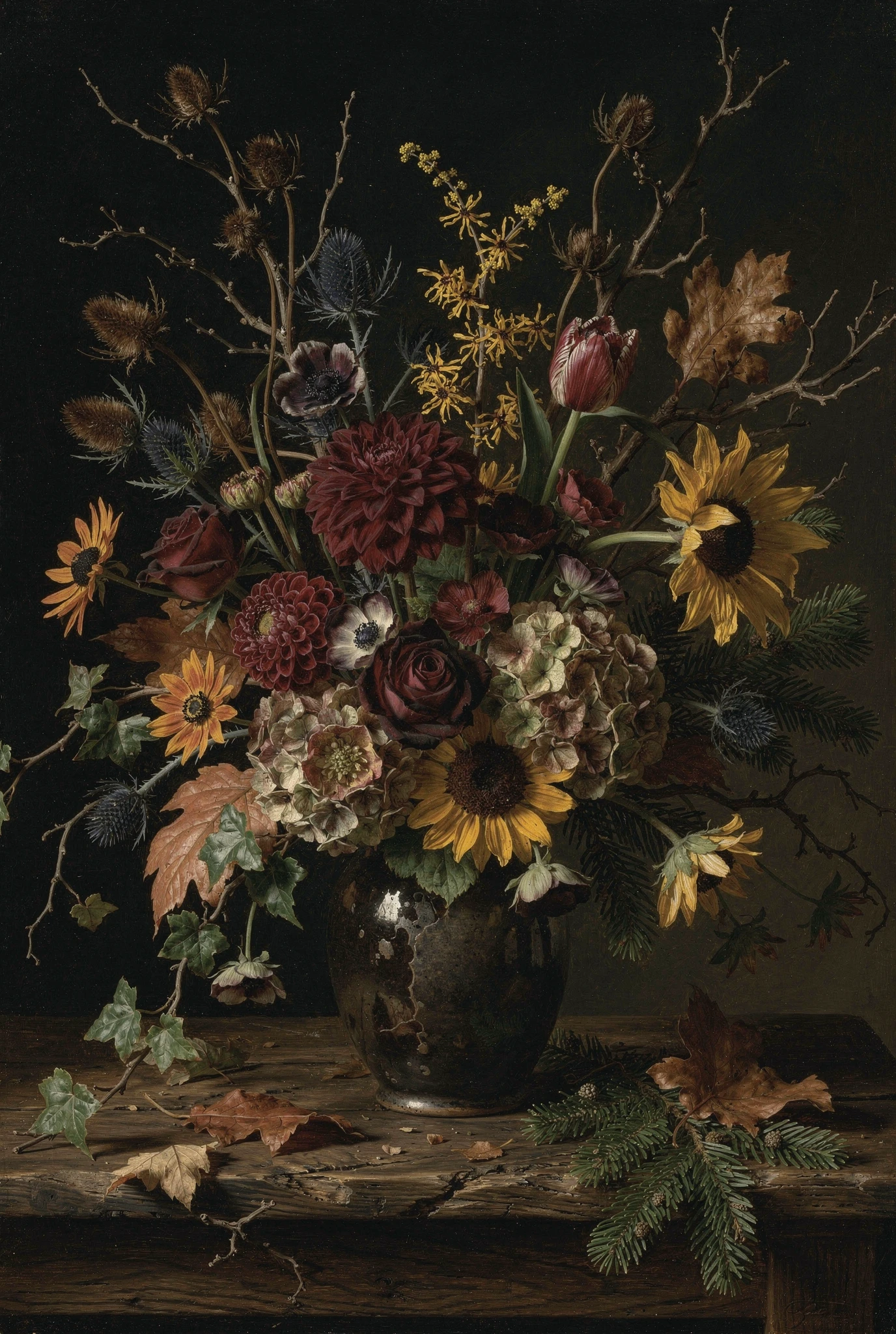
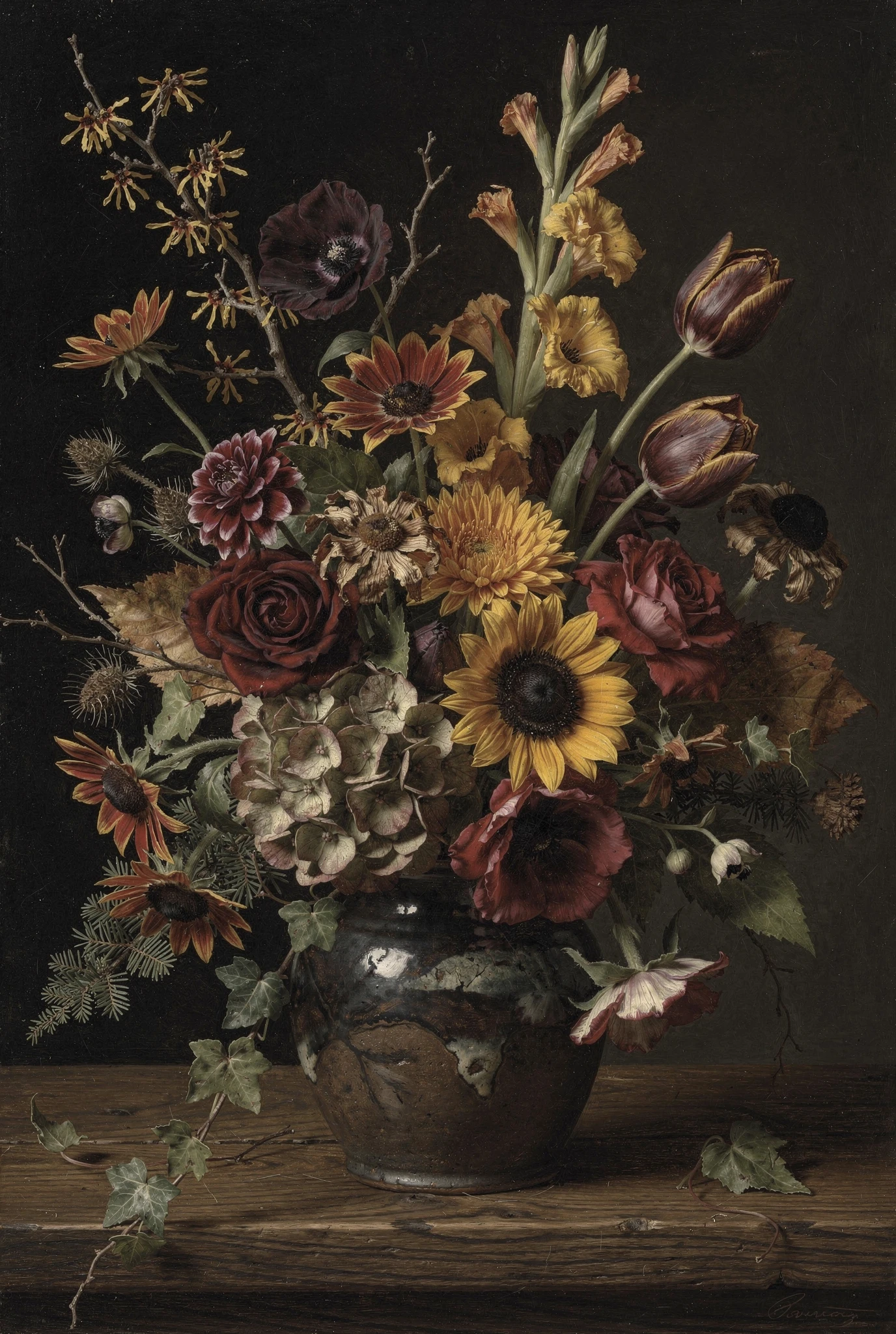
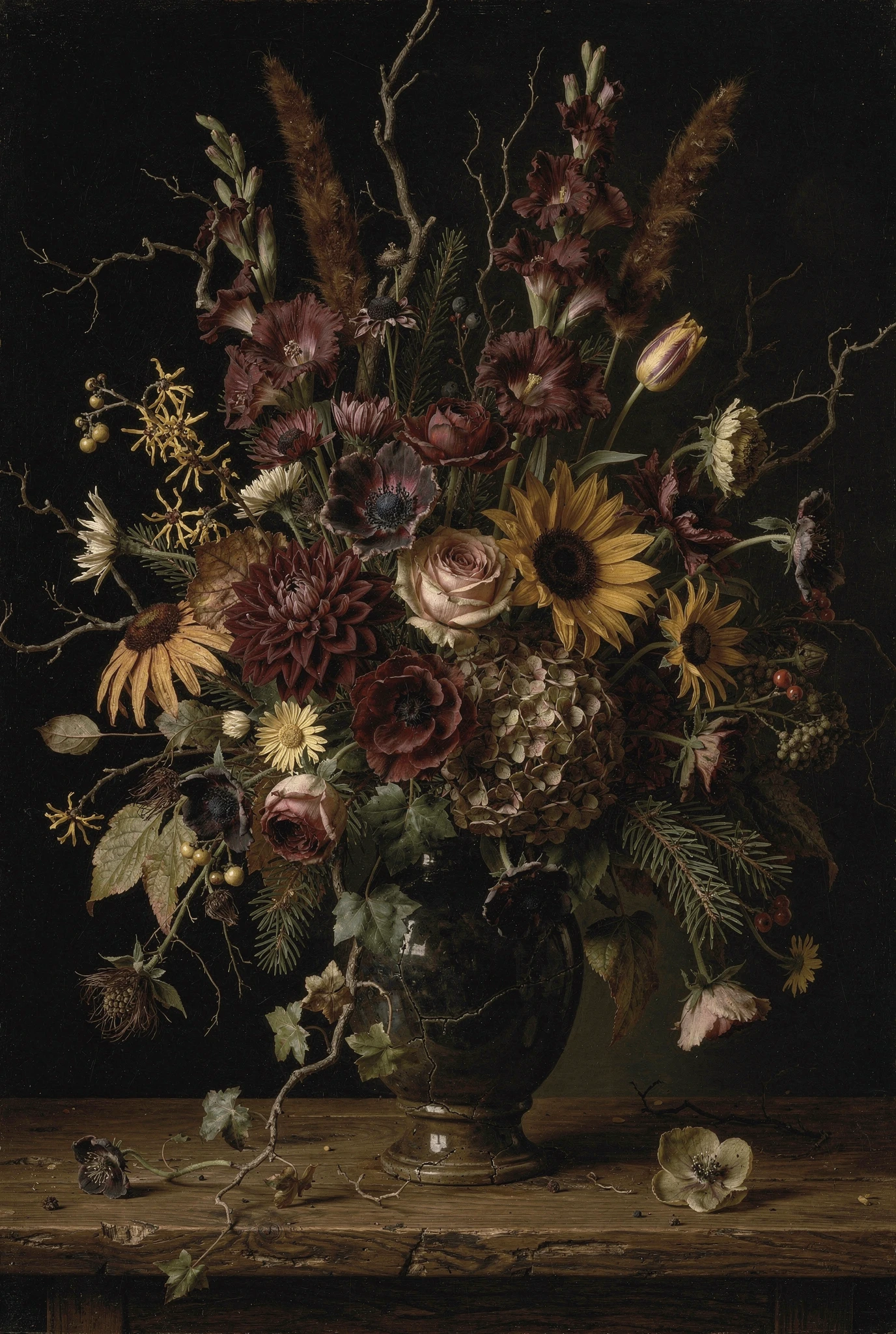
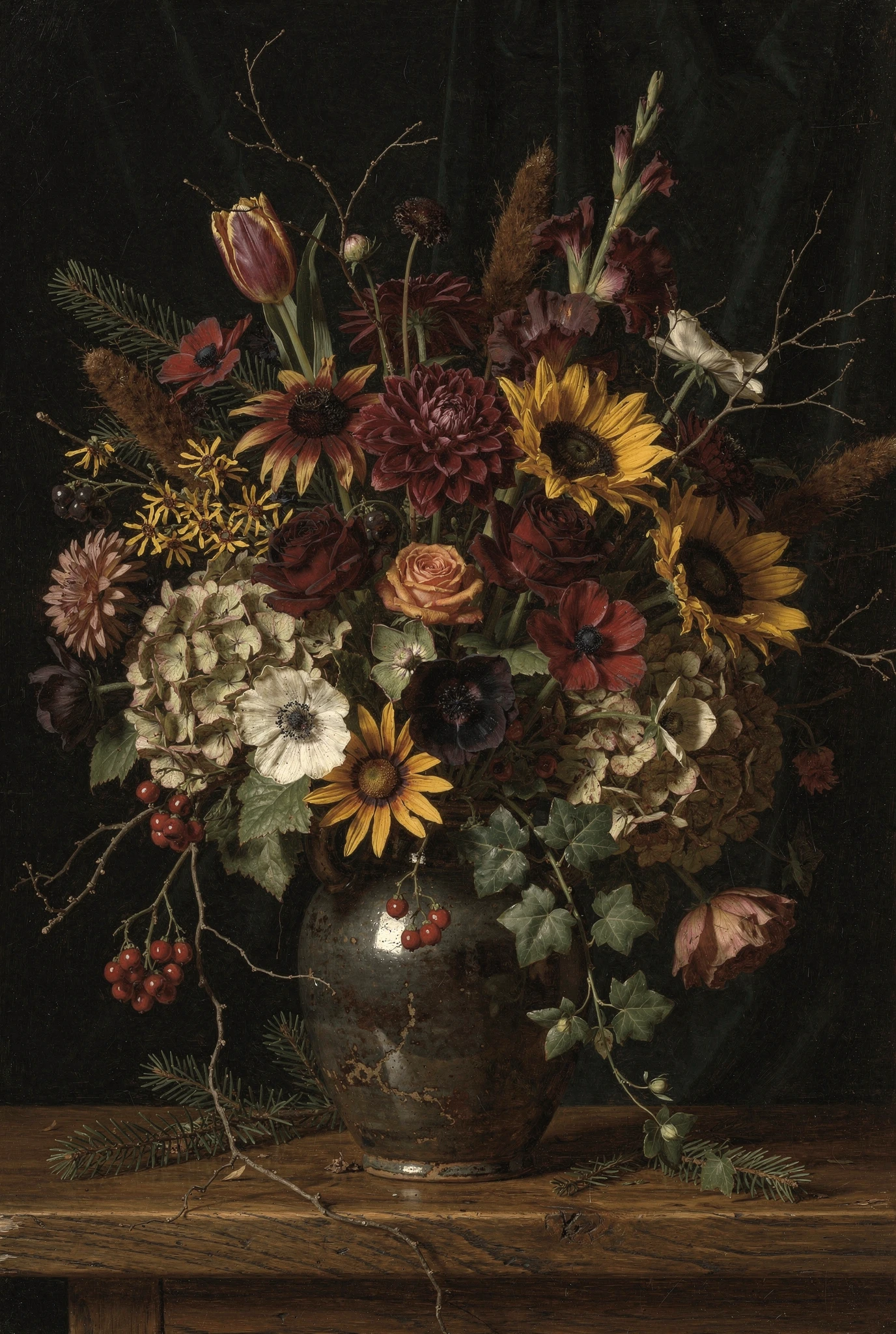
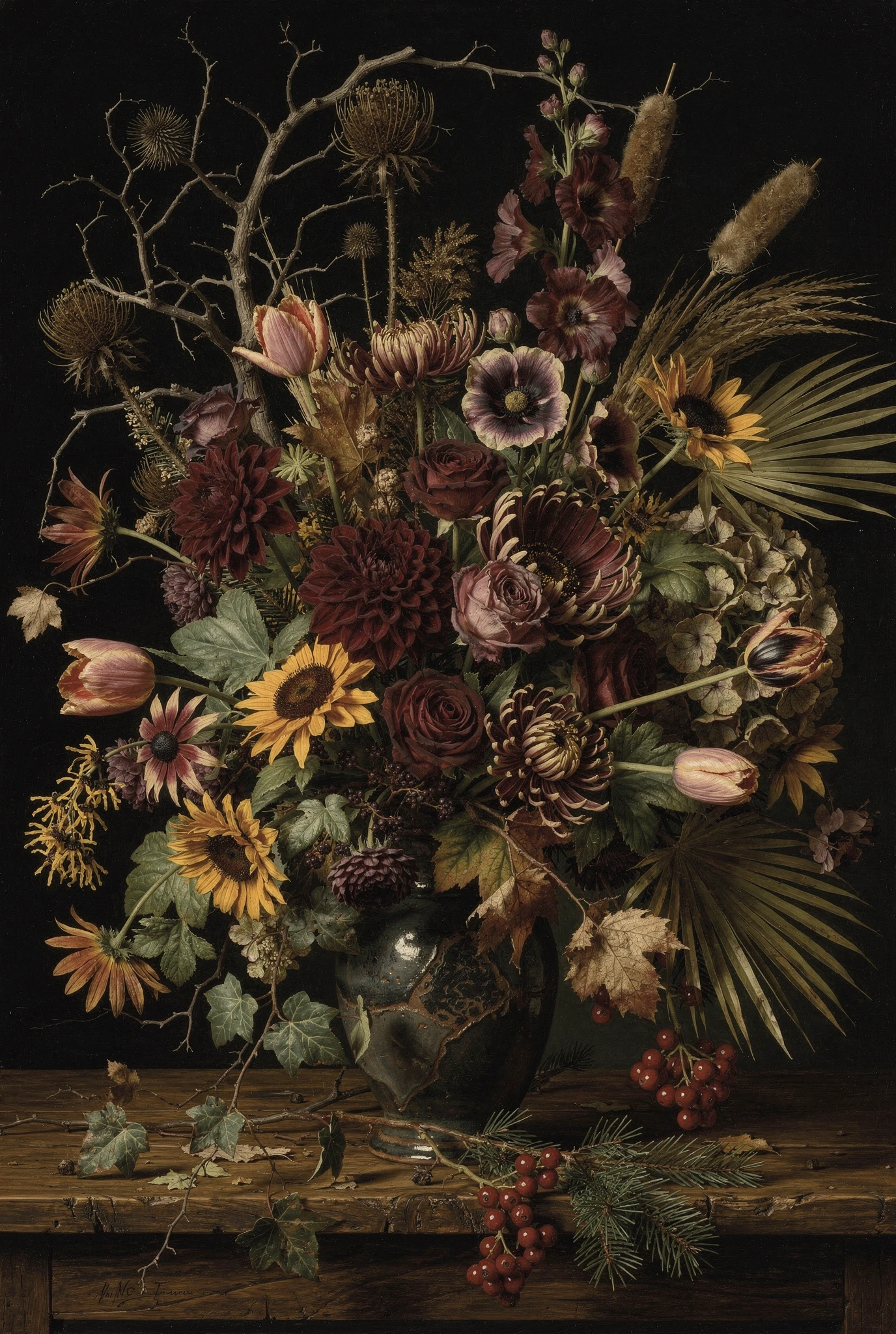
Still-life has always promised truth, yet it has never been truthful. The bouquets of seventeenth-century Dutch flower painting were impossible constructions: blooms stitched together from different seasons, climates, and moments in time, assembled slowly across months or years into arrangements that could never have existed in real life. Anthos v2 returns to this tradition of quiet deception, but through a different instrument. These flowers are not recorded from nature, nor invented by hand; they emerge from a system that does not see petals, stems, or seasons, but probabilities. In this space, botanical accuracy dissolves and strange hallucinations appear — hybrids, distortions, moments of subtle wrongness. Rather than resisting these anomalies, Anthos v2 accepts them as part of the medium's language. The images are not true, but they are honest about their artificiality.
Anthos v2 is an update — not in the sense of correction, but of perception. Where the original Anthos sought clarity and perfection, this new iteration allows imperfection to surface. These images are neither photographs nor botanical illustrations; they are simulations that acknowledge their own synthetic nature. Flowers feel heavier, colours less pristine, surfaces more tactile. Flux.2 renders not only form but weight, texture, and fragility, producing bouquets that feel less immaculate and more bodily. The flowers appear touched by time, as though they have existed before being seen. If Anthos imagined flowers that never faded, Anthos v2 suggests that even synthetic forms cannot entirely escape reality.
These bouquets are not true in any empirical sense, yet they are not cynical either. They are assembled with attention, with care, with something close to affection — even as they remain artificial, beautiful, unreliable, and slightly unstable. Here, flowers exist not forever in bloom, nor in decay, but in a fragile intermediate state between freshness and ageing, between idealisation and entropy. They ask a simple question: if something is not real, can it still be sincere? Anthos v2 does not offer an answer. Instead, it stages a form of existential theatre, where illusion does not oppose sincerity, but becomes its condition. In place of brushstroke, there is hallucination; in place of pigment, probability. The flowers exist not as objects, but as events — momentary stabilisations of possibility that feel almost, but never fully, real.
Gallery
"To plant a garden is to believe in tomorrow." — Audrey Hepburn