Variants: when is a filter not a filter?
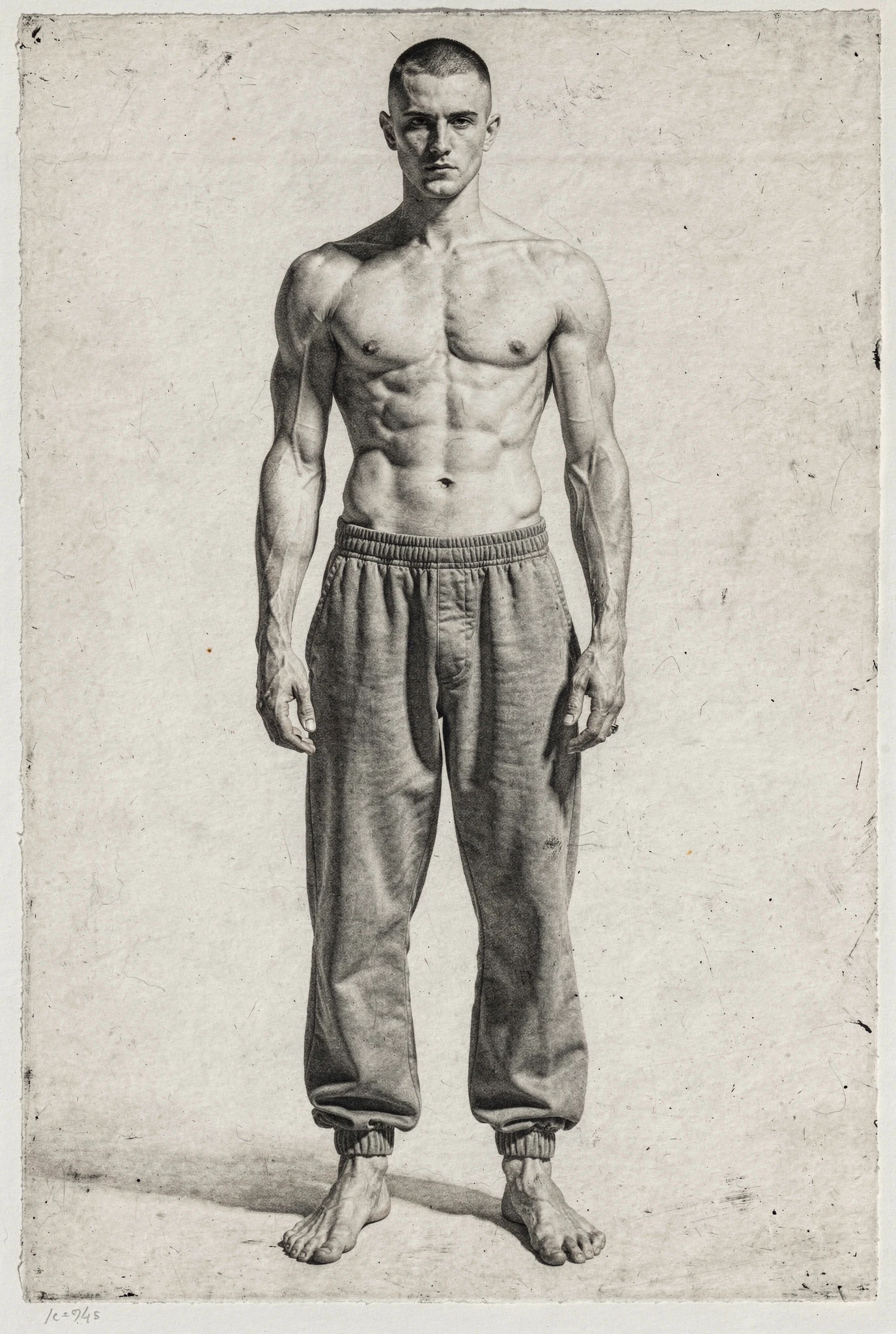
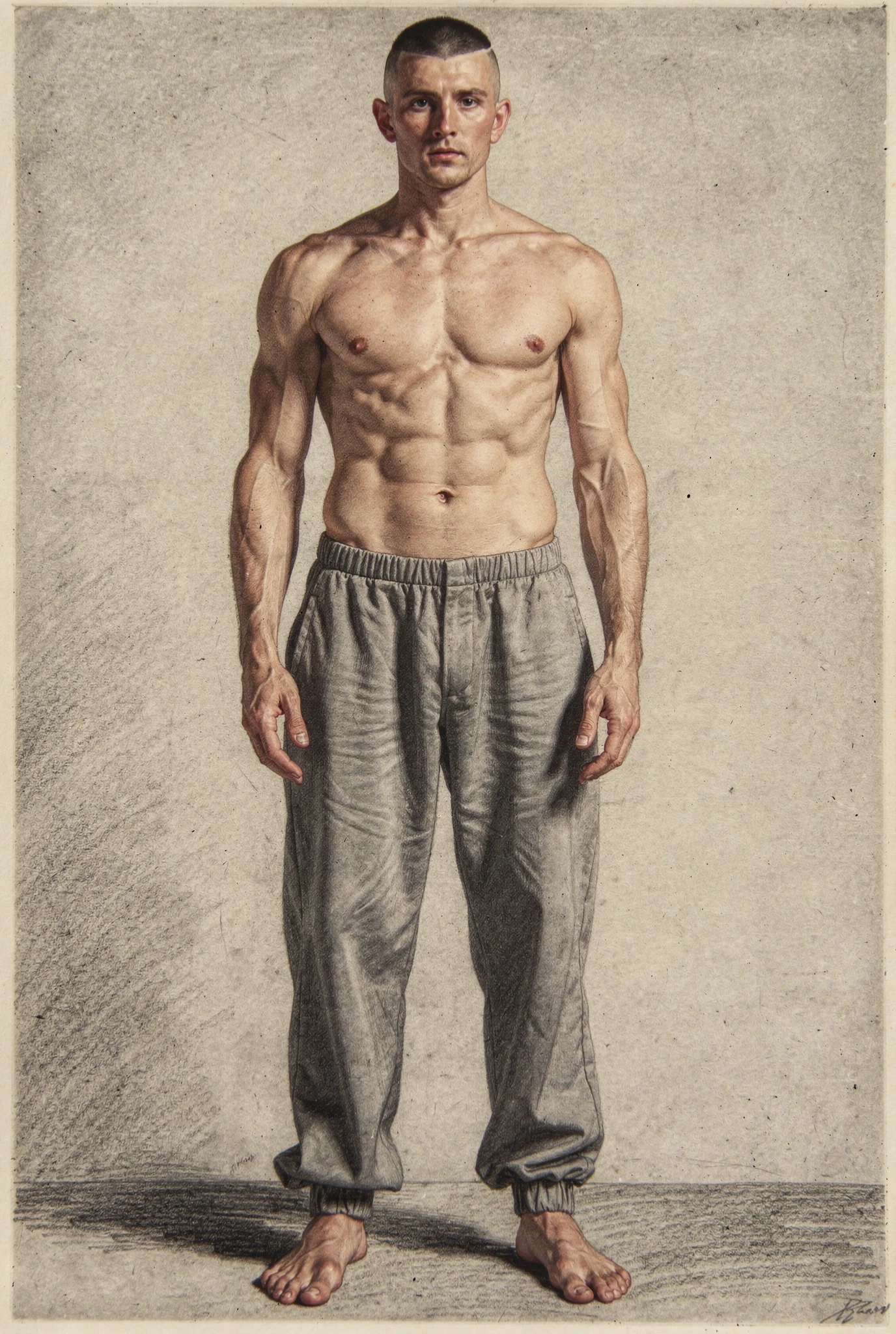
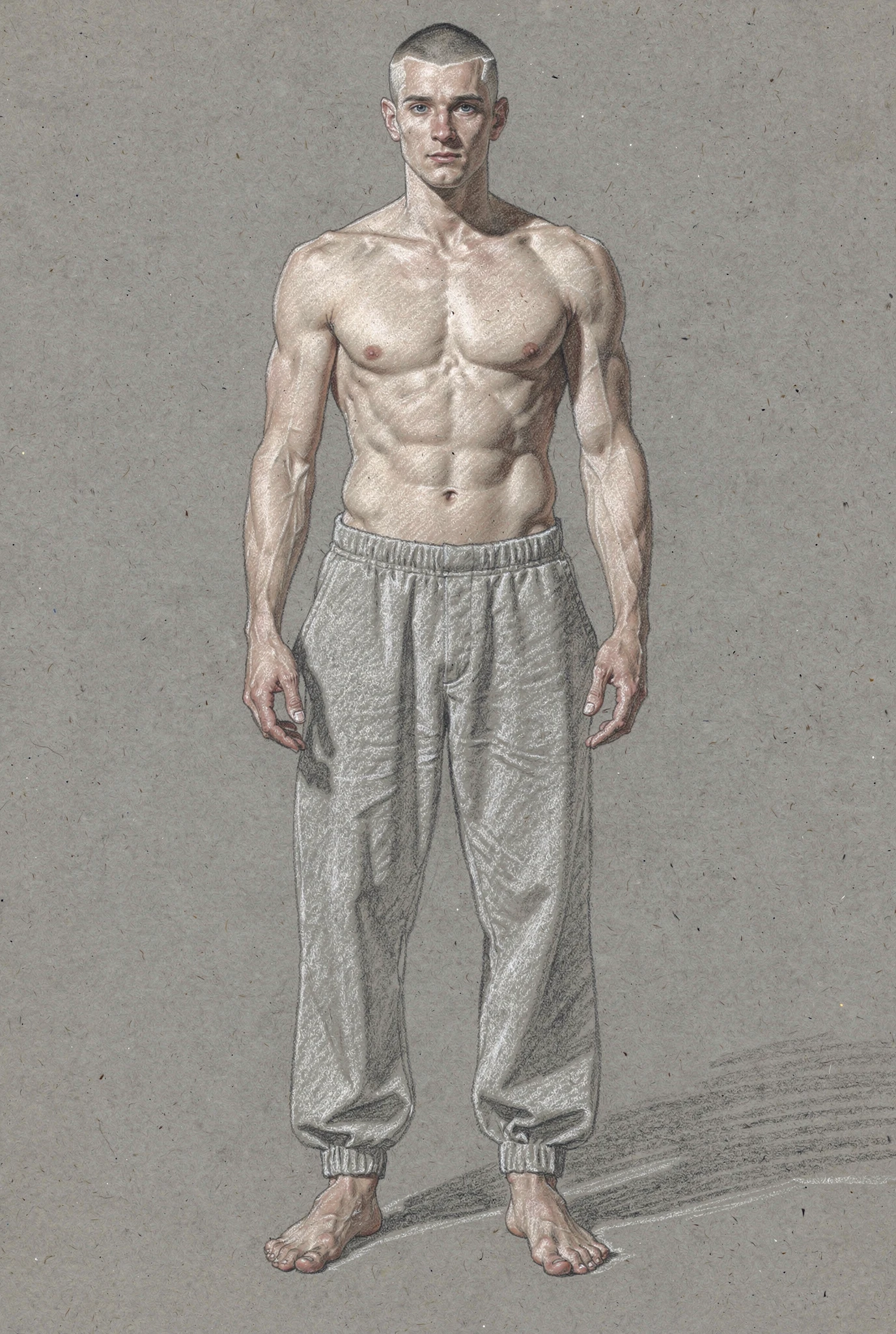
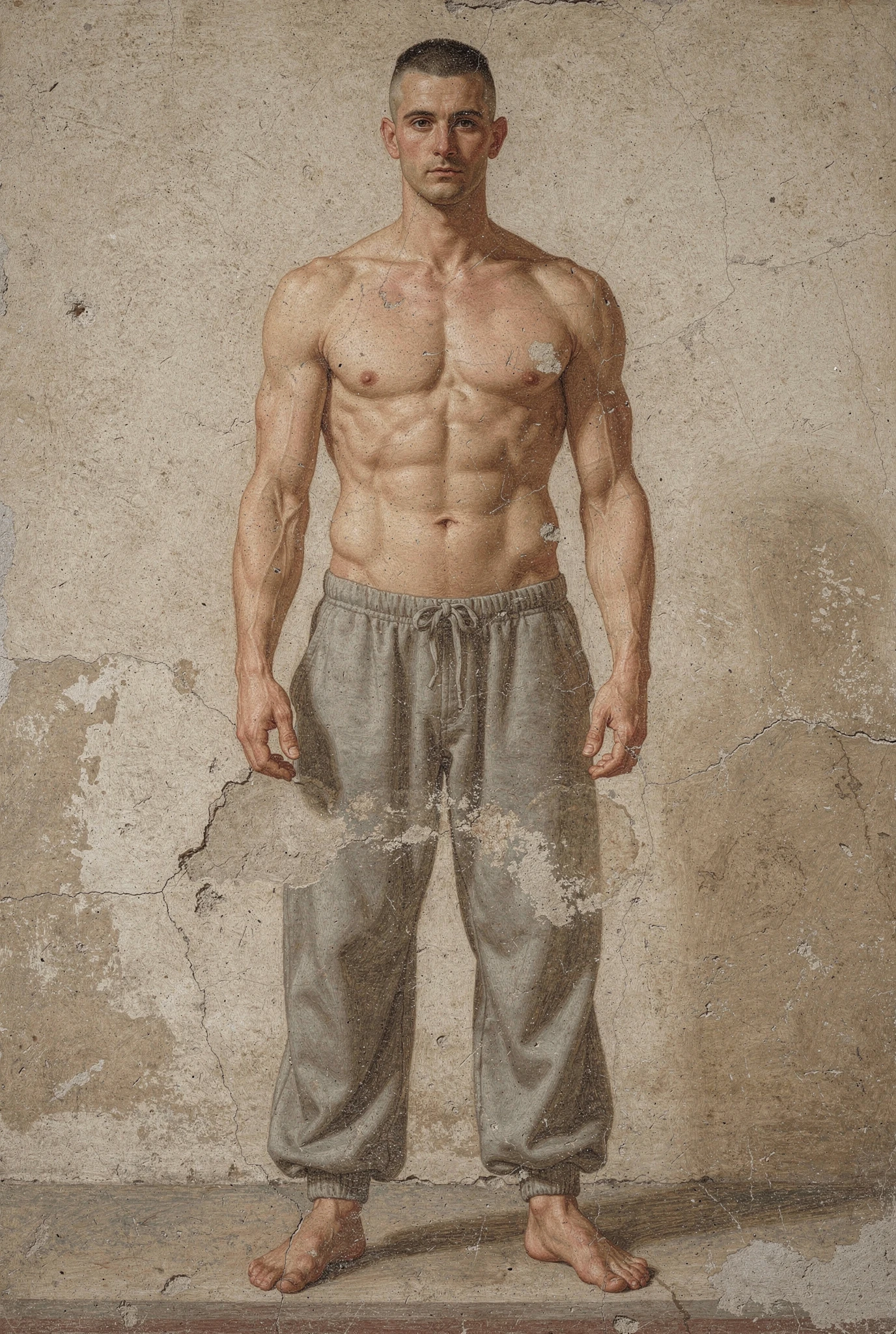
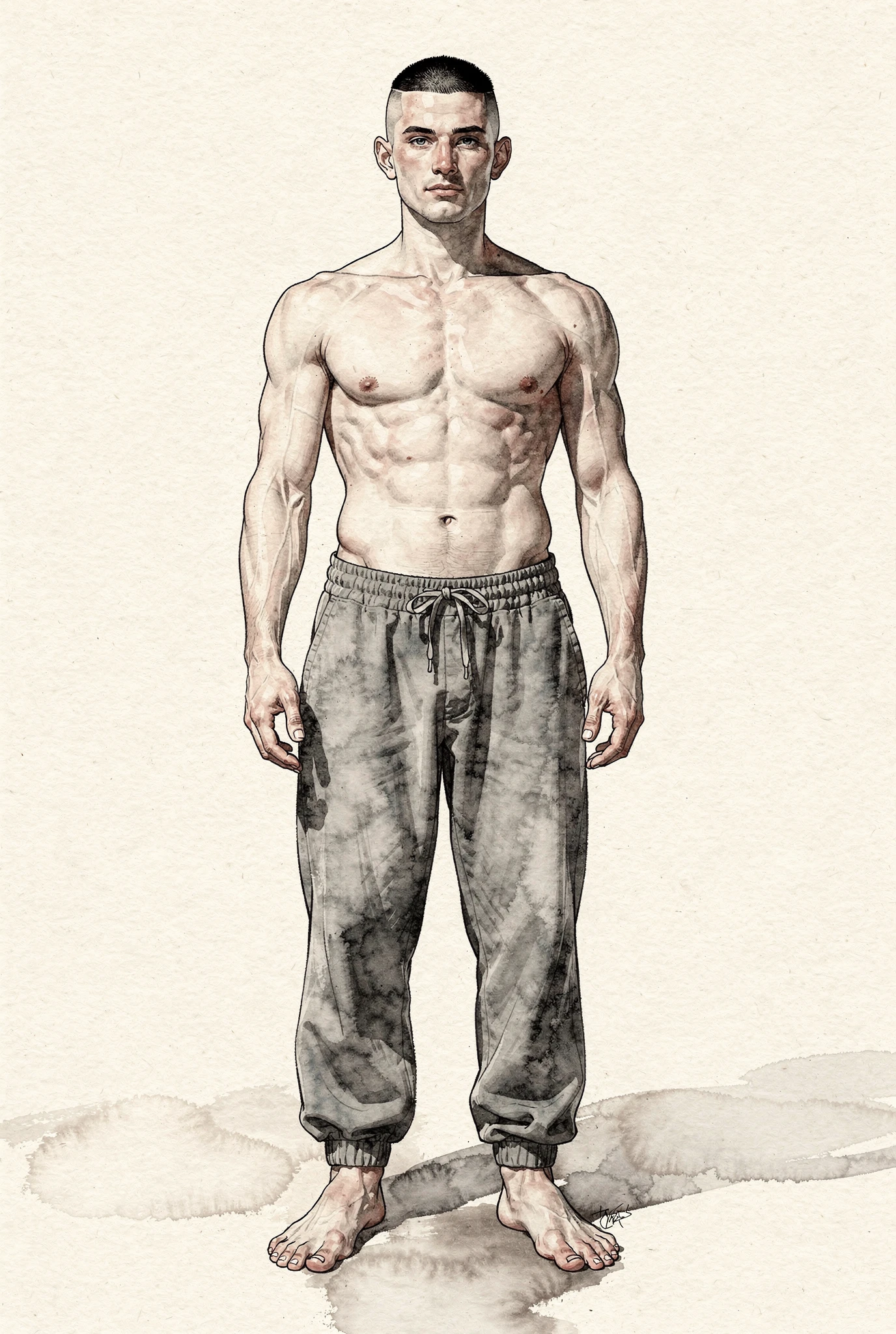
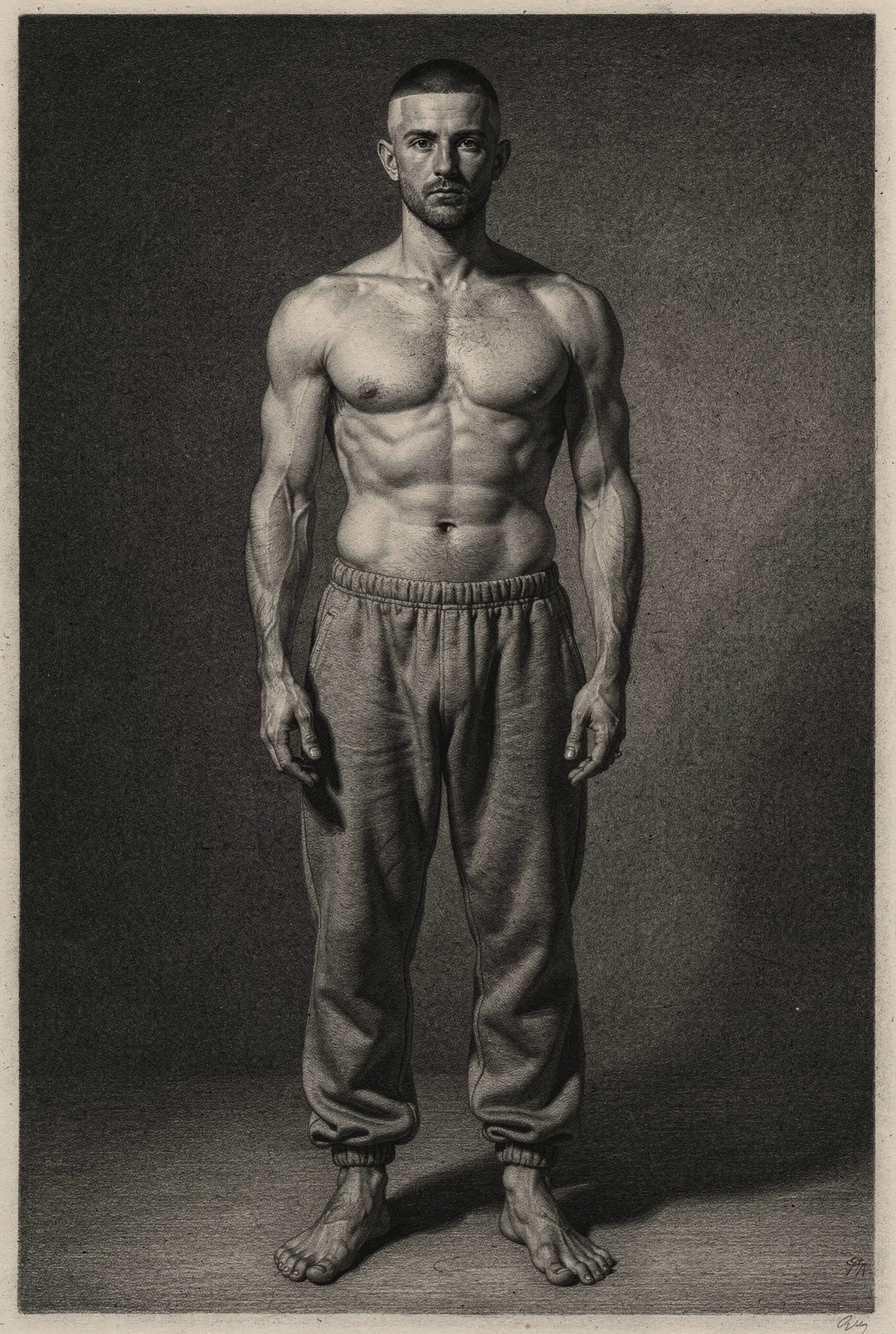
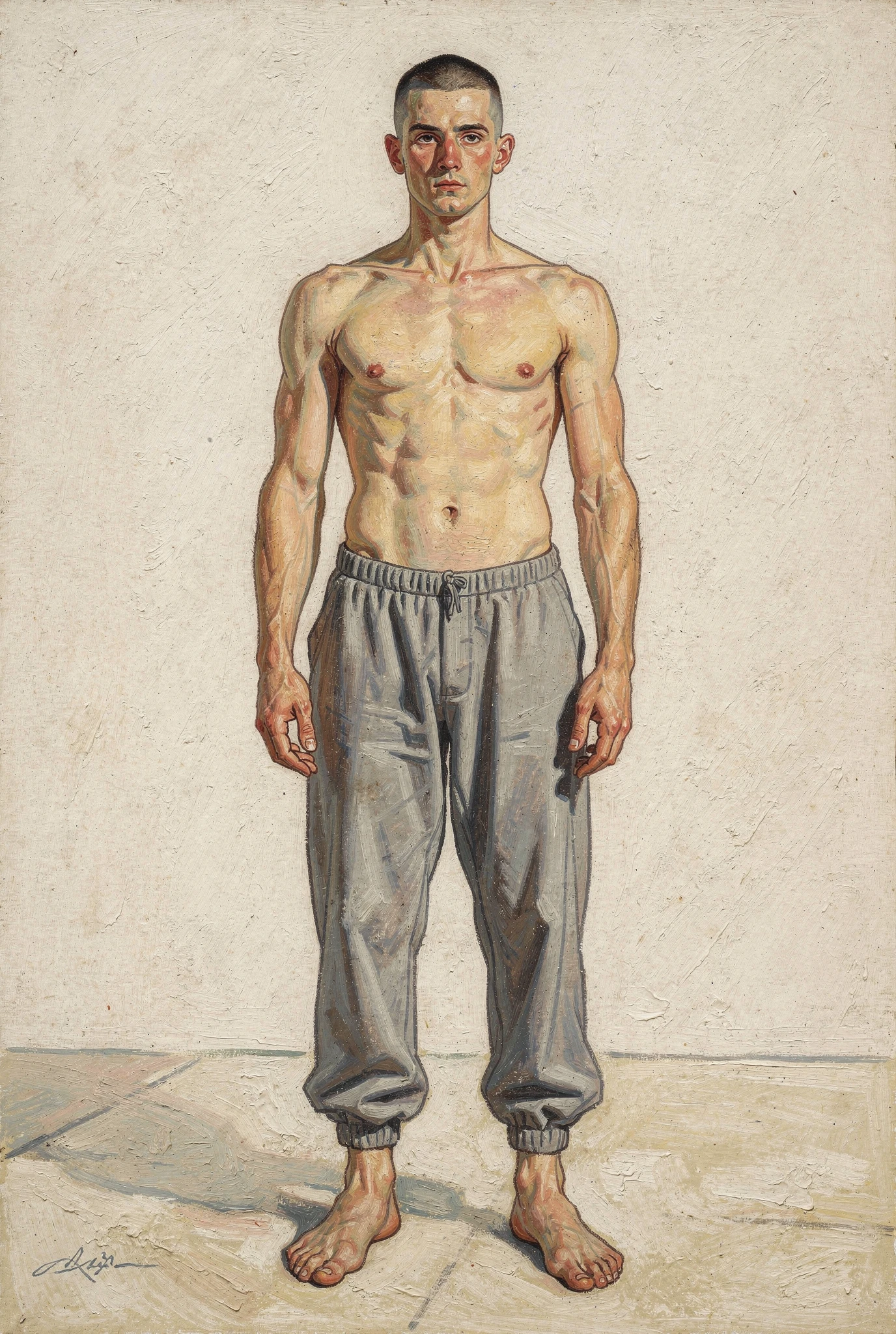
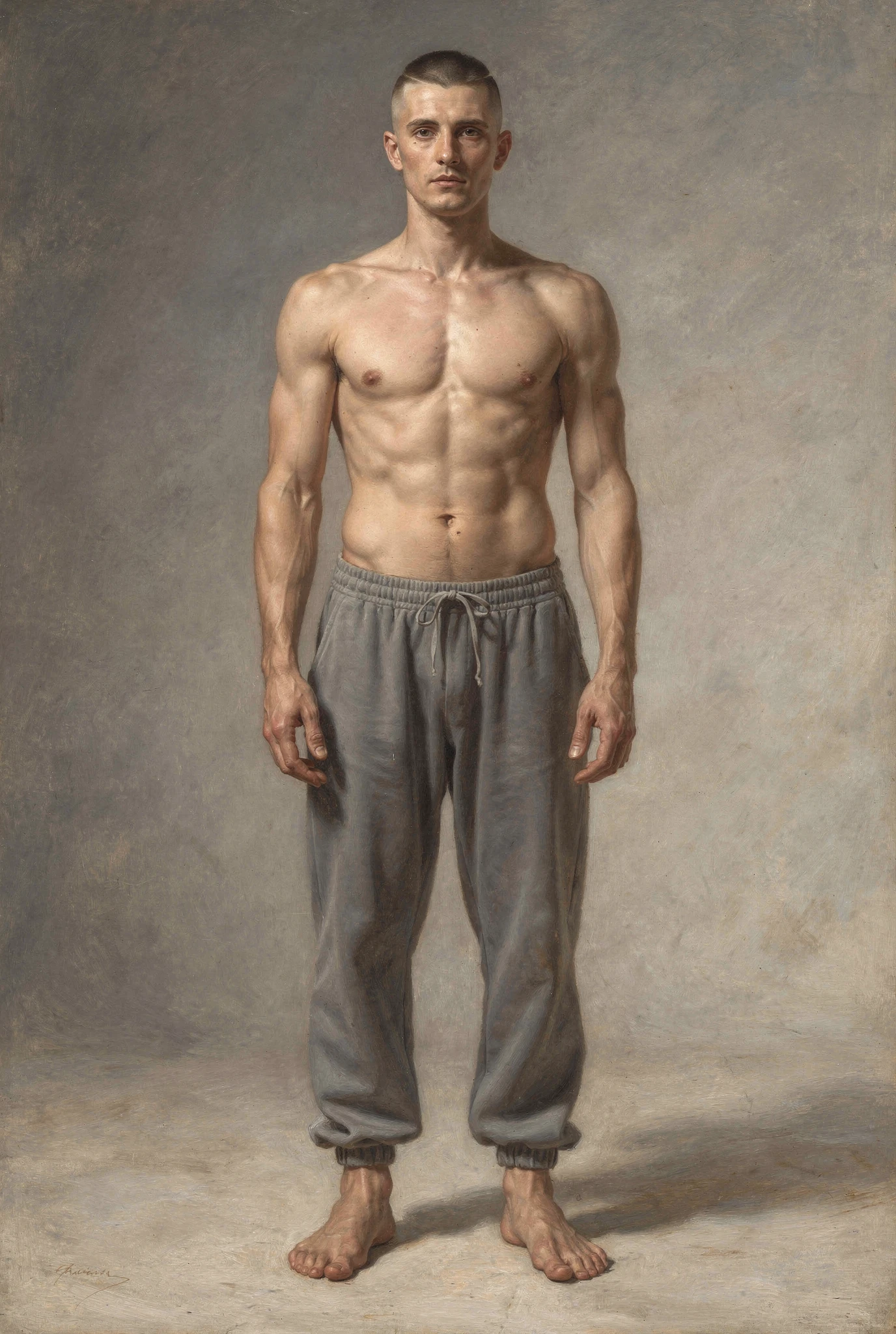
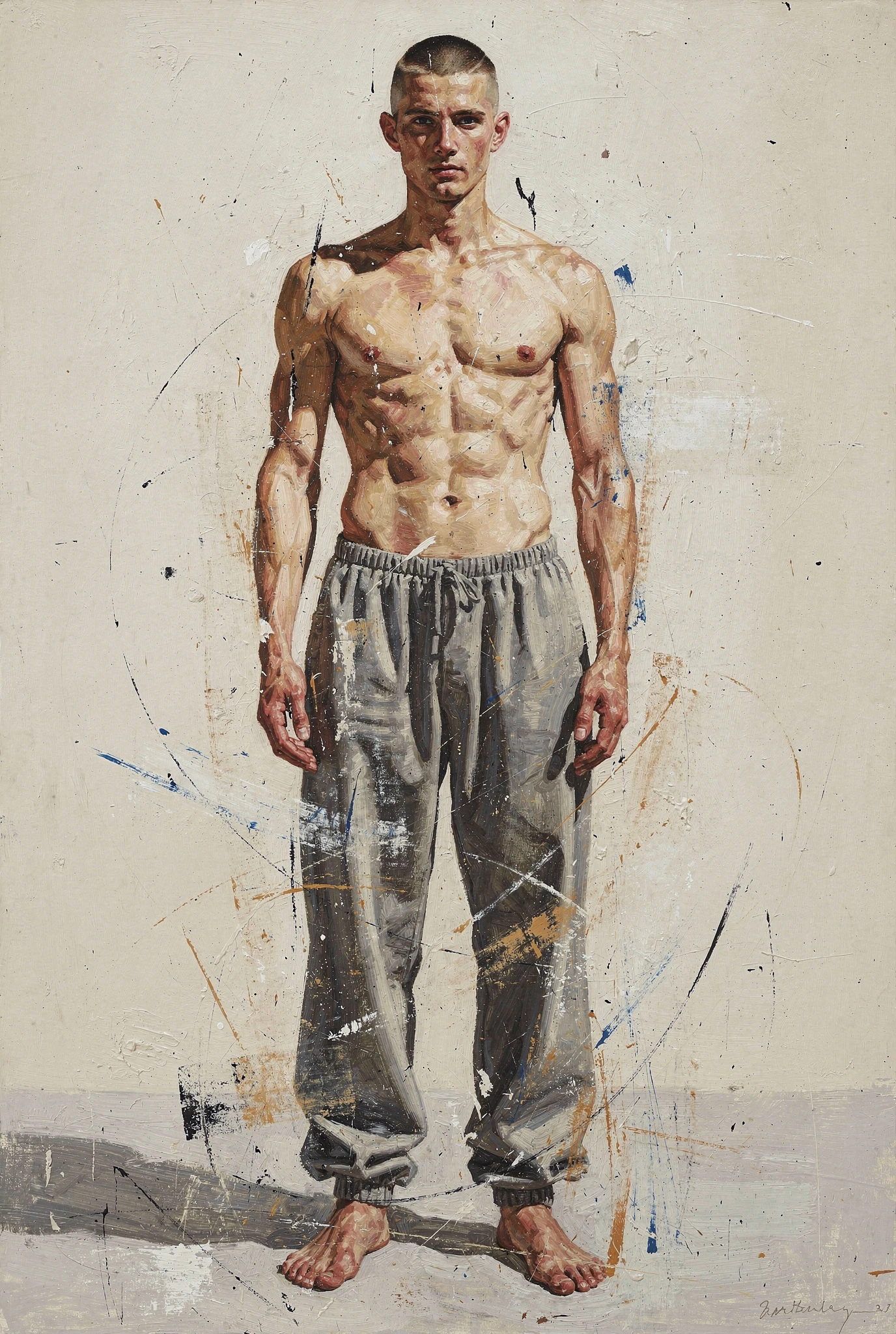
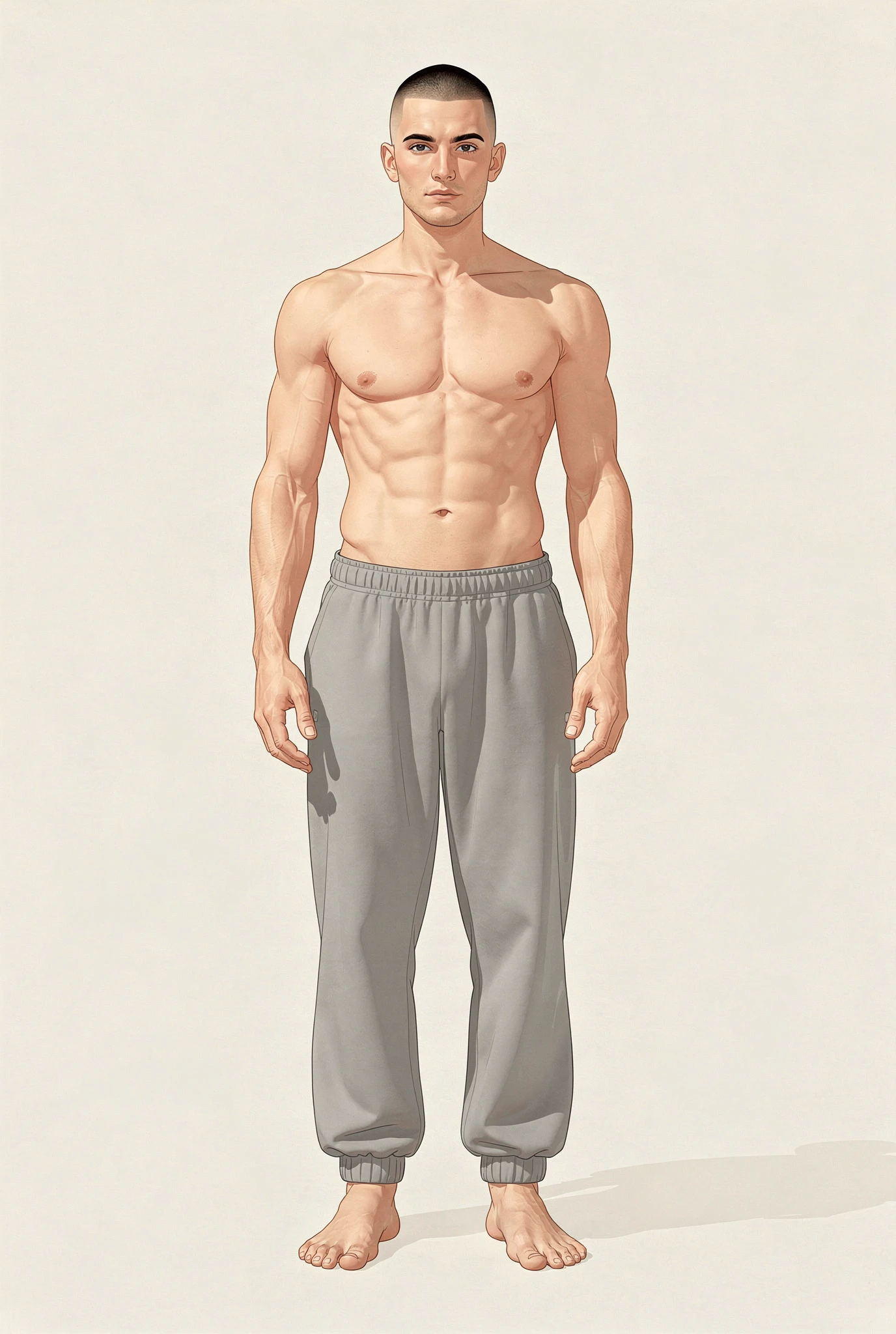
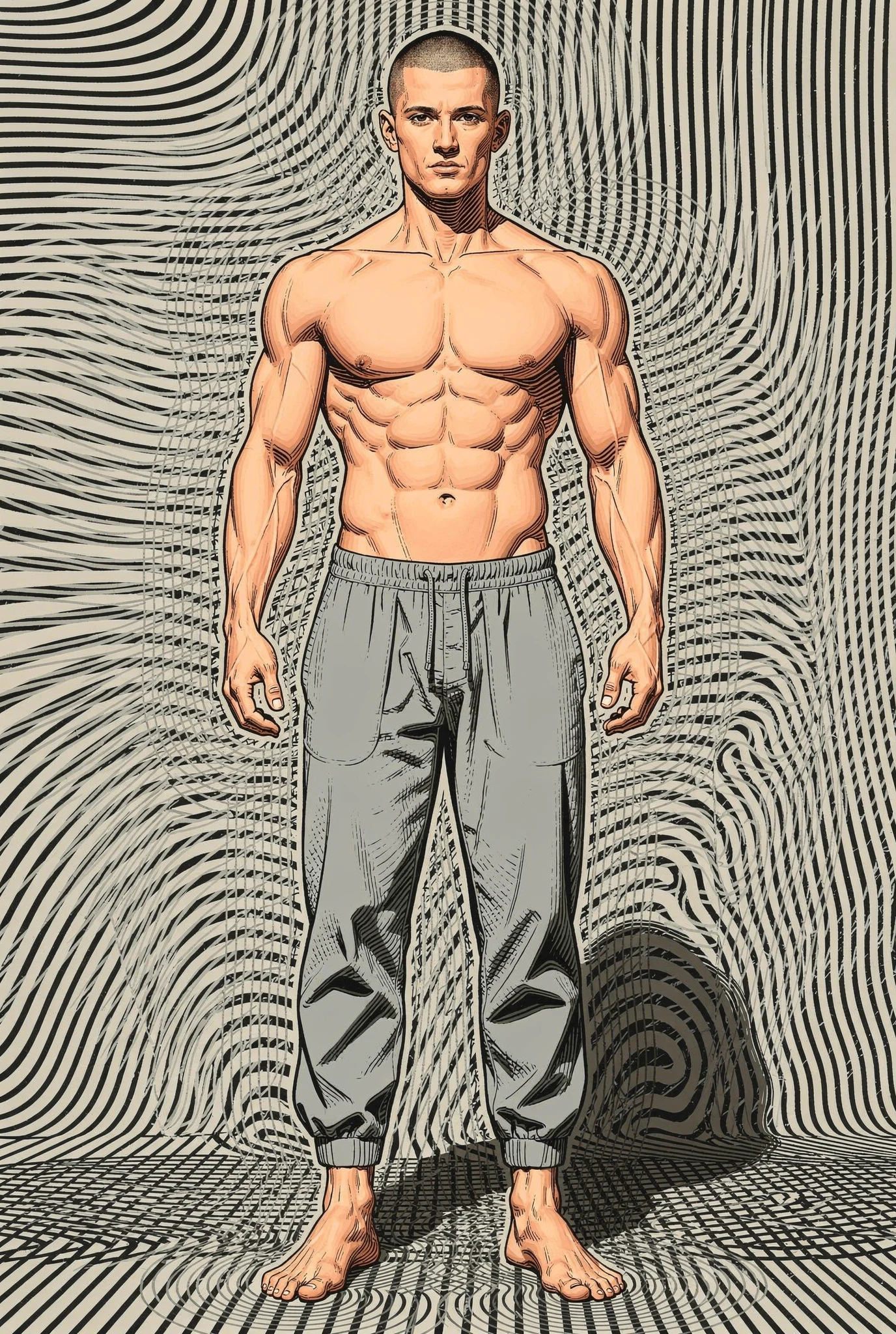
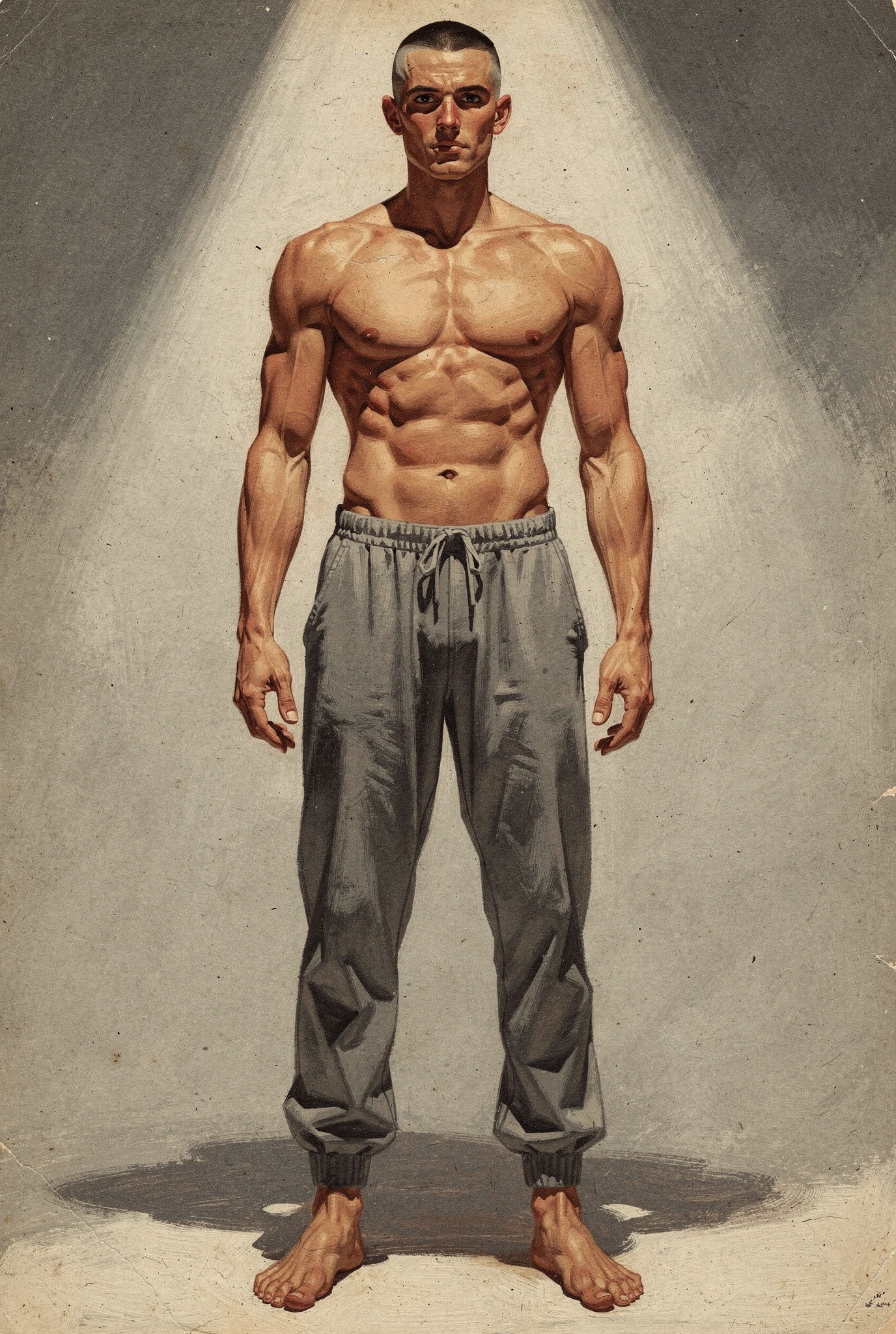
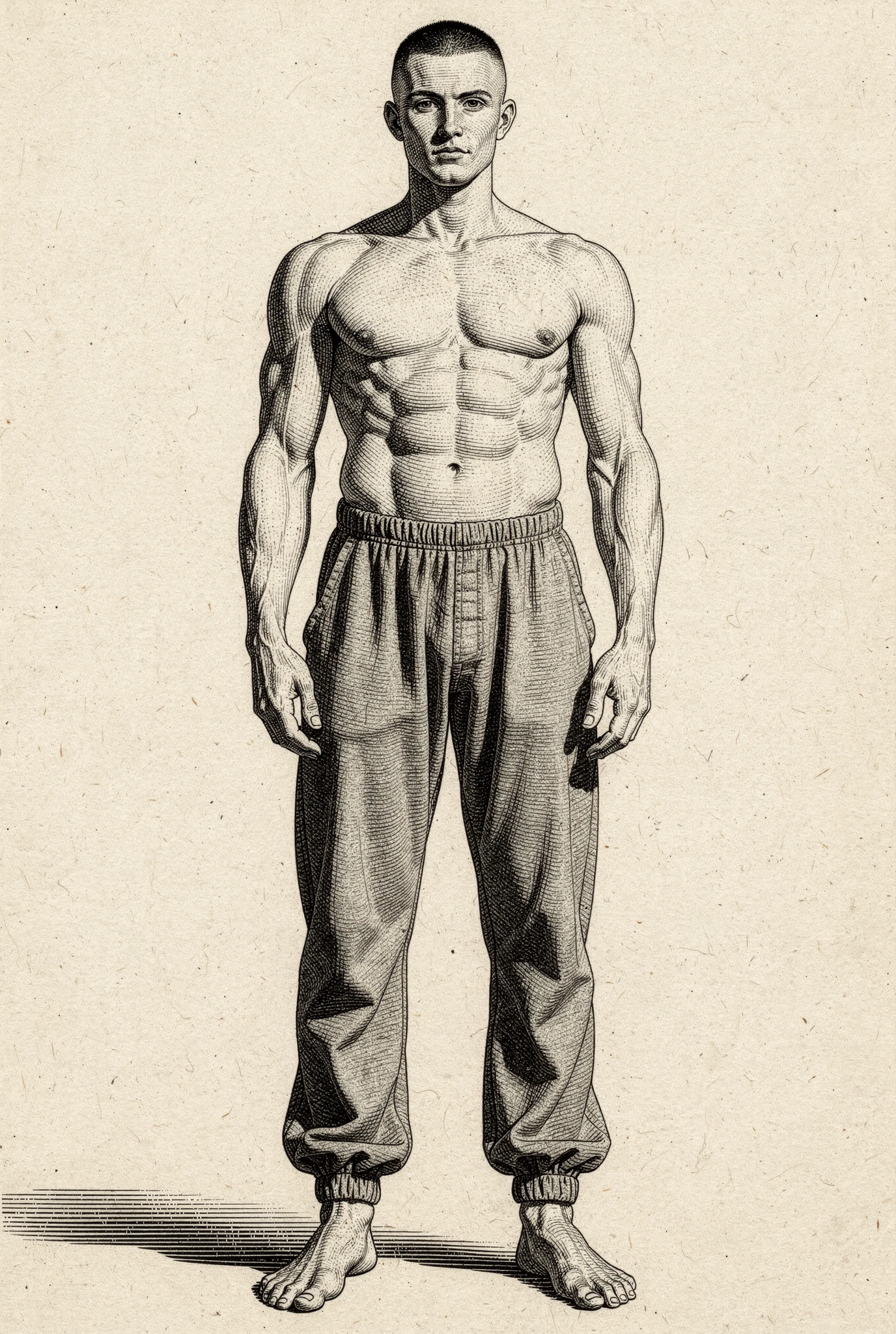
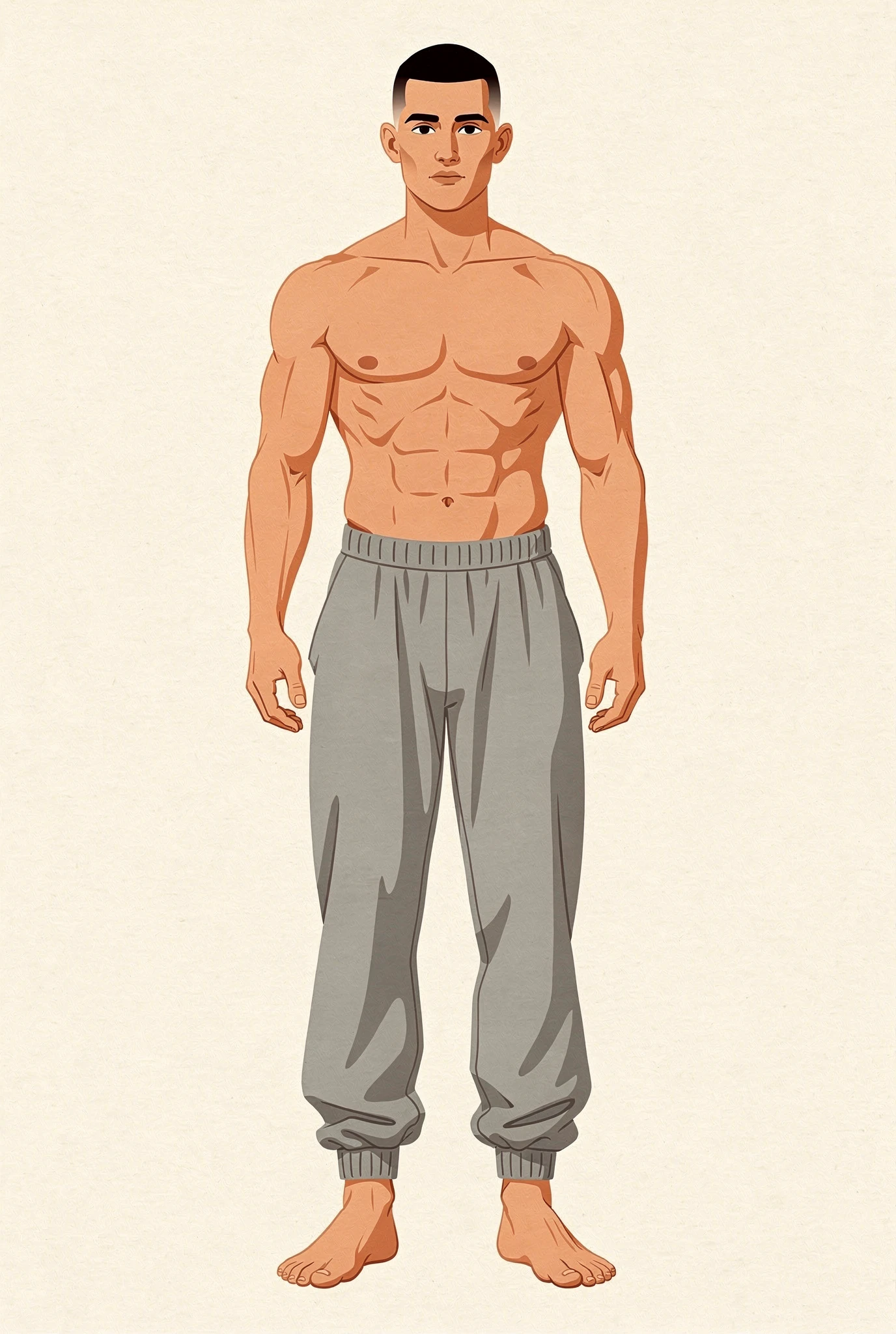
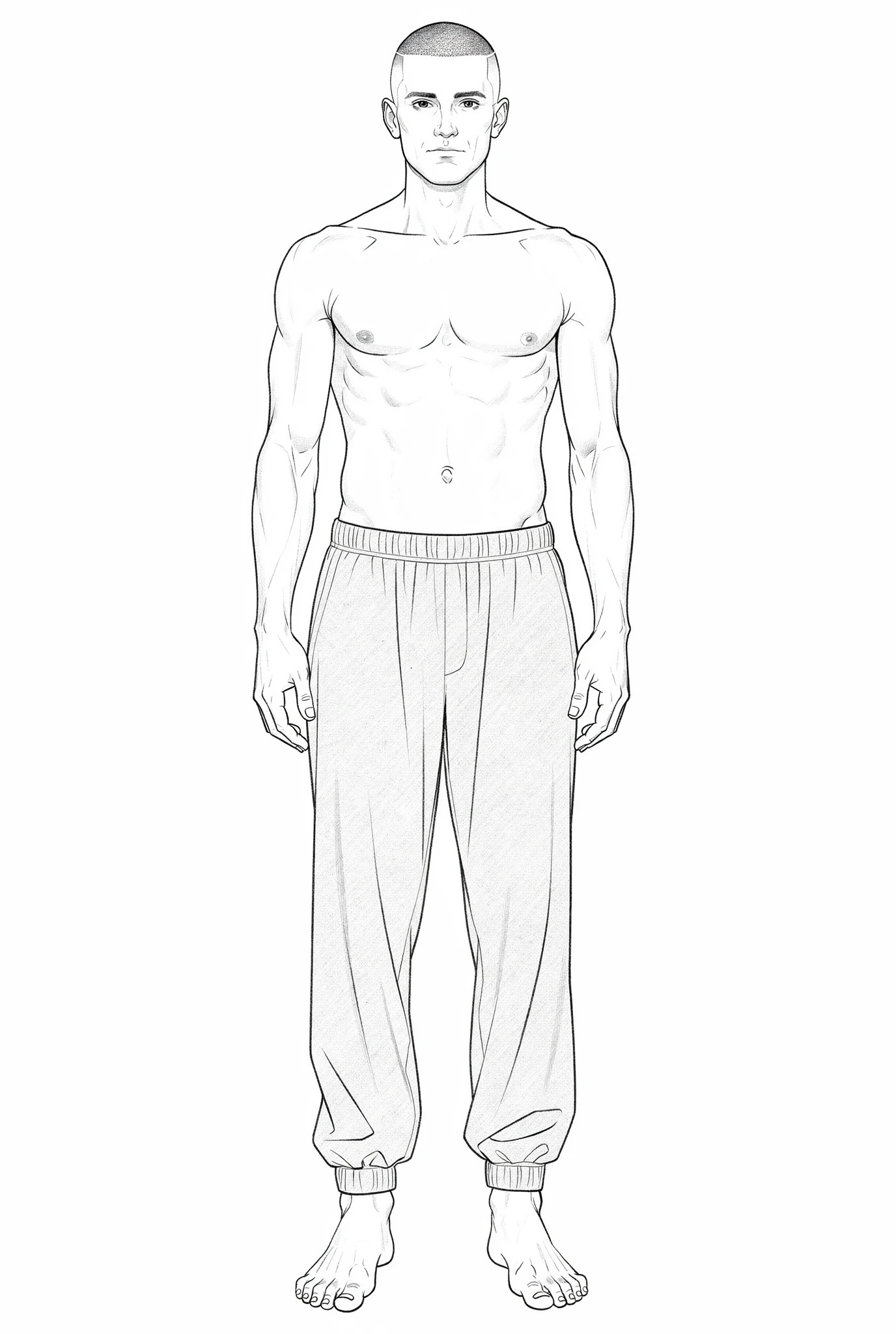
Variants began as a private research exercise rather than a conventional project. I was building a visual databank of simulated mediums and art styles: graphite, charcoal, fresco, mezzotint, manga, abstraction, illustration, print, and many others. The original prompts followed a deliberately fixed structure, with the same six-part description repeated each time. Each one used the same basic motif: a standing male figure in the same pose, wearing the same clothing, against the same neutral background. The identity of the figure was allowed to vary, while the descriptive framework remained fixed. Only the final sentence changed, naming the medium, style, or visual language to be simulated. The eighteen synthographs shown here are a selected group from that wider experiment. They are not presented as finished artworks in the usual sense, but as evidence of a method: one repeated description translated through different visual systems.
The question is simple: when is a filter not a filter? In conventional image-editing, a filter is applied after the image already exists. Photoshop's Filter Gallery, for example, offers artistic, brush stroke, sketch, stylise, texture, and distortion effects that alter the appearance of a finished picture. Many contemporary apps now do something similar, often with far greater sophistication, transforming photographs through preset looks or generative effects. Variants is concerned with something different. These images were not made by taking one picture and processing it eighteen ways. Each image was generated separately from language, with the chosen medium or style written into the prompt as part of its original condition.
That distinction matters because it changes where style enters the image. It is not pasted onto the surface afterwards, but folded into the act of formation. The prompt does not ask an existing photograph to imitate mezzotint or fresco; it asks the machine to imagine the figure as though that visual language were native to the figure from the beginning. The body becomes a constant, almost a measuring device, while each final sentence changes the atmosphere around it: weight, intimacy, authority, vulnerability, graphic force, painterly softness, artificial history. Variants is therefore less about individual identity than about the elasticity of synthetic image-making — how language becomes surface, how simulation becomes form, and how difference can emerge from a single, carefully held structure.
Gallery



"There is no such thing as repetition. Only insistence." — Gertrude Stein