Arca II: fictional cabinets constructed from reclaimed timber
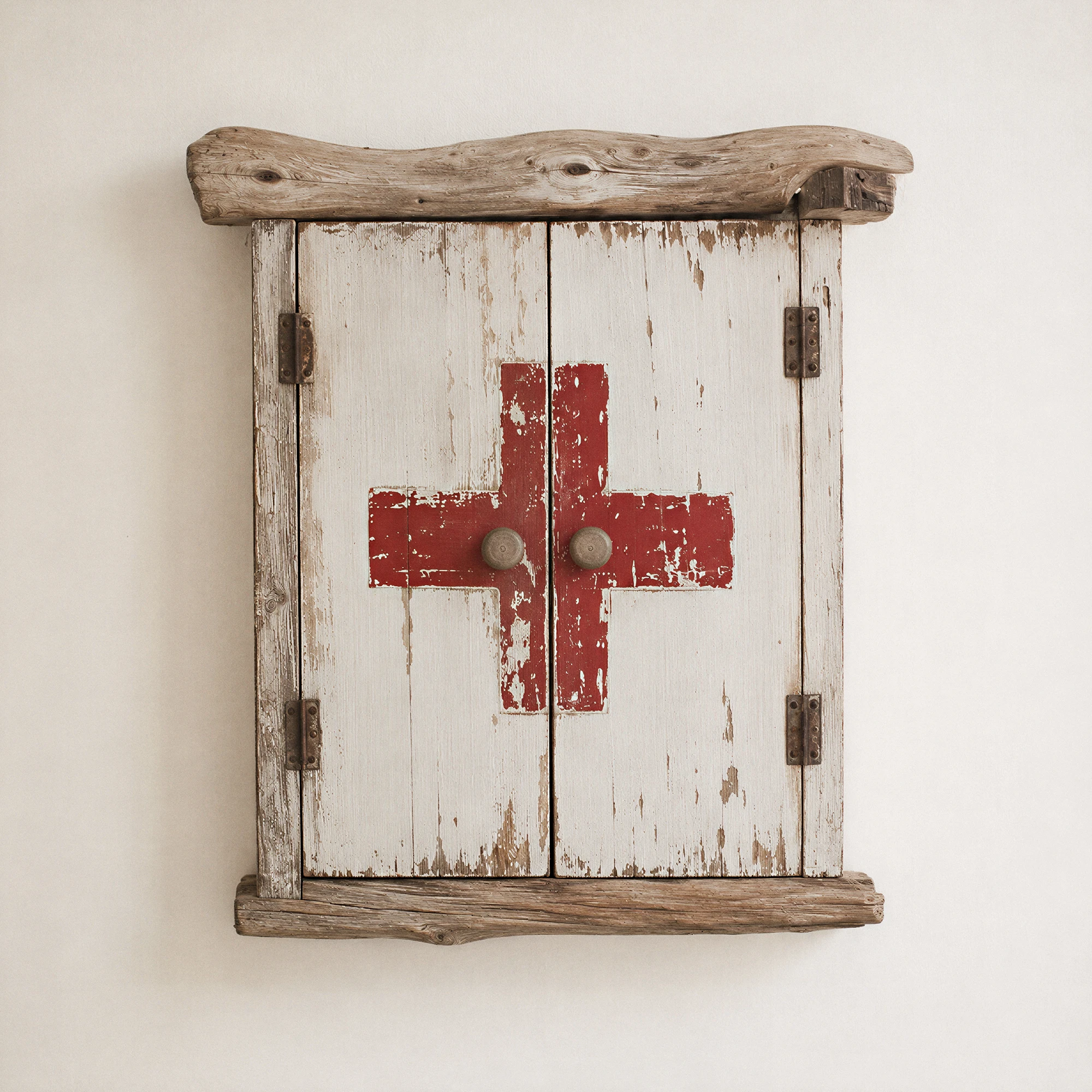
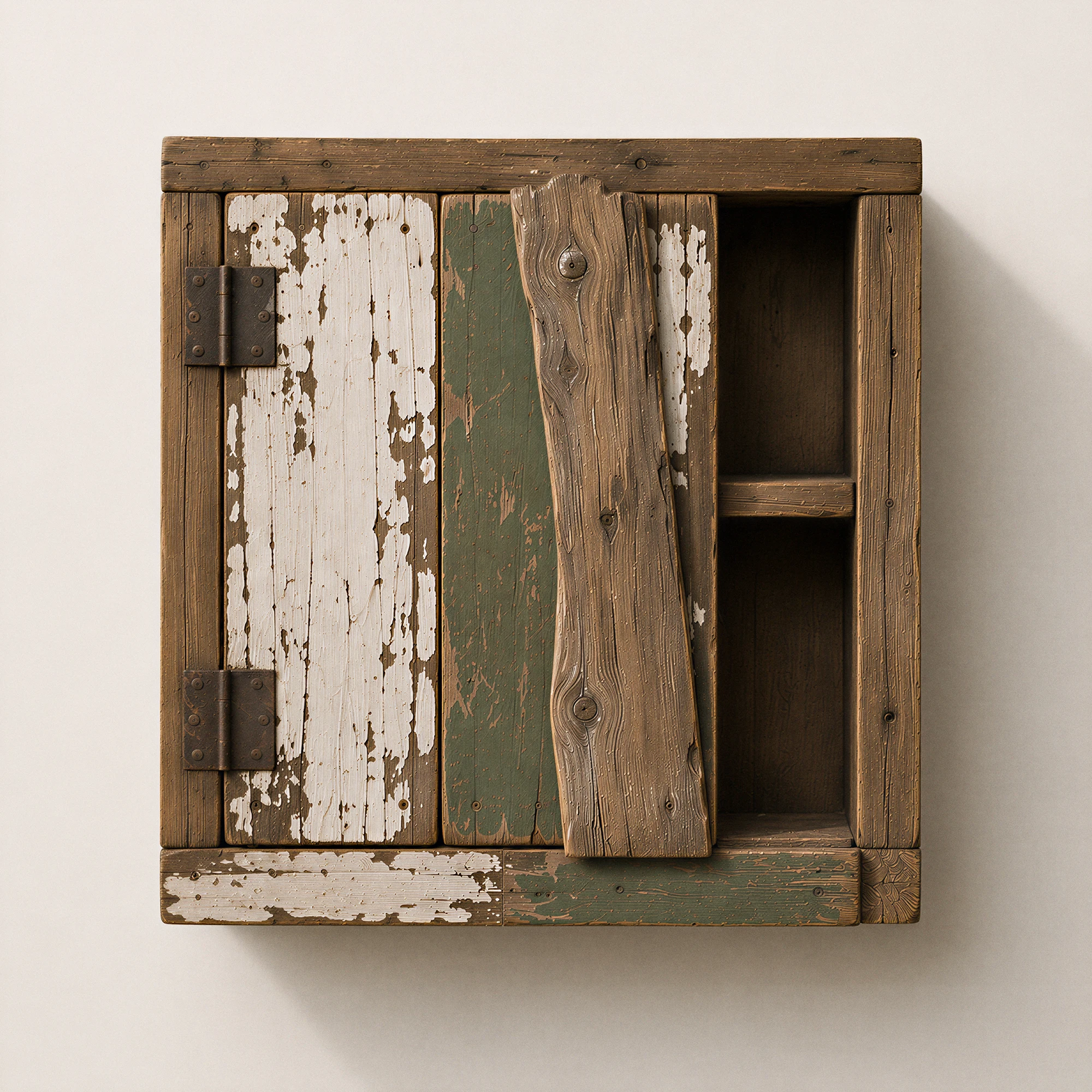
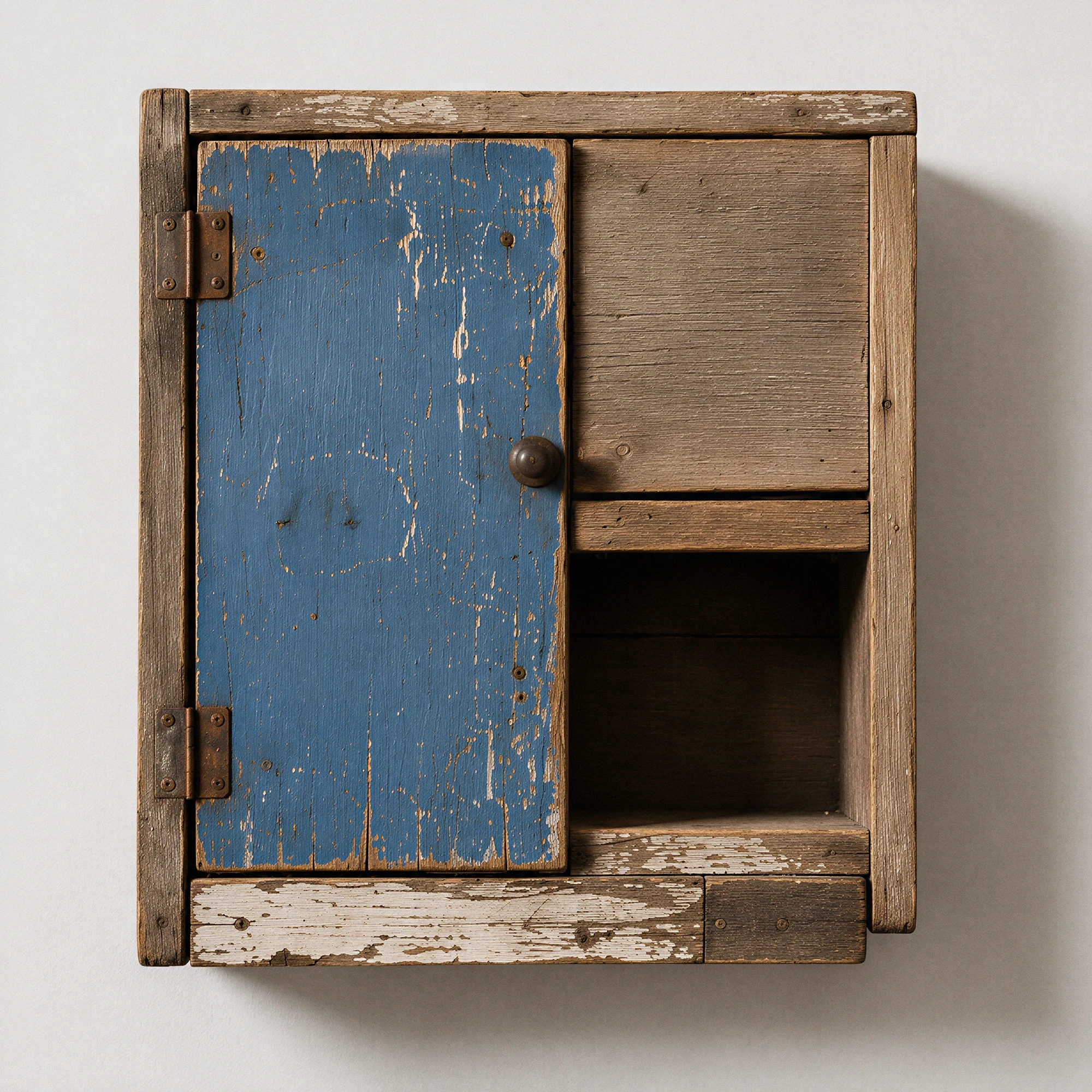
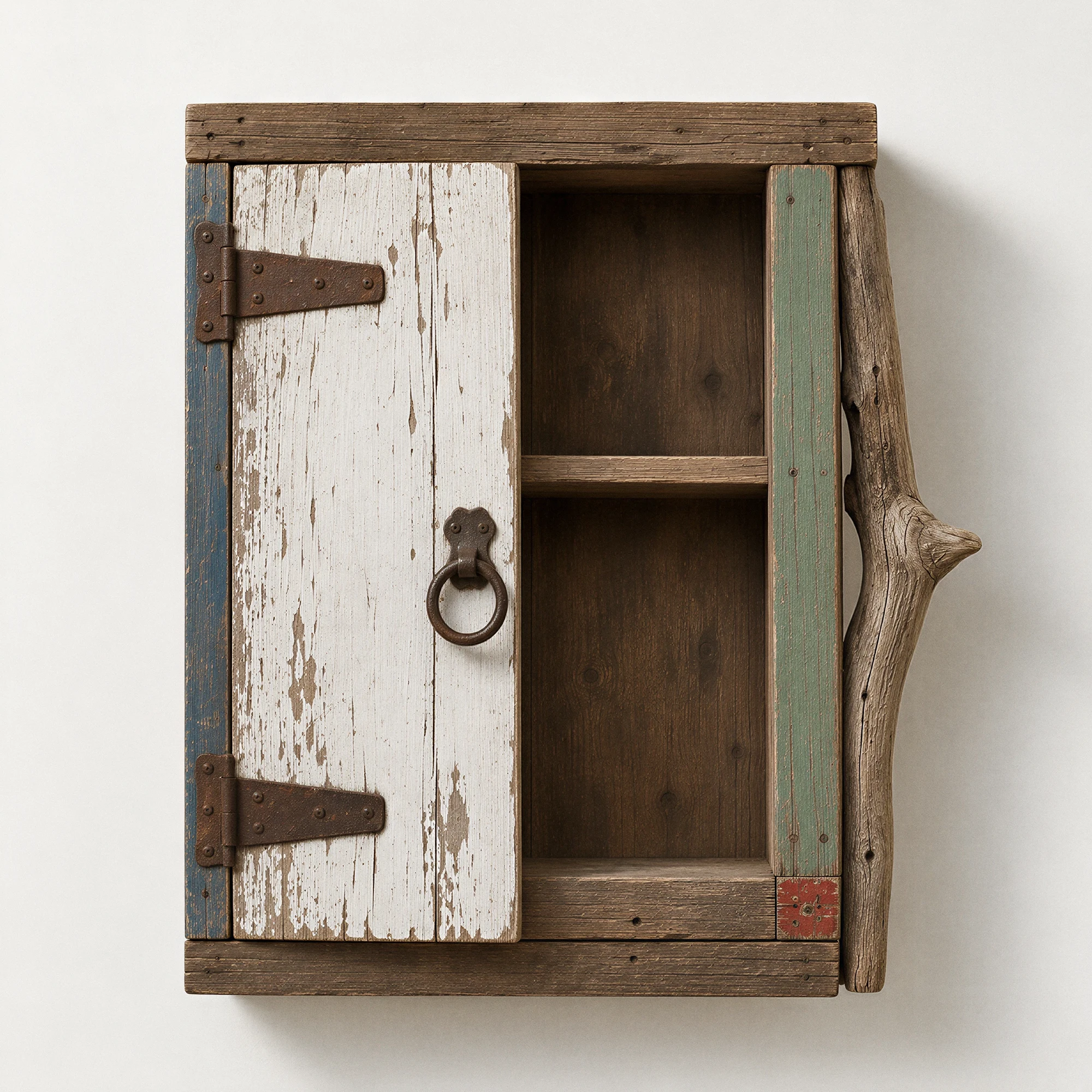
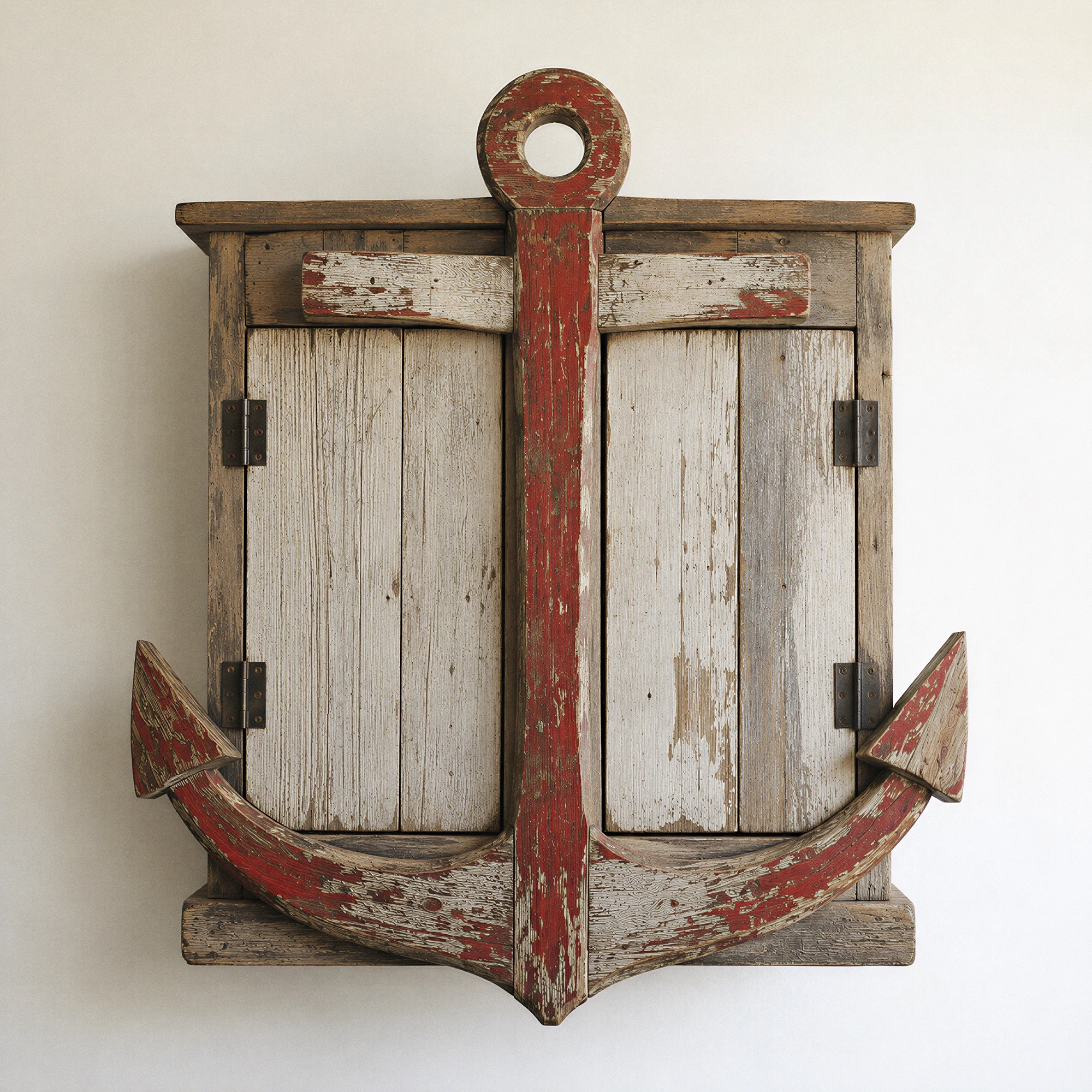
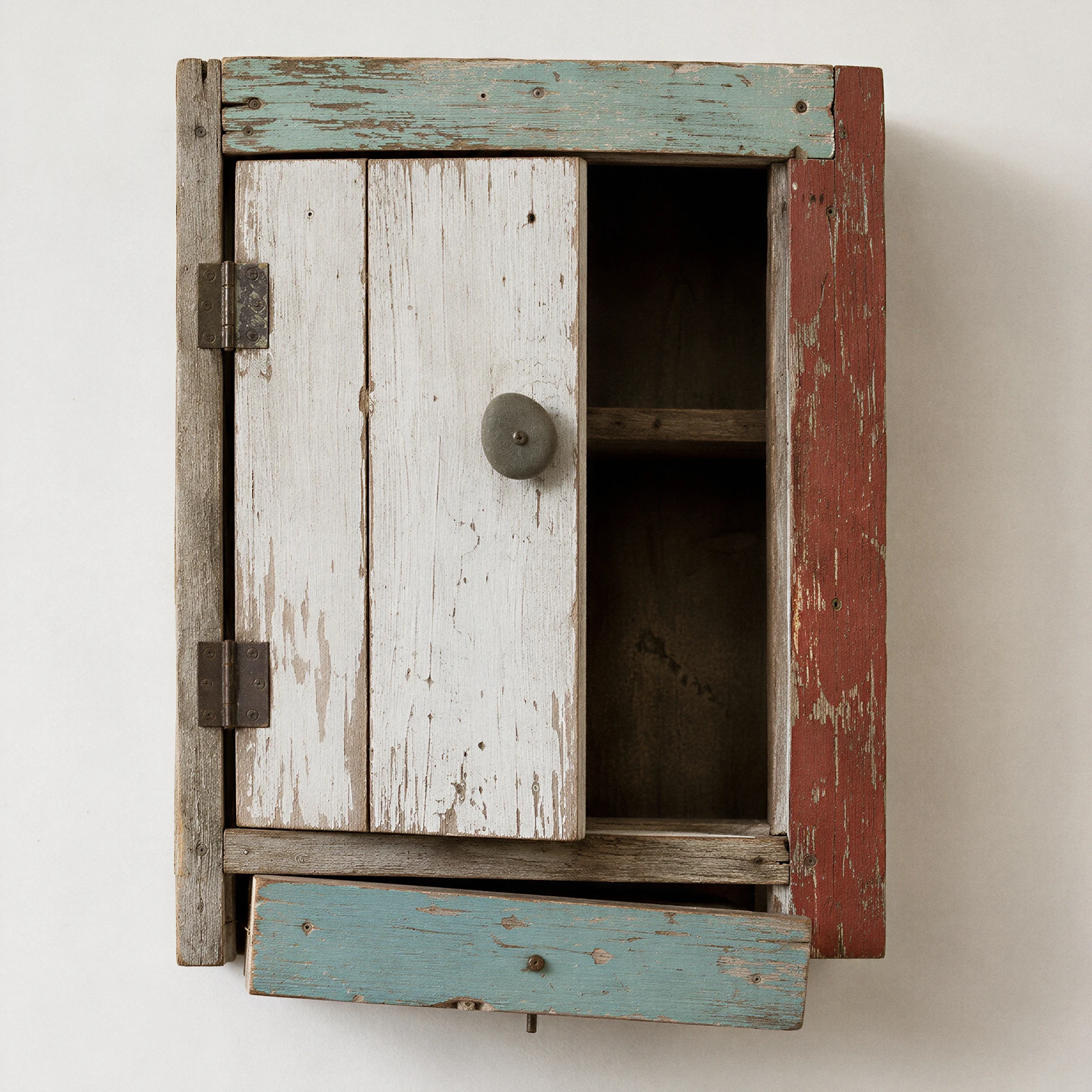
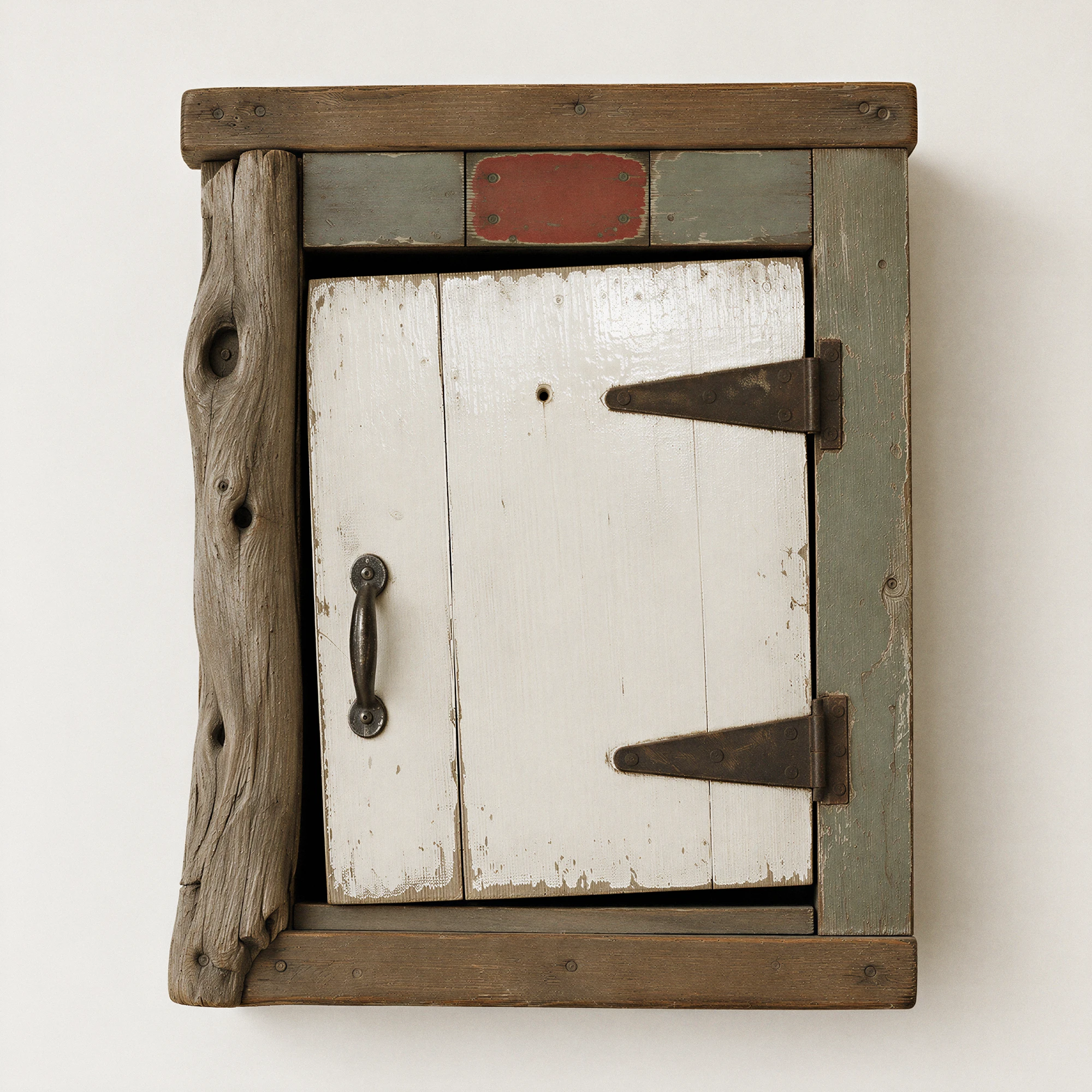
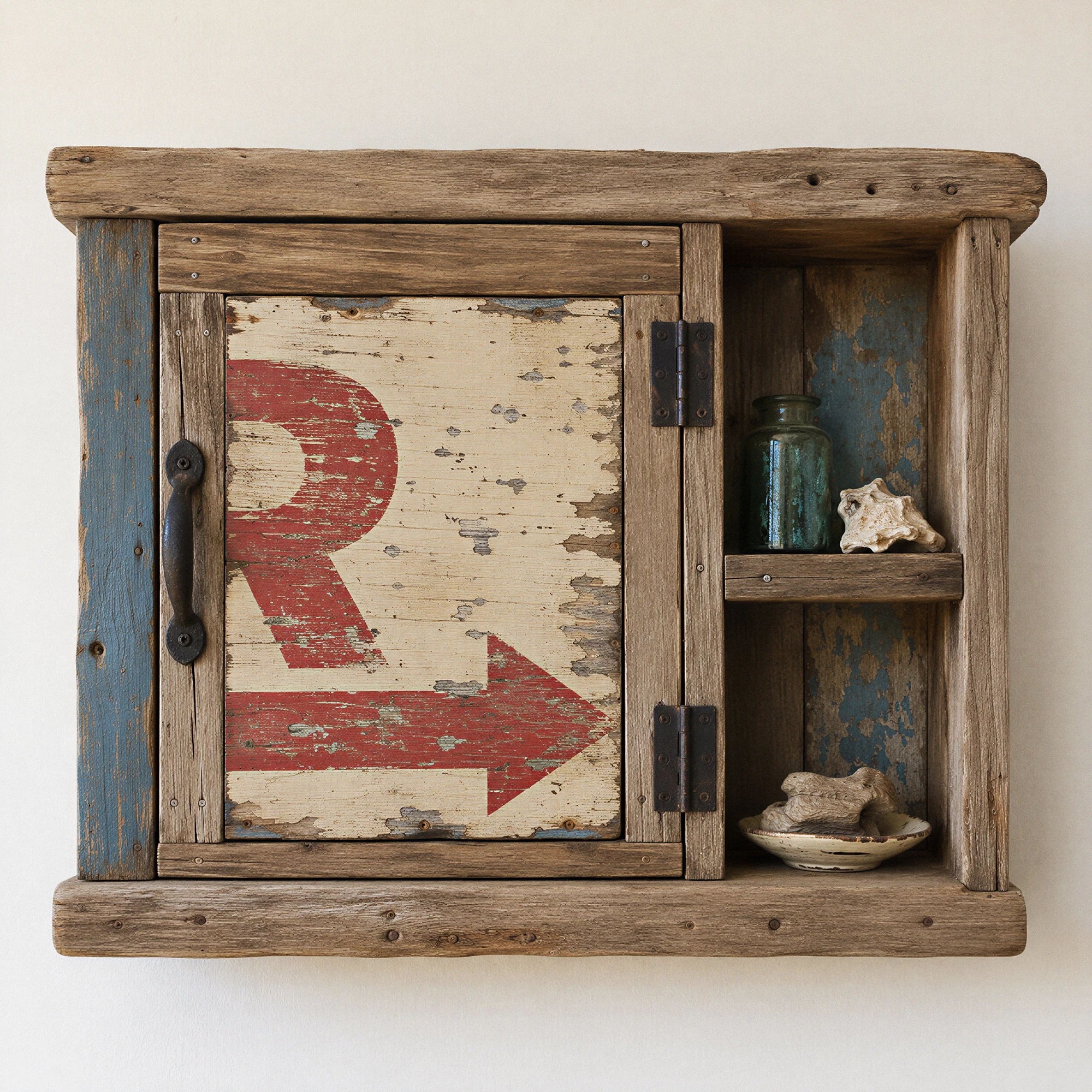
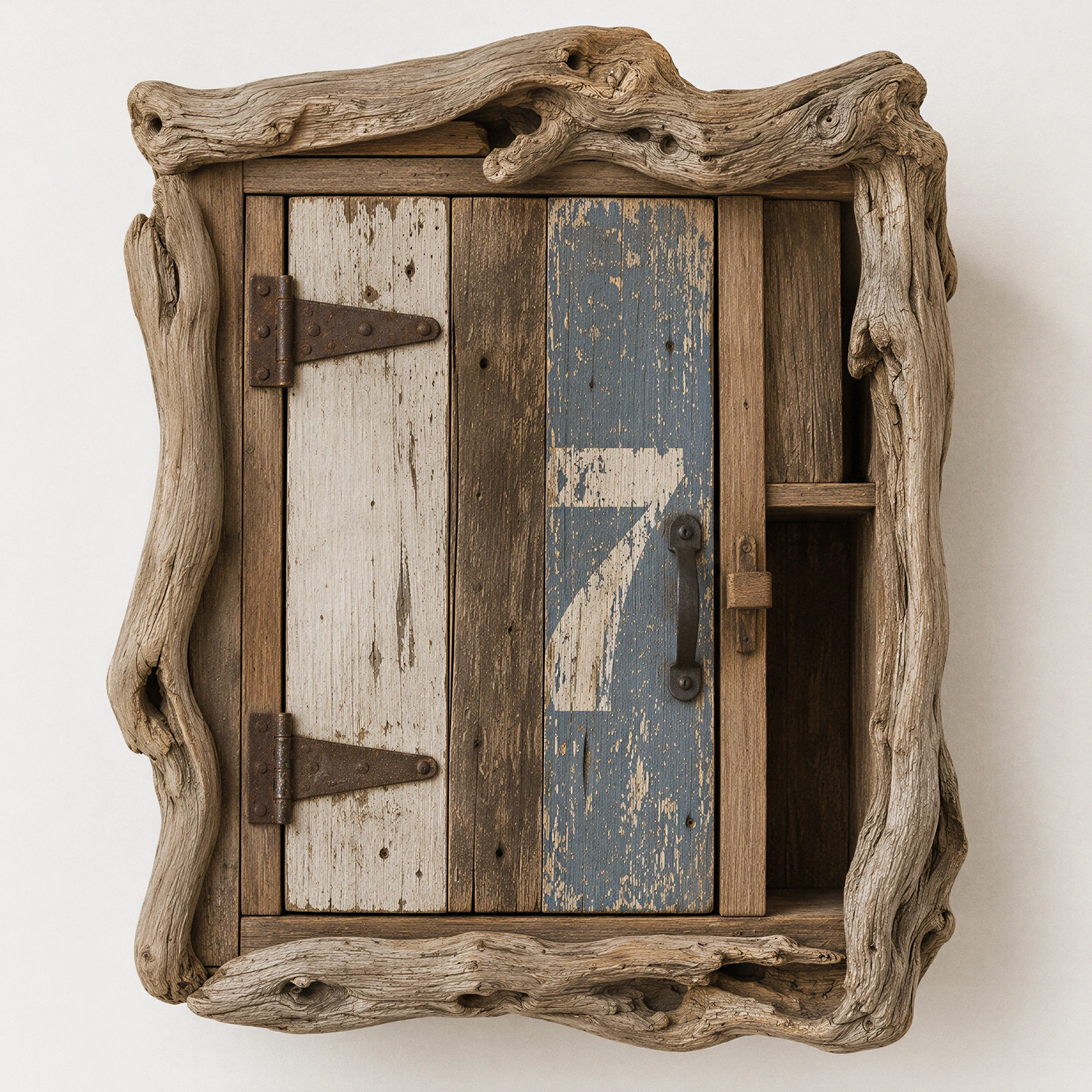
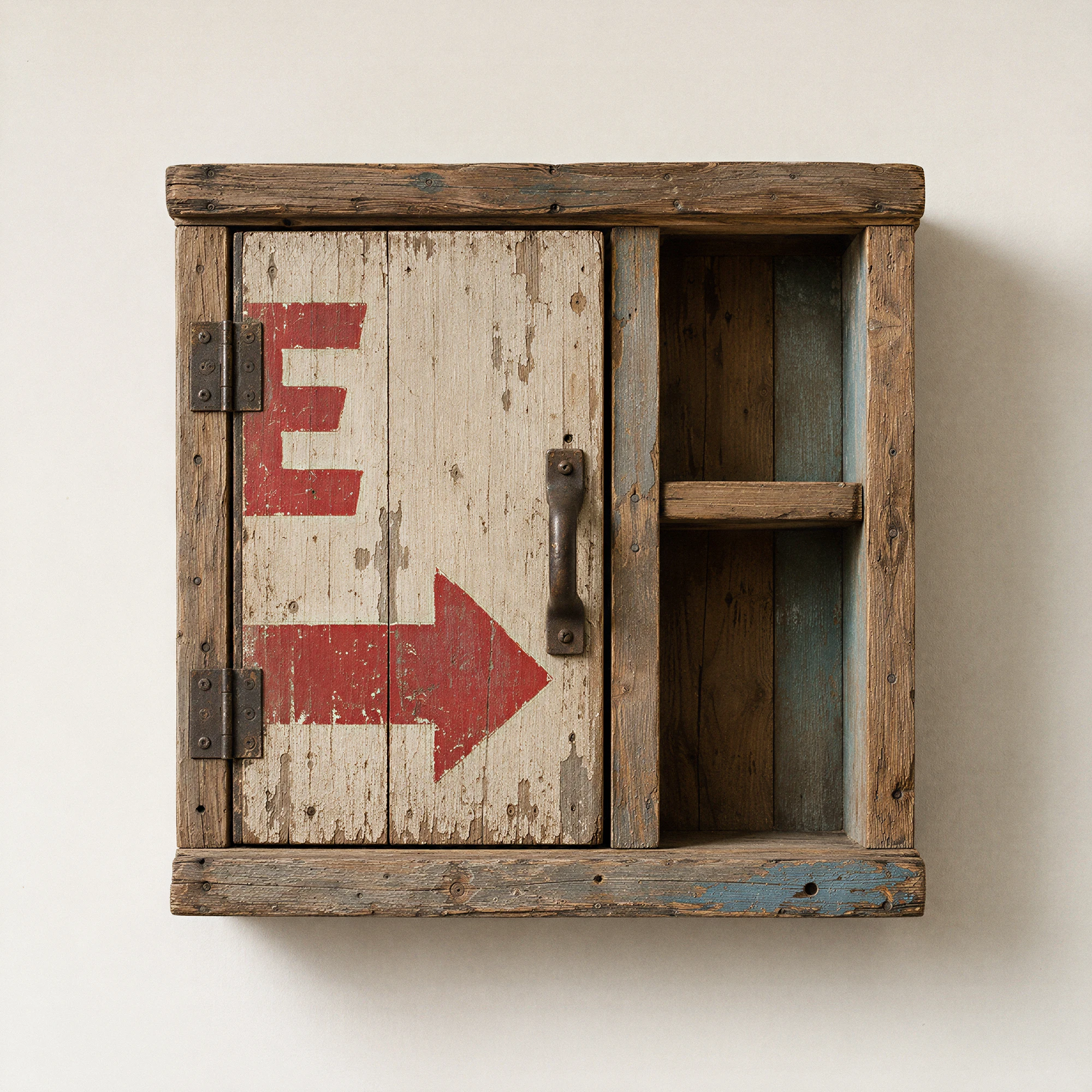
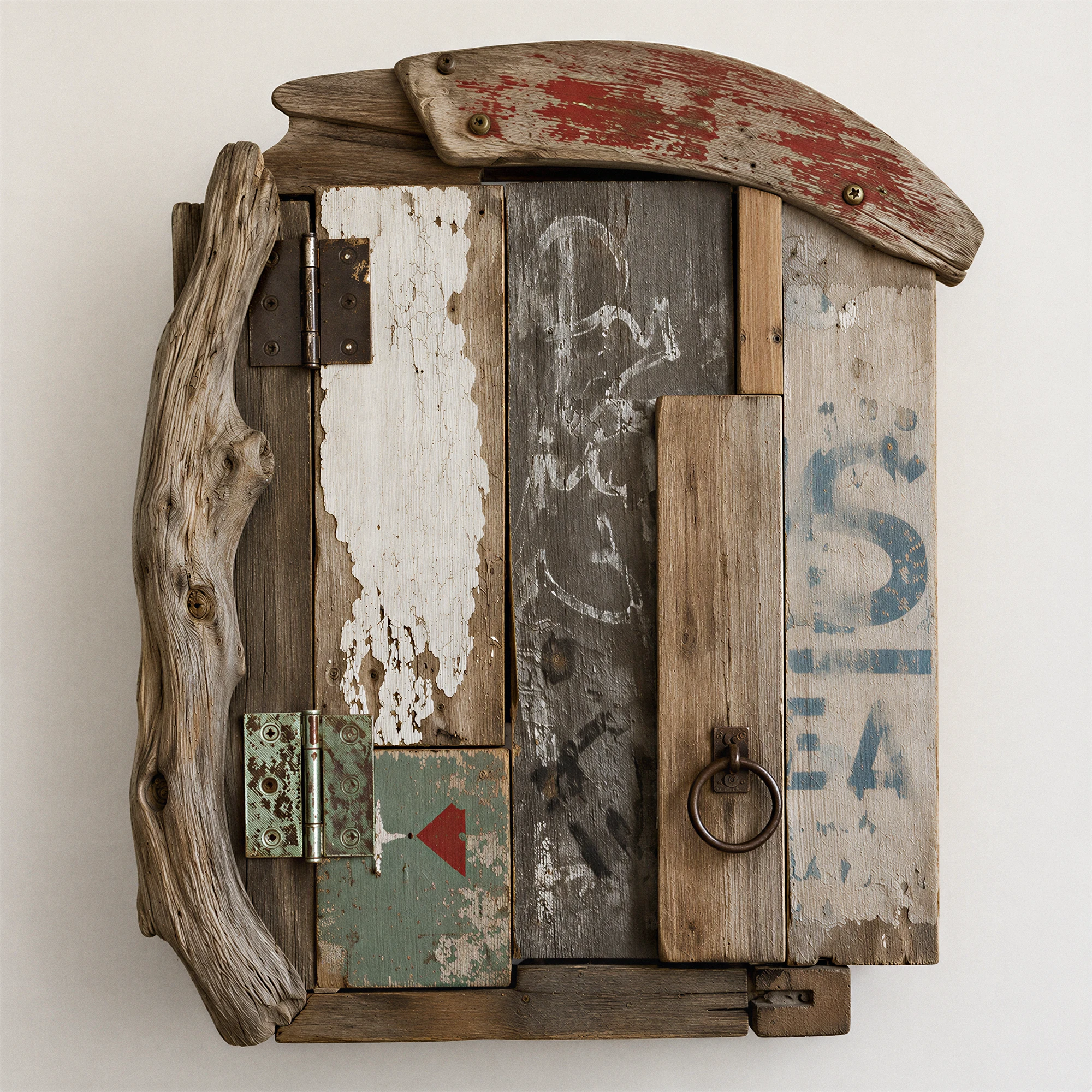
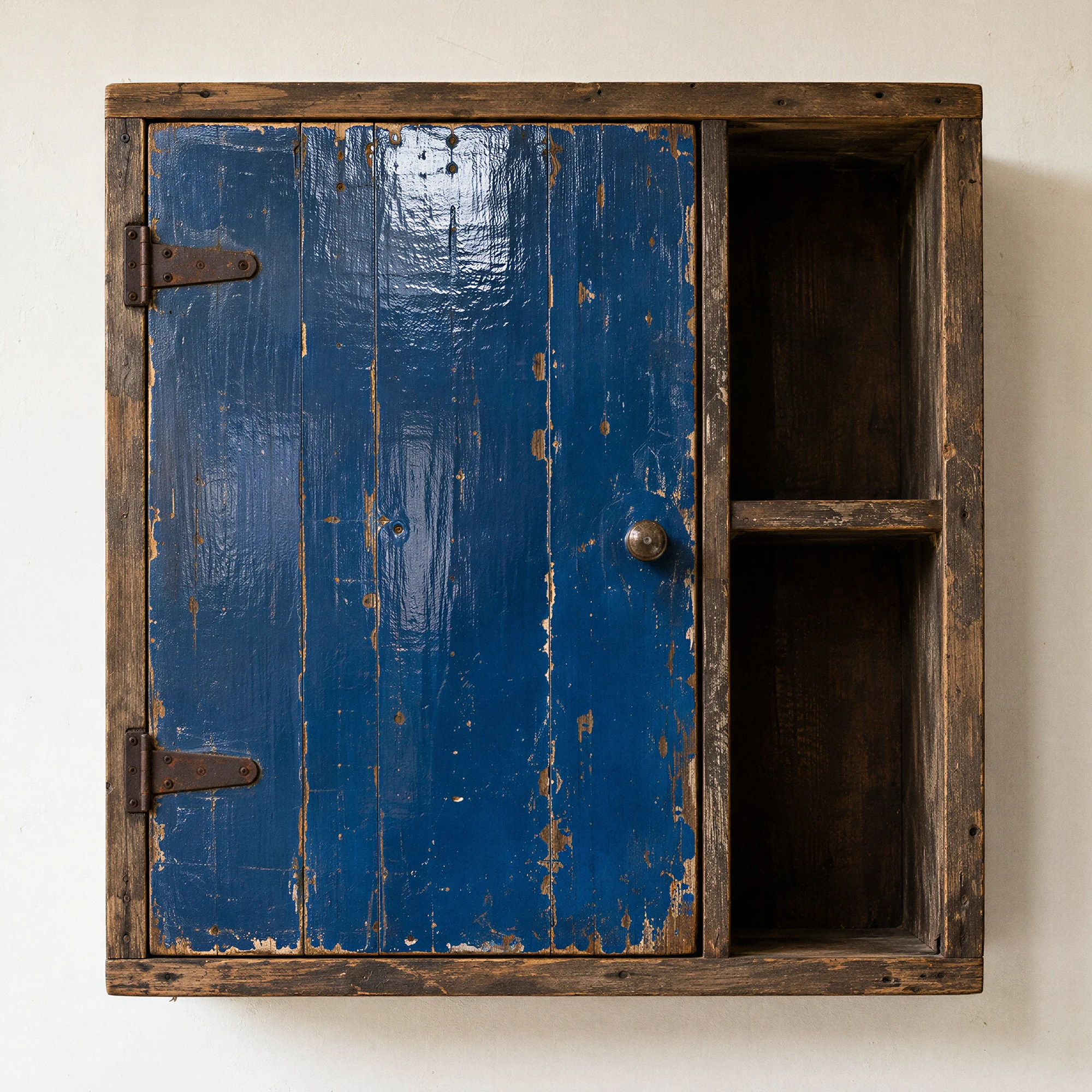
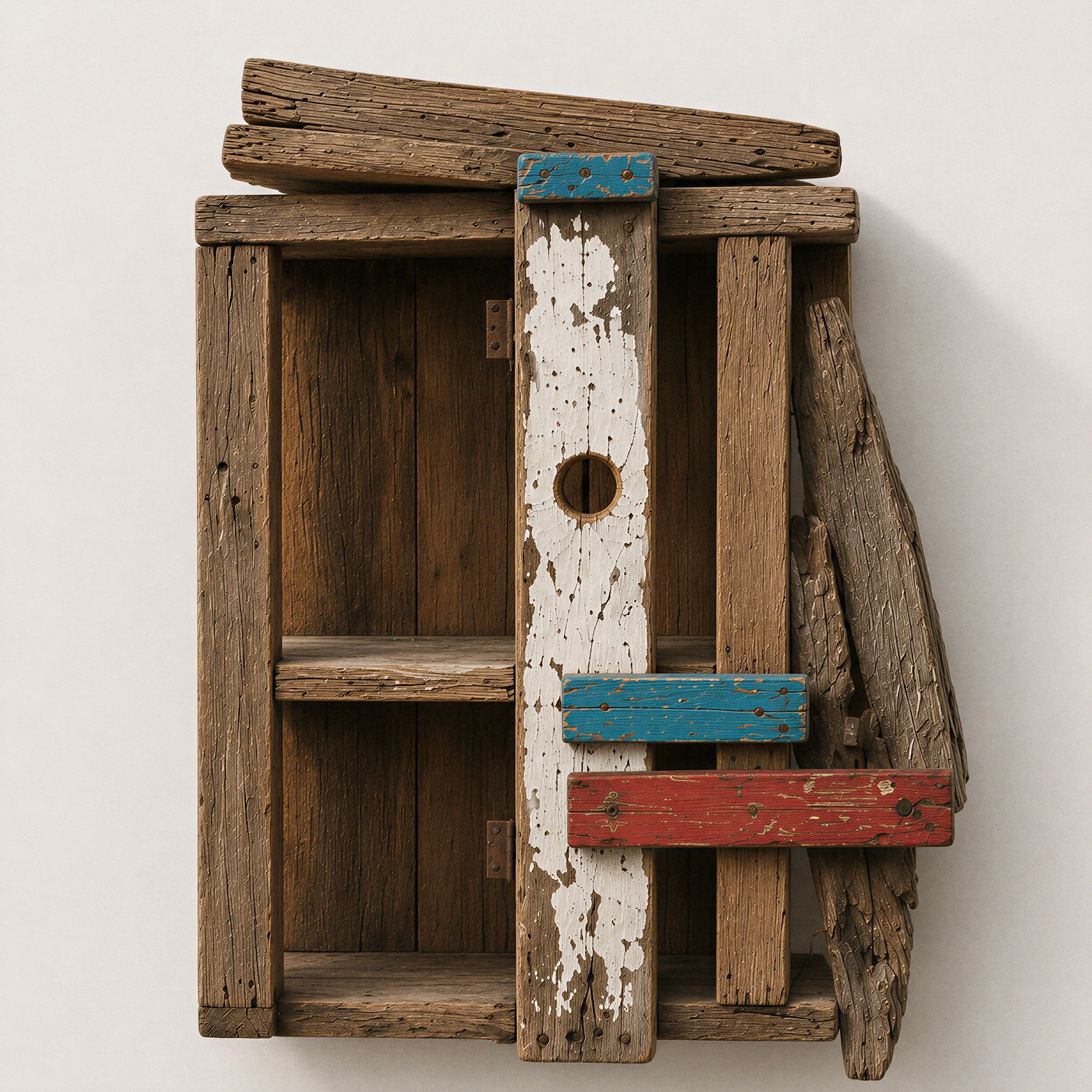
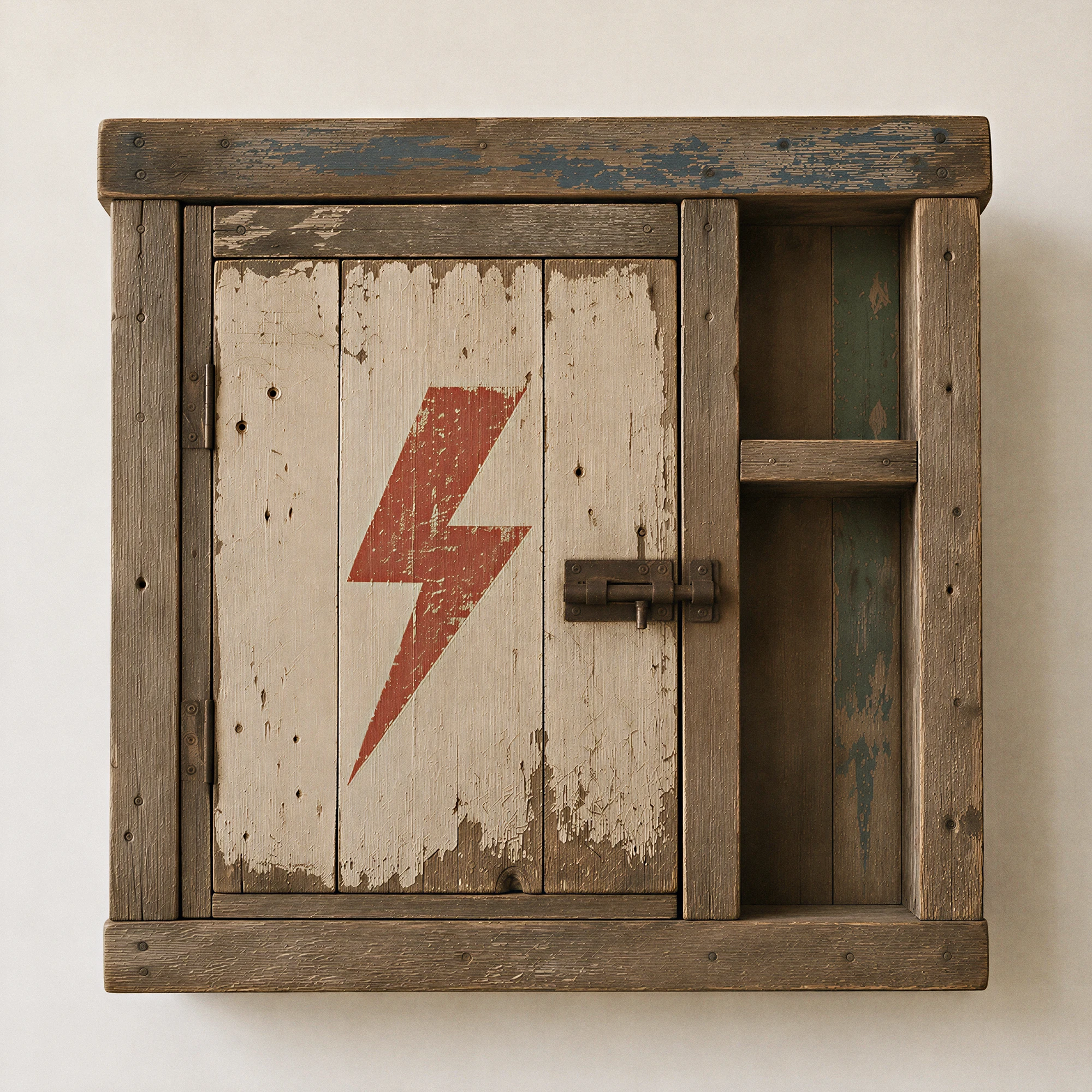
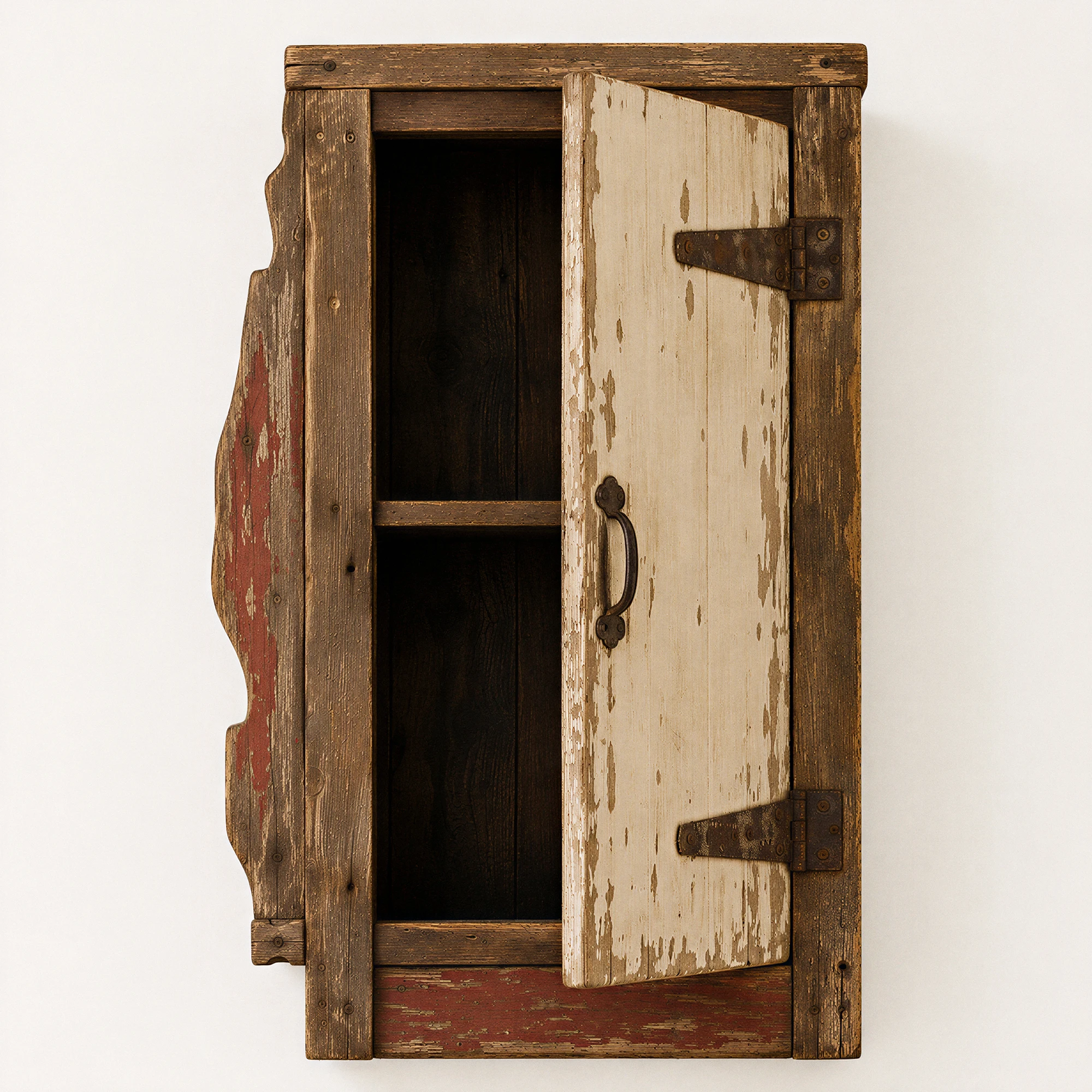
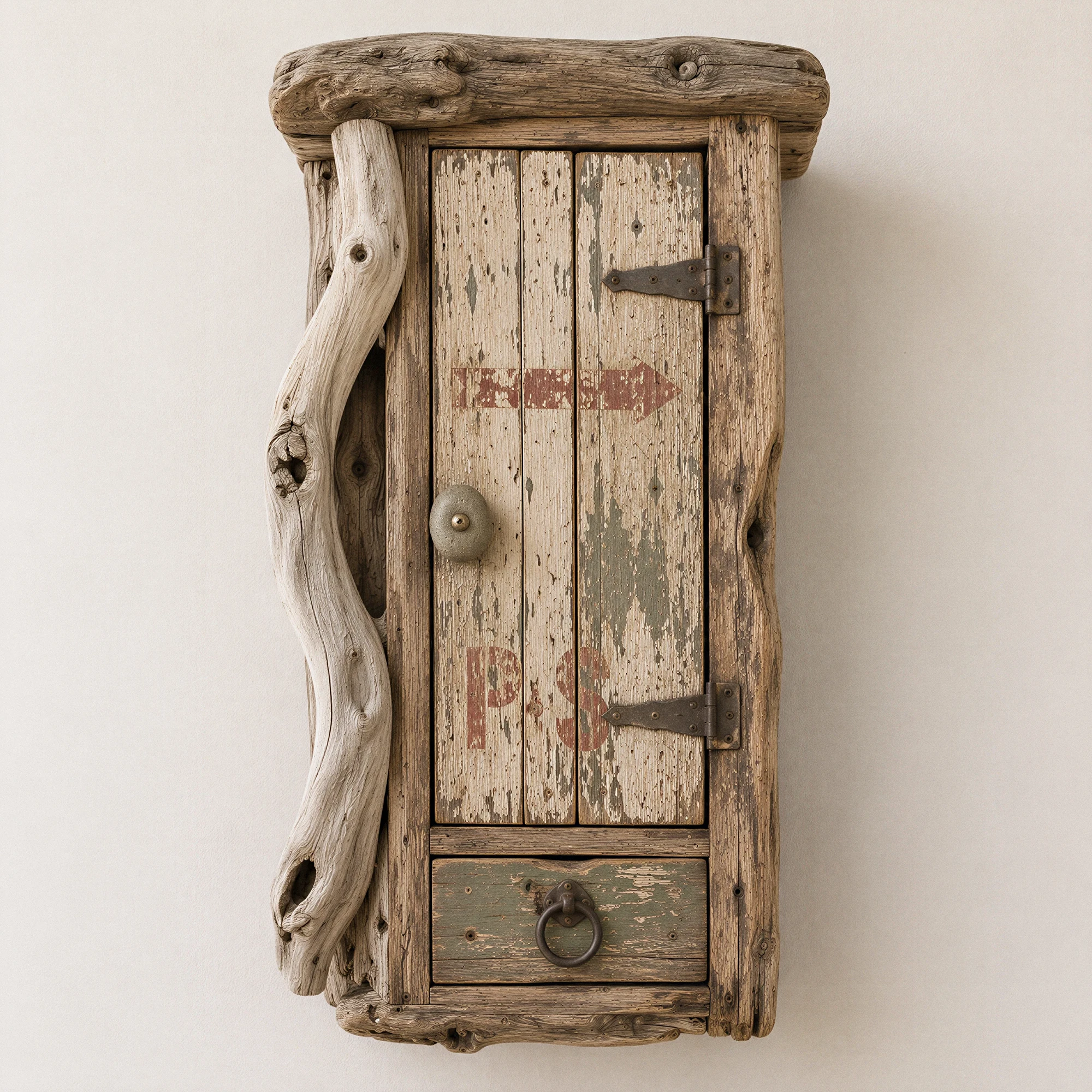
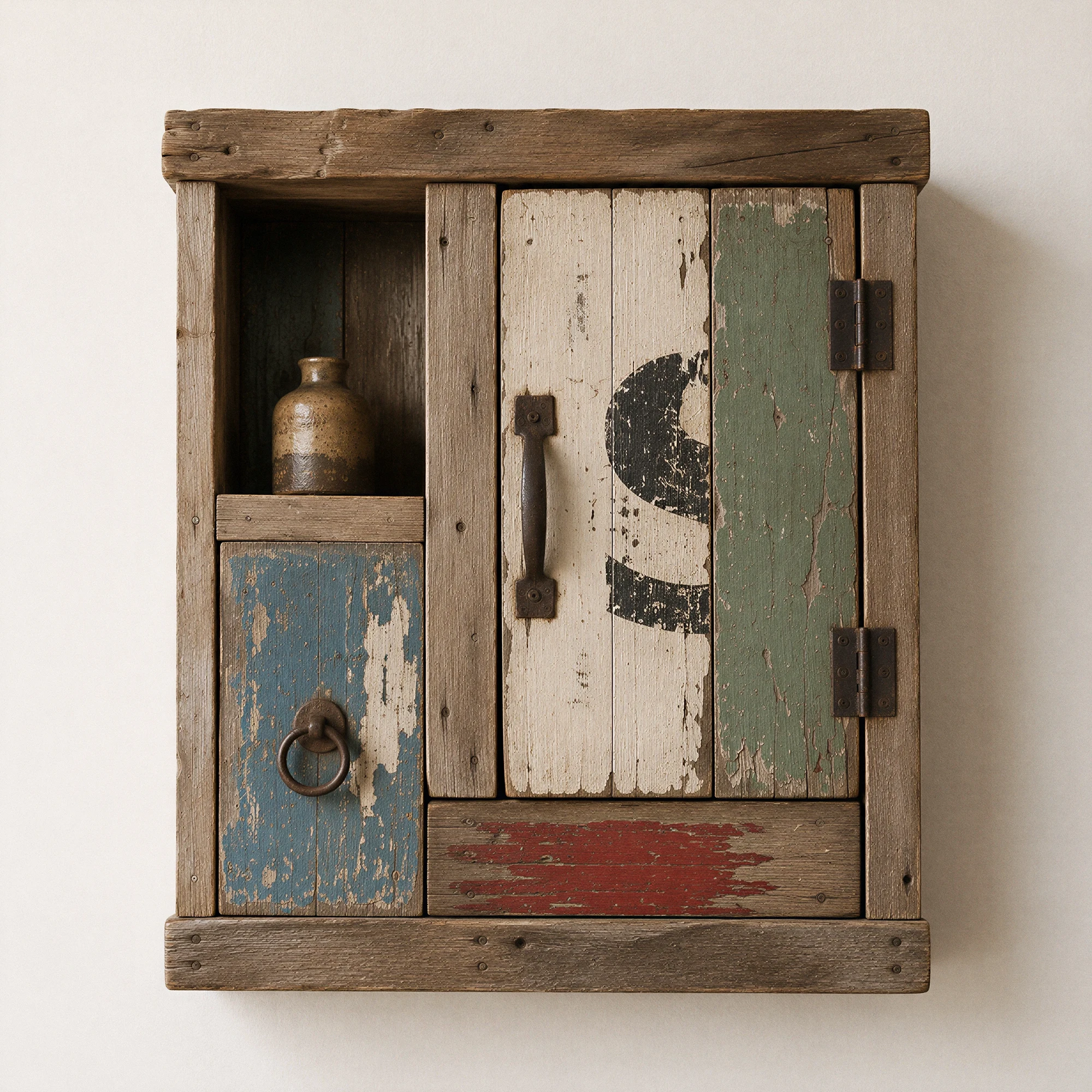
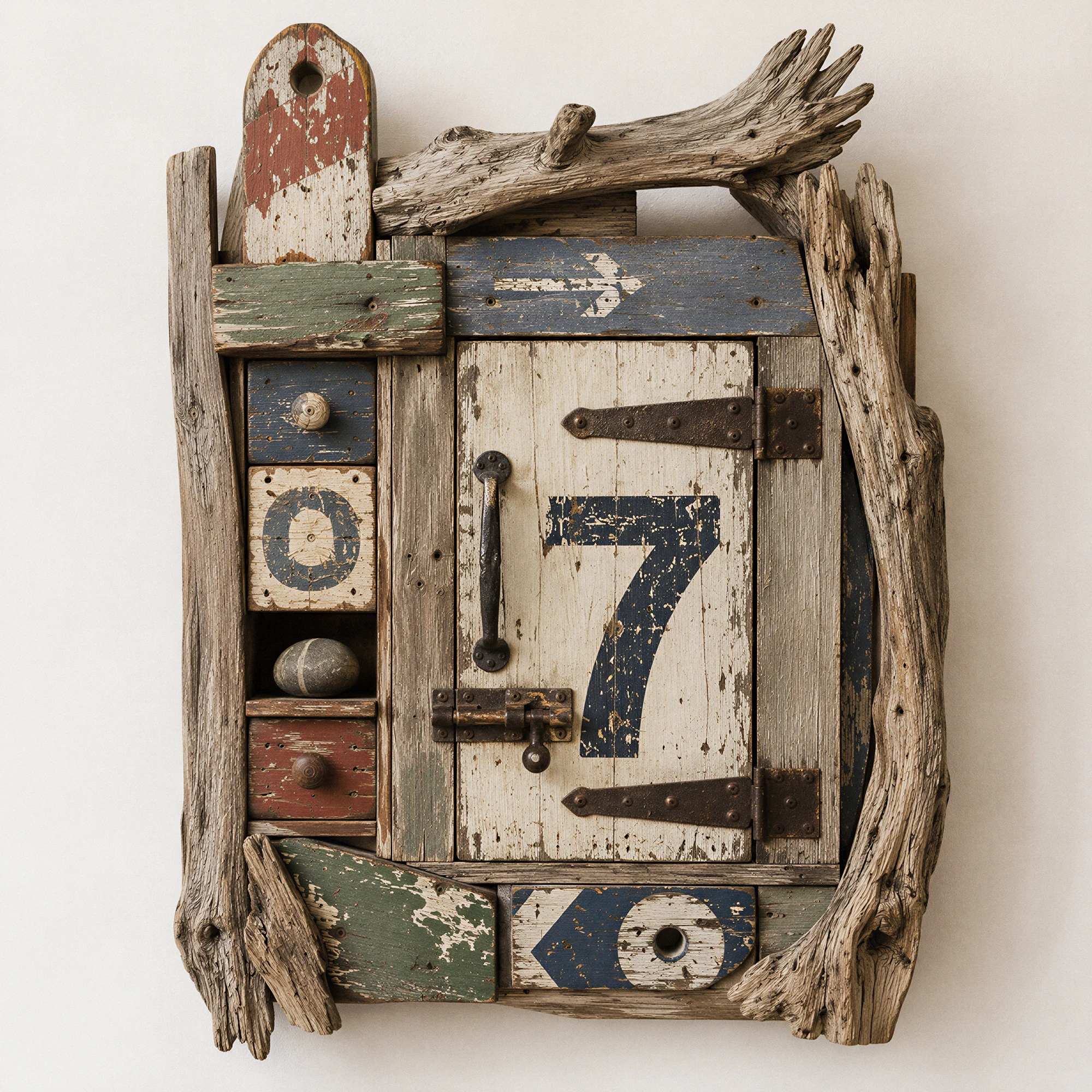
Arca II returns to the first project ever published on this website, but it does not simply repeat it. The original Arca imagined fictional driftwood cabinets assembled from wreckage that had never existed. This second version begins from the same fascination with handmade objects, salvaged materials, and the strange authority of weathered surfaces, but the material language has widened. These are fictional cabinets constructed from reclaimed timber: old floorboards, shed wood, sign fragments, rusted hinges, peeling paint, stencilled numbers, and occasional pieces of driftwood brought into the structure like memory made solid. The cabinets of Arca II feel less hallucinated, more logical — more authored.
Arca II was developed through conversation with GPT-5.5 Thinking and generated and refined using ChatGPT + Images.2. Rather than writing fixed prompts and accepting whatever emerged, the work developed through looking, questioning, correction, and return. A handle was moved because it needed to be pulled. A latch was removed because it had no purpose. A door needed hinges where hinges should be. A piece of timber had to feel joined, not pasted on. In this sense, the project became less like issuing instructions to a machine and more like working beside an imaginary carpenter at a bench, testing whether each object could persuade the eye not only as an image, but as a thing with weight, use, and intention.
The work shows what happens when AI becomes more intelligent — when thought becomes form. What remains is still impossible. No timber has been cut, no gloss paint has flaked, no hinge has stiffened with age. Yet these cabinets ask to be believed. Their surfaces suggest previous lives: boats, sheds, workshops, signs, cupboards, medical boxes, storage crates, coastal repairs. They are not replicas of real craft, nor replacements for it, but synthetic cousins — objects assembled from language, memory, and visual negotiation. Arca II is a return to origin, but also a record of a changed method: a sequel made through conversation, where the fiction of materiality becomes sharper, quieter, and more convincing with each correction.
Gallery
"Age appears to be best in four things; old wood best to burn, old wine to drink, old friends to trust, and old authors to read." — Francis Bacon