Selfie: performative masculinity
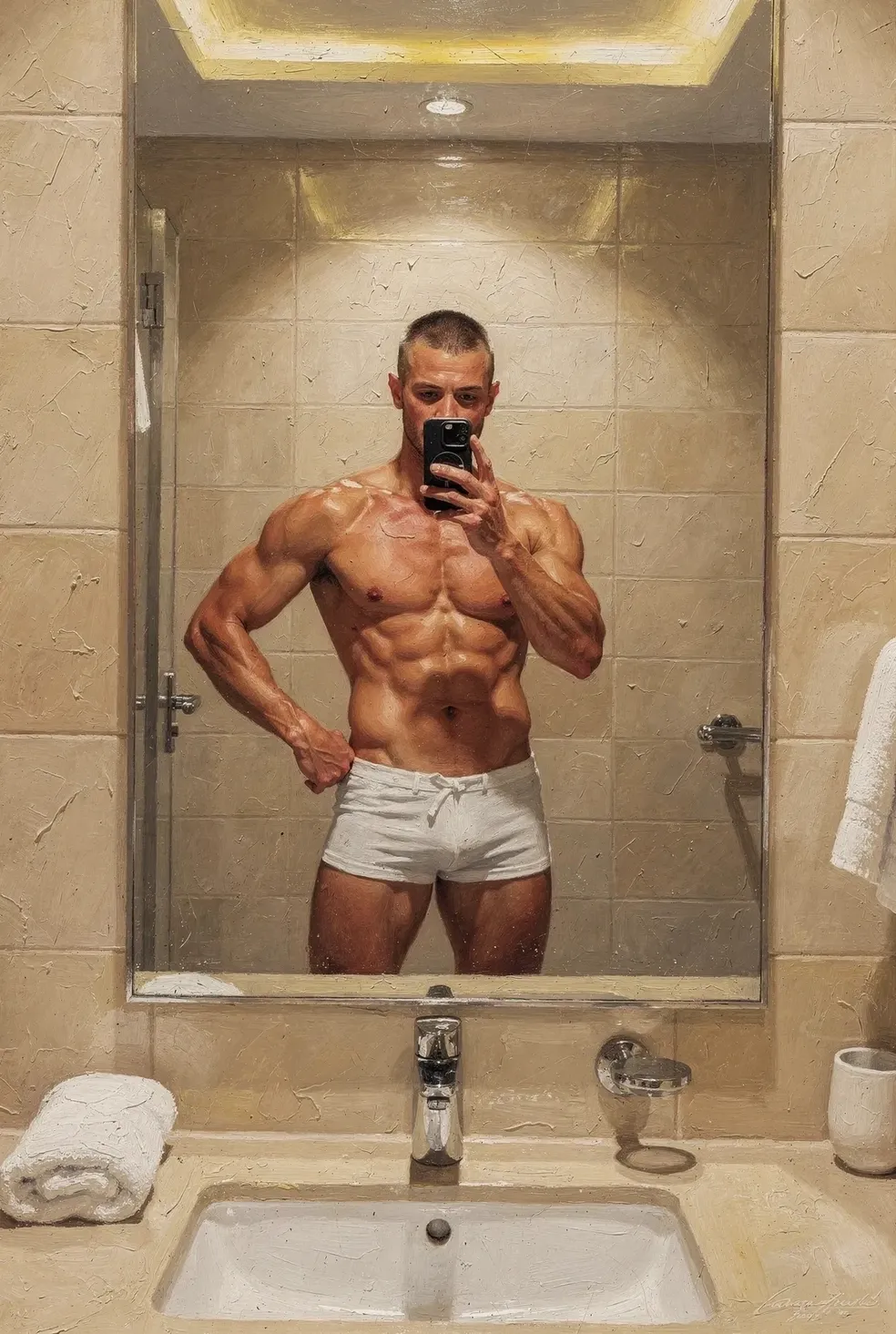
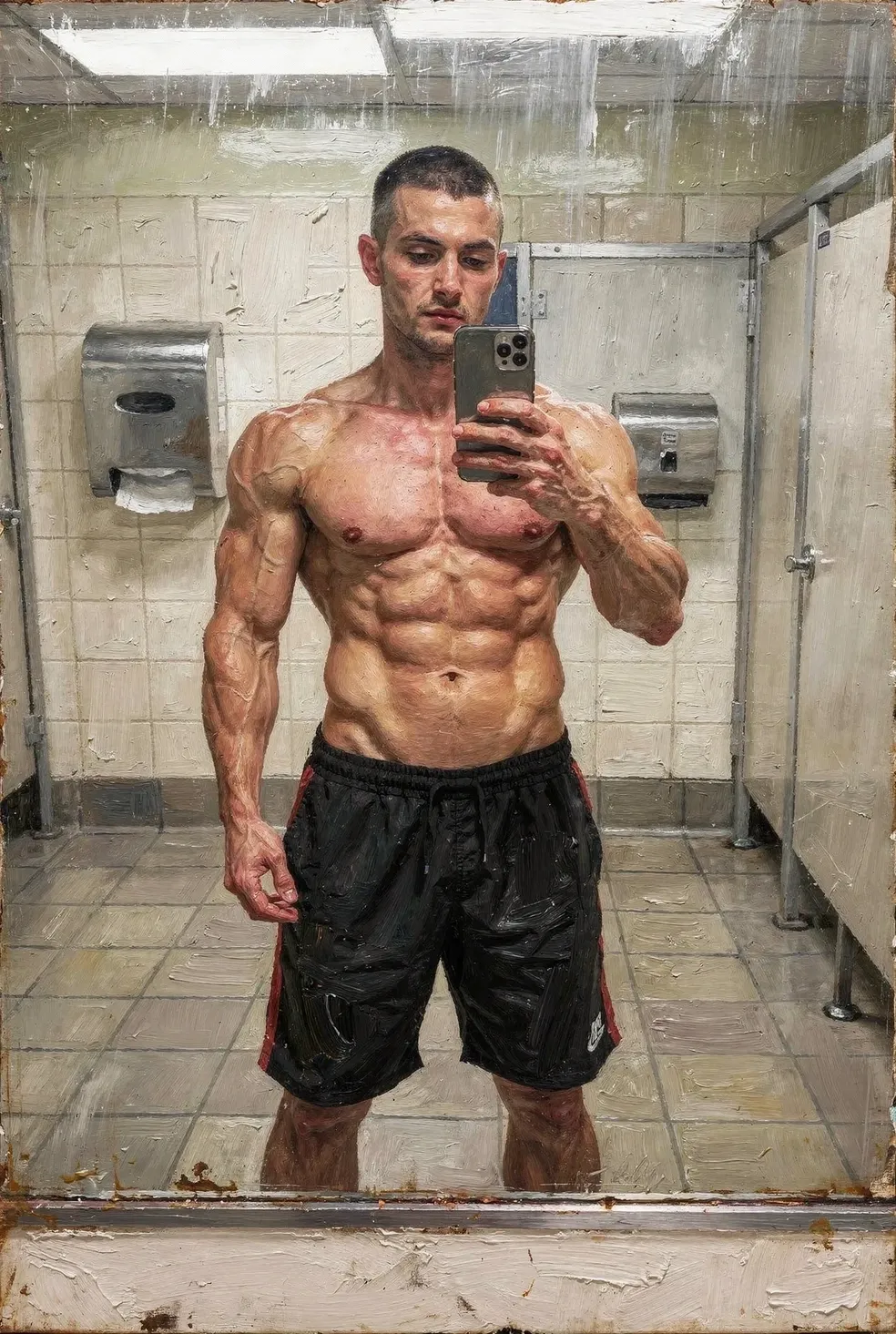
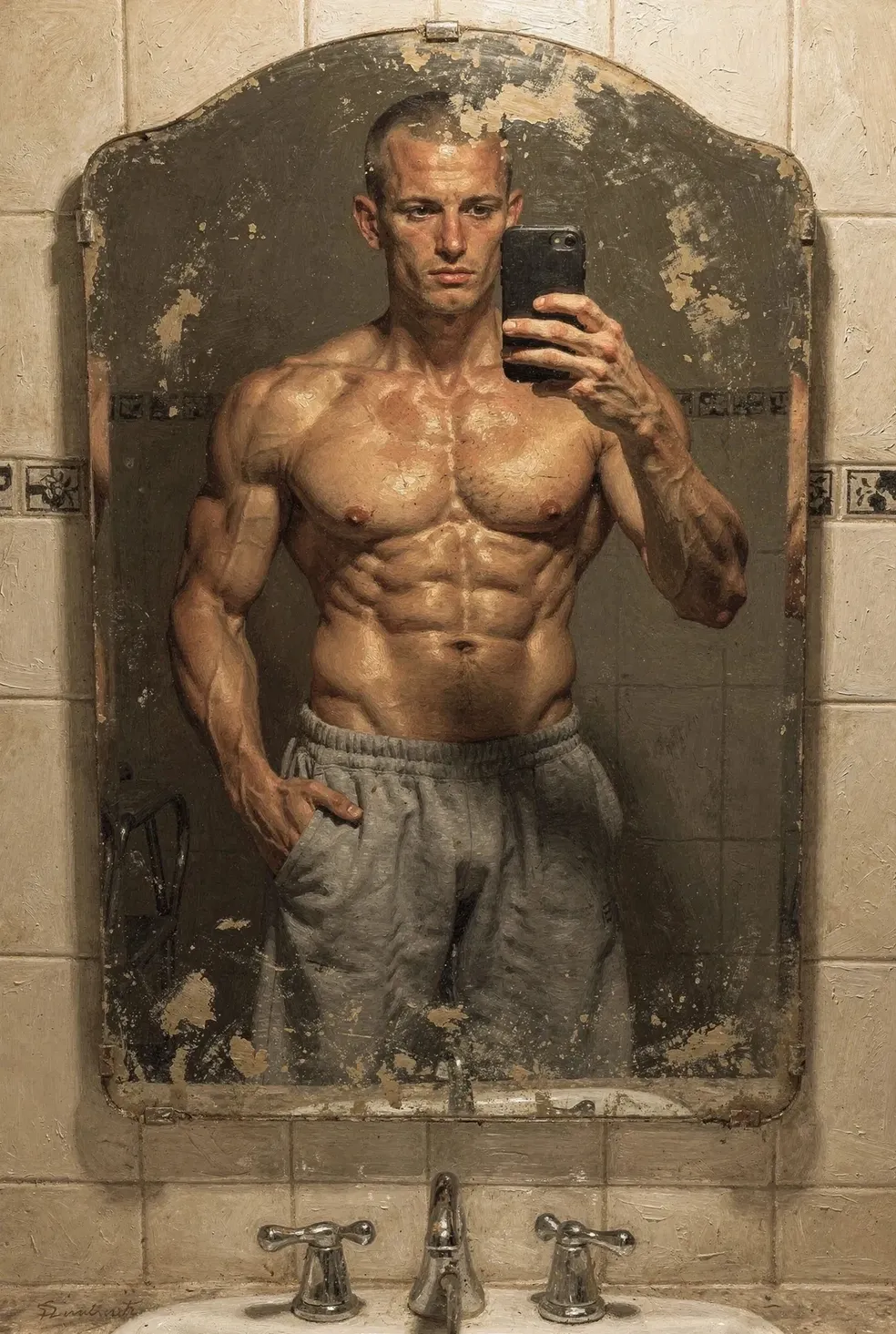
Just reaching out, bro… thanks for the follow. You into fitness? At the heart of Selfie is a man alone with his smartphone — flexing, posing, teasing, documenting his own body as though reporting to an unseen audience. The men in these synthographs don't exist, yet they still want to be admired by people they don't know, for reasons they can't explain. It's beautiful, ridiculous, erotic, shallow, tender, vain, and true. Straight boys are obsessed with each other — their gains, their rituals, their progress pics, their underwear. Instagram is a cathedral of male vanity, and the mirror selfie is its central liturgy. Meal plans. Testosterone boosters. Endless abs. Bottomless egos. Men are strange creatures: confident, competitive, insecure. A mass of muscle and contradictions. You can look, but please don't touch.
The self-referential images "real men" produce today are steeped in homoerotic language even when their makers insist on heterosexual intent. "No homo, bro." They're creating gay imagery without realising it, posing in ways shaped by decades of homoerotic photography — Herb Ritts, Mapplethorpe, Bruce Weber, Rick Day — and distributing it inside a heteronormative space. Selfie is a critique and a love letter: cynical and affectionate at the same time. It's also quietly funny — the over-eager flex, the slightly-too-damp skin, the socks that are doing far too much. These works explore performative masculinity in the age of social media, where competition, vanity, exhibitionism, and aspiration merge into a single gesture: the body offered to the camera by the person who desires the gaze the most.
This is my first full engagement with Flux.2 Pro, and the results mark a shift. These are digital hallucinations rendered to resemble oil paintings, or pencil drawings. By stripping away the high-definition polish of the smartphone, the images rise beyond documentation into something more reflective and atmospheric. Unlike Gymnos, with its classical ideals, or Kalos, with its fetishised labour — both made with Flux.1 — this project is more confrontational, depicting private performances staged for public consumption. Technology made this behaviour possible, but the instinct is older. From Rembrandt's self-portraits to Egon Schiele's contorted bodies, the mirror has long been a place where the self is examined. Here, in Selfie — the mirror, smudged and imperfect, records everything.
Gallery





"When I look in the mirror, I never see anybody I know." — Andy Warhol