Nocturne: simulated paintings of men after dark
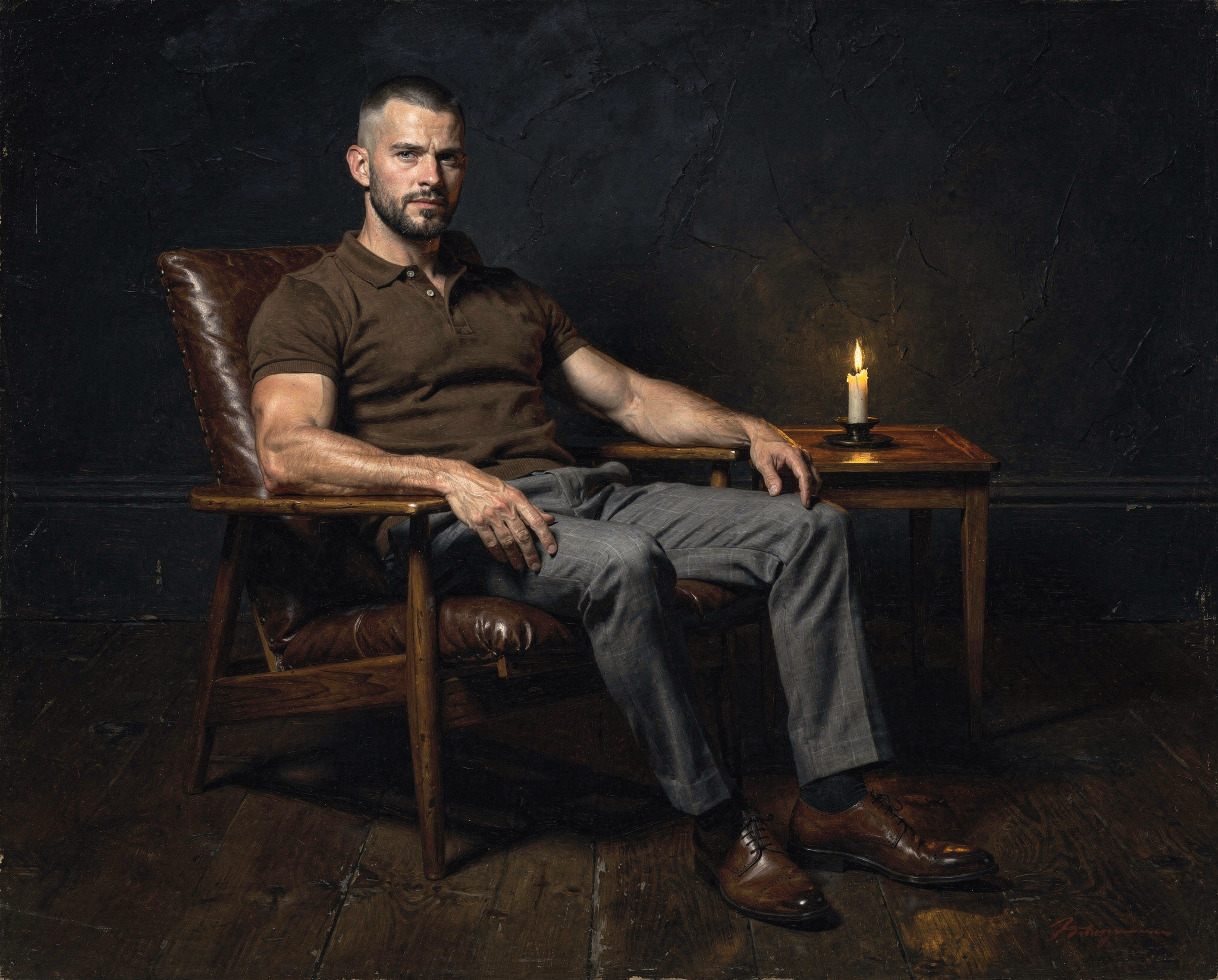
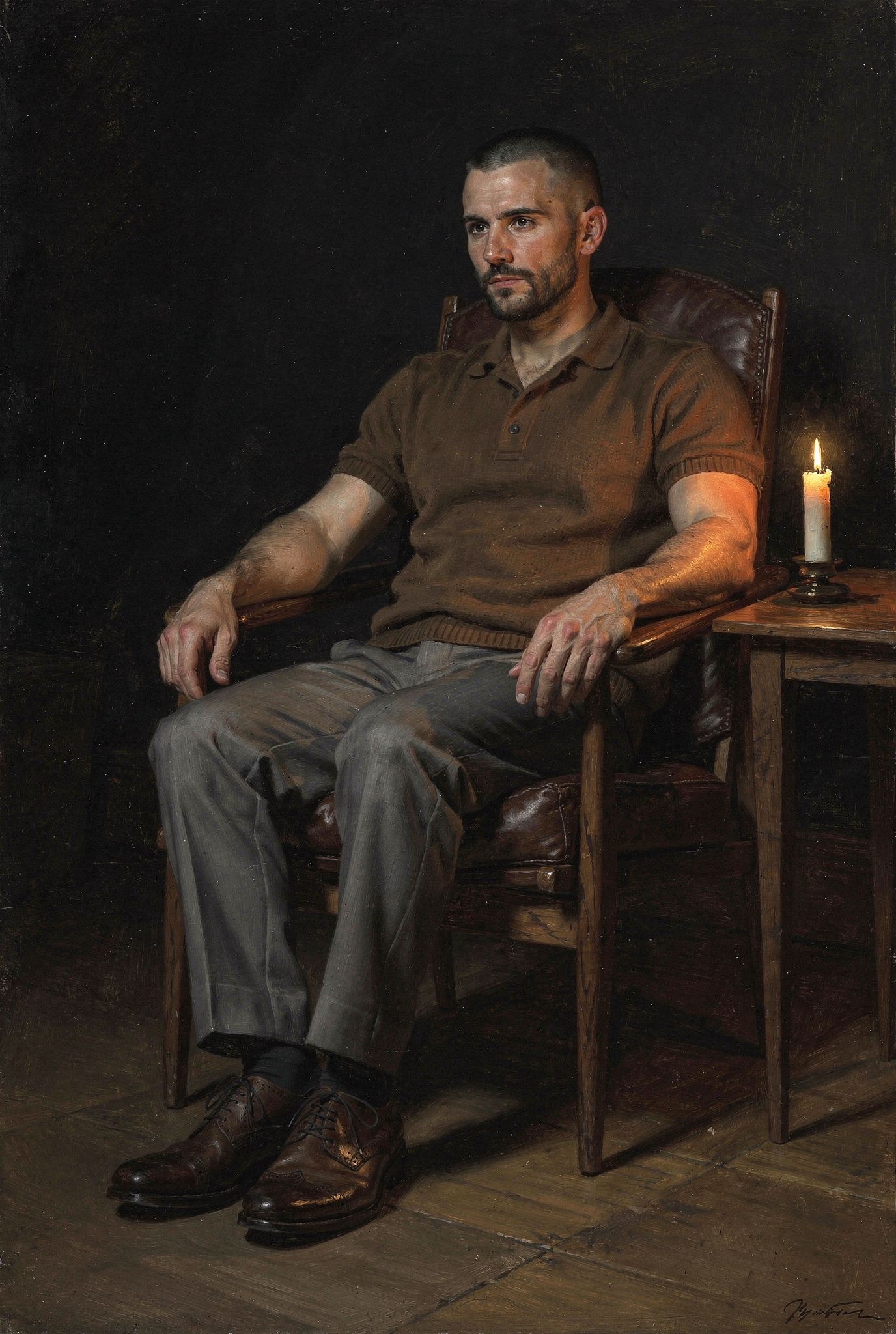
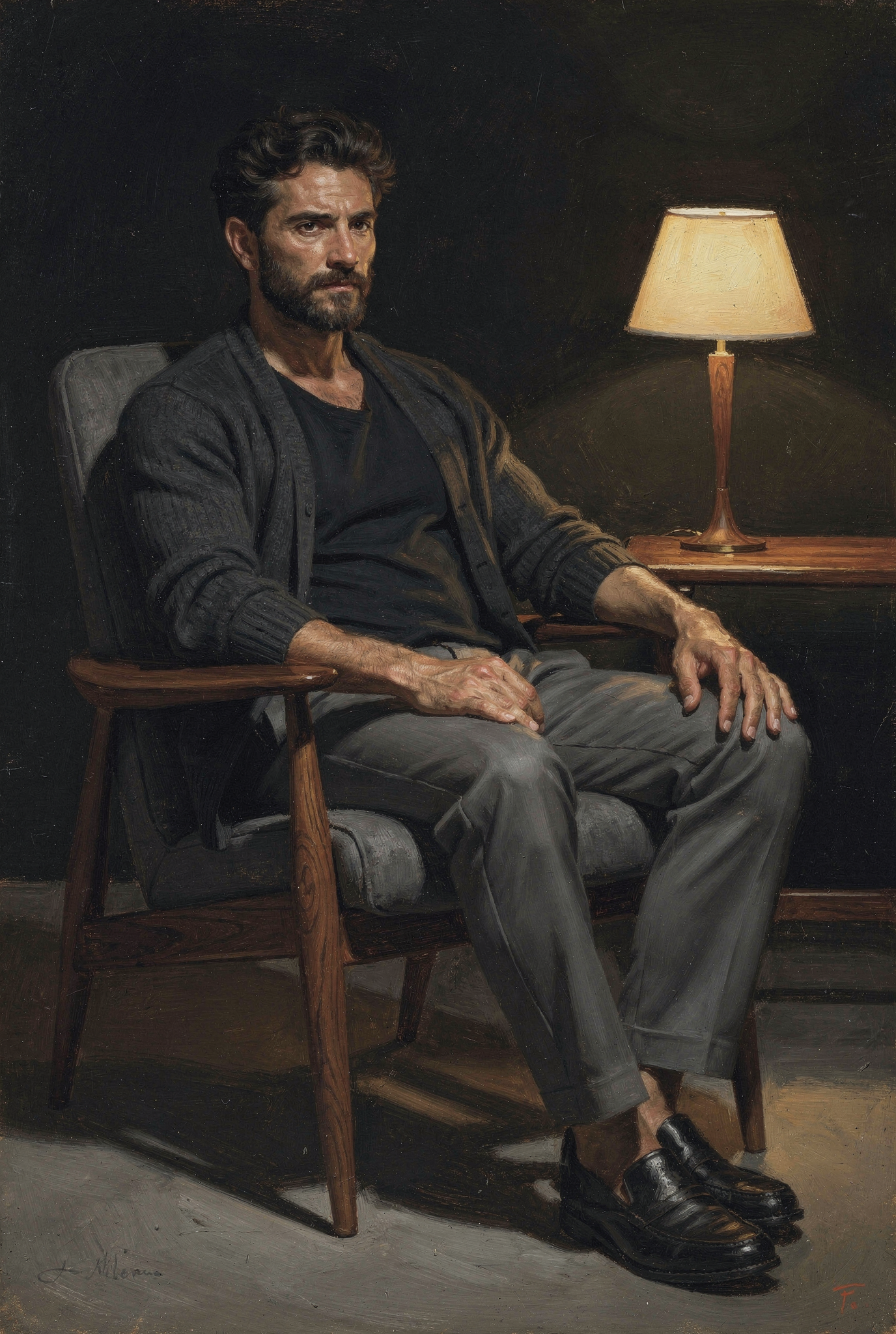
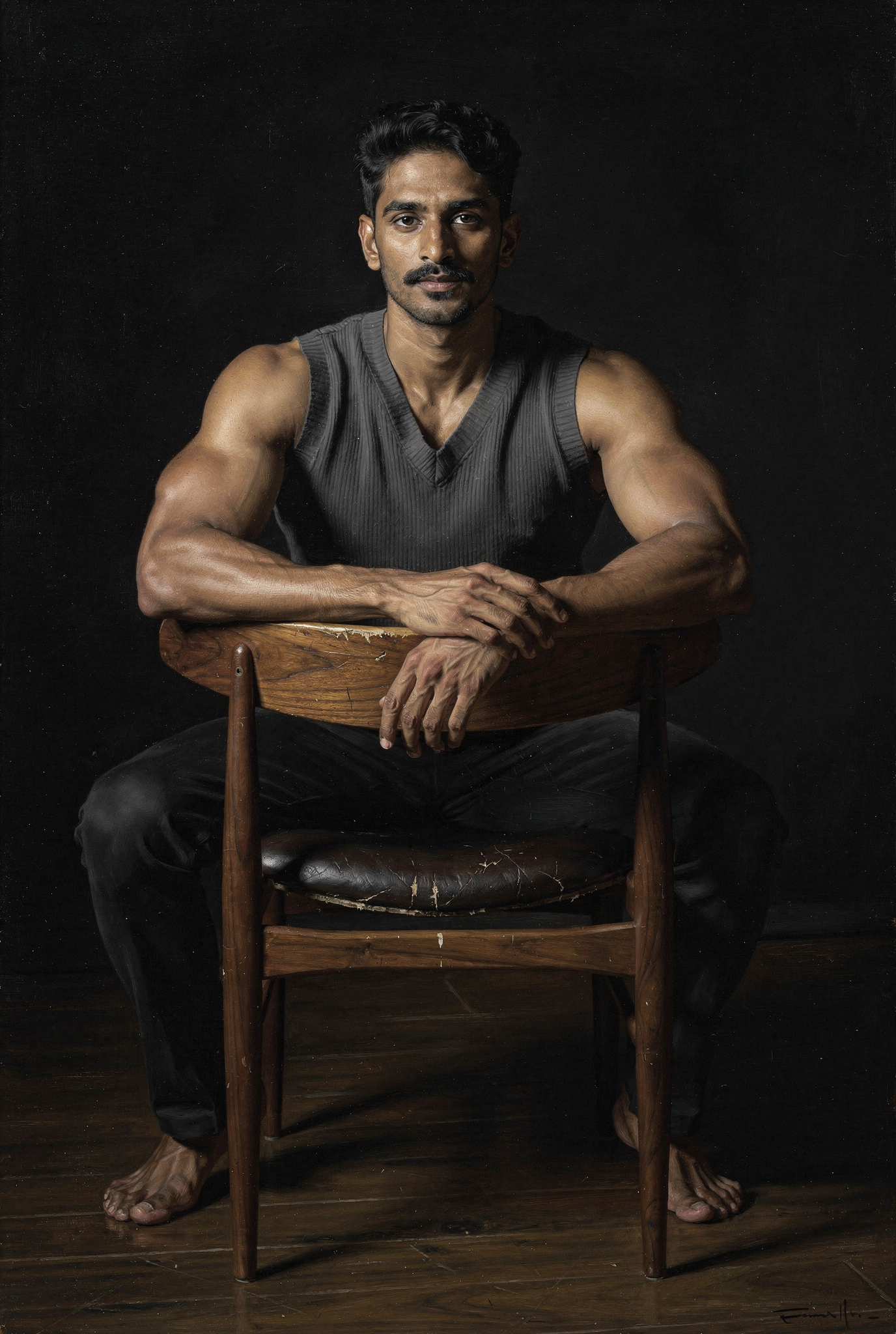
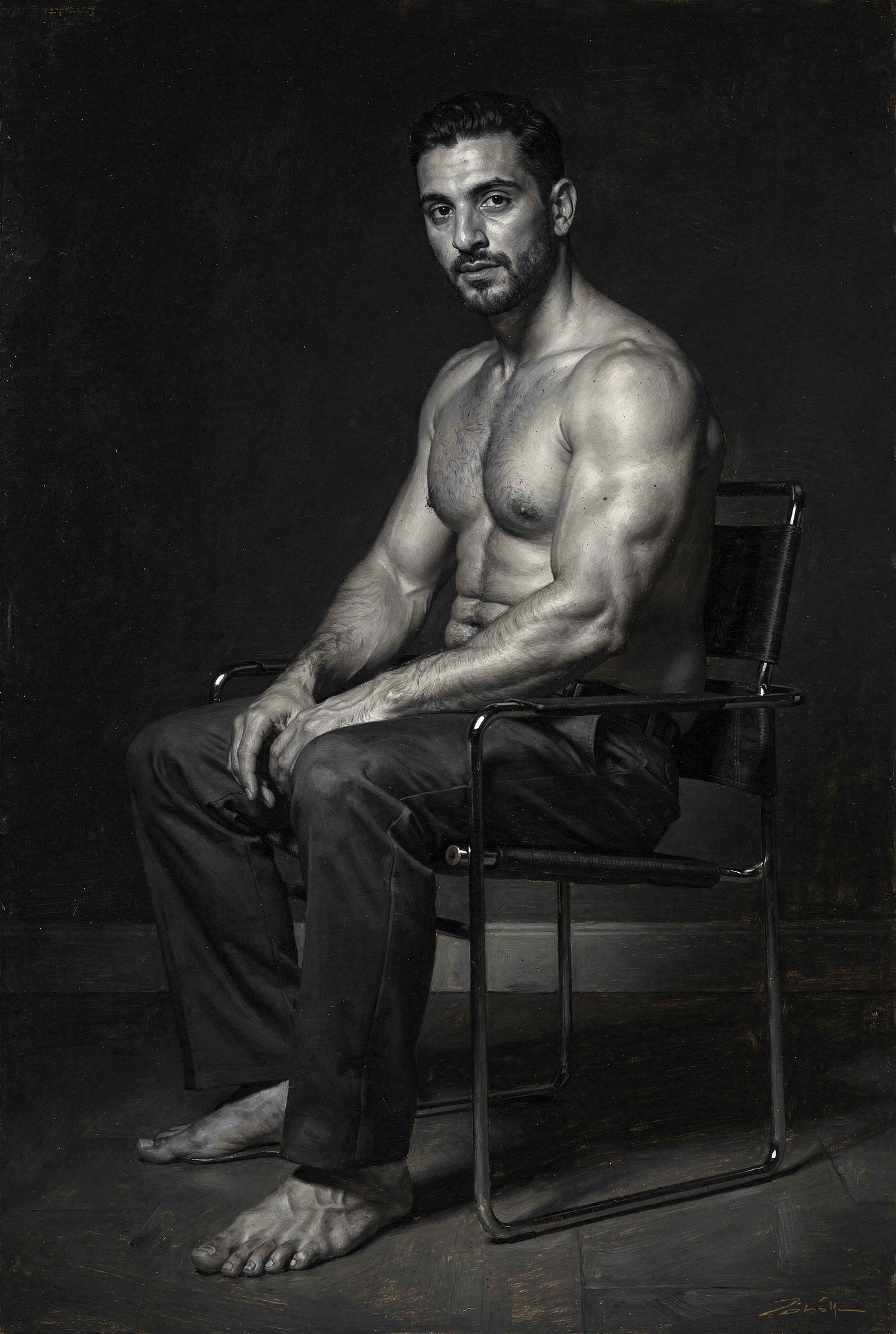
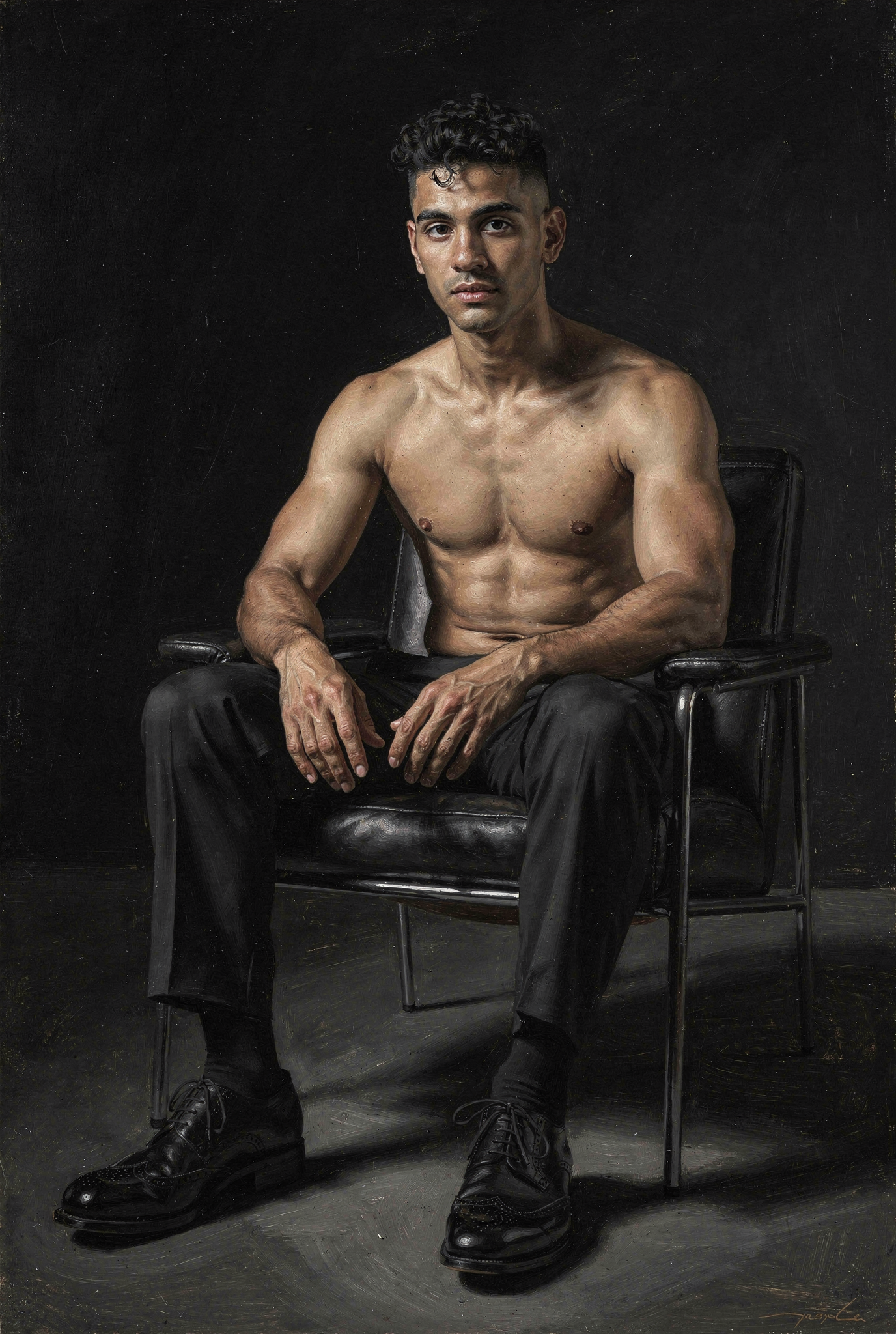
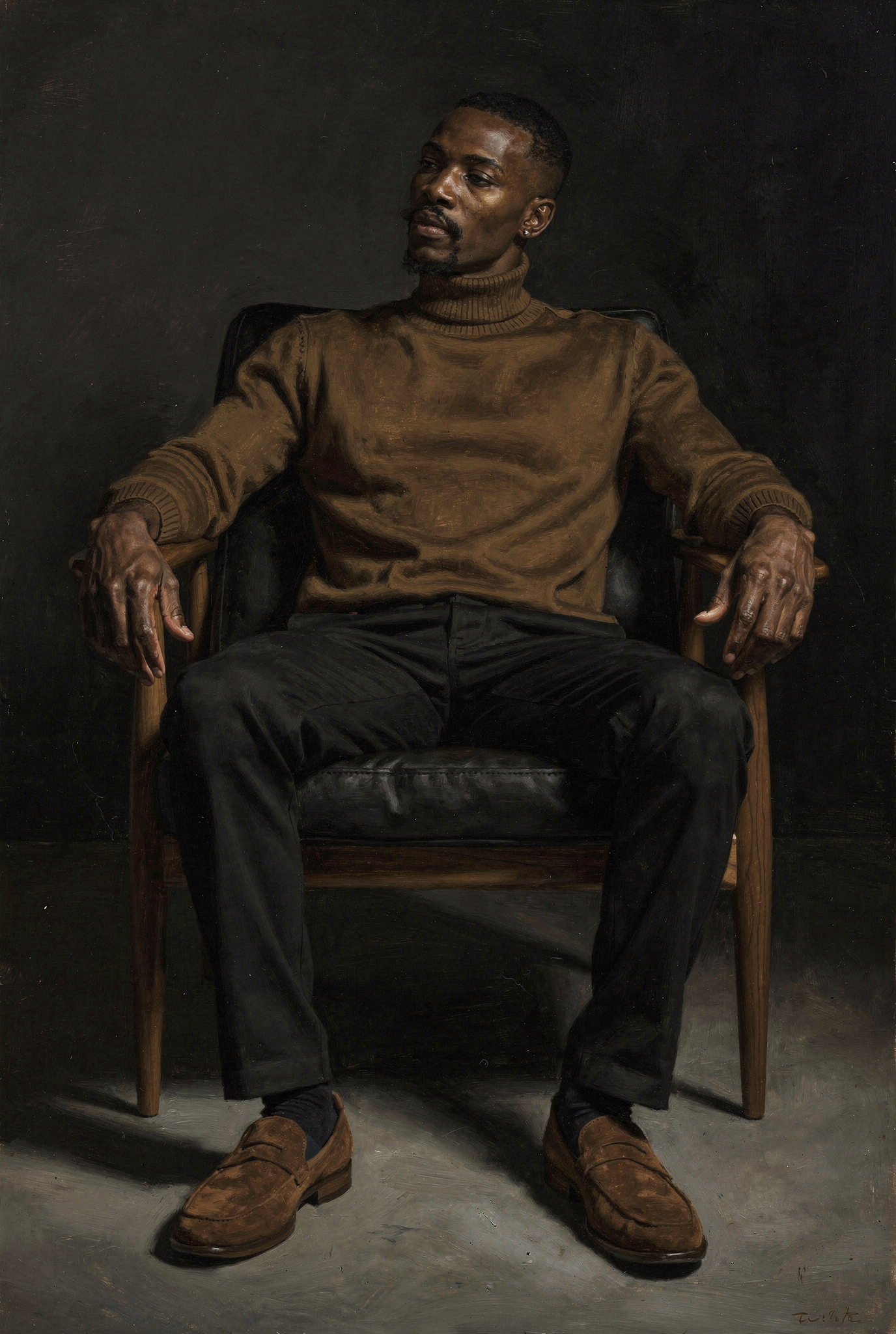
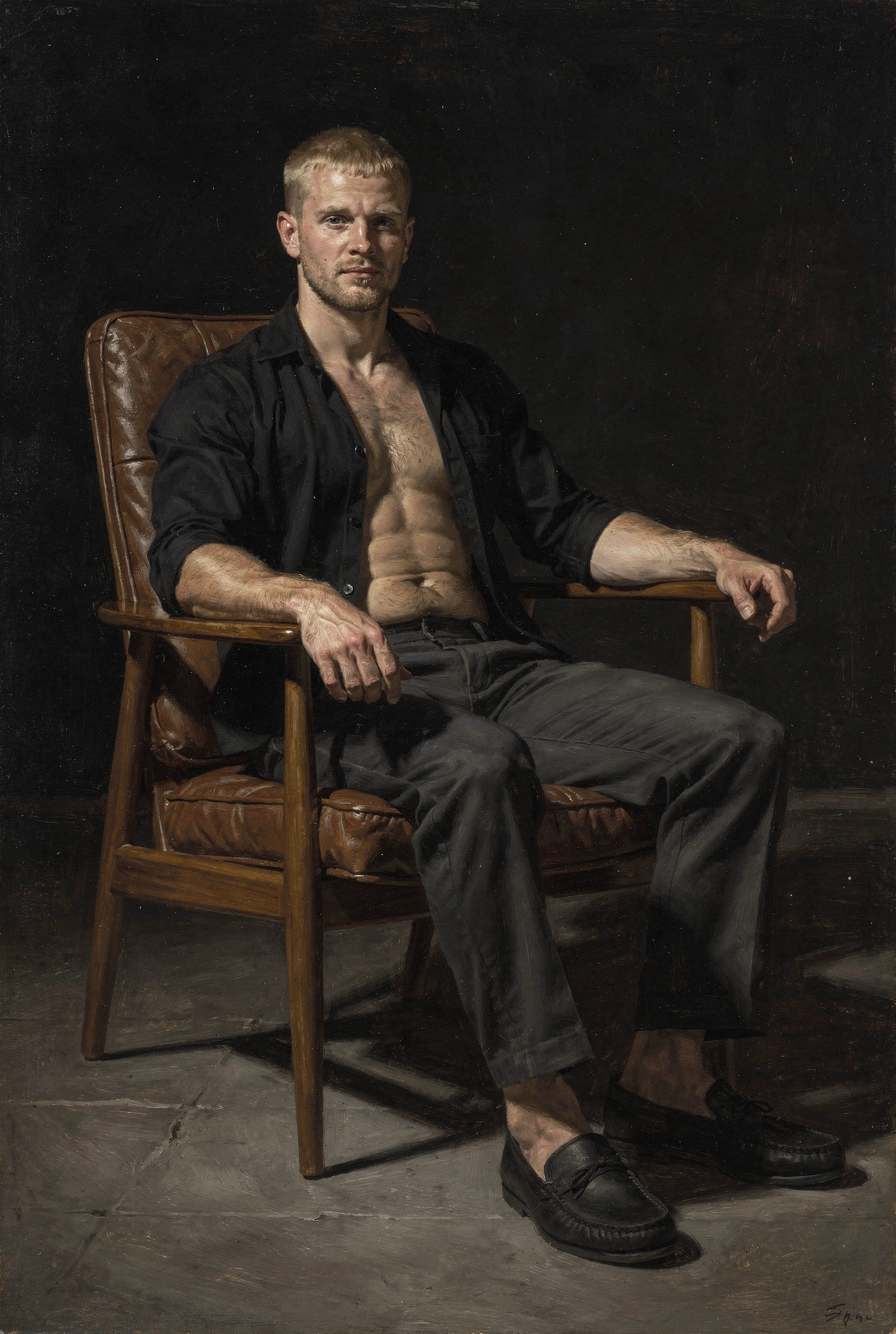
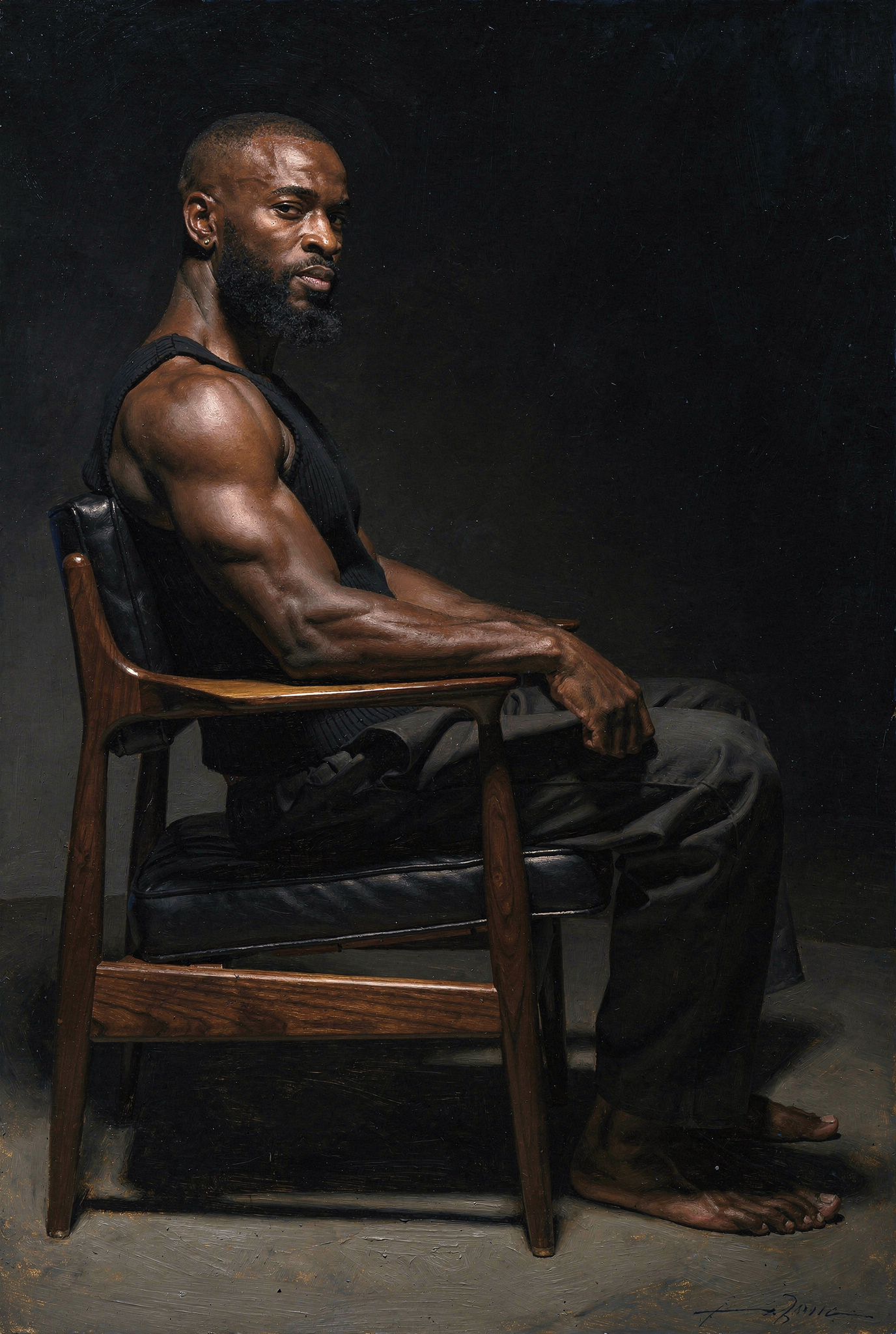
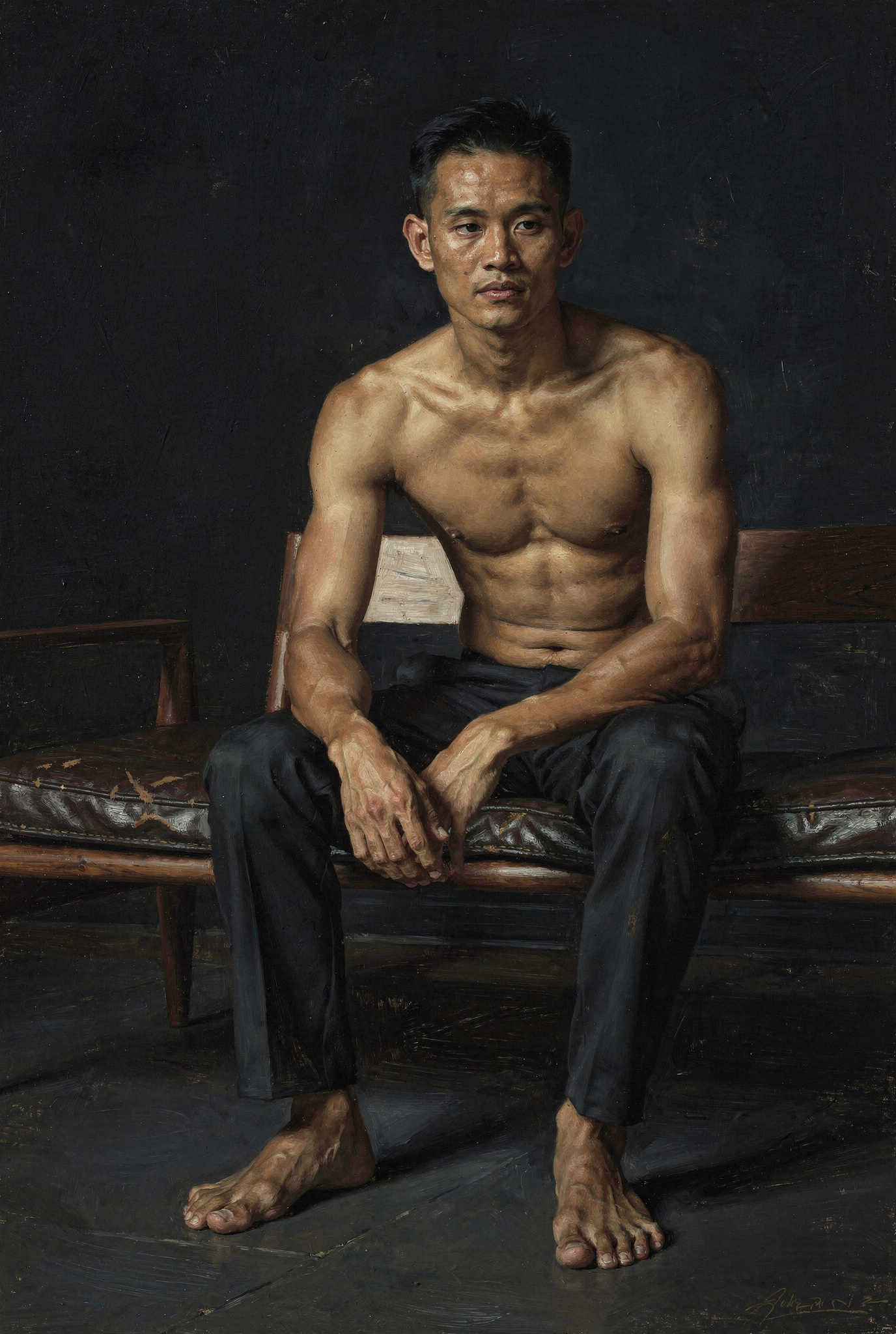
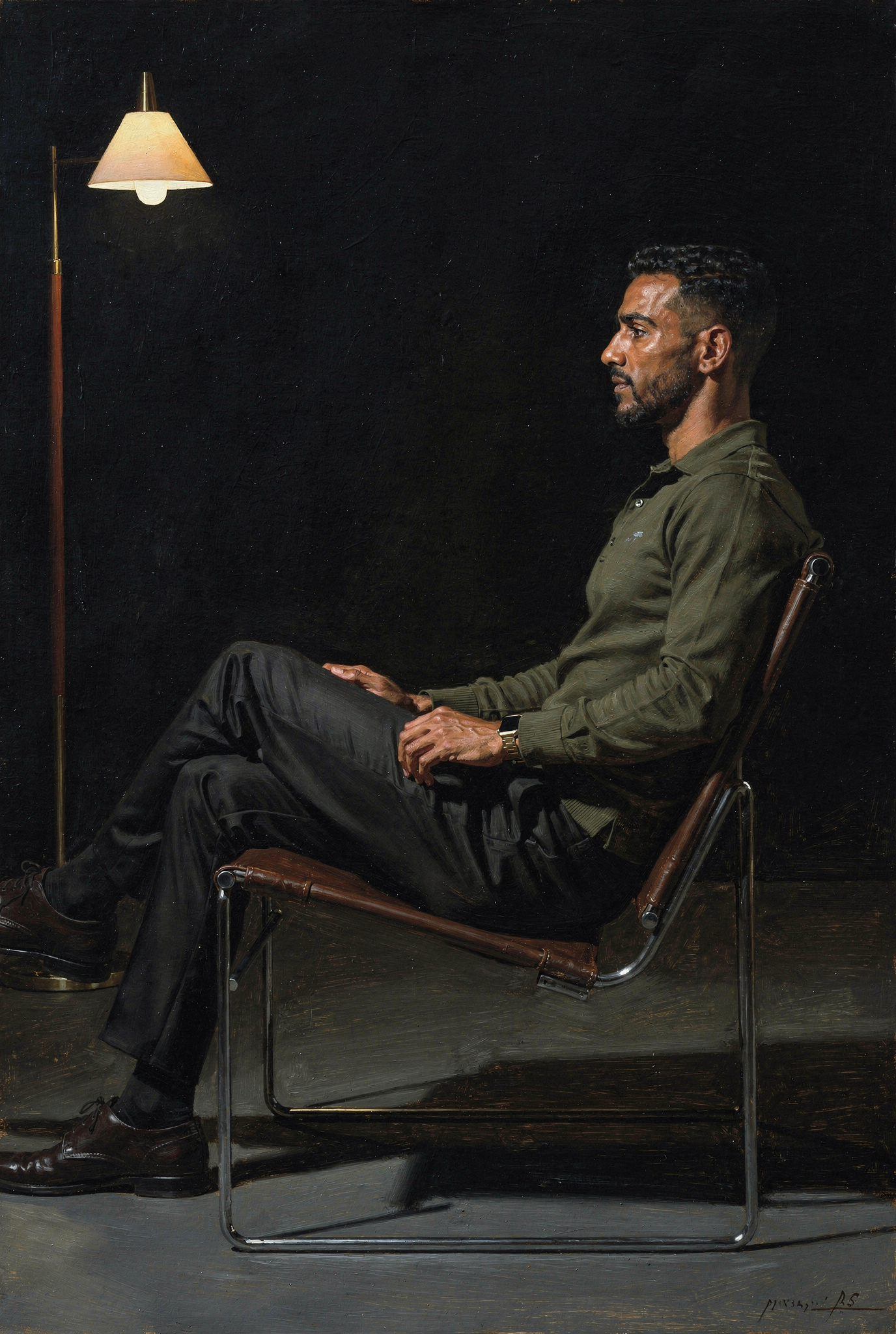
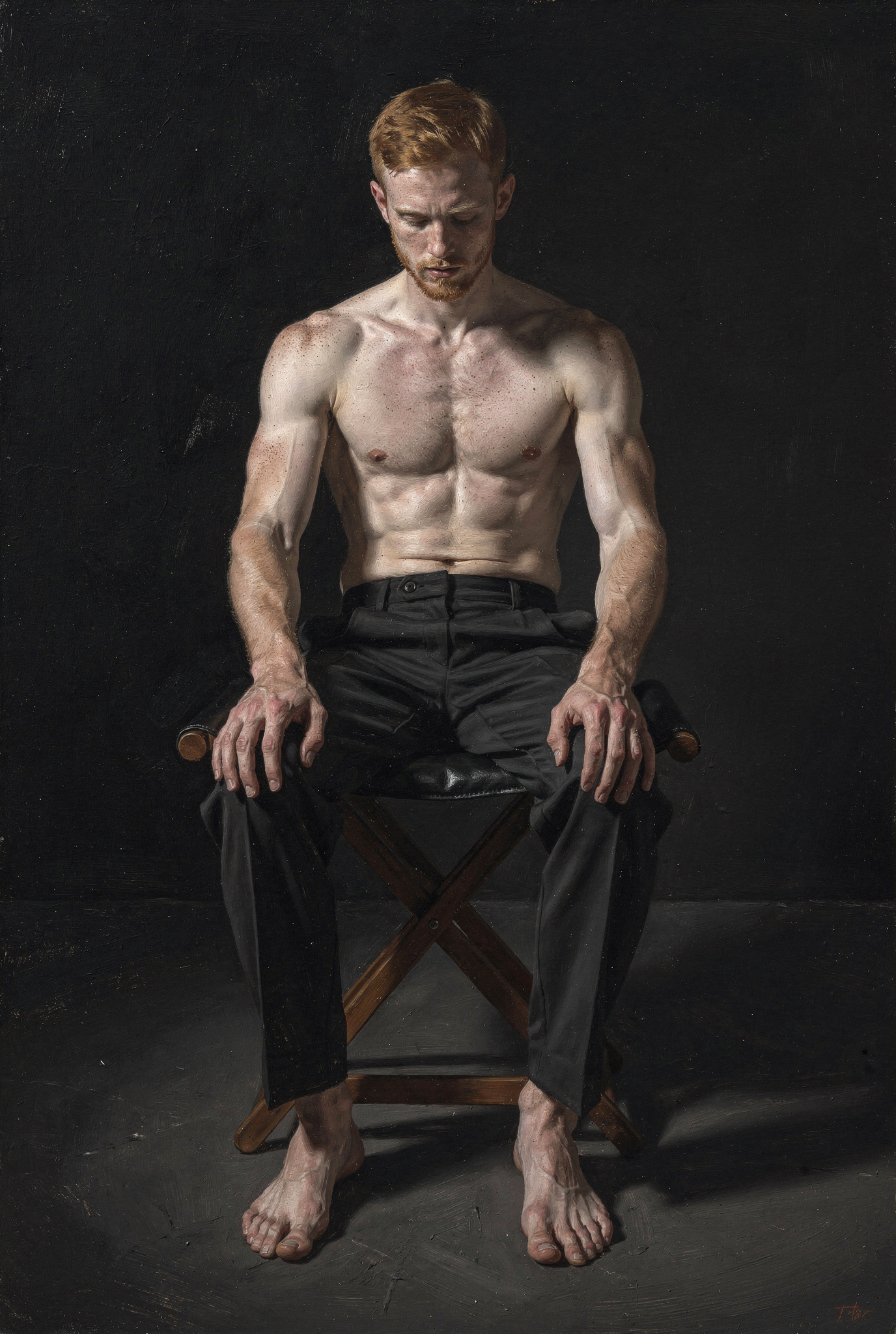
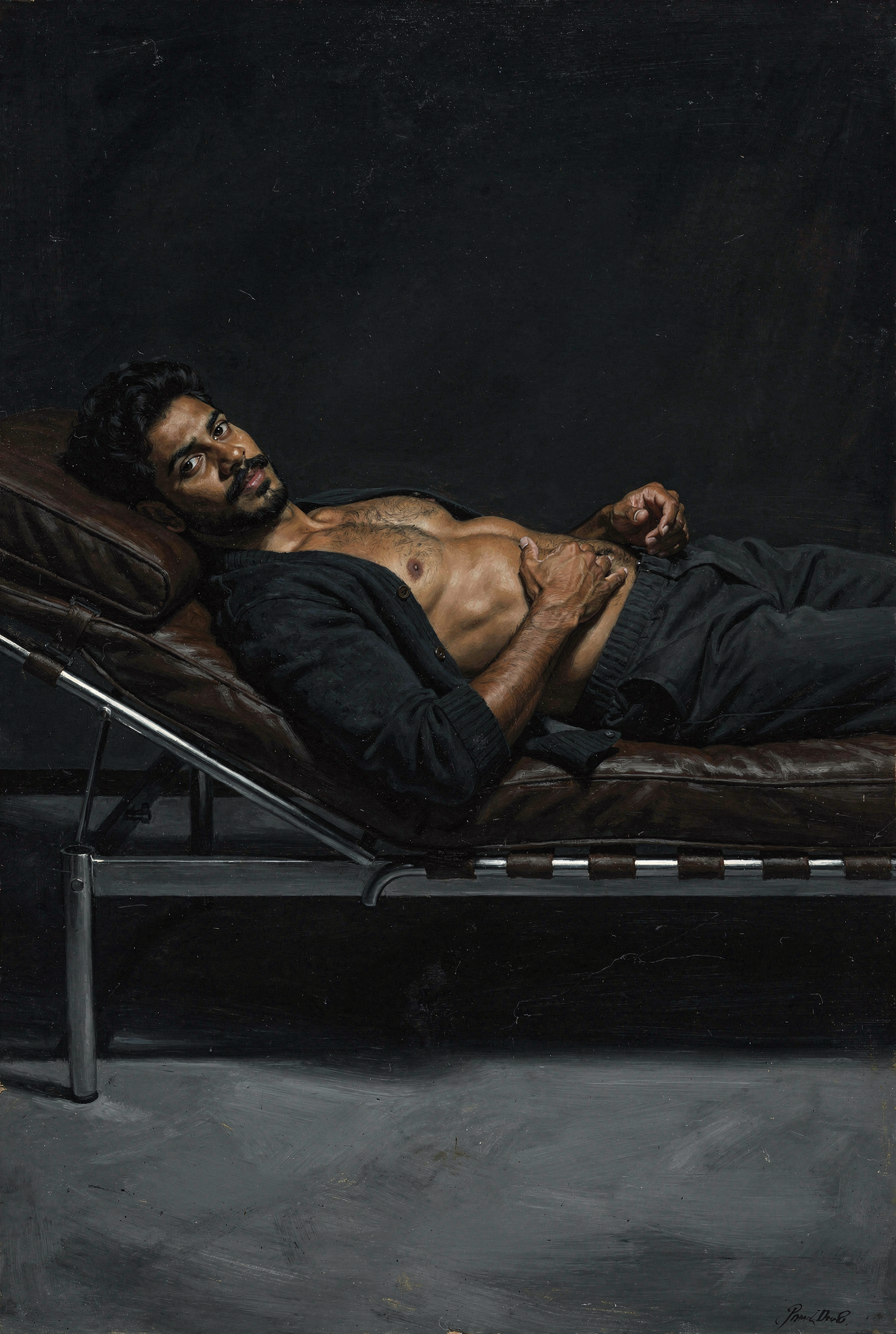
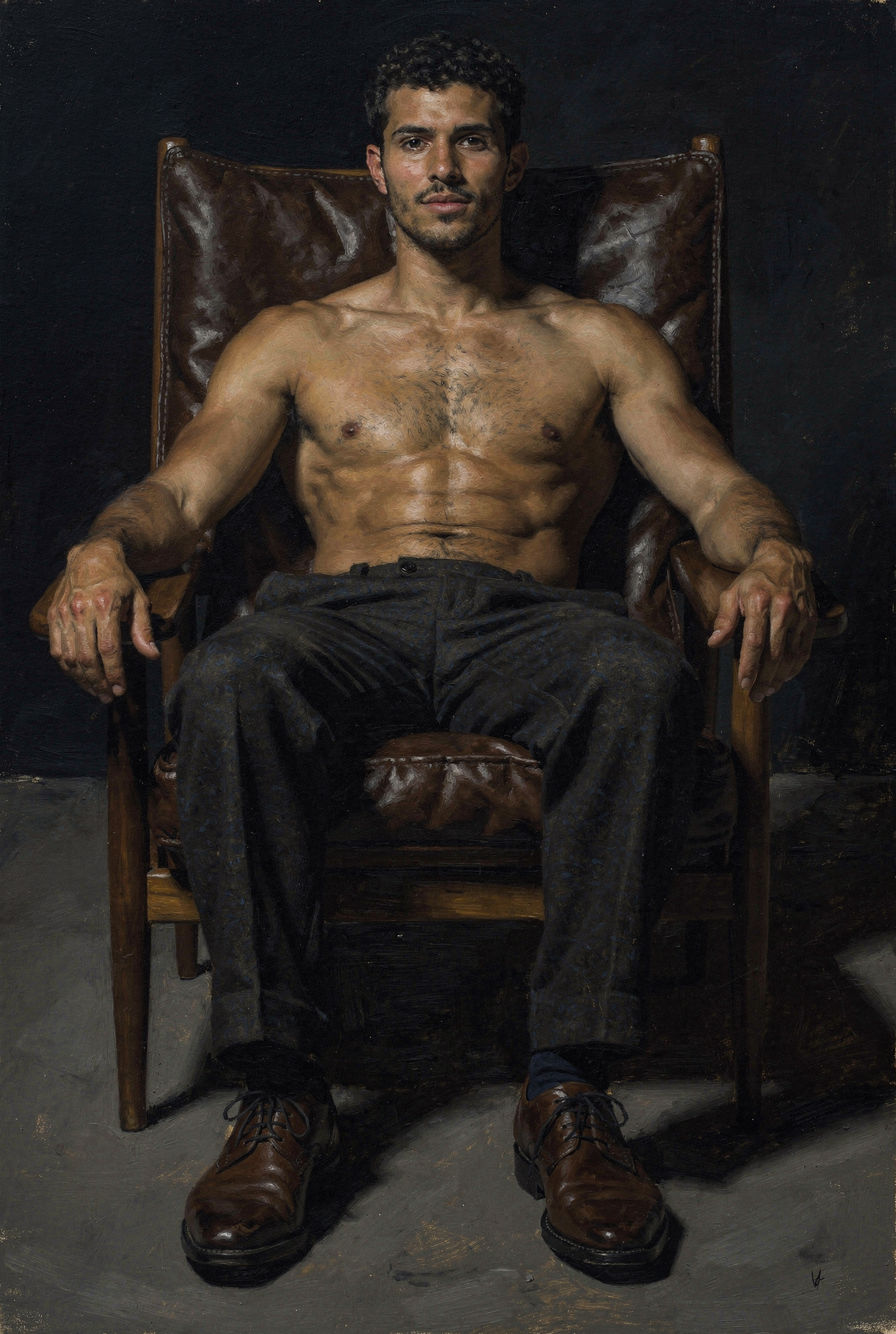
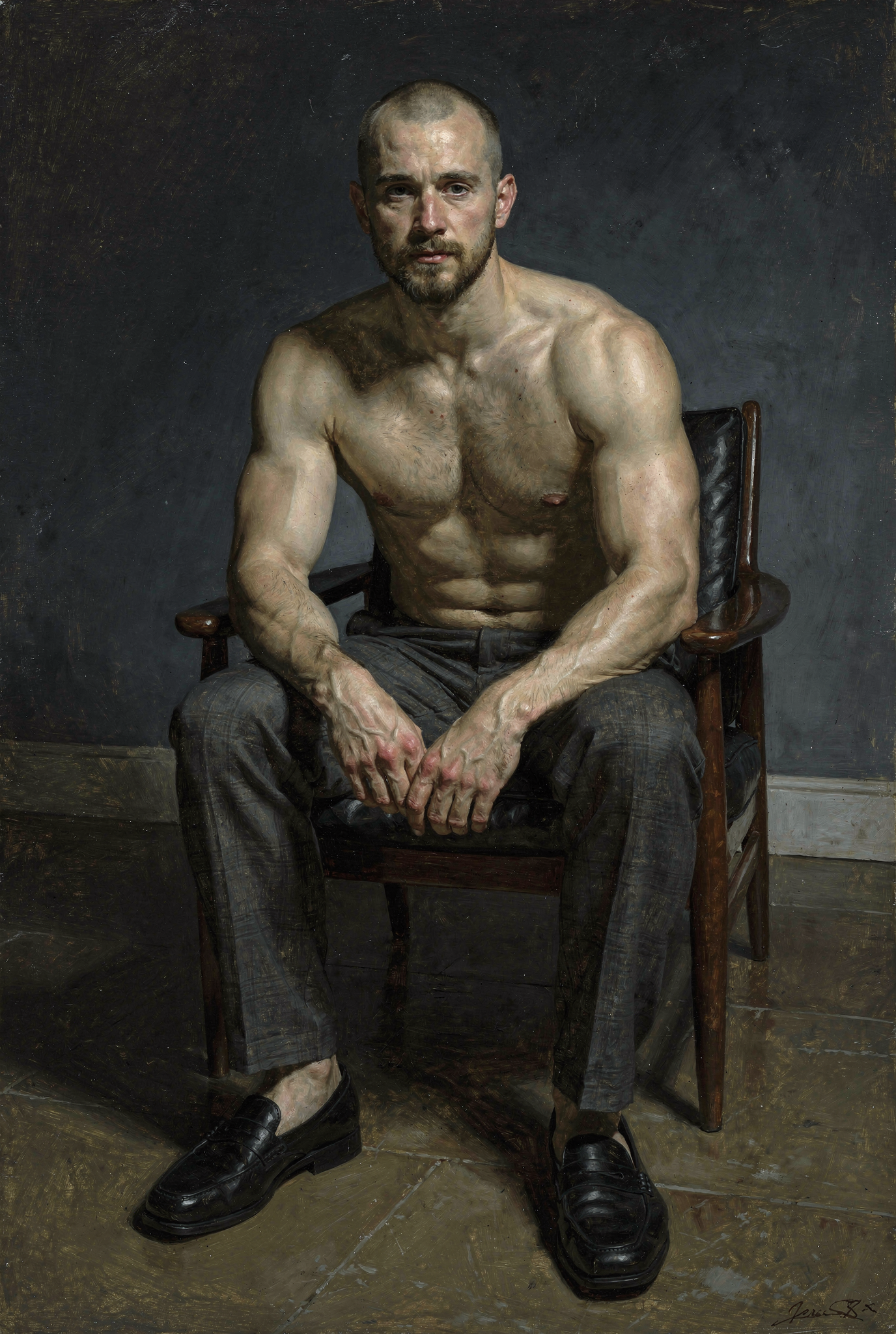
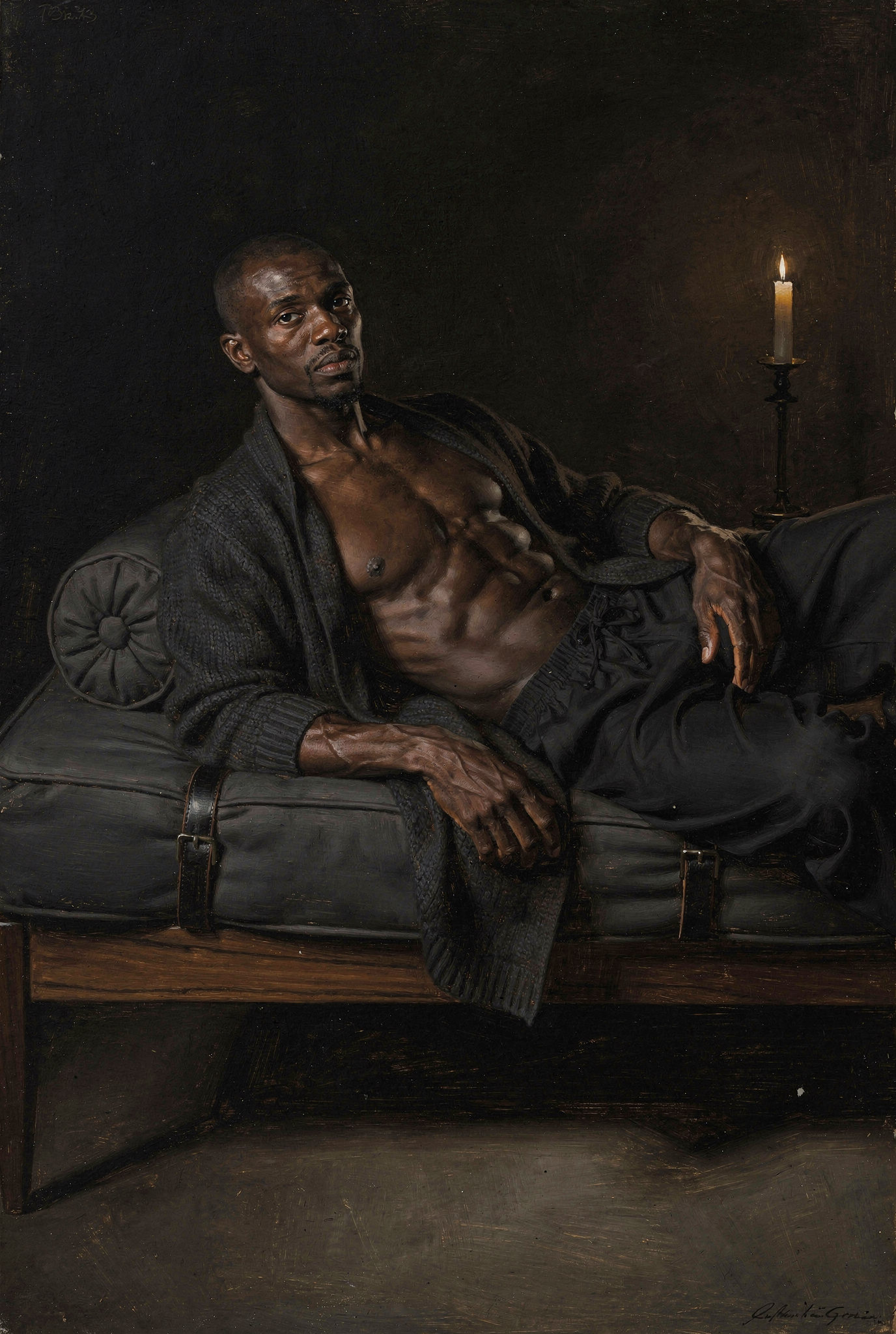
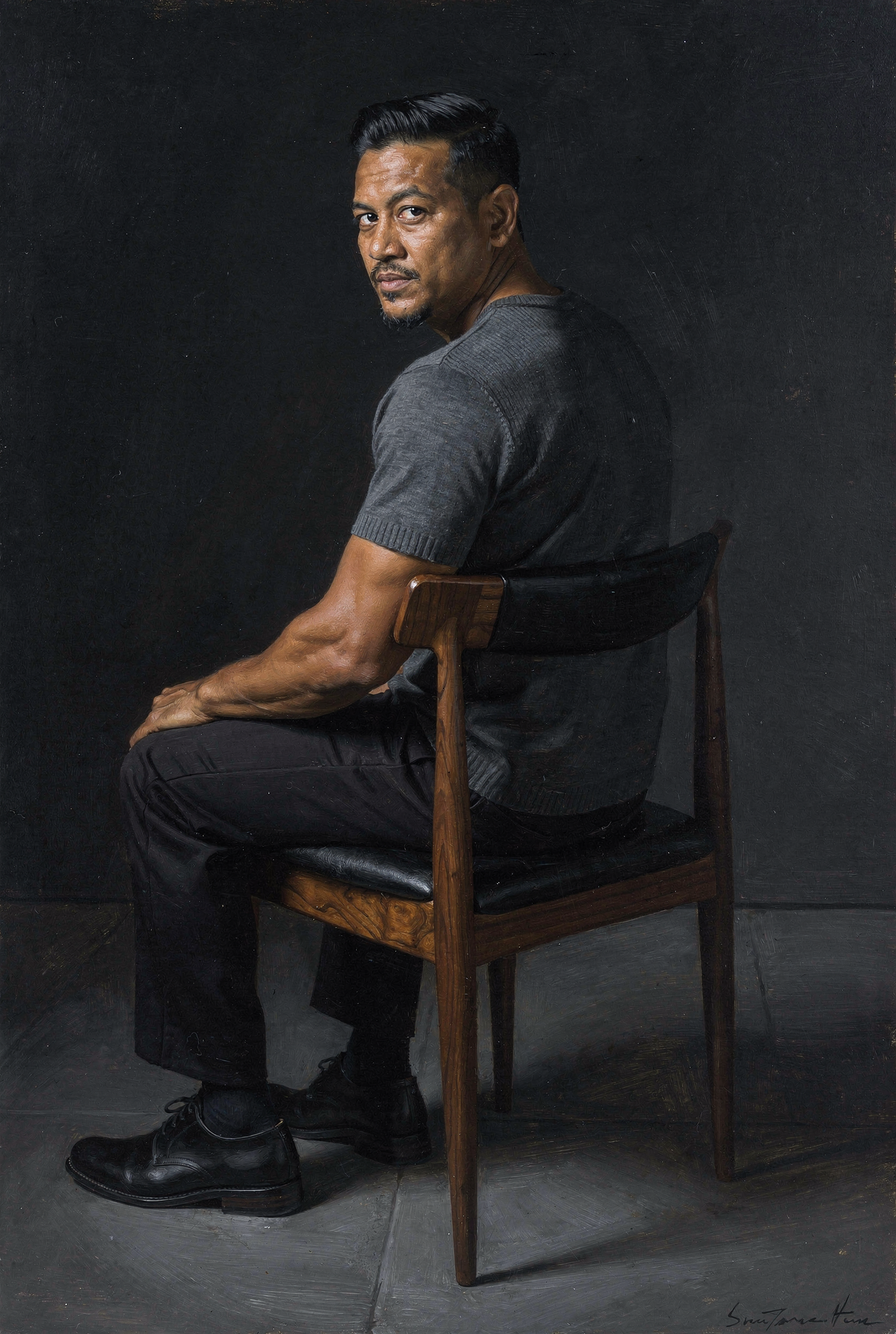
Nocturne began with an attempt to render darkness. These simulated paintings imagine private interiors after hours, furnished with dark walnut, smoked oak, worn leather and wool, where light was meant to arrive selectively and much of the room to disappear. The prompts repeatedly asked for near-total darkness: a candle, lamp or unseen source finding a face, hand, bare chest or fold of clothing while everything beyond its reach receded. Yet FLUX.2 Pro persistently preserved more visibility than intended. Even as the instructions became increasingly explicit, the model continued to describe what it had been asked to withhold — another plane of a face, another trouser crease, another chair leg recovered from shadow. The resulting images occupy the space between the tenebrist ambition of the prompts and the model's own tendency towards legibility. Darkness remains present, but not as completely as it was first imagined.
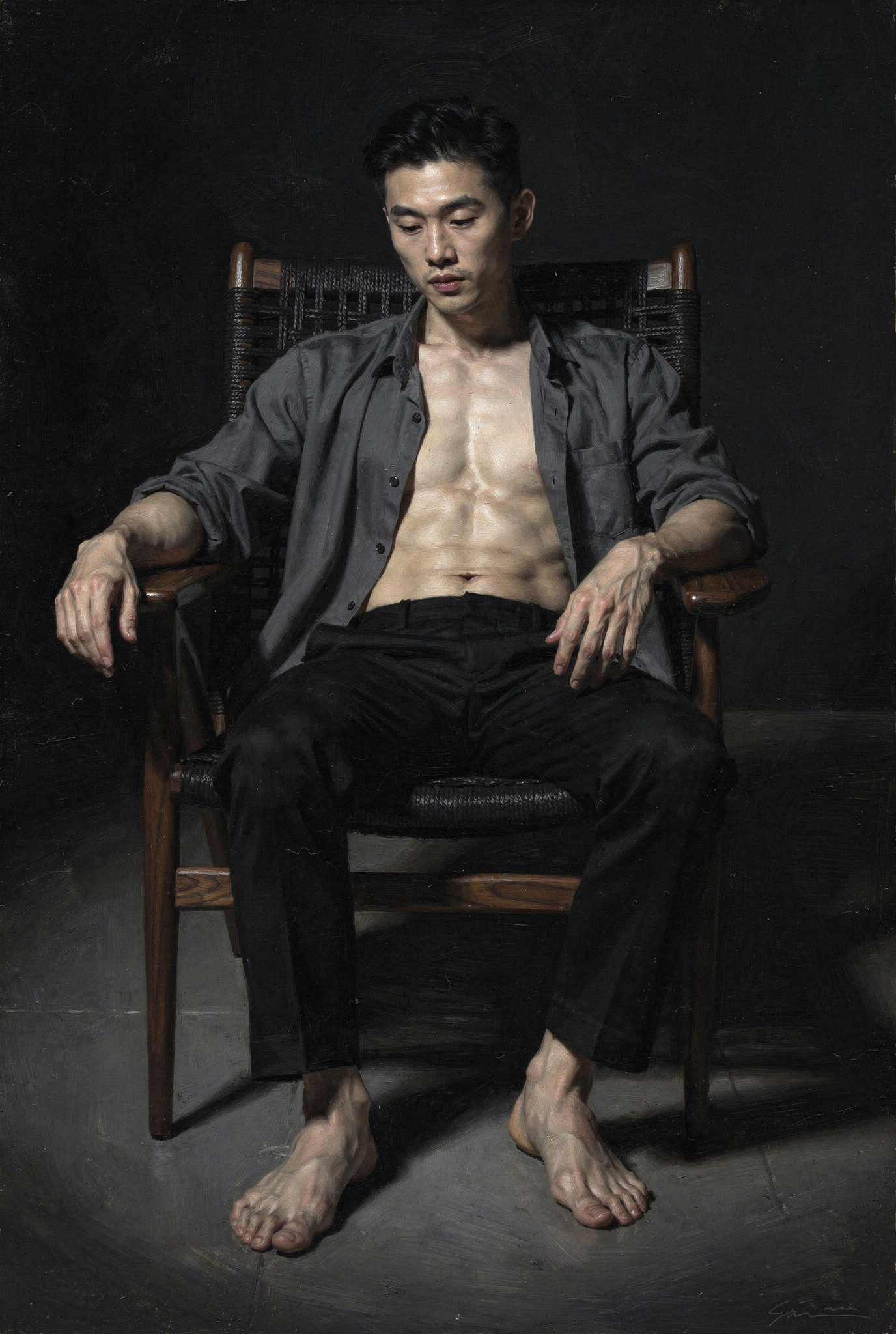
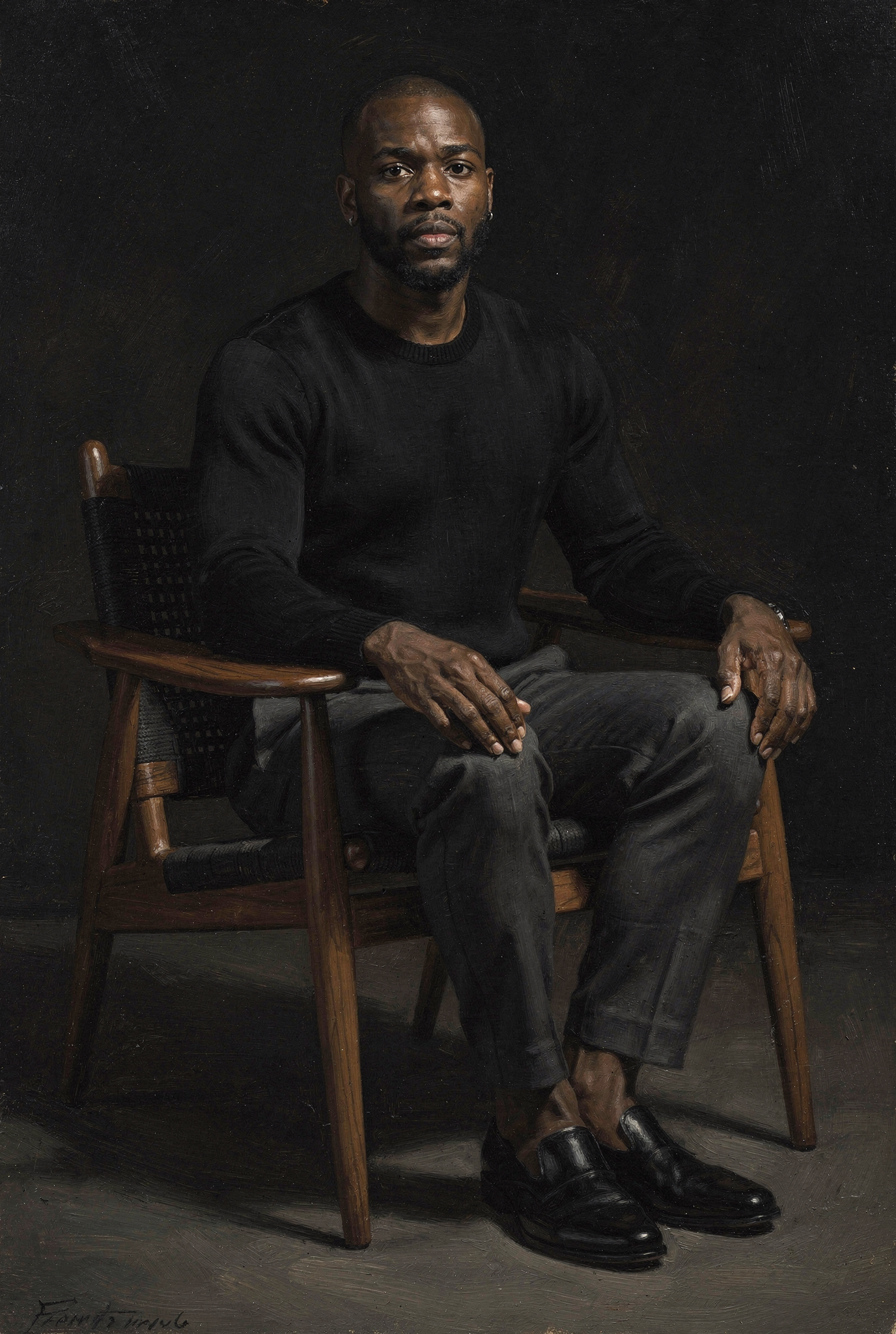
The men themselves remain at the centre of the work. They are physically assured, unmistakably strong and familiar with the discipline of the gym, but strength is never staged as spectacle. They sit, recline, turn and rest among 1950s Danish Modern chairs, stools and daybeds, their bodies settling into wood, leather and upholstery rather than posing against anonymous studio space. Some wear knits, shirts, flannel and polished shoes; others are partially clothed or bare-chested. Fabric conceals and describes at once, giving light another surface to work upon. These men know they are being looked at, yet nothing in their posture suggests embarrassment or defence. The erotic charge lies in that ease: a loosened shirt, a resting hand, a lowered gaze, exposed skin, the weight of a body becoming still. They are seductive without performing seduction, and powerful without needing to prove it.
None of this happened, of course. There was no dark room, no sitter waiting between poses, no candle burning down beside a Danish chair. Nocturne is synthographic: an invented gathering of men, furniture and interiors constructed through language and artificial intelligence, shaped both by intention and by the model's learned visual habits. Its immediate material is words translated into pixels, and those pixels are themselves light. Even the darkness is synthetic: light arranged to suggest its own absence. The more the prompts asked the model to withhold, the more it seemed inclined to reveal, turning image-making into a negotiation between instruction and interpretation. These fictional bodies can still carry tenderness, desire and attention, while also exposing something of the medium that produced them. What remains is intimate, controlled, sensual and unresolved — not quite the darkness first imagined, but the record of an encounter with it.
Gallery
"However vast the darkness, we must supply our own light." — Stanley Kubrick