Natty: a claim, hashtag, question, and a joke
"Natty or not?" begins as a question about bodies, but it is really a question about trust. In fitness culture, the phrase asks whether a physique is natural or enhanced, earned or assisted, honest or performed. It belongs to a culture of looking closely, doubting claims, measuring evidence and reading the body as if it might confess. Online, that doubt widens. A body appears on a screen and immediately becomes a claim: proof of discipline, genetics, restraint, training, diet and time. Yet the image carrying that claim is never neutral. It has already passed through light, lens, crop, pose, platform and expectation. What looks natural may simply be well managed. What appears to be proof may already have been edited, adjusted or improved.
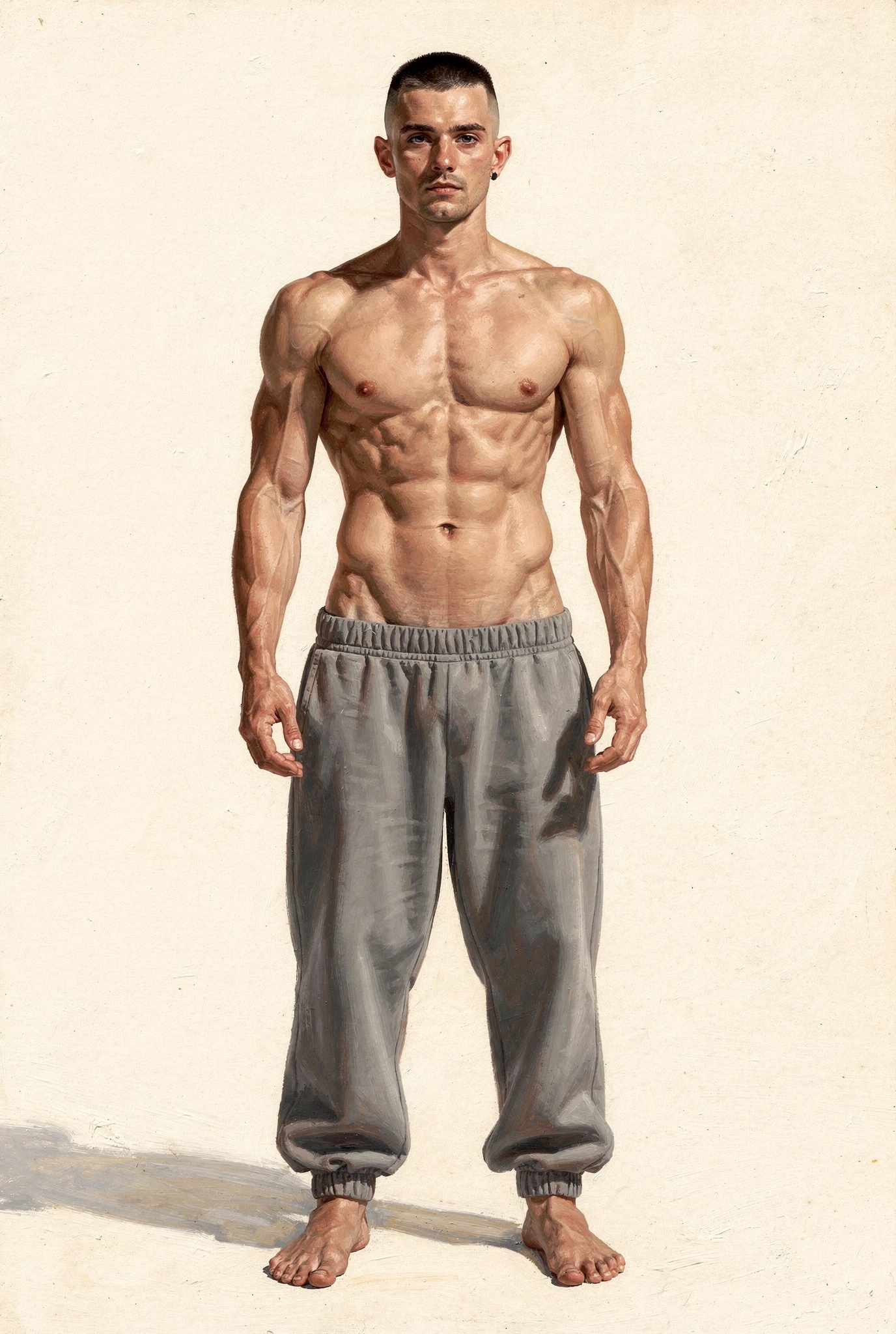
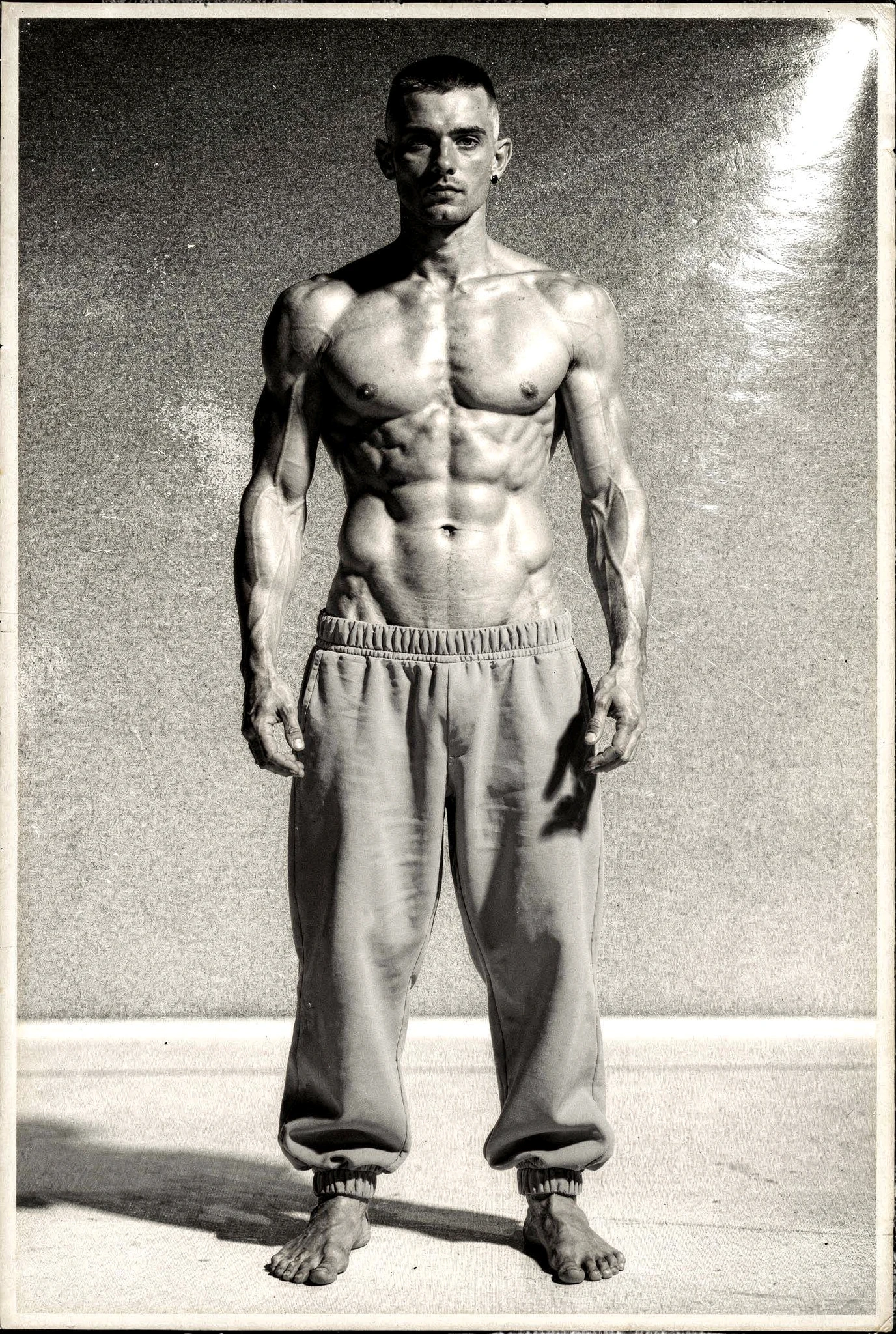
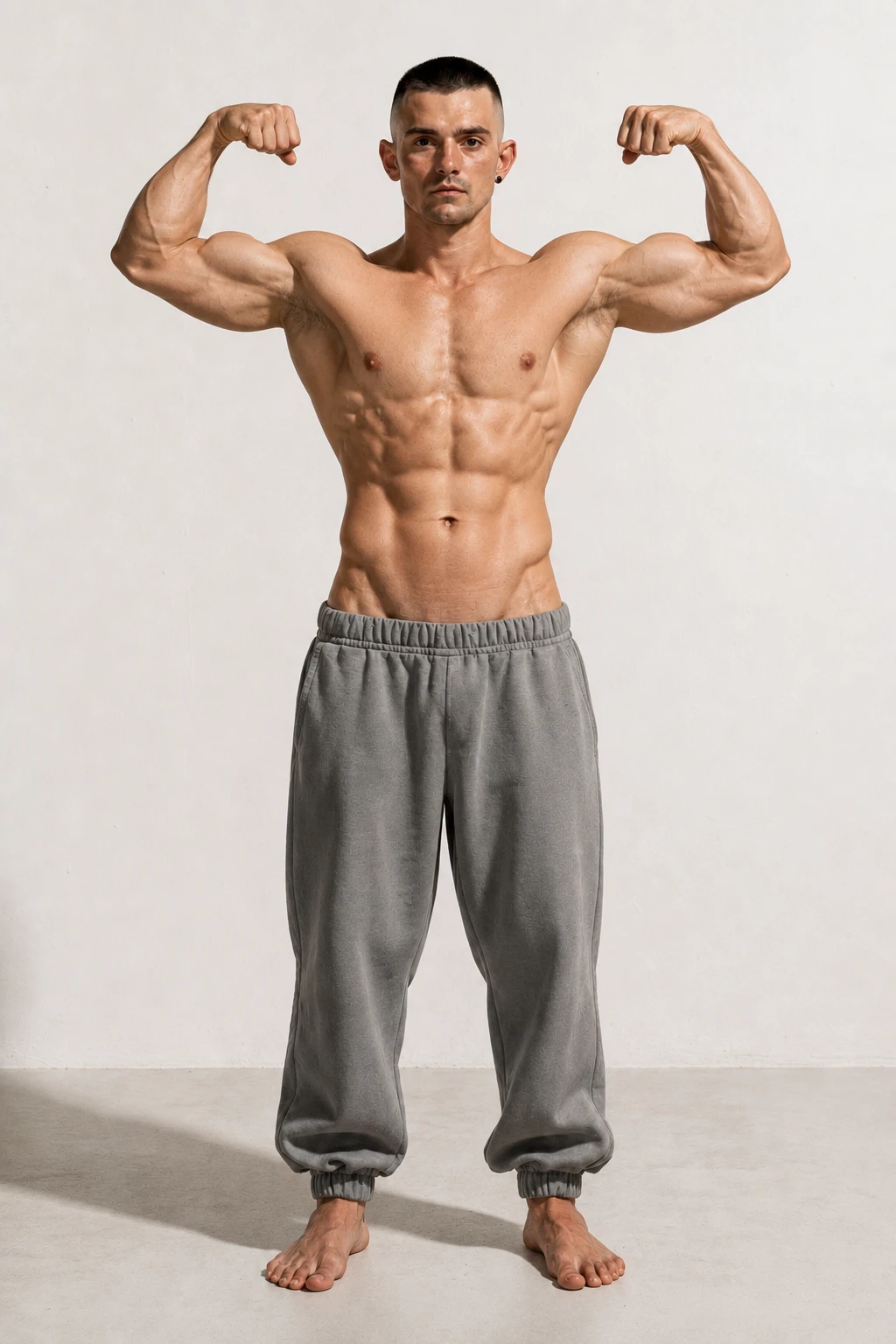
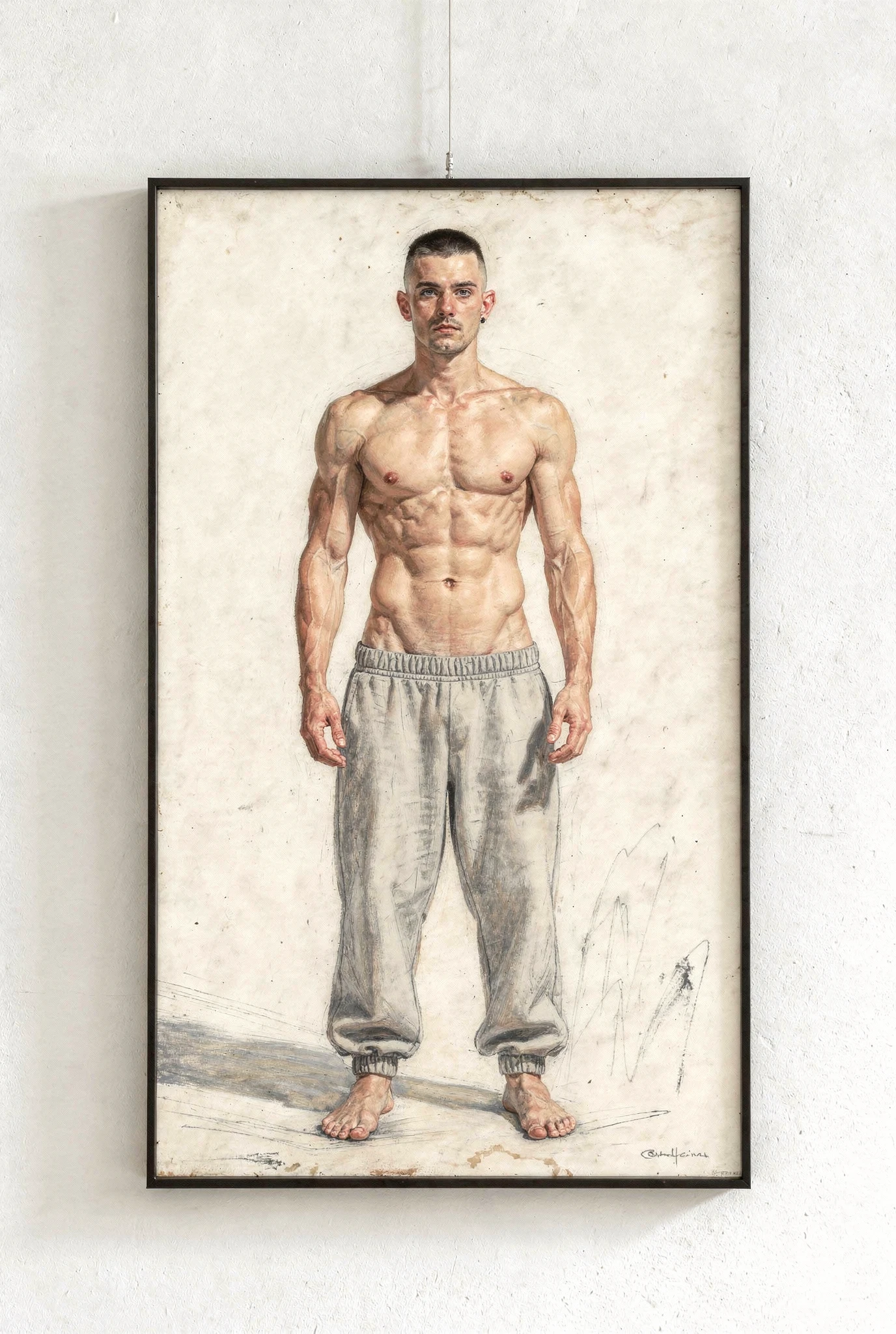
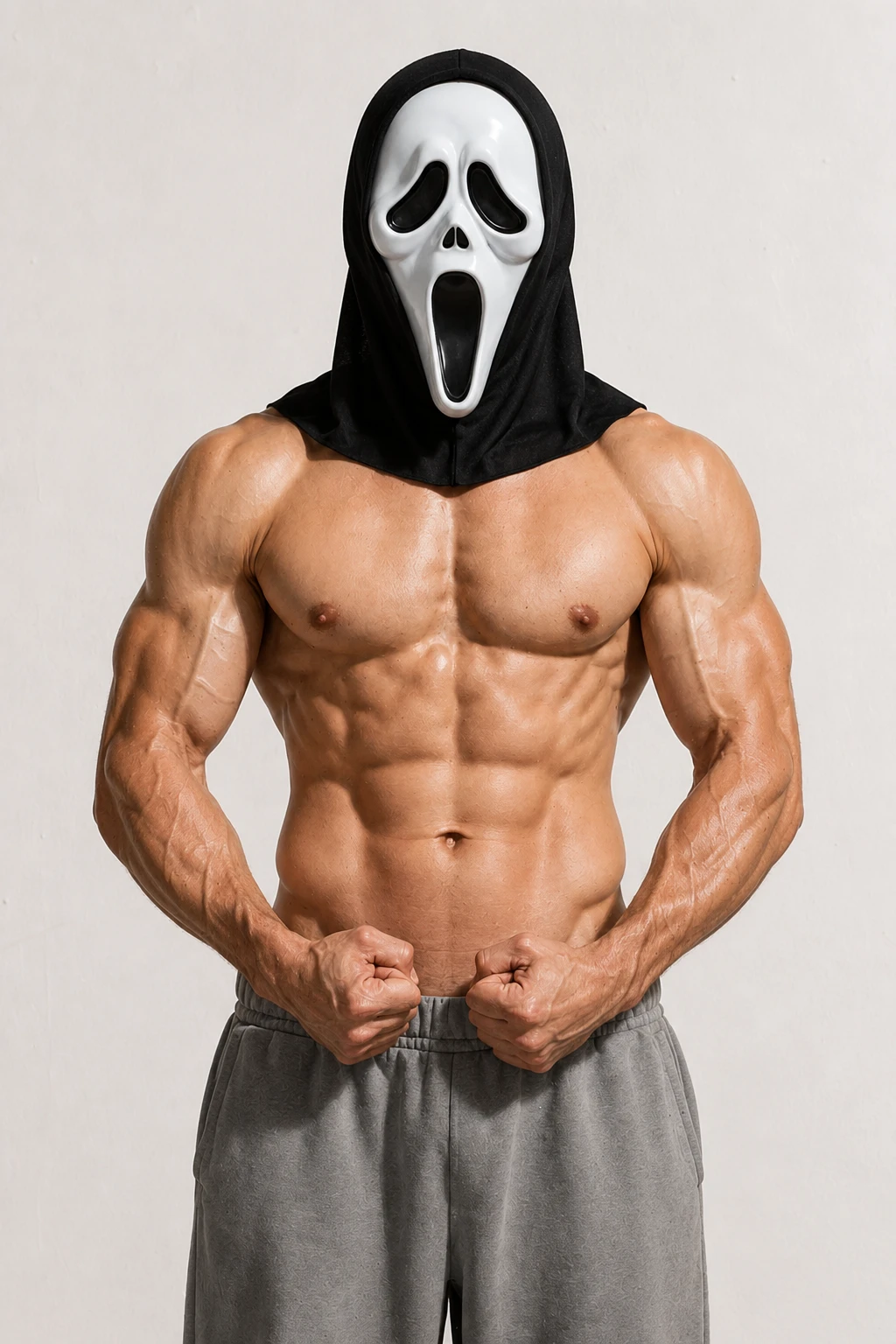
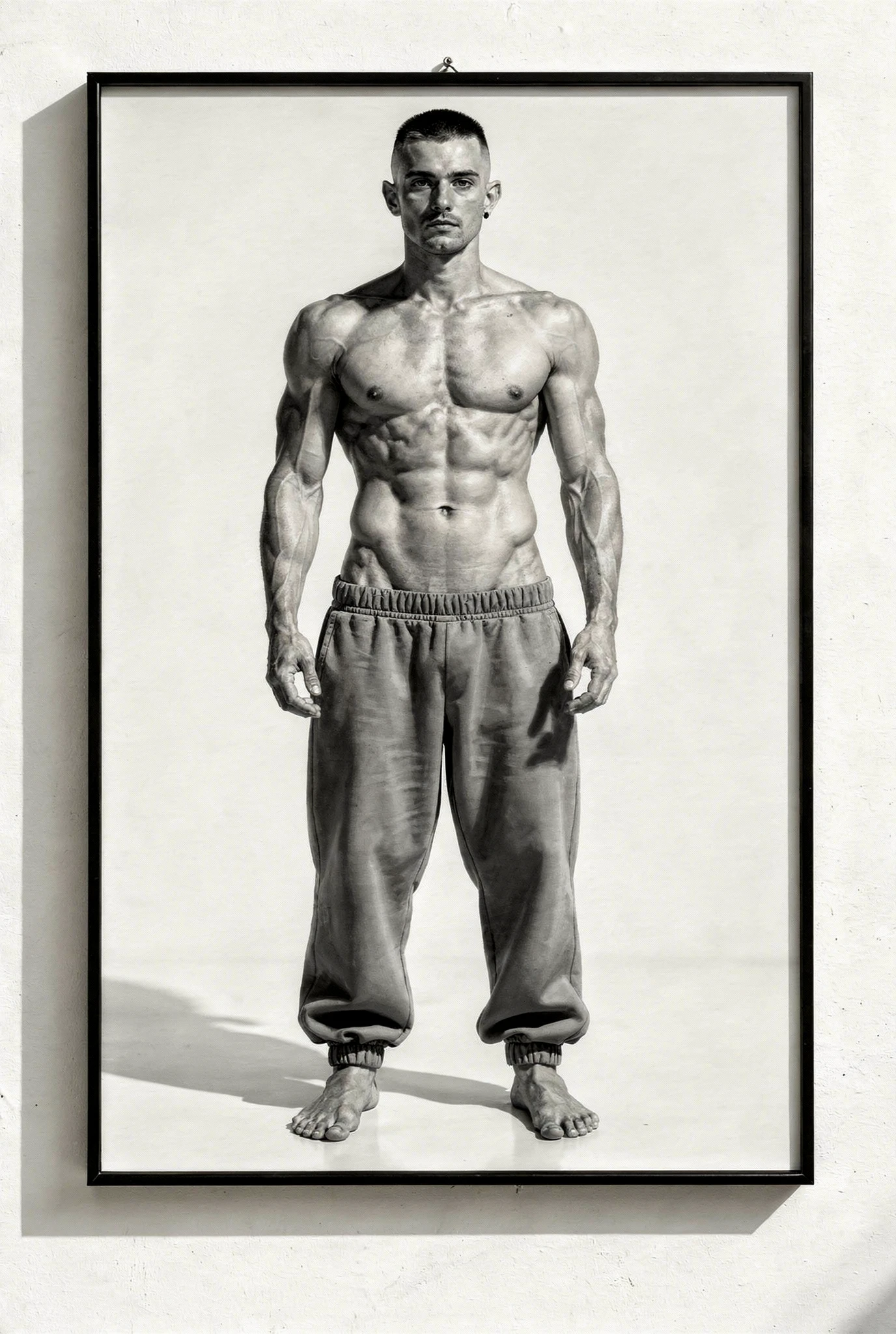
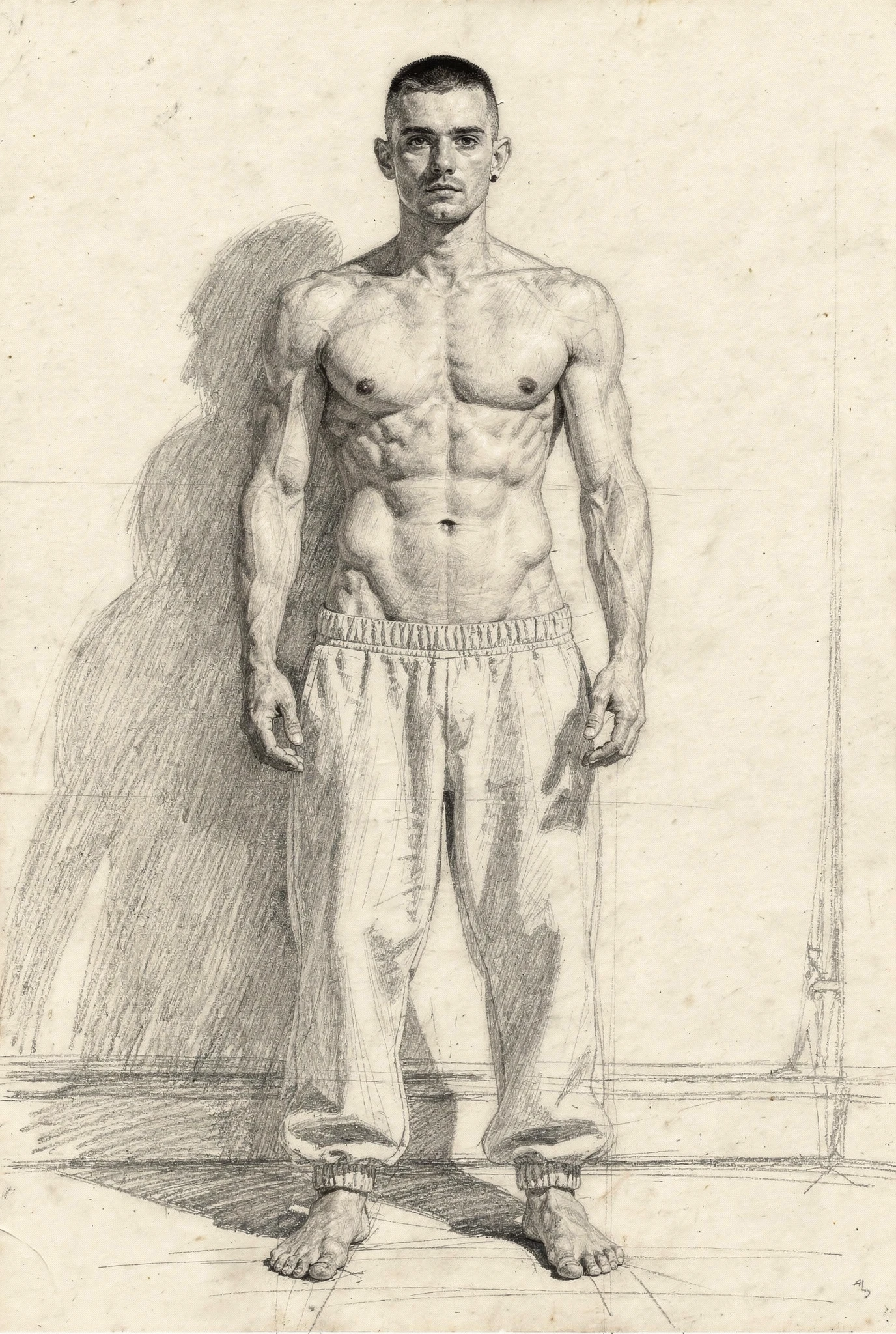
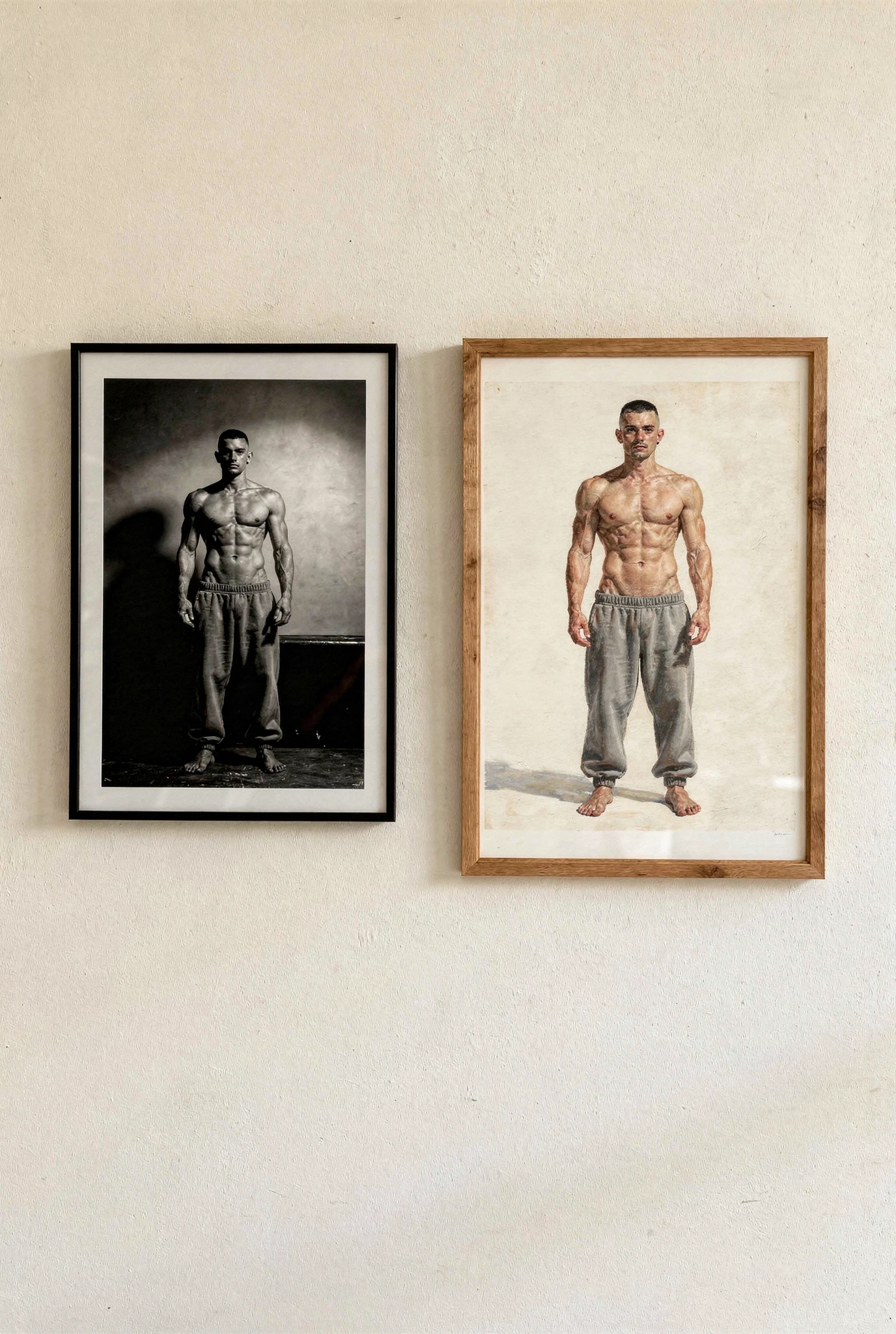
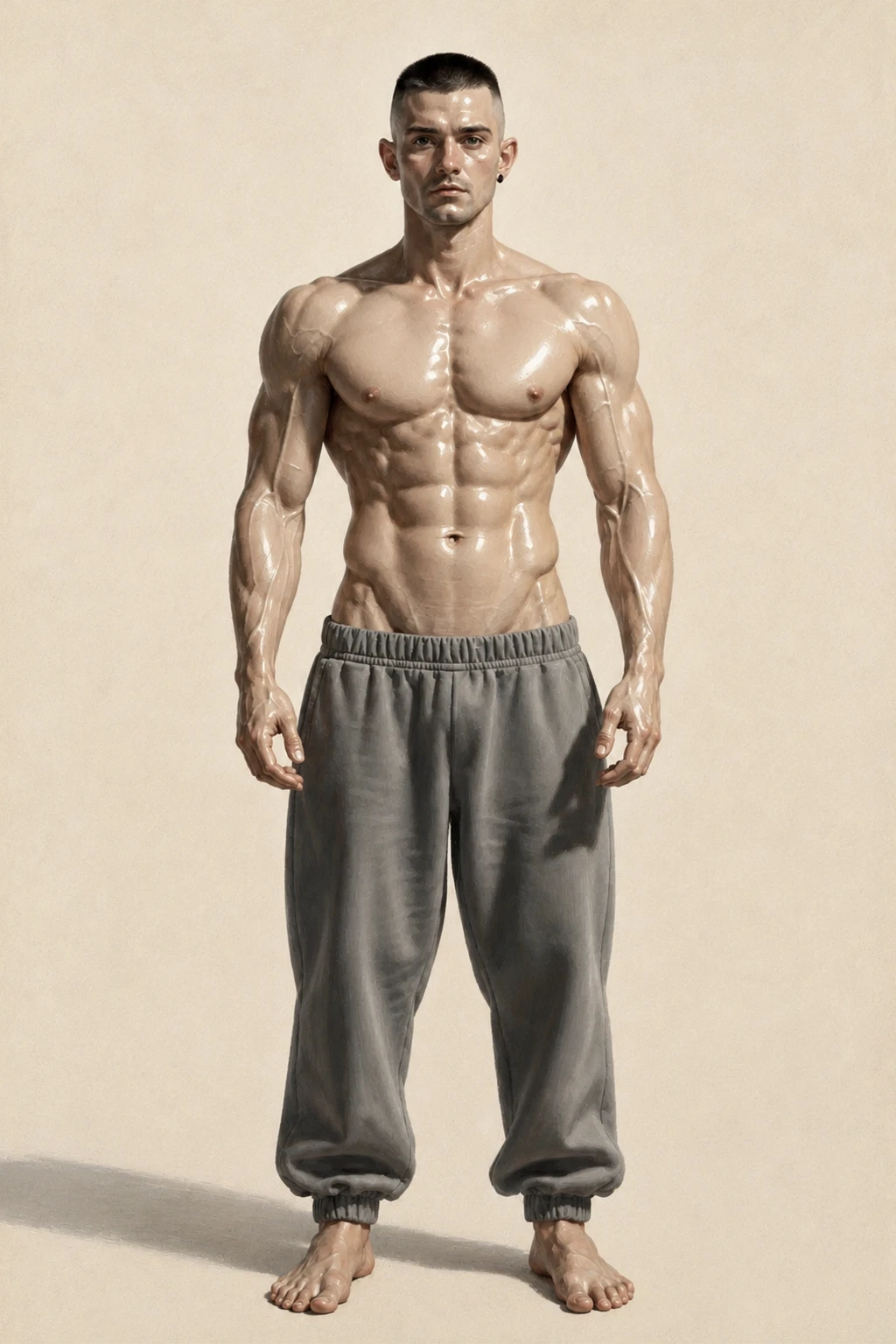
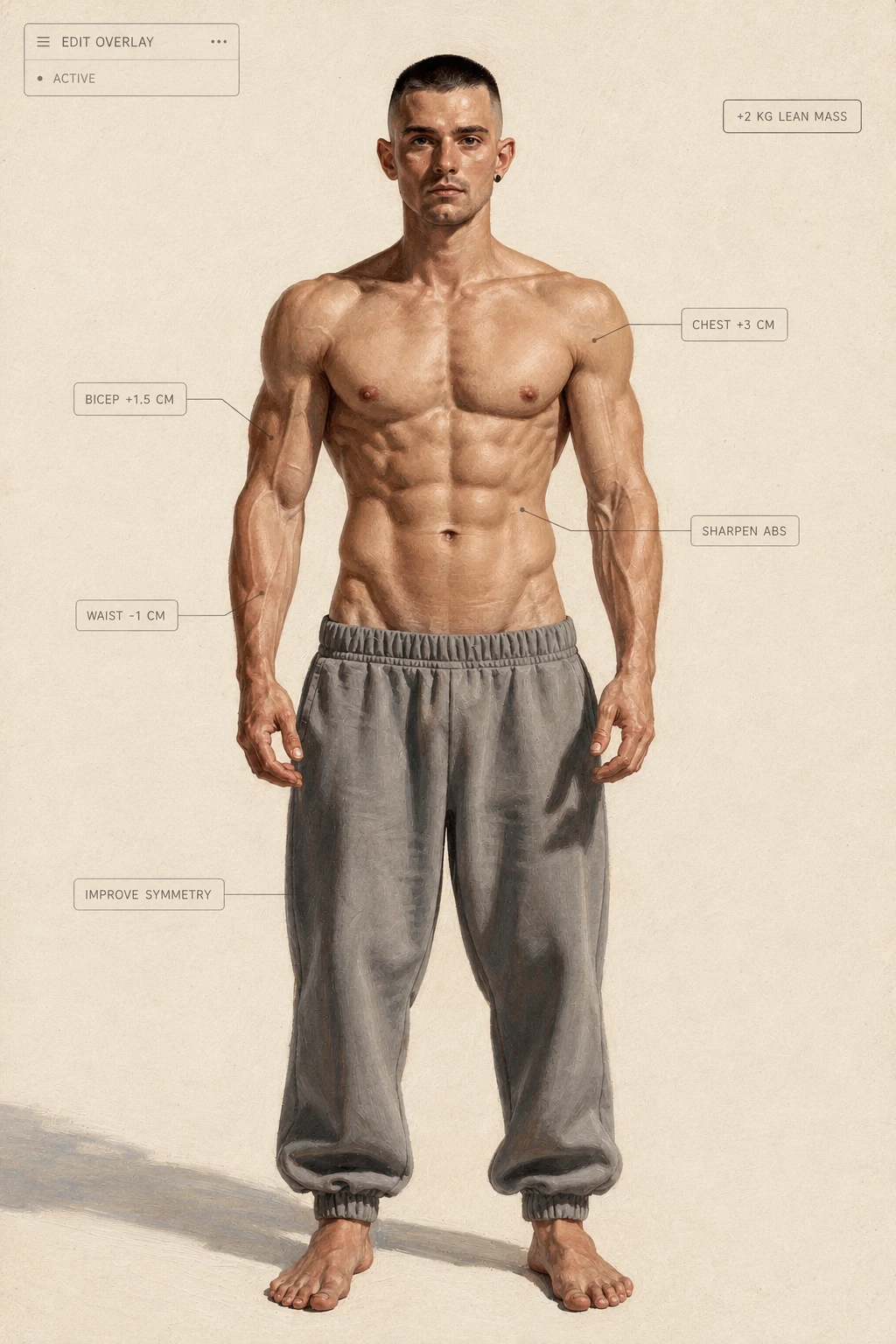
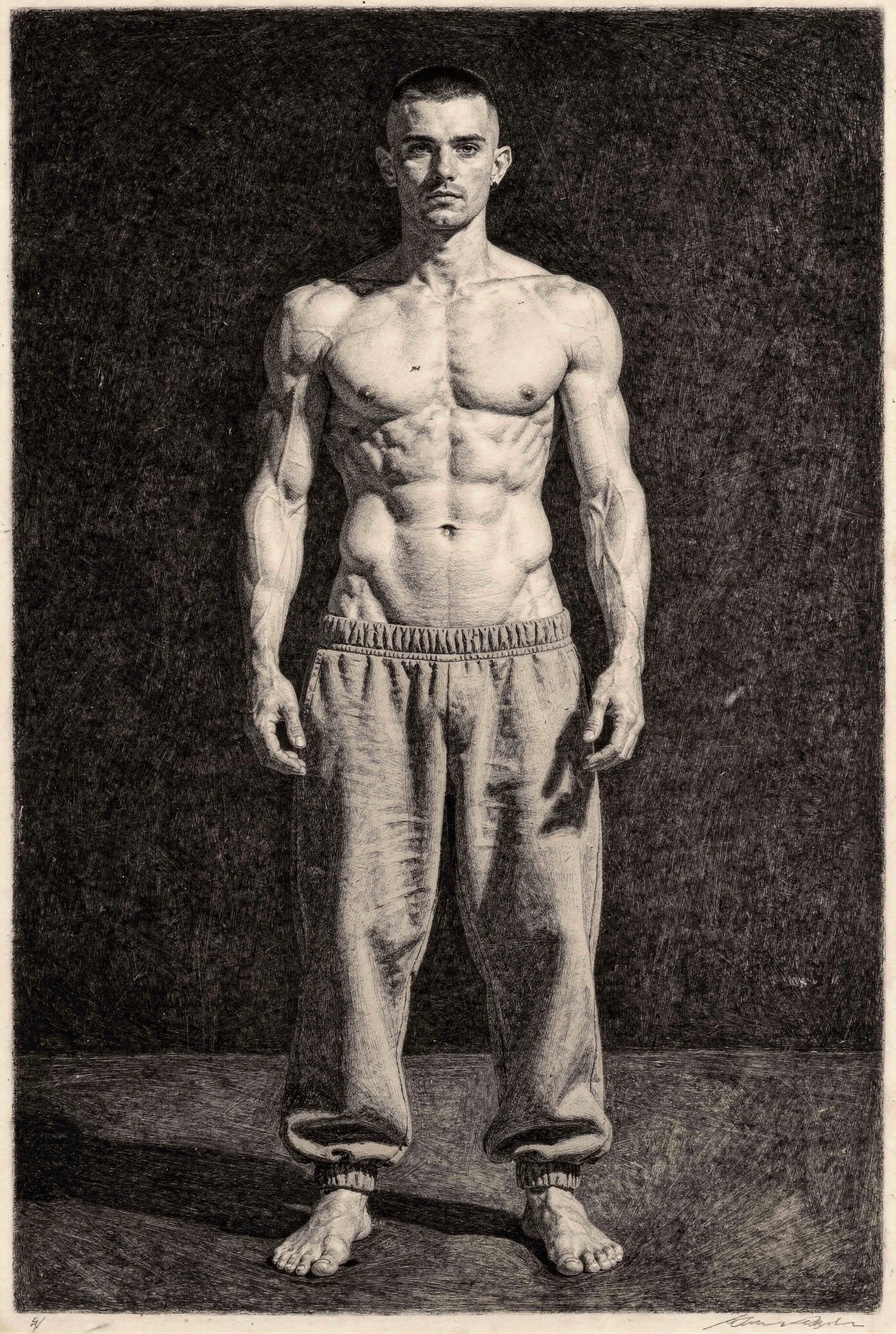
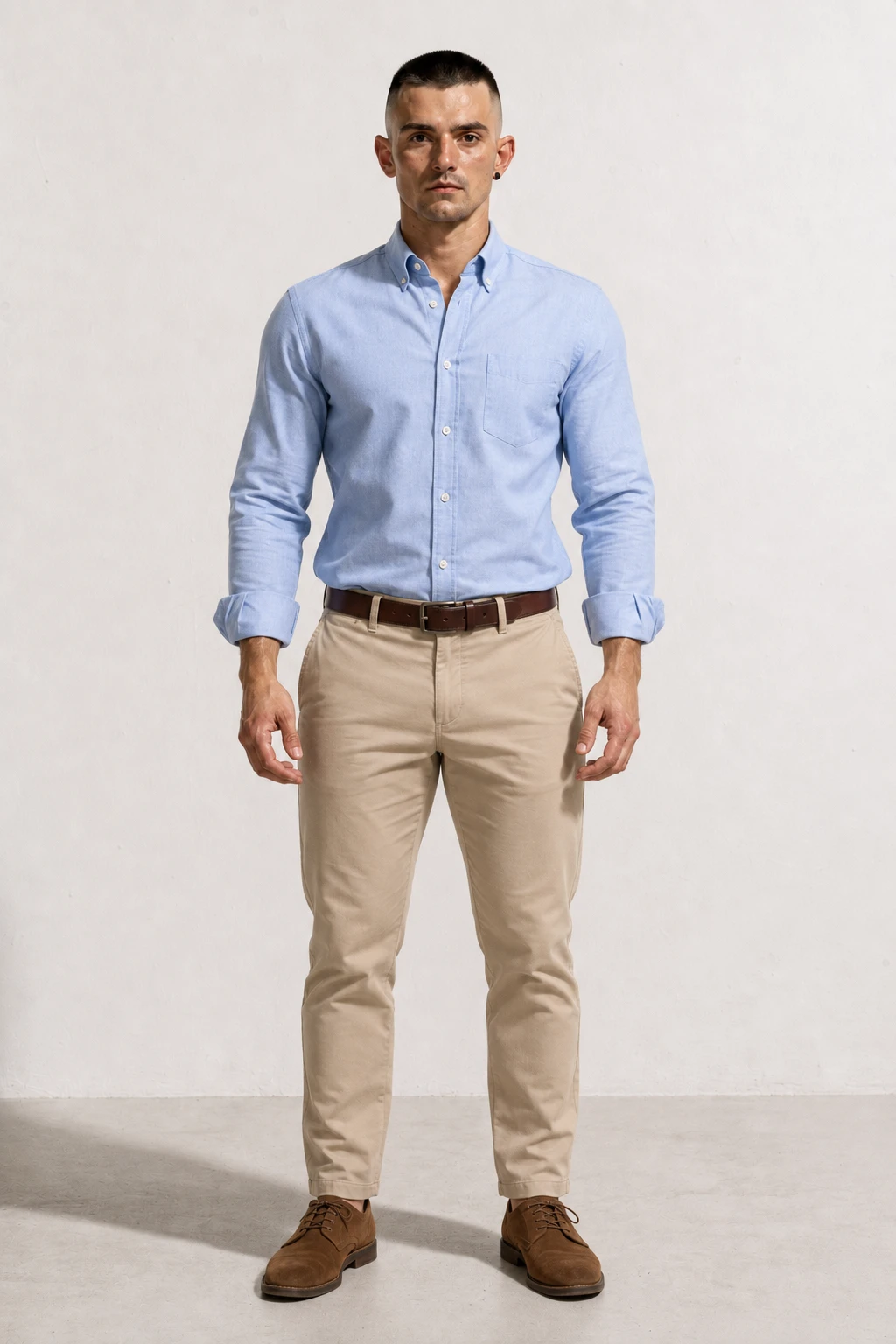
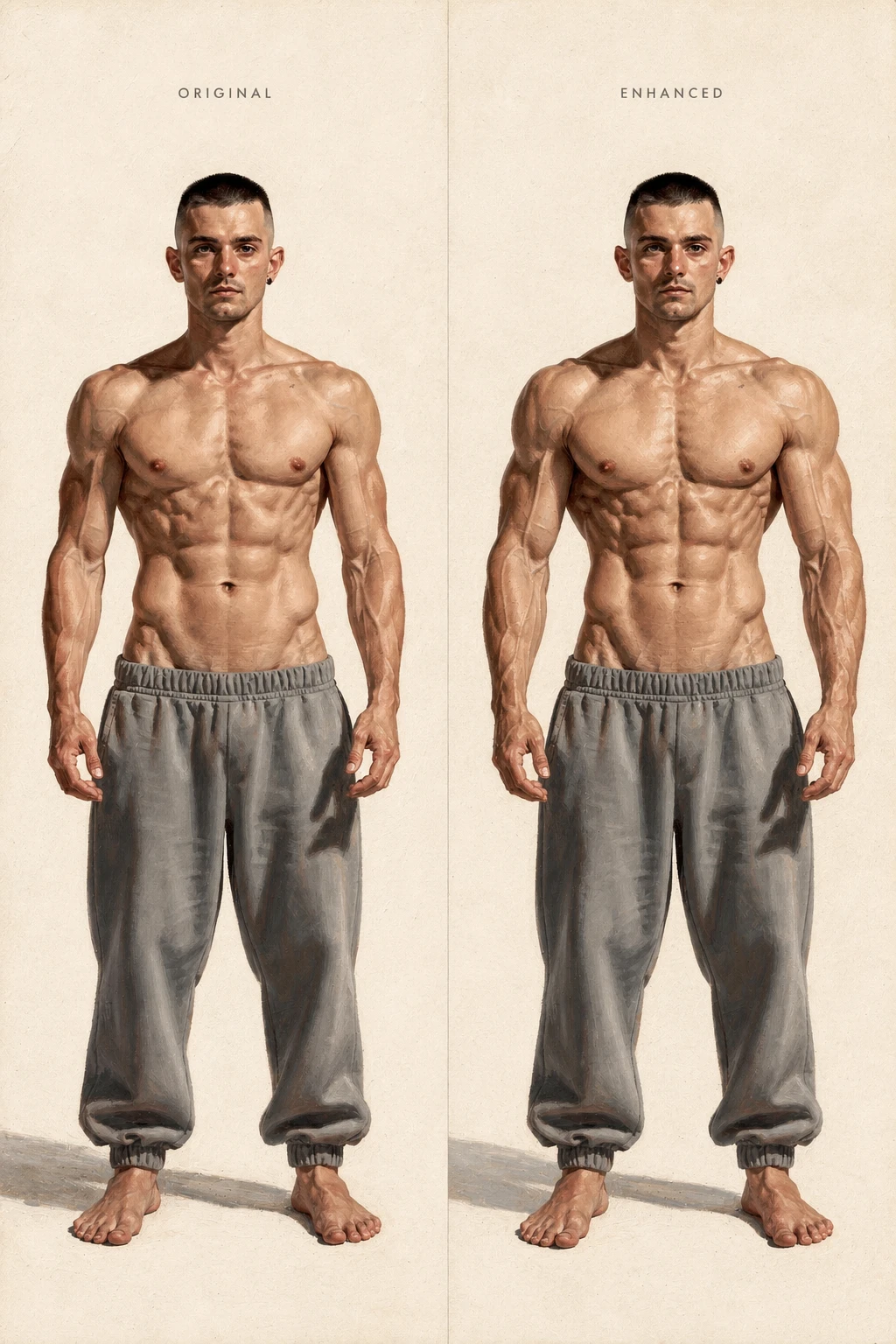
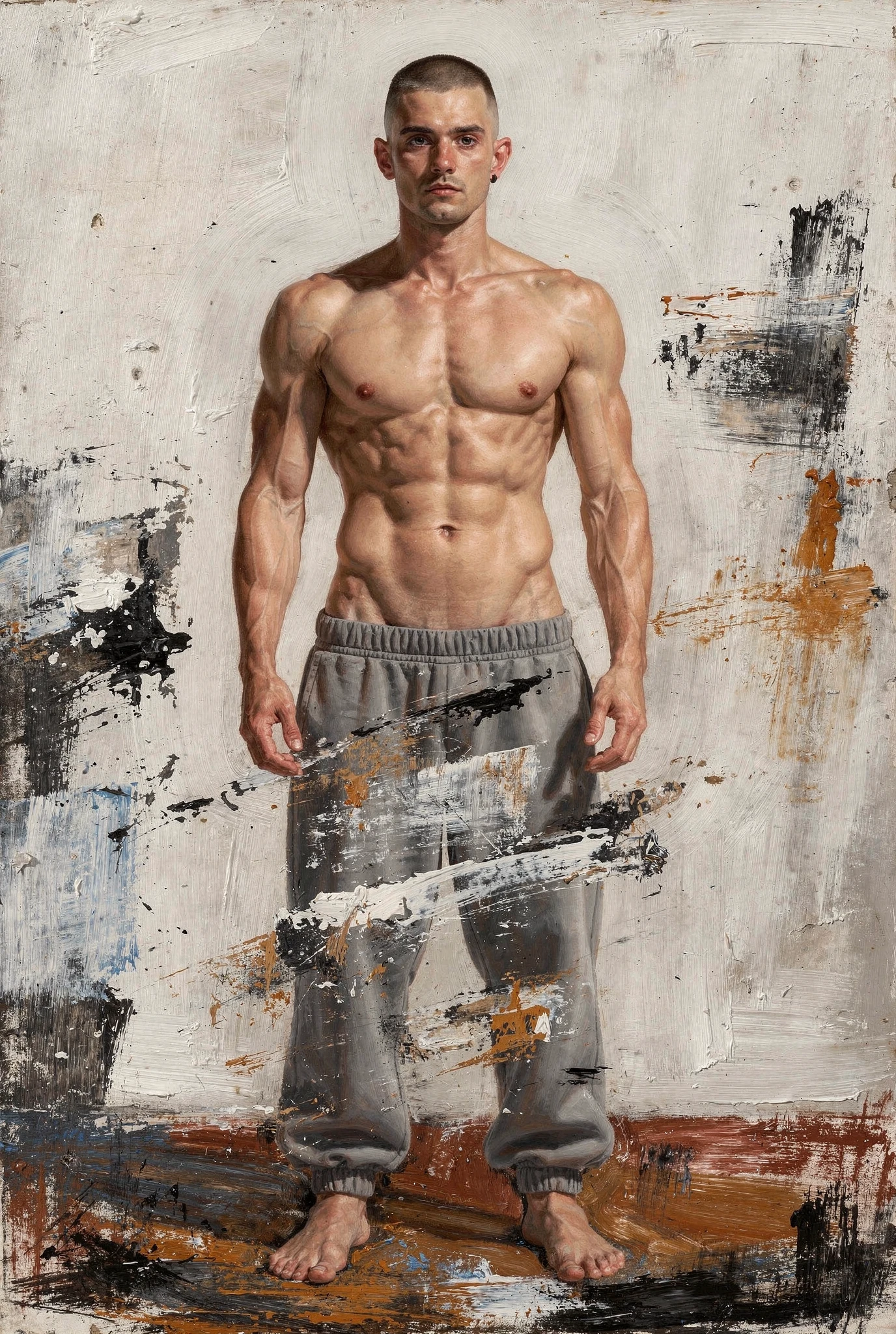
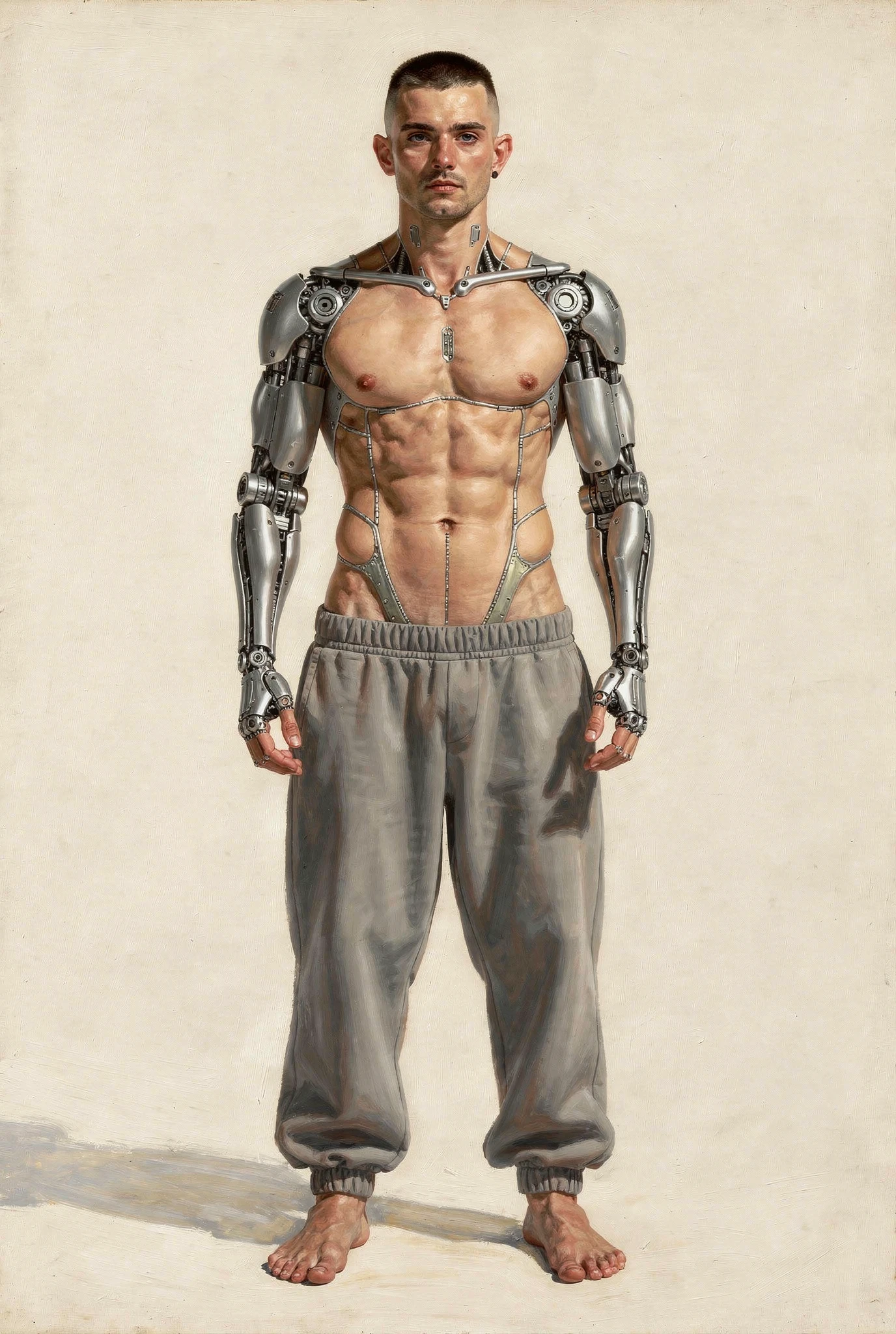
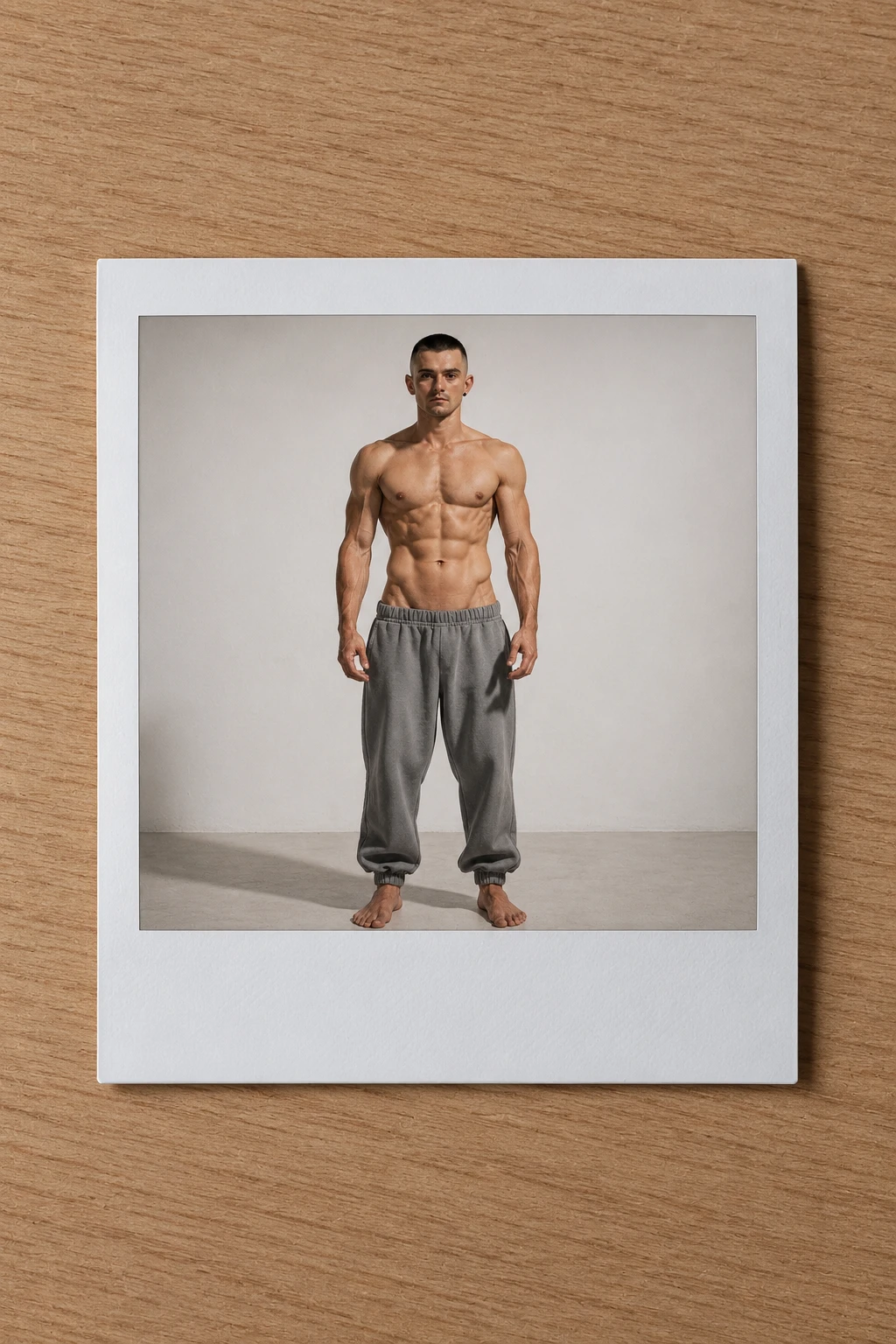
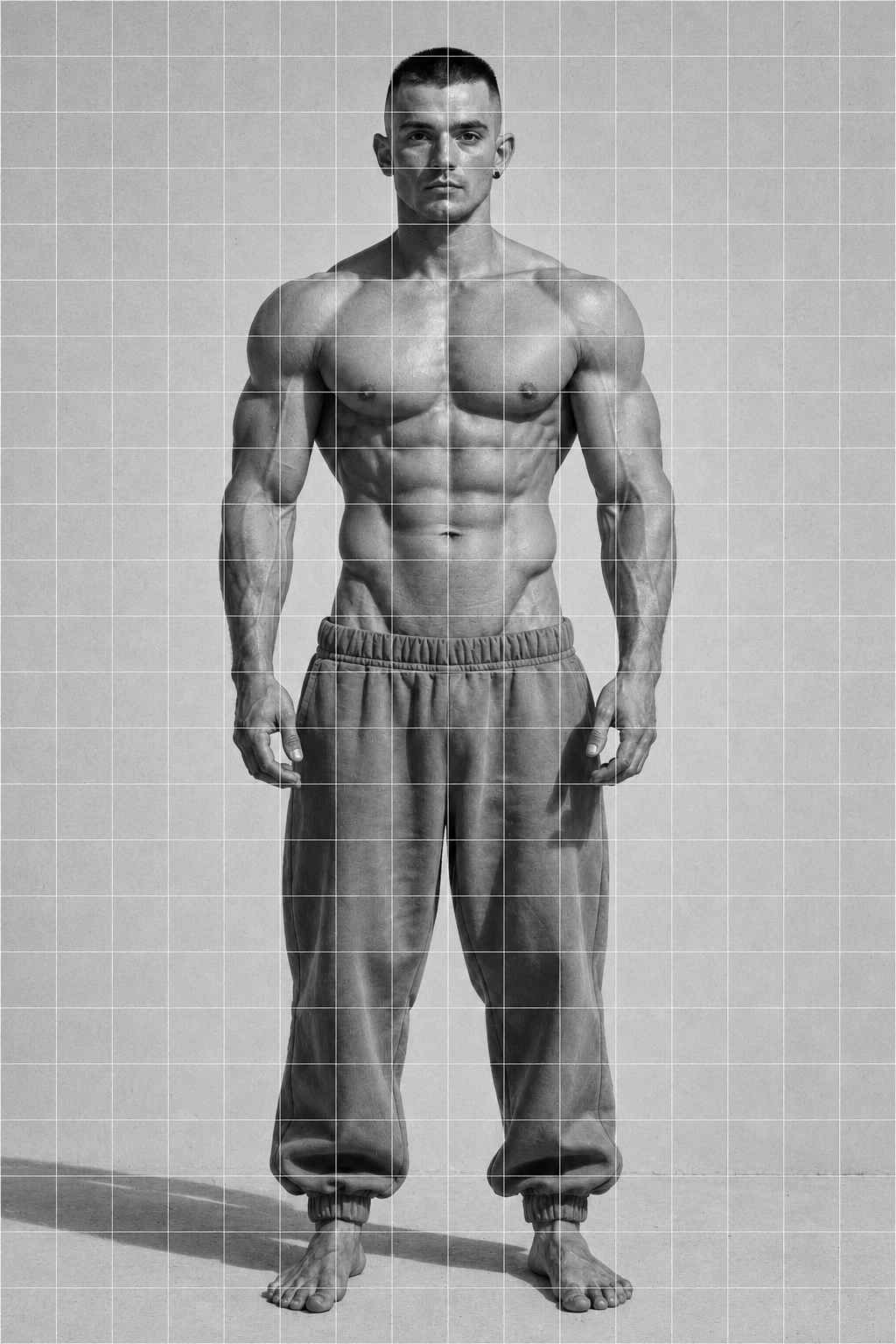
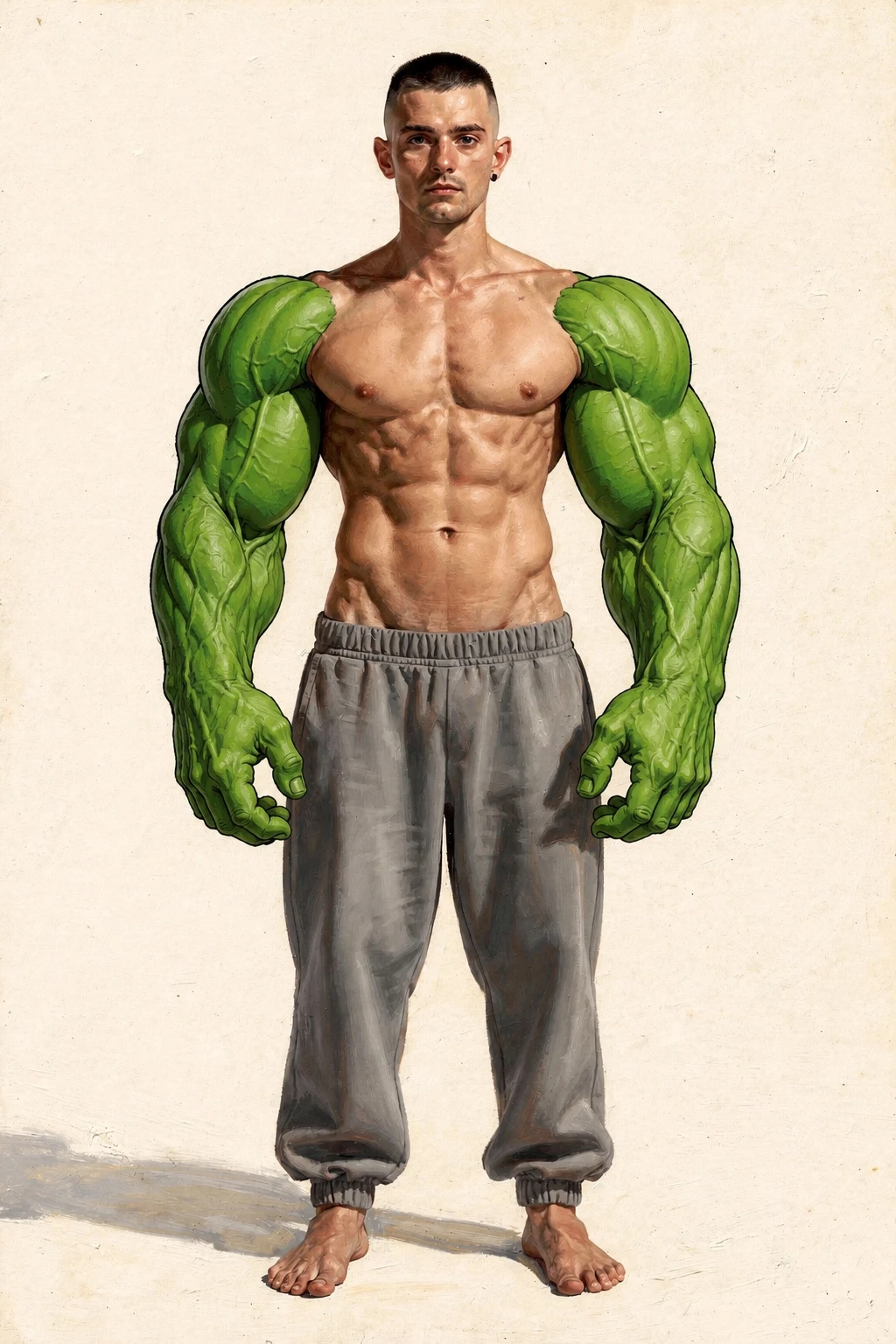
In Natty, the same male figure is treated as editable material. He is measured, duplicated, reframed, converted to monochrome, turned into a drawing, hung as evidence, enlarged, smoothed, annotated and improved. His body gains muscle, becomes data, accepts overlays, absorbs fantasy, suffers absurd interventions and begins to cross into synthetic construction. Some edits are subtle: a change of pose, a shift into black and white, a smart shirt, a cleaner surface. Others are blunt enough to break the spell completely: a Ghostface mask covers his face, cartoon muscle erupts from his shoulders, mechanical parts enter the body as if optimisation has become engineering. Digital images can be refined, enhanced, restyled, recoloured, corrected, overpainted or pushed towards fantasy. The body can also be edited, through exercise, diet, discipline and supplementation. Between those two forms of alteration — bodily and digital — the figure becomes less a person than a file under revision: opened, adjusted, exported, questioned, reopened.
The joke is blunt, but the doubt is serious. AI tools now make it possible to alter a photograph almost instantly: add five kilograms of lean muscle, sharpen the abs, narrow the waist, improve symmetry, change the clothes, change the surface, change the evidence. Images of bodies increasingly arrive to us through these alterations, especially on platforms where appearance is already performance. The old question — natural or not? — starts to collapse, because the body and the image can no longer be separated cleanly. A physique may be trained, enhanced, filtered, exaggerated, fabricated or entirely invented, and still appear with the calm authority of evidence. Natty does not try to decide whether the body is real or natural. It asks what kind of belief an image can still command when every surface is editable, every claim can be improved, and even proof has become a style.
Gallery
"We have art in order not to die of the truth." — Friedrich Nietzsche