Chouchou: contemporary animal portraits
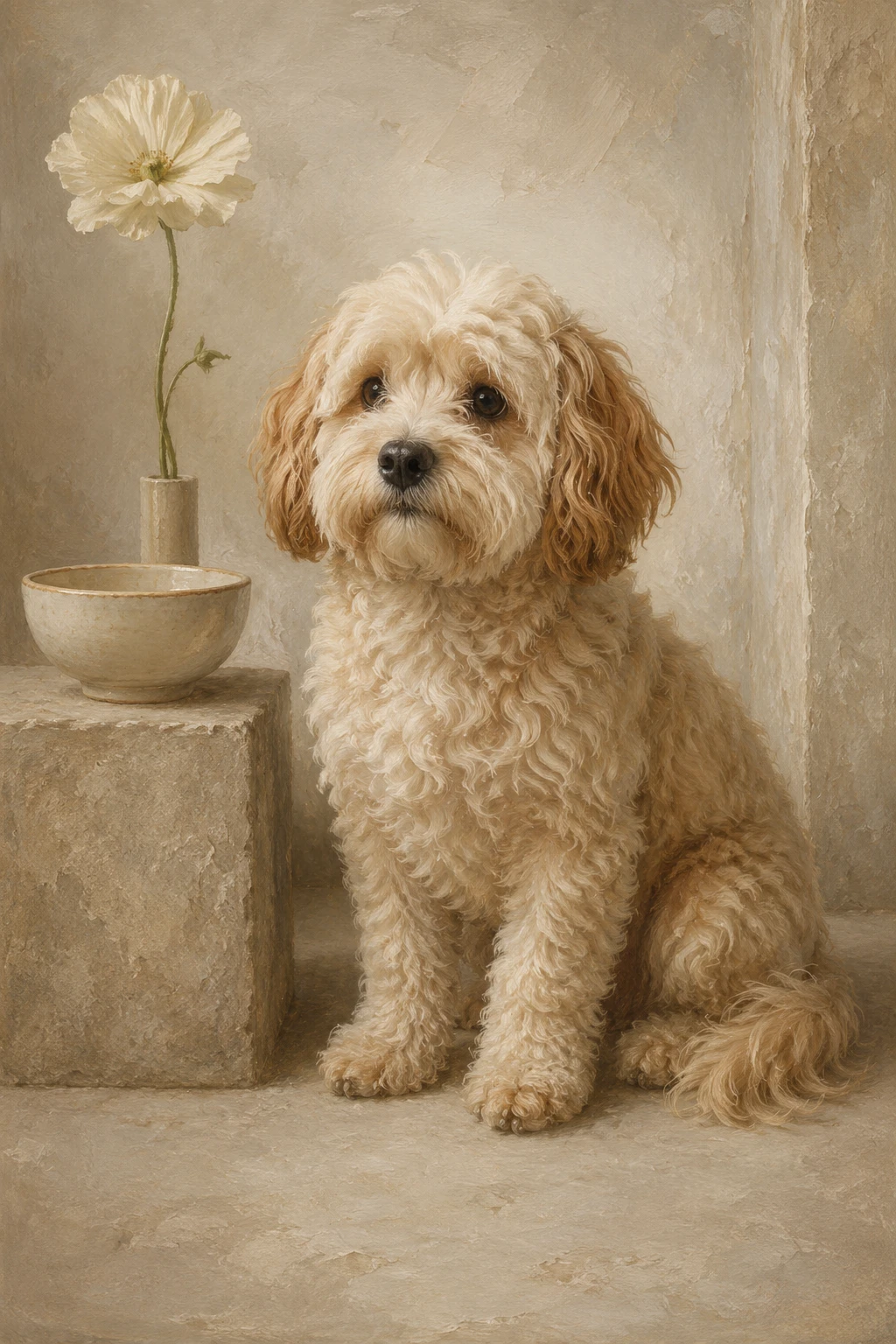
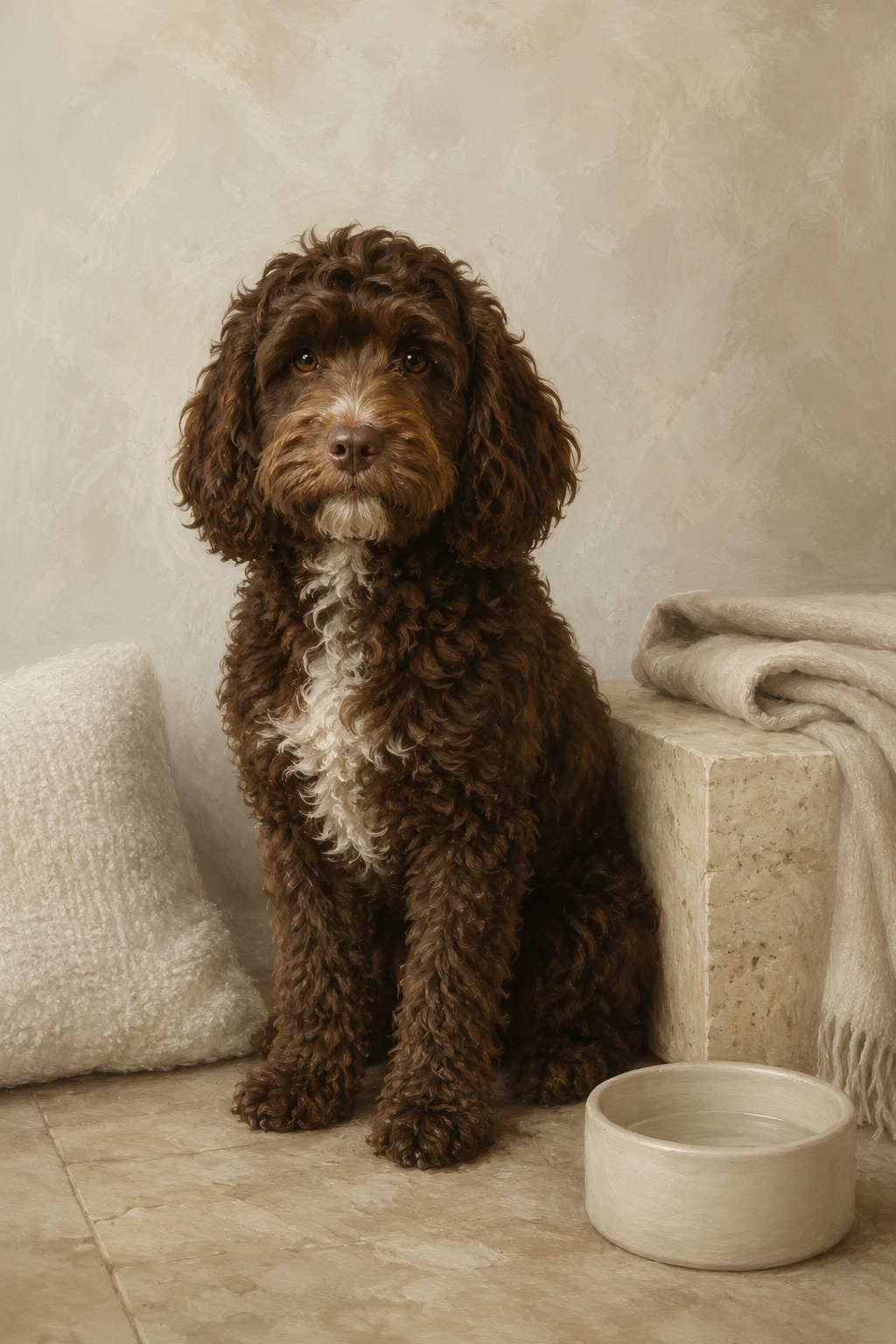
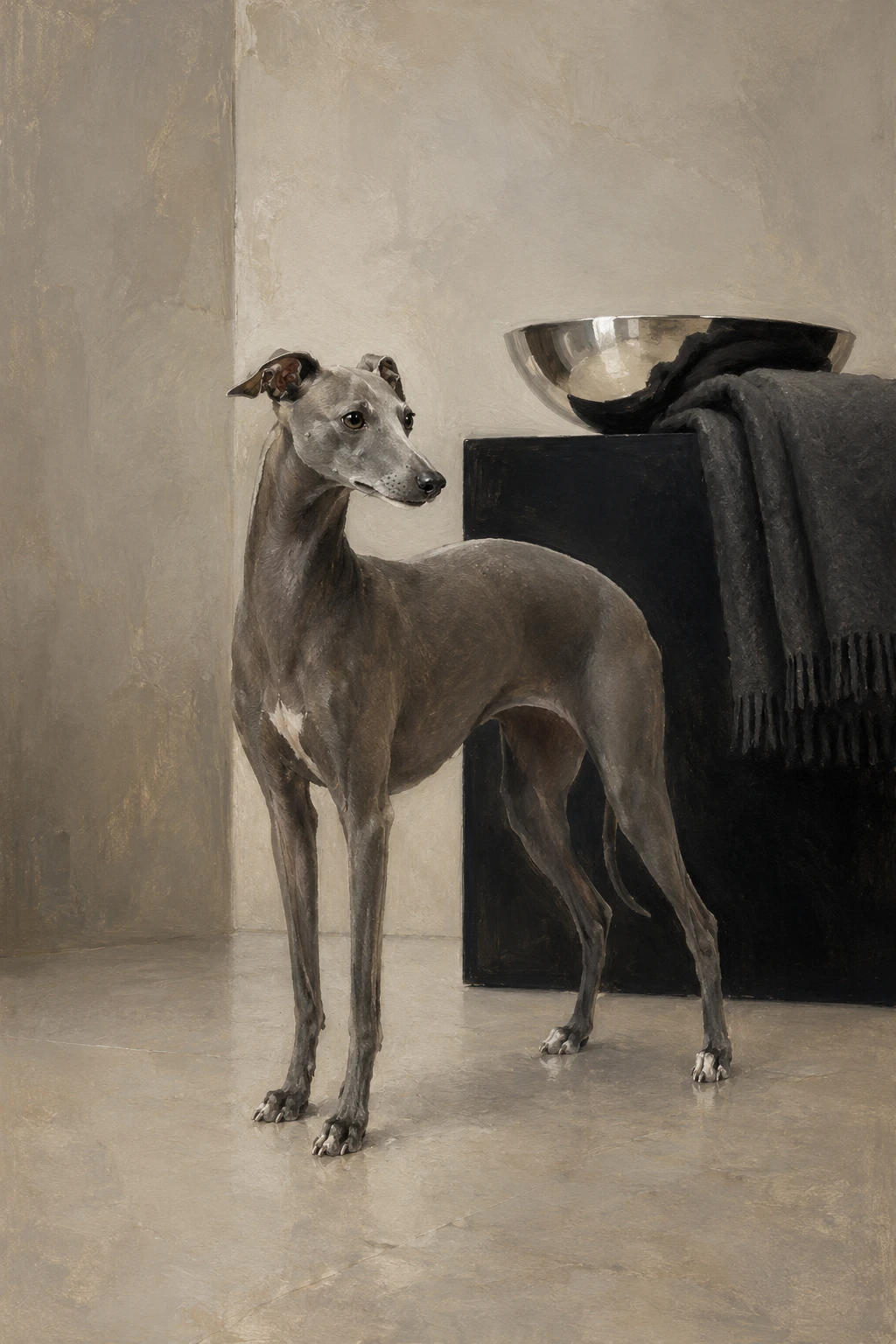
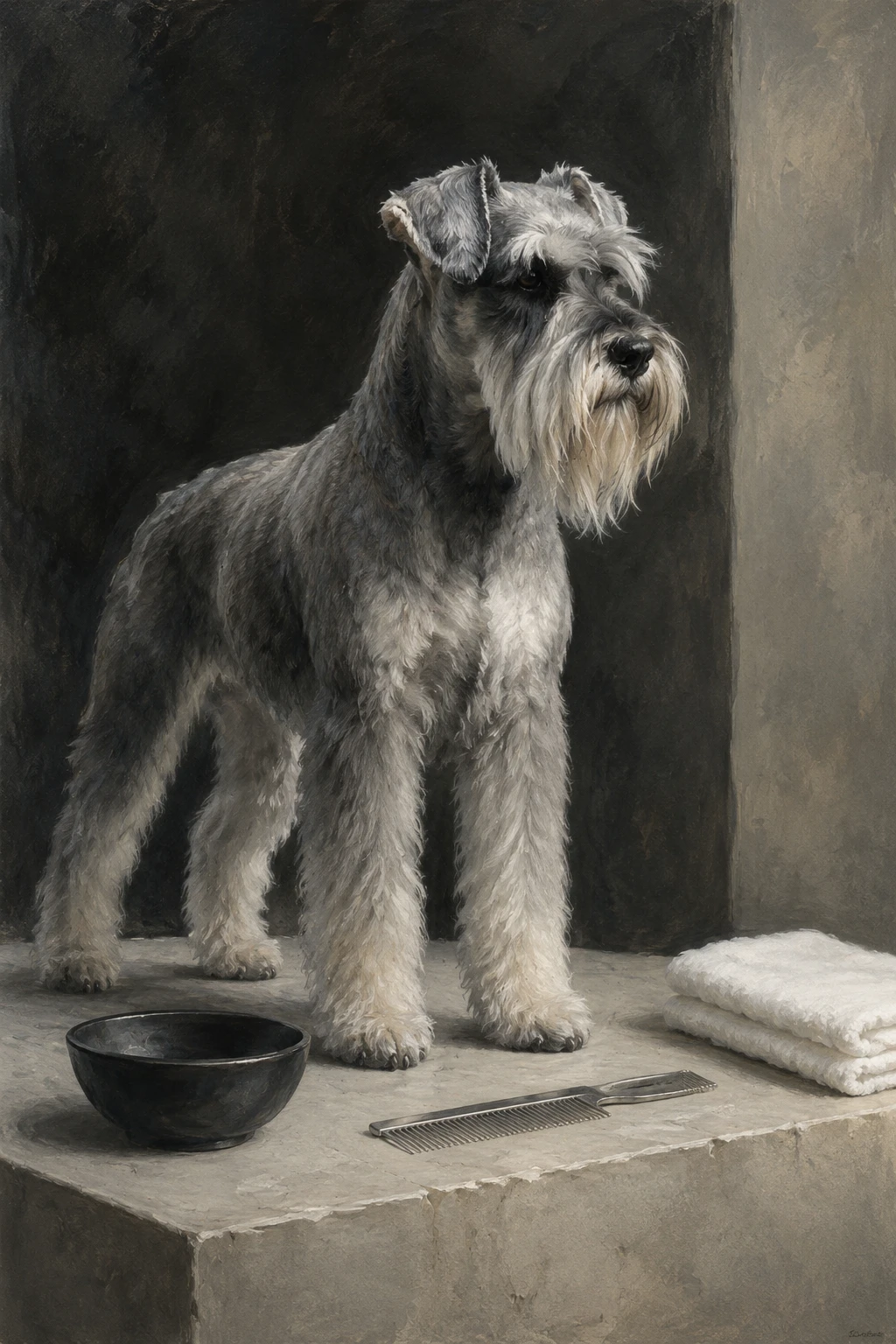
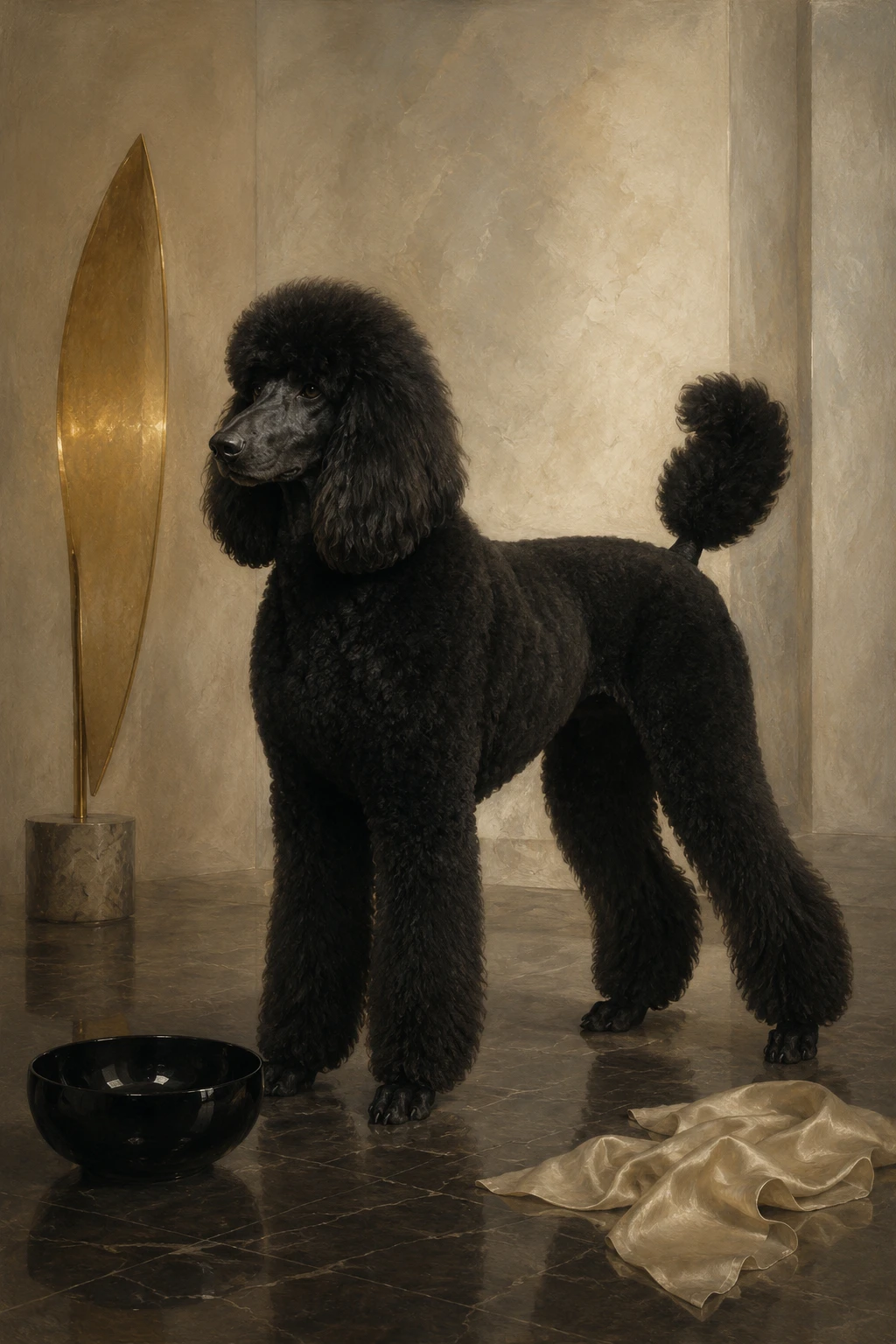
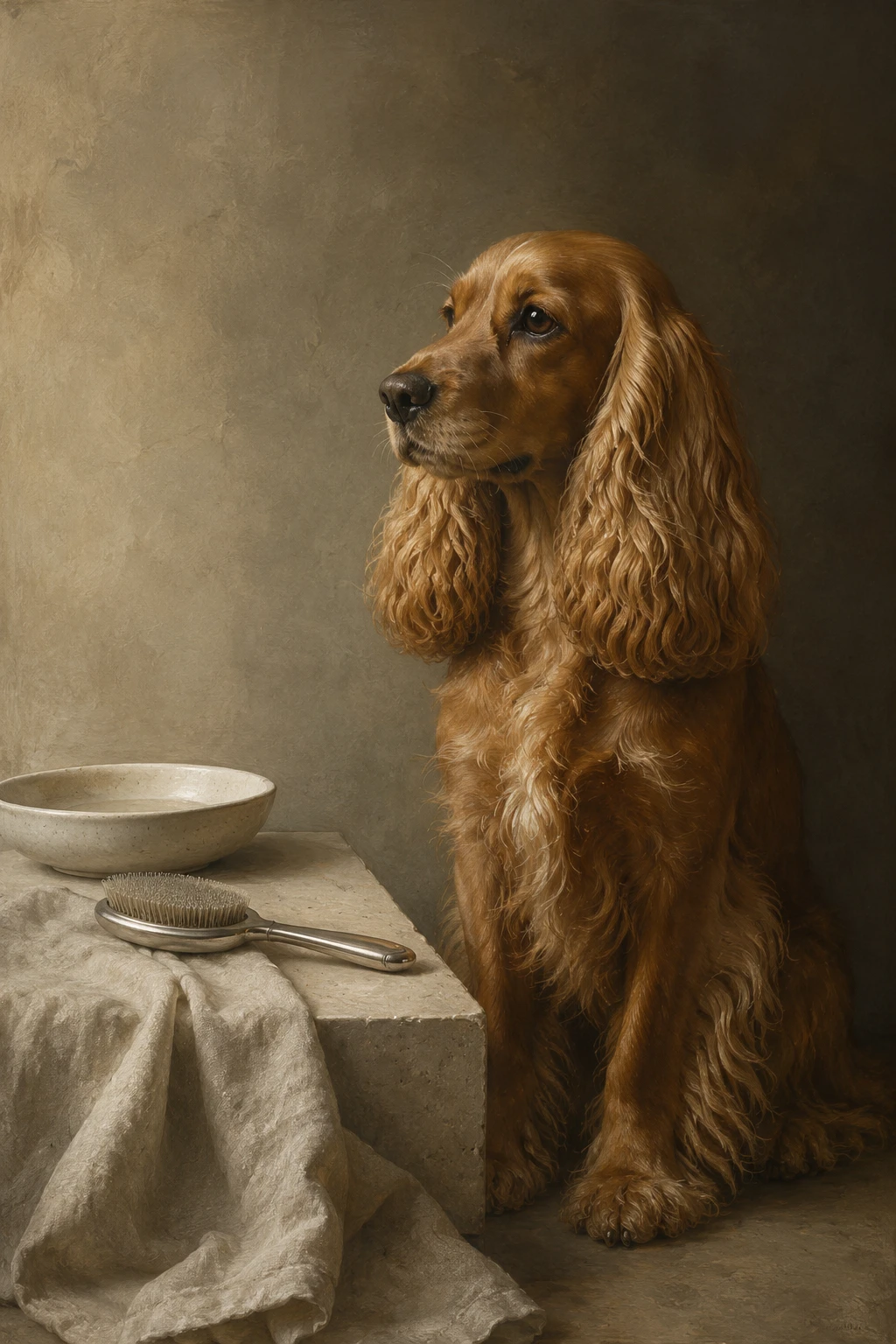
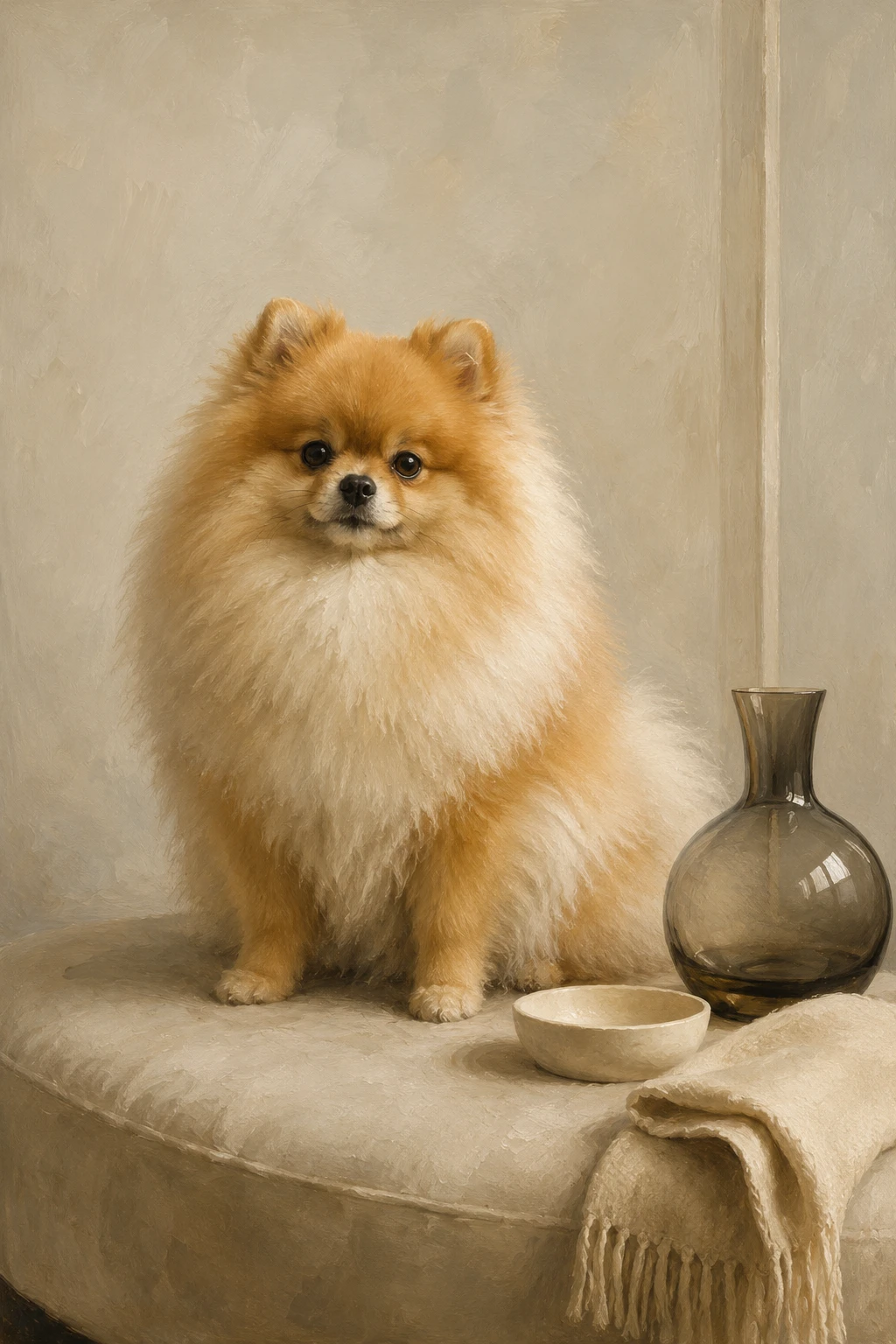
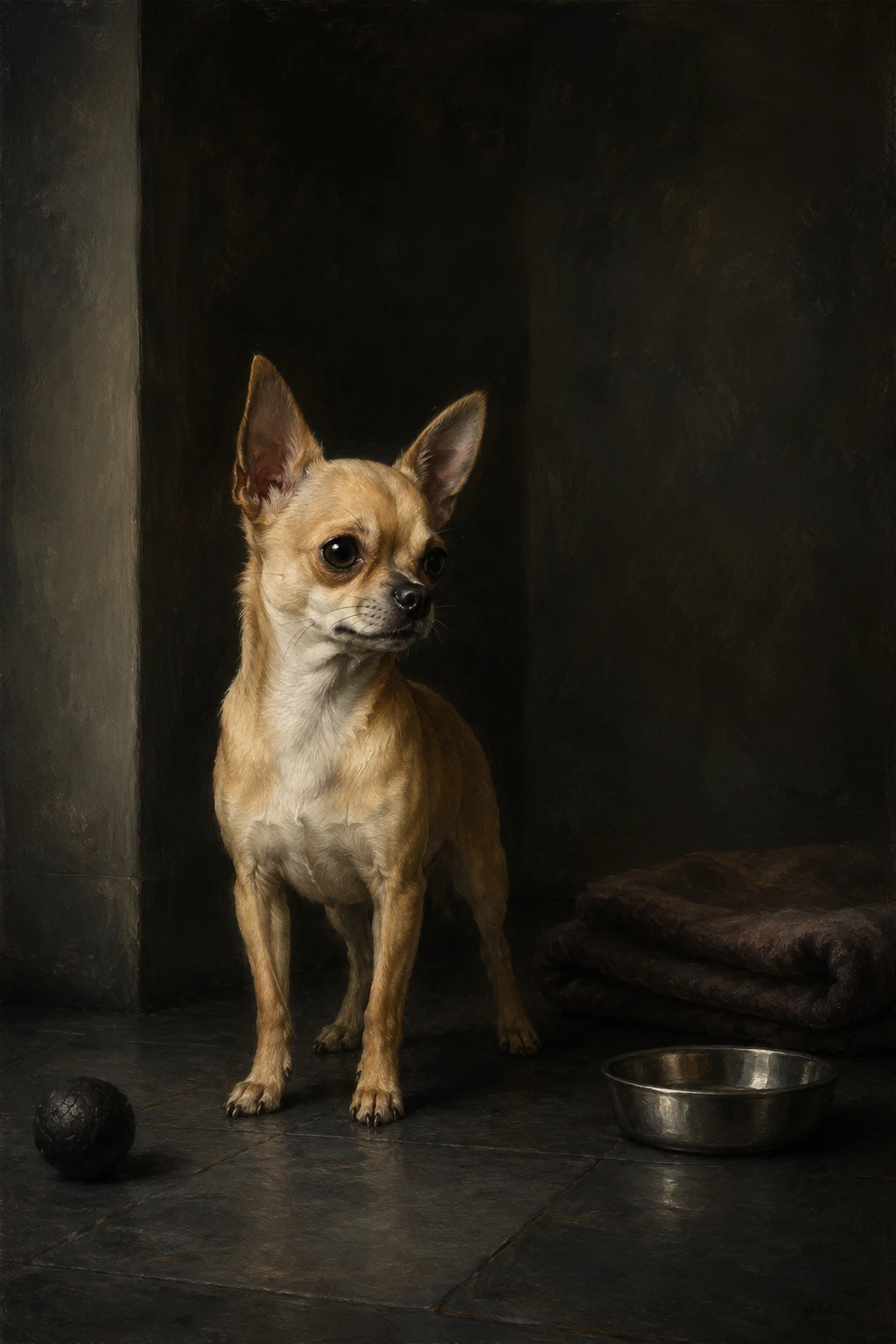
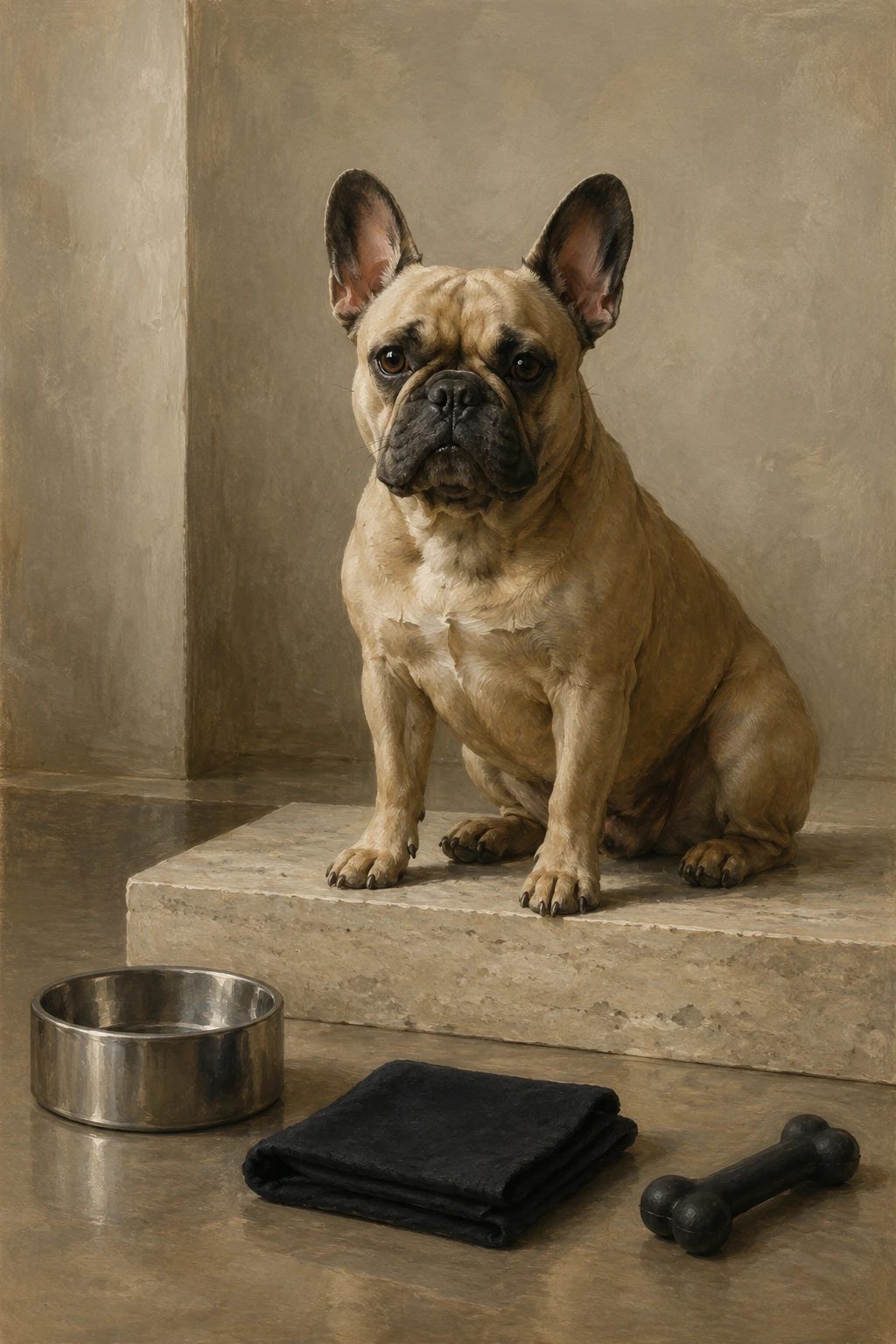
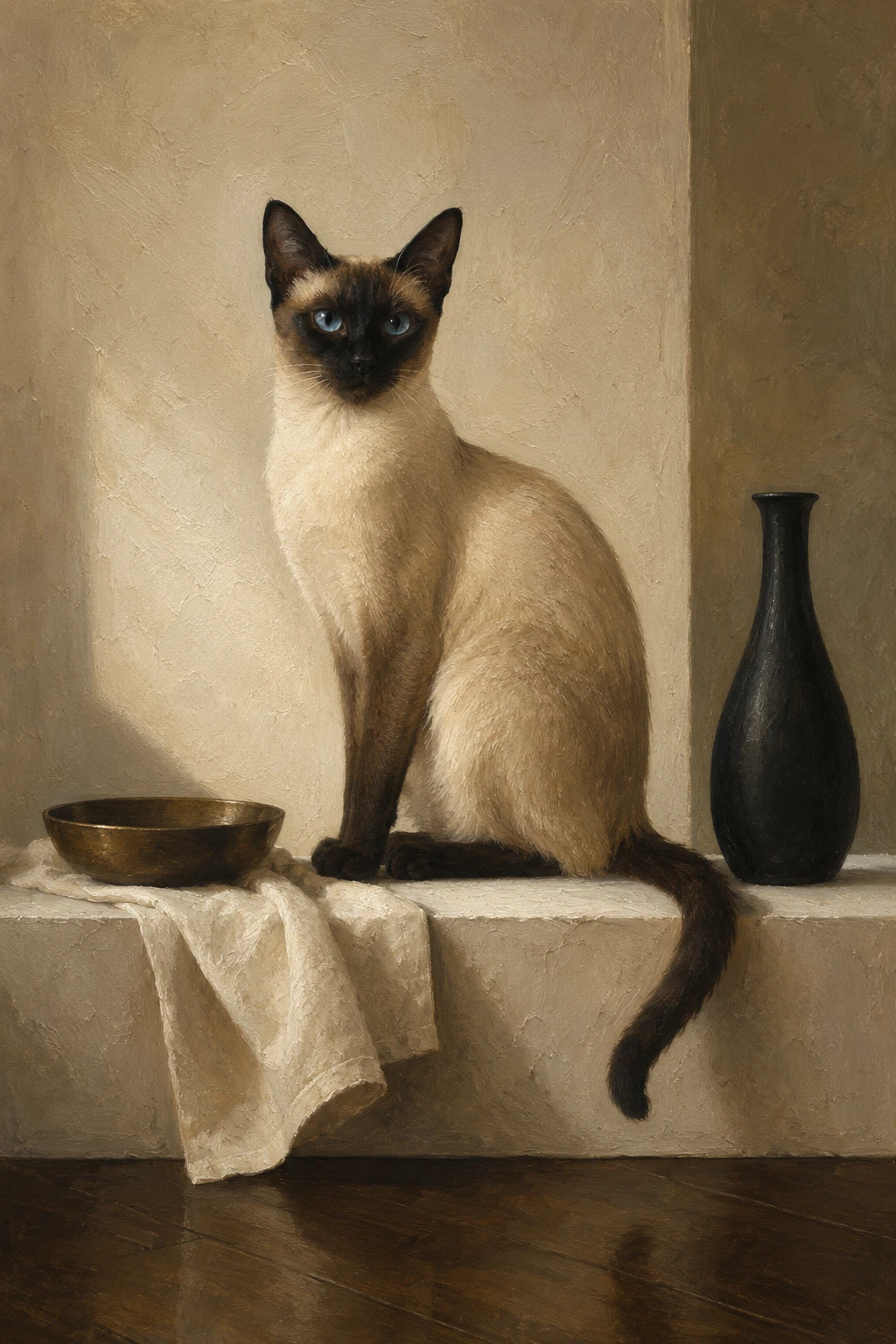
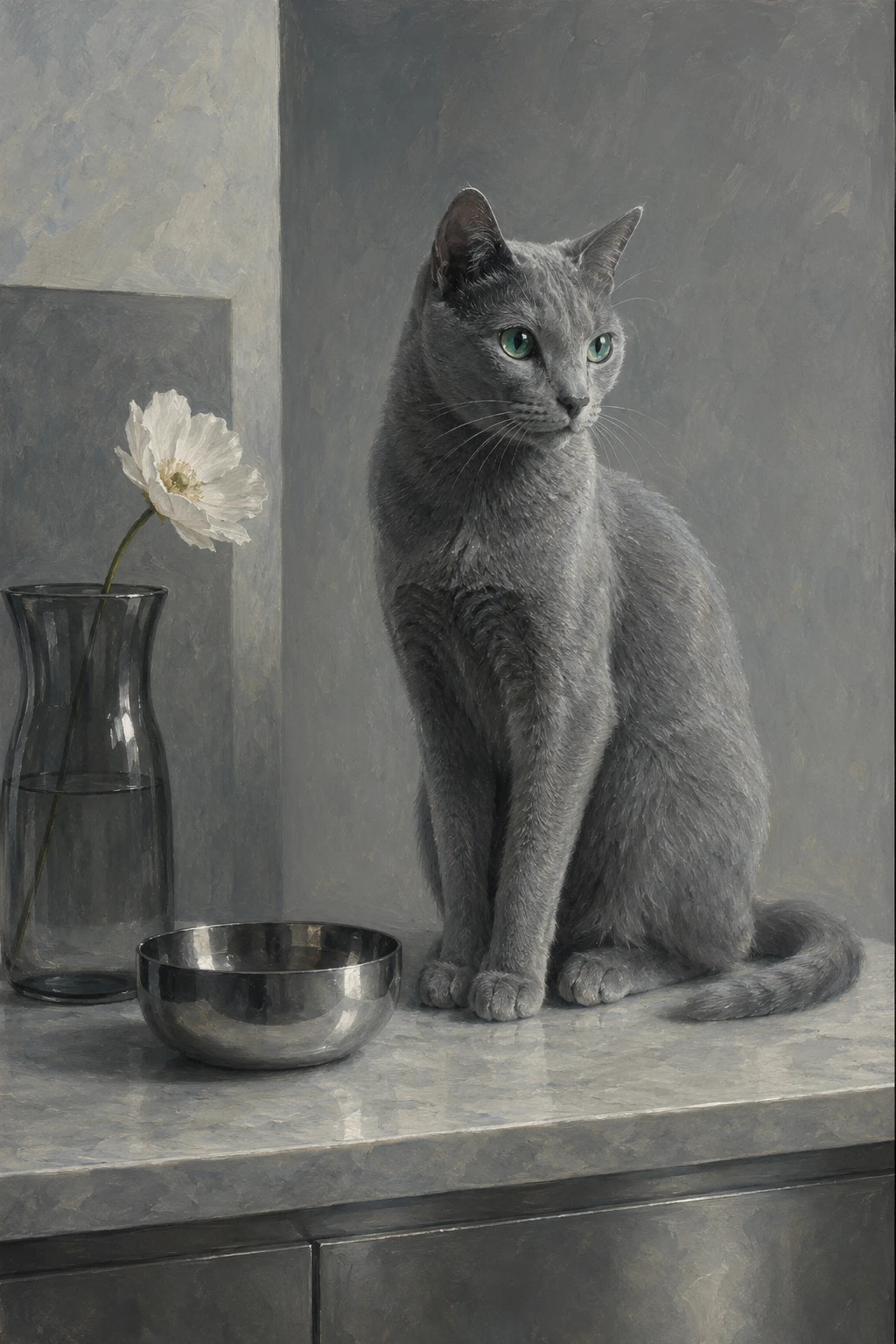
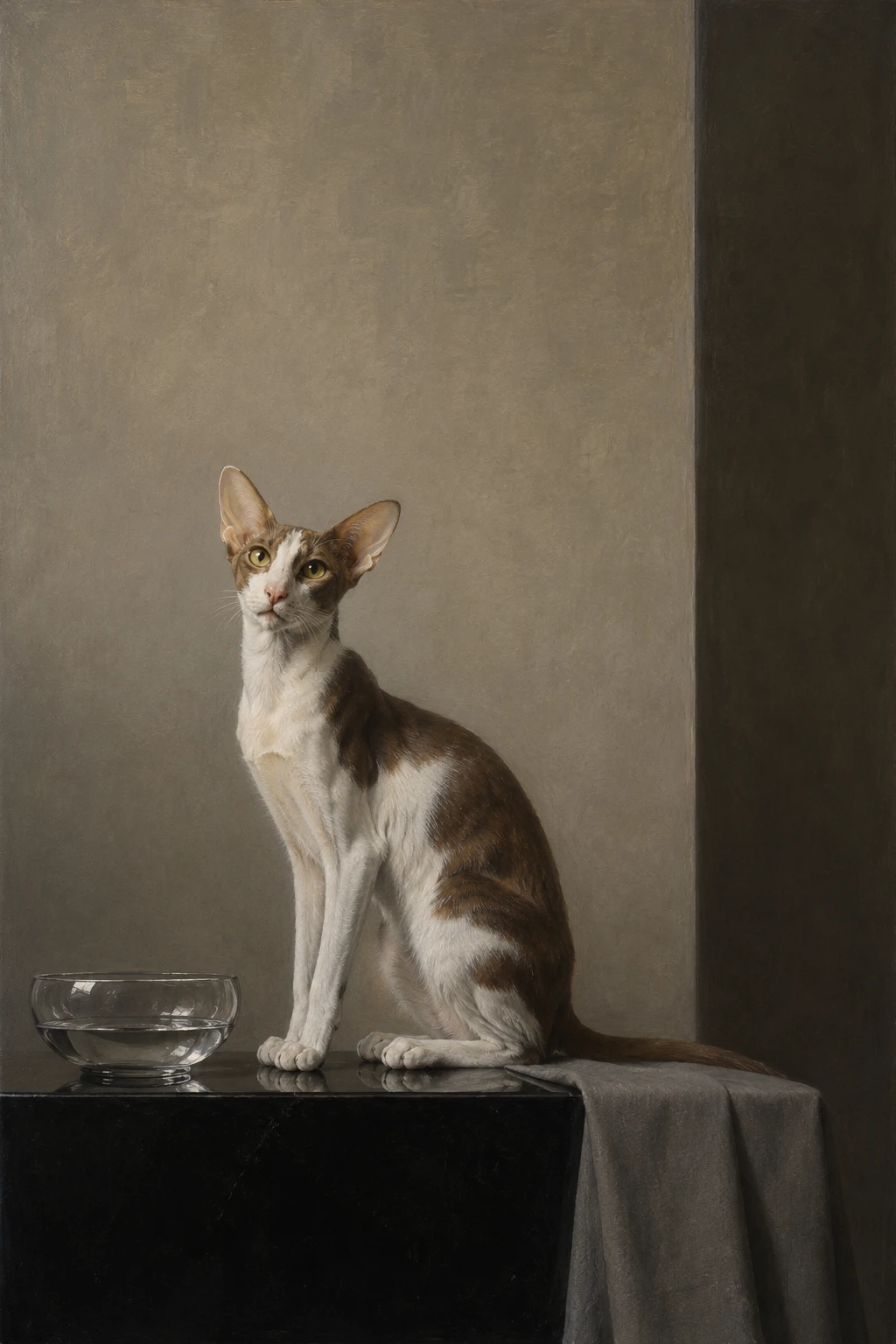
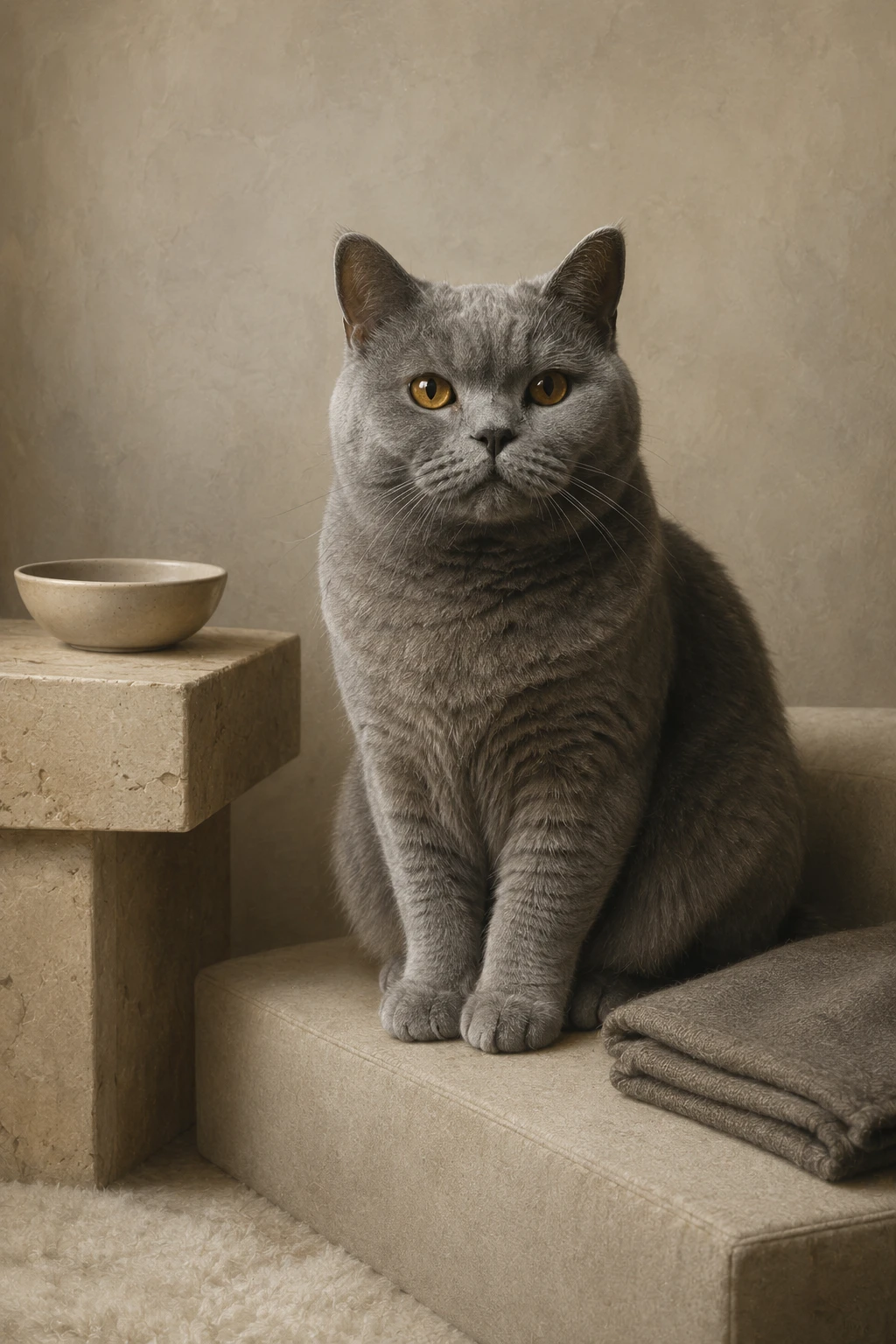
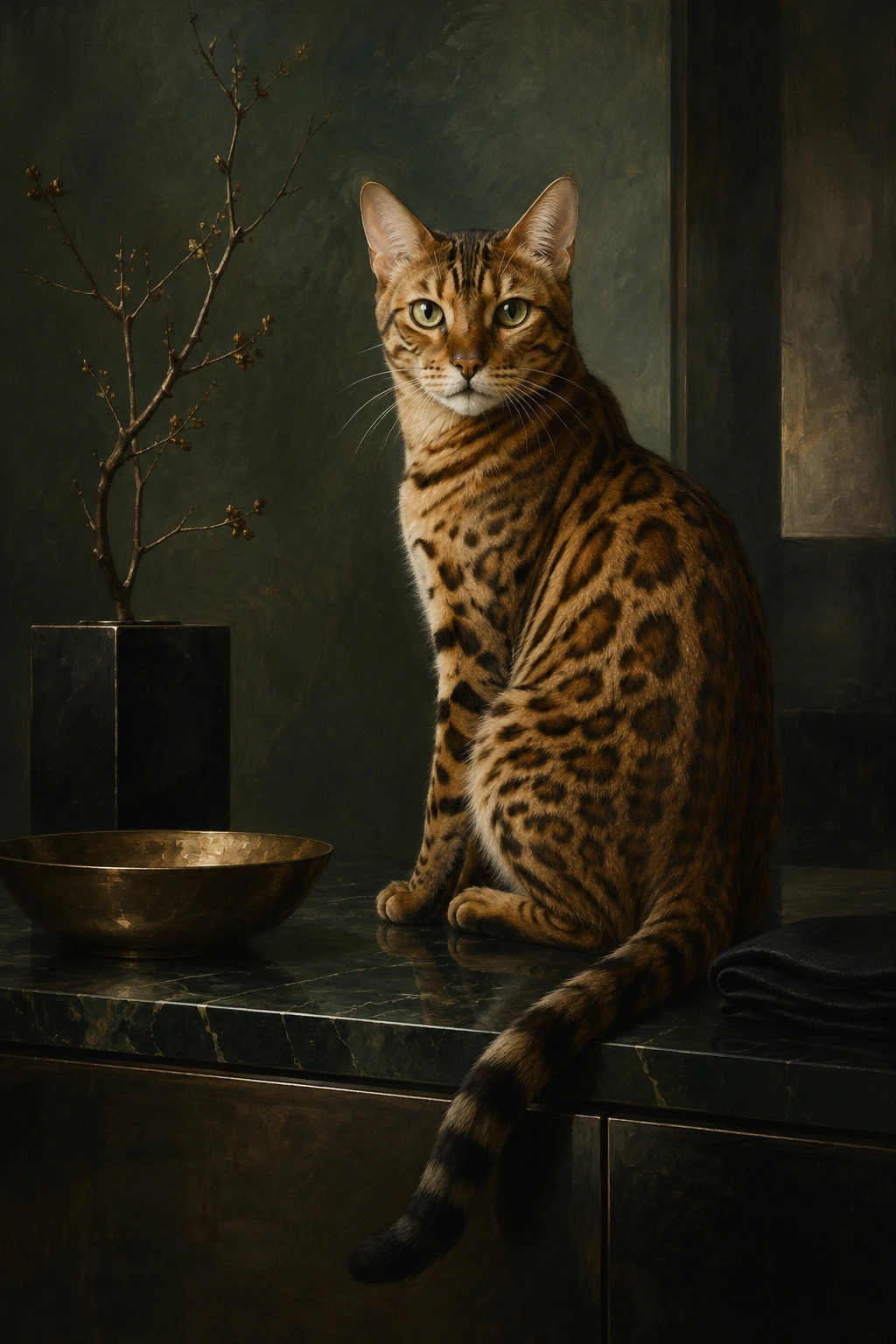
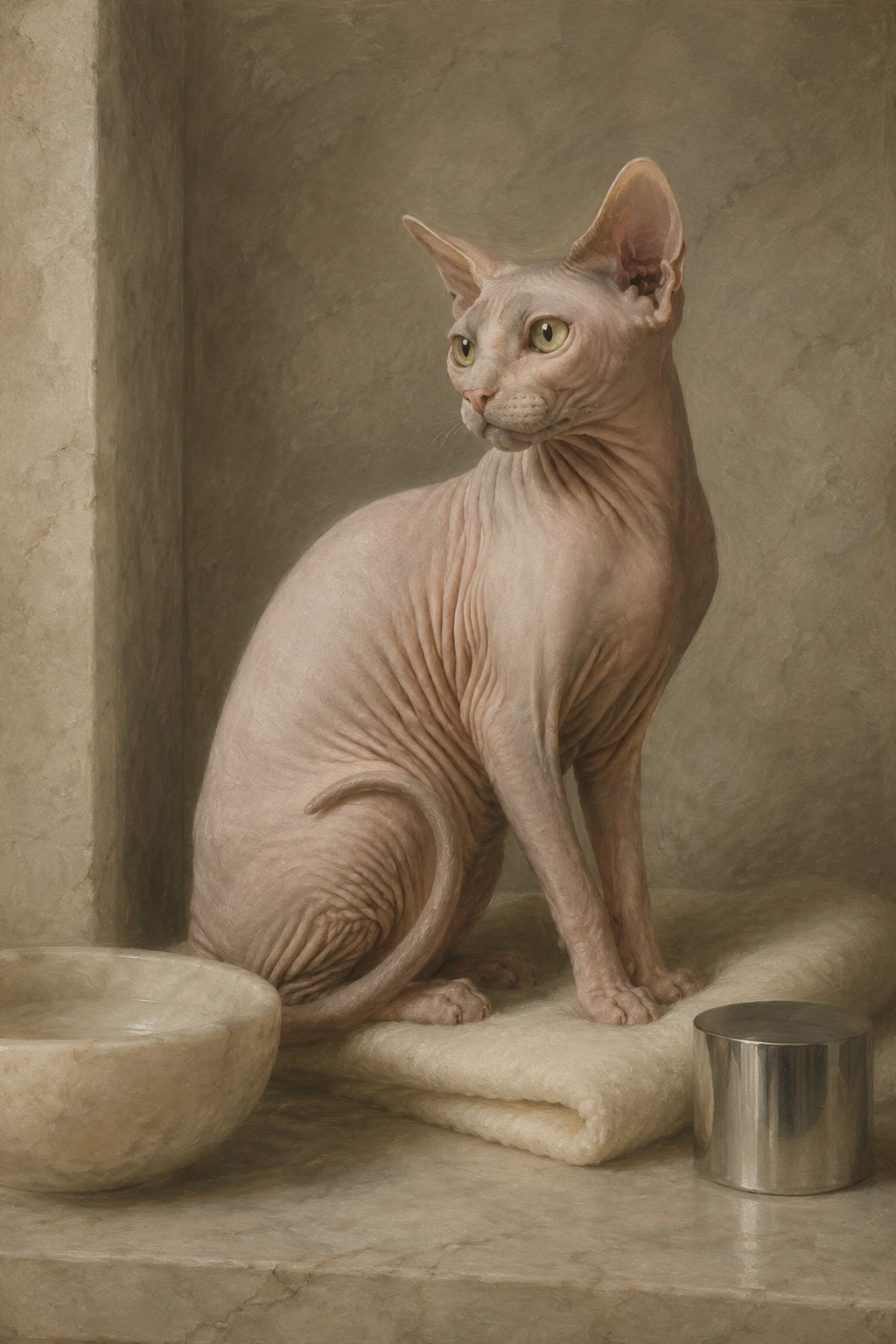
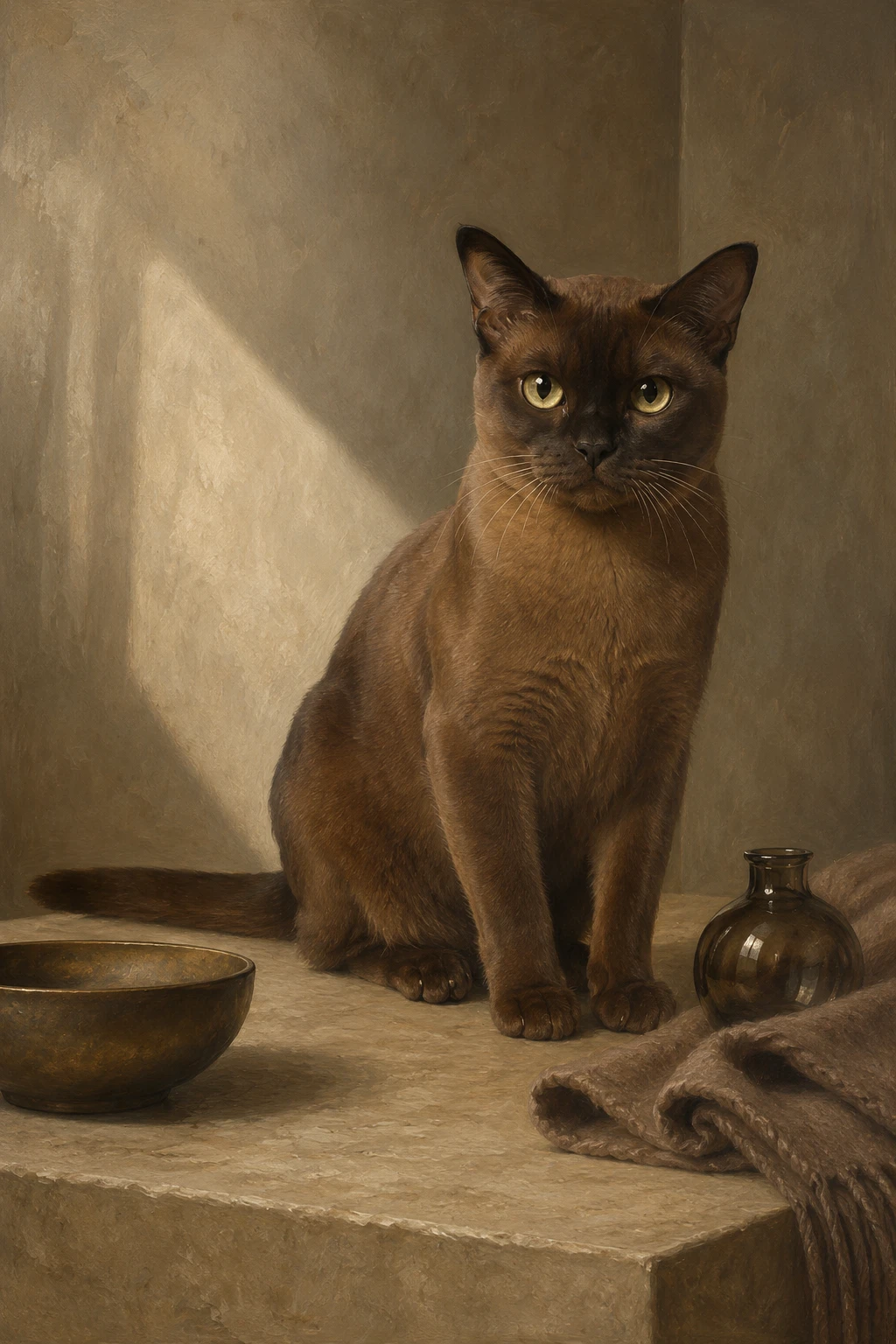
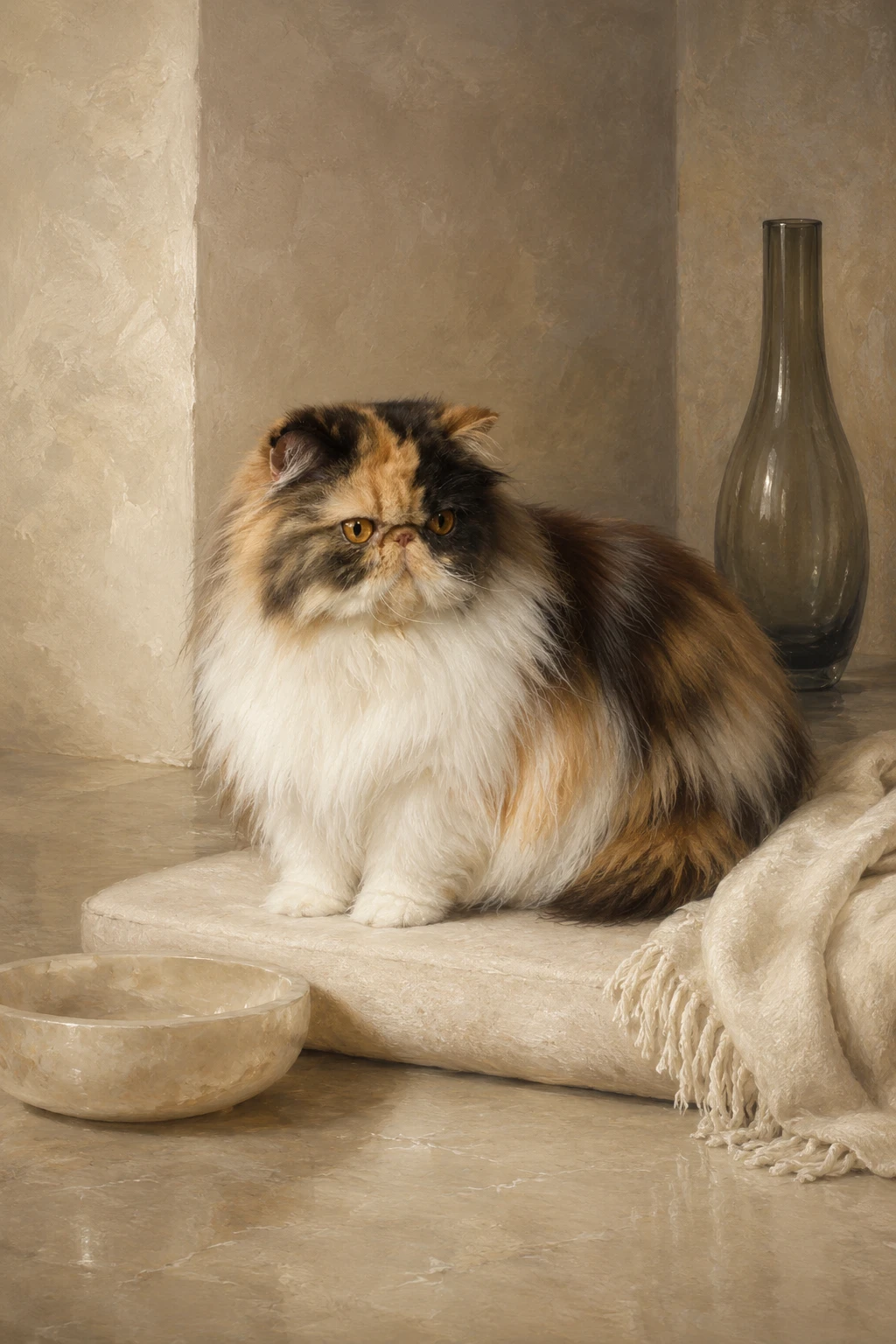
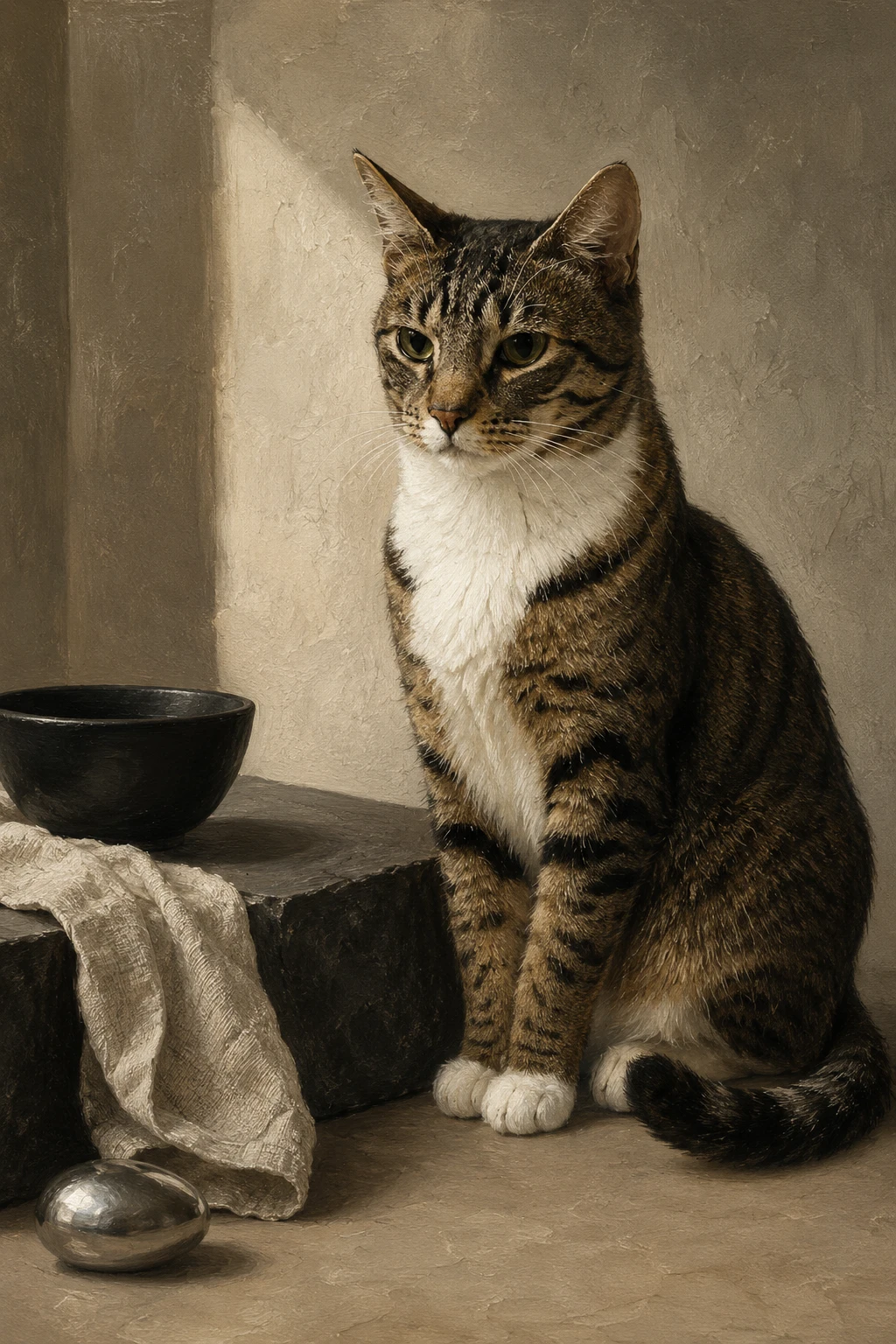
Chouchou began with animals, but not exactly with pets. The title is affectionate — a French term of endearment for a favourite person, object or companion — yet the images refuse simple cuteness. Dogs and cats are placed within restrained interiors of stone, plaster, cloth, glass and metal, where each animal becomes a composed presence rather than a domestic anecdote. The project looks back to the history of animal painting, especially George Stubbs, whose clarity, restraint and attention to bodily form offered a useful model. Frans Snyders remains somewhere in the background: abundant, excessive, brilliant at making the world overflow. For this series, however, excess had to be set aside. The animal needed space around it. Minimalism became a kind of discipline.
The images borrow the atmosphere of oil painting without becoming paintings themselves. They are contemporary AI-generated works, made through a conversation-to-image process with ChatGPT rather than a conventional text-to-image workflow. That distinction matters because the images emerged through discussion, testing, revision, critique and adjustment, not from fixed prompts alone. The project moved gradually from photographic realism towards a painterly surface: softer edges, tonal depth, layered shadow, carefully modelled fur, and a sense that the animals and environments have been interpreted rather than recorded. Reference images were consulted to stabilise anatomy, coat, breed identity and proportion, but no individual source image was copied. The result is not a reproduction of painting, but a series of synthetic images that use painterly intelligence as a language.
A painting by Stubbs or Snyders belongs to a world of drawing, anatomy, patronage, studio time, material preparation and slow physical execution. Chouchou was made differently: not by building an image mark by mark, but through research, prompting, selection, rejection, revision, sequencing and judgement. Generative AI can produce an image quickly, but speed does not erase authorship; it relocates it. These animals are not presented as trophies or status symbols in the old sense; they are closer to curated companions, folded into taste, grooming, interiors and lifestyle. A Cavapoo, an Italian Greyhound, a Russian Blue, a Bengal or a Shorthair Tabby carries not only species and breed, but social meaning, fashion, posture and temperament. These works are not asking to be mistaken for paintings, or to compete with eighteenth-century craft on its own terms. They ask what happens when the atmosphere of painting is produced through conversation, computation and taste.
Gallery
"Dogs want only love but cats demand worship." — L. M. Montgomery