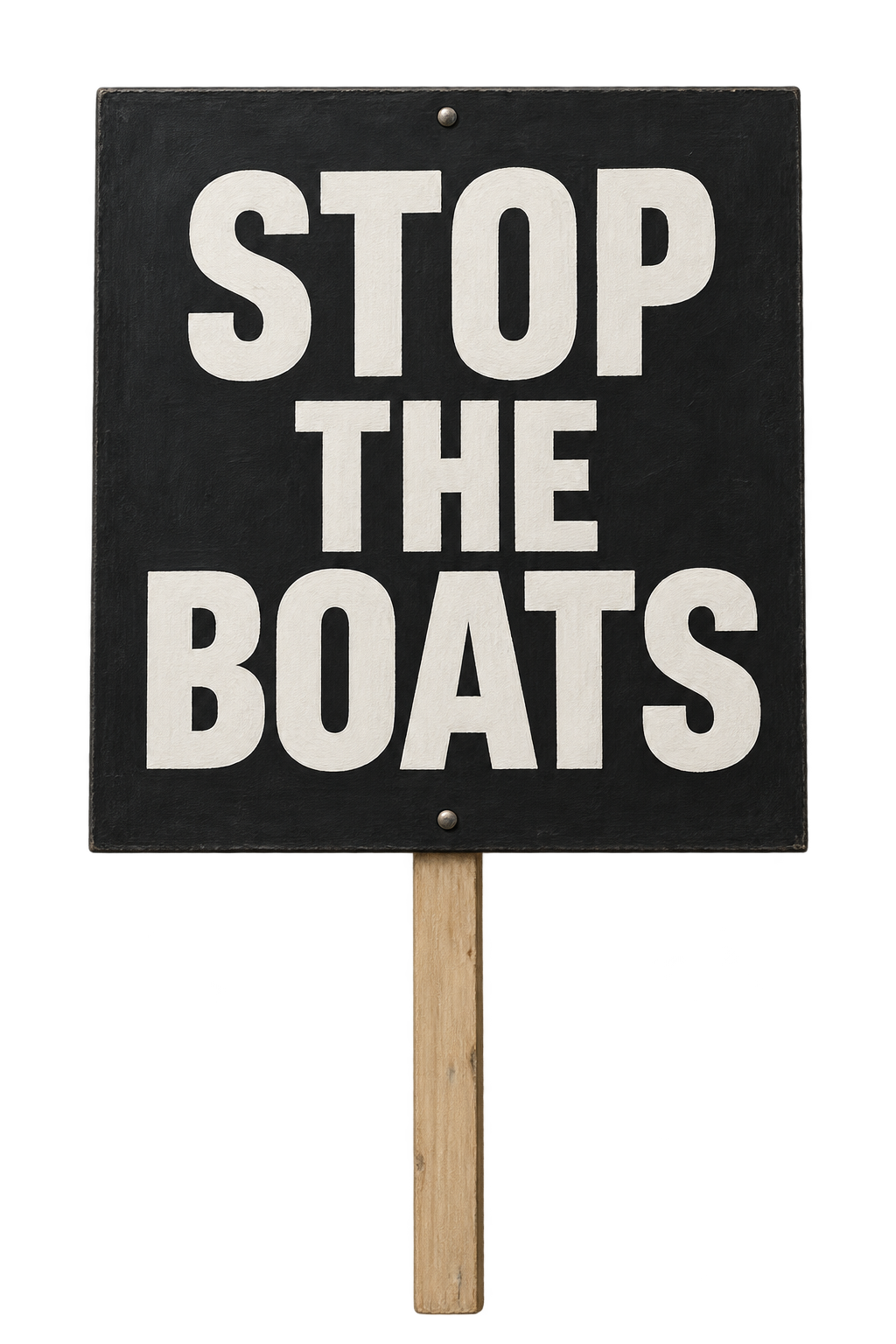
Covered: the face disappears, the body remains
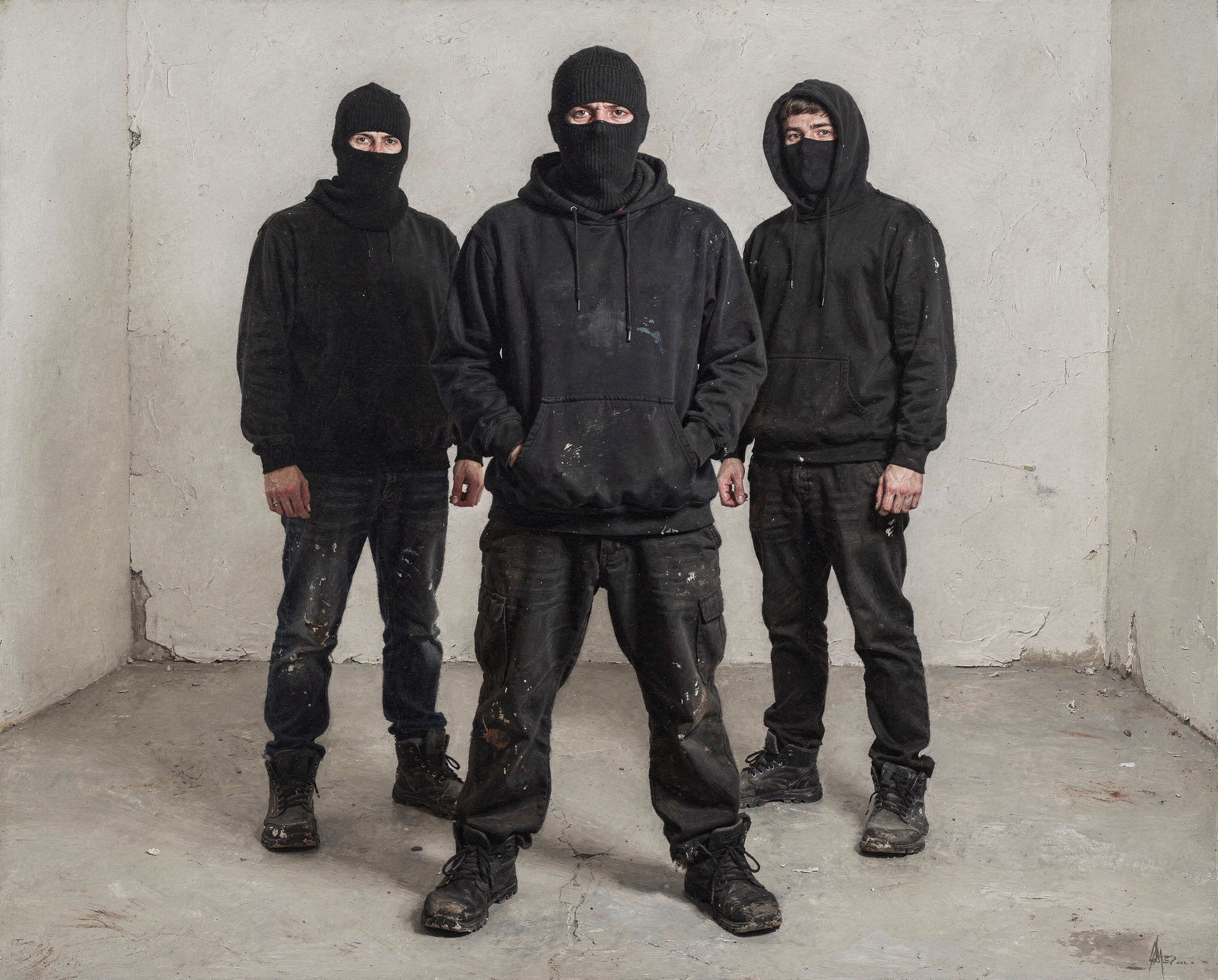
This project was inspired by the anti-migration protest at Dover on 5 September 2026, when a large, almost exclusively male group associated with Patriot Platform and Daniel Thomas, known as Danny Tommo, blocked roads around the port. Most of the men wore black clothing and balaclavas, creating a visual language of anonymity, solidarity and intimidation that reappeared at later protests. The men arrived in organised waves, and Thomas has described his supporters as working-class men — bricklayers, roofers and carpenters. That description helped shape the fictional figures here: ordinary men in hoodies, sweatshirts, jeans, workwear, shorts, trainers and boots, their clothes worn and sometimes grubby rather than polished. The imagery from the Dover protests also recalled other histories of coordinated black dress, from black bloc protest tactics to the political uniforms of Oswald Mosley's Blackshirts, without suggesting equivalence.
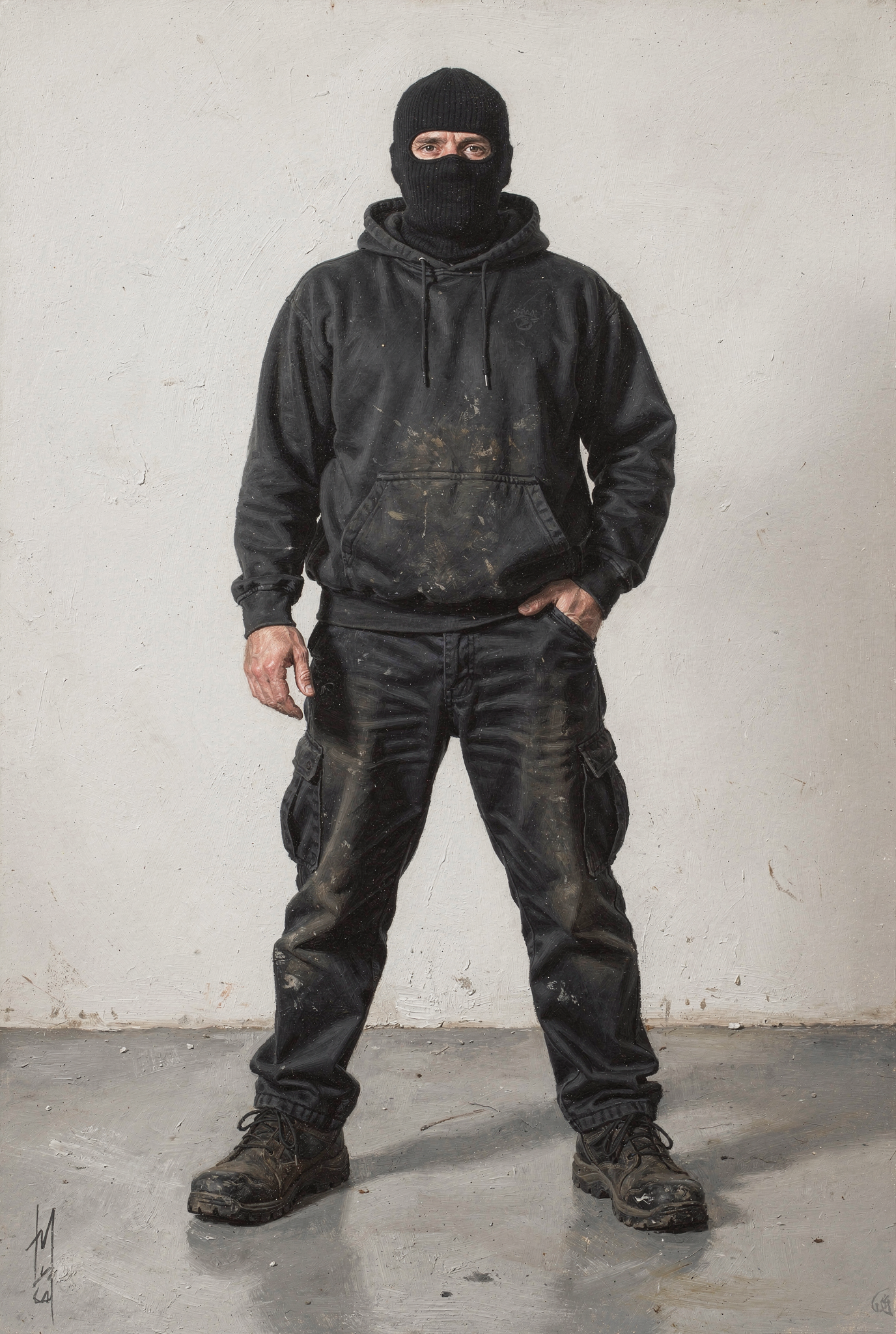
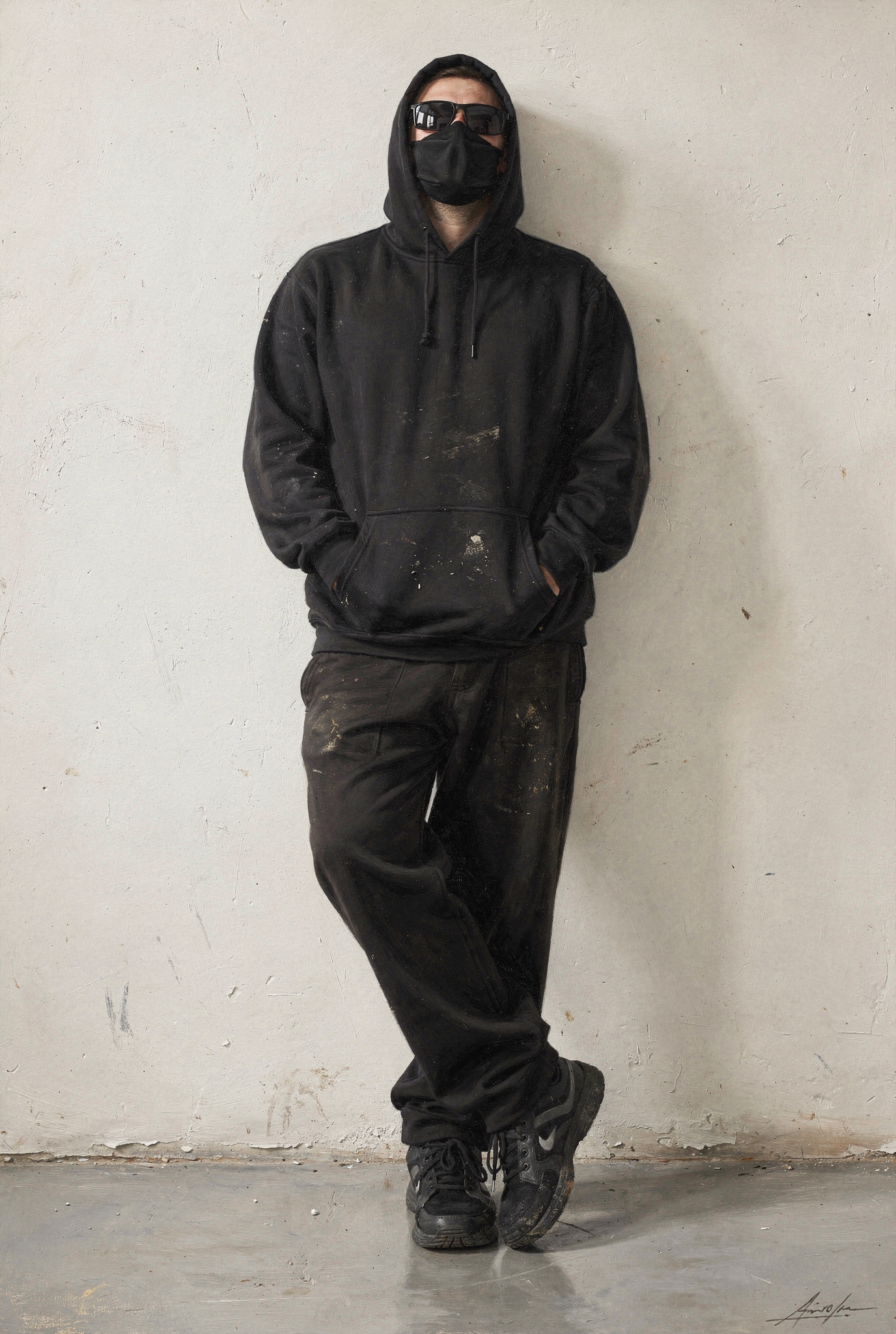
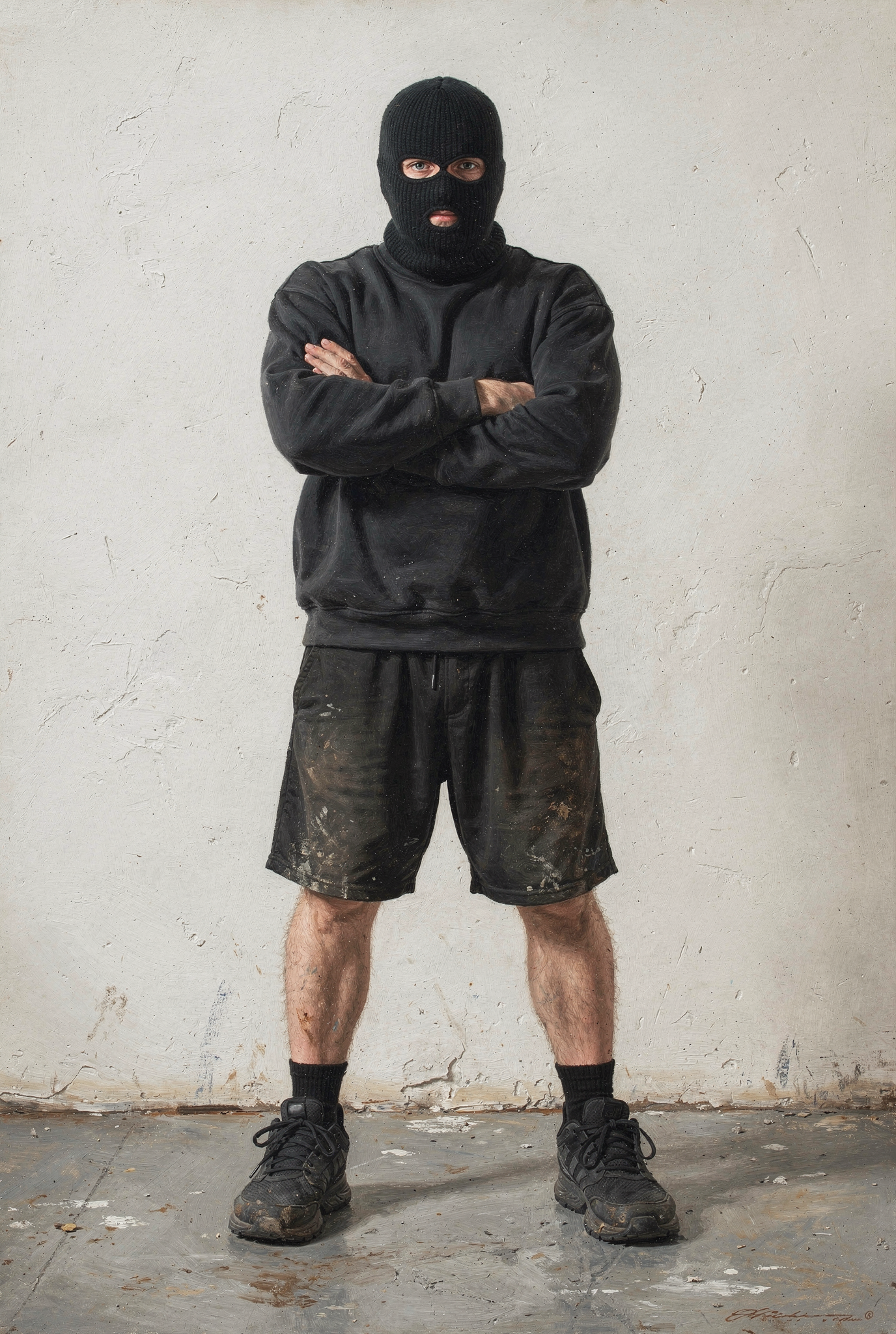
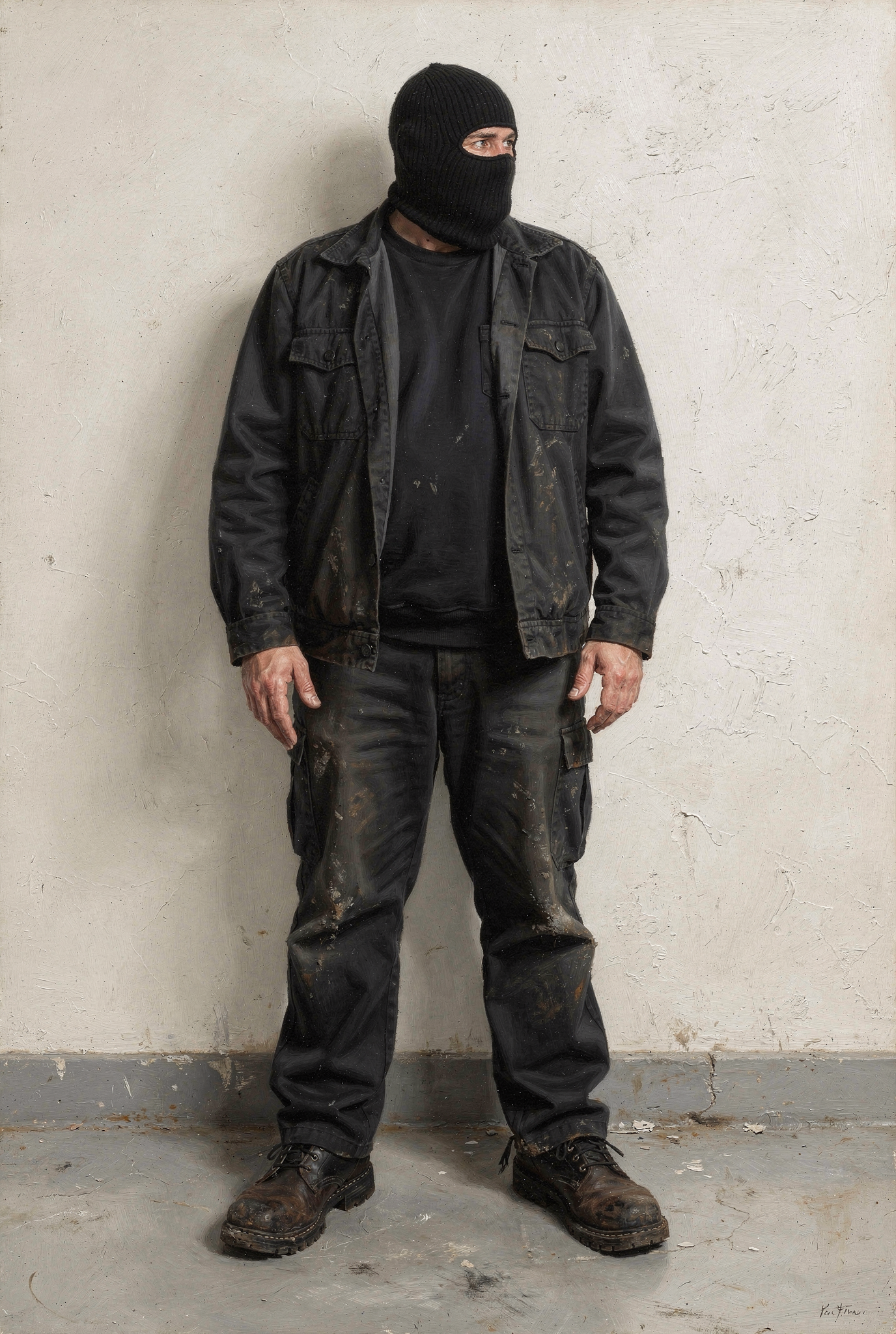
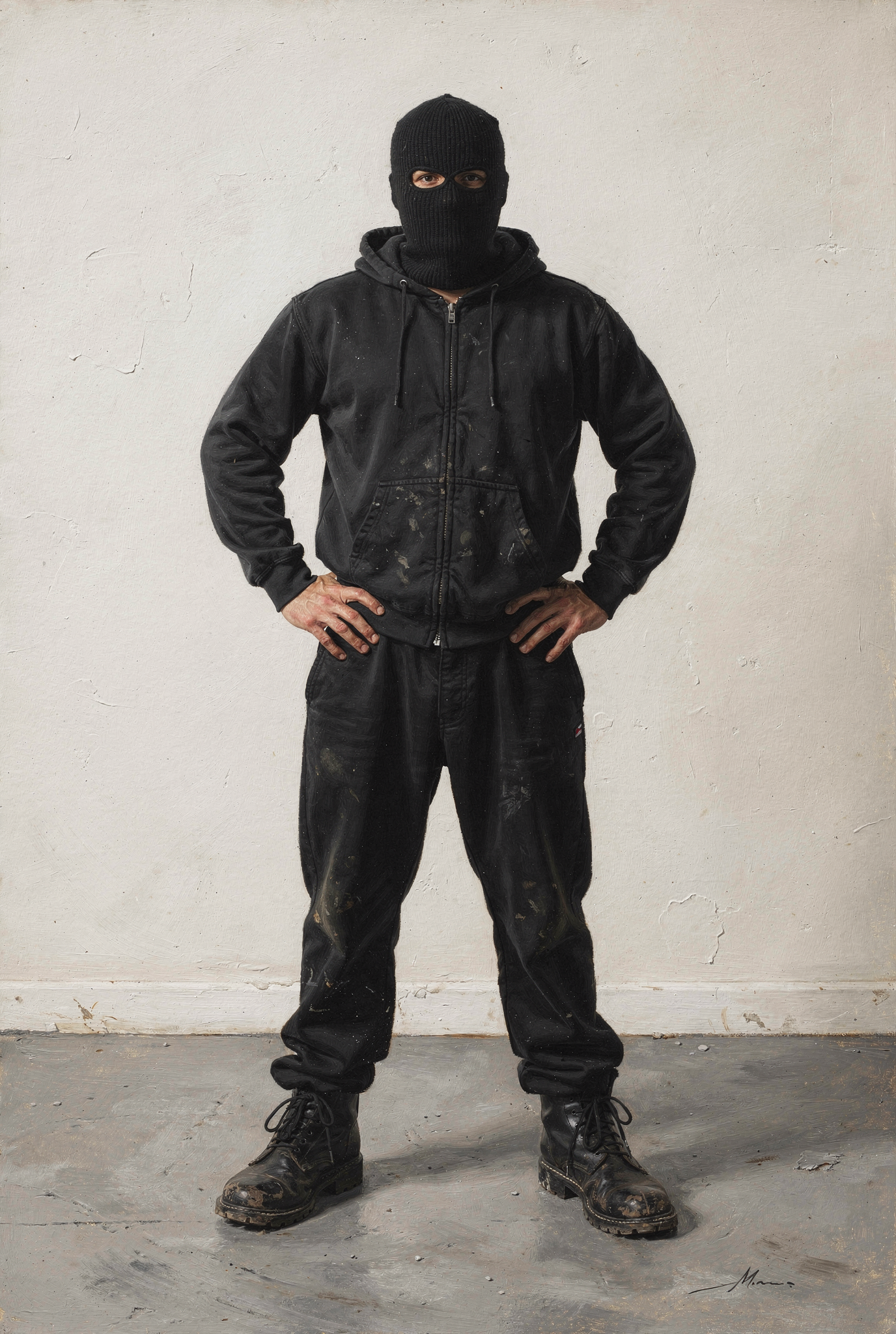
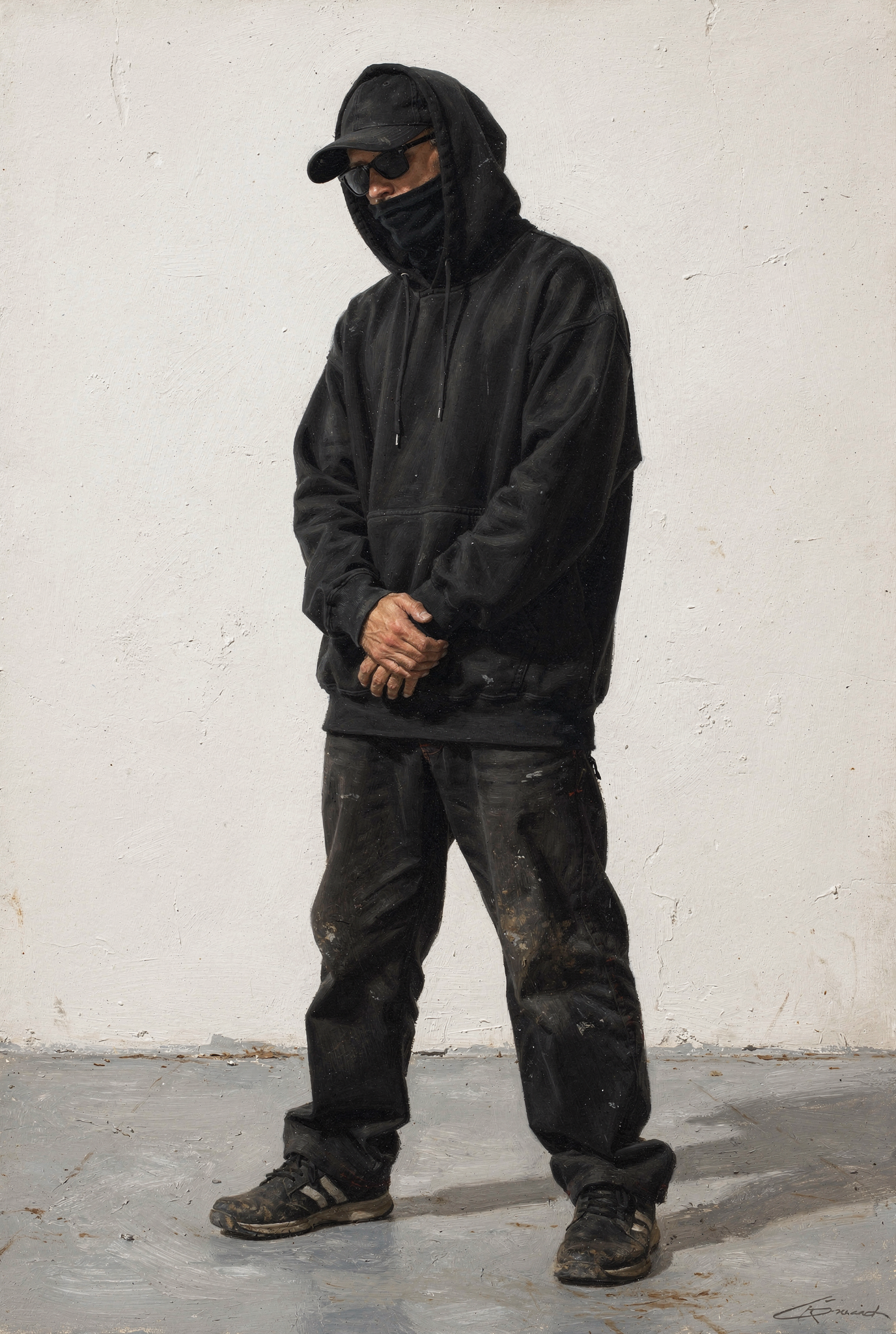
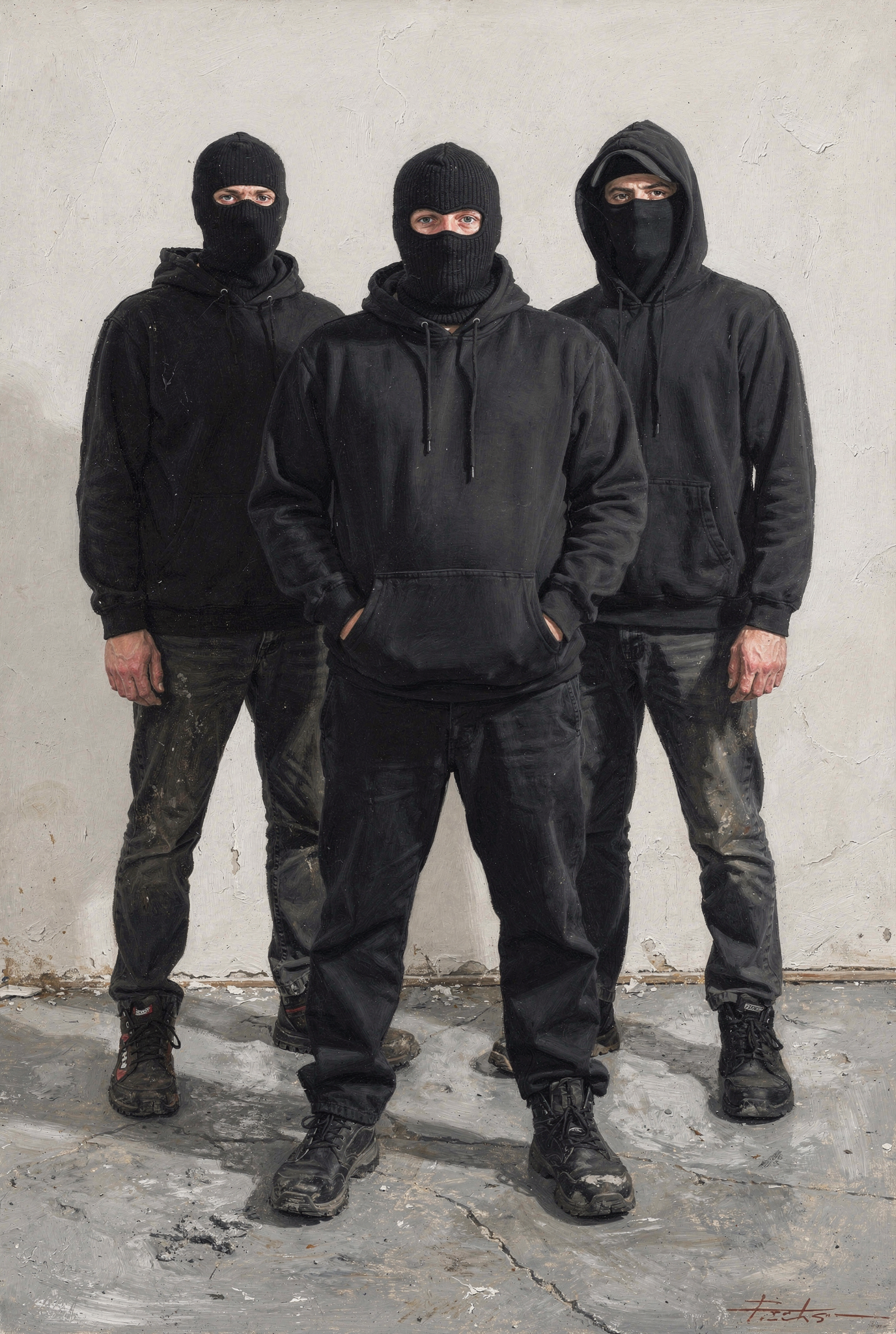
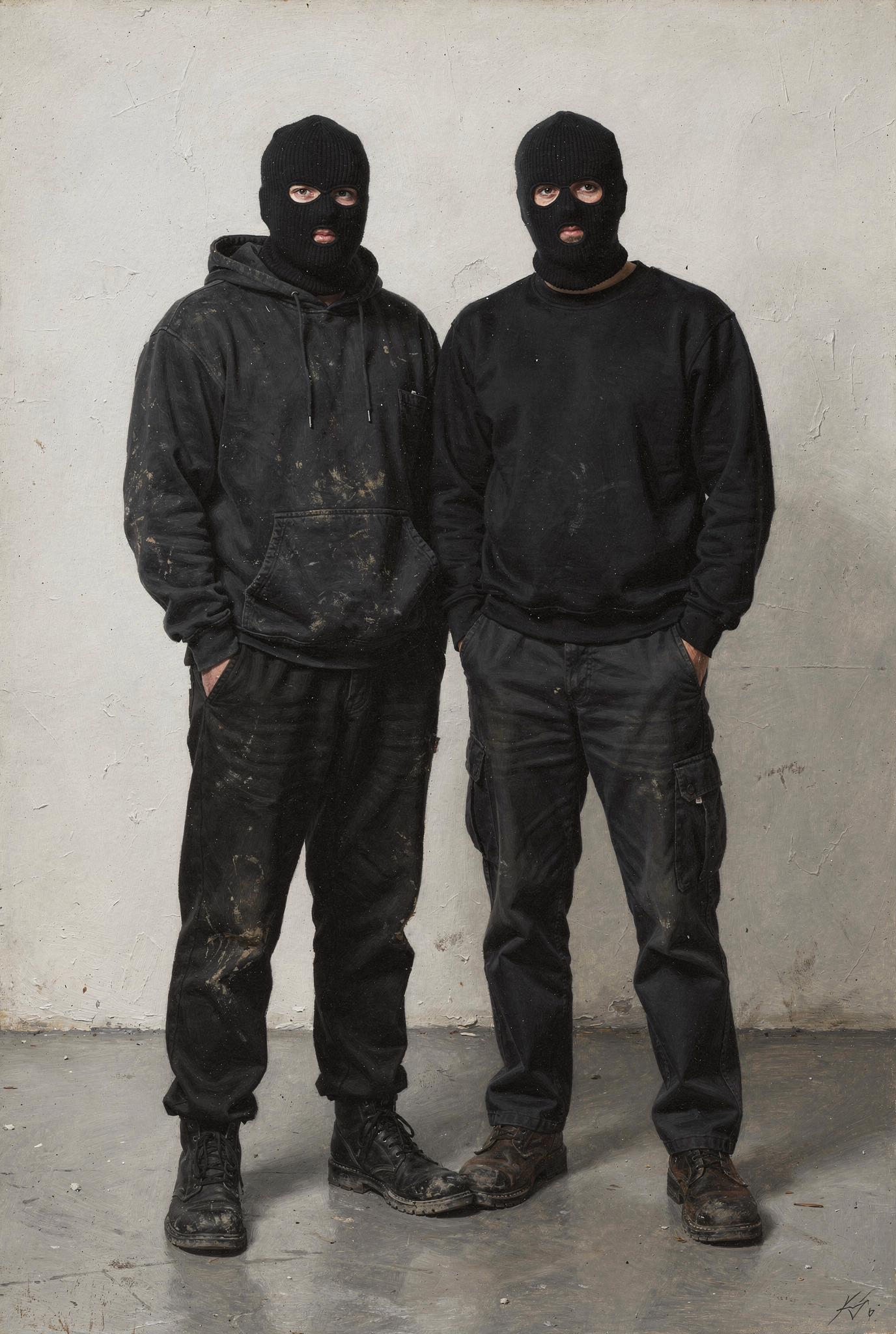
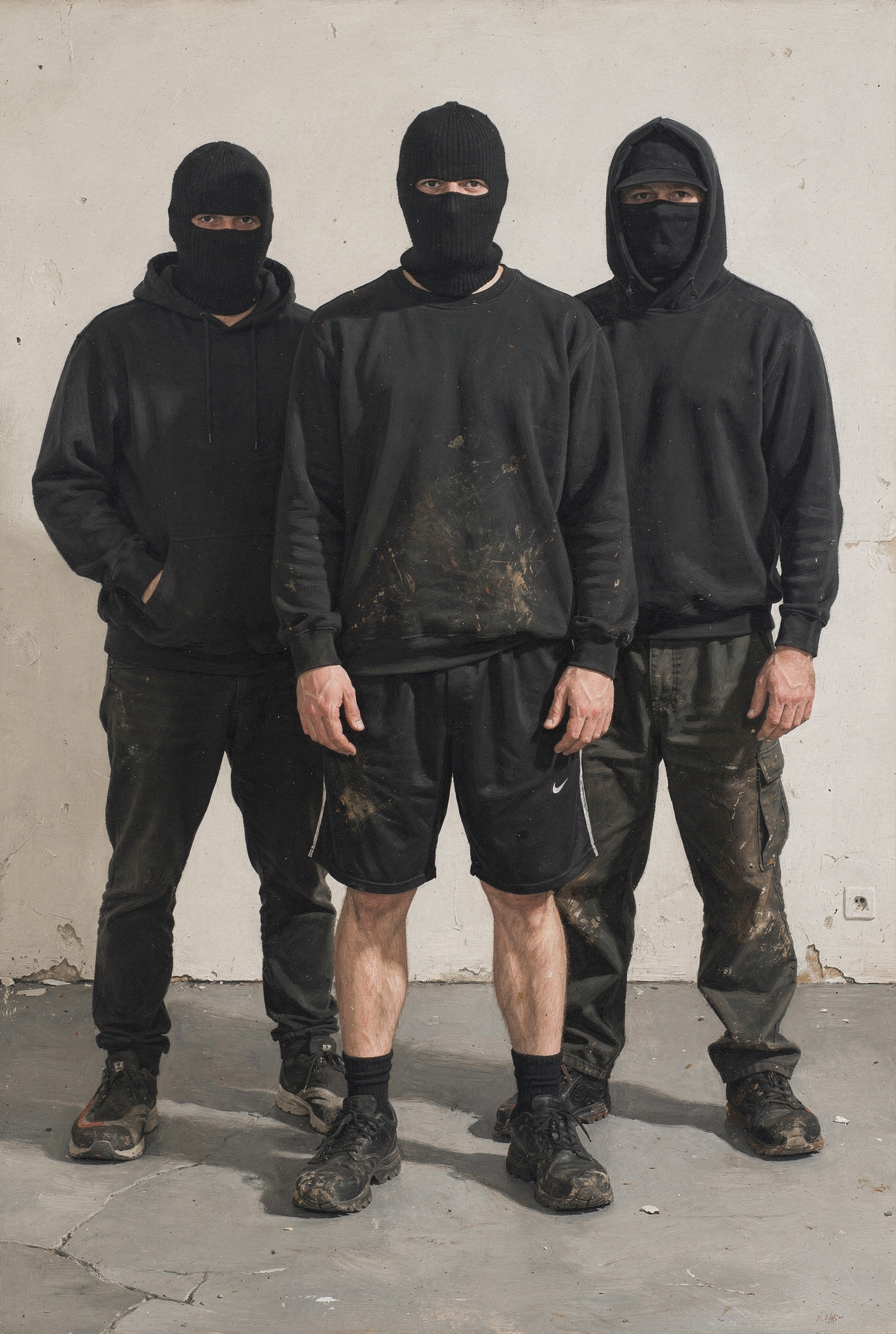
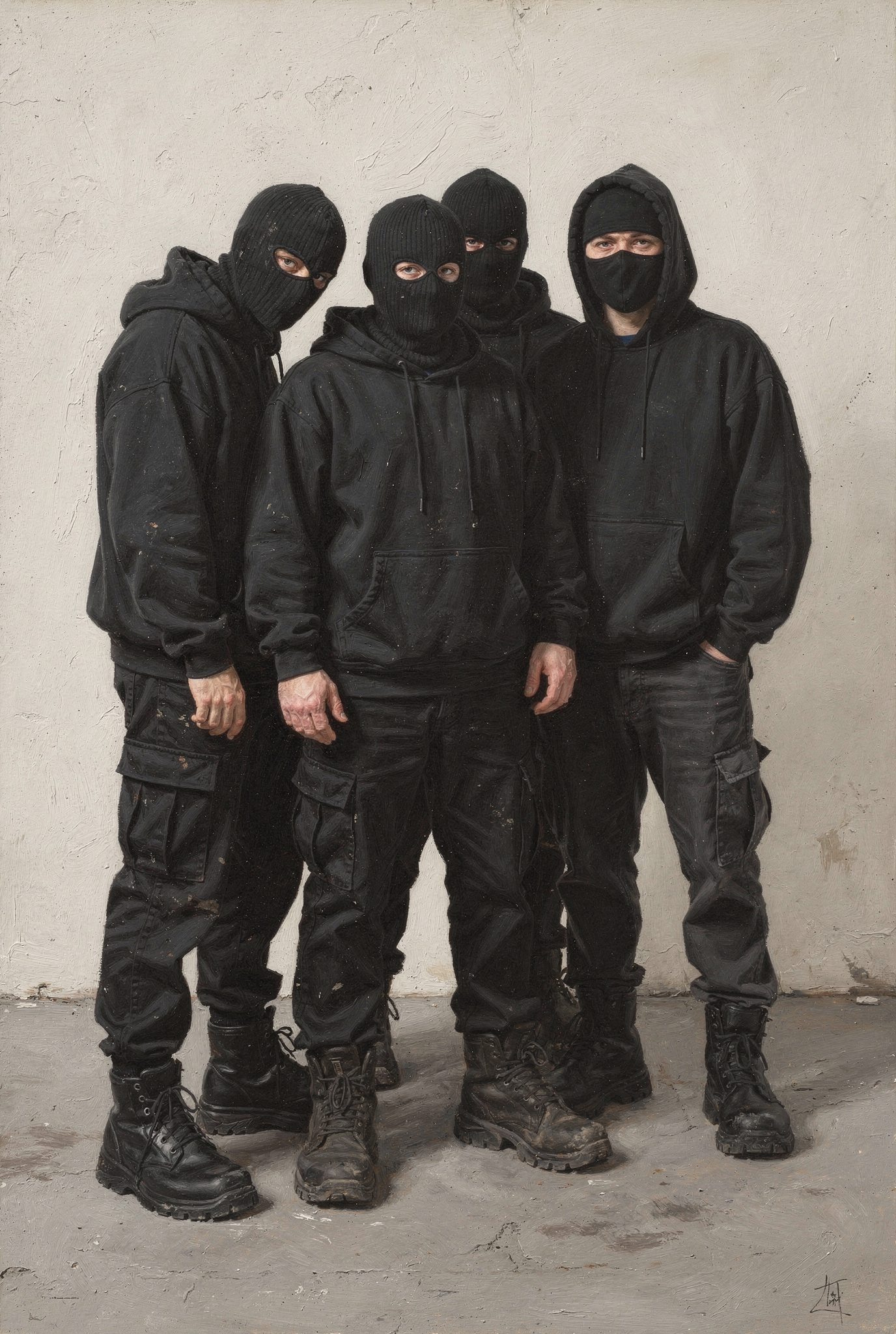
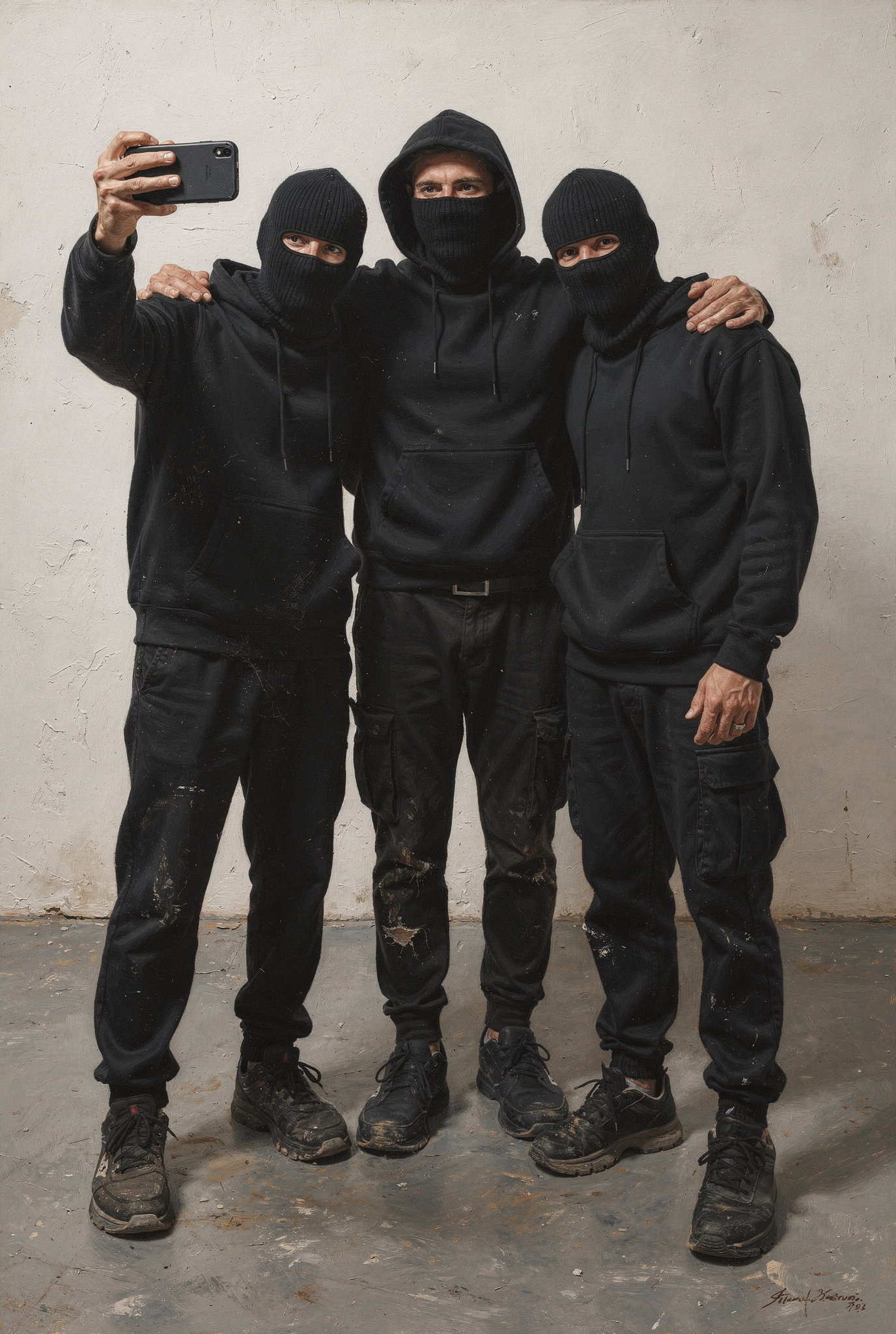
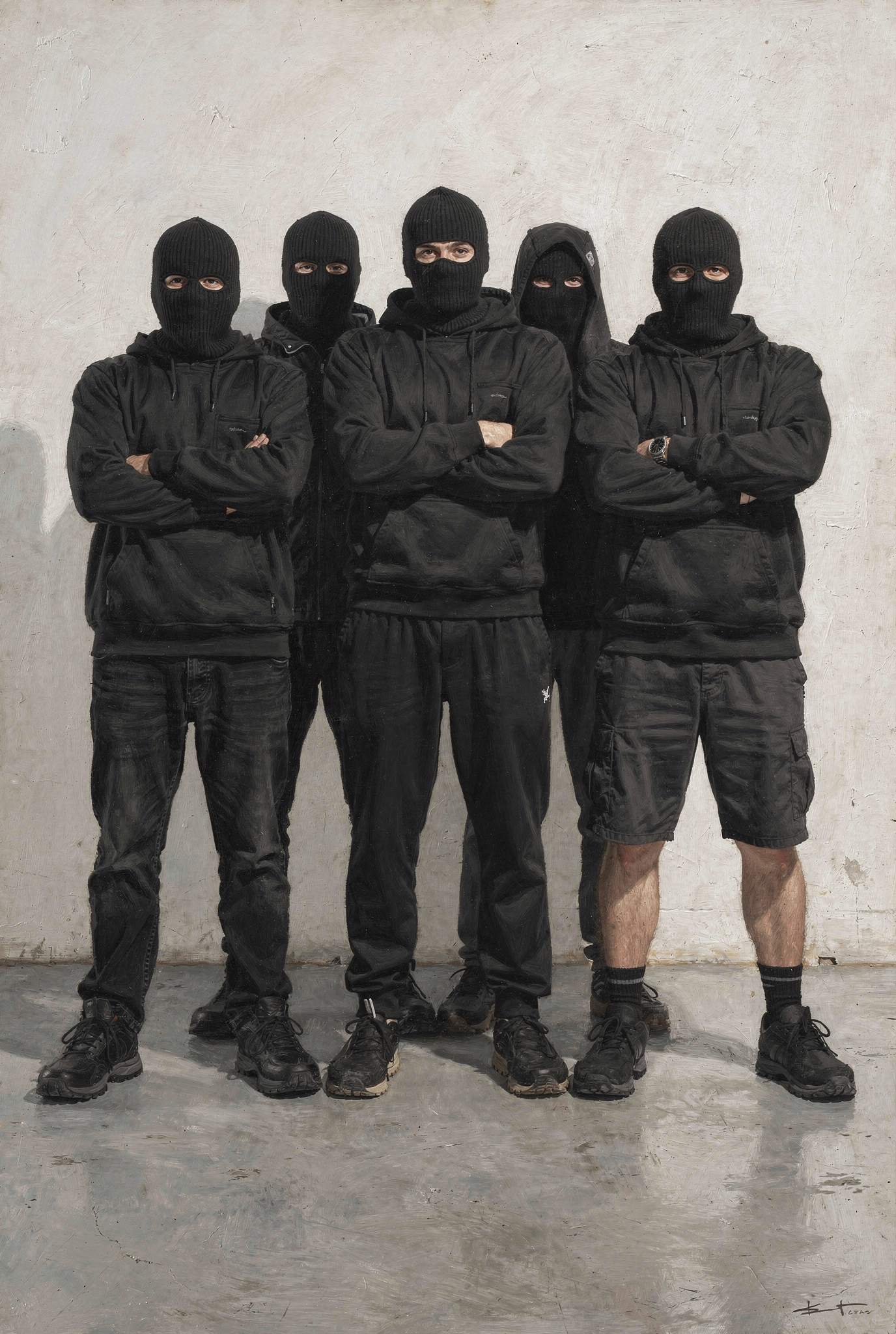
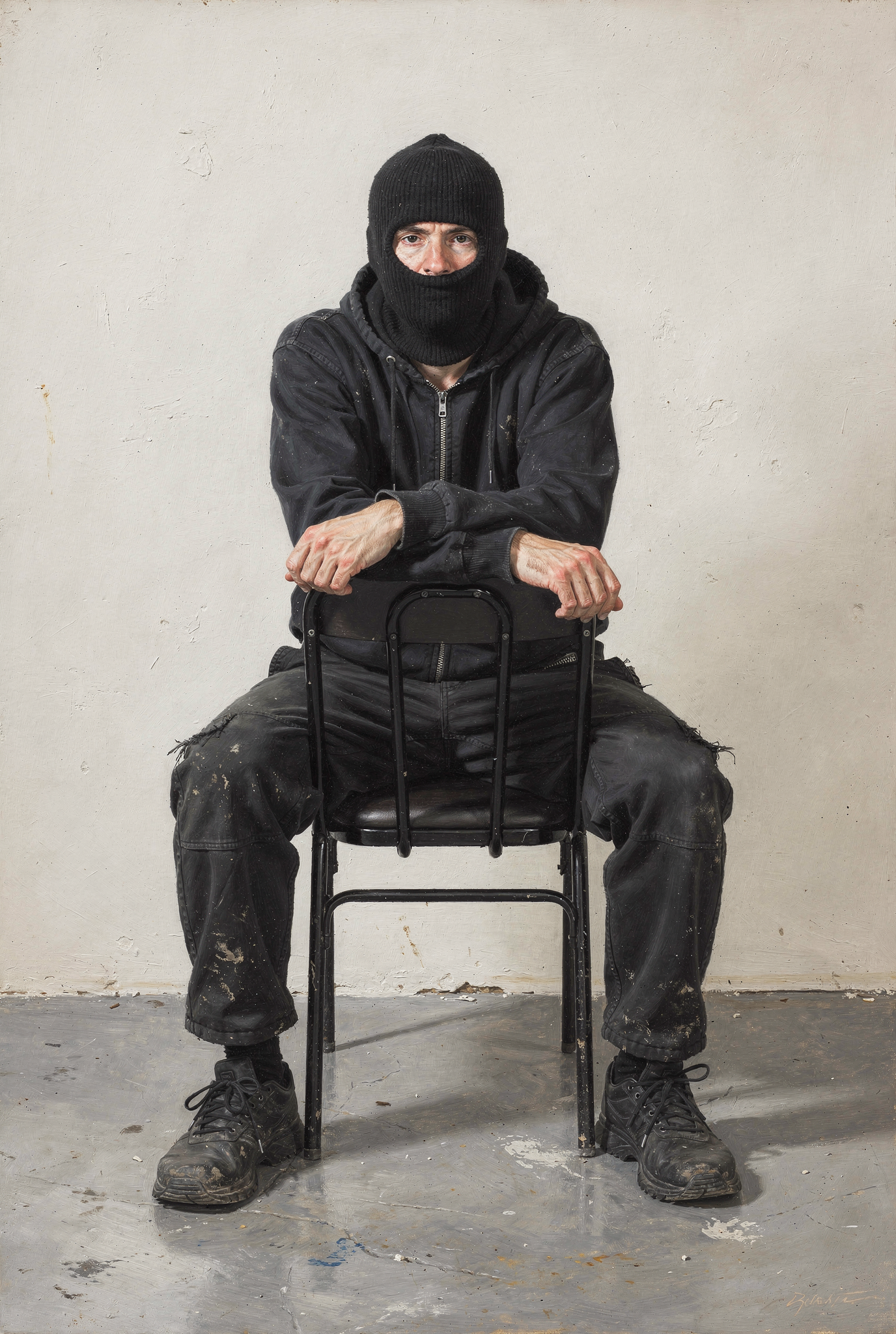
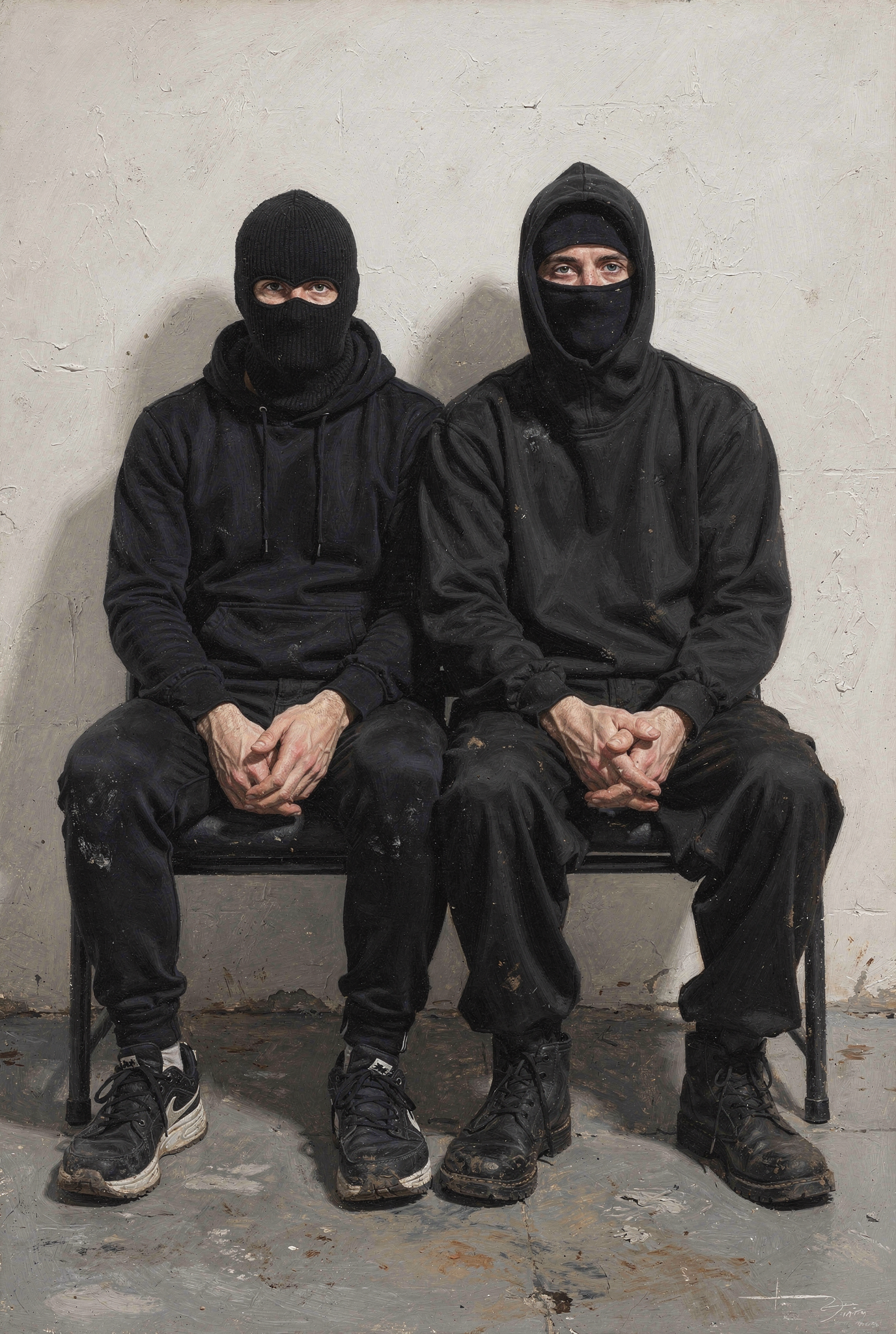
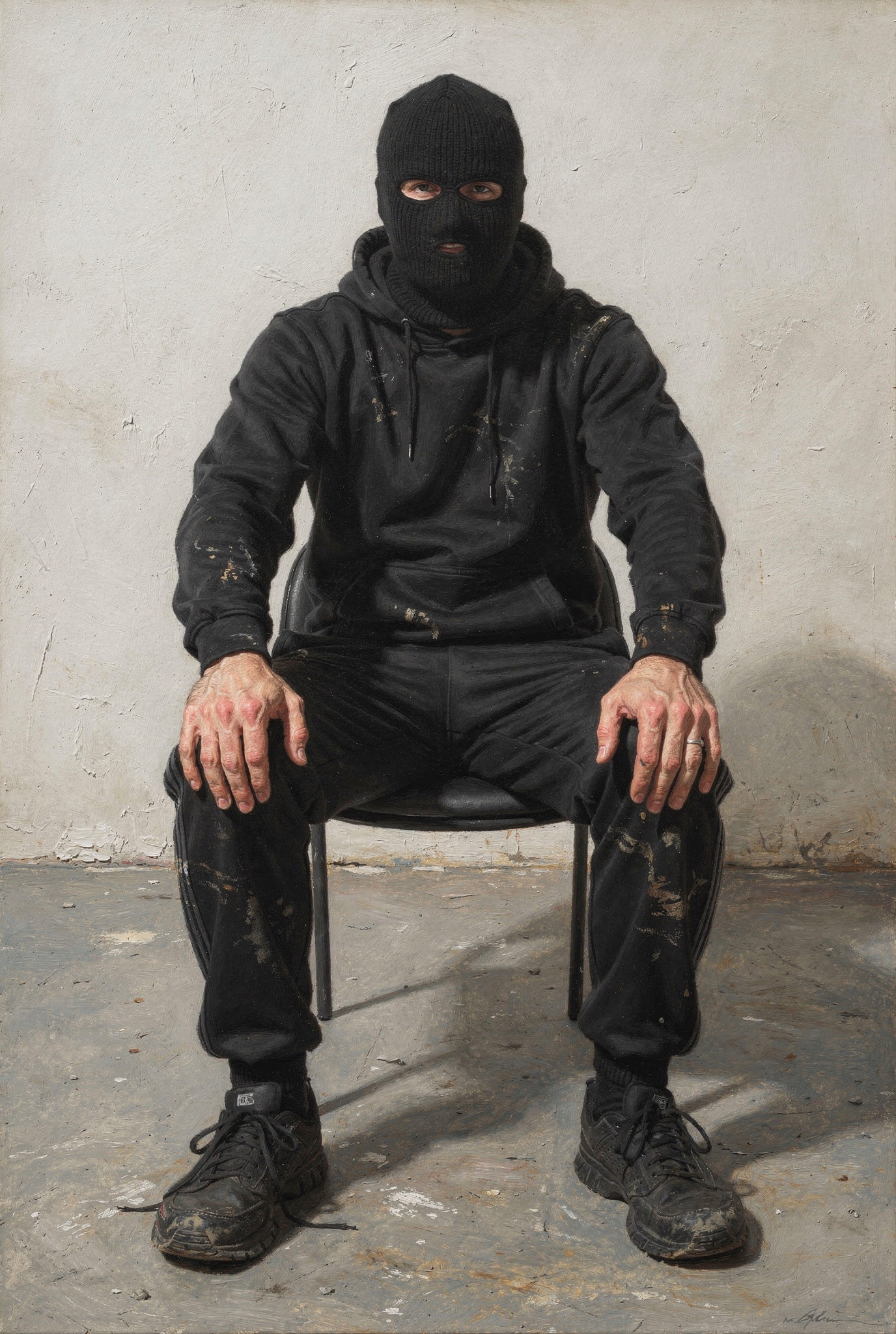
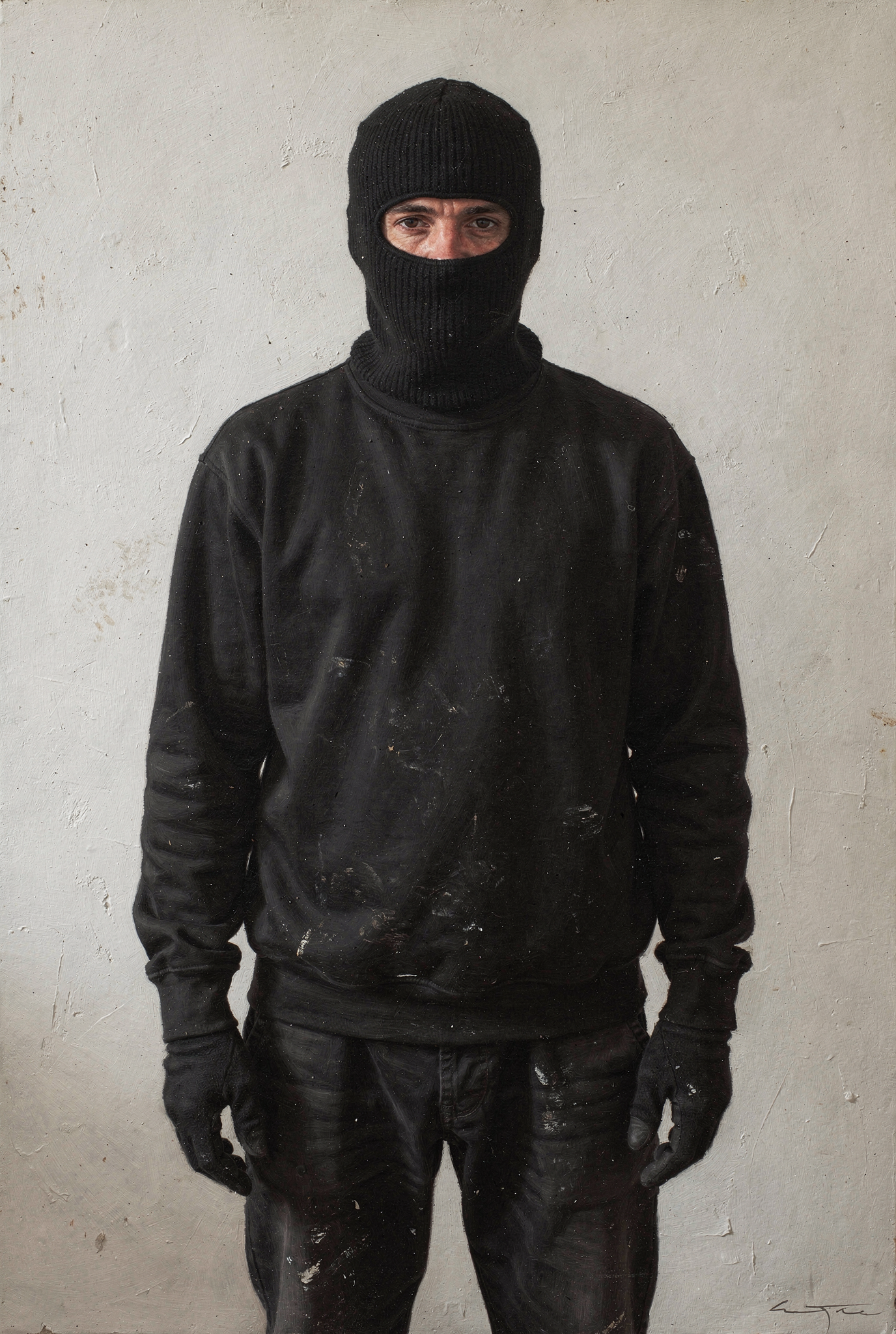
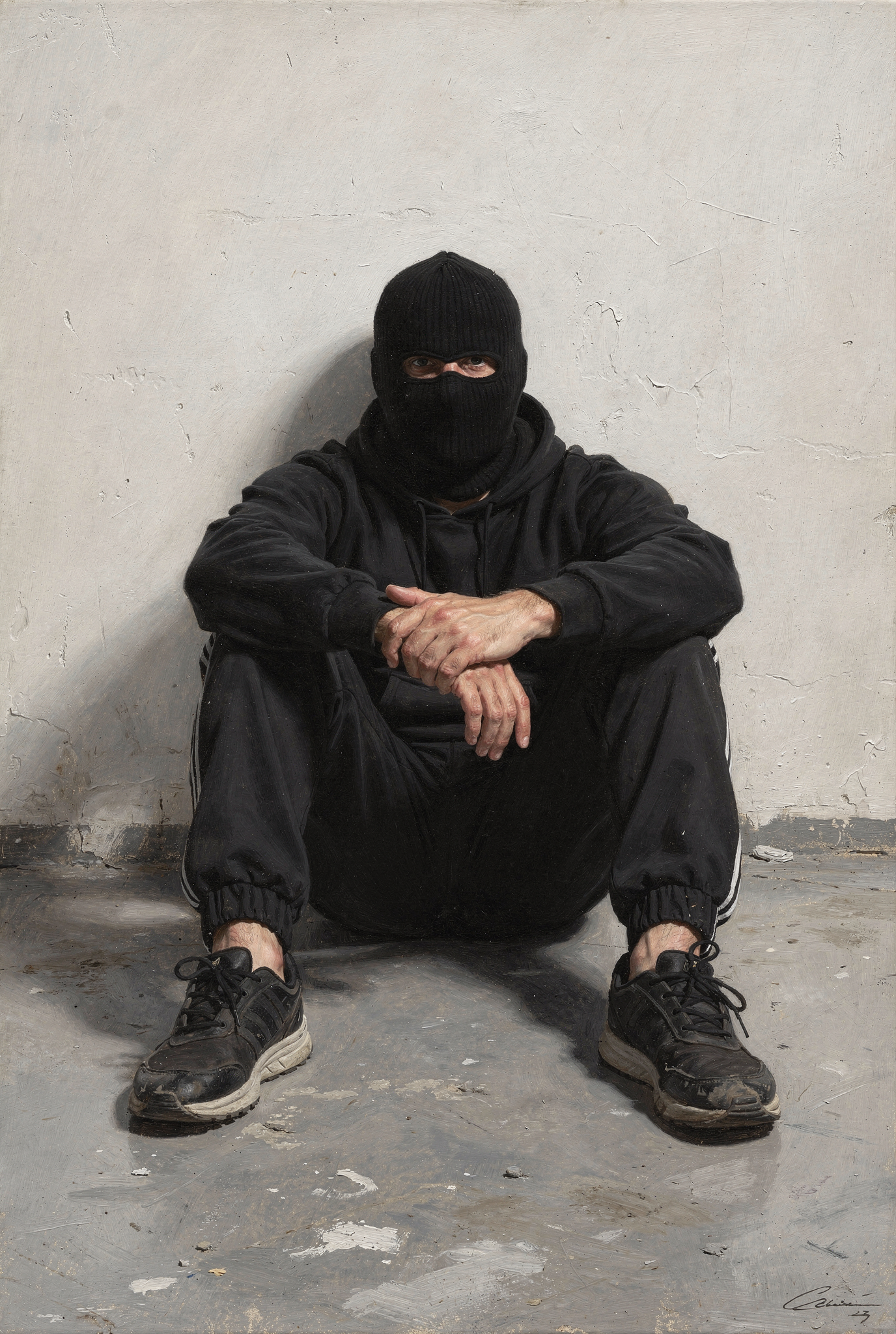
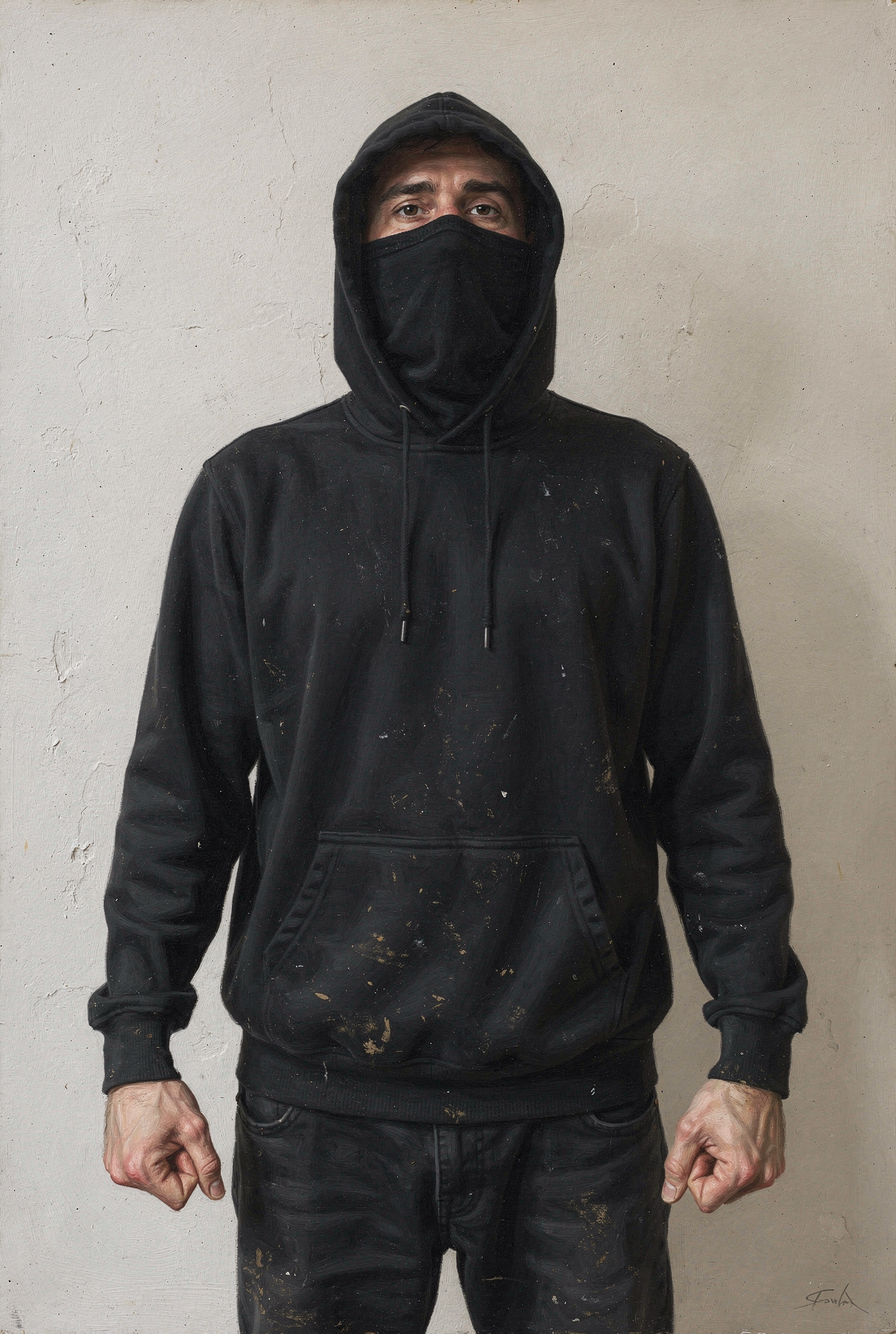
The men in these images are entirely fictional. They have no identities to protect, no biographies beneath the masks and no political beliefs of their own. Concealing the face of someone who does not exist creates a paradox: the less information the figure provides, the more the viewer begins to supply. Age, class, occupation, sexuality, aggression, vulnerability, intention and political persuasion are projected onto bodies that cannot confirm or deny any of them. Clothing becomes evidence; stance becomes character. Feet spread, shoulders squared, arms folded, hands buried in pockets. Posture becomes posturing. Some of these men may be hard; others may simply be trying very hard to look hard. Similar black clothing makes them appear almost uniform, and as solitary figures gather into pairs and groups, individual presence gradually gives way to collective identity.
Across the eighteen images, the viewpoint moves between isolated men, group formations and closer encounters. Bodies become more noticeable as faces disappear: hands, shoulders, thighs, fabric, weight and proximity begin carrying information the face would normally provide. Dover remains the catalyst, but the protest itself has been stripped away. There are no flags, police or documentary claims, and after the webpage's opening sequence there are no slogans. These are simulated oil paintings of simulated protesters, dragged off the street and placed inside an imaginary portrait studio. The political message has gone, but its visual language remains available for inspection. What remains are questions about masculinity, anonymity, threat, performance and projection. Once the slogans disappear, the men still seem to mean something — and much of that meaning may have been supplied by the person looking.
Gallery
"Man is not what he thinks he is, he is what he hides." — André Malraux