Camera: contemporary portraiture and promptography
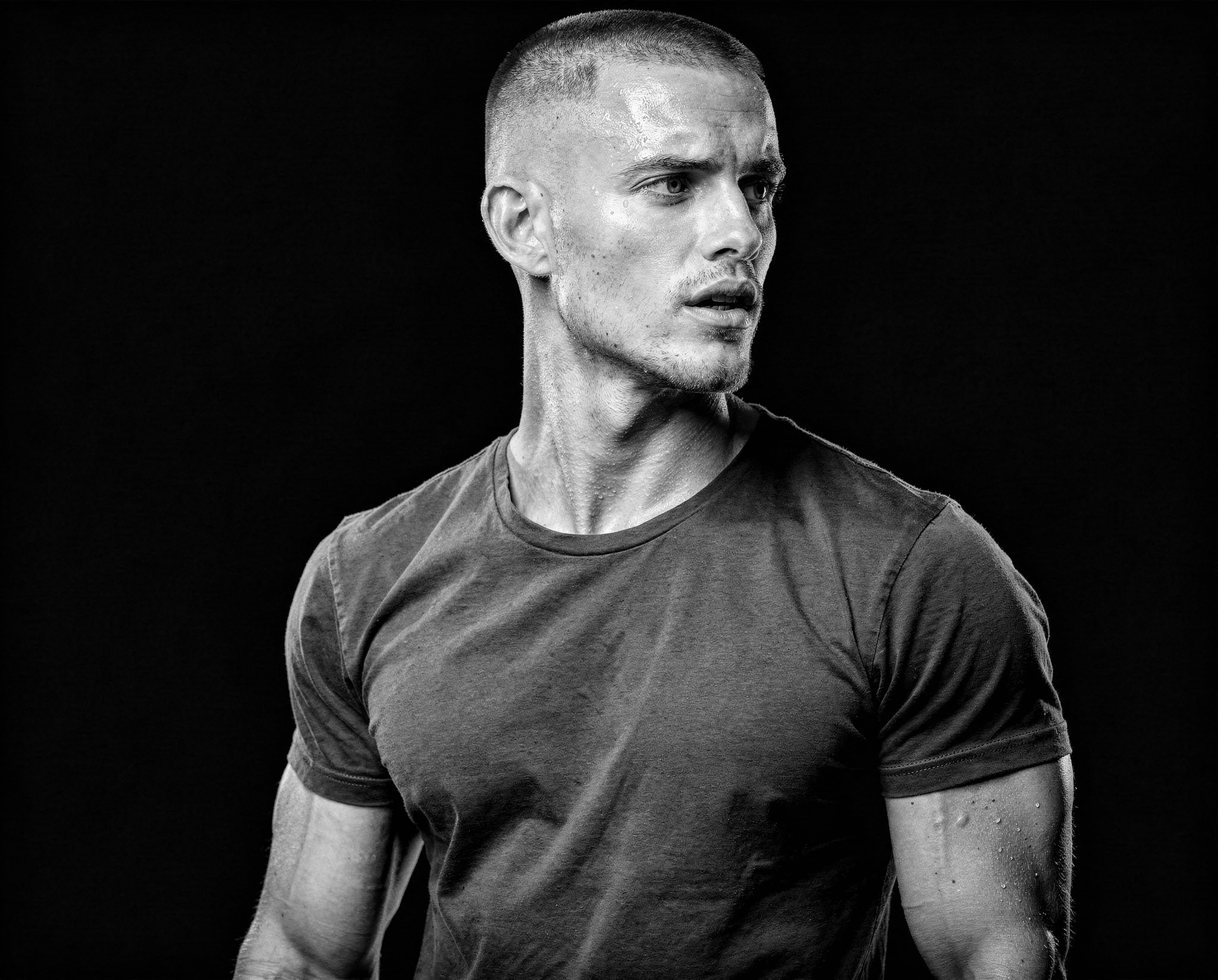
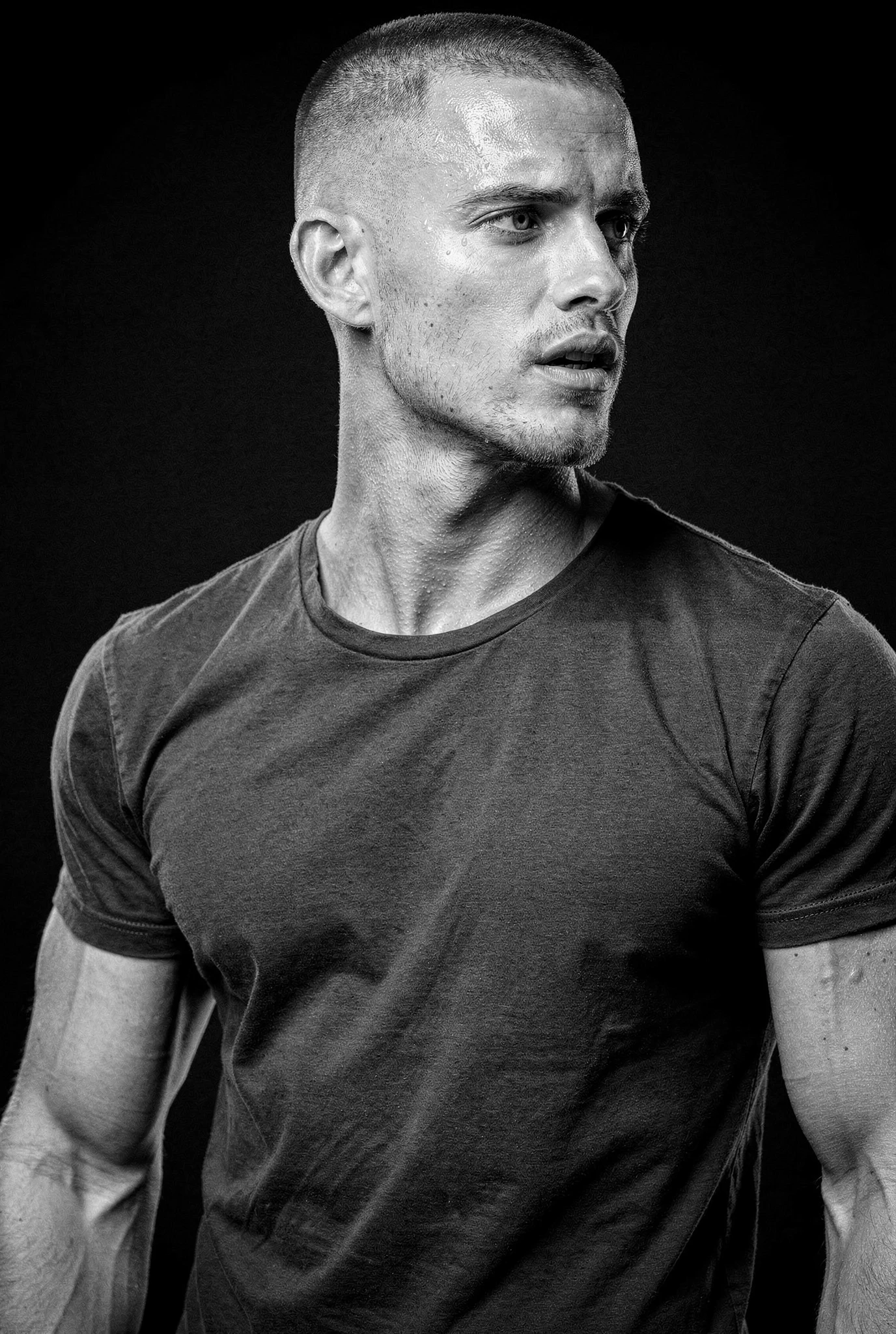
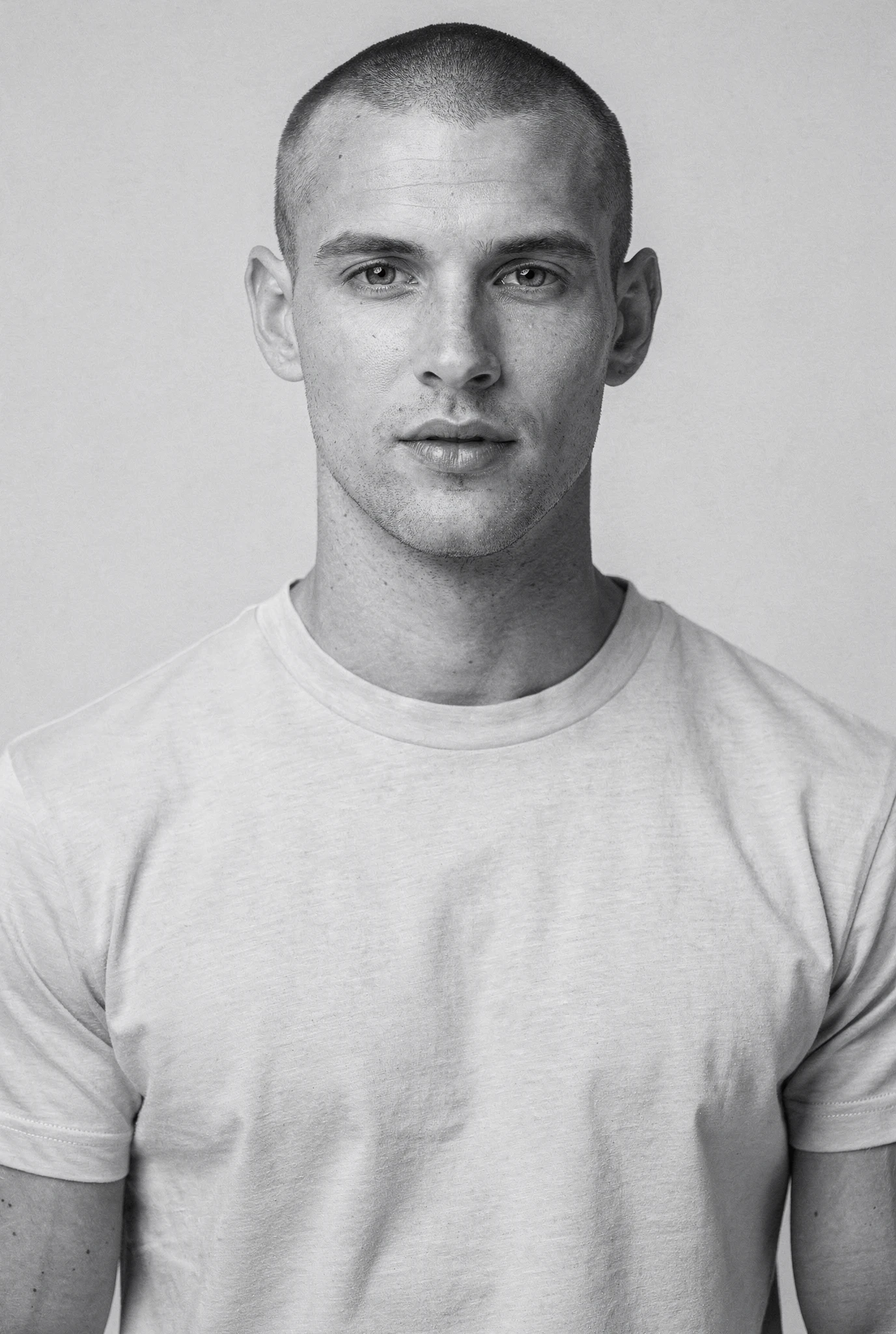
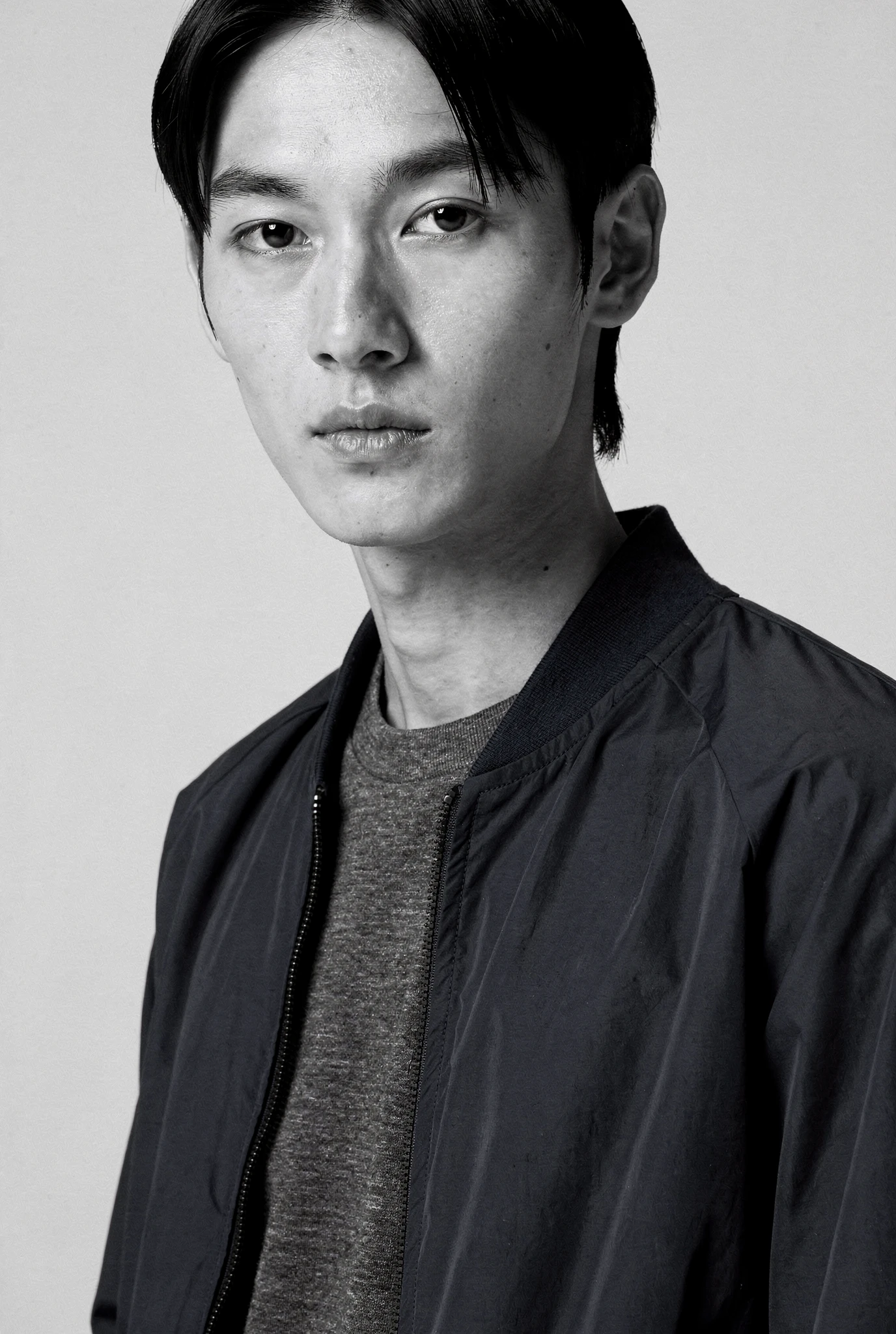
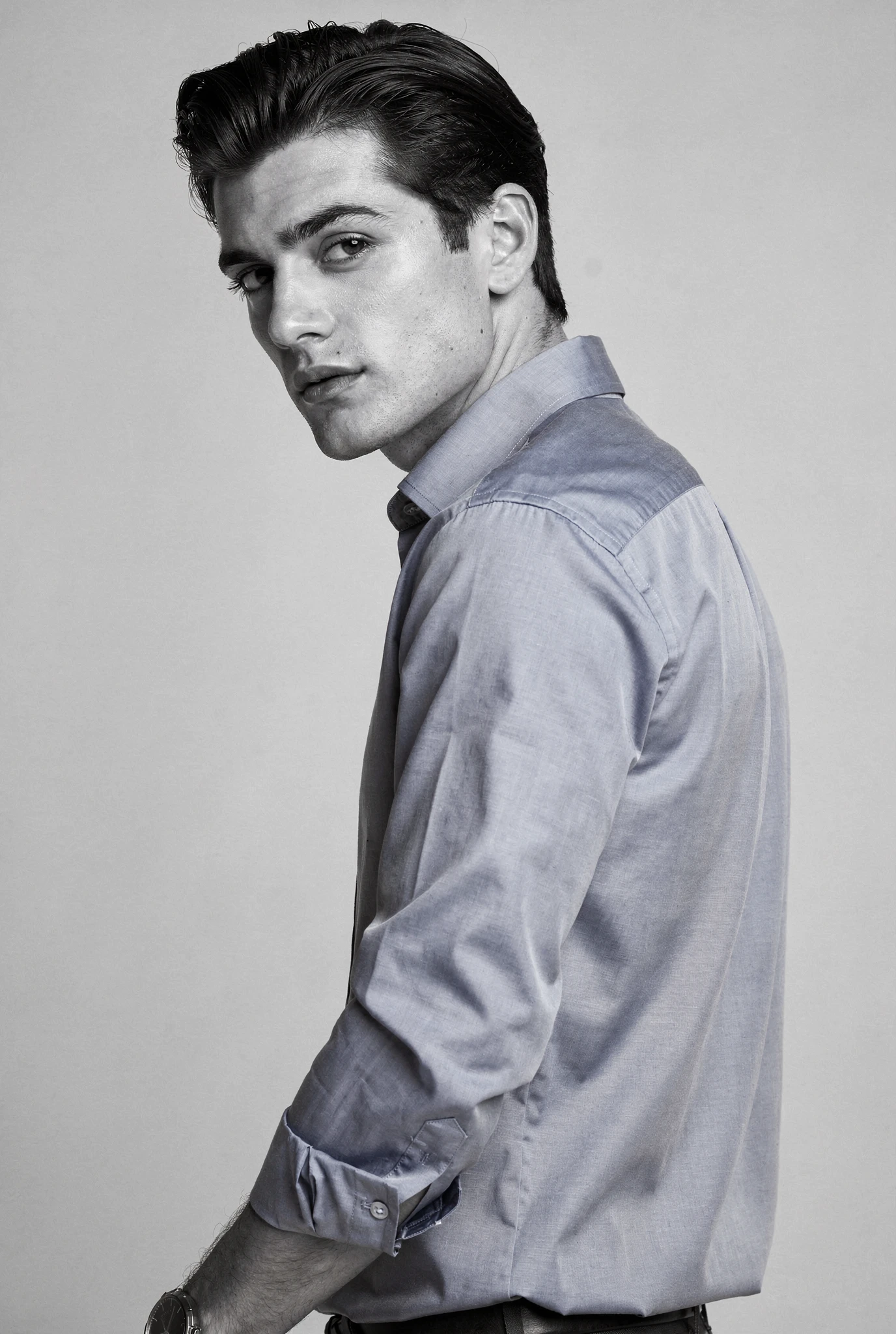
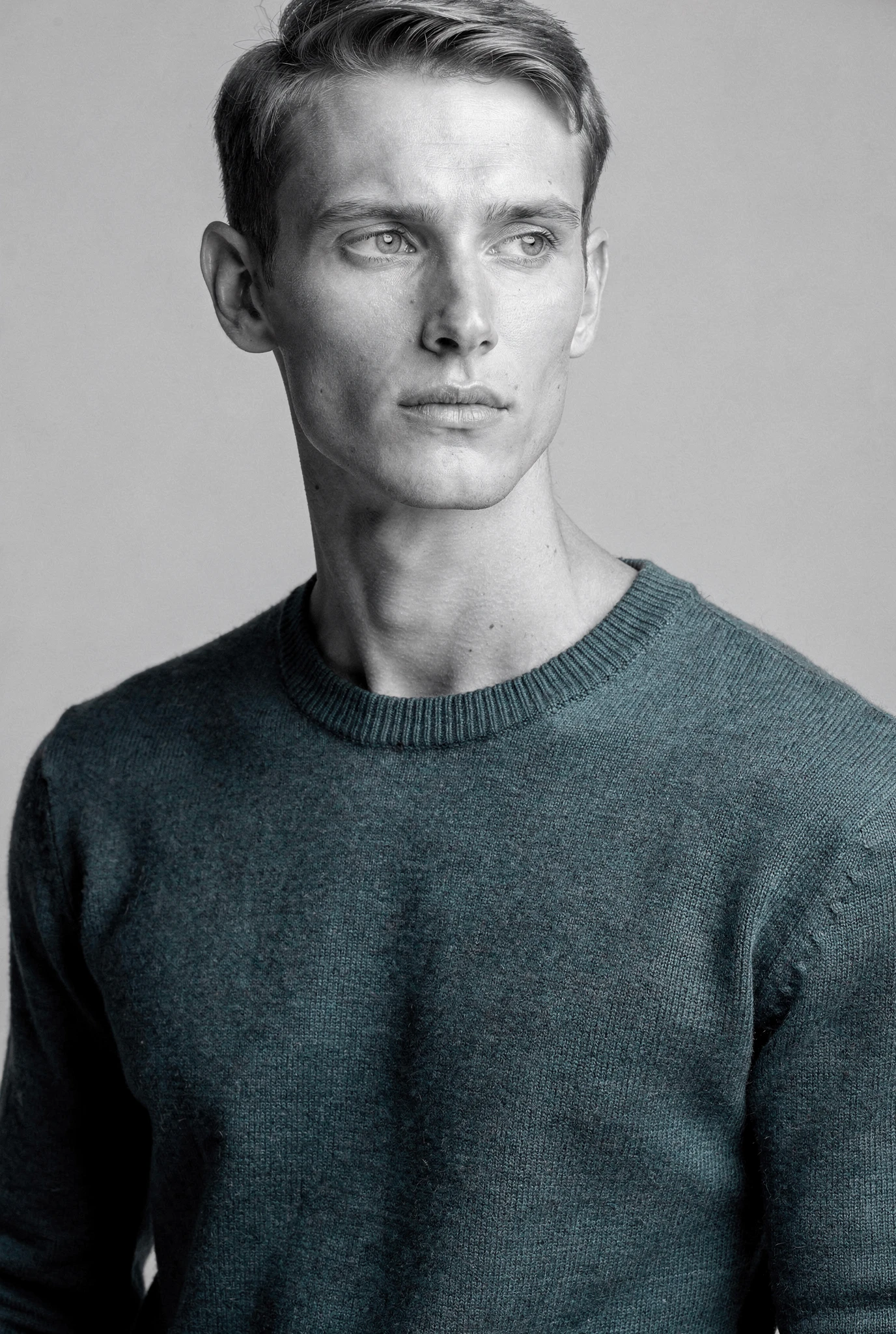
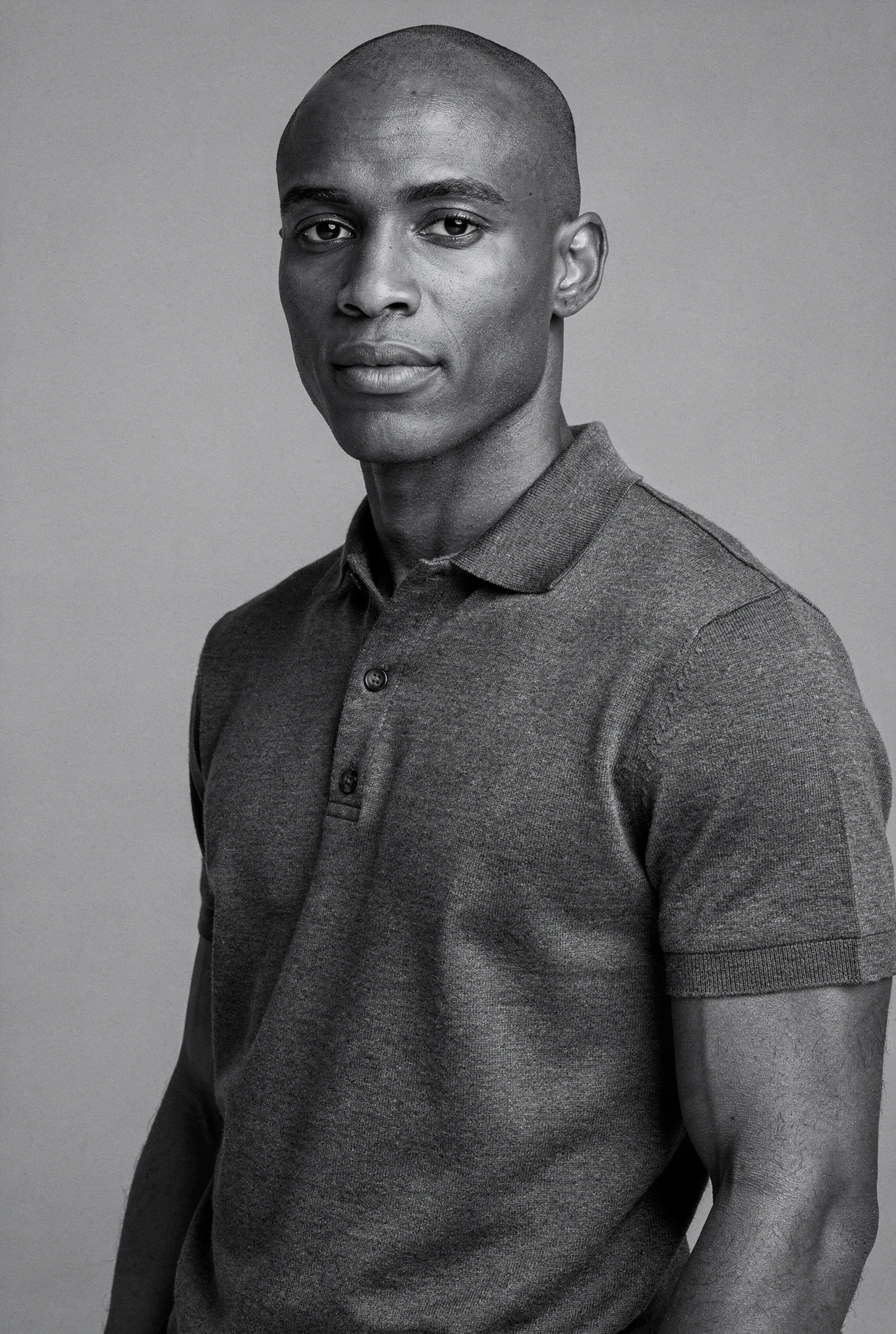
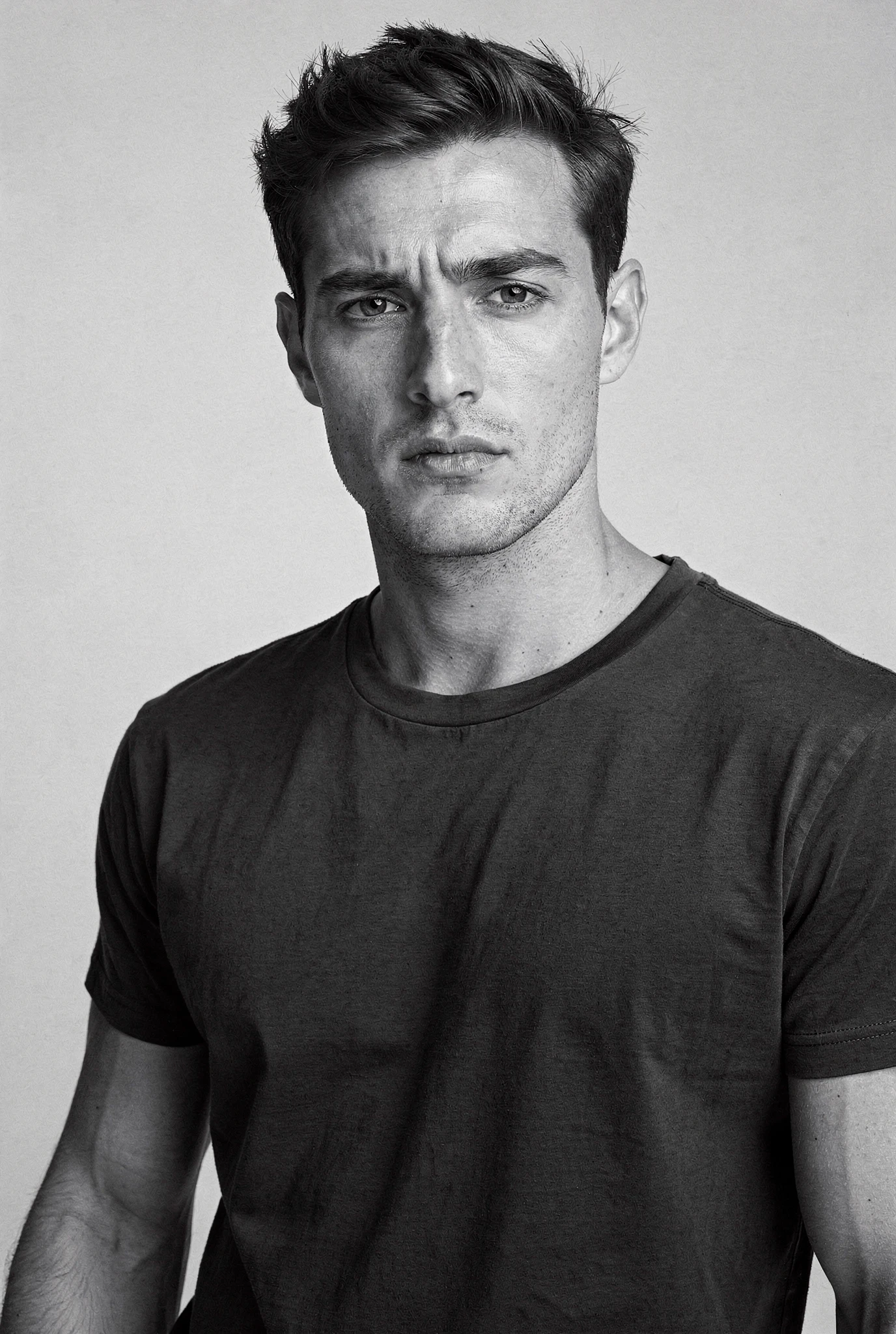
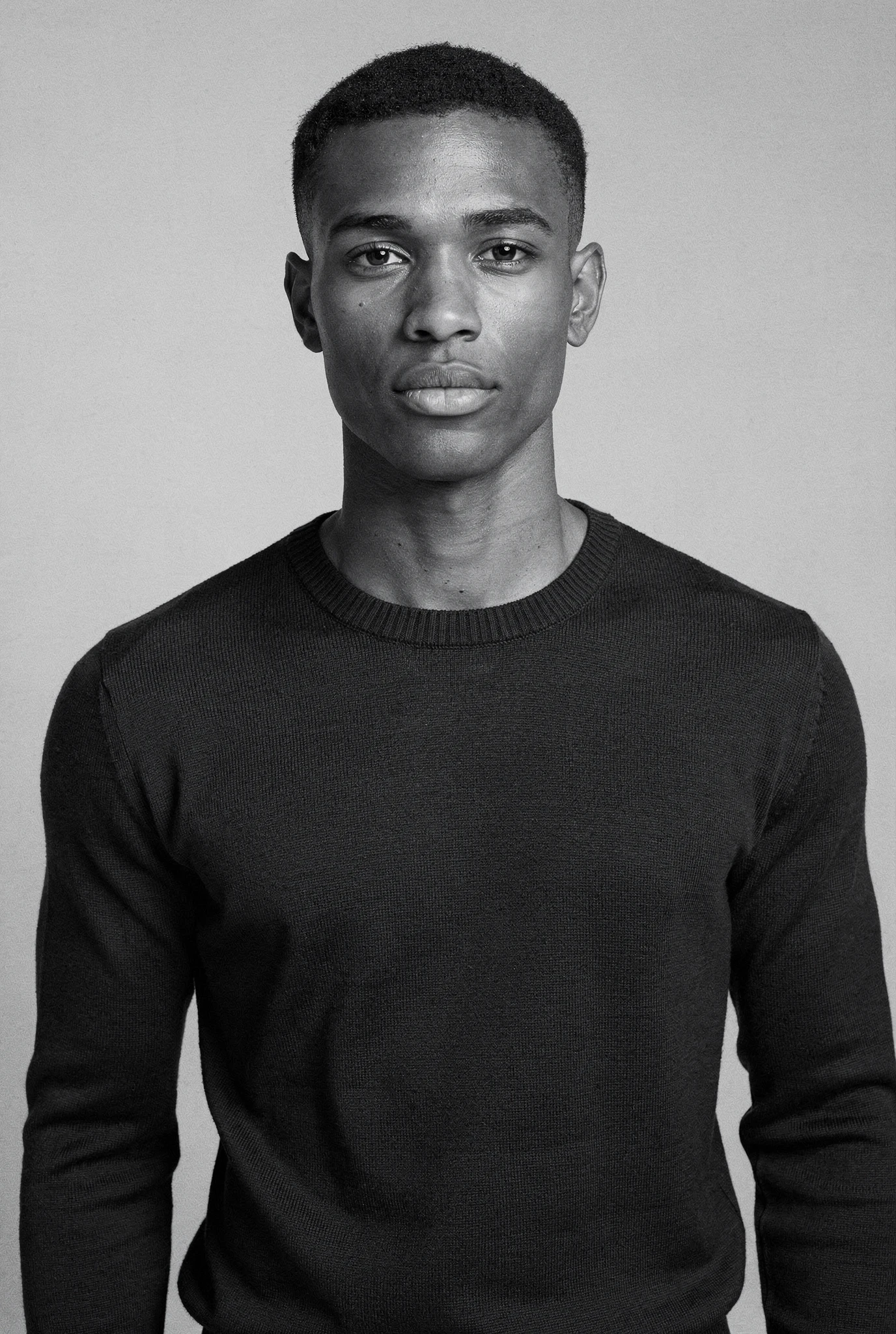
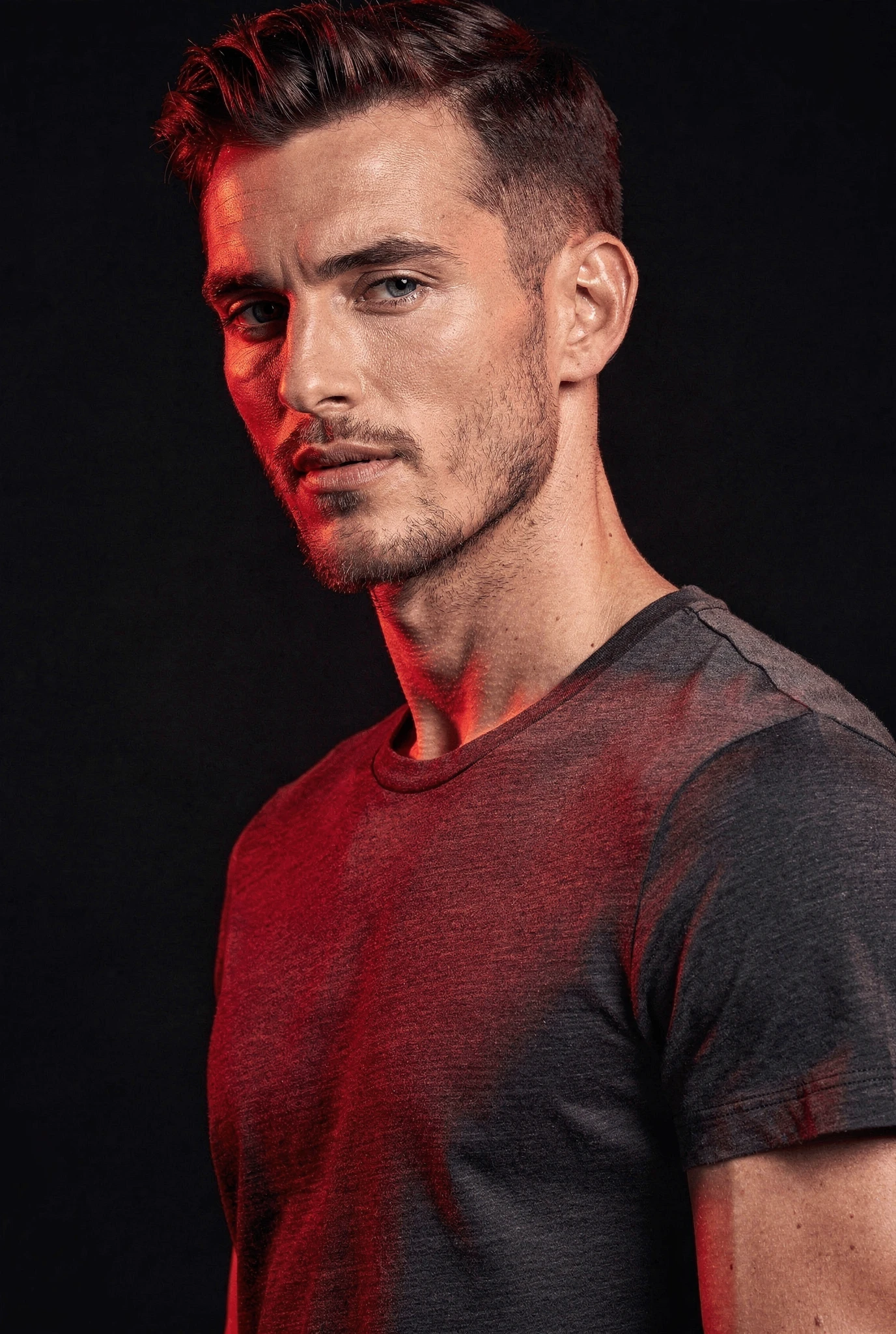
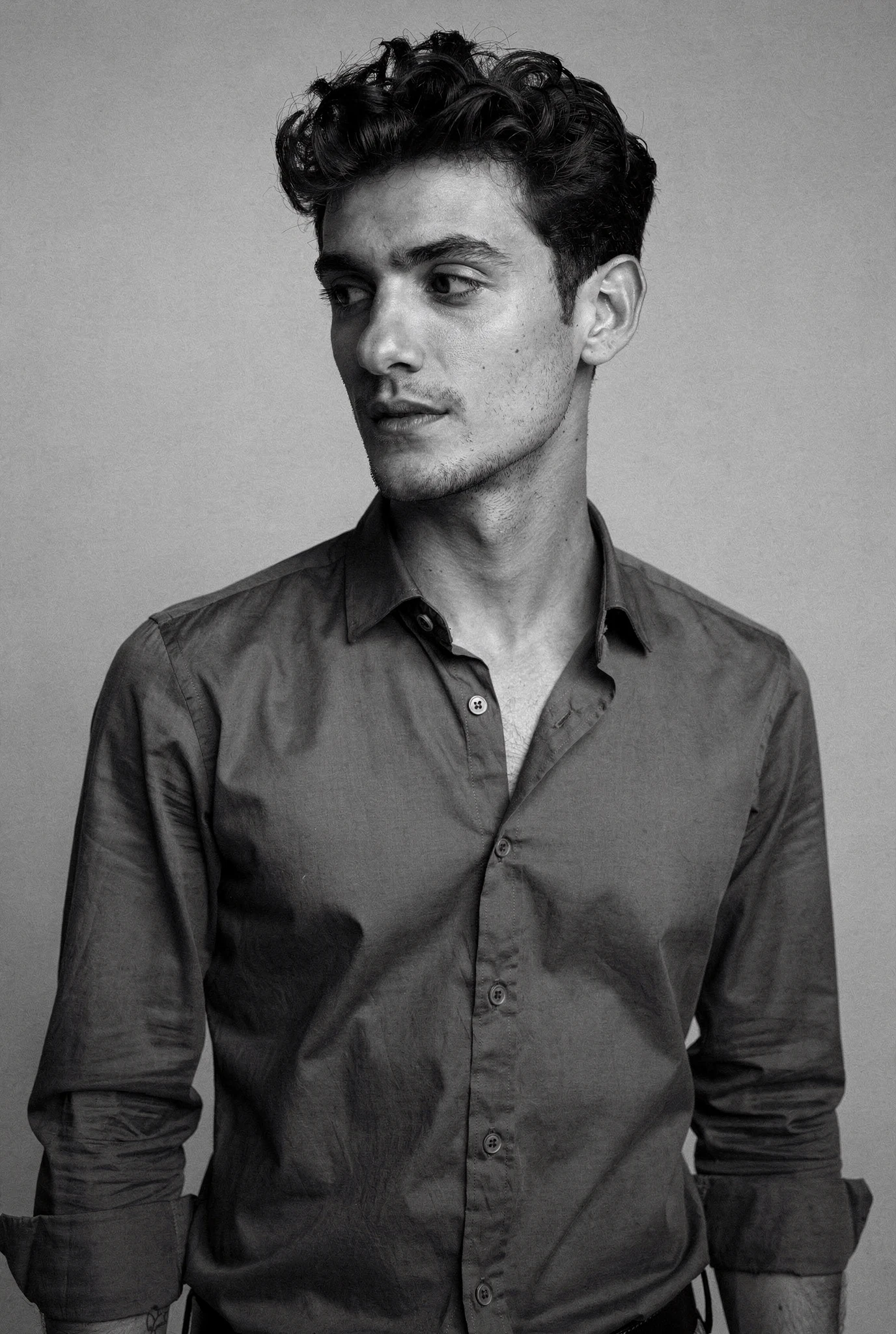
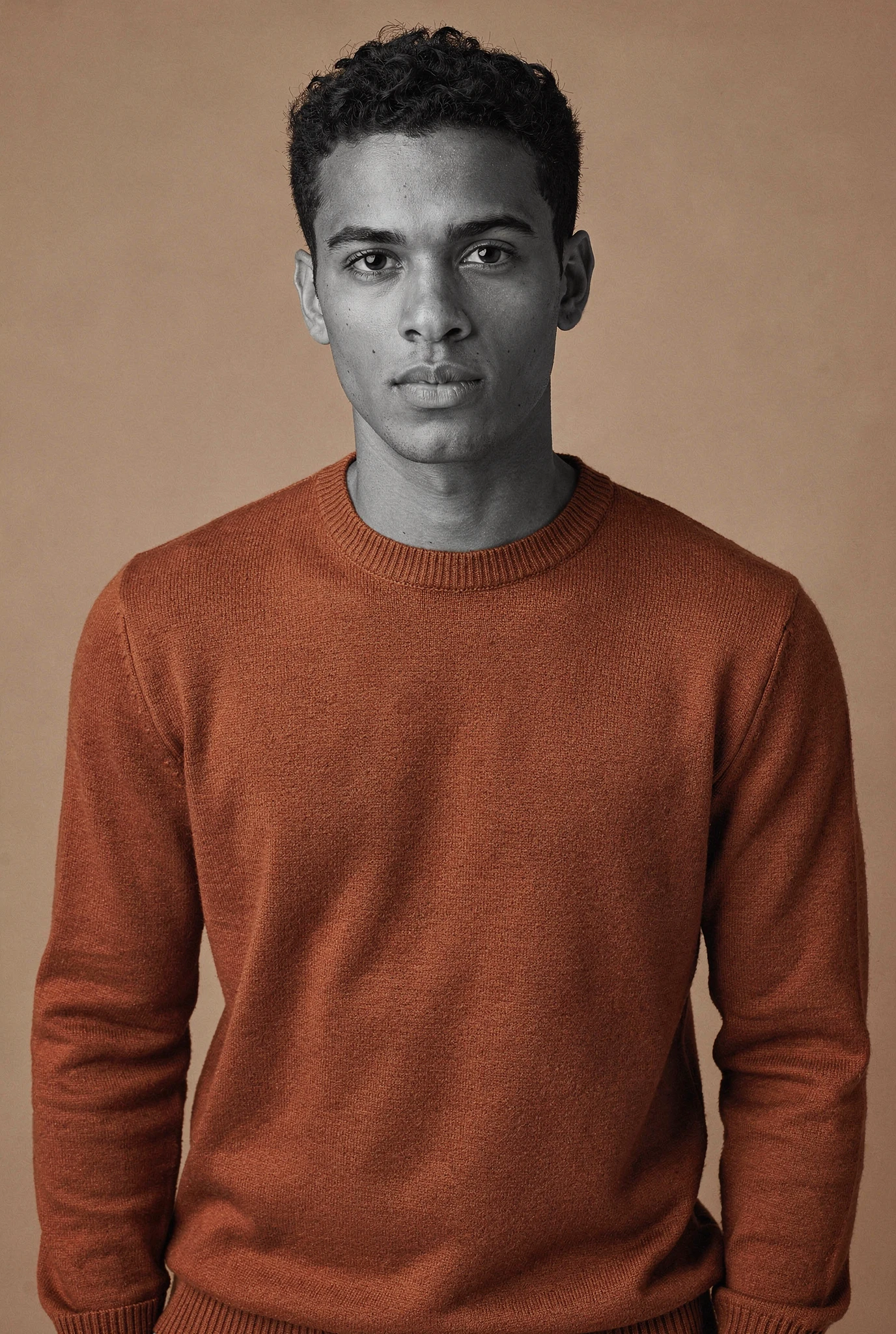
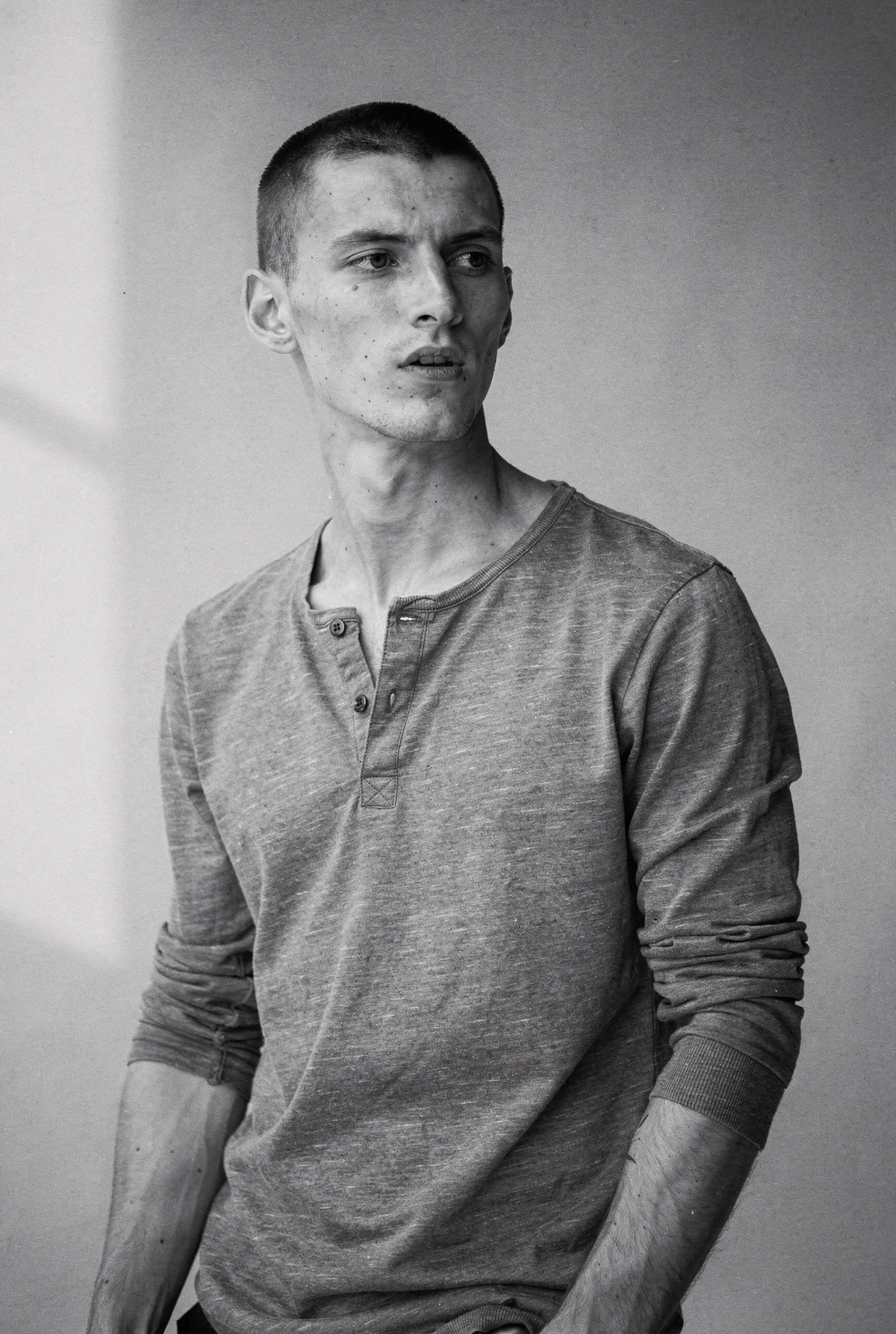
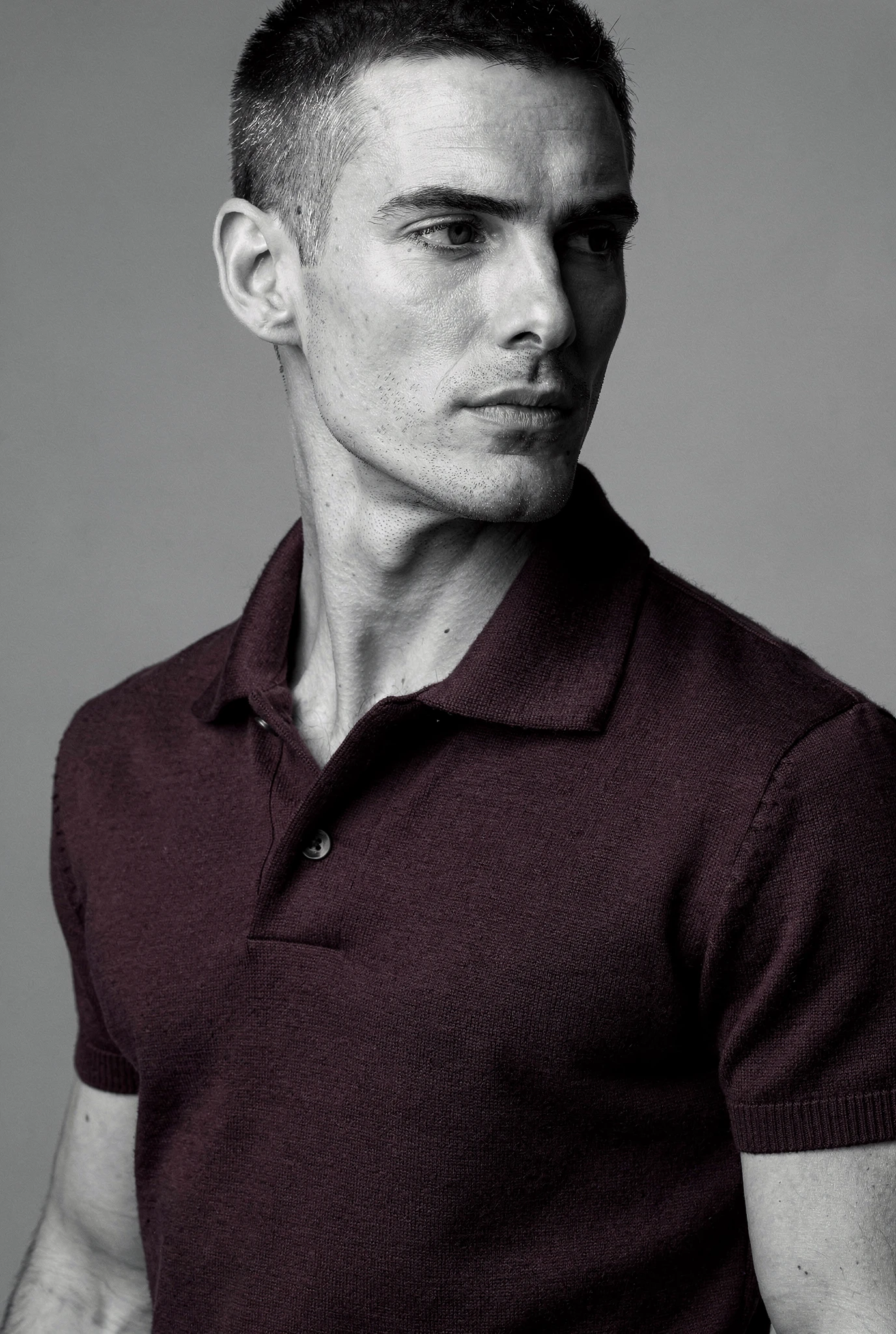
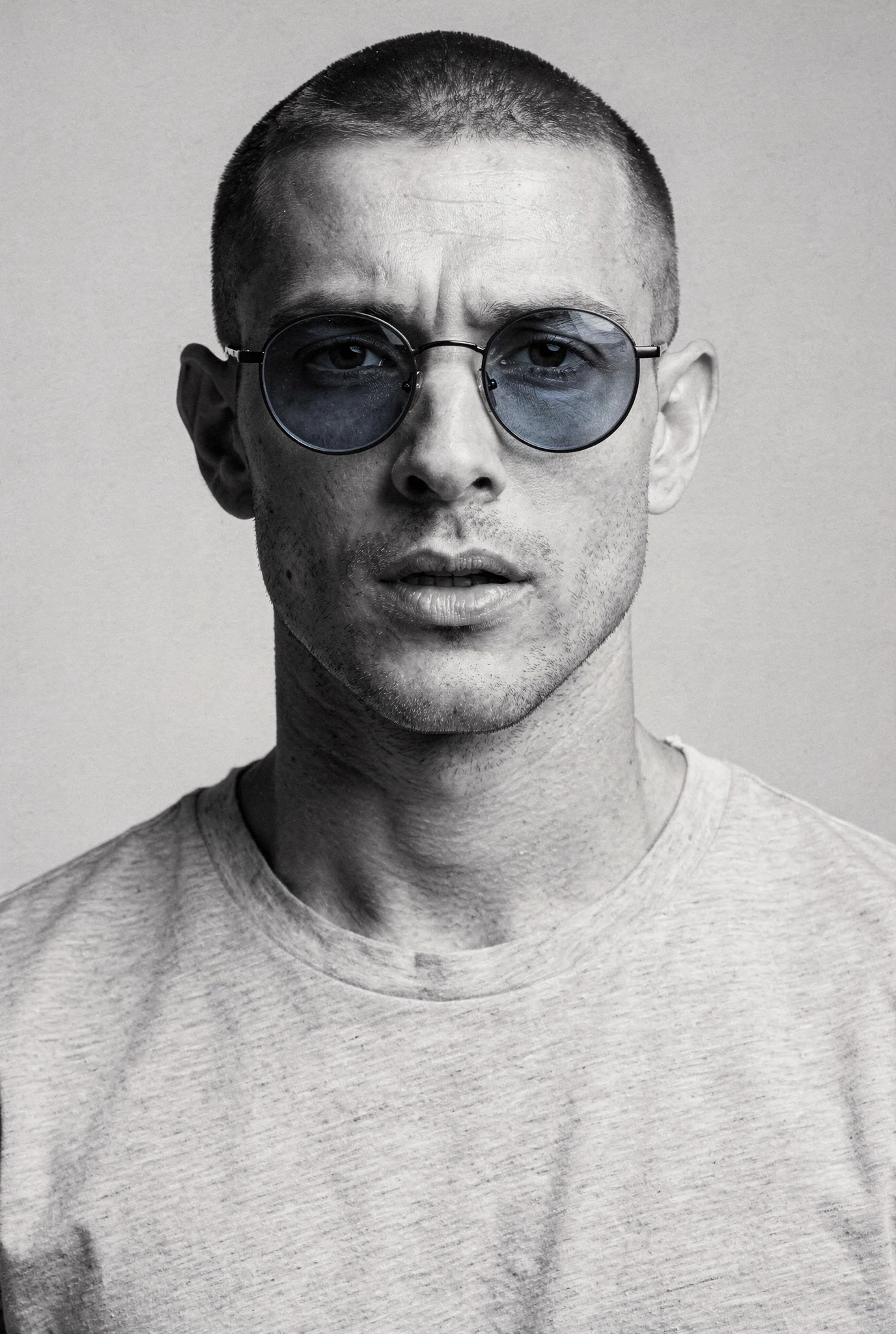
Photography begins with light falling on something that is there. A person stands before a lens, a shutter opens and a fraction of lived time is preserved. The portraits in Camera begin differently. There is no sitter, no studio and no moment waiting to be recorded. Eighteen portraits of fictional male models are constructed through language, their subjects cast as though selected from the same imaginary modelling agency. Their photographs are equally invented. Different cameras, lenses, film stocks, digital systems and lighting arrangements give the images subtly different technical characters, while neutral backgrounds remove almost everything that might distract from the person. Black and white provides the foundation, but the series repeatedly crosses into colour: a garment retains a muted hue, a background carries a faint tint, or coloured light alters the photograph more completely. These shifts make the photographic construction more visible, but technique is only the beginning. A photograph can look entirely plausible and still leave us feeling that nobody is there.
The harder task is to construct presence. These men behave like professional models: they understand how to present themselves to a camera, hold their bodies with confidence and project without turning every expression into a performance. What matters happens at the edges of that composure. A gaze settles just beside the lens, a mouth seems about to move, attention shifts, or a controlled face becomes briefly difficult to read. Mood emerges through small agreements between expression, posture, light, clothing and photographic distance rather than through obvious displays of sadness, desire, vulnerability or surprise. Each figure is entirely fictional, without memory, history or consciousness, yet portraiture encourages us to supply these things anyway. We read character into posture, intention into a glance and feeling into changes so slight that we may register them before we can explain them. The image offers the signals; the viewer begins to construct the person.
Camera is therefore concerned with connection as much as simulation. Its portraits are made from words, but their success depends upon whether those words can produce something that feels briefly human. Photographic coherence creates belief in the image; physical specificity creates belief in the sitter; psychological ambiguity leaves space for recognition, projection and empathy. Monochrome and colour, analogue and digital character, softness and precision prevent the series from settling into a single photographic formula, while the repeated simplicity of model, clothing and neutral ground holds it together. None of this makes the fictional men real, nor does it reproduce the encounter between photographer and sitter that belongs uniquely to photography. Instead, Camera tests what remains possible when that encounter is removed but its visual and emotional grammar survives. The question is no longer simply whether an invented man can look real. It is whether, for the duration of an image, he can make us feel that someone is there.
Gallery
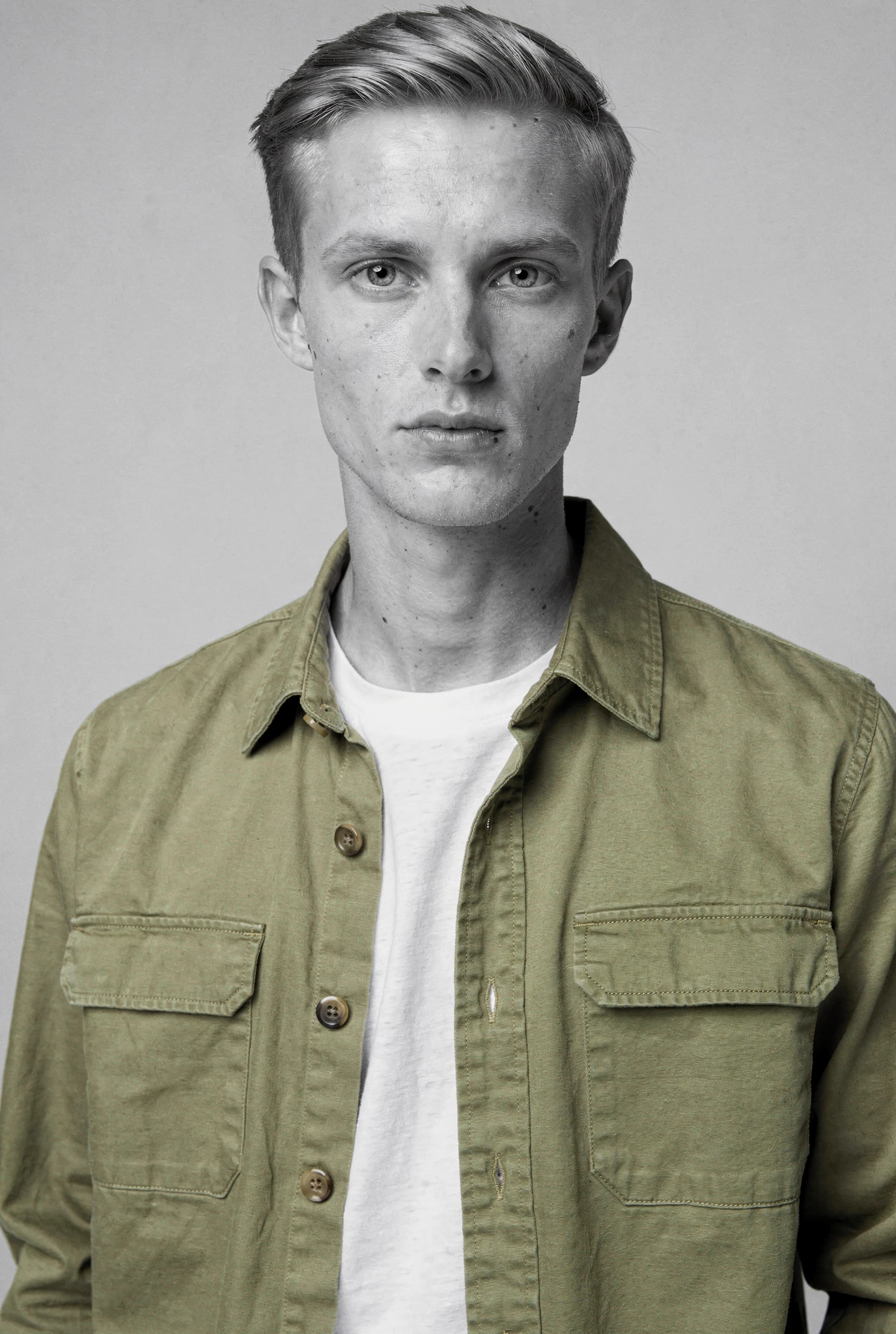
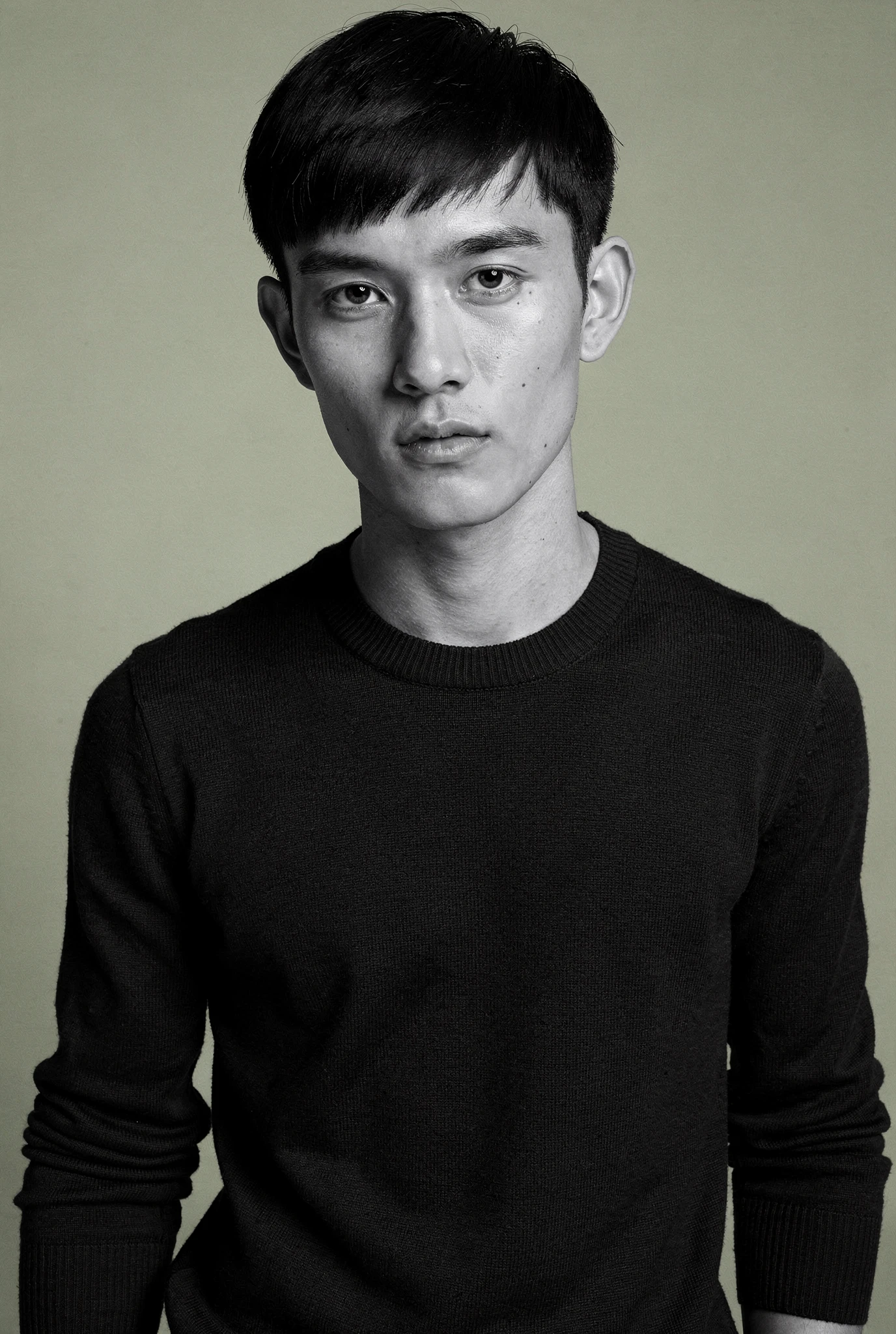
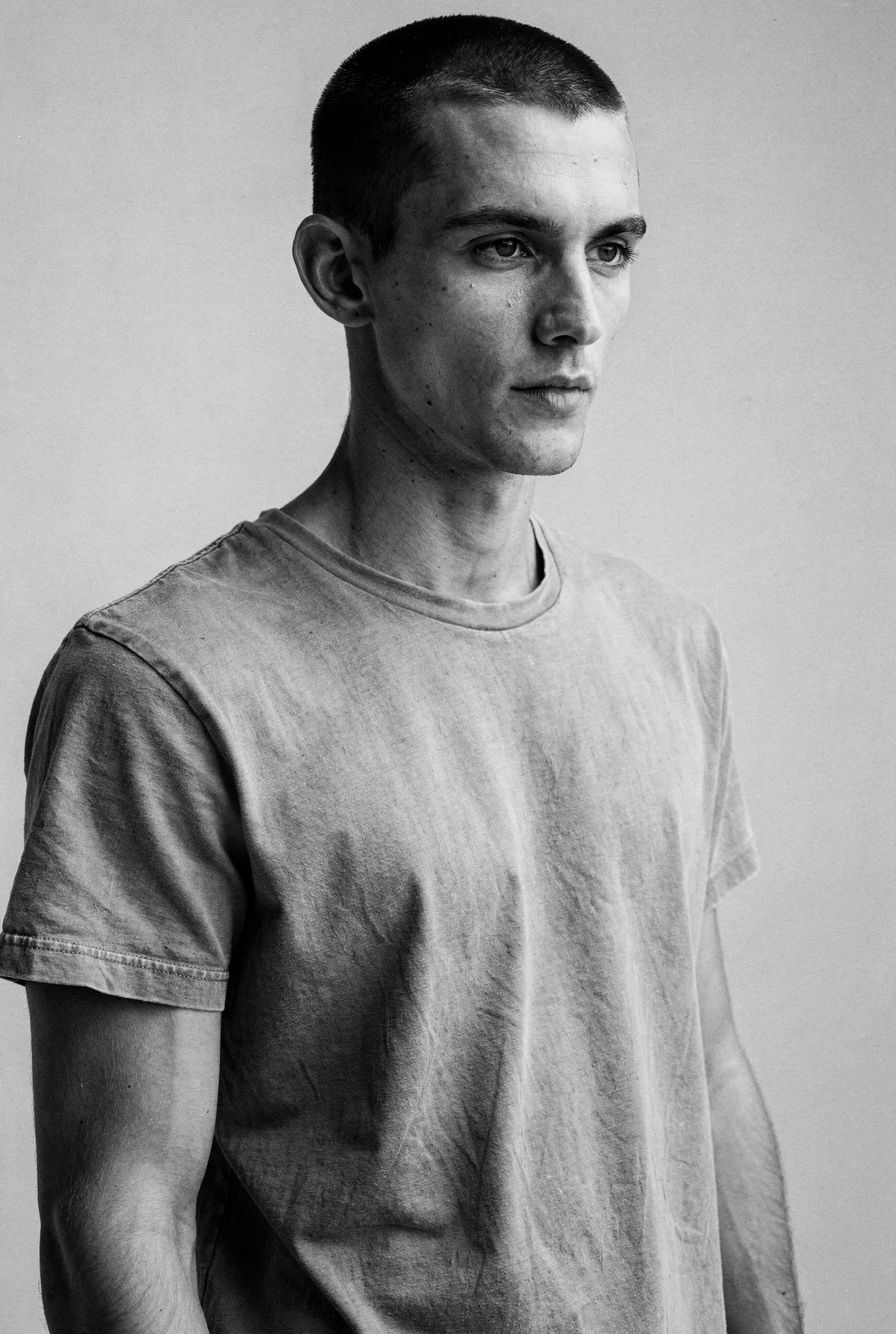
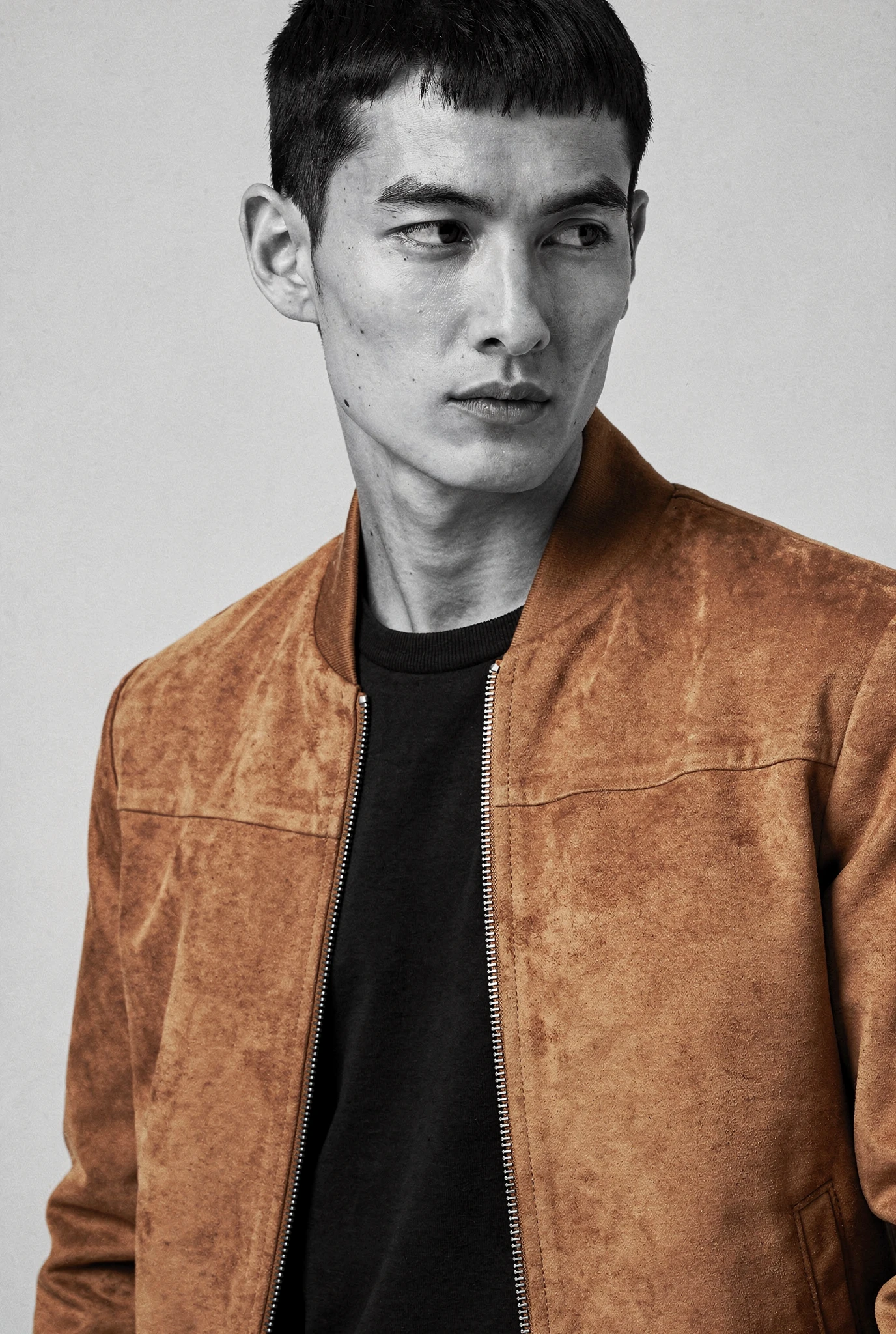
"It's more important to click with people than to click the shutter." — Alfred Eisenstaedt