Tension: bodies under pressure
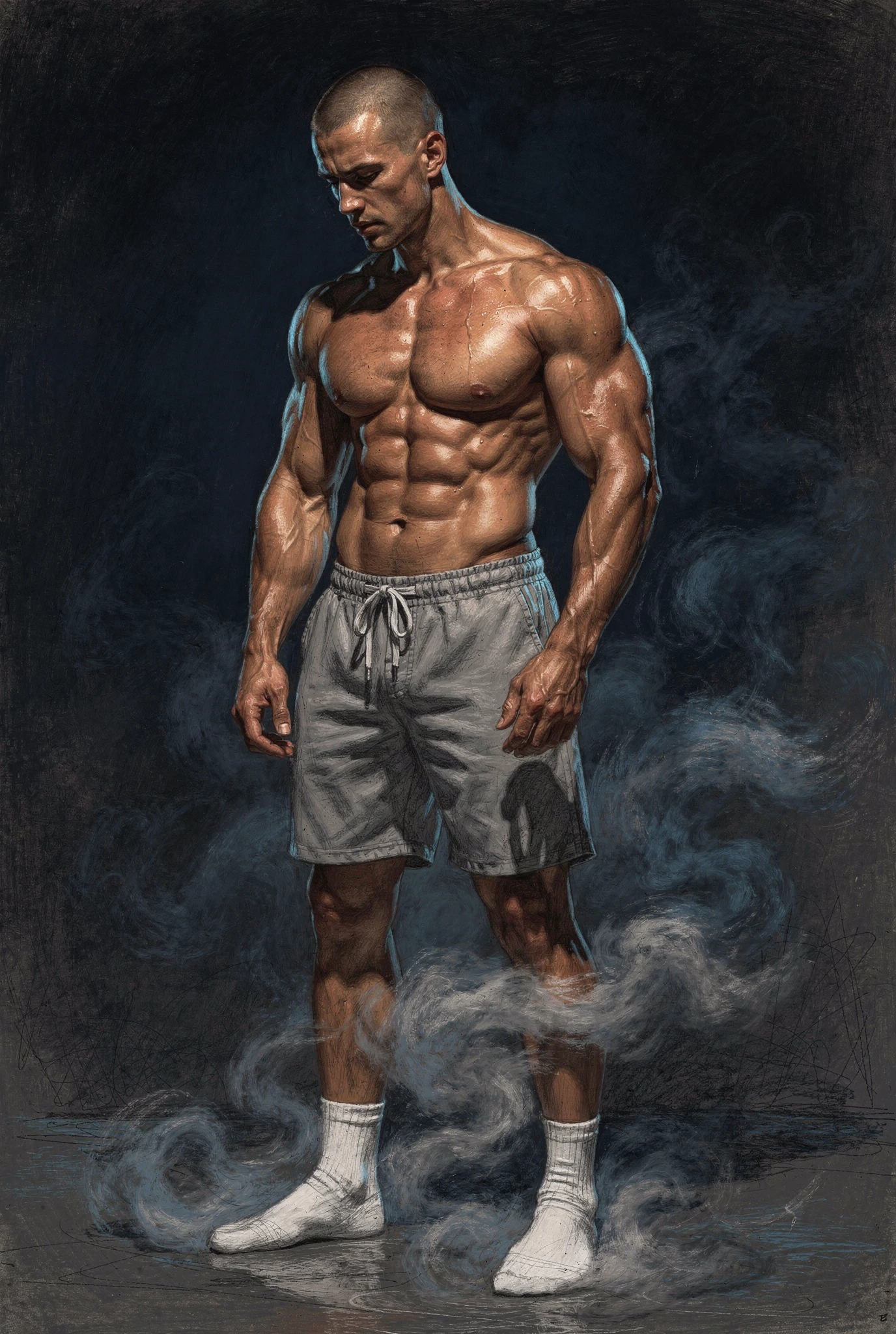
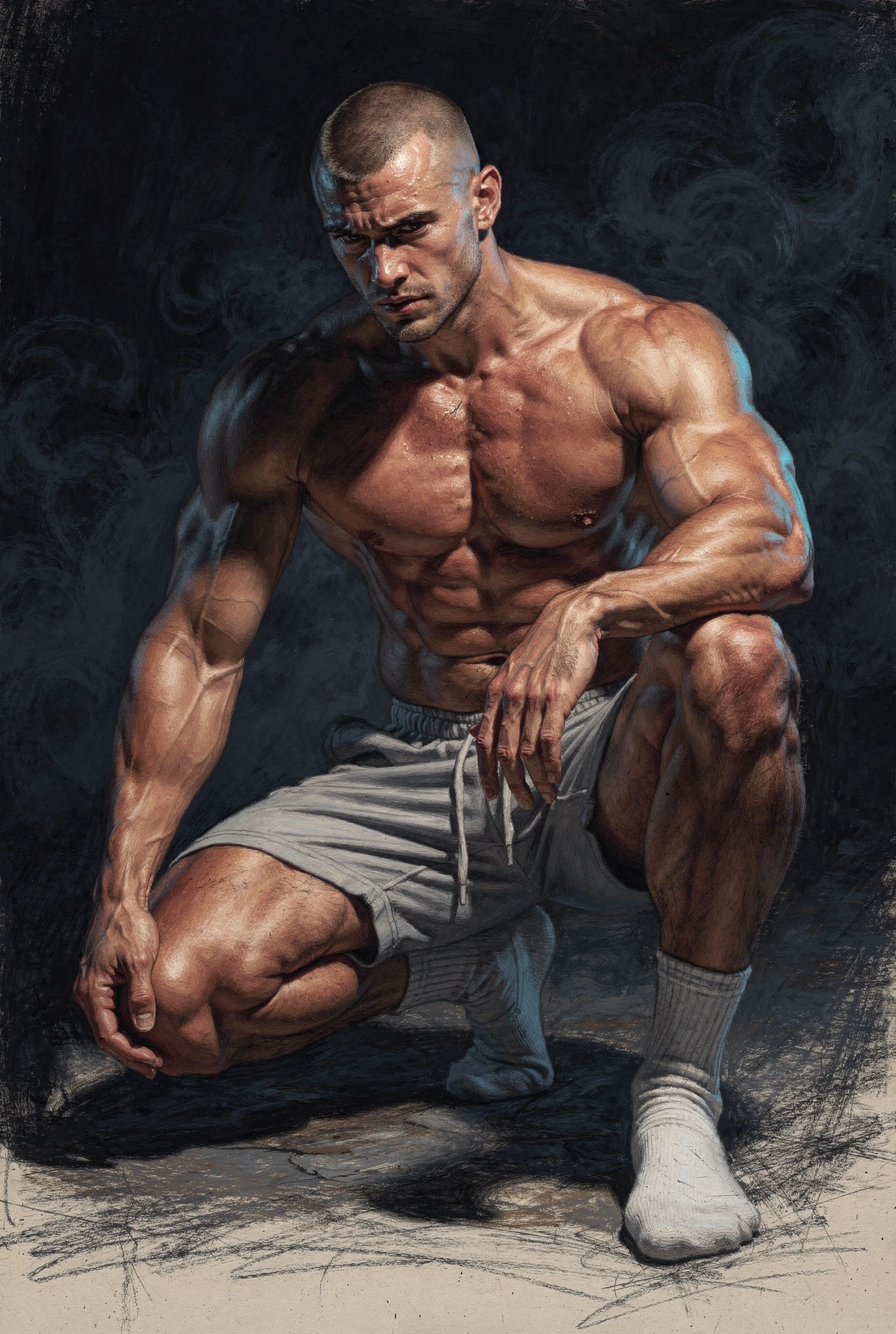
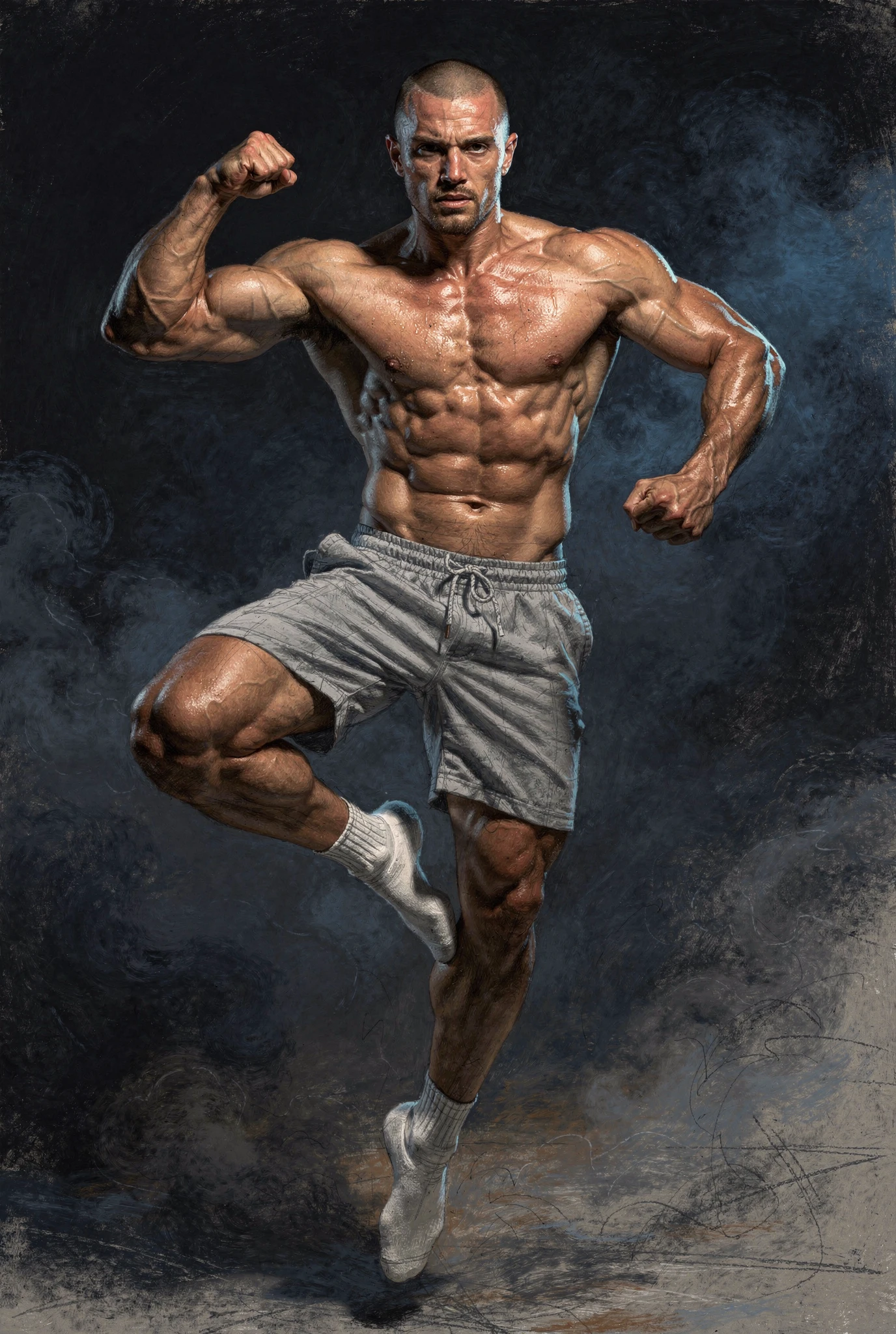
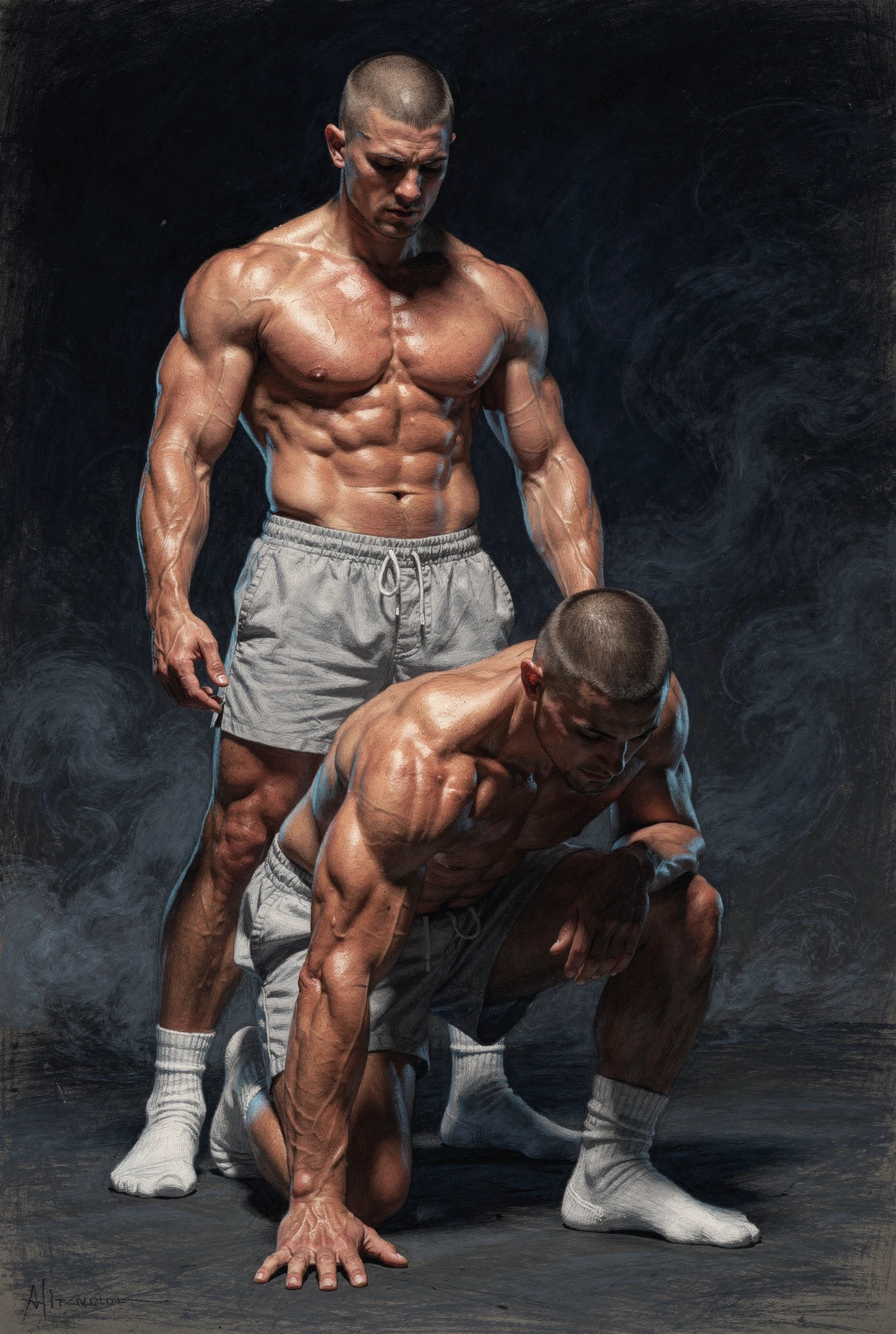
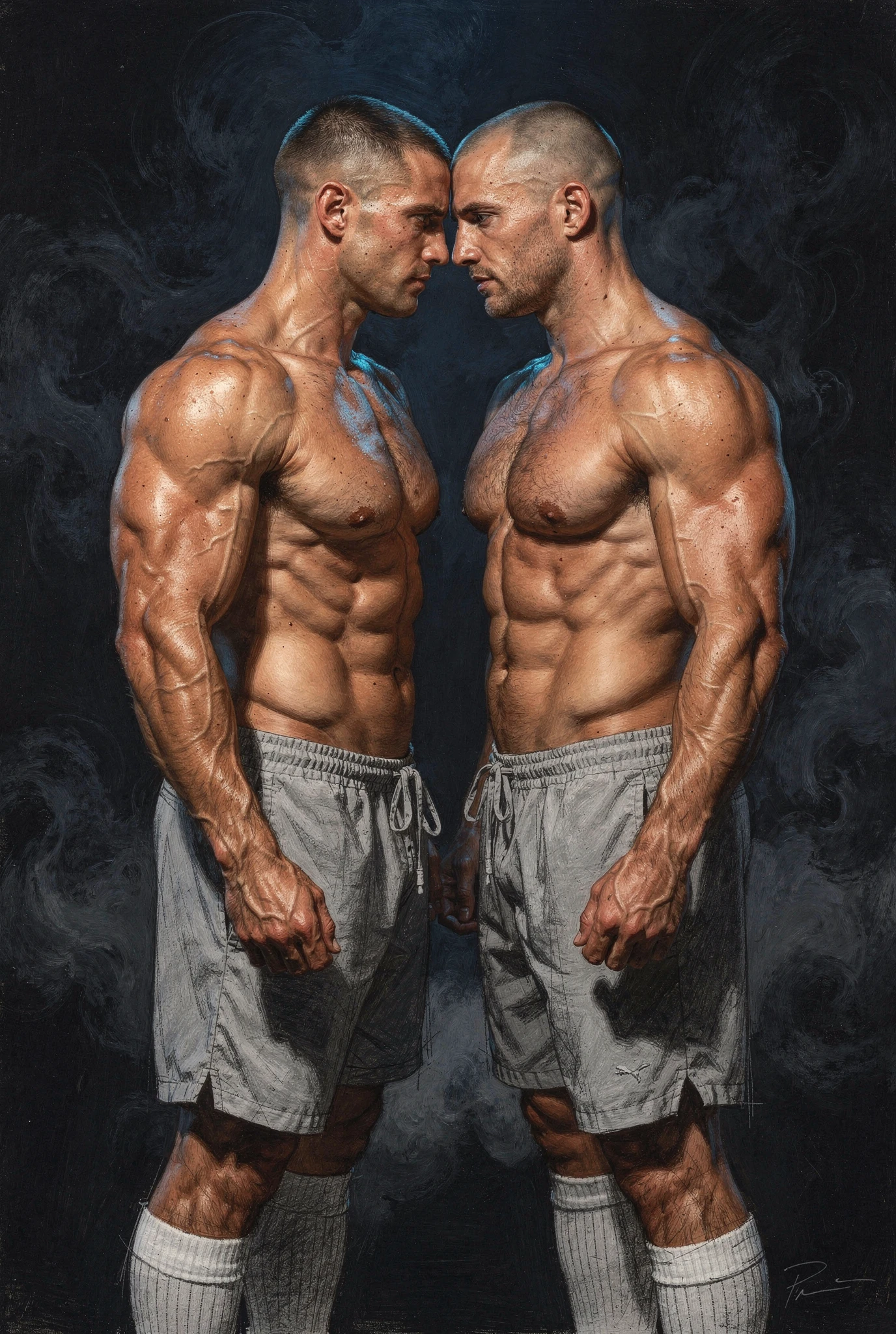
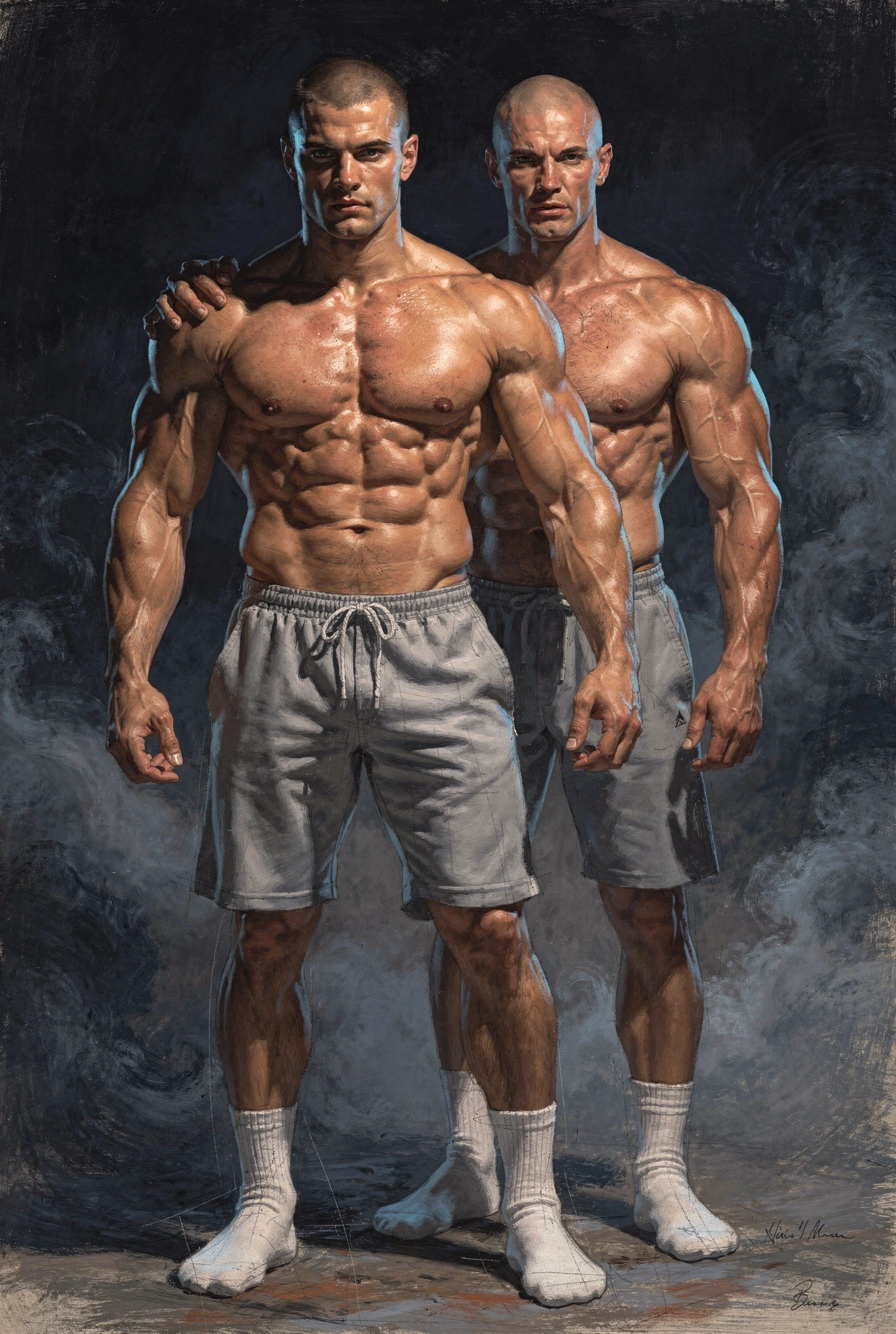
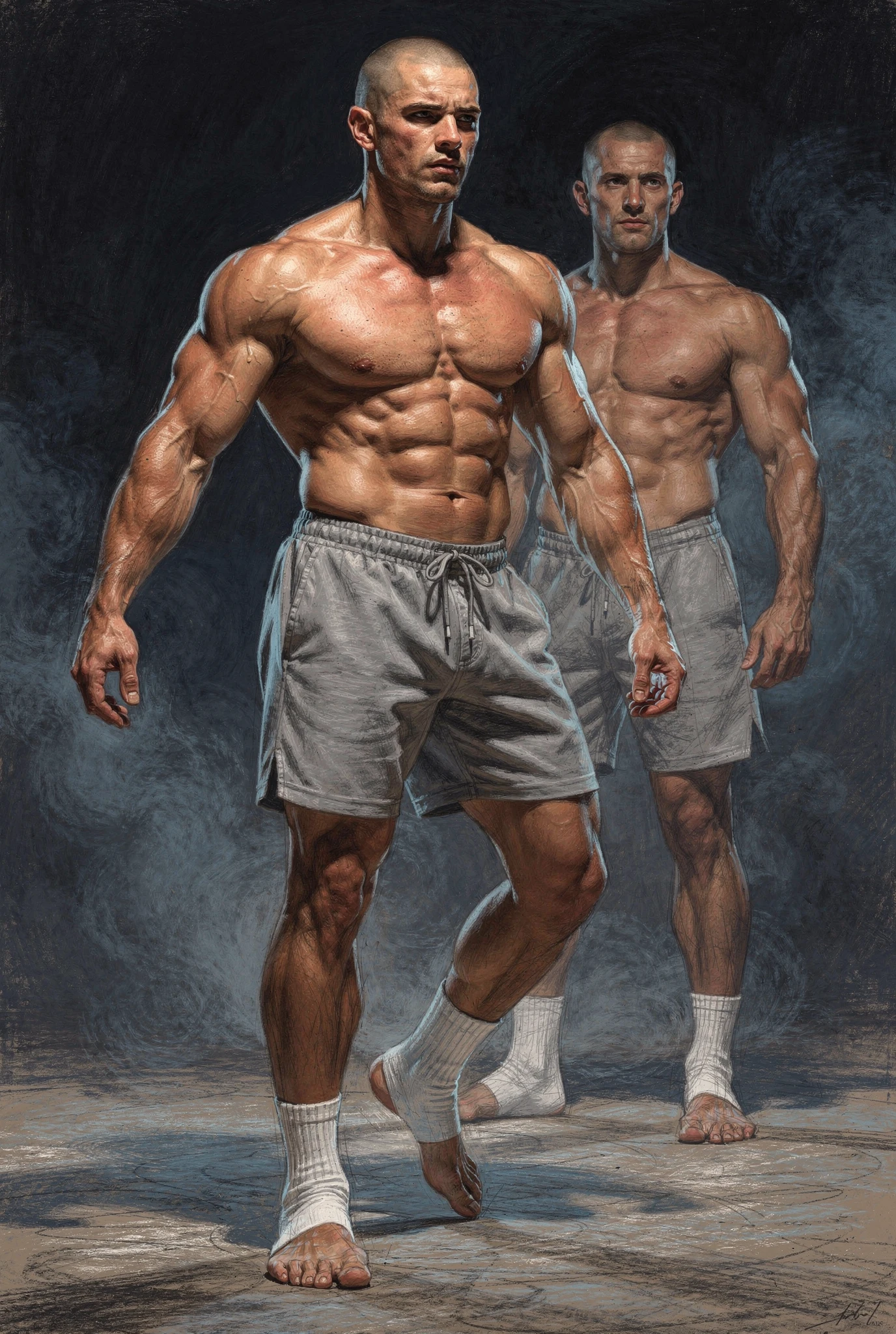
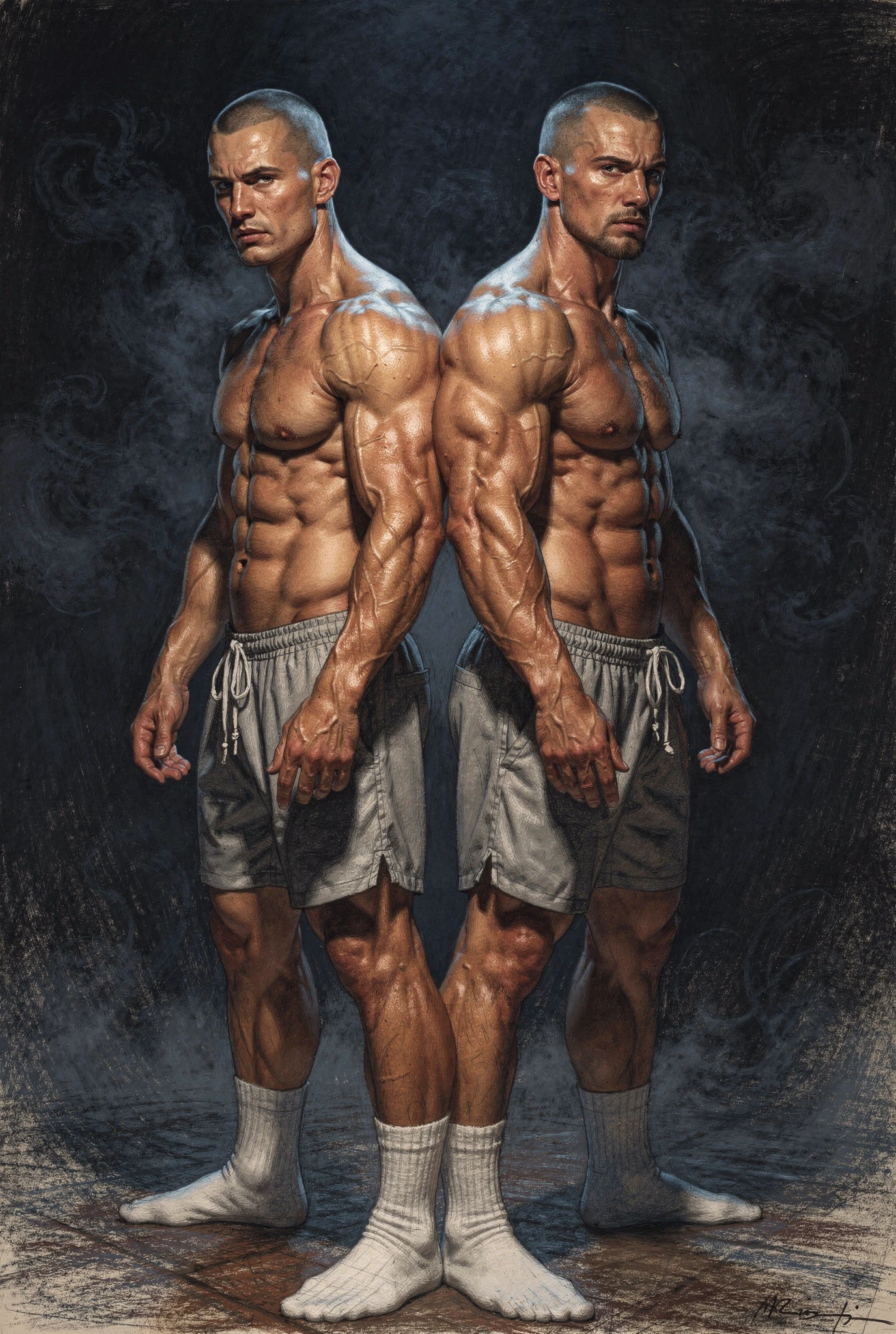
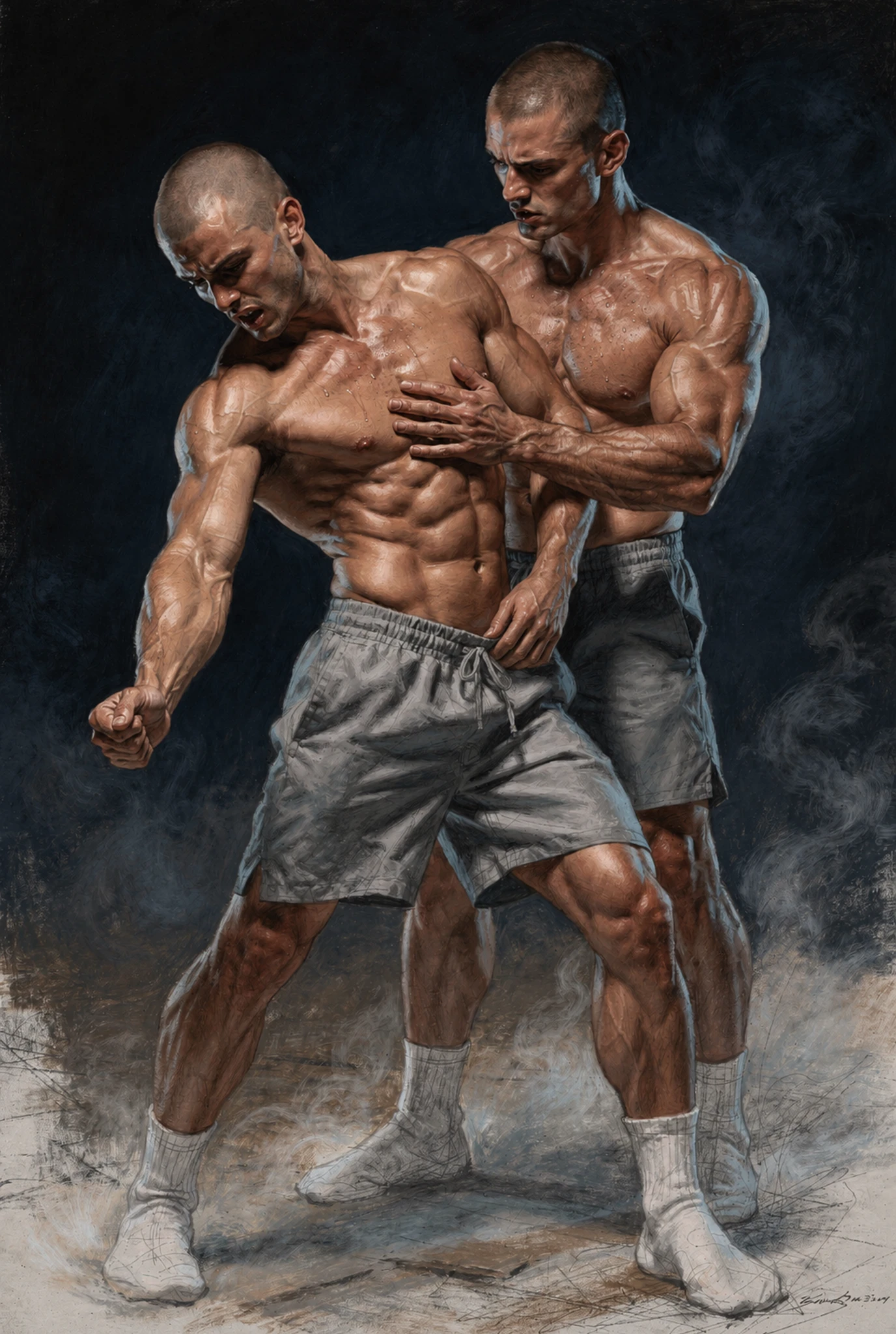
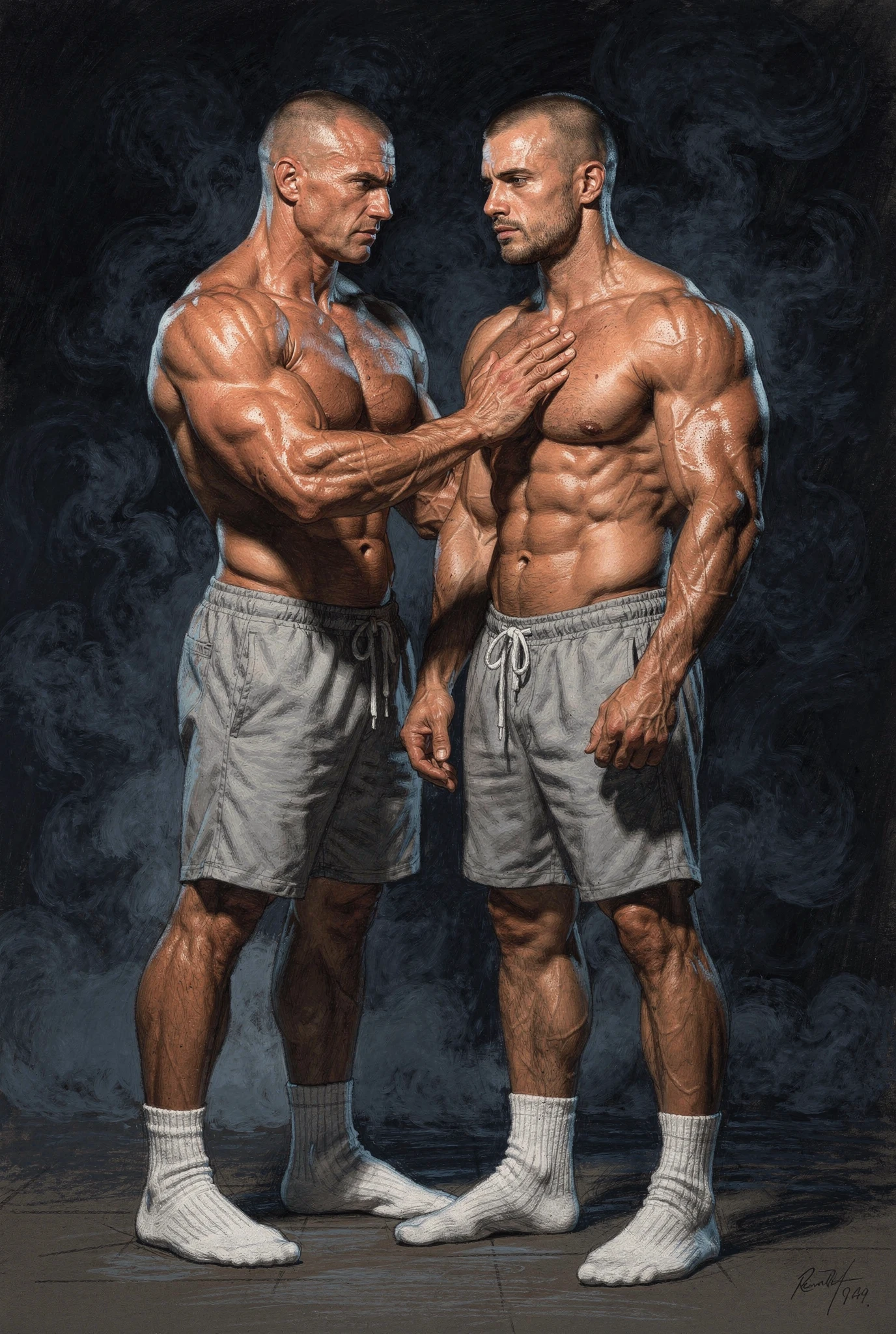
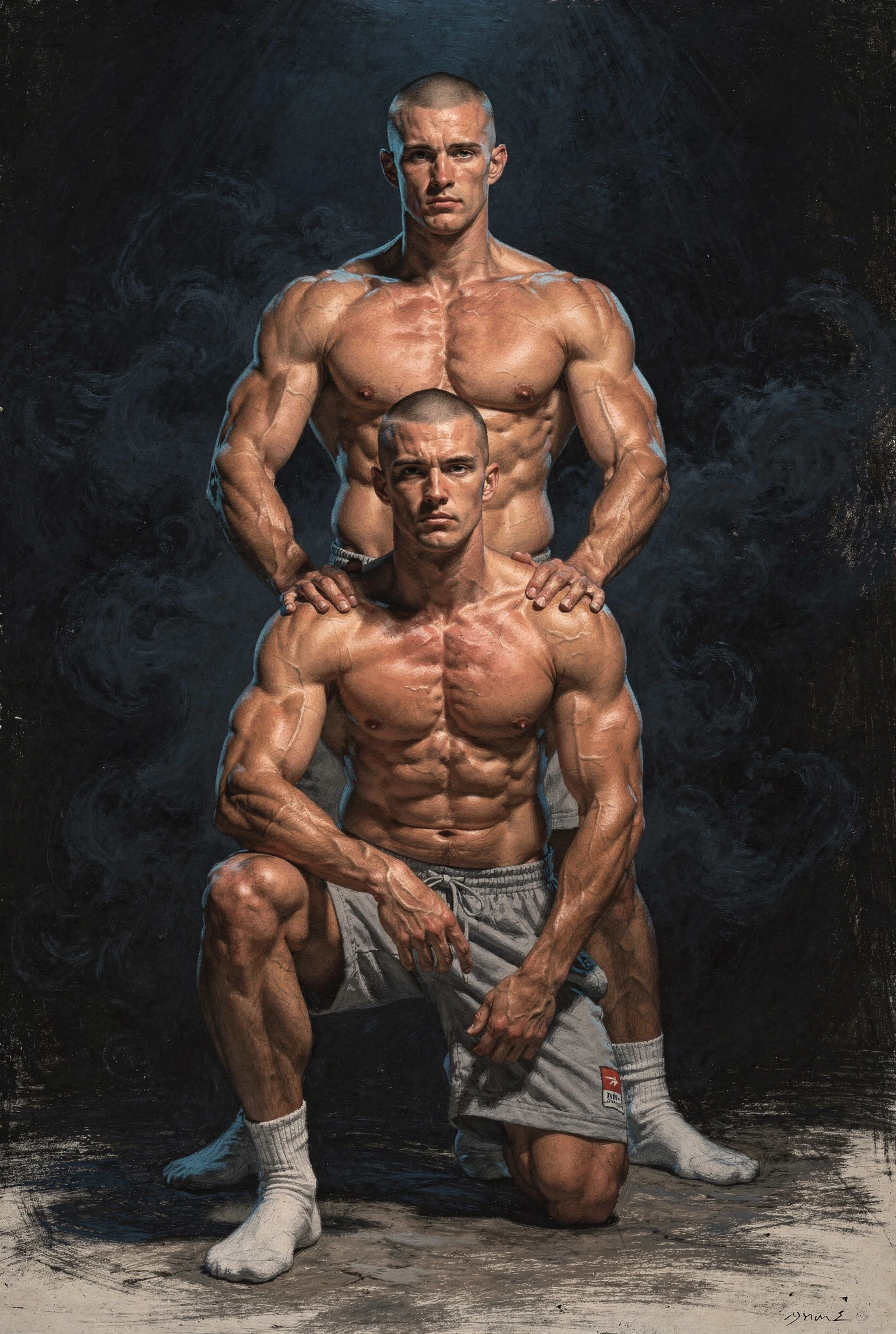
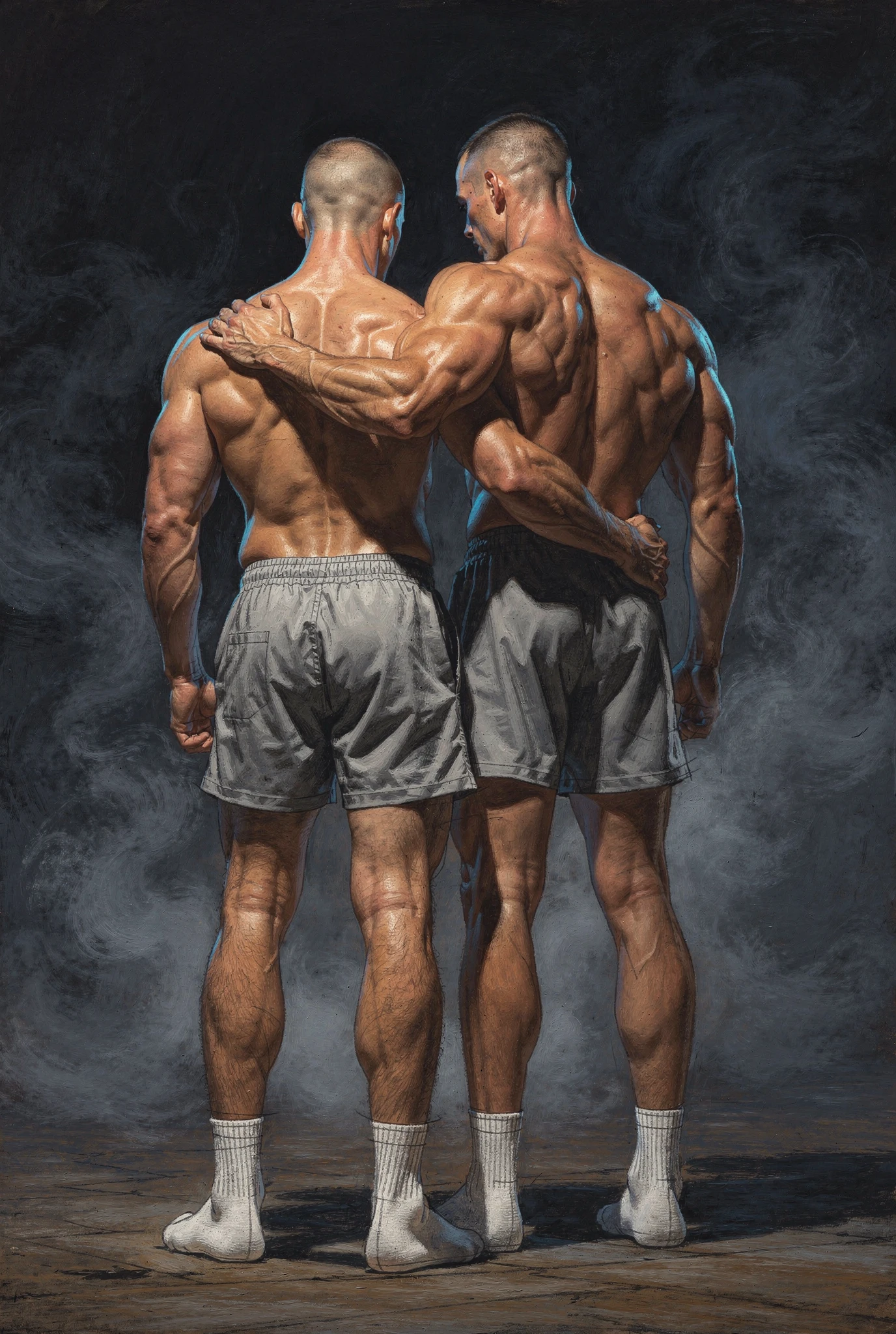
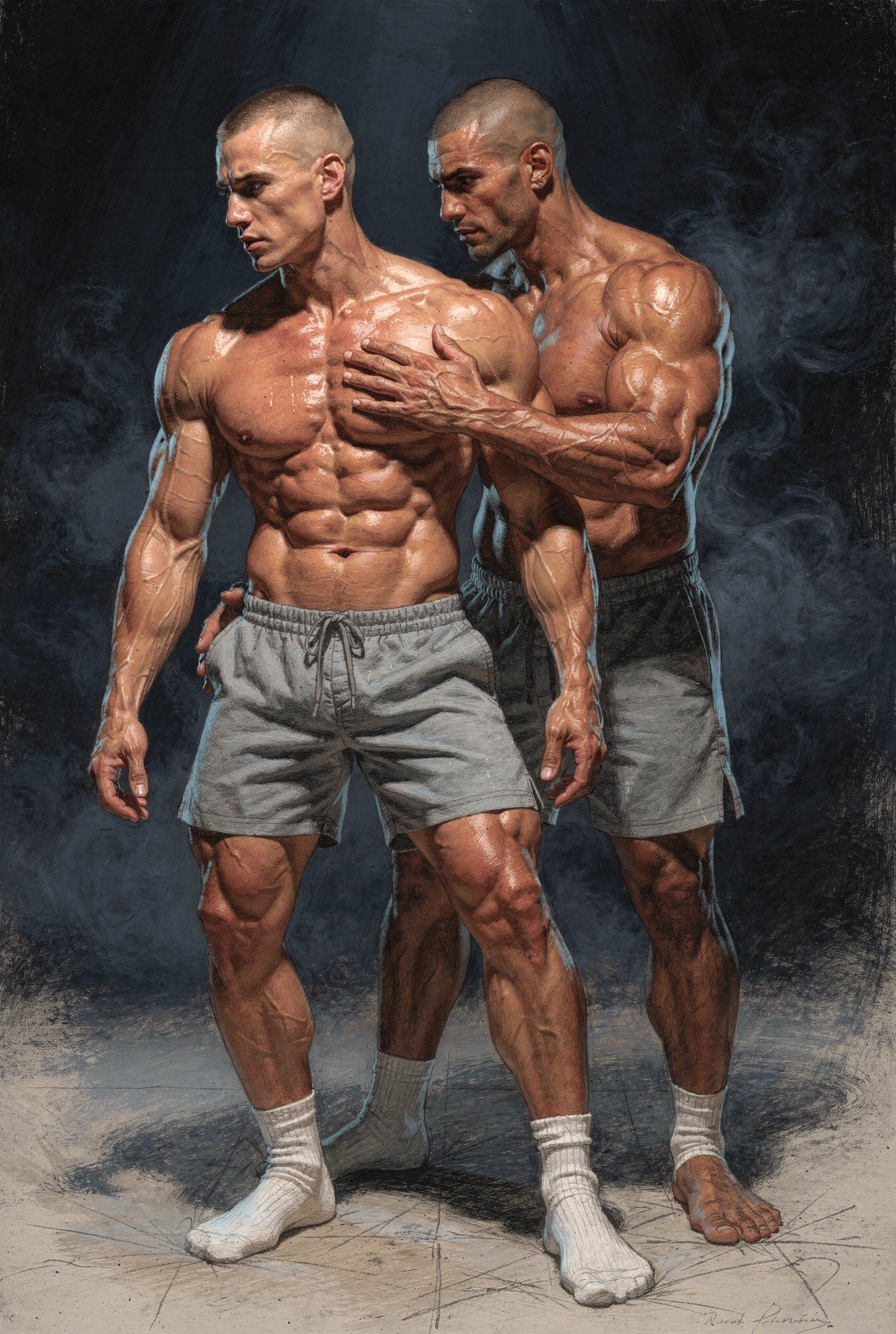
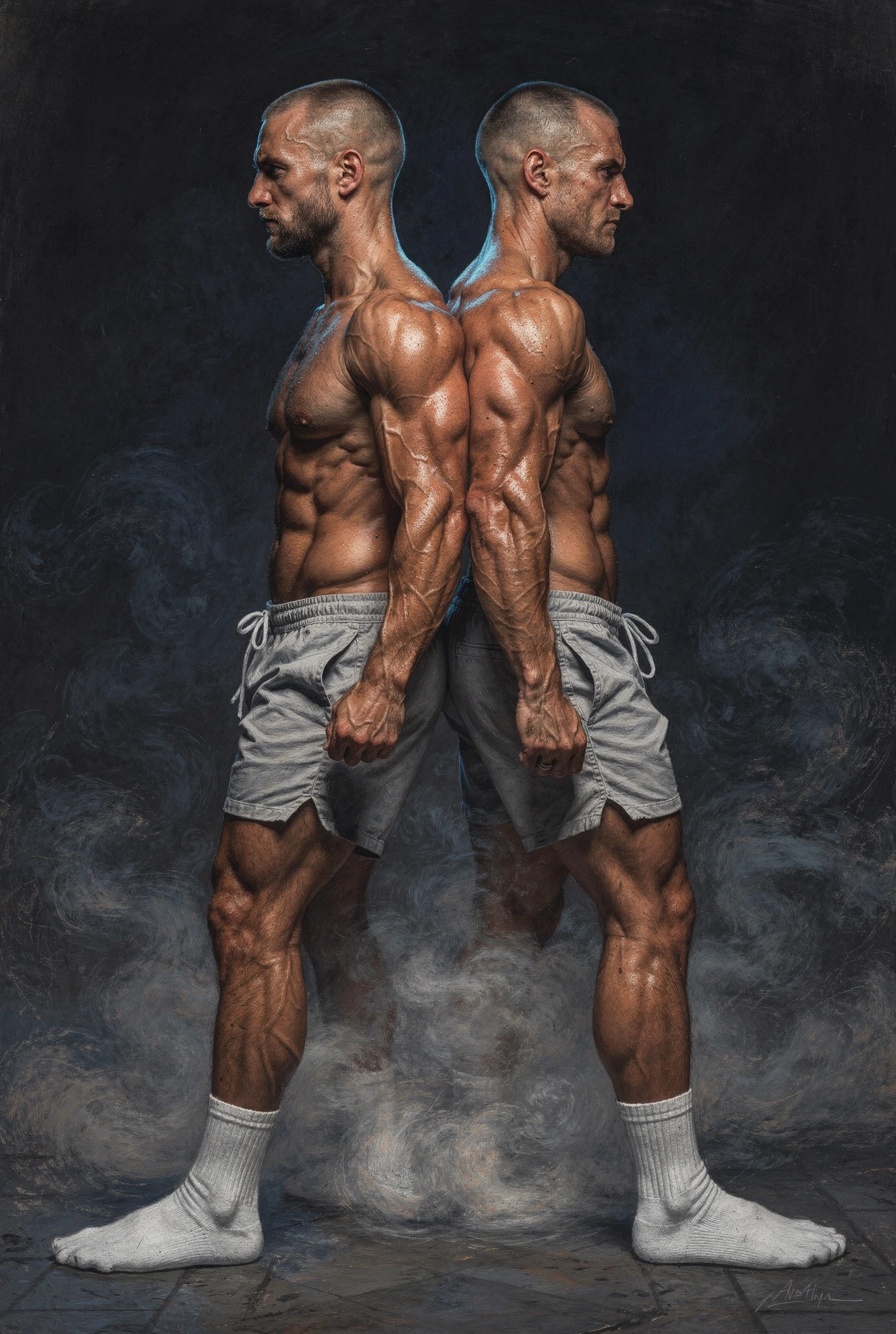
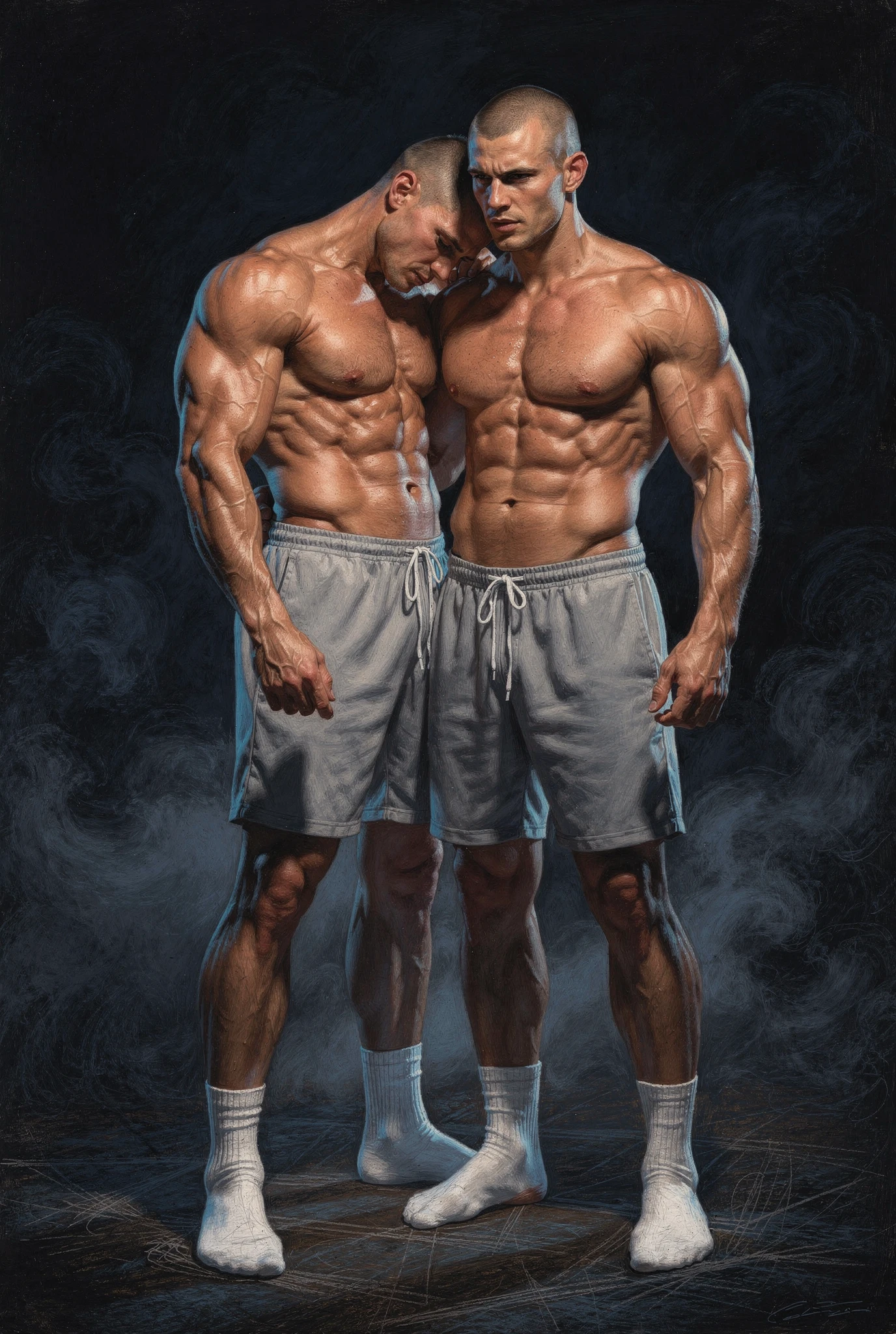
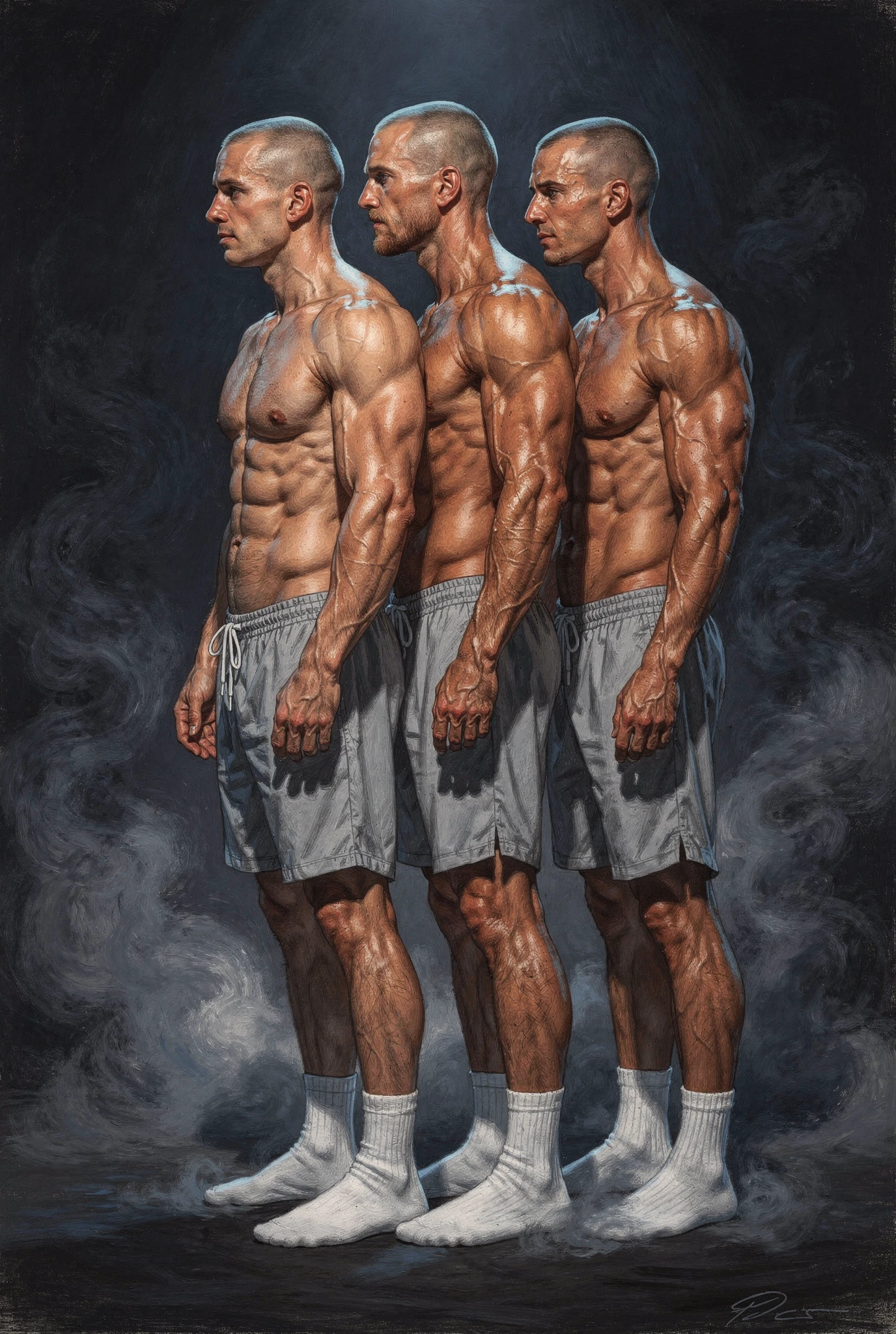
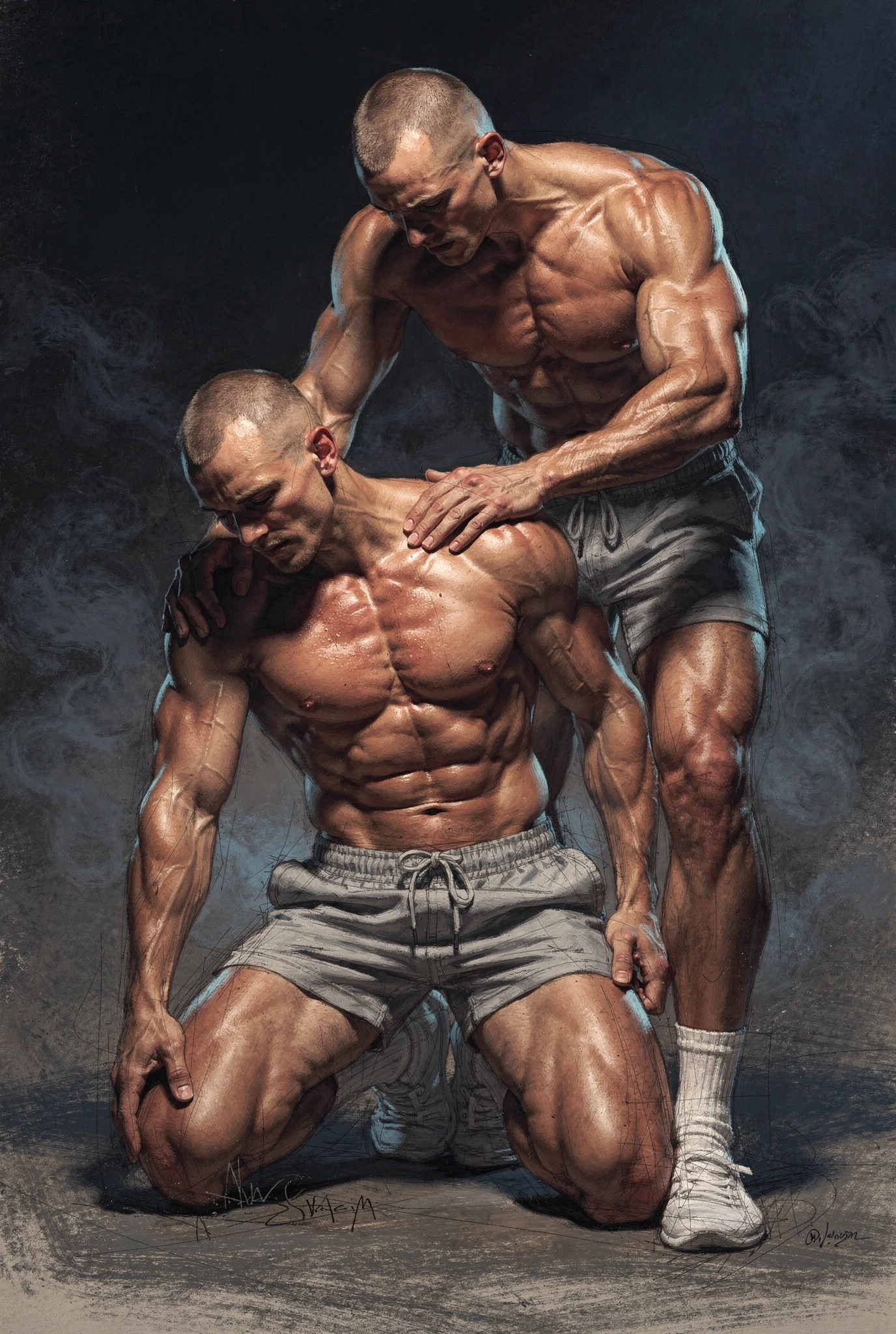
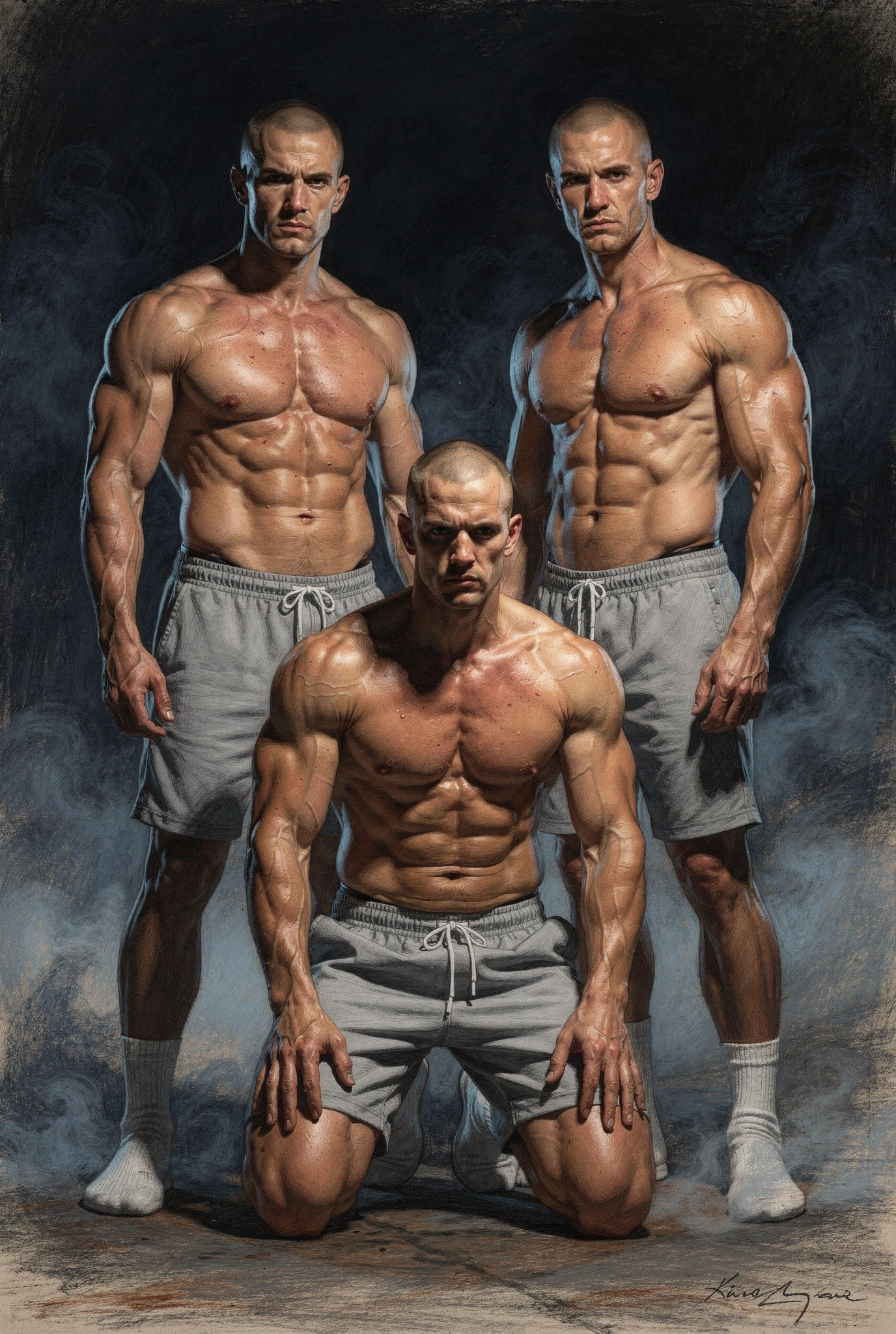
Across a series of composed encounters, this project asks what changes when the body is no longer alone. One figure may already carry beauty, force, vulnerability and desire; two figures create a circuit. A glance, a turned shoulder, a hand against skin, the narrow space between torsos — each becomes a charged sign. With three bodies, the scene changes again: pressure circulates, attention divides, and masculinity begins to behave less like an isolated pose than a shared physical language. Across these encounters, bodies meet in states of proximity, pressure and restraint. They lean, brace, yield, support, push, hold and resist. A shoulder becomes a point of force, a hand becomes a hinge, a back becomes a surface of trust. Each image holds the moment before resolution, where contact remains unfinished and desire has not been reduced to explanation.
The homo-erotic dimension of the work is obvious, but it remains unresolved. It is not decorative, coy, or hidden like contraband, yet neither is it explicit or crude. The charge belongs to posture, weight, skin, breath, nearness and control. Sometimes the contact appears tender; sometimes it appears controlling; sometimes it hovers between the two. These men are aware of their strength and attractiveness, but they are not trapped inside the old choreography of dominance, rivalry or denial. They inhabit their bodies without apology. They touch without panic. They occupy a space in which male intimacy is not immediately converted into threat, ridicule, shame or taboo. The question is not whether they are gay or straight, but what becomes possible when those anxious labels lose their authority and the body is allowed to speak first. Nothing explicit takes place, yet everything is suggested: not as provocation, but as atmosphere, intelligence and permission.
In this sense, Tension imagines a world beyond defensive masculinity. It proposes another physical language for men, shaped by trust, restraint, surrender, mutual recognition, poise and bodily awareness. The men are under pressure, but not under threat. They are exposed, but not humiliated. They are powerful, but not brutal. Their bodies are fictional, produced through artificial intelligence, yet the contact they suggest feels strangely intimate: no one posed, no one touched, no camera witnessed the scene, and still the images are full of heat, weight and relation. That contradiction is central to the work. These are simulated bodies, but they activate real questions about looking, desire, fear and freedom. The project imagines eroticism as confidence rather than secrecy, contact as knowledge rather than violation, and beauty as something men may share without shame.
Gallery
"A man is one whose body has been trained to be the ready servant of his mind." — John Ruskin