Camoufleur: AI-generated pixel camo
The French slang word camouflage came into common English usage during World War I when the concept of visual deception developed into an essential part of modern military tactics. During the First World War, artists, theatre painters and designers were recruited as camoufleurs: people trained to make things difficult to see, recognise or target. It was never only about blending in. Dazzle camouflage, painted across ships in bold geometric schemes, did almost the opposite. It accepted that a ship could not be hidden, then used broken forms and violent contrasts to confuse its apparent size, speed and direction. From the beginning, camouflage belonged to both art and strategy.
Digital camouflage extends that history into the logic of pixels. Instead of imitating leaves, mud or snow directly, it samples an environment into blocks of colour, scale and contrast. Seen close up, the pattern may look artificial, even awkward: little square fragments, stepped edges, hard joins. Seen from further away, those fragments begin to fuse. Colours merge, outlines weaken, and anything wearing the pattern becomes harder to separate from its surroundings. Multi-scale camouflage is a type of military camouflage combining patterns at two or more scales, often (though not necessarily) with a digital camouflage pattern created with computer assistance. Pixel camouflage is therefore a distance machine: too clear nearby, less legible from afar.
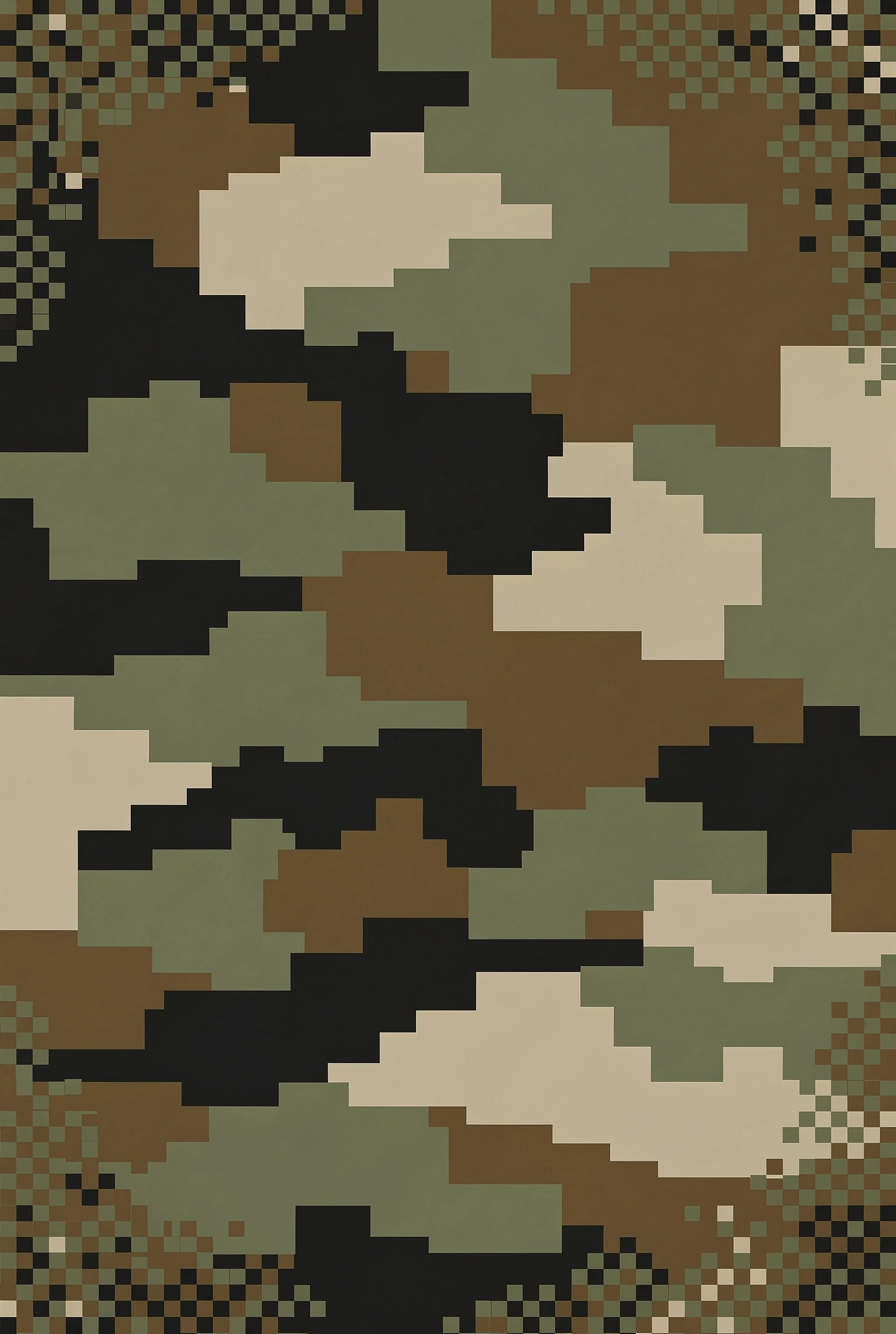
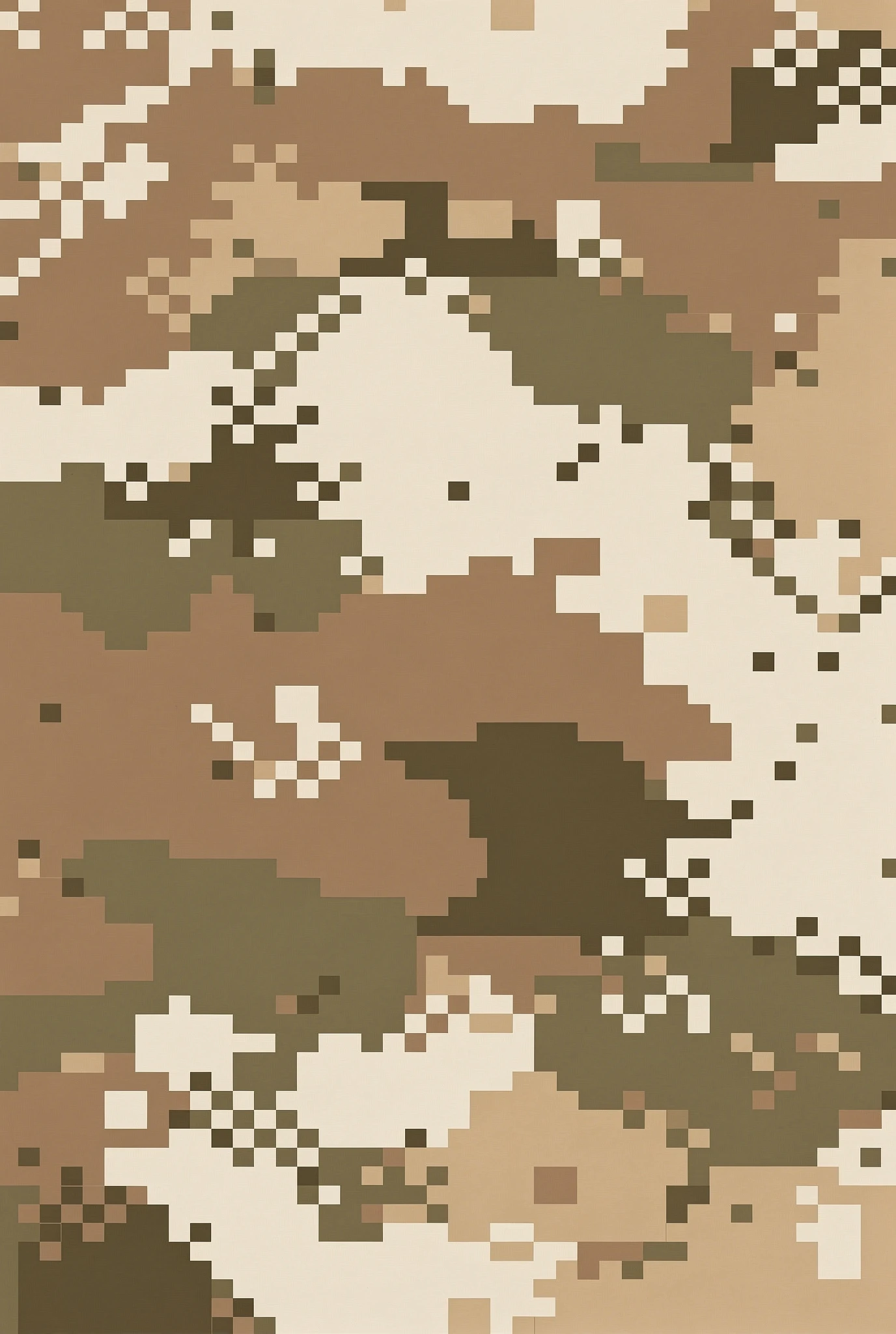
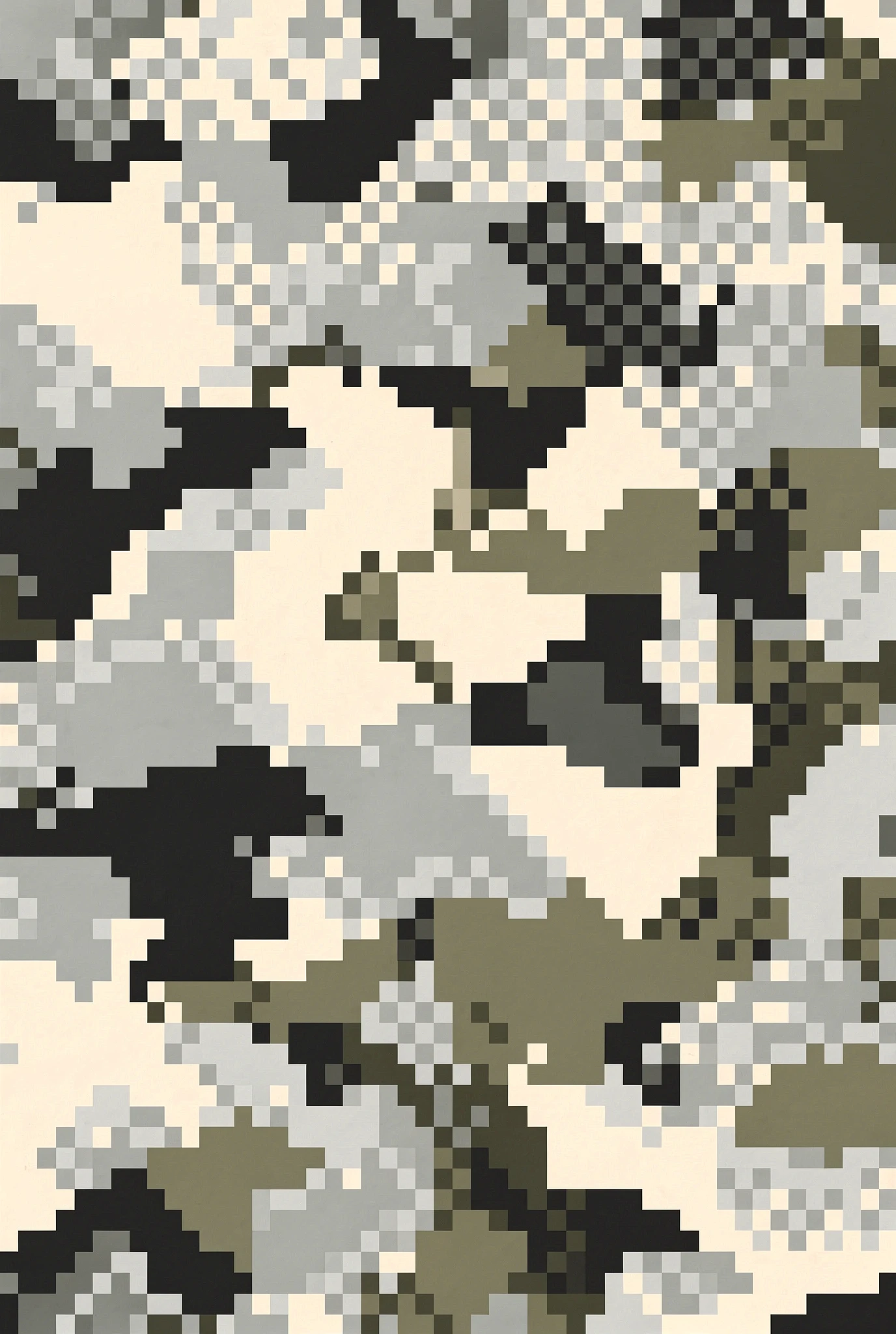
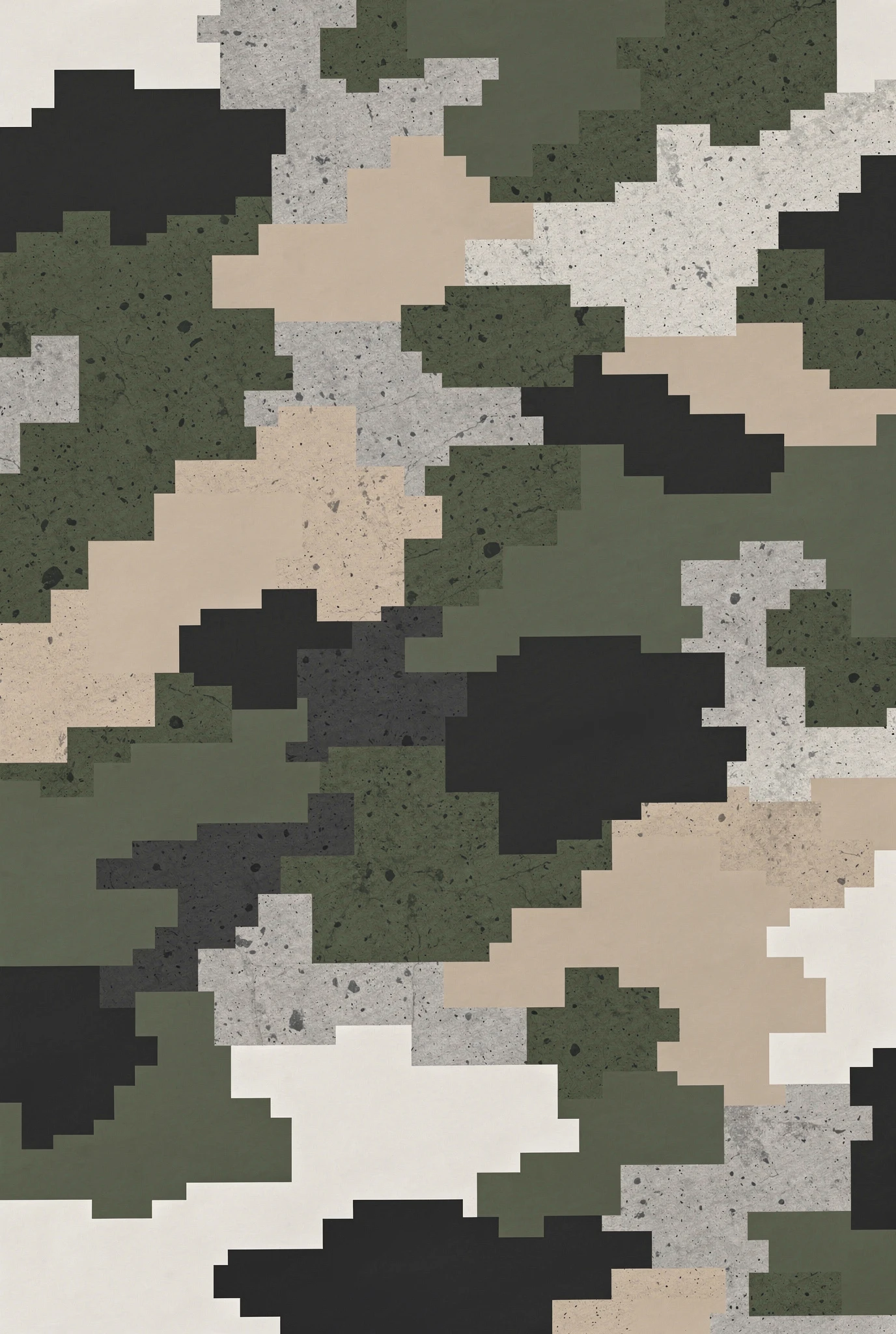
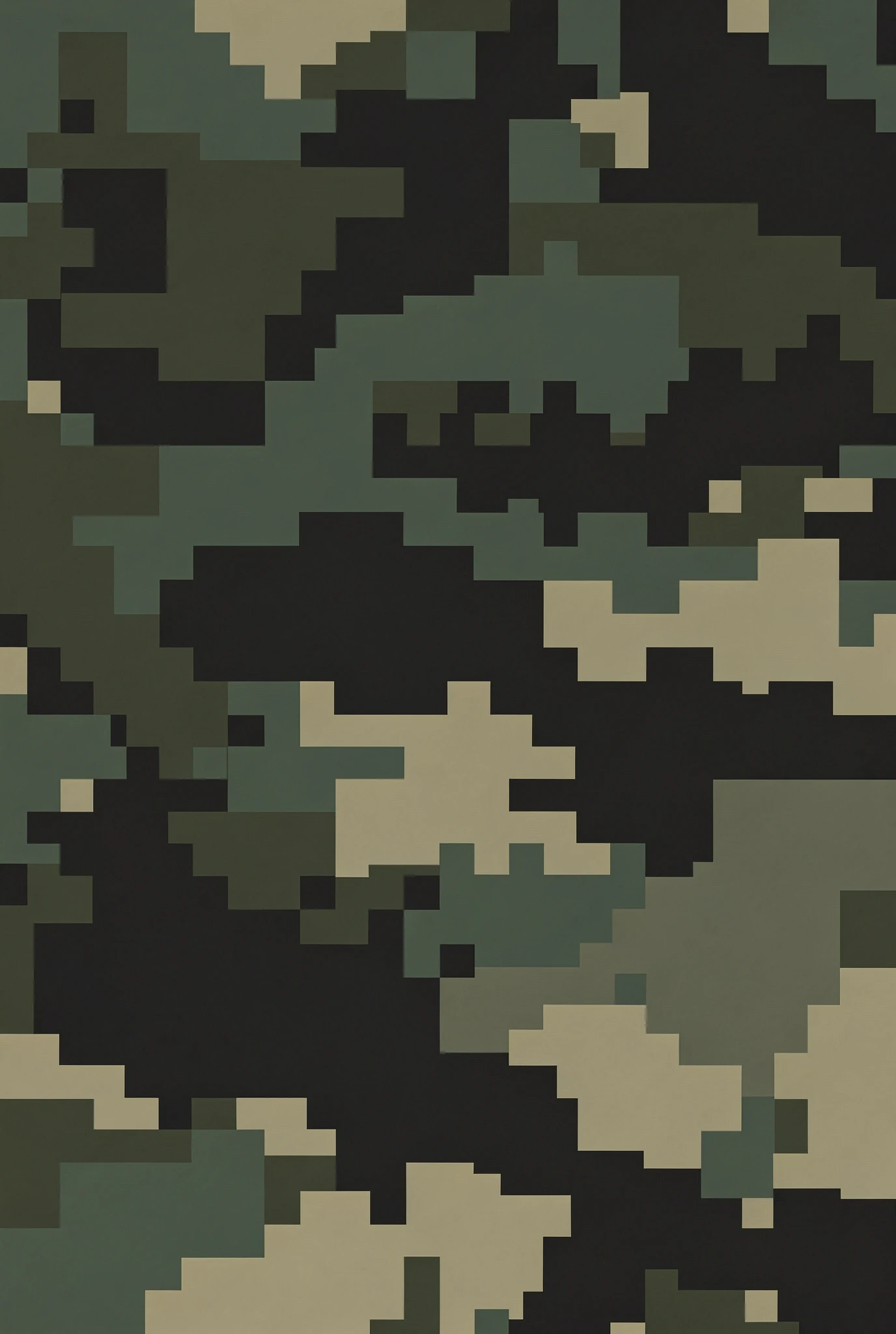
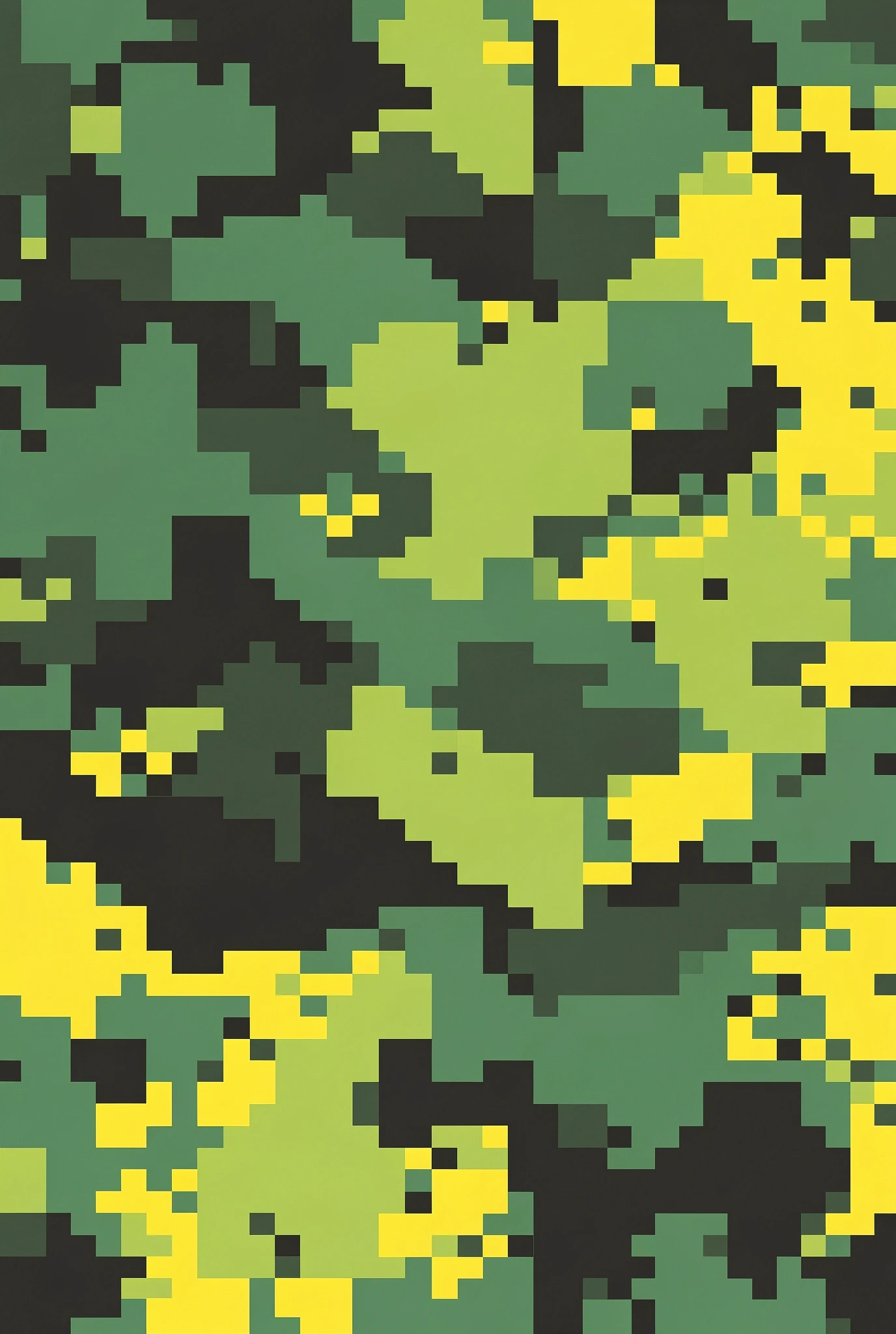
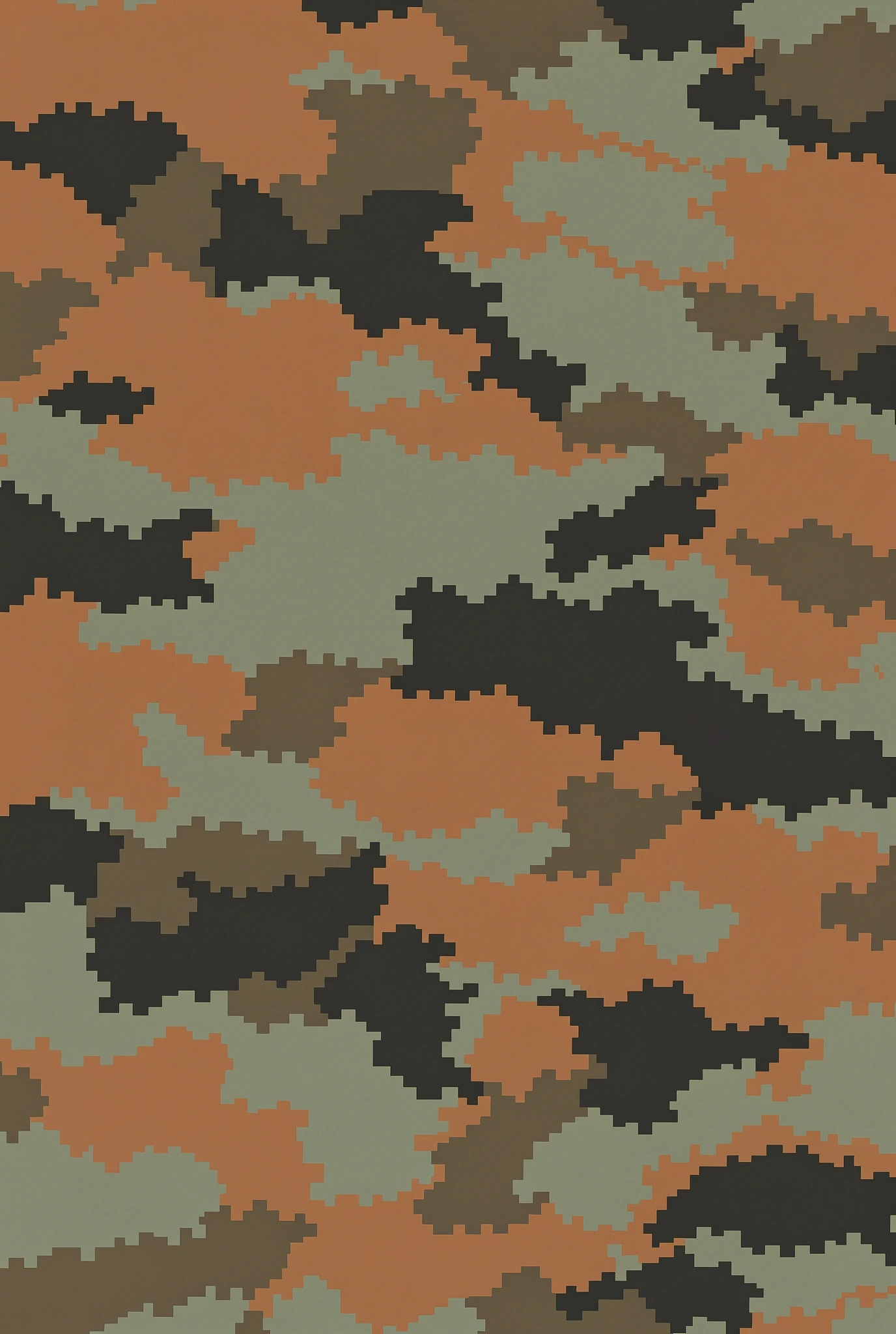
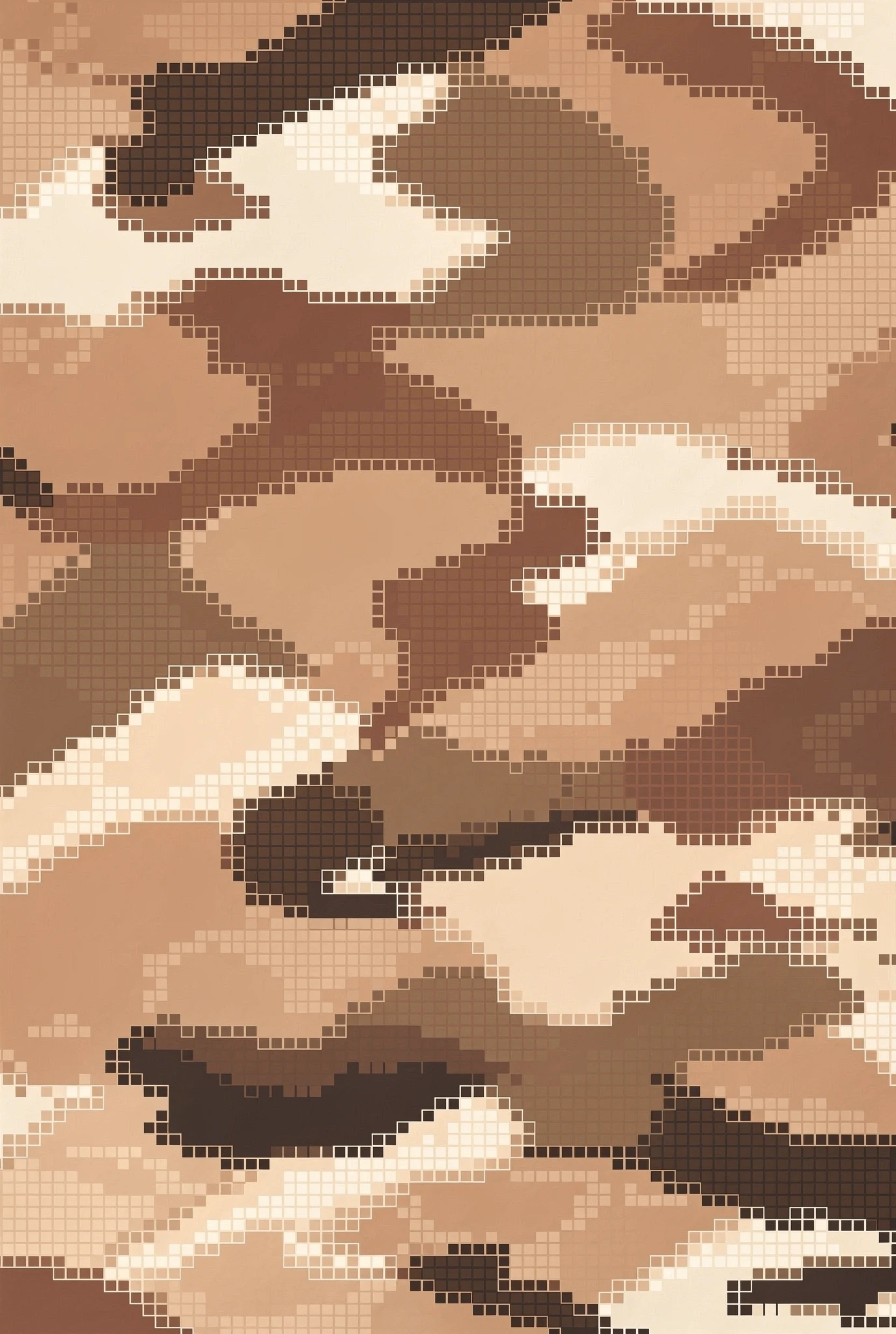
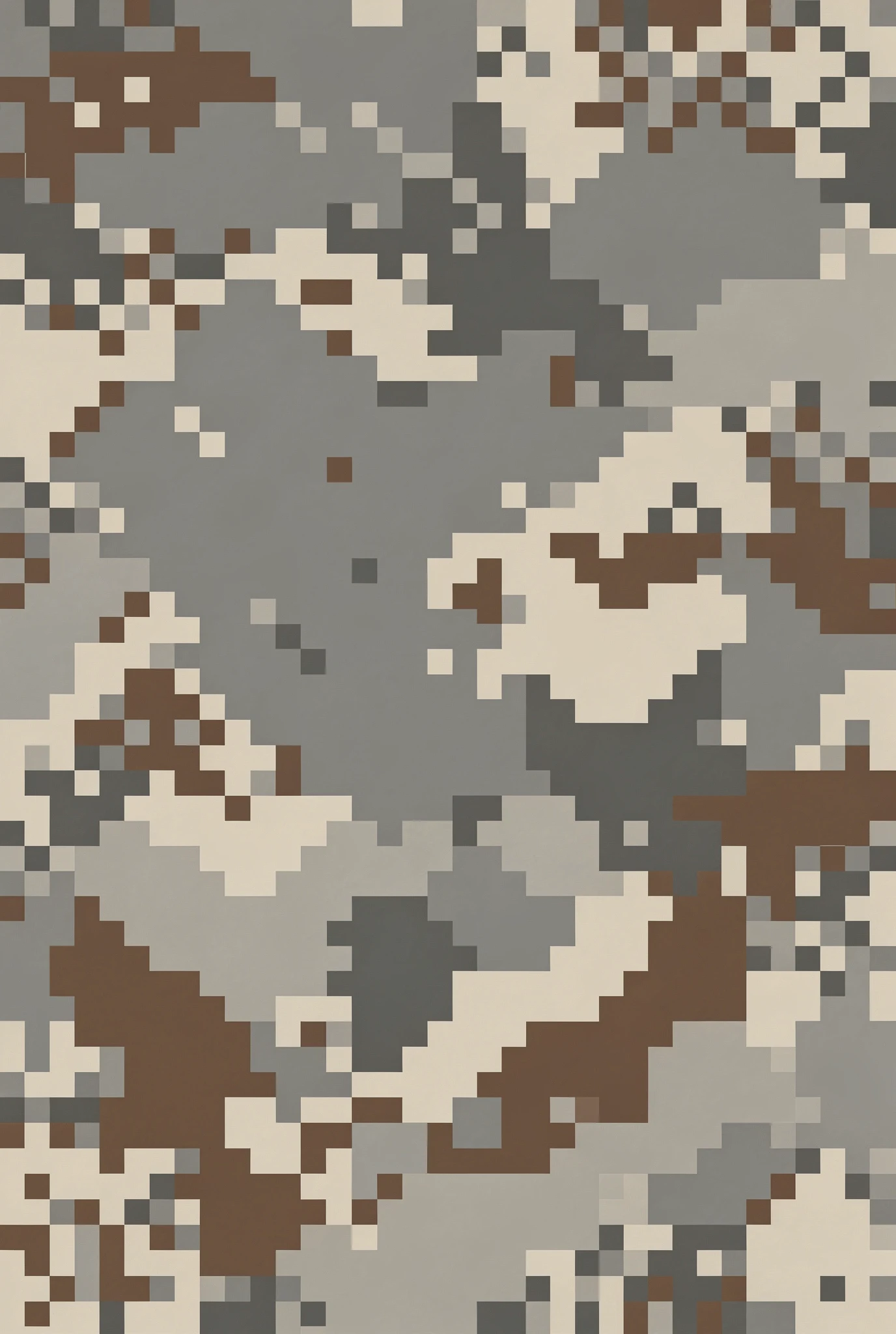
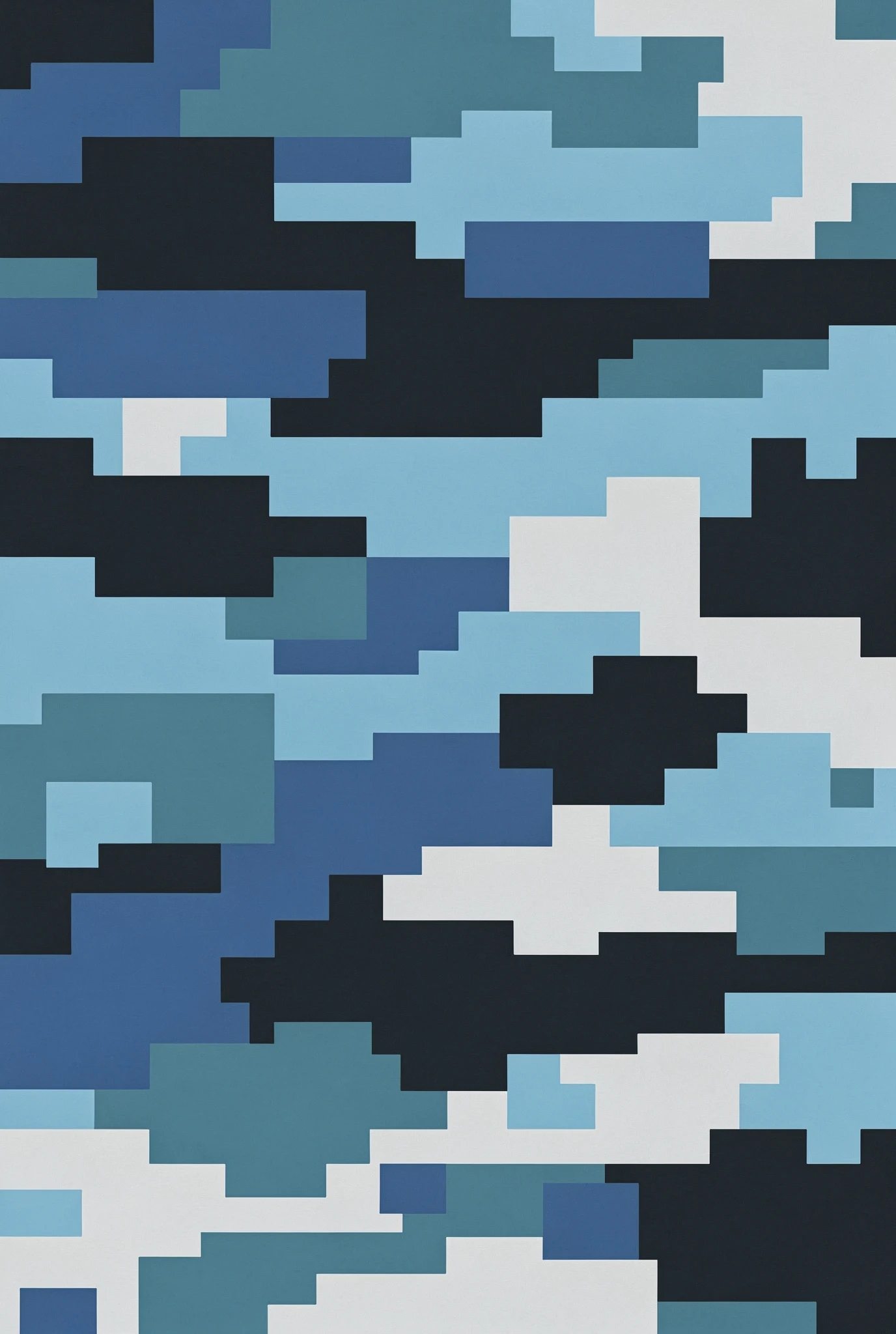
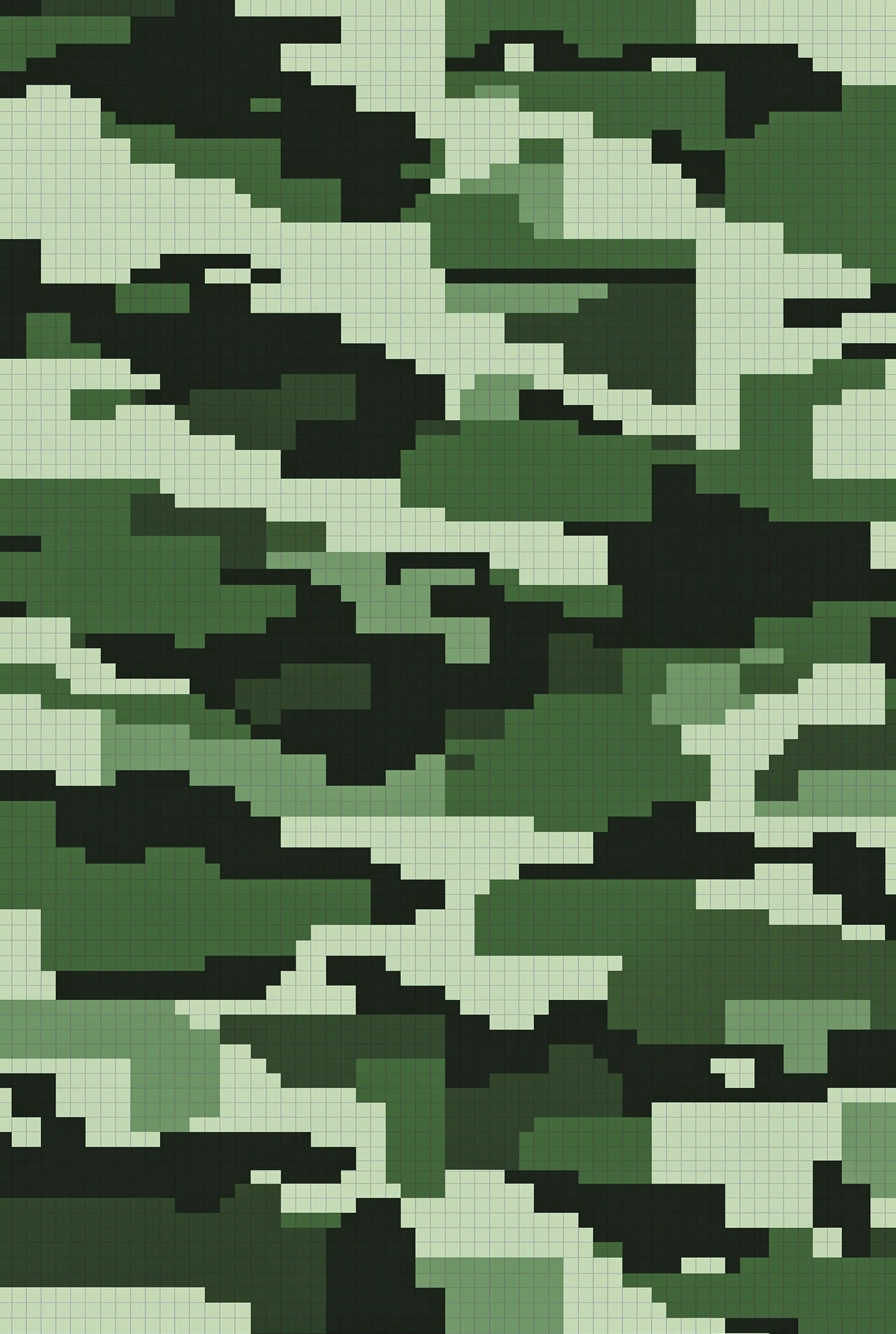
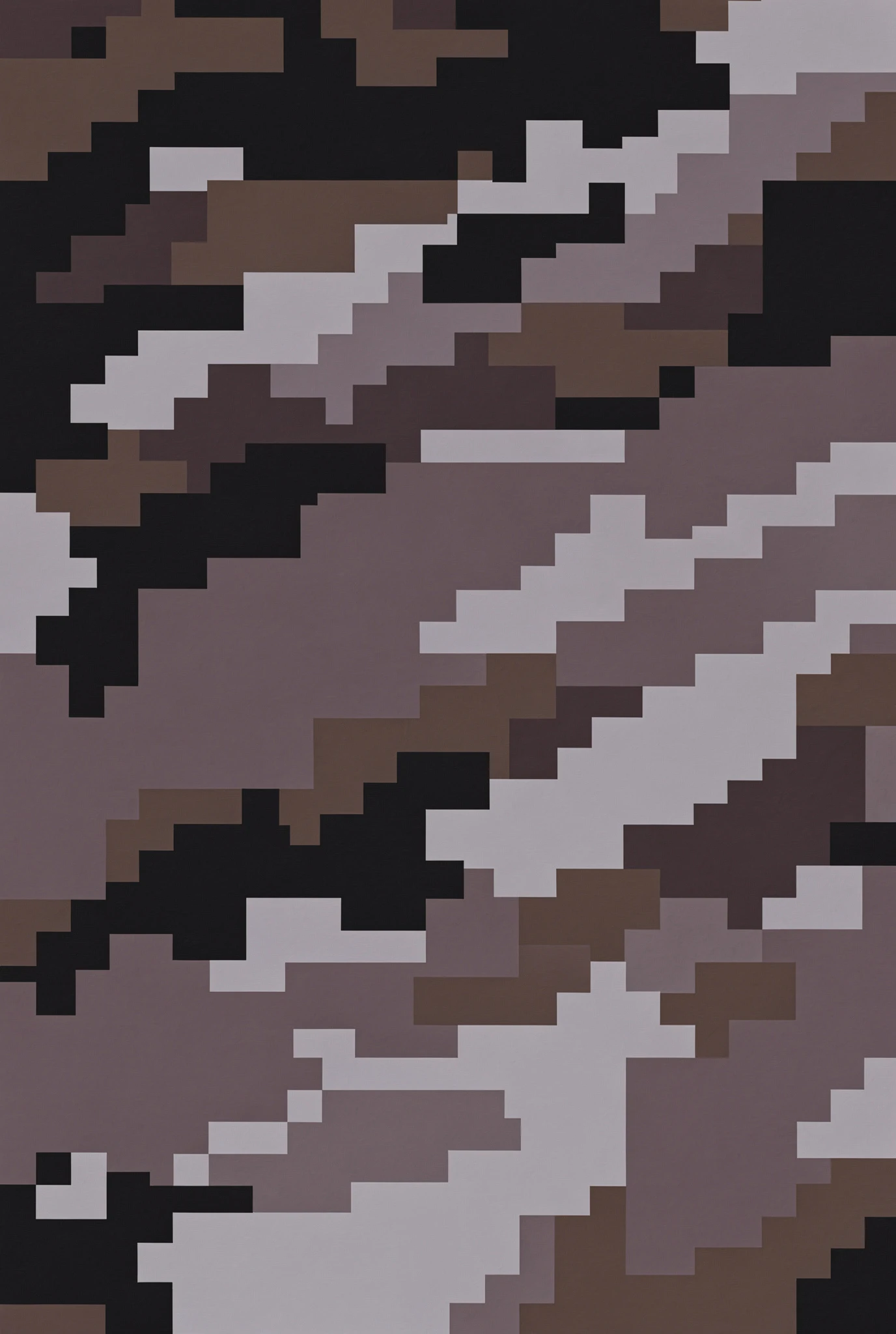
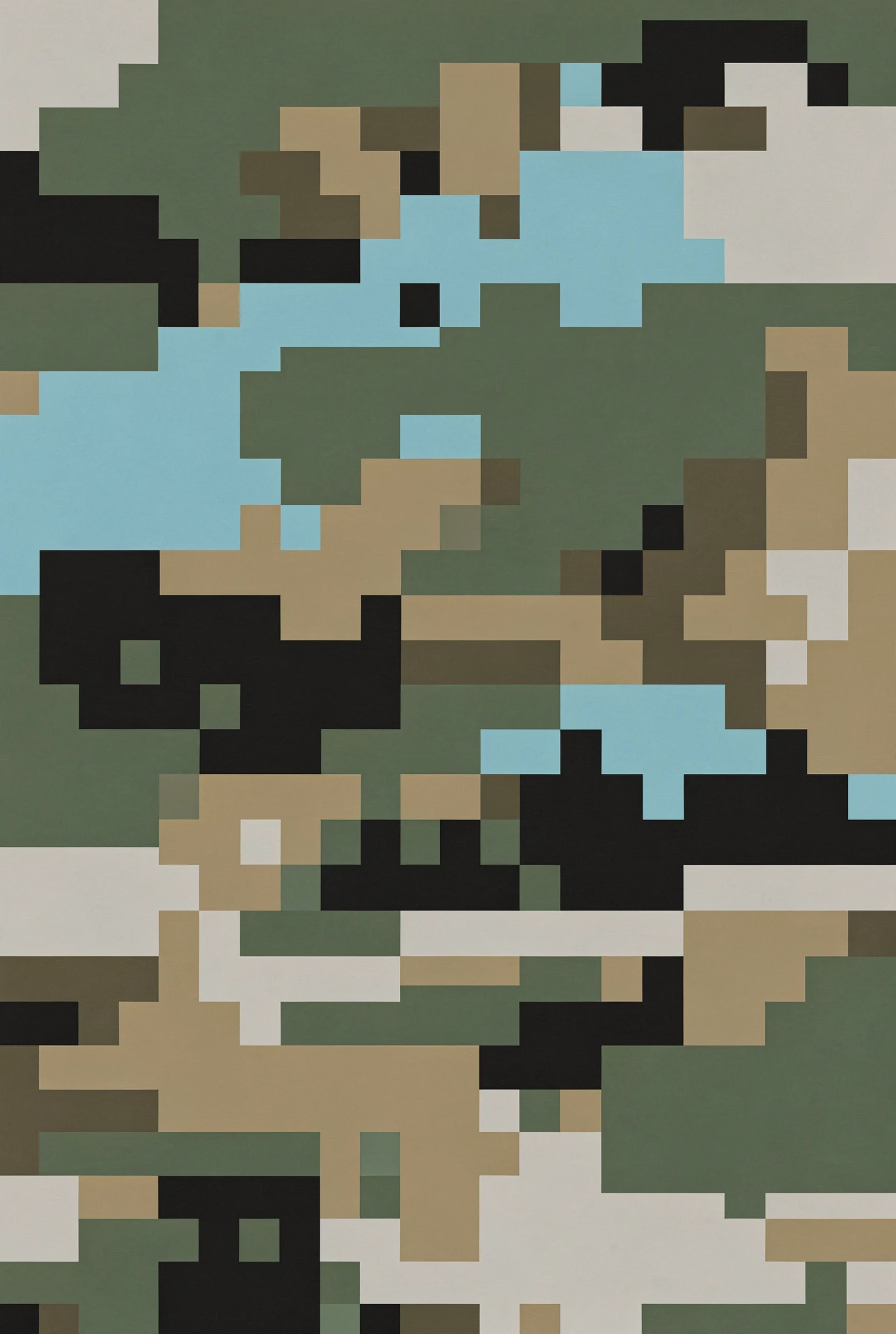
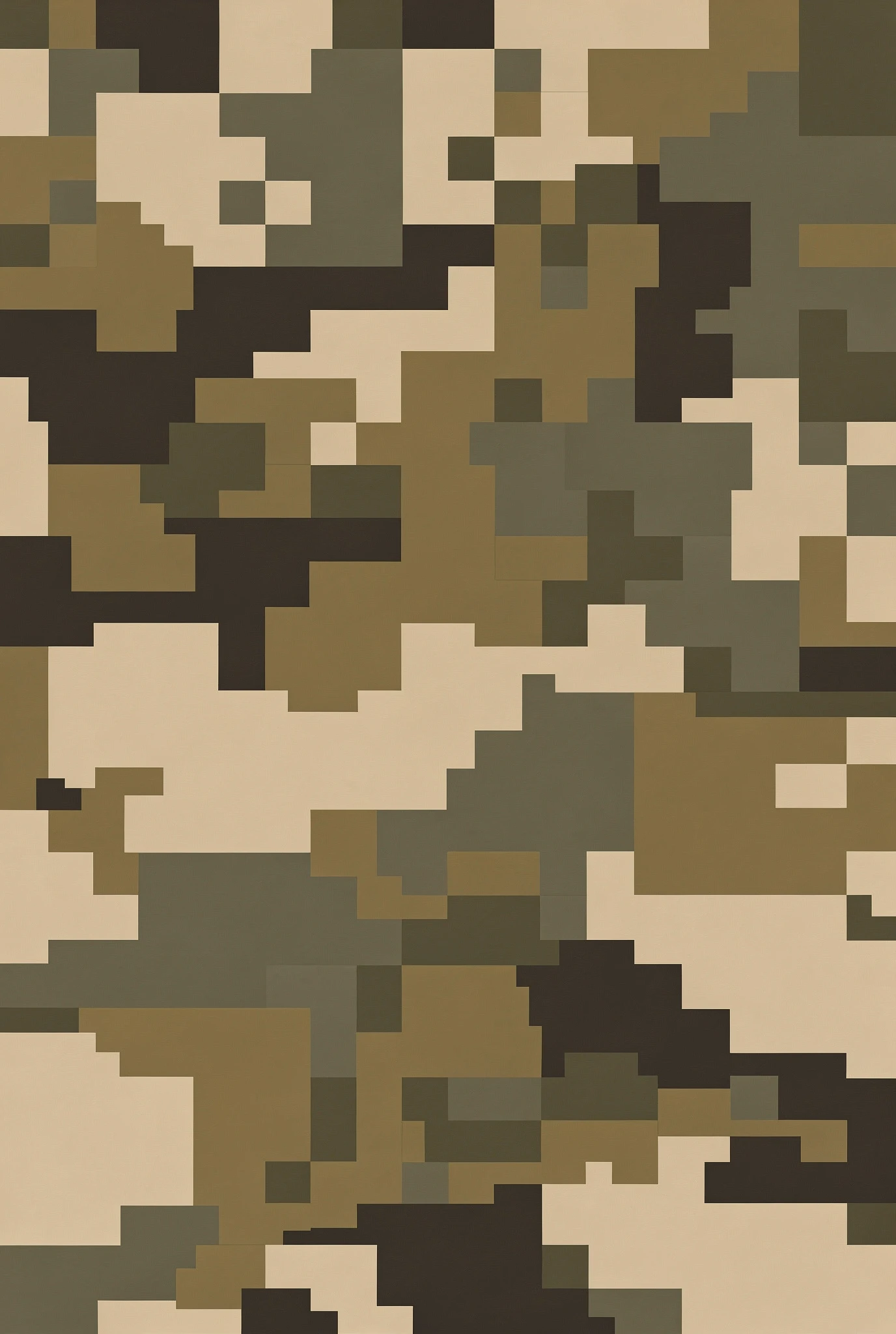
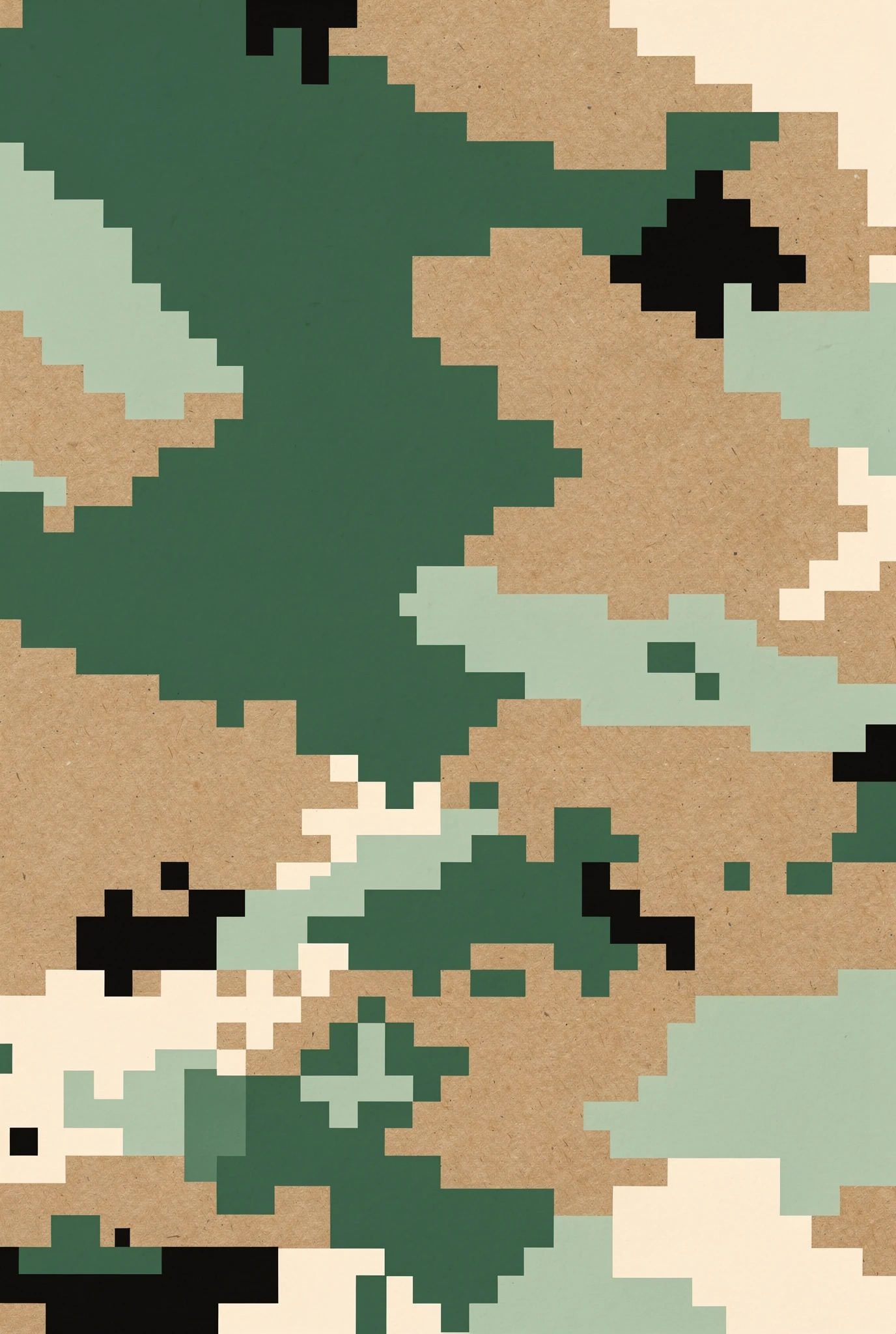
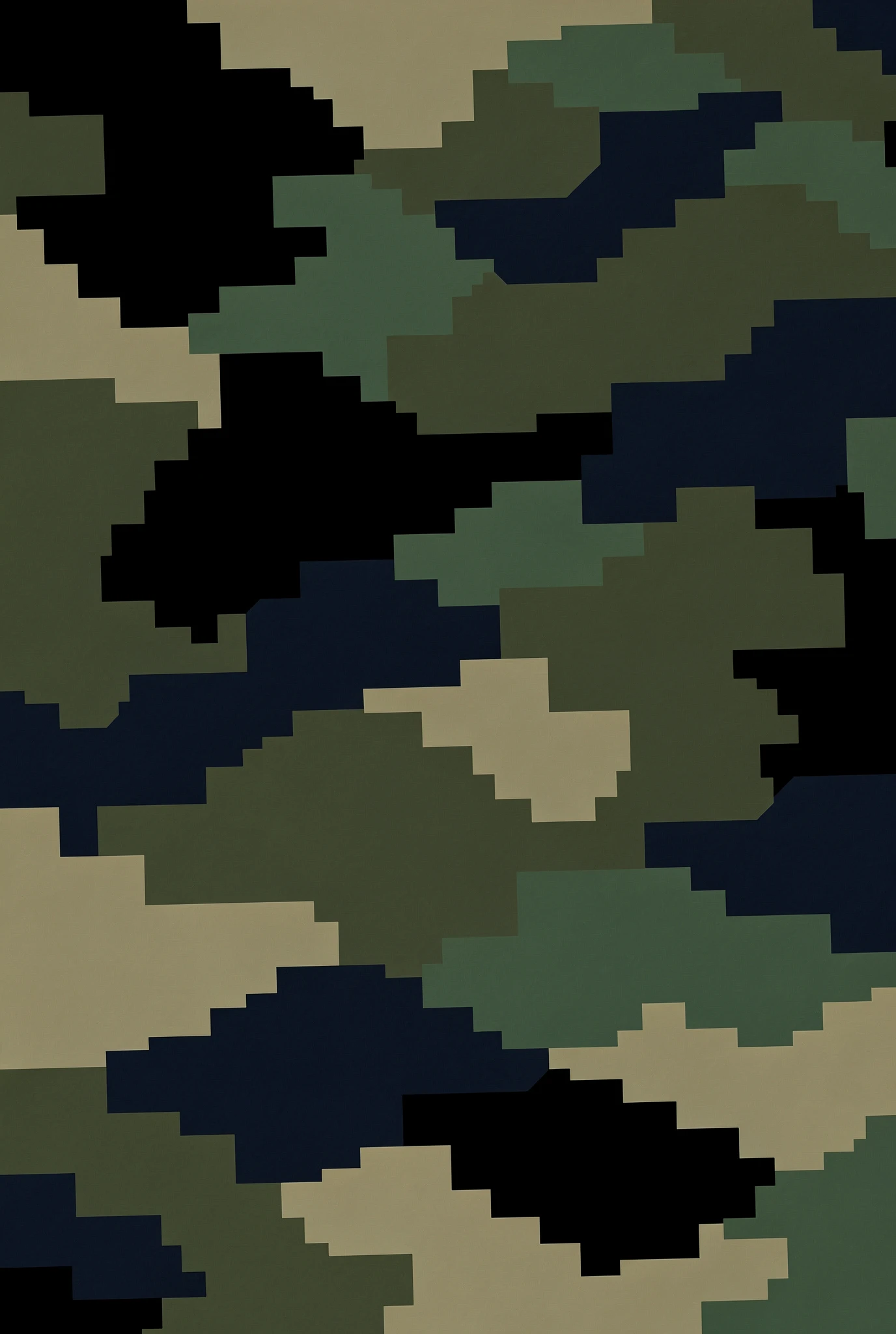
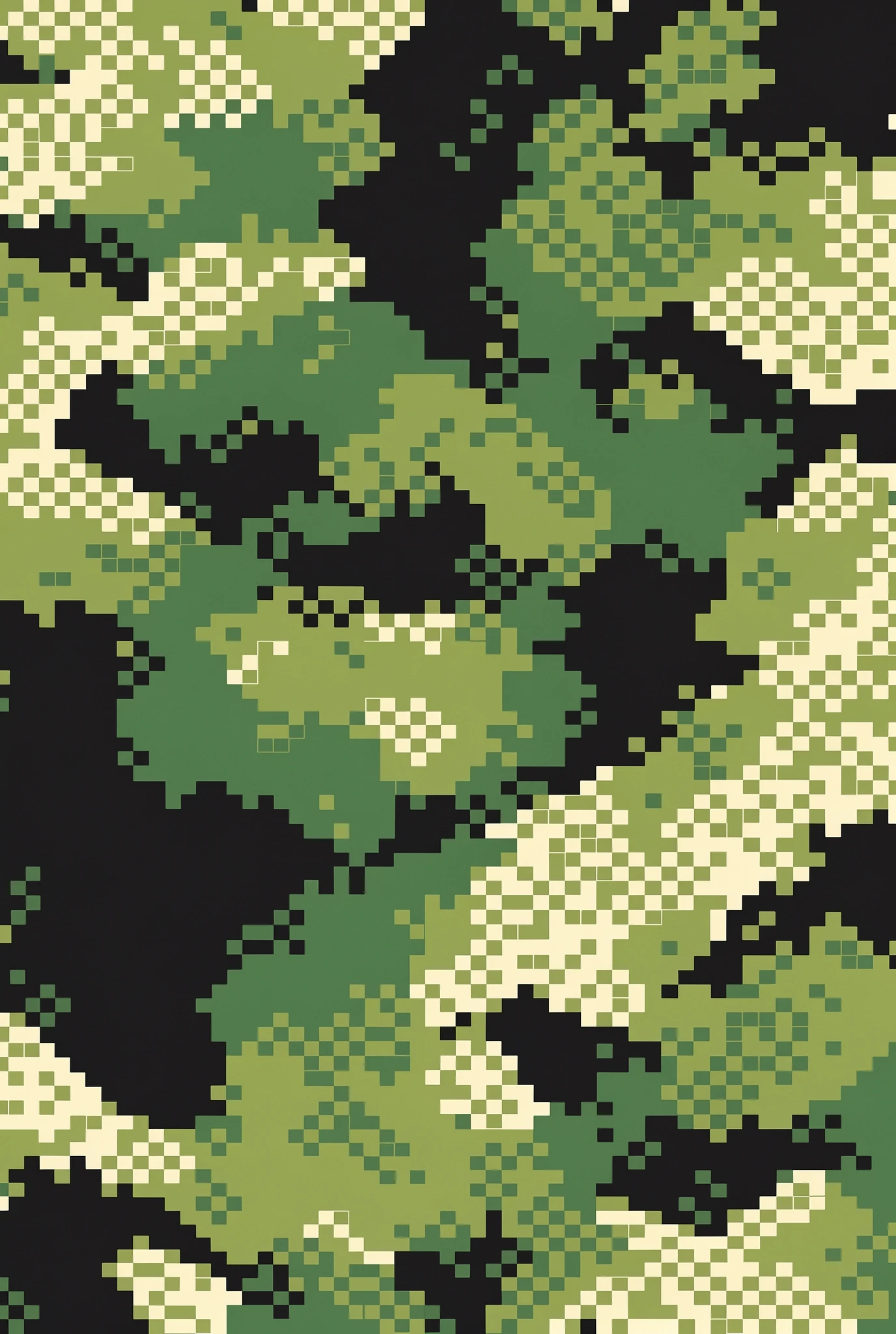
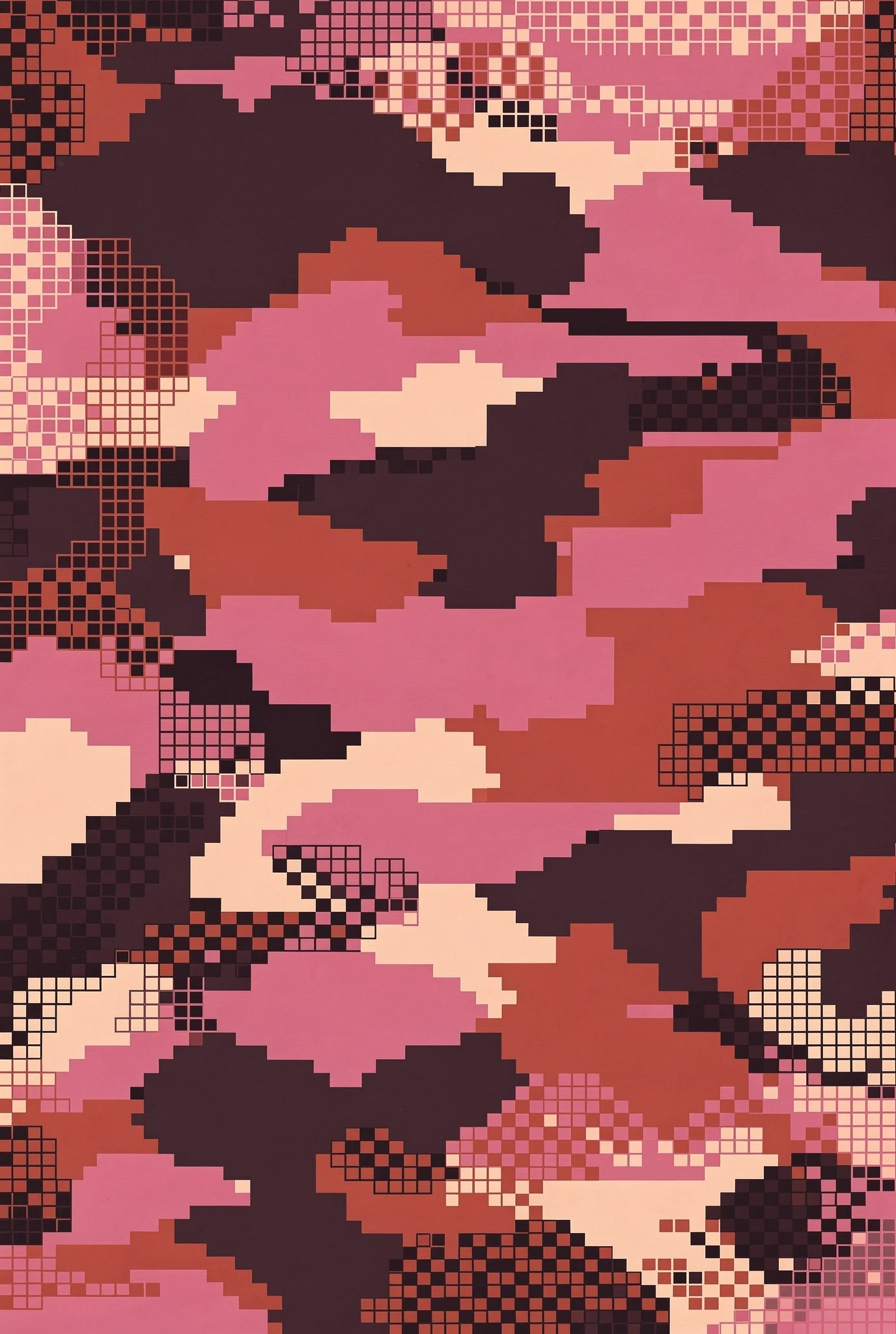
This project removes the body, uniform and battlefield, leaving only the pattern itself. The eighteen synthographs imagine fictional camouflage systems for environments that may not exist: woodland data, ash, snow, algae, concrete, night, rust, skin, screen-light and synthetic terrain. Blocks of pixels gather, fracture, drift, pulse, compress and dissolve across flat print-like surfaces. Some patterns feel natural, others visibly manufactured, as if produced by sensors, training software or artificial foliage simulators. Here, camouflage is treated as a behaviour of vision: a surface designed to disappear, but unable to stop revealing the intelligence of its own design. Being pixellated or digital does not guarantee improved performance.
Gallery
"Everything we see hides another thing." — René Magritte