Albion: on white ground
Albion, the ancient name for Great Britain, likely comes from a Celtic word commonly translated as "white land." The Greeks and Romans adopted the name from the Celts, connecting it to the Latin word albus, meaning "white." The term refers less to nationhood than to appearance: chalk cliffs, pale stone, open sky. It is now used poetically, symbolising Britain's history and natural beauty. In this project, Albion is treated as a concept rather than a statement. In physics, white is the presence of all visible light; in pigment and drawing, however, white has long been treated as a lack of colour — a blank surface awaiting mark-making. It is this tension between light as fullness and surface as emptiness that Albion explores through its paper, skin, and landscape.
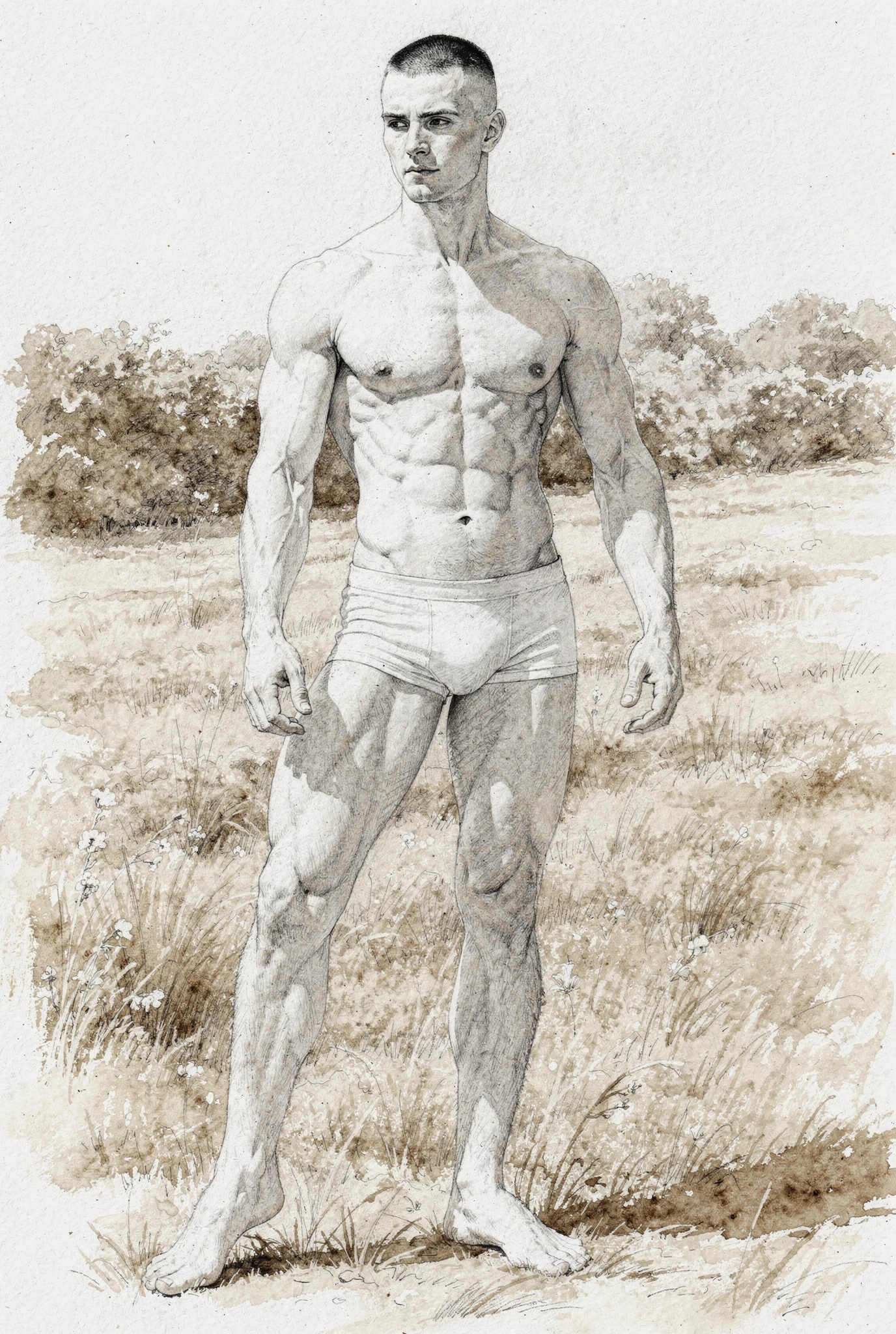
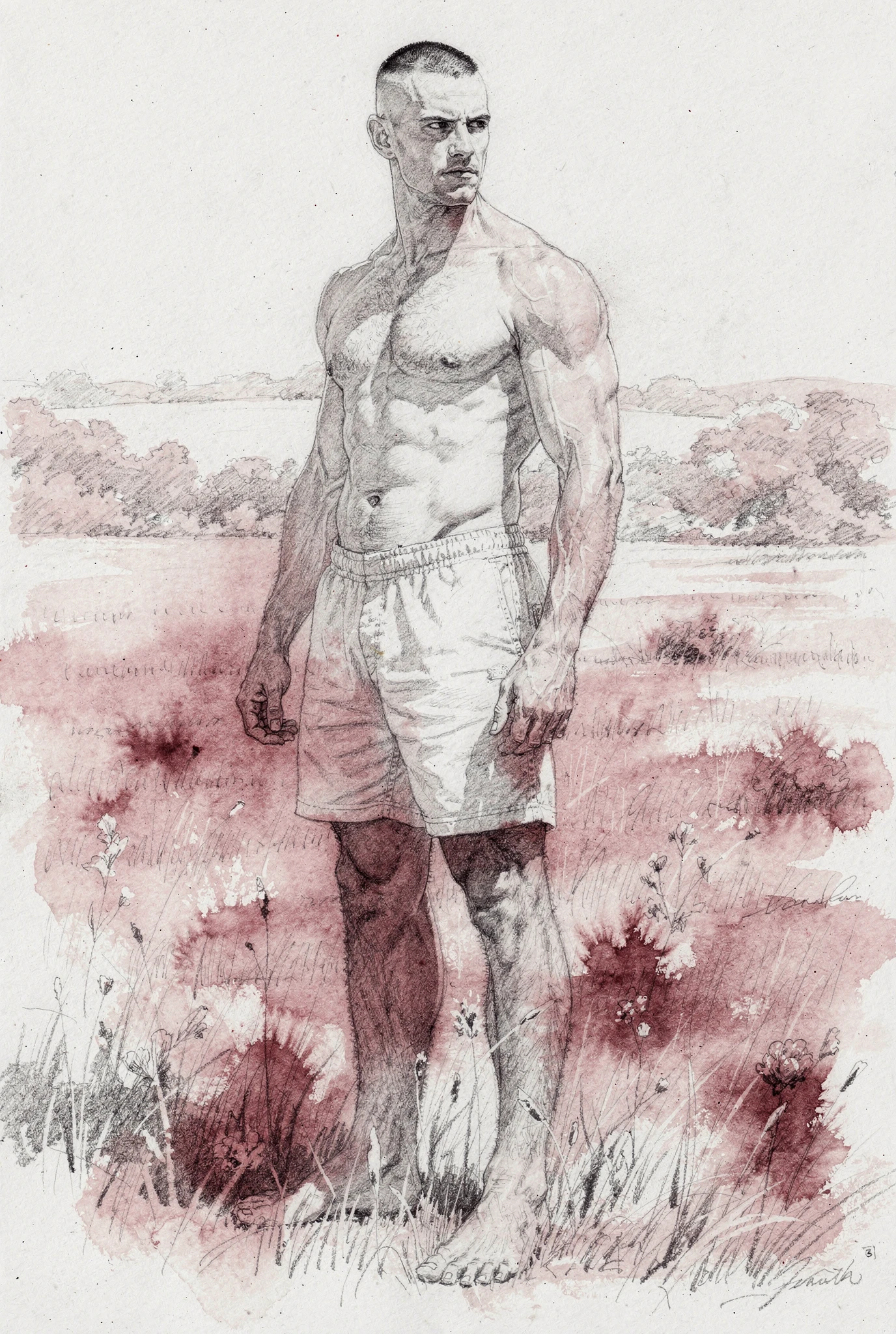
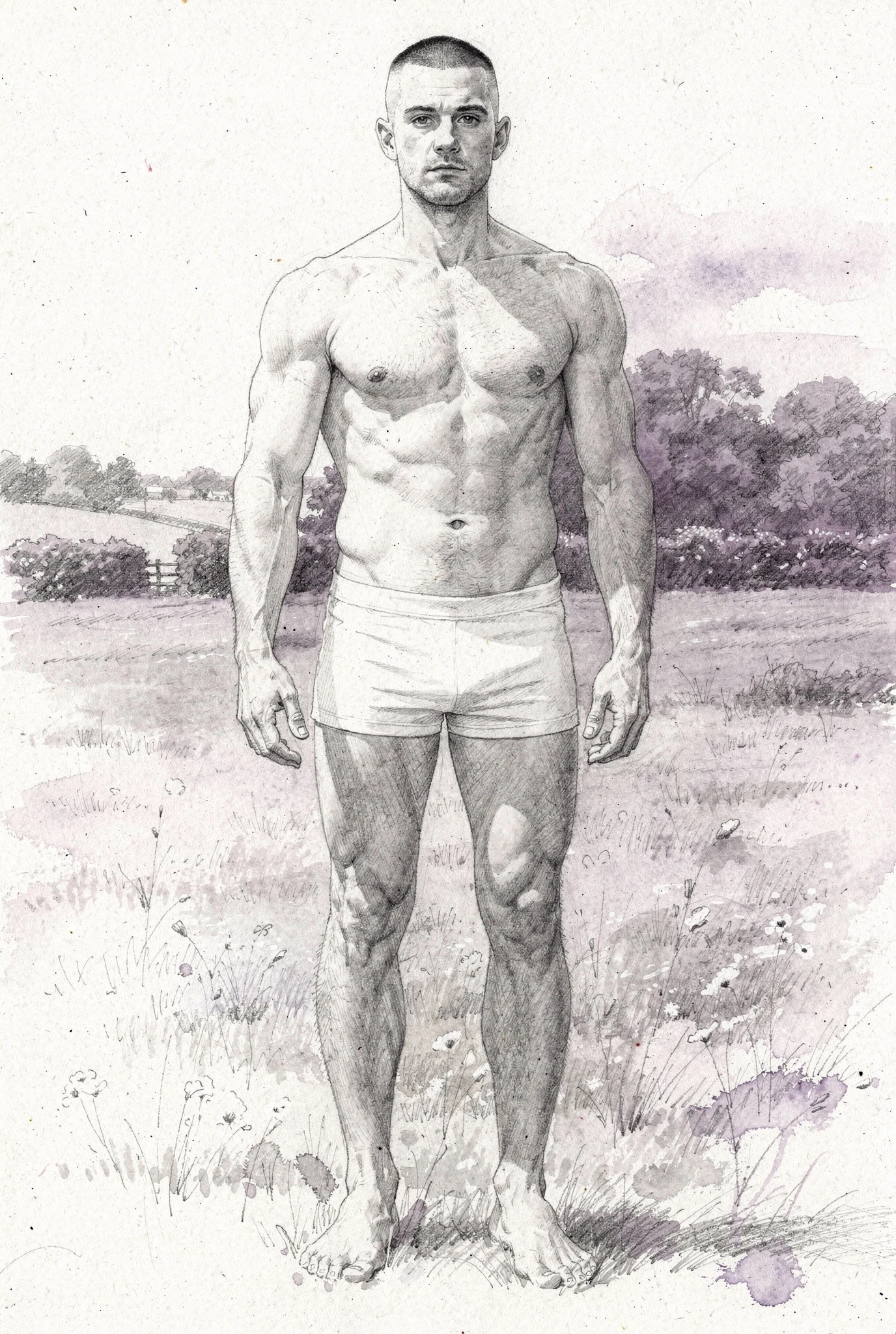
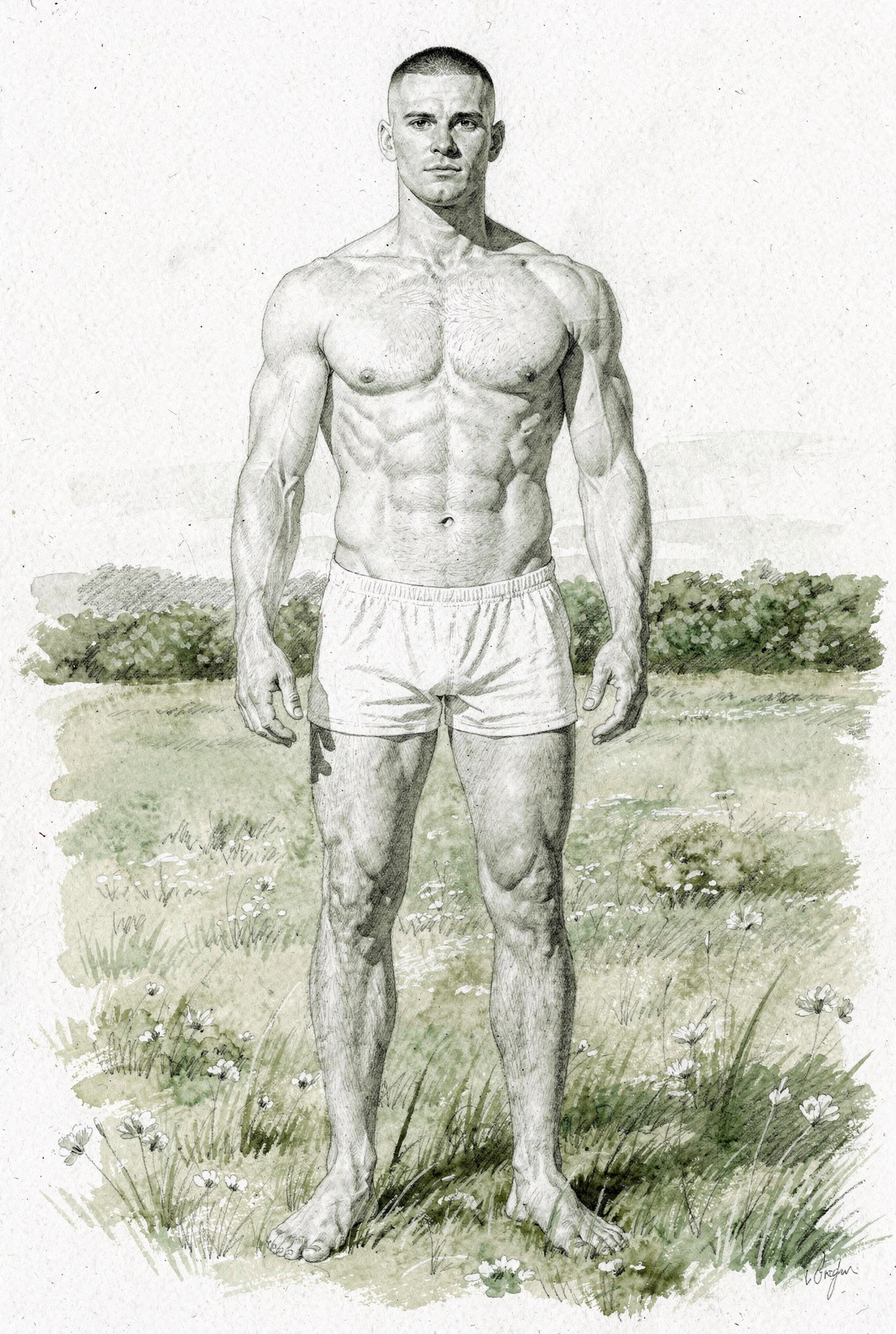
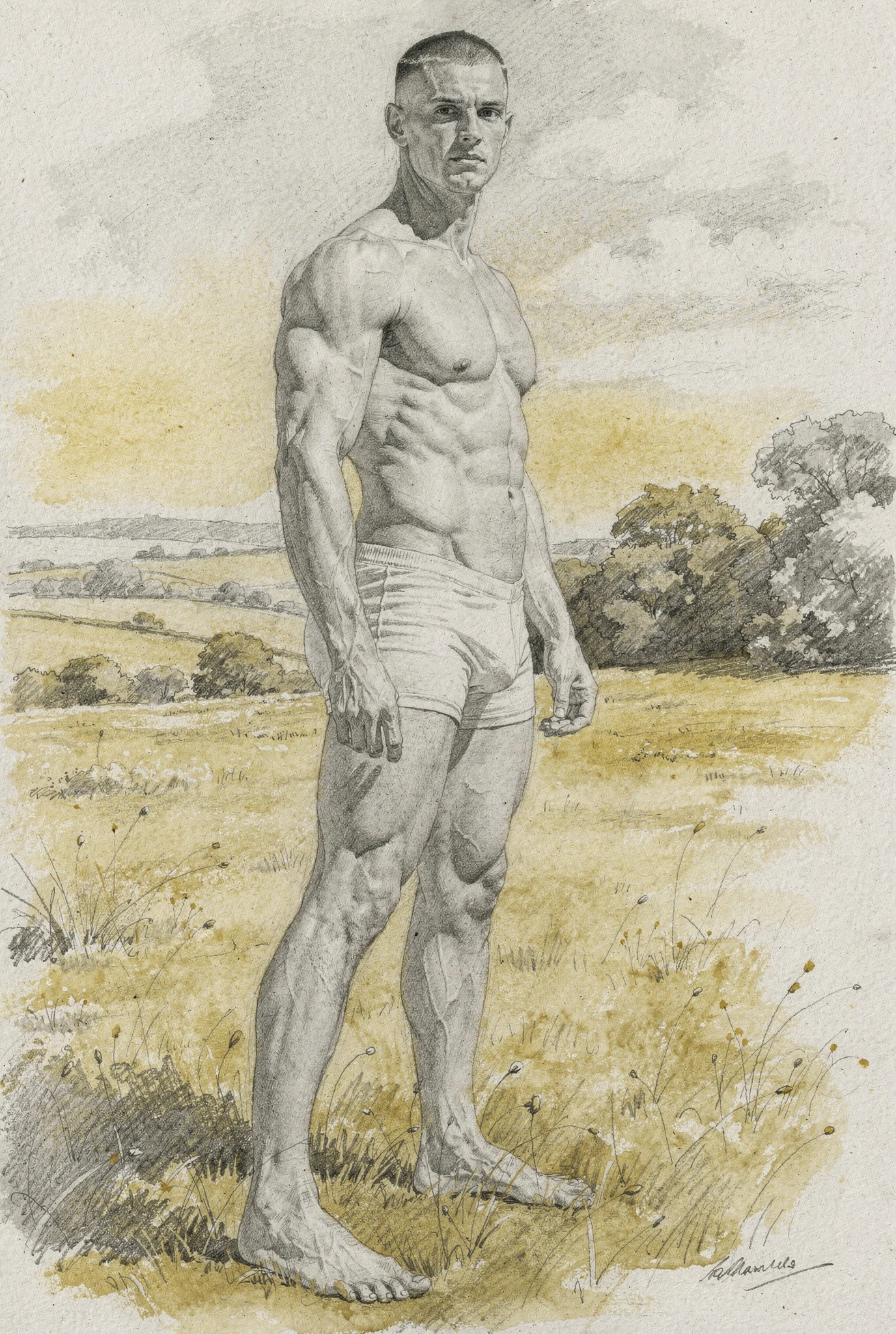
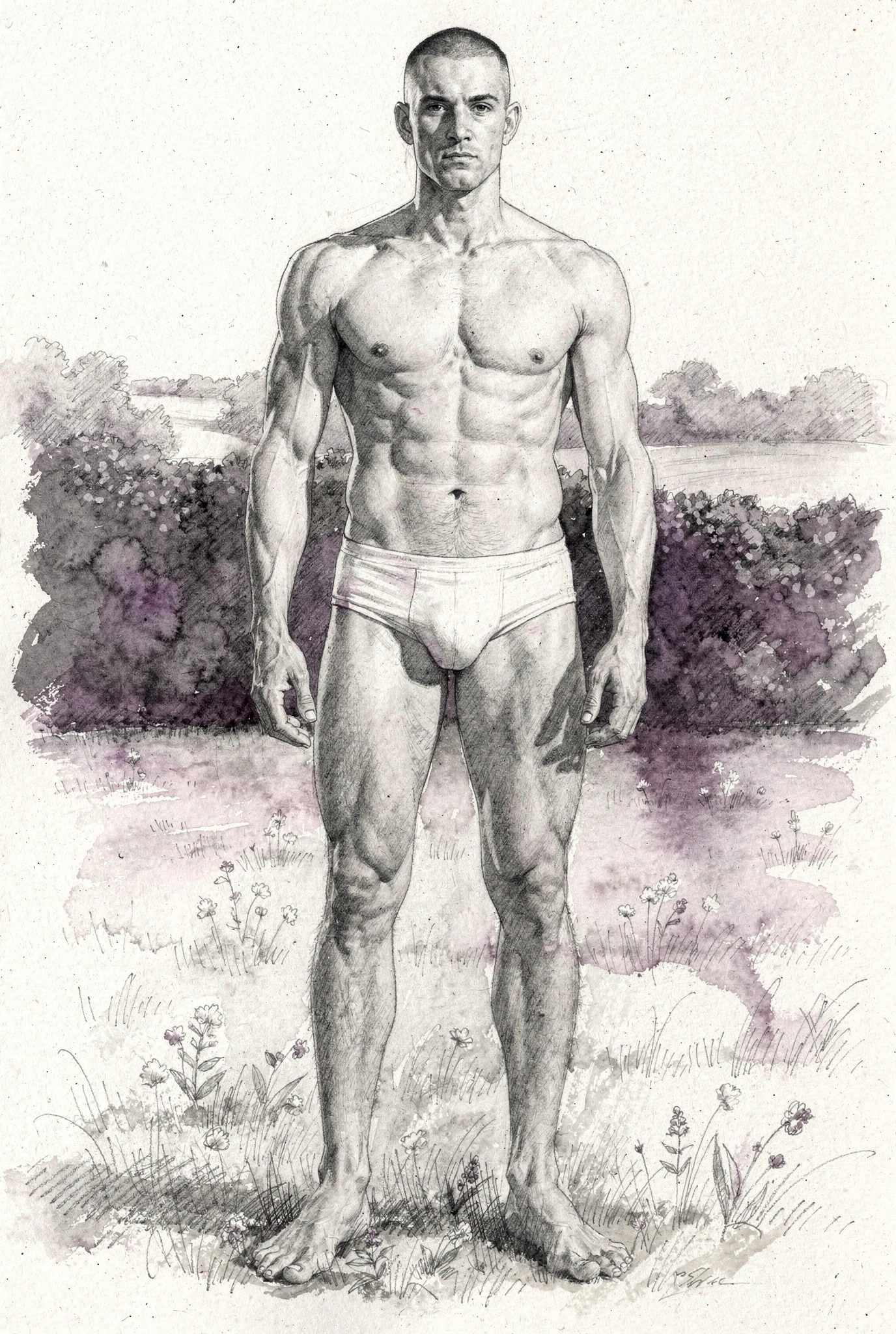
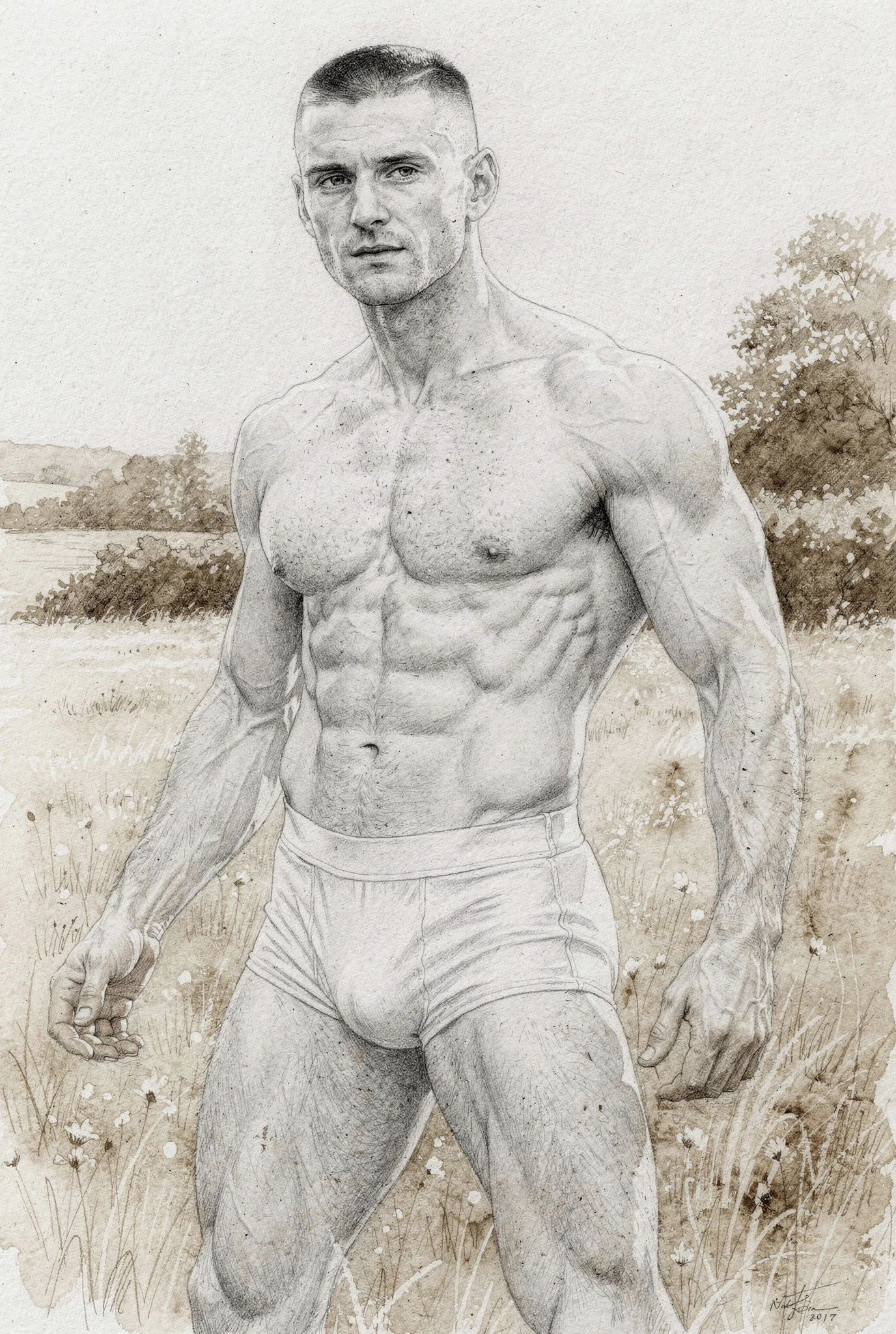
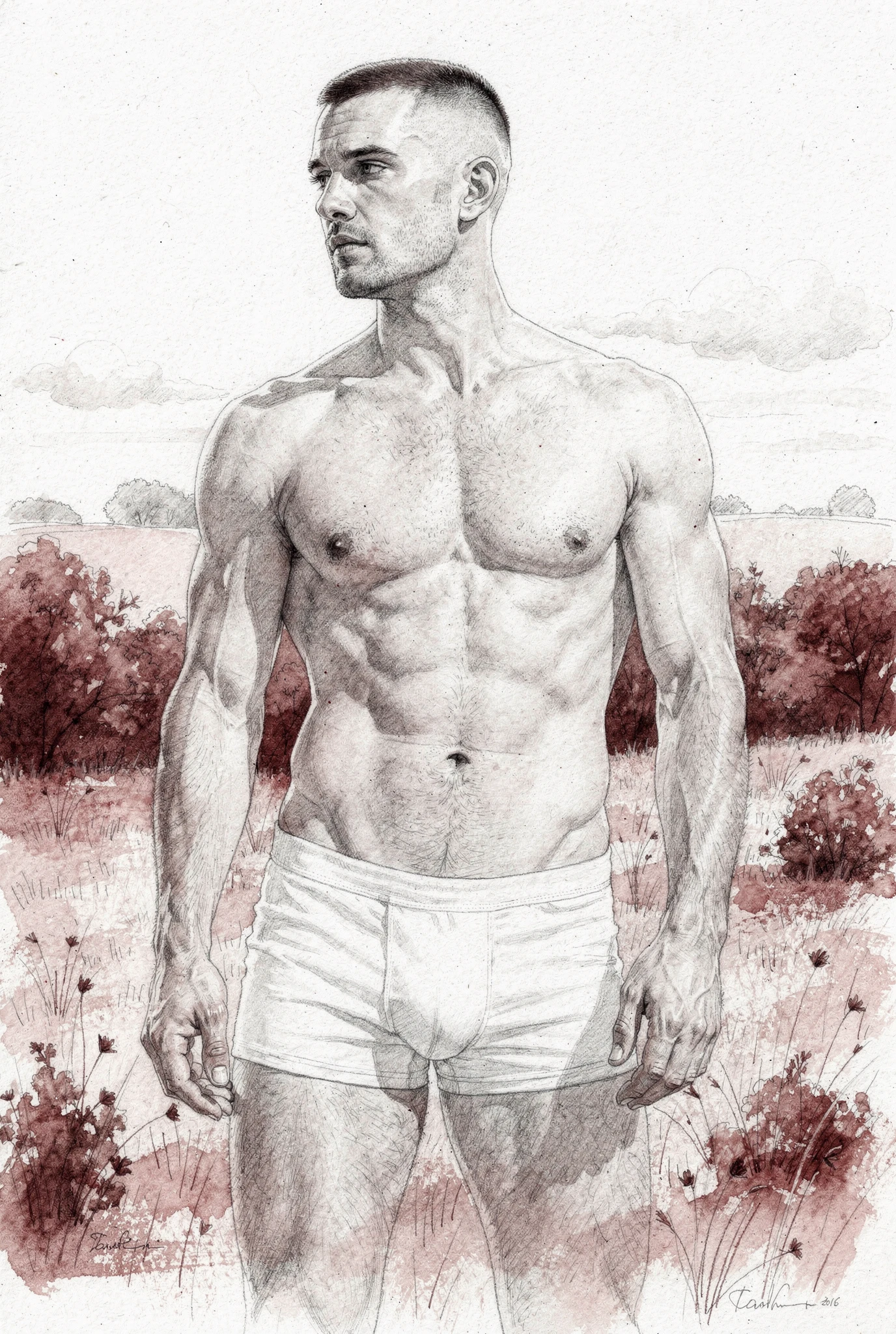
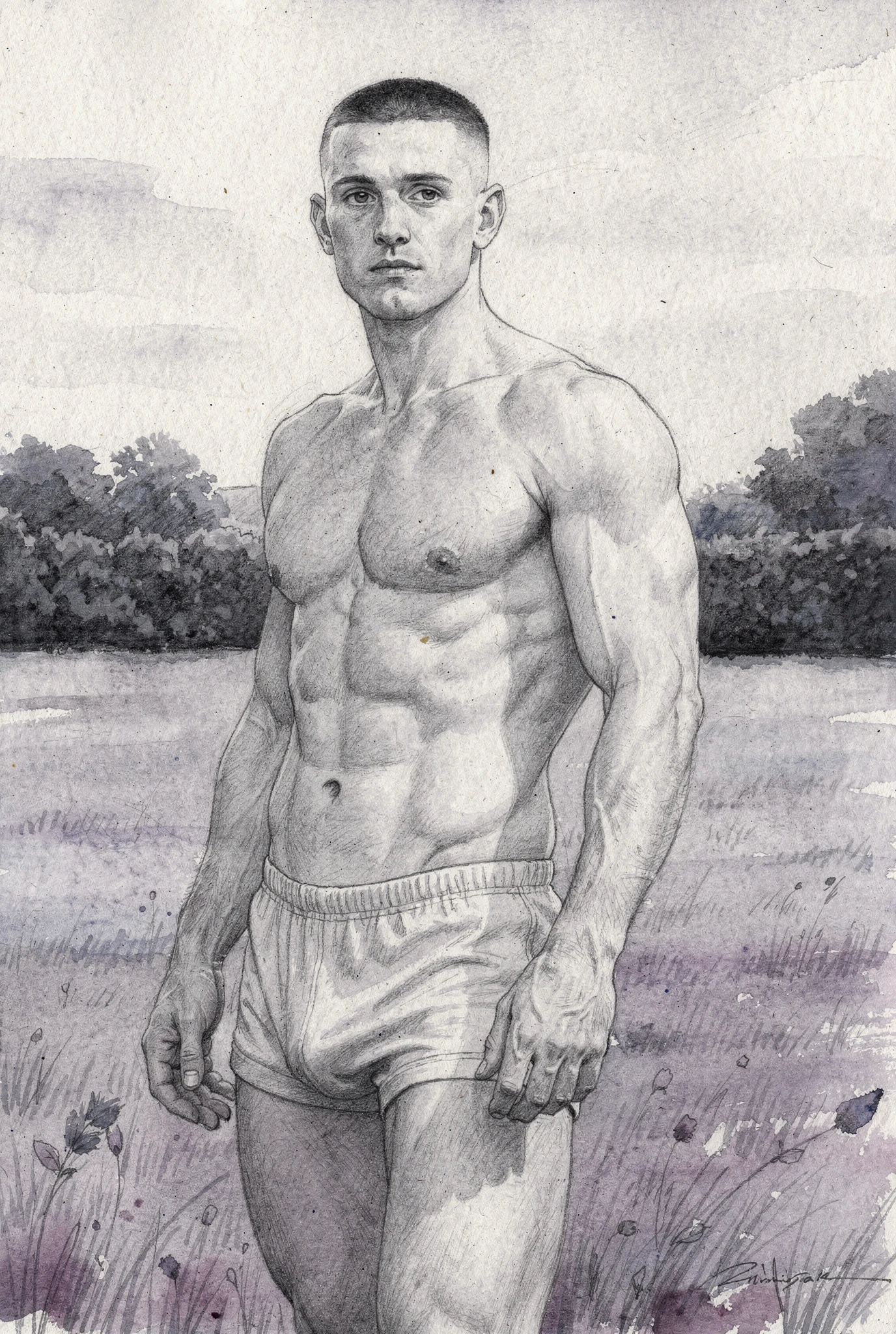
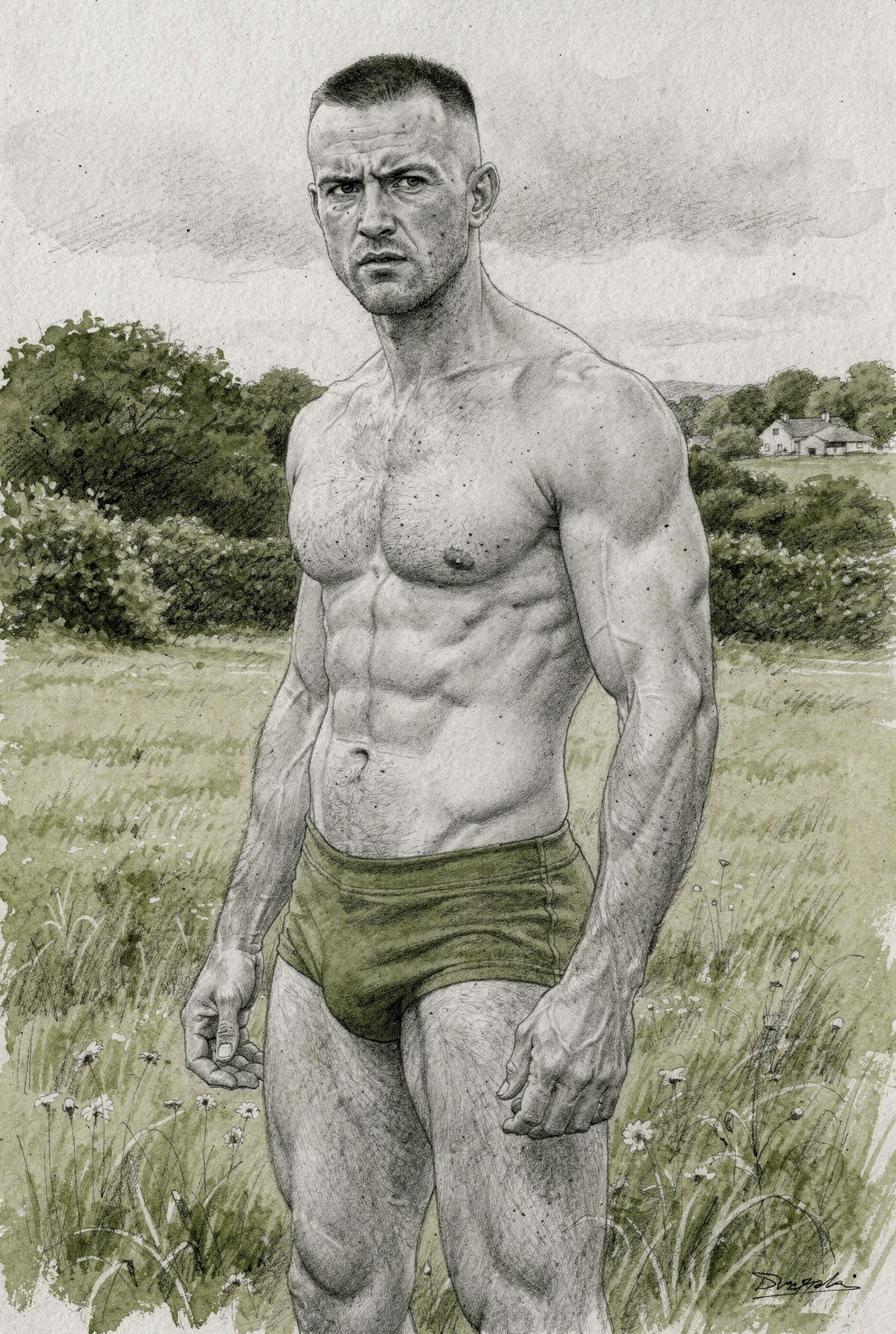
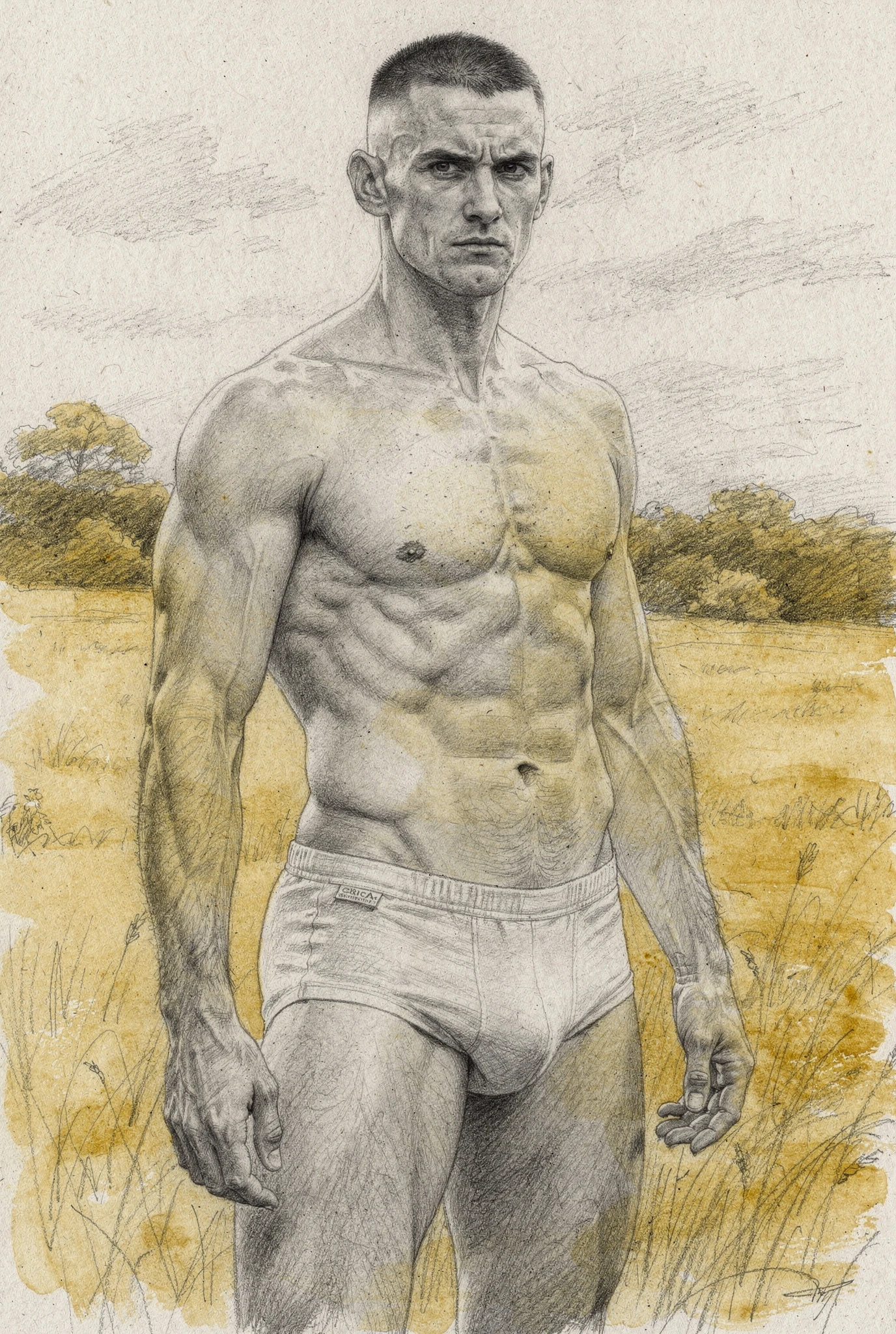
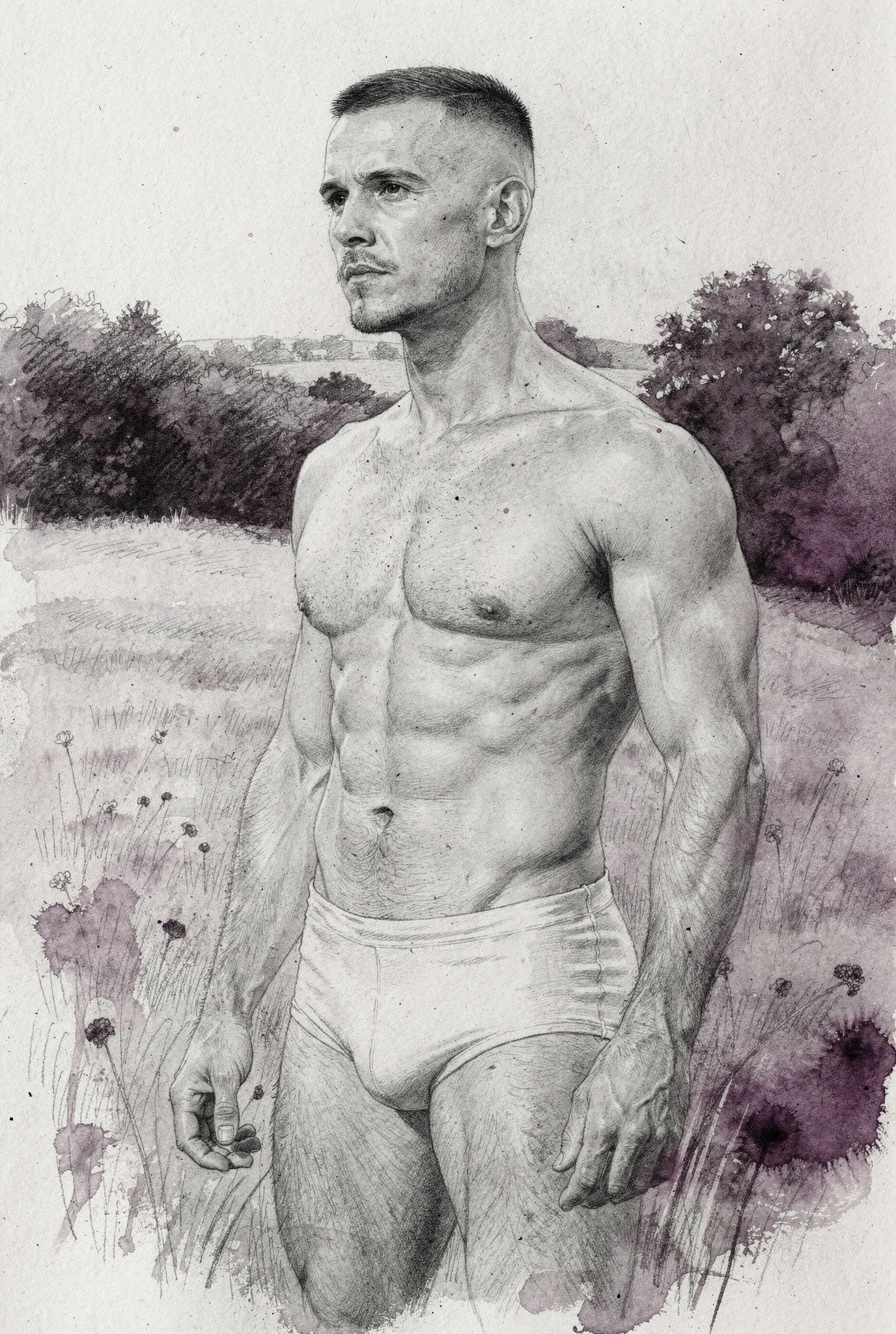
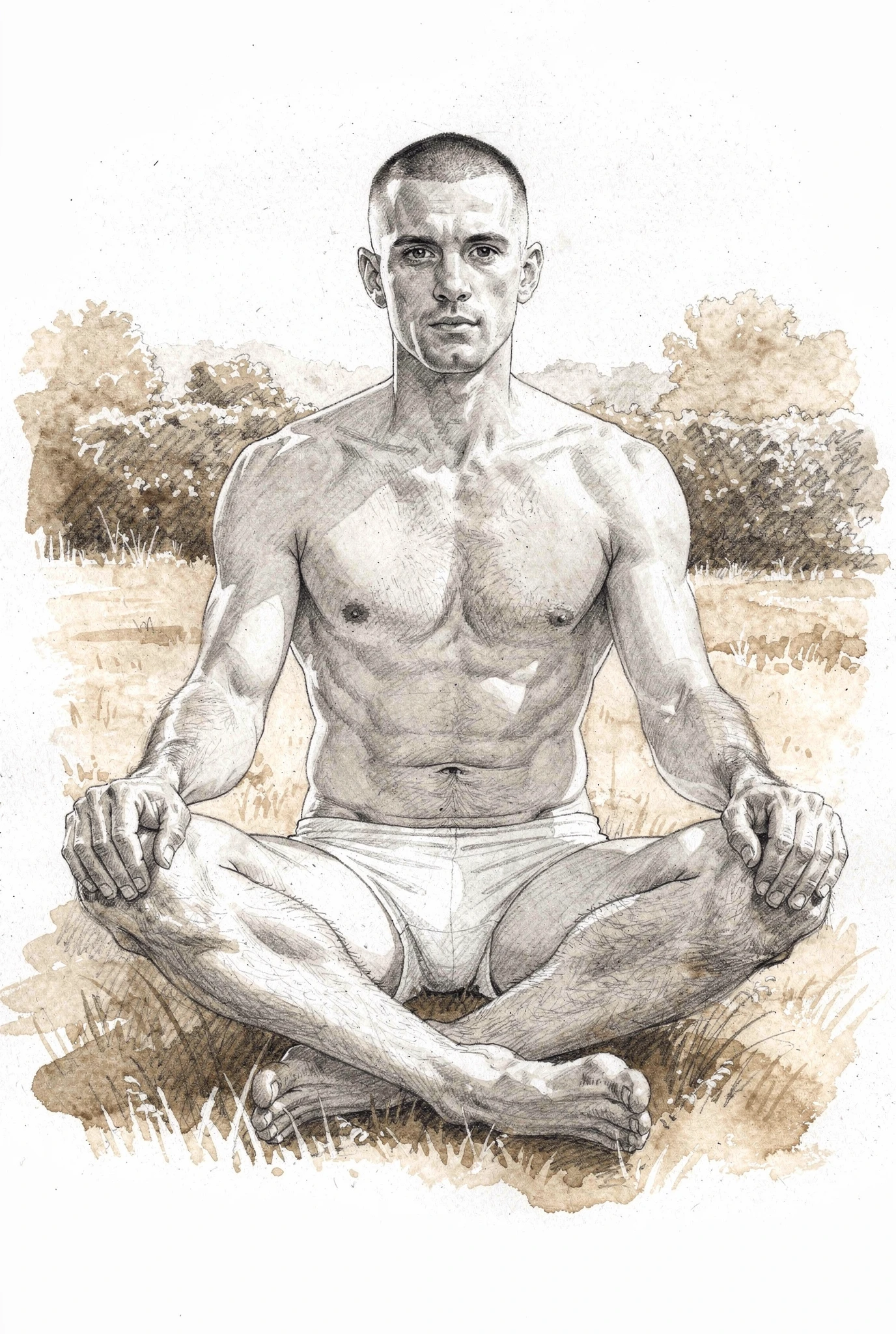
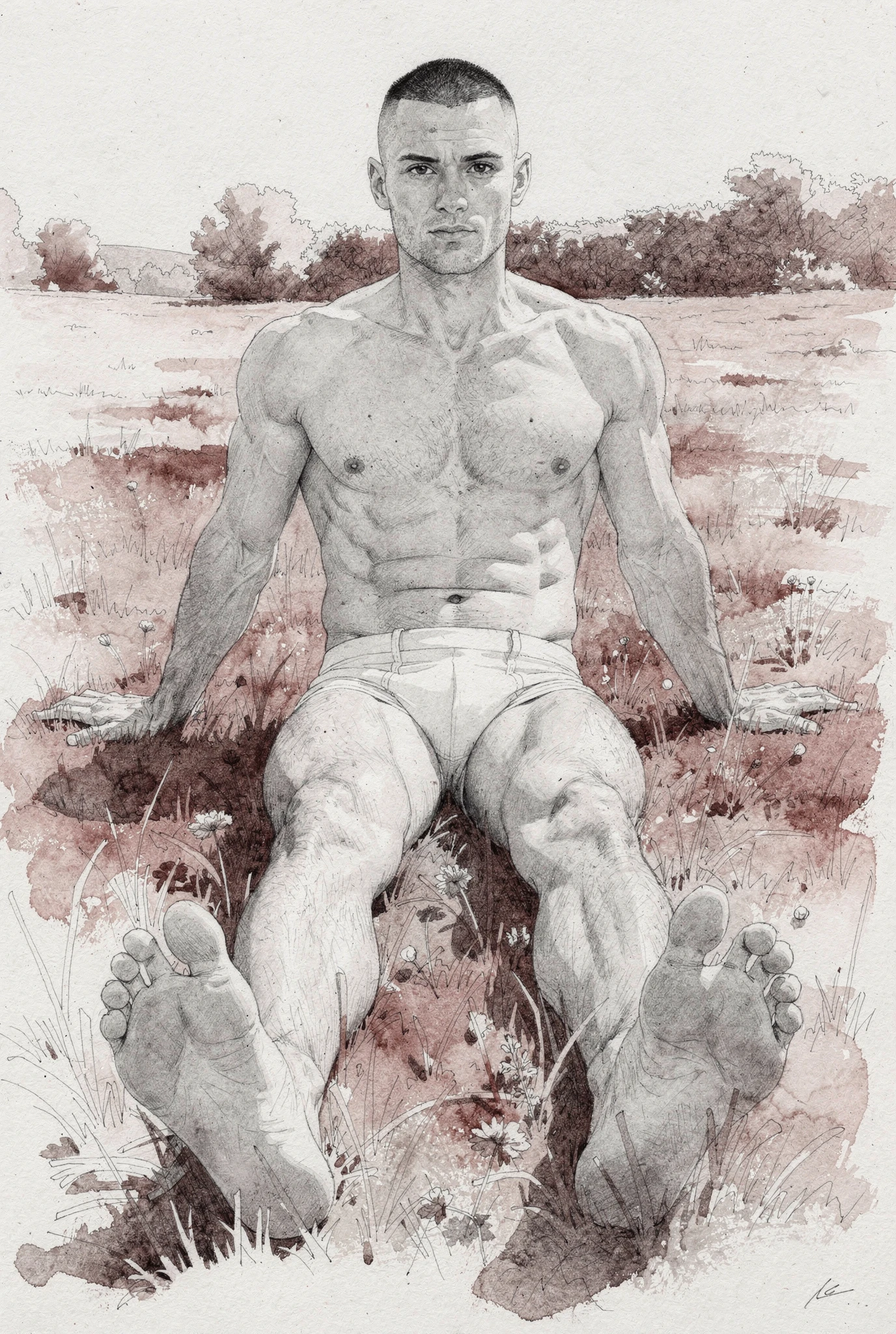
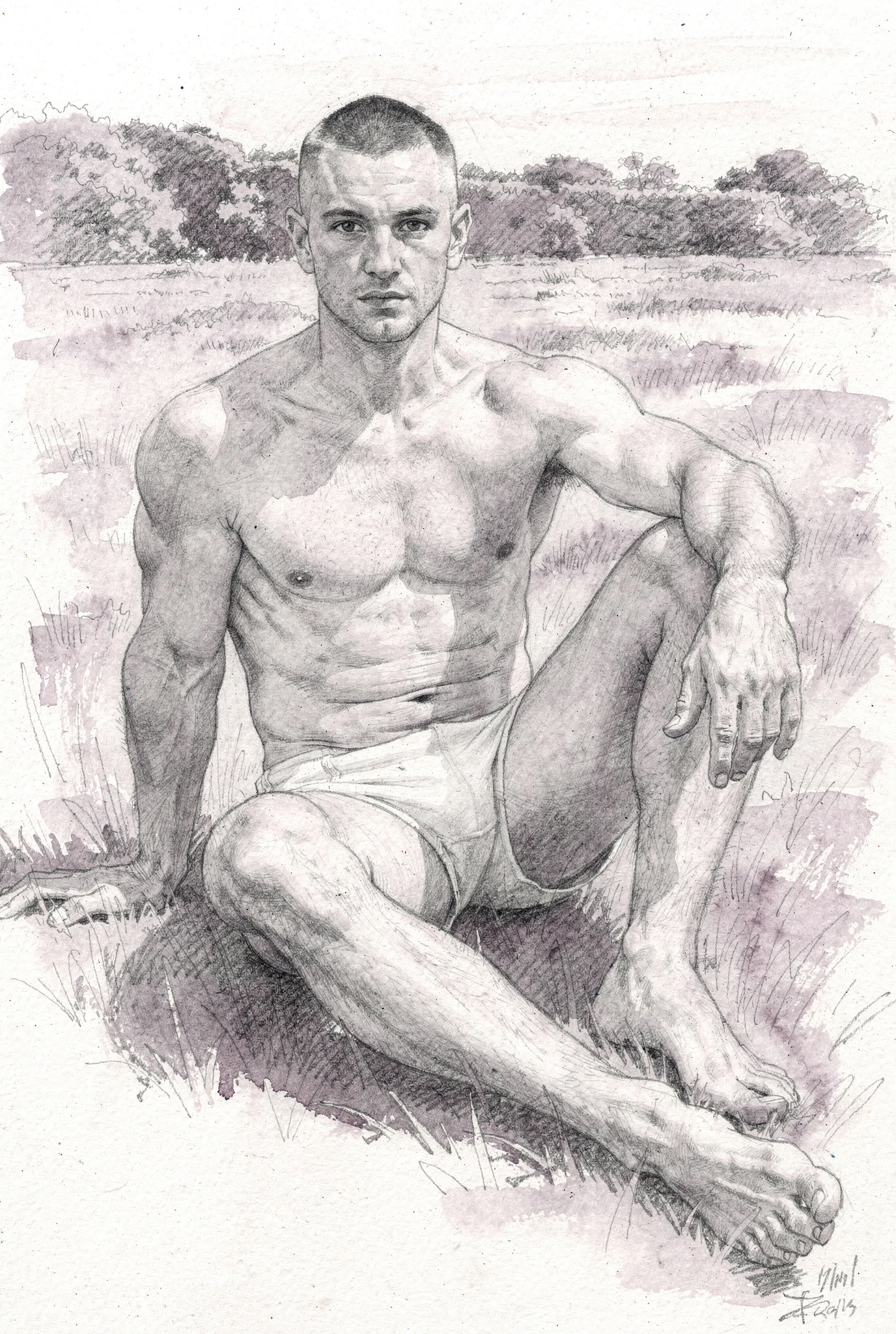
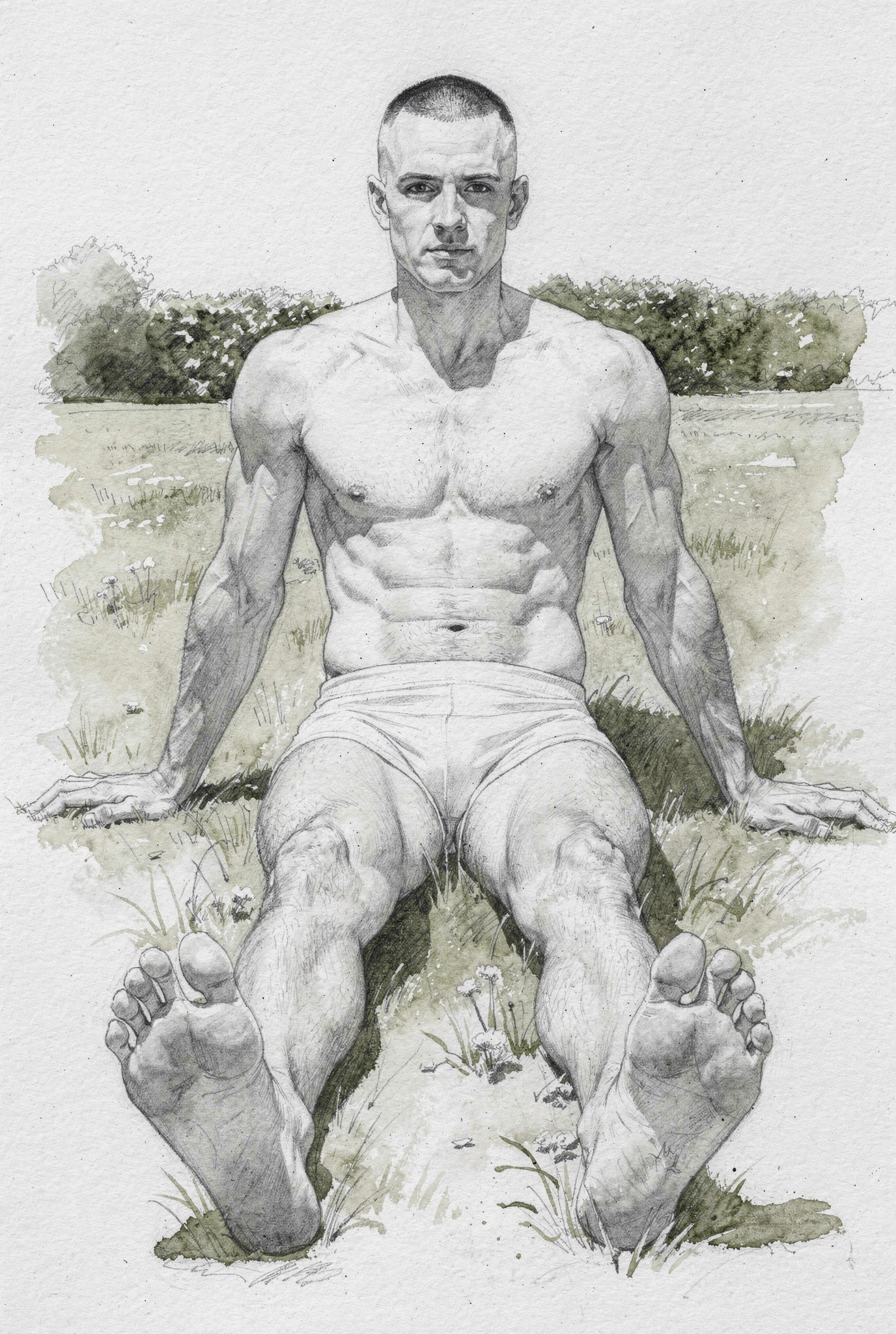
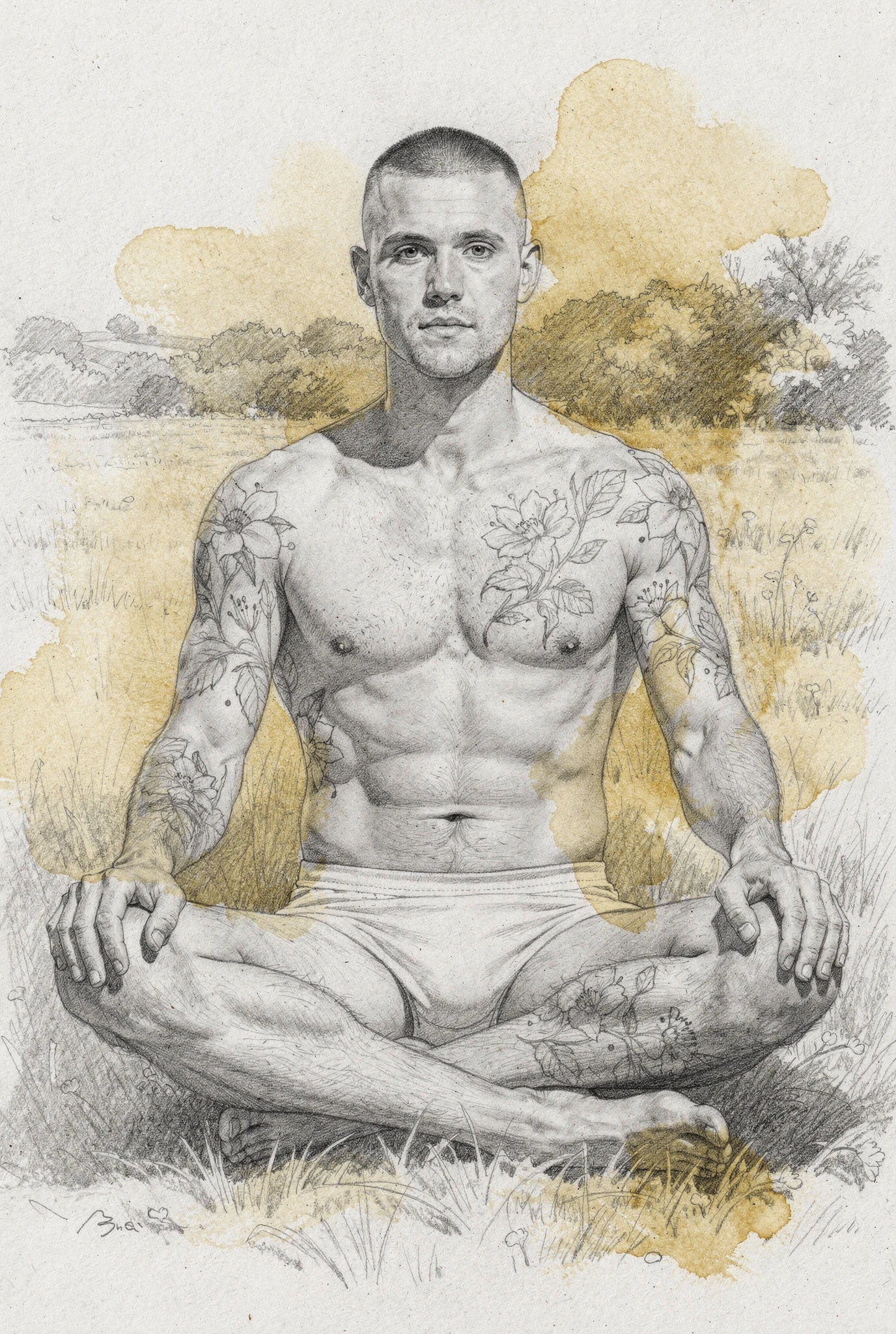
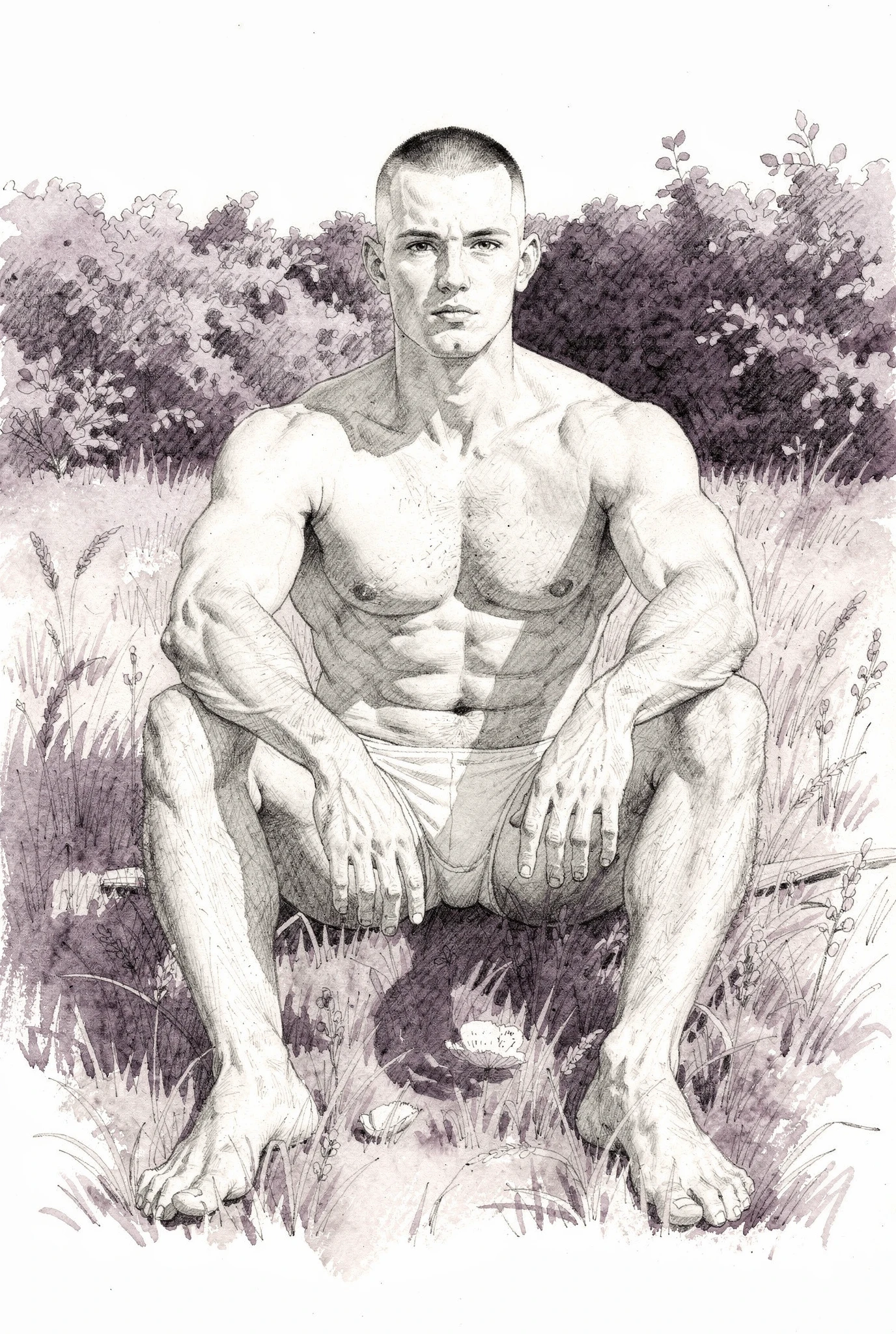
Across eighteen images, male figures appear within lightly described countryside settings — meadows, hedgerows, open fields — rendered in graphite and restrained tonal washes. The landscapes recede, remaining calm and unobtrusive, while the bodies are exposed, still, and present. The men are stripped down to underwear not for narrative effect, but to allow the body to exist plainly as form, surface, and material. The images were developed during winter, yet imagine a different season: one of warmth, light, and physical ease. They appear as sketches that could have been made plein air, or later refined in the studio using photographic reference. Graphite carries the structure of each image, while transparent watercolour-style washes introduce subtle colour using simulated vegetable dyes — onion skin, beetroot, red cabbage, spinach, turmeric, and blackberry. These pigments remain subdued, organic, and atmospheric, allowing large areas of paper to remain visible.
The figures themselves are synthographic constructs — idealised, non-existent, generated from a latent space shaped by probability and training data. Although the men in these images were not explicitly described as white or Caucasian at prompt level, the system repeatedly rendered them as such, revealing a racial bias embedded within contemporary generative models. Rather than correcting or concealing this tendency, Albion responds with awareness and restraint. Areas are lightened, simplified, or allowed to dissolve back into the ground, permitting the white surface to reassert itself. The work does not define what Britain once was, is now, or should be. Instead, it presents a field of appearances shaped by light, omission, and inherited visual systems — and leaves them unresolved.
Gallery
"Success is a worn down pencil." — Robert Rauschenberg